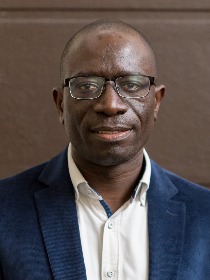
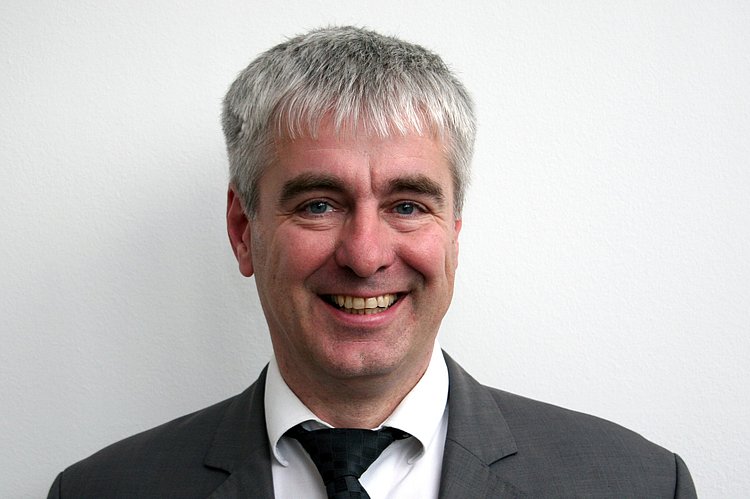
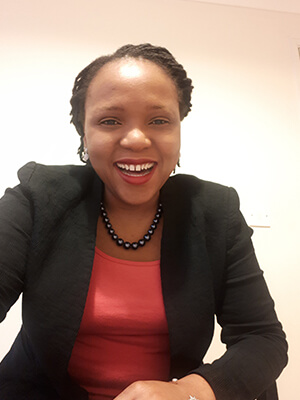
Joram Tarusarira is an Associate Professor in Religious Studies at the University of Groningen, affiliated with the Faculty of Religion, Culture and Society. His work bridges religion, conflict, and climate security. He holds a PhD from the University of Leipzig (2015) and has extensive post-doctoral and field experience in Africa. Expertise: Religion & Conflict, Climate Security, Peacebuilding Leadership: Coordinator of MA Religion, Conflict and Globalisation Funding: NWO Idea Generator Grant for 'Invoking the Sacred' project Research focuses on sacred dimensions of climate conflicts, African peacebuilding strategies, and religion's role in human security. He leads interdisciplinary projects like CGIAR Climate Security Initiative and contributes to policy frameworks globally. Awards: NWO Grant (2020), CGIAR Recognition (2023) Teaching: Methodology clinics, Ethics & Secularity courses His 70+ publications analyze intersections of religion, climate change, and security in Africa. Current projects investigate Northern Mozambique's climate conflicts and Ugandan veterans' identity dynamics.
Dr. Michael (Miek) Dunbar is a Lecturer in Communication Design at RMIT University's School of Design , specializing in interaction and service design for regenerative futures. He co-leads the Greater Melbourne City Portrait initiative with Regen Melbourne, focusing on creating safe social and ecological urban frameworks. His work challenges anthropocentric data practices while developing digital public tools for urban decision-making. Key research areas include: Regenerative Design, More-than-human Data Sets, Collaborative Design Teams Teaching: Master of Communication Design program, Service Design, Work Integrated Learning His publications address urban data infrastructures, collaborative design methods, and regenerative practices. Projects like Australia's first Housing Monitor demonstrate his focus on civic data systems and urban sustainability. Current research explores: Relational ontologies in data visualization Multi-species sensing apparatuses Expanded participatory data governance
Matthew Holmes is a Lecturer in Management at the University of York's School for Business and Society, where he leads the MSc International Business Management program. His research employs sociological frameworks to analyze sport-for-development initiatives in Zambia, particularly focusing on poverty alleviation and UN Sustainable Development Goals. Methodologically, he uses participatory approaches and interdisciplinary theory. His publications critically examine power structures in international development, with recent work applying postcolonial theory to decolonize research methods. Articles emphasize socio-economic inequality, community agency, and gender equity in least developed countries.
David Dowling is a Professor at the University of Iowa’s School of Journalism and Mass Communication, part of the College of Liberal Arts and Sciences. He holds the role of Executive Editor of the Journal of Communication Inquiry since August 2024. With a Ph.D. from the University of Colorado (1995), his research focuses on digital media, podcasting, narrative journalism, and the evolution of media industries. His work explores topics like immersive storytelling, audio journalism, and the cultural impact of digital publishing. Dowling is the author or editor of 12 books, including Podcast Journalism: The Promise and Perils of Audio Reporting (2024) and A Delicate Aggression: Savagery and Survival in the Iowa Writers’ Workshop (2019). His research has been featured in outlets like The New Yorker and London School of Economics Newsroom Report . His research interests span digital longform journalism, podcasting’s role in news dissemination, and the intersection of media with social activism. He has received multiple accolades, including the 2019 and 2020 Best Article Awards in Journal of Radio & Audio Media for groundbreaking studies on immersive audio storytelling and podcast-driven cultural narratives. Dowling teaches courses in journalism studies, digital gaming culture, and qualitative research methods, fostering the next generation of media scholars and practitioners. His recent work emphasizes participatory journalism, environmental literary journalism, and the co-evolution of journalism with public relations in branded content. His articles analyze topics ranging from transnational crime reporting in podcasts to the activism embedded in digital storytelling formats like immersive documentaries and gamified news platforms.
Hilary Johnson is an Adjunct Associate Professor at the Living with a Disability Research Centre, La Trobe University, and has taught part-time in the School of Allied Health. Her academic and clinical work centers on improving communication access for individuals with complex communication needs, including those with aphasia, intellectual disabilities, and developmental conditions. Adjunct Associate Professor, Living with a Disability Research Centre Part-time teaching, School of Allied Health, La Trobe University Extensive collaboration with Scope and other disability organizations Hilary holds a PhD, MA (Ed), B Ed, and Dip Sp Th, reflecting a strong interdisciplinary background in speech pathology, education, and disability studies. Diploma in Speech Therapy (Dip Sp Th) Bachelor of Education (B Ed) Master of Arts in Education (MA Ed) Doctor of Philosophy (PhD) Her research is deeply committed to enhancing the lives of people with little or no speech through Augmentative and Alternative Communication (AAC), saliva control, and inclusive communication practices. She investigates communication access in healthcare, legal, transport, and community settings, aiming to foster dignity, autonomy, and social inclusion. Analysis of her recent publications reveals a consistent focus on participatory research, accessibility standards, and the development of practical tools and training for frontline workers. Her work spans qualitative studies, intervention evaluations, and policy-oriented research, often employing co-design and community-based methodologies. Her scientific contributions have been recognized through widespread citation, media pickup, and policy references, though formal awards are not listed in the provided text. Keynote speaker at national and international conferences Multiple publications in high-impact journals such as Disability and Rehabilitation and Journal of Intellectual and Developmental Disabilities Research cited in policy and news outlets Hilary actively mentors students and collaborates across disciplines, though specific advisees are not named. Her work is supported through institutional and organizational partnerships, including Scope, and emphasizes capacity building in both professional and community contexts. She is involved in developing and evaluating digital tools like the Aphasia App and communication access networks, reflecting a forward-looking approach to leveraging technology for inclusion.
Dr. Vivian Visser is an Assistant Professor in Governance & Pluralism at the Department of Public Administration and Sociology, Erasmus School of Social and Behavioural Sciences, Erasmus University Rotterdam. Her research lies at the intersection of Public Administration and Sociology, focusing on citizen participation, community self-organization, and the reproduction of social inequalities in governance processes. Her research interests include: Citizen participation and invitational governance Social and emotional dynamics in public engagement Status and educational disparities in civic initiatives Role of civil servants in inclusive governance Urban sociology and neighborhood livability Visser employs an interdisciplinary, mixed-methods approach—combining vignette survey experiments, ethnographic observations, and in-depth interviews—to investigate how public professionals can tailor participation strategies to diverse citizen groups. Her recent publications reflect a strong trend toward understanding the emotional, cultural, and structural barriers to inclusion, especially among less-educated populations. The research emphasizes actionable insights for policymakers and practitioners. She has received the Erasmus Graduate School Award for Best Dissertation and has been recognized for her impactful work through media coverage in outlets like NRC Handelsblad, De Jortcast, and Binnenlands Bestuur. Her research has also informed public discourse on participation through expert contributions. Visser is actively involved in knowledge exchange through initiatives such as: Kenniswerkplaats Leefbare Wijken : Co-creating knowledge on neighborhood livability GovLab010 : Fostering innovation in local governance She coordinates the Master’s program Polarisatie, Democratie en Samenleving and develops post-academic courses to equip public professionals with tools for inclusive participation. She is currently developing new educational content focused on engaging discontented citizens.
Marcel Broersma is a full Professor of Media and Journalism Studies at the University of Groningen's Faculty of Arts, leading the Journalism department and directing the Centre for Media and Journalism Studies. He specializes in journalism history, digital transformation of news media, and political communication. Broersma holds an MA in History and Journalism and a PhD from the University of Groningen (2002, cum laude). His research explores media innovation, the evolution of journalistic practices, and the role of social media in political discourse. Director of the Centre for Media and Journalism Studies Academic Director of the Dutch Research School for Media Studies (RMeS) Coordinator of the UNL Digital Society research program Chair of the Digital Literacy Coalition and the Board of Advisers for the CIT RUG His research interests include the transformation of journalism, digital literacy, and the historical and comparative analysis of media systems. Notable grants include a VIDI grant (NWO, 2007) and AHRC/NWO funding for studies on journalism’s evolving role. Broersma has authored/co-authored over 40 books and edited volumes, including Betrokken en gericht (2014) and Form and Style in Journalism (2007). Recent work focuses on marginalized citizens' digital inclusion, algorithmic systems, and Chinese social media’s political dynamics. He actively advises media institutions and government bodies, including the Dutch Frisian Media Fund and the Mediawijzer.net scientific board. His teaching includes master’s courses on journalism theory and history at the University of Groningen. Broersma supervises numerous PhD candidates and postdoctoral researchers, contributing to interdisciplinary projects on media innovation and public communication.
Richard Silberglitt is a Senior Physical Scientist at RAND and Professor of Policy Analysis at the RAND School of Public Policy, where he conducts interdisciplinary research at the nexus of science, technology, and public policy. With over 50 years of experience across academia, government, and industry, he is a leading expert in technology foresight, energy systems, and R&D portfolio management. His research focuses on emerging technologies , science and innovation policy , energy security , and nanotechnology . He has developed influential methodologies such as an energy scenario analysis framework and the PortMan portfolio management system, both widely applied in U.S. and international contexts. His work supports strategic planning in defense, public safety, and economic development. His recent publications reflect a strong trend toward technology foresight , critical materials supply chains , quantum technology assessment , and public sector innovation . These works often employ scenario planning, Delphi methods, and data-driven analytics to inform high-stakes policy decisions. Member, American Physical Society Member, Materials Research Society Member, American Ceramic Society As a subject matter expert, Silberglitt has advised the United Nations, U.S. Department of Defense, National Security Agency, and multiple federal agencies. He has chaired the International Advisory Board of the APEC Center for Technology Foresight and delivered testimony to U.S. Congressional committees on critical materials and technology policy. His research has been supported by grants and contracts from the U.S. Army, Navy, CDC, and National Institute of Justice. He has led major initiatives on law enforcement technology, transportation safety ( The Road to Zero ), and international technology foresight. His work often involves collaborative teams and cross-sector partnerships to address complex technological and policy challenges.
Katrina Heijne is a researcher and educator at the Faculty of Industrial Design Engineering (IDE), Delft University of Technology, where she is affiliated with the Department of Design, Organisation and Strategy and the Creative Processes group. She actively contributes to teaching courses such as Creative Facilitation and Deliberate Creativity, and is involved in the Connected Creativity Minor & Lab. Her research focuses on creative processes, including visual thinking, idea generation techniques, co-design, and group facilitation in design contexts. She explores how structured methodologies can enhance creativity in both individual and collaborative settings, particularly in urban design and educational environments. The recent publications of Katrina Heijne reflect a consistent focus on creativity support tools, ranging from AI as an inspiration source to systematic roadmaps for creative problem solving. Her work bridges design theory and practical facilitation, emphasizing evidence-based approaches to creativity. She was nominated for the TU Delft Education Team Award in 2024 for her contributions to the Connected Creativity initiative. Katrina also serves as an advisor/consultant for SeriousCreativity, applying her academic expertise in real-world innovation settings. She has co-authored multiple publications on creative methodologies and is actively engaged in research projects such as U_CODE - Urban Collective Design Environment, which investigates collaborative urban design processes.
Prof. Kristina Afrić Rakitovac is a full Professor at the Faculty of Economics and Tourism, University of Primorska (Pula, Croatia), employed since 1996. She holds positions in three departments: Department of National and International Economics, Department of Tourism, and Department of Management. Her academic background includes a PhD (2006) and MSc (2000) in economics, along with a bachelor's degree (1995). Her research focuses on sustainable tourism development, cultural heritage valorization, corporate social responsibility, and regional economic policies. She has led projects like ArchaeoCulTour, promoting innovative cultural tourism in Istria. Her work emphasizes stakeholder participation, community engagement, and environmental protection in tourism practices. In teaching, she coordinates courses such as Sustainable Development Management, Corporate Social Responsibility, and Special Forms of Tourism. Her over 60 publications span journals and conferences, addressing topics like overtourism mitigation, heritage preservation, and post-pandemic recovery strategies. Education: Bachelor’s Degree: 1995 MSc: 2000 PhD: 2006 Key Research Themes: Sustainable Tourism Policy Cultural Heritage Management Community-Based Development Environmental Economics Teaching Focus: Applied Economics Sustainable Development Tourism Innovation Her work bridges academic research with practical applications, contributing to Croatia’s tourism strategy and EU-funded initiatives in sustainable development.
Henrik Nilsson is a Senior Lecturer at the Department of Education at Linnaeus University, Sweden. His work focuses on multicultural education contexts, school leadership, and organizational challenges in socially diverse educational settings. He holds a PhD in Education and actively collaborates with municipalities and the Swedish National Agency for Education on policy implementation. Research Groups: Center for Cultural Sociology, Center for Educational Leadership Key Projects: Seed project on addressing racism in teacher education programs His research investigates how schools navigate ethnic and social diversity, focusing on leadership practices, school improvement processes, and intercultural competence development in teacher training. He has published extensively on topics like immigrant incorporation,pedagogy in multicultural schools, and educational governance structures.
Professor Sandy Oliver is a leading academic in public policy and evidence-based research, currently serving as Professor of Public Policy at the Social Research Institute, University College London (UCL), and Deputy Director of the EPPI Centre. Her work focuses on bridging research and decision-making in policy, healthcare, and public services. She pioneered patient and public involvement in research, particularly within the NHS, and co-founded the journal Research for All to promote collaborative research between communities and academia. Education: PhD, University of Surrey (1981) Bachelor of Arts, University of York (1976) Research Interests: Systematic reviews and evidence synthesis Public and stakeholder involvement in research and policy Evidence-informed decision-making in global health and development Transdisciplinary research approaches Health equity and marginalized populations Awards and Affiliations: Member of the Campbell Collaboration Board Editor with the Cochrane Collaboration Co-editor of Research for All Former Director of UCL’s Social Science Research Unit (2015–2020) Distinguished Visiting Professor at the University of Johannesburg (2018–2023) Grants and Projects: Lead on initiatives like the CEPHI project exploring complexity in public health evidence Work with DFID and the WHO on global health guidelines Development of frameworks for rapid evidence assessments and stakeholder engagement Labs and Teams: Active in the EPPI Centre, a global leader in evidence synthesis, and collaborates with interdisciplinary teams on global health and development projects.
Dr Aastha Malhotra is a Senior Lecturer at the School of Psychology and Wellbeing, University of Southern Queensland (UniSQ), specializing in social enterprise and human services. With over 20 years of global experience, her work focuses on bridging academia and practice through transformational leadership, strategic planning, and community engagement. Research: Social impact evaluation, migrant/refugee inclusion, health equity, and participatory approaches. Grants: Funded by DFAT, Advance Queensland, and Queensland Government for projects on social innovation and leader wellbeing. Awards: 2015 ANZAM award winner for nonprofit research. Leadership: Coordinates higher degree research and leads UniSQ's Social Innovation and Inclusion theme. Her work spans Asia, North America, and Australia, emphasizing cross-sector partnerships and sustainable solutions for marginalized communities.
Prof. Dr. Heinz Stapf-Finé is a Professor of Social Policy at Alice Salomon University of Applied Sciences Berlin (ASH Berlin) . His work focuses on democracy development , social equality , and political participation through applied research projects. Current projects include Krise als Chance (2023-2025) analyzing pandemic impacts on volunteer engagement Gleiche politische Teilhabe (2021-2024) guiding outreach political education DEMOKRATIE (2015) examining democracy-distant attitudes His research spans social policy analysis , healthcare systems , and democratic resilience , with emphasis on qualitative methodologies and participatory research . Publications include: Handbuch aufsuchende politische Bildung (2025) on outreach political education The World We Want to Live In (2022) addressing digital transformation Scientific awards encompass roles as Vertrauensdozent (Hans-Böckler & Friedrich-Ebert Stiftungen) and editorial board membership of Sozialer Fortschritt journal. He supervises PhD students like Irene Köppe and Nele Rathke , and has received third-party funding from institutions like the Stiftung Deutsche Klassenlotterie Berlin .
Dr Kutoma Wakunuma is an Associate Professor in Information Systems at the School of Computer Science and Informatics, De Montfort University (DMU), UK. She is actively involved in research, teaching, and leadership, serving as Module Leader, Programme Leader for MSc Computing, and Deputy Subject Group Leader. She is affiliated with the Centre for Computing and Social Responsibility (CCSR) and holds a PhD in Information Communication Technologies for Development and Gender from Coventry University. PhD in Information Communication Technologies for Development and Gender, Coventry University, UK Post-Graduate Certificate in Higher Education (PGCert. Teaching), De Montfort University, UK MA in Women’s Studies (Challenges in Management and Decision-Making), Lancaster University, UK HND in Management Information Systems, Zambia Institute of Management Her research focuses on the societal impacts of technology, particularly in the Global South. Key areas include ICT for Development (ICT4D) , ethics in emerging technologies , gender and technology , Responsible Research and Innovation (RRI) , and AI governance in Africa . She explores how digitalisation affects development, equity, and sustainability, with a strong emphasis on the UN Sustainable Development Goals. Her recent publications reflect a growing focus on ethical AI, digital platforms, and the gig economy in Africa. Themes include gendered AI design , responsible innovation , digital governance , and stakeholder engagement . Her work often bridges technical systems with ethical and social justice concerns, particularly in underrepresented regions. Dr Wakunuma has received numerous awards and recognitions, including the Initiativkreis Ruhrgebiet Fellowship for outstanding research, UN World Summit Award, and DAAD Scholarships. She has also been a recipient of EU and UKRI/GCRF research funding. DMU award on Exploring Sustainable Development in Ahmedabad, India, 2019 Coventry University PhD full Studentship, 2007 Open Society Institute scholarship, Oxford Internet Institute, 2006 UN World Summit on the Information Society Award, 2005 DAAD Scholarships (2004, 2000) Initiativkreis Ruhrgebiet Fellowship (Honoured for outstanding research), 2002 International Federation for Information Processing (IFIP) Award, 2000 She is an active PhD supervisor and examiner, mentoring students on topics such as identity theft in Nigeria, e-voting, digital SMEs in South Africa, and feminist critiques of techno-capitalism. She has served as a Principal Investigator and Senior Researcher on major EU-funded projects including RRING, SATORI, CONSIDER, and ETICA. She is also a Visiting Lecturer and PhD Supervisor at Stockholm University, an Editorial Board Member for the Journal of Responsible Technology, and an ethics advisor for the European Commission. Dr Wakunuma is affiliated with the Centre for Computing and Social Responsibility (CCSR), where she contributes to interdisciplinary research on technology ethics and governance. She leads and participates in teams focused on responsible innovation, digital inclusion, and sustainable technology development, particularly in African contexts.