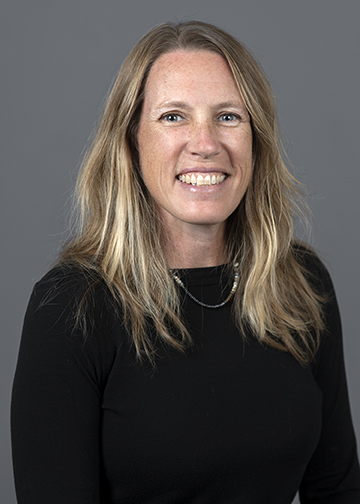
Caroline GottschalkView profile
Professor
Caroline Gottschalk is the Vilas Distinguished Achievement Professor in the Department of English at the University of Wisconsin-Madison. Her work bridges environmental rhetoric, community engagement, and river restoration, focusing on socio-ecological systems and cultural revitalization. She directs the Headwaters Lab, a transdisciplinary research group exploring human-environment relationships through storytelling and participatory methods. Education: Ph.D., University of Illinois at Chicago M.S., University of Wisconsin-Madison M.A., University of Illinois at Chicago B.S.W., University of Iowa B.A., University of Iowa Research Interests: Gottschalk’s work emphasizes community-based collaboration, place-responsive storytelling, and the ethical dimensions of environmental restoration. She examines how marginalized voices and nonhuman agencies shape ecological narratives and policy-making. Recent projects include flood resilience frameworks in Wisconsin’s Driftless Area and rethinking beaver-based restoration through Indigenous knowledge systems. Publications: Her recent work spans Geoforum, Environment and Planning E, and Duke University Press, analyzing topics like transdisciplinary river research, contested restoration practices, and feminist flood futures. These studies highlight tensions between ecological management and cultural values. Awards: Vilas Distinguished Achievement Professor (University of Wisconsin-Madison) Teaching and Outreach: Gottschalk teaches courses like ENGL 236 (Writing Rivers) and ENGL 706 (Community Engaged Praxis), integrating service-learning and public scholarship. She prioritizes ethical university-community partnerships, advocating for “positive barriers to access” that balance collaboration with accountability. Labs and Teams: The Headwaters Lab collaborates with ecologists, policymakers, and local communities on projects like the Driftless Area Flood Resilience Initiative. Current efforts include developing narrative-based tools for climate adaptation and recentering relational ethics in restoration science.