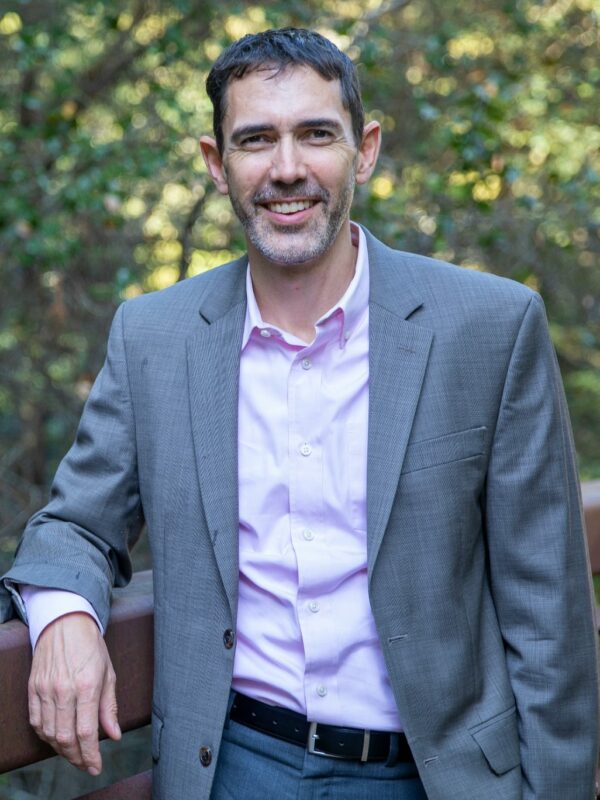
Antti Pirinen is a Senior Lecturer in the Department of Architecture at Aalto University. His work bridges spatial design and service design, focusing on human-centered, participatory, and collaborative approaches in the built environment. Key research areas include resident-driven housing development, critical analysis of dwellings, and the integration of service design in spatial contexts. Honors : Nominated for the 2023 History Book of the Year award for 'Perkeleitä ja enkeleitä – Ahlqvistien maailmat'. Antti's research explores emerging design practices in public sector governance, smart home technologies in cohousing, and the role of design in urban administration. His publications highlight interdisciplinary intersections between spatial efficiency, shared resources, and technological integration. He has contributed to collaborative housing models through tools like the 'SmartUp Fact Sheet' and design games for shared space development. His work emphasizes inclusivity, with studies on universal design for elderly and disabled populations.
Kristin Bergaust serves as Professor at Oslo Metropolitan University within the Faculty of Technology, Art and Design's Department of Aesthetic Subjects, specializing in Drama and Theater Communication. Appointed in 2008, she previously held a part-time professorship at the University of Agder's Faculty of Art from 2015-2017. Her academic foundation includes: Visual Arts education from the State Academy of Fine Arts Cand.mag degree in Literature and Language Bergaust's research critically examines art-technology intersections through ecological and social lenses. She pioneers work in digital media, video, and sound within media art, contemporary art, and relational aesthetics frameworks. Her focus on environmental sustainability manifests in projects like "Oslofjord Ecologies" and "FeLT," which investigate living technologies and fjord ecosystems through artistic research methodologies. This work bridges creative practice with urgent socio-ecological concerns. Analysis of her 16 scientific publications reveals consistent interdisciplinary exploration across art-science-technology domains. Key trends include bioart applications, unconventional computing approaches, and feminist perspectives on sustainable tech development. Her publications demonstrate growing emphasis on ecological crisis response through artistic intervention, particularly in marine environments and swarm robotics applications. Bergaust founded and directed Atelier Nord media lab for artists in Oslo, establishing critical infrastructure for media art since the 1990s. She currently leads the "FeLT- Futures of Living Technologies" project investigating human-organism-machine interactions, while actively participating in research groups including "Art – Practice – Research" and "Creative Practice – Interventions in Space, Place and Environment." Her work extends to major platforms like the Oslofjord Triennale and EU Green Week initiatives.
Terry van Dijk serves as a faculty member at the University of Groningen's Faculty of Spatial Sciences within the Urban and Regional Studies Institute. His academic profile demonstrates active engagement in spatial planning research with significant scholarly output including 96 publications and ongoing supervision of PhD candidates like Nika Lindhout. Recent activities include invited presentations at international forums such as the 39e Rencontre d'agences d'urbanisme (2018) and guest lectures on water governance and intercultural perspectives (2015-2016). Dr. van Dijk's research interests span multiple dimensions of spatial planning with particular emphasis on boundary-spanning design approaches, land use challenges, and climate adaptation strategies. His fingerprint analysis reveals dominant expertise in Land Use (100%), Dutch Studies (95%), Spatial Planning (77%), Planning Process (76%), Planning Practice (53%), and Central/Eastern Europe contexts (45%). This multidisciplinary focus connects theoretical frameworks with practical applications in urban development. His recent publications demonstrate evolving research trajectories from traditional spatial planning toward innovative design-led approaches for complex challenges like climate adaptation and child-friendly urbanism. The 2025 publications particularly highlight boundary-spanning competencies in urban climate adaptation and process architecture for consensus-building in land consolidation projects, showing a consistent thread of integrating stakeholder perspectives through spatial design solutions. As a PhD supervisor and academic presenter, Dr. van Dijk maintains active engagement with both scholarly communities and practical planning contexts. His media contributions, including expert commentary on projects like the Lelylijn (2021), demonstrate applied relevance of his research to contemporary spatial challenges in the Netherlands.
Andrea Zeffiro is an Associate Professor at McMaster University's Department of Communication Studies and Media Arts. From 2015–2025, she served as Academic Director of the Lewis and Ruth Sherman Centre for Digital Scholarship. Education: PhD in Communication Studies (Concordia University) SSHRC Postdoctoral Fellowship (Simon Fraser University) Research Focus: Her work spans critical data studies, cybersecurity ethics, data justice, and digital research methods, with a focus on feminist and queer perspectives in technology. She explores immersive media, virtual environments, and the social implications of data systems. Recent Publications: Her 15 most recent works analyze digital scholarship infrastructure, cybersecurity narratives, and ethical frameworks for locative media. Key themes include democratizing technology, challenging algorithmic biases, and preserving digital activism. Awards: 2025 University Scholar Societal Impact Seed Grant ($85,000) SSHRC Postdoctoral Fellow Notable Projects: The collaborative digital storytelling project Techno Trash is featured in digital humanities guides at Loyola University, Virginia Tech, and Northwestern University. She has exhibited work at Banff New Media Institute and California Nanosystems Institute.
Dr Catherine Kontz is a London-based composer and professor at the Royal College of Music, specializing in nonlinear forms, visual/spatial elements, and musical theatricality in contemporary composition. She serves as a Doctoral Supervisor and is currently an artist-in-residence at King's College London's Engineering Department. Born 1976 BMus (Hons), MMus, PhD from Goldsmiths Her research spans: Audio technology applications in composition Multimedia operatic productions Site-specific sound installations Interdisciplinary collaboration strategies Cultural synthesis in musical theatre Temporal experimentation in performance Her work has been performed by prestigious ensembles and artists including Solistes Européens Luxembourg, BBC Scottish Symphony Orchestra, ensemble recherche, Exaudi, and Naomi Woo. Current projects include collaborative research with Professor Zoran Cvetkovic exploring audio technologies and human intelligence processes. Notable achievements: Shortlisted for Quattropole Music Prize Commissioned for European Capital of Culture program Doctoral research connecting Deleuzian theory with mime opera Regular Tête-à-Tête opera festival participant Director of multimedia opera productions Academic contributions include: Supervising doctoral composition students Developing interdisciplinary research projects Teaching contemporary composition techniques Creating large-scale collaborative works Advancing audio technology applications Mentoring emerging composers
Helena Sustar is a part-time lecturer specializing in service design, systemic design, and empathic design, with a focus on sustainability and public sector innovation. Her work bridges collaborative methodologies like co-design with systemic thinking to address complex challenges in urban mobility and circular business models. Department: Life-Wide Learning Research Interests: Helena’s expertise lies in applying design practices to sustainability, public policy, and futures studies. Key areas include: Systemic design for holistic problem-solving Co-design methodologies in public sector projects Speculative design for envisioning sustainable mobility futures Empathic design frameworks to enhance user-centered solutions Publication Trends: Recent works emphasize the intersection of service design with sustainability assessment, circular economy, and futures research. Articles from 2013–2023 highlight systemic approaches to urban mobility, evidence-based design critiques, and Finland-specific public sector case studies.
Claire Levy is a Senior Lecturer in Film at the Bath School of Art, Film and Media , Bath Spa University. She holds an MA in Photography and Urban Cultures from Goldsmiths, University of London, and a BA Hons in French and German from Oxford University. As a Fellow of the Higher Education Academy (FHEA), she bridges academic and industry expertise. Her research explores young people's rural experiences , public space dynamics , and interactive documentary through a participatory lens. She is currently pursuing a PhD at Goldsmiths on these topics while serving as a Research Associate at the Centre for Community and Urban Research. Claire's filmography spans UK broadcast (Channel 4, BBC) and BFI-funded projects. She has collaborated with the NHS on educational materials and co-founded the Stroud Film Festival. Her consultancy includes corporate films for Beazley, ACCA, and HSBC. Scientific Awards & Honors Royal Television Society (RTS) Award nominations for documentary work (2009) Fellow of the Higher Education Academy (FHEA) Her corporate projects like 'Brent Council Citizenship Film' and 'ACCA Executive Team: Reflecting Back and Looking Forwards' demonstrate expertise in brand-aware filmmaking. She supervises students in documentary, participatory research, and non-linear storytelling.
MA Silke Lipinski is a Research Associate at the Institute of Psychology , Humboldt University of Berlin, specializing in Clinical Psychology of Social Interaction within the Faculty of Life Sciences . She coordinates the Center for Patient and Public Involvement (PPI) at the German Center for Mental Health (DZPG) and serves as a PPI consultant at the Berlin-Potsdam site. Her work bridges academia and community advocacy, focusing on participatory research models. Institution: Humboldt University of Berlin Department: Department of Psychology Role: Research Associate & PPI Coordinator Contact: silke.lipinski@hu-berlin.de Research Focus: Her work centers on Autism Spectrum Disorders , emphasizing participatory research methods , patient and public involvement (PPI) , and improving mental health care accessibility for autistic adults. She advocates for co-creating healthcare solutions with affected communities. Publications (2019-2024): Silke Lipinski’s research spans autism-focused psychotherapy, PPI integration in mental health systems, and self-help resource design. Her work appears in journals like Der Nervenarzt , Autism in Adulthood , and Journal of Autism and Developmental Disorders , with recent emphasis on interdisciplinary guideline development and national mental health infrastructure. Labs & Teams: She collaborates with the Dziobek-Lab and contributes to the German Center for Mental Health (DZPG), driving stakeholder engagement and translational research initiatives.
Claire McAndrew is an Associate Professor at The Bartlett School of Architecture, University College London, where she serves as Co-Design & Participatory Practice Director (since August 2023) and Co-Director of AUAR Labs (since February 2021). She joined The Bartlett in 2011 and holds Chartered Psychologist status. Her academic journey began at University of Surrey where she earned her BSc (2003), MSc (2004), and PhD (2008). Her research focuses on frameworks for participation in the built environment, drawing upon contemporary theory and debate around community and public engagement. As a social scientist working within architectures and practices of care, her work shifts social practices toward more care-full capacities. Through projects like the British Academy-funded Caring—with Cities (2021-22) and experimental work at AUAR Labs on Block West (Bristol, 2020) and House Block (Hackney, 2021), she explores how communities can reclaim local housing production. Her 15 most recent publications (2018-2023) demonstrate a consistent trajectory exploring care practices in urban environments, participatory architecture, community-led housing, and the application of discrete automation technologies. These works bridge architectural theory, social science, and practical implementation, with increasing focus on relational understandings of care in urban action and spatial justice. Notable Awards: AJ Small Projects Award: Social Sustainability Prize 2021 for Block West The Pineapples Awards: Community Engagement 2021 (shortlist) Responsible Disruptors Program 2022 honorable mention from Metropolis Magazine Creative Placemaking Award 2023 nomination McAndrew has secured funding from AHRC, ESRC, and the British Academy, including an AHRC Fellowship at the National Institute of Design, India in 2014. She supervises doctoral theses on topics underscored by feminist thinking and participatory forms of practice across sustainable fashion, housing crisis, care futures, craft, and design computation. She teaches on MA Situated Practice and has held visiting appointments at RMIT Australia, University of Westminster, and University of the Arts London. As Co-Director of AUAR Labs, she leads a research laboratory that brings together advanced technologies, design, and communities to radically rethink architectural production. Her work exemplifies the integration of academic research with practical implementation in community contexts.
Ranja Hautamäki serves as Associate Professor in Landscape Architecture at Aalto University's Department of Architecture, specializing in sustainable landscape planning and society. Her research bridges academic theory with municipal policy implementation, focusing on nature-based solutions for climate change, biodiversity loss, and urban well-being through green infrastructure development. Her research interests center on planning practices and discourses in landscape architecture, examining how societal conceptions of nature translate into material landscapes. Key areas include climate-adaptive urban greening, carbon-neutral city development, biodiversity conservation in compact cities, and the political dimensions of nature-based solutions. She investigates tensions between ecological imperatives and urban densification through critical analysis of municipal climate action plans and EU environmental legislation. Recent publications reveal strong thematic trends: 75% address urban green infrastructure for climate mitigation/adaptation, with growing emphasis on policy implementation (EU Nature Restoration Law), carbon accounting methodologies, and socio-ecological tradeoffs in dense urban environments. Her interdisciplinary work spans environmental science, planning theory, and political ecology. Lappset scholarship (2025) Puutarhaliiton Golden Badge (2022) Vuolteentori Environmental Structure of the Year (2018) Väitöskirjapalkinto Doctoral Dissertation Prize (2016) Maisema-arkkitehtuuriteko Landscape Architecture Achievement (2016) As thesis supervisor, Hautamäki has guided award-winning master's research including Anni-Mari Anttola's LAPPSET-prize work on Helsinki's grassland networks. Her funded projects focus on green infrastructure for climate adaptation, with recent grants supporting carbon sequestration studies in urban residential yards and EU policy impact assessments. She actively collaborates with municipal planners through projects translating academic research into practical tools like the Green Factor methodology.
Olivier Francomme is an Associate Professor (PRAG) at the University of Picardy Jules Verne in Amiens, France. He also serves as a Research Director at the China Cooperative Research Center for Modern School at Jiaxing University of Zhejiang in China, and as an Associate Researcher at the EXPERICE laboratory (EA 3971) at the University of Paris 8. His professional email is olivier.francomme@u-picardie.fr and he can be reached at his personal website http://olivier-francomme.fr/ . University of Picardy Jules Verne - Associate Professor (PRAG) University of Paris 8 - Associate Researcher at EXPERICE laboratory University of Zhejiang, China - Research Director at China Cooperative Research Center AFIRSE French Section - General Secretary Dr. Francomme earned his Doctorate in Educational Sciences and completed his HDR (Habilitation à Diriger des Recherches) in 2011. His academic journey began with a Doctorate in Human Geography in 2000, which emerged from anthropological education research focusing on family structures and educational outcomes in Colombian Amazonia and Caribbean islands. In 2004, he pursued a Master's degree to better align with teacher training contexts where he continues to work today. Dr. Francomme's research interests span multiple dimensions of educational phenomena. He specializes in Freinet pedagogy and its international applications, particularly in China where he has been instrumental in establishing experimental Freinet schools since 2011. His work on "Scientific support for educational innovations in schools and high schools" represents a significant three-year action research project (2015-2021) conducted with AFIRSE French section and CCRCMS in China. Another major research strand focuses on "Violence in schools," where he served as coordinator and scientific manager for an international research project initiated by UNESP (University of Rio Claro Brazil) from 2008-2014. His recent publications reveal a strong emphasis on transdisciplinarity in educational research, with particular attention to cooperative research methods ("Chercheurs Collectifs Coopératifs") that bridge theory and practice. There's a clear international dimension to his work, with significant collaborations in China, Greece, Brazil, and across Europe. The pandemic period (2020-2022) saw him examining how Freinet pedagogy practitioners adapted to coronavirus challenges, demonstrating the flexibility and resilience of alternative educational approaches. Dr. Francomme has been actively involved in advising and research supervision, particularly through his role directing the Master MEEF-EBI (bilingual immersive teaching) program at the University of Perpignan. His work with "Chercheurs Collectifs Coopératifs" represents an innovative approach to teacher training that emphasizes collaborative research as a pathway to professional development. He has secured research funding through various channels including AFIRSE, CCRCMS, and AO-IUFM Picardie (2010-2013). Dr. Francomme leads research teams through the China Cooperative Research Center for Modern School in Jiaxing, where he directs international collaborations focused on educational innovation. At the University of Paris 8, he contributes to the EXPERICE laboratory (EA 3971), which specializes in educational sciences, psychoanalysis, and French as a foreign language. His work with the ICEM (Institut coopératif de l'École moderne) and FIMEM (Fédération internationale des mouvements de l'École moderne) connects him to broader international networks of educational innovation.
Dr. Alison M. Meadow is an Associate Research Professor at the University of Arizona , specializing in linking research with decision-making to enhance the usability of climate science. Her work with the Climate Assessment for the Southwest (CLIMAS) has focused on developing Community Climate Profiles and advancing equitable climate adaptation strategies for Indigenous and rural communities. Research Interests: Dr. Meadow's research spans climate science, environmental policy, and transdisciplinary collaboration. She emphasizes ethical frameworks for community-engaged research, knowledge co-production, and climate justice. Her projects include agricultural decision support systems and Indigenous-led adaptation initiatives. Notable Contributions: She pioneered the Community Climate Profiles and co-authored the Actionable Science Guidebook , both aimed at bridging scientific research with practical policy applications. Her recent publications address climate ethics, restoration practices, and Indigenous sovereignty in climate science.
Lena Neij serves as Professor and UNESCO Chair in Education for Sustainable Development at The International Institute for Industrial Environmental Economics (IIIEE) at Lund University, Sweden. She is also an Affiliated Professor at CIRCLE and a Profile Area Member for Circular Building Sector at LTH. Her work spans multiple institutional contexts while maintaining a strong focus on sustainability transitions and climate action. Her educational background isn't explicitly detailed in the provided information, but her research expertise demonstrates deep knowledge in environmental economics and policy frameworks. Neij's research interests center on climate neutral cities, with specific focus on the role of cities in governing climate change, the transformative capacity of municipalities, strategies of local mitigation policy, and interventions for local learning. Building upon her expertise in energy systems analysis and multilevel governance, her work covers energy demand and services, renewable energy, and energy- and resource-efficient buildings. Her research program integrates energy modeling, technology learning, and climate cost dynamics to develop transformative methods for evaluating energy and climate policy. Analysis of her recent publications reveals a strong emphasis on practical implementation challenges of renewable energy systems, particularly solar photovoltaics, energy communities, and citizen engagement in climate action. Her work bridges technical energy systems analysis with social science perspectives on policy implementation and citizen participation. Neij actively participates in knowledge dissemination through conference organization and public engagement activities, including the City Futures Summit (2020) and workshops on Knowledge for Sustainable Development (2021). Her research portfolio includes significant grant funding, with current leadership of major projects including 'Klimatneutrala städer 2030 - Öppen akademi' (2023-2025), 'Urban Arena' network, and 'The transition to a low-carbon economy' research (2021-2025). She has supervised doctoral students including Sofie Sandin (2018-2021). Neij contributes to interdisciplinary research teams focused on sustainable urban development, particularly through her involvement in the Urban Arena network which brings together over 100 researchers across multiple disciplines to address climate-neutral city challenges.
Katie E. Richards-Schuster is an Associate Professor at the University of Michigan School of Social Work . She received her PhD in Social Work and Sociology (2005) and AM in Social Service Administration (1997) from the University of Michigan and University of Chicago respectively. Her work focuses on youth participation and community organizing through participatory research approaches. Director of Undergraduate Minor Programs Founding Director of the Community Action and Social Change undergraduate minor Her research explores contexts that facilitate youth engagement across settings, with particular attention to educational justice and critical youth media . She has led community-engaged and national projects focused on youth participation, and has presented at national and international conferences. Scientific contributions include: 2023 ENGAGE Small Grant 2018 Ginsberg Center award 2018 Gilbert Whitaker Fund grant She co-chairs the Youth Focused Evaluation group within the American Evaluation Association . Current projects include system-wide youth participatory evaluation in urban school districts and distilling best practices for youth participation in social work.
Adam Millard-Ball is Professor of Urban Planning at the UCLA Luskin School of Public Affairs, where he conducts research at the intersection of transportation systems, environmental sustainability, and urban data science. Trained in economics, geography, and urban planning, he employs geospatial analysis, econometric modeling, and qualitative methods to evaluate transportation and land-use policies aimed at reducing greenhouse gas emissions. His research spans street-network sprawl measurement, parking policy reform, active transportation infrastructure, and climate action planning. Key methodological approaches include large-scale geospatial data analysis, network connectivity metrics, and community-engaged research frameworks. His work consistently addresses equity dimensions in urban environmental policy, examining how transportation and land-use decisions disproportionately impact vulnerable populations. Analysis of his 2023-2025 publications reveals three dominant research trajectories: (1) Quantifying urban form through street-network sprawl metrics at global scales, (2) Evaluating active transportation infrastructure for health and climate co-benefits, and (3) Developing equity-centered frameworks for climate adaptation planning. His recent work demonstrates increasing integration of community-based participatory methods with computational urban analytics.