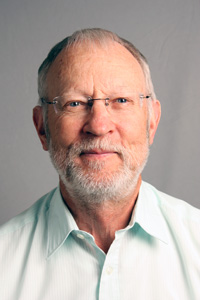
Sonia Fliss is a Full Professor at ENSTA Paris , affiliated with the Department of Applied Mathematics and the POEMS laboratory (UMR CNRS-INRIA-ENSTA) . She teaches applied mathematics courses on partial differential equations (PDEs) , finite element methods , and periodic homogenization to undergraduate and graduate students. Doctor in Applied Mathematics (2009) Authorized to supervise research (2019) Research Interests : Sonia Fliss specializes in the modeling and numerical analysis of wave propagation in periodic, quasi-periodic, and random media . Her work includes transparent boundary conditions , guided waves , and asymptotic methods for acoustic, electromagnetic, and elastic wave phenomena . Recent Publications highlight her contributions to the Half-Space Matching Method , edge states in honeycomb structures , and scattering problems in unbounded domains . Her numerical techniques address multi-scale waveguides and time-harmonic propagation . Laboratory : As a member of the POEMS team, she collaborates on interdisciplinary projects involving mathematical analysis , computational physics , and engineering applications in domains like defence, energy, and transport .
Vanessa Bettinson is a Professor of Law and Vice Chancellor Research Fellow at the Northumbria School of Law, Northumbria University. Her work focuses on domestic violence and abuse within criminal law frameworks, with a particular emphasis on coercive control, sentencing reforms, and interdisciplinary collaboration. She has held previous academic positions at De Montfort University and has led projects funded by entities like the Home Office and Ministry of Housing. Key areas of research include AI applications in identifying perpetrators, public perceptions of self-defense in domestic abuse cases, and children's experiences within the criminal justice system. Educations: Not explicitly listed in text Her research interests span socio-legal approaches to domestic abuse, vulnerability studies, and legal policy reform. Recent projects include analyzing coercive control offences across jurisdictions and exploring sentencing mitigation for women affected by abuse. She co-leads Northumbria's Gender, Violence and Abuse Interdisciplinary Research Theme. Recent publications examine self-defence frameworks for abuse survivors, professional responses to coercive control, and comparative analyses of domestic abuse legislation in Scotland, England, Wales, and Northern Ireland. Her work contributes to UN Sustainable Development Goals focused on gender equality and justice reform. Grants: Home Office Domestic Abuse Perpetrator Fund (2021-22), Place to Call Home Project (2020-22) Her research highlights interdisciplinary collaboration with computer science, criminology, and social work teams. Current studies investigate sentencing practices for abuse-driven crimes and public attitudes toward self-defence in domestic violence contexts. No specific labs or teams are named, though her work involves partnerships with statutory and voluntary sector organizations.
Rob Basten is an Associate Professor in the Department of Industrial Engineering and Innovation Sciences at Eindhoven University of Technology (TU/e). He has been with TU/e since October 2014, initially as an Assistant Professor before being promoted. His work focuses on operations management and behavioral operations management, with particular expertise in maintenance, spare parts supply, and after-sales services for high-tech equipment. Basten's research is highly applied, often conducted in collaboration with industry partners such as ASML, NXP, Canon Production Printing, Marel Poultry, and the Ministry of Defence. Dr. Basten's educational background includes: Master's in Industrial Engineering and Management (2004) from University of Twente Master's in Computer Science (2005) from University of Twente PhD in Operations Management (2010) from University of Twente Rob Basten's research centers on improving after-sales services for high-tech equipment, with a focus on incorporating new technologies such as 3D printing and IoT. His work spans both analytical and empirical approaches, with increasing emphasis on behavioral operations management as human decision-makers interact with AI-based decision support systems. Basten investigates how to design and control after-sales service supply chains when spare parts can be 3D printed, and how to optimize maintenance policies for complex systems. His interdisciplinary research bridges operations management, maintenance engineering, and human behavior. Analysis of Basten's recent publications reveals a strong focus on the application of new technologies in after-sales services. Key trends include the integration of additive manufacturing in spare parts supply chains, condition-based and predictive maintenance driven by Industry 4.0 technologies, and the behavioral aspects of human-AI collaboration in maintenance decision-making. His work frequently addresses challenges in high-tech manufacturing contexts, particularly semiconductor equipment, with a growing emphasis on Industry 5.0 concepts that integrate human-centered approaches with advanced technologies. Dr. Basten has received recognition for his work, including: Finalist for the 2020 Daniel H. Wagner Prize for Excellence in Operations Research Practice ISIR Best Student Paper Award 2018 Rob Basten actively supervises numerous PhD students and has led several major research projects. He currently supervises nine PhD students including Maryam Azani, Ragnar Eggertsson, Bibi de Jong, Zhao Kang, Niccolò Maccarini, Aran Nasiri, Bas van Oudenhoven, İpek Tanıl, and Alireza Yazdani. He has successfully guided six PhD students to completion. Basten has been project leader and work package leader in significant research initiatives including ProSeLoNext (funded by NWO with industry co-funding), PrimaVera, SINTAS, and OCPROM projects. His research is consistently supported by both public funding agencies and industry partnerships, reflecting the practical relevance of his work. Basten is an active member of the Operations, Planning, Accounting & Control group at TU/e and contributes to the EAISI High Tech Systems initiative. He has organized key academic events including the first two editions of the Maintenance Research Day and the Behavioral Operations Conference 2019. His work connects academic research with industry practice through ongoing collaborations with leading high-tech companies, creating a dynamic research environment focused on solving real-world challenges in maintenance and service logistics.
Professor Tim Dafforn is a Professor of Biotechnology at the University of Birmingham's School of Biosciences, serving as Knowledge Exchange Lead and contributing to national science policy. His expertise spans biophysical spectroscopy and synthetic biology, with a focus on developing novel biomolecular technologies like SMALPs and RTF-EXPAR diagnostics. He holds roles including Chief Scientific Advisor to the UK Department of Business Energy and Industrial Strategy, Chair of the Institute of Engineering Technology's Innovation Panel, and membership in UK Engineering Biology Leadership Council and Ministry of Defence committees. Education: BSc (Hons) Biochemistry (Cardiff University) and PhD in Protein Engineering (Bristol University). Research emphasizes nanotechnology-enhanced biomolecule exploitation, including membrane protein purification and diagnostics commercialization. He has founded two companies and contributed to policy frameworks for science exploitation and entrepreneurship education. Teaching focuses on applied courses enhancing student ability to translate science into practical applications. Key labs include the Birmingham Biophysical Characterisation Facility. His research streams involve bacterial cell division mechanics, nanoencapsulation methods, and detection systems, yielding seven patents. Personal interests include motorsports and long-distance car rallying.
Kin K. Leung is the Tanaka Chair Professor in the Electrical and Electronic Engineering and Computing Departments at Imperial College London. He serves as the Head of the Communications & Signal Processing Group (2009-2024) and Deputy Director of the University Defence Research Centre in Signal Processing. Previously, he held senior technical roles at AT&T Bell Labs and Lucent Technologies. Education: B.S. from Chinese University of Hong Kong (1980), M.S. and Ph.D. from University of California, Los Angeles (1982, 1985). Research Interests: Focuses on wireless technologies, communication networks, stochastic modeling, machine learning, optimization, and emerging quantum computing applications. His work integrates theoretical frameworks with practical implementations in multi-antenna systems, cross-layer network designs, and distributed quantum architectures. Publication Trends: Recent works (2021-2025) demonstrate a strong focus on quantum computing integration with networking systems, federated learning optimizations for edge devices, and reinforcement learning solutions for resource allocation in wireless environments. Awards and Honors: Fellow of Royal Academy of Engineering (2022) IEEE Fellow (2001) IET Fellow (2021) Royal Society Wolfson Research Merit Award (2004-2009) IEEE Communications Society Leonard G. Abraham Prize (2021) IEEE Best Survey Paper Award (2022) Grants and Leadership: Principal Investigator for EPSRC TITAN/HASC Com Hubs, DCIT Centre, and DQC & App (distributed quantum computing). Leads the Communications & Signal Processing Group and co-directs the School of Convergence Science in Space, Security and Telecoms.
Professor Kin K. Leung is the Tanaka Chair Professor at Imperial College London, holding dual appointments in the Electrical and Electronic Engineering and Computing Departments. He leads the Communications & Signal Processing Group and has served as Deputy Director of the University Research Defence Centre. His research spans machine learning, quantum computing, wireless communications, and distributed systems. Leung earned a Ph.D. in Computer Science from UCLA (1985) and has held prestigious roles including IEEE Fellow (2001), Fellow of the Royal Academy of Engineering (2022), and Member of Academia Europaea (2012). Research interests include AI-driven network optimization, 6G cellular networks, and distributed quantum computing. He leads EPSRC-funded projects like TITAN Com Hub and HASC Com Hub, focusing on network-of-networks and all-spectrum connectivity. His work on federated learning, edge computing, and SDN resource management has been recognized through awards like the IEEE Communication Society Best Survey Paper (2022). Leung has over 30 years of industry experience at Bell Labs, AT&T, and Lucent, advancing wireless technologies. His funded projects include DAIS-ITA (U.S.-UK collaboration) and SmartEN for environmental sensing. He edits journals like ACM Computing Surveys and IEEE Transactions on Mobile Computing, contributing to both theory and application in communication networks.
Foez Ahmed is a Visiting Fellow and Research Fellow at the School of Electrical and Data Engineering, University of Technology Sydney (UTS). He holds a B.Sc. (Hons.) and M.Sc. in Information and Communication Engineering from the University of Rajshahi, Bangladesh, and an M.Eng. in Electrical and Computer Engineering from the South China University of Technology. His academic appointments include prior roles as Assistant Professor at RU, Lecturer at Northern University Bangladesh, and King Khalid University. His research specializes in cutting-edge antenna technologies, with emphasis on: Space and defence antenna systems Metasurface-driven beam-steering mechanisms Satellite-on-the-move terminals 3D-printable RF structures for high-efficiency applications Recent publications (2022-2025) demonstrate a consistent focus on metasurface innovation for satellite communications, featuring dielectric/metallic metastructures, phase-correction techniques, and additive manufacturing solutions. He has received numerous scientific awards, including: Commonwealth iRTP Scholarship & International Research Scholarship Chinese Government Scholarship & UTS Gold Medal First Prize in CSIRO Bushfire Challenge and IEEE presentation awards Faculty-wide research grants and travel funds Ahmed leads a $1.1 million NSW government-funded project developing satellite terminal antenna technology. He has taught courses including Electronics and Circuits (UTS) and Introduction to Engineering (Macquarie University).
Professor Dr. Vancho Kenkov is a Full Professor at the Institute for Security, Defence and Peace under the Faculty of Philosophy at Ss. Cyril and Methodius University in Skopje. He has served as the Head of the Institute since 2018 and leads the Strategic and Defense Studies program. His career spans active military service (until 1993), postgraduate studies at the Institute of Defense (1993/94), and academic roles since 1995. He holds a PhD in Defense and Peace Sciences (2005) and has held teaching titles from Assistant Professor (2005) to Full Professor (2015). Education: Military Academy, Belgrade (1978) Master of Defense (2000) from the Institute of Defense PhD in Defense and Peace Sciences (2005) Research focuses on military doctrines, modern weapons systems, arms control, and Balkan security dynamics. His work emphasizes cybersecurity, defense reforms, and EU integration impacts. He teaches courses like Modern Armed Systems , National Security Strategy , and Arms Control and Disarmament . Publications span cybersecurity strategies, defense reforms, and Balkan geopolitical challenges. His articles address biological warfare defense, cyber defense priorities, and EU police missions in the Western Balkans. He speaks Russian, Greek, and partial English. Administrative roles include leading academic programs and participating in faculty commissions. His work bridges military science with contemporary security challenges, emphasizing technological impacts on defense systems.
Amanda Clough-Ricci is an Assistant Professor in the Law Department at Northumbria University. She specializes in criminal law with a focus on partial defences to murder, consent, and sexual offences, often conducting comparative analyses between UK/Australian legal systems. She teaches criminal law, gender, and sexuality on the LLB program, and leads the Police Constable Degree Apprenticeship module. Her current research explores abused children committing parricide and contributes to UN SDG 4 (Quality Education). Education includes a PhD (Northumbria University), LLB (University of Sunderland), and PGCert in Law (Liverpool John Moores University). Her work examines legal reforms in homicide cases, coercive control, and fault theories in criminal law. She collaborates internationally and publishes in high-impact journals like Journal of Criminal Law . Research trends emphasize legal comparisons across jurisdictions, with recent focus on stealthing criminalization and provocation reforms. She actively engages in public discourse through media mentions and open-access publishing.
Jana Orszaghova serves as a Senior Lecturer at the University of Western Australia (UWA) within the School of Earth and Oceans, and is affiliated with the UWA Oceans Institute and UWA Defence and Security Institute. She holds the position of Deputy Program Leader for Offshore Renewable Energy Systems at the Blue Economy CRC, demonstrating significant leadership in marine energy research. Her research centers on marine renewable energy systems , specifically focusing on wave-structure interactions with applications to Wave energy converters (WECs) Floating and fixed offshore wind turbines Non-linear excitation mechanisms Ocean technology development She applies advanced mathematical and numerical modeling to solve complex hydrodynamics challenges, with strong industry collaboration aimed at creating safer, more reliable marine energy systems. Recent publications reveal a concentrated research trajectory in wave energy conversion and offshore wind hydrodynamics , with emphasis on extreme response analysis, harmonic decomposition of forces, and non-linear wave-body interactions. Her work consistently bridges theoretical fluid mechanics with practical engineering applications for renewable energy infrastructure. Through active leadership in major research initiatives including the Blue Economy CRC and ARC-funded projects, she drives innovation in ocean renewable energy systems. Her collaborative network spans international institutions and industry partners focused on advancing marine energy technologies. Dr. Orszaghova maintains strong educational engagement through public lectures on offshore renewable energy topics and supervises research projects within UWA's marine energy programs, contributing significantly to workforce development in this critical sustainability sector.
Dr. Yi Cui is a Senior Lecturer in the School of Electrical Engineering and Computer Science at the University of Queensland (UQ), Australia. He holds a Ph.D. in Electrical Engineering from UQ (2016) and previously served as a Research Associate at the University of Tennessee, Knoxville, USA. His expertise spans wide-area monitoring and control, smart grid cybersecurity, data analytics, and condition assessment of power transformers. Education: - B.Eng. and M.Eng. from Southwest Jiaotong University, China (2009, 2012) - Ph.D. in Electrical Engineering, University of Queensland (2016) Research Interests: Dr. Cui focuses on cybersecurity strategies for smart grids, data-driven approaches to power system stability, and condition monitoring of power equipment. His work integrates advanced analytics, machine learning, and sensor technologies to enhance grid resilience and transformer reliability. Grants & Projects: - Cybersecurity Defence Strategies of Distribution Synchrophasor in Smart Grids (UQ Cyber Seed Funding, 2021–2022) - Collaborations with industry partners like Northern Territory Power and Water Corporation on network analytics. Teaching & Supervision: Available for supervision in electrical engineering and computer science, focusing on renewable energy integration, smart grid technologies, and power system cybersecurity. Labs/Teams: Contributes to UQ's Cyber Security Research Group and collaborates with international institutions on cybersecurity and smart grid initiatives.
Nethal Jajo is a Lecturer at the Faculty of Science, The University of Sydney. He holds a PhD in Mathematics from Nankai University (China) awarded in 1999. His professional journey includes tutoring at UNSW's School of Physical, Environmental and Mathematical Sciences, lecturing roles at Western Sydney University, Northern Consortium of British Universities, and Macquarie University. Additionally, he served as a mathematics modeller within the Australian Department of Defence. Research Focus: Statistical modelling in healthcare and education systems Simulation methodologies for resource optimization Outlier detection algorithms in data analysis Military manpower analysis and forecasting Time series applications in demand forecasting Key Publications: His work spans statistical analysis of research quality metrics (e.g., ERA evaluations), discrete event simulation in healthcare systems, and hybrid machine learning-ARIMA models for surgical demand forecasting. Recent contributions include AI-driven military propensity analysis and Python/R guides for data science beginners. Teaching & Industry Links: Combines academic roles with practical experience in defence modelling and healthcare system optimization. Active in developing educational resources for statistics and data science methodologies.
Mehwish Nasim is a Lecturer in Computer Science at The University of Western Australia (UWA) and holds adjunct positions at the University of Adelaide and Flinders University. She is an Associate Investigator at the ARC Centre of Excellence for Mathematical and Statistical Frontiers and a member of the Equity and Diversity Committee. With 17+ years in technology, she has served as a Research Scientist at the University of Konstanz and a lecturer at the National University of Sciences and Technology (Pakistan). Her PhD from the University of Konstanz focused on inferring social relations in partially observable networks. Research Interests Her work spans social network analysis, machine learning, medical image processing, and health analytics. Current projects include predicting population-level events in Australia, detecting misinformation, modeling social media polarization, and improving decision-making via complex systems approaches. Grants & Funding Key grants include a Defence AI Research Network grant (~$100K), a Defence Innovation Partnership grant ($150K), and Flinders Impact Seed Funding ($10K) targeting vaccine misinformation in migrant communities. She also secured ACEMS grants for social media polarization studies and led proposals in wargame modeling and transnational research. Teaching She teaches courses such as Algorithms, Agents & AI (UWA), Data Engineering (Flinders), and Database Modelling. Past roles include lecturing at NUST and tutoring network dynamics at Konstanz. Media & Outreach Featured in 'Women in STEM' series (2022), Flinders News (2022), and CSIRO's Data61 spotlight (2021). She has been interviewed on disinformation campaigns and podcast discussions on 'fake vs fact' (ACEMS, 2020).
Kevin Siqueira is an Associate Professor of Economics at the University of Texas at Dallas (UTD), affiliated with the School of Economic, Political and Policy Sciences. He holds a Ph.D. in Public Economics from Iowa State University (1998), an MBA in Finance and International Business from the University of Illinois at Chicago (1991), and a B.B.A. in Production Management from Loyola University (1987). His research focuses on Microeconomics, Defense, Environmental Economics, and Public Policy, with notable contributions to terrorism studies and game theory applications in conflict analysis. Teaching includes courses such as Game Theory, Environmental Economics, and Microeconomic Principles at both undergraduate and graduate levels. He has held academic positions at Clarkson University (1999–2006) and Iowa State University (1998–1999), alongside roles as a Research Analyst at the Institute of Defense Analyses (1996–1998). His research projects span international conferences and address topics like global terrorism deterrence, third-party conflict intervention, and institutional reform in state-owned enterprises. Publications emphasize strategic interactions in terrorism, defense strategies, and policy delegation, with articles in journals such as Economics & Politics , Journal of Public Economics , and Defence and Peace Economics . Professional memberships include the American Economic Association and the Public Choice Society.
Ronnie Mackay is a Professor of Criminal Policy & Mental Health at De Montfort University, affiliated with the Leicester De Montfort Law School within the Faculty of Business and Law . His academic work is central to the Criminal Law and Criminal Justice research group and the Institute for Law, Justice and Society . Qualifications: B.A. (Law), M.Phil, Barrister at Law Professional Affiliations: Member of Gray’s Inn of Court, Member of the Parole Board for England and Wales (1995–2001) Professor Mackay specializes in criminal law and mental health law , with a particular focus on mental condition defences such as the insanity defence , unfitness to plead , diminished responsibility , and provocation . He has pioneered empirical research in these areas, conducting studies funded by the Law Commission , Nuffield Foundation , ESRC , and British Epilepsy Association . His research critically examines legal doctrines like the M'Naghten Rules and has directly influenced law reform and policy development in England and Wales. His recent publications and edited volumes—including Fitness to Plead: International and Comparative Perspectives (2018) and The Insanity Defence: International and Comparative Perspectives (2023)—reflect a strong trend toward comparative legal analysis and interdisciplinary engagement with psychiatry and forensic science. These works examine doctrinal evolution, empirical application, and human rights dimensions across multiple jurisdictions. Editorial Roles: Editorial Board Member, Journal of Forensic Psychiatry and Psychology (1992–present); Editorial Board Member, Personality and Mental Health (1997–2019) Scientific Awards & Recognition: Longstanding editorial contributions, membership in the Parole Board, and invitations to advise international bodies such as the American Academy of Psychiatry and the Law. Professor Mackay has secured significant external research grants, including from the Home Office , ESRC , and Nuffield Foundation , acting as project director on major studies. He has served as an academic consultant to the Law Commission on multiple reform projects, including those on murder, manslaughter, infanticide, and unfitness to plead. He regularly presents at international conferences and has delivered keynote addresses in New Zealand, Australia, Norway, and the UK. His academic and policy impact is amplified through his collaborations with institutions such as Auckland University of Technology and his involvement in global dialogues on mental disorder and criminal responsibility. He is a leading voice in efforts to modernize outdated legal frameworks and ensure fair treatment of mentally disordered offenders.