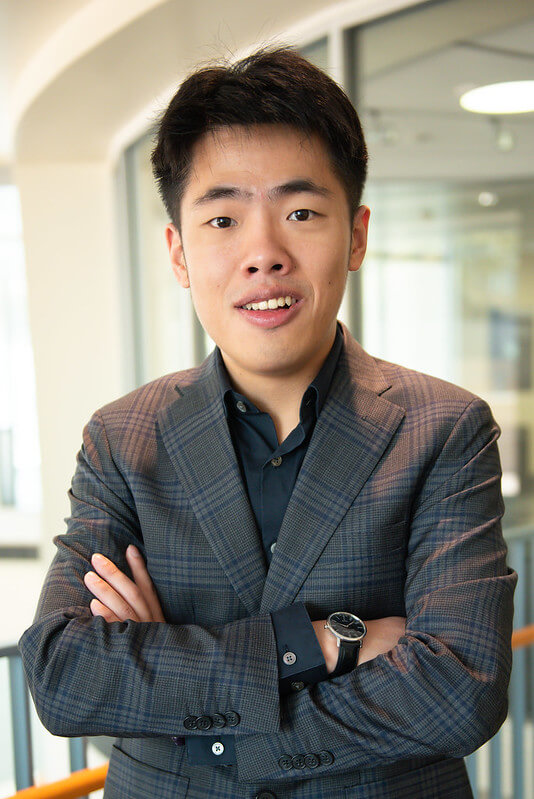
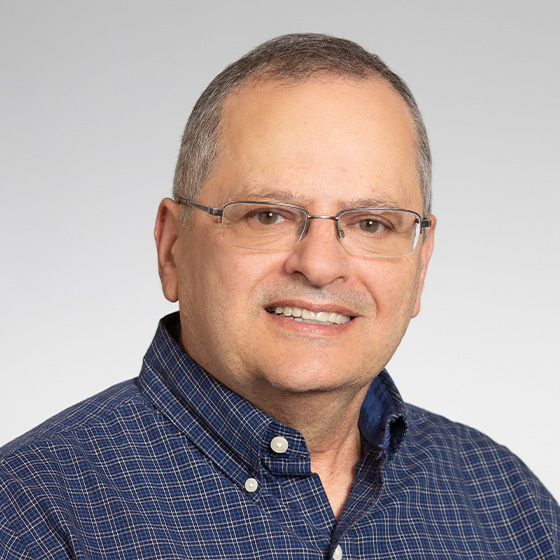
Igo J.M. Besselink is an Associate Professor and Chair of Vehicle Dynamics in the Department of Mechanical Engineering at Eindhoven University of Technology (TU/e). His research focuses on vehicle dynamics analysis, tire behavior modeling, battery electric vehicles, and vehicle control systems. He leads the Automotive Technology lab, emphasizing experimental validation of simulation models to enhance transport safety and efficiency. Academically, he holds an MSc from Delft University of Technology (TU Delft, 1990) and a PhD from TU Delft (2000). He worked at Fokker Aircraft (landing gear dynamics) and TNO Automotive before joining TU/e in 2002 as a part-time lecturer, transitioning to full-time roles as Assistant Professor (2008) and Associate Professor (2016). Research interests include dynamics of commercial vehicles, autonomous operation in confined areas, and sustainable transportation. He has supervised 6 PhD and over 80 Master students, authored/co-authored over 50 publications, and serves on the Editorial Board of Vehicle System Dynamics . Recent work emphasizes neural network-based vehicle behavior estimation, cooperative platoon control, and criticality measures for automated vehicle testing. His lab develops test rigs and prototypes to bridge simulation and real-world performance.
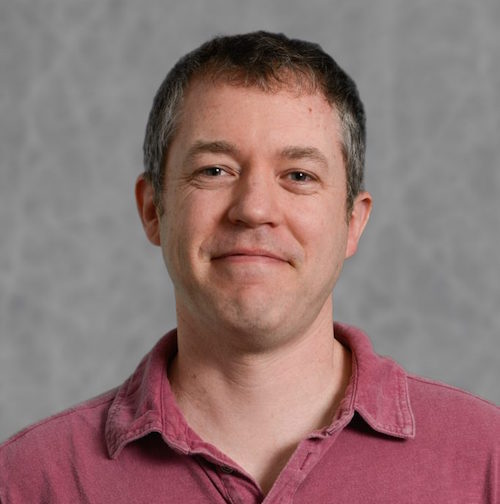
Ulisses Braga-Neto is a Professor in the Department of Electrical and Computer Engineering at Texas A&M University, part of the College of Engineering. He holds a Ph.D. from The Johns Hopkins University (2002), with earlier degrees including an M.S. from the Federal University of Pernambuco (1992). His research focuses on statistical signal processing, pattern recognition, and machine learning, with applications in bioinformatics, materials informatics, and environmental modeling. He leads the TAMIDS Scientific Machine Learning Lab and has authored over 100 publications. Key research areas include physics-informed neural networks for environmental and engineering problems, error estimation in classification systems, and gene regulatory network inference. His recent work emphasizes machine learning applications in agriculture (e.g., cotton detection in corn fields using UAS), CO2 sequestration modeling, and wildfire prediction. He has contributed to foundational texts like Error Estimation for Pattern Recognition (Wiley-IEEE, 2015). Prof. Braga-Neto's interdisciplinary approach bridges computer science, engineering, and biology. His lab develops algorithms for data-poor environments, with applications in genomics, proteomics, and metagenomics. He advises graduate students through Texas A&M's ECE program, emphasizing rigorous statistical methods alongside machine learning innovation.
Quan Zhou is an Assistant Professor in the Department of Statistics at Texas A&M University, part of the College of Arts & Sciences. His research focuses on developing advanced sampling methods, particularly Markov chain Monte Carlo (MCMC) algorithms, with applications in Bayesian methodology, variable selection, stochastic optimization, and statistical genetics. He holds a BS from Fudan University and a PhD from Baylor College of Medicine, followed by a postdoctoral fellowship at Rice University. He teaches courses such as Mathematical Probability, Multivariate Analysis, and Advanced Stochastic Processes. Notable contributions include work on informed MCMC samplers, Schrödinger bridge theory, and high-dimensional structure learning. He advises PhD students like Hyunwoong Chang (now at UT Dallas) and Guanxun Li (Beijing Normal University). Active in academic service, he served as President of the Southeastern Texas Chapter of the American Statistical Association (SETCASA).
Seth Sullivant is a Distinguished Professor in the Department of Mathematics at North Carolina State University (NC State), within the College of Sciences. His research focuses on algebraic statistics, computational and combinatorial algebra, and mathematical phylogenetics. He holds a Ph.D. in Mathematics from the University of California, Berkeley (2005). His expertise spans interdisciplinary areas, including algebraic approaches to statistical problems, combinatorial methods in phylogenetics, and the development of algebraic tools for graphical models. He is affiliated with research groups in Algebra and Combinatorics, Mathematical Biology, and Symbolic Computation at NC State. Recent research trends in his publications emphasize the application of algebraic geometry and combinatorics to statistical models, phylogenetic network analysis, and identifiability problems in systems biology. His work bridges abstract mathematical concepts with practical statistical methodologies, addressing challenges in data analysis and model interpretation. No specific scientific awards are listed in the provided texts. His advising and grant activities are not detailed here, though his extensive publication record suggests active research collaborations. He is part of research teams focused on advancing algebraic methods in statistics and computational biology.
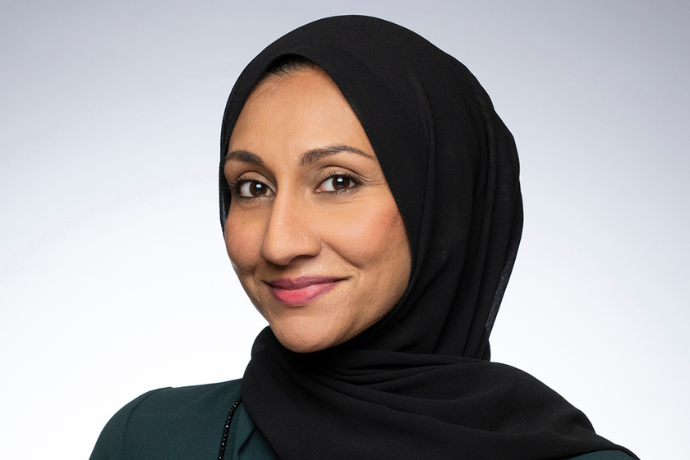
Saba Alvi is an Adjunct Professor at the University of Ottawa's Faculty of Education, holding a long-term appointment. She specializes in anti-racism education, anti-oppression pedagogy, and the study of marginalized youth, particularly BIPOC and Muslim communities. Alvi completed her PhD in Education at the University of Ottawa, with doctoral research focusing on how Muslim youth perform identity through clothing like the hijab. She also serves as an Anti-Racism Consultant for schools with significant BIPOC student populations. Education: PhD in Education, University of Ottawa Research Interests: Alvi's work centers on cultural identity expression, youth subcultures, and systemic racism in educational settings. She employs qualitative methodologies to explore how marginalized groups navigate identity through clothing and pedagogical practices. Her research bridges critical race theory and education policy. Awards: 2019 Part-Time Professor of the Year Award (APTPUO) Advising & Grants: No specific grants or advising details provided in the text. Labs/Teams: No affiliated research labs or teams explicitly mentioned.
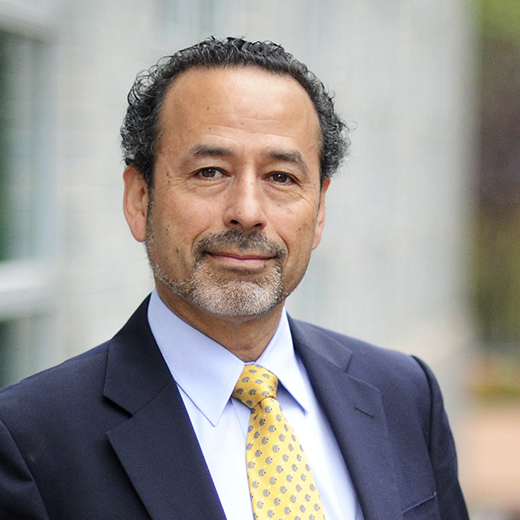
Fernando F. Suarez is the Jean C. Tempel Professor of Entrepreneurship and Innovation at the D'Amore-McKim School of Business, Northeastern University. He previously served at Boston University, where he founded and chaired the Strategy and Innovation Department. He has held visiting positions at MIT Sloan School, London Business School, Hitotsubashi University, and institutions in Chile. His work bridges academic research and practical entrepreneurship. Research Interests: His research centers on innovation and technology strategy, entry timing, industry evolution, platform competition, and the integration of services within product firms. He focuses on high-technology sectors such as telecommunications, computers, and software, exploring how firms adapt and compete through strategic innovation. Publication Trends: His recent publications, appearing in top journals like Strategic Management Journal , Management Science , and MIT Sloan Management Review , reflect a cohesive focus on how firms navigate technological change, categorize innovations, and transform their business models. A recurring theme is the interplay between technological evolution and market categorization. Advising and Grants: While specific students are not listed, his role as a professor and department founder suggests significant mentorship and leadership in academic development. He has been an institutional entrepreneur, founding an MBA program and a software company, and has consulted for and served on the boards of multiple firms, indicating strong industry engagement and likely grant or funding involvement. Labs and Teams: He is affiliated with the NEXT Innovation Lab at Northeastern University, which supports research and innovation in entrepreneurship and transformative ventures. He is part of a faculty group focused on innovation and venture creation, combining scholarly rigor with practical impact.
Badi H. Baltagi is a Distinguished Professor of Economics and Senior Research Associate at the Center for Policy Research, Maxwell School of Citizenship and Public Affairs, Syracuse University. He previously served as the George Summey, Jr. Professor of Liberal Arts at Texas A&M University (1993–2005) and has held visiting positions at the University of Arizona and the University of California, San Diego. He currently holds a part-time chair position in Economics at the University of Leicester, United Kingdom. Ph.D. in Economics, University of Pennsylvania, 1979 Baltagi’s research focuses on econometrics, particularly panel data, spatial econometrics, health econometrics, and theoretical econometrics. His work has significantly advanced methodologies in fixed and random effects models, spatial dependence, and network effects in panel data. He is renowned for his authoritative textbooks, including Econometric Analysis of Panel Data and Econometrics , which are standard references in graduate econometrics courses worldwide. His recent publications (2021–2025) demonstrate a strong trend toward integrating spatial and network structures into panel data models, with applications in health, labor, and international trade. He frequently publishes in top journals such as Journal of Econometrics , Econometric Reviews , and Economics Letters , emphasizing robust estimation, specification testing, and dynamic modeling. Kuwait Prize for Economics and Social Sciences (2018) Distinguished Achievement Award in Research, Texas A&M University (2002) Multa and Plura Scripsit Awards, Econometric Theory Distinguished Authors Award, Journal of Applied Econometrics Fellow, Journal of Econometrics Fellow, Econometric Reviews Fellow, International Association for Applied Econometrics Fellow, Spatial Econometrics Association Fellow, Society for Economic Measurement Research Fellow, IZA (since 2002) Research Fellow, CESifo (since 2003) Global Labor Organization (GLO) Fellow Lifetime Fellow, Economic Research Forum (MENA region) Baltagi has held major editorial roles, including co-editor of Economics Letters (2011–present), former editor of Empirical Economics (1999–2018), and replication editor for Journal of Applied Econometrics (2003–2018). He is the series editor for Contributions to Economic Analysis (Emerald Publishing) and Advanced Studies in Theoretical and Applied Econometrics (Springer). He has advised numerous Ph.D. students and collaborates extensively with researchers globally, particularly in spatial and health econometrics. He is actively involved in organizing and presenting at major conferences such as the International Panel Data Conference and the International Association of Applied Econometrics. Baltagi is a founding member and former director of the International Association for Applied Econometrics and serves on the board of directors and advisory boards of the Spatial Econometrics Association and the Journal of Spatial Econometrics , respectively. His leadership in establishing and promoting specialized econometric fields underscores his influence in shaping modern econometric research.
Dr Lounis Chermak is a Lecturer in Computer Vision and Autonomous Systems at the Centre for Electronic Warfare, Information and Cyber, part of Cranfield Defence and Security at Cranfield University, UK. He leads the Joint Autonomy Lab and is actively involved in research and education in autonomous systems with applications in defence and space. Research Interests: His work focuses on situational awareness in autonomous platforms, with core expertise in computer vision, sensor fusion, artificial intelligence, robotics, and navigation. He investigates perception, decision-making, and mobility across aerial, ground, maritime, and space systems, developing robust solutions for challenging environments including low visibility and extreme illumination. The recent publications reflect a strong trend in autonomous navigation, particularly for space and defence applications, using advanced computer vision techniques such as thermal stereo odometry, HDR imaging, stixel-based scene understanding, and lightweight 3D descriptors. Research also extends to cybersecurity of autonomous systems, including impersonation attack detection and optical countermeasures. Scientific Awards: No scientific awards mentioned in the provided text. Advising and Grants: Dr Chermak leads research activities supported by postdoctoral researchers, PhD, and MSc students. His work is funded and applied in collaboration with major clients including aerospace organizations (ESA, UK Space Agency, Thales Alenia Space), defence agencies (MoD, DSTL, BAE Systems, MBDA), and technology companies (Samsung, Astroscale). He supervises research students in robotics and autonomous systems across civilian and defence domains. Labs and Teams: He leads the Joint Autonomy Laboratory, a 200 m² indoor facility equipped with drone netting, motion capture systems, virtual reality test benches, UAV and ground robot fleets, electric vehicles, and multiple sensors for vision, ranging, and motion. This lab supports both educational and cutting-edge research in autonomous systems.
Jörg Stober is a research associate at the Max Planck Institute for Plasma Physics (IPP) and a private lecturer at the Ludwig Maximilian University of Munich (LMU), where he has been actively involved in teaching and research since completing his habilitation in 2007. He co-teaches core plasma physics courses including Plasma Physics I and Plasma Physics II , contributing to academic education in fusion science. Education: Habilitation in Physics, year 2007 Doctorate (Dr.), institution not specified His research focuses on experimental plasma physics, particularly transport phenomena in H-mode plasmas, electron cyclotron resonance heating (ECRH), and optimization of heating and current profiles in tokamak devices. He investigates thermal insulation, pressure limits, and intrinsic scenarios with small edge-localized modes (ELMs). A significant part of his work involves the expansion and real-time control of ECRH systems on the ASDEX Upgrade tokamak, including the detection and interpretation of scattered radiation for both heating control and vessel protection. His work supports the advancement of nuclear fusion as a sustainable energy source. The available publications suggest a strong focus on experimental fusion research, particularly in the domains of plasma heating, transport dynamics, and control systems in magnetic confinement devices. His expertise bridges engineering applications and theoretical plasma physics, with implications for the development of future fusion reactors. Scientific Awards: No awards mentioned in the provided text. Dr. Stober advises university interns and contributes to academic mentoring through teaching and research supervision, though no formal PhD or Master’s students are listed. He has not received any explicitly mentioned grants, but his long-standing position at IPP suggests sustained funding support. He is involved in organizing and participating in seminars, workshops, and public outreach events related to fusion energy and plasma physics. He is part of the research team at the Max Planck Institute for Plasma Physics in Garching, working on the ASDEX Upgrade experiment, one of Europe's leading tokamak devices for fusion research. His work integrates closely with experimental operations, diagnostics, and control systems development.
Dr. Eva Chung is a Senior Lecturer in Occupational Therapy at Swansea University's School of Health and Social Care, part of the Faculty of Medicine, Health and Life Science. Her research focuses on community-based inclusive development, robotic interventions for children with autism, and public health. She previously developed Hong Kong's first self-funded BSc Occupational Therapy program. Her work bridges academic and clinical practice, emphasizing interdisciplinary collaboration and technology-driven solutions. Research Interests: Community-based inclusive development Robotic interventions in therapy Developmental disabilities Mental health policy Occupational therapy education Grants & Projects: Principal Investigator of the General Research Fund (HK$83,836.4) for robotic intervention frameworks Evaluated post-earthquake rehabilitation programs in China Co-developed interprofessional education programs for children with special needs Recipient of multiple competitive grants from Hong Kong and Swansea institutions Professional Roles: Associate Editor, Frontiers in Public Health Editorial Board Member, Hong Kong Journal of Occupational Therapy Labs/Teams: Active in Swansea's occupational therapy education and robotics research teams, collaborating with global institutions on inclusive development initiatives.
Carine S. Germond is a Professor of European Studies at NTNU’s Department of Historical and Classical Studies, part of the Faculty of Humanities. She teaches in the BA and MA programs in European Studies, supervising PhD, MA, and post-doctoral research on European integration history, policies, and politics. Her academic journey includes a M.Phil. and Ph.D. in Contemporary History from the University of Strasbourg, an MA and BA in German Studies from the University of Tours, France. Previously held positions: Tenured Assistant Professor at Maastricht University (2009–2016), Visiting Professor at the European University Institute (2022), and part-time professor at EUI (2018–2019). Expertise: European integration history, transnational policy-making, Franco-German relations, Common Agricultural Policy, and gender studies in EU politics. Research focuses on state actors in European cooperation, transnational societal actors, European Parliament evolution, and gendered roles in EU integration. Current projects include sustainability in EU maritime policy and ‘hidden figures’ in EU history (e.g., women’s contributions). Her work spans four main themes: Franco-German bilateral relations, transnational farm interest groups, European Parliament dynamics, and gendered histories of EU integration. She has led projects like ‘WomEUn’ (gendered EU history) and ‘EUSEAS’ (EU maritime sustainability). Awards include the Clifford Hackett Lectureship (Yale) and fellowships from NIAS, Marie Curie, and DFG. She advises EU institutions like the Committee of the Regions and contributes to media discussions on EU politics.
Krister Wolff is an Associate Professor of Adaptive Systems at the Department of Mechanics and Maritime Sciences (M2) at Chalmers University of Technology. He also serves part-time as Vice Head of Department for Education. His research focuses on applying artificial intelligence, machine learning, and bio-inspired methods to robotics, autonomous systems, and self-driving vehicles. He teaches in the international Master's program in Complex Adaptive Systems. His work includes projects such as AI-supported vehicle suspension design, propeller optimization using genetic algorithms, and developing interactive robots for social distancing in healthcare settings. He has contributed to over 39 publications and 9 research projects, collaborating with organizations like VINNOVA and the Swedish Transport Administration. Notable projects include ISOLDE for hospital robots and Tactical Decision-Making in Autonomous Driving funded by the Wallenberg Foundation. Key areas of expertise include reinforcement learning for autonomous vehicles, evolutionary algorithms in design optimization, and driver behavior modeling in critical scenarios. His research bridges theory and practical applications, emphasizing collaboration between academia and industry.
Henning Bang is a Professor (50% part-time) at the Department of Psychology, University of Oslo , specializing in work, cultural, and social psychology. He concurrently serves as Managing Director of Henning Bang AS (50%) and has held leadership roles in consulting firms since 1989. His academic career includes teaching at UiO, NHH, and BI in areas like group psychology, organizational culture, and leadership. Education: PhD in Psychology (2010, University of Oslo) Master's in Psychology (1986, University of Oslo) Master of Science in Economics (1982, Norwegian School of Economics) Research Interests: Focuses on group processes, team effectiveness, leadership dynamics, organizational culture development, and conflict resolution. His work emphasizes practical applications in military, police, and corporate settings, often leveraging character strengths and psychological safety frameworks. Recent projects include predicting cadet performance, leadership team development, and organizational flexibility. Publications: Over 30 peer-reviewed articles and book chapters since 2008, with a focus on character strengths measurement, leadership effectiveness, and organizational behavior. Recent themes include psychological safety in teams and cultural flexibility in workplaces. Awards: 2010: Bjørn Christiansen Memorial Prize (Norwegian Psychological Association) 2004: Teaching Excellence Award (UiO Department of Psychology) Consulting & Teams: Leads Henning Bang AS, advising organizations on leadership development and culture change. Collaborates with military and police institutions on character strengths-based training programs.
Dr Inci Toral is an Associate Professor in the Department of Marketing at the Birmingham Business School, University of Birmingham. She holds a PhD in Marketing and Management and has developed innovative marketing and management courses since 2012. Her teaching spans undergraduate and postgraduate levels, including courses such as Event Management (UK and Singapore) and Services and Retail Strategy (UK and Dubai). Her educational background includes: PhD in Marketing and Management (2012) MSc in Information Technologies Management (2008) BA in Management (1990) Senior Fellow of the Higher Education Academy, UK (2019) Associate Fellow of the Higher Education Academy (2013) Dr Toral's research focuses on digital marketing, retailing, strategic marketing, social media marketing, B2B marketing, and blended learning pedagogy. She explores digital services, responsible marketing education, and creativity in marketing education. Her work combines academic rigor with practical application, drawing from her prior experience as a senior manager in retail banking and project management in technology and banking sectors. Her recent publications highlight trends in digital consumption, smart home adoption, retail atmospherics, and responsible marketing education. These works reflect a strong emphasis on consumer behavior in digital environments, ethical marketing practices, and pedagogical innovation in higher education. She holds leadership roles including Education Lead for the Department, Programme Directorship, and Academic Integrity Officer, contributing to curriculum design, staff mentoring, and academic operations. Dr Toral has not been mentioned as receiving specific scientific awards in the provided text. She advises on course development and academic integrity but no named students are listed as her advisees. She is actively involved in research and teaching with no indication of retirement or part-time status.
Alden Bass is a Professor in the Hazelip School of Theology at Lipscomb University. He specializes in the history and theology of early Christianity, focusing on North African figures like Tertullian, Cyprian, and Augustine. His research emphasizes biblical interpretation, preaching practices, and the intersection of theology with social issues like justice, technology, and creation care. Education : B.A. in Religious Studies, Yale University (2005) M.T.S., Vanderbilt Divinity School (2007) Ph.D. in Historical Theology, Saint Louis University (2014) Research Interests : Early Christian exegesis, Donatism, Augustine's anti-Donatist sermons, and the sociohistorical context of North African Christianity. He also explores contemporary applications of early Christian theology to modern issues like technology ethics and urban ministry. Recent Scholarly Trends : Recent work addresses historiographical shifts in studying African Christianity, including colonial-era archaeological impacts and critical theory approaches. Key themes include the role of liturgical sermons in catechesis and the political theology of early Christian communities. Awards : None explicitly listed, but his prolific peer-reviewed publications indicate scholarly recognition. Advising/Grants : No specific grants or advisees named, but his involvement in the Nurturing Communities Network reflects collaborative community-focused work. Labs/Teams : Co-founded The Lotus House neo-monastic community during his time in St. Louis, now part of the nationwide Nurturing Communities Network emphasizing intentional Christian living.