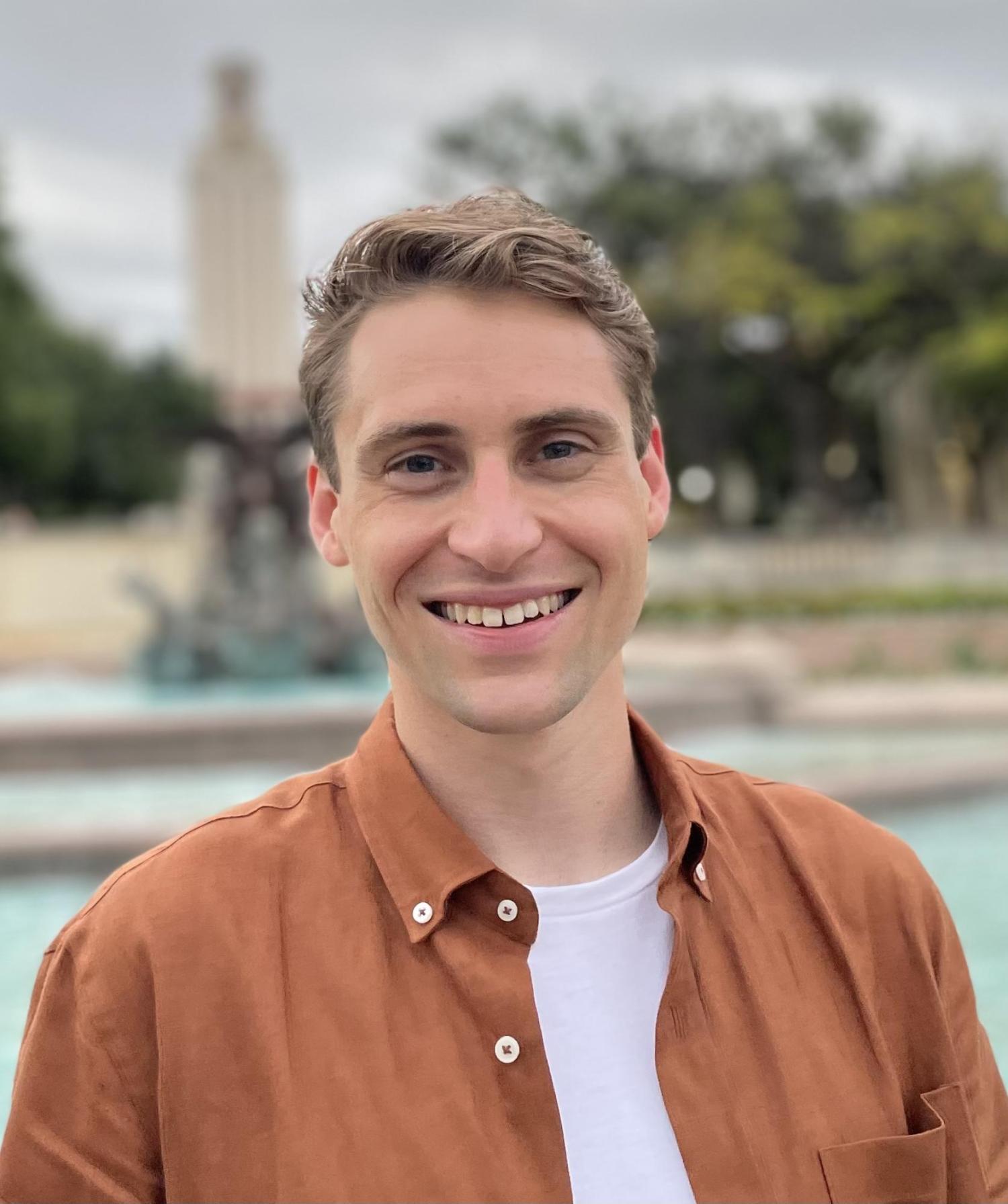
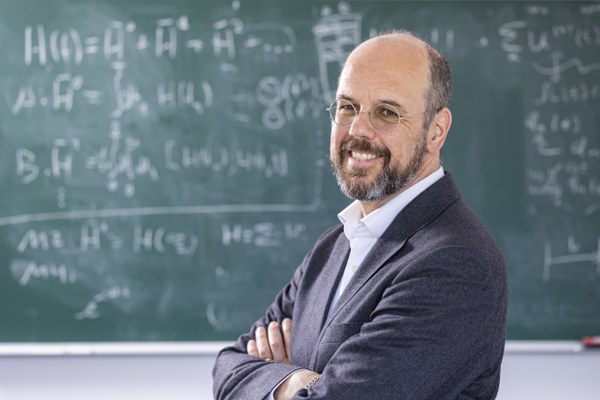
Archontis Politis is an Assistant Professor in the Department of Computing Sciences at Tampere University's Faculty of Information Technology and Communication Sciences. His research focuses on signal processing, machine learning, and their applications in audio engineering, particularly in spatial audio, sound source separation, and parametric audio coding. He explores topics such as Ambisonics, reverberation control, and neural network-based approaches for audio processing. His work emphasizes spatial audio reproduction, including six degrees of freedom (6DOF) rendering, microphone array processing, and efficient compression techniques for higher-order Ambisonics. He also investigates sound event localization and detection, leveraging machine learning for real-world acoustic scenarios. His contributions span theoretical advancements in spherical harmonics and practical implementations of spatial audio systems. Recent research highlights include developing datasets for music source separation, improving synthetic-to-real generalization in classical music, and creating neural encoding models for irregular microphone arrays. His methodologies often integrate deep learning with traditional signal processing to address challenges in multi-speaker environments and dynamic acoustic scenes.
Ryo Ikeshiro is an Assistant Professor at the School of Creative Media, City University of Hong Kong, and co-director of the spatial audio art/research unit SoundLab. His work bridges sound art, computational creativity, and cultural studies through immersive installations, algorithmic audio-visual systems, and sonification techniques. PhD in Creative Practice (Goldsmiths, University of London) MPhil in Music (University of Cambridge) BMus (King's College London) Ikeshiro's research interrogates the materiality of sound through: Multichannel Ambisonics and directional audio Neural network-driven temporal dislocation Sonification of climate data and historical soundscapes Machine learning for artistic interpretation Interplay of identity and technology East Asian ideophonic traditions His 2010-2024 publications and installations reveal cross-disciplinary engagement with: Fractal mathematics in audiovisual art Algorithmic composition systems Interactive installation technologies Sonic cartography Historical memory in sound Collaborative research frameworks SoundLab, which he co-directs, develops spatial audio research at the intersection of: Technical innovation Cultural representation Experimental pedagogy Public engagement International artistic exchange Practice-based research
Mahmoud Karimi is a Senior Lecturer at the School of Mechanical and Mechatronic Engineering , University of Technology Sydney (UTS), leading the Vibroacoustics Research Group within the Centre for Audio, Acoustics and Vibration. He holds a PhD in Mechanical Engineering from UNSW with specialization in vibration and acoustics, and has conducted visiting research at University of Cambridge, Technical University of Munich, and INSA Lyon. His research focuses on computational hydroacoustics, vibroacoustics, and uncertainty quantification in noise/vibration problems. Academic Leadership : Editor-in-Chief of Acoustics Australia since 2025 Research Income : Attracted $6M in competitive grants ($2M as Chief Investigator) since 2017 Technical Expertise : Specializes in acoustic black hole structures, flow-induced vibration modeling, and leak detection in buried pipelines Scientific Awards : Recipient of ARC DECRA Fellowship (DE190101412) 2019-2022 Research Trends : His 91+ publications demonstrate expertise in hybrid acoustic modeling techniques, sustainable hempcrete development, and vibration energy harvesting solutions with applications in mining, rail systems, and water infrastructure. International Collaborations: University of Cambridge (UK), Technical University of Munich (Germany), INSA Lyon (France) Teaching Portfolio: Advanced numerical methods, dynamics & control, and computational modeling at UTS
Dr. Grey Ballard is an Associate Professor in the Department of Computer Science at Wake Forest University . He earned a B.S. in Math and Computer Science (2006), M.A. in Math (2008) from Wake Forest, and PhD in Computer Science (2013) from the University of California, Berkeley. He was a Truman Fellow at Sandia National Laboratories before joining Wake Forest. Research Focus: Ballard develops communication-optimal algorithms for high-performance computing , particularly in tensor decompositions , symmetric matrix computations , and nonnegative matrix factorization . His work combines numerical linear algebra with parallel algorithm design to reduce data movement costs in distributed systems. Publications demonstrate expertise in communication lower bounds , randomized tensor rounding , and visualization tools for parallel algorithms. He has contributed software packages such as TuckerMPI , GentenMPI , and PLANC for large-scale data compression and clustering. Scientific Awards: Wake Forest Excellence in Research Award NSF CAREER Award SIAM Linear Algebra Prize Three Conference Best Paper Awards (SPAA, IPDPS, ICDM) C.V. Ramamoorthy Distinguished Research Award (UC Berkeley) ACM Doctoral Dissertation Award – Honorable Mention Teaching: Courses include Introduction to Computer Science , Numerical Linear Algebra , and Parallel Algorithms . He has developed educational tools using the Thread-Safe Graphics Library to visualize parallel dynamic programming and collective communication.
Prof. Martin Wosnik is a Professor of Ocean and Mechanical Engineering at the University of New Hampshire (UNH), where he also serves as Director of the Center for Ocean Renewable Energy. His work bridges fluid mechanics, thermal sciences, and renewable energy technologies. Ph.D., Mechanical Engineering, SUNY Buffalo M.S., Aeronautical/Aerospace Engineering, SUNY Buffalo B.S., Mechanical Engineering, Technical University of Darmstadt Prof. Wosnik focuses on ocean renewable energy (tidal, wave, wind), turbulent flows , high-speed hydrodynamics , cavitation , and advanced flow measurement techniques. His research emphasizes both fundamental fluid dynamics and applied technologies for sustainable energy systems. Recent publications highlight his work on cross-flow turbines for marine environments, blade strain analysis , and hybrid energy-water systems . Key themes include geometric scaling effects, material optimization for turbine blades, and resource assessment for tidal/wave energy installations. He leads the Chase Ocean Engineering Laboratory at UNH, contributing to projects like the Living Bridge Initiative and the Atlantic Marine Energy Center . The lab conducts experiments on hydrokinetic turbines, wind arrays, and flow measurement technologies.
Prof. Dr. Haris Gačanin is a faculty member at RWTH Aachen University, affiliated with the Institute for Distributed Signal Processing under the College of Electrical Engineering. His research focuses on integrating machine learning with wireless communication systems, particularly in industrial IoT, edge computing, and network optimization. Current academic rank: Professor Contact: harisg@dsp.rwth-aachen.de Research Interests: Wireless systems, machine learning, signal processing, and network optimization. Key contributions include: Adaptive resource allocation in IIoT and vehicular networks AI-driven channel estimation and feedback mechanisms Security-oriented emitter identification via metric learning Federated/transfer learning for edge environments Hardware-efficient deep learning models for mmWave and THz communications Methodological Focus: Combines reinforcement learning, attention mechanisms, and robust neural architectures with practical implementations on FPGA and vehicular systems.
Ata Zadehgol is an Associate Professor (promoted to Full Professor in 2025) in the Department of Electrical and Computer Engineering at the University of Idaho, College of Engineering. He is the founding director of the Applied Computational Electromagnetics and Signal/Power Integrity (ACEM-SPI) Laboratory. His academic journey includes a Ph.D. from the University of Illinois at Urbana-Champaign (2011), an M.S. from UC Davis (2006), and a B.S. from the University of Washington (1996). He spent over a decade in the microelectronics industry before joining academia. Ph.D., Electrical and Computer Engineering, University of Illinois at Urbana-Champaign, 2011 M.S., Electrical and Computer Engineering, University of California, Davis, 2006 B.S., Electrical Engineering, University of Washington, Seattle, 1996 Dr. Zadehgol's research focuses on computational electromagnetics , signal and power integrity , and modeling of multi-scale and stochastic systems . His work spans from low-frequency to terahertz regimes, with recent expansion into quantum electrodynamics and photonics. He develops advanced computational algorithms for efficient and stable modeling of electromagnetic systems, including FDTD methods, reduced-order modeling, and machine learning applications. The research articles highlight a consistent focus on electromagnetic modeling , signal integrity , and computational efficiency . Key themes include FDTD sub-gridding, stochastic surface roughness in waveguides, stability of transfer functions, and macro-modeling for antennas and interconnects. The publications span IEEE Transactions, Applied Mathematics and Computation, and Electronics, reflecting interdisciplinary work bridging engineering, physics, and numerical methods. Best Poster-Paper Award, IEEE EDAPS, 2016 University of Idaho Presidential Mid-Career Award, 2020 Outstanding Faculty Award, College of Engineering, 2025 NSF Recognition for Novel Algorithm for Optical Interconnects, 2018 Dr. Zadehgol has secured significant research funding from the National Science Foundation (NSF) , NASA , Micron Technology , and Schweitzer Engineering Laboratories (SEL) . He advises graduate students in the ACEM-SPI Lab, though specific names are not listed. His lab supports research in computational electromagnetics, signal/power integrity, and quantum engineering applications. Future work includes advancing modeling techniques for quantum systems and high-frequency electronics. The Applied Computational Electromagnetics and Signal/Power Integrity (ACEM-SPI) Laboratory , which he founded and directs, serves as the central hub for his research group. The lab focuses on algorithm development for electromagnetic simulation, signal integrity analysis, and emerging applications in quantum science. It is supported by federal and industrial grants and collaborates with partners in academia and industry.
Shoji Makino is a Professor at Waseda University's Graduate School of Information, Production and Systems. He has held academic and research positions at institutions such as the University of Tsukuba and NTT Communication Science Laboratories. His work spans acoustic signal processing, blind source separation, and adaptive filtering. Education: Ph.D., Tohoku University (1993.03) Mechanical Engineering, Tohoku University Graduate School of Engineering (1979.04–1981.03) Engineering, Tohoku University Faculty of Engineering (1975.04–1979.03) Research Interests: His research focuses on acoustic signal processing for speech and audio, including blind source separation (BSS) , beamforming , and adaptive filtering . He pioneered methods for solving permutation alignment in frequency-domain BSS and developed geometrically constrained ICA techniques. Scientific Awards: Hoko Award (2018.10, Hattori Hokokai Foundation) Outstanding Contribution Award of the Institute of Electronics, Information, and Communication Engineers (2018.06) IEEE Signal Processing Society Best Paper Award (2014.01) IEEE Fellow (2004.01) IEICE Achievement Award (1997.05) Committee Memberships: He has served as Chair of the IEEE CAS Society's Blind Signal Processing TC, General Chair of IEEE WASPAA2007, and Associate Editor of IEEE Trans. SAP. He is actively involved in EURASIP, APSIPA, and the Acoustical Society of Japan.
Katia Gallo is a Professor at the Department of Applied Physics, KTH Royal Institute of Technology, where she leads the Nonlinear and Quantum Photonics Group. She is actively involved in national and European quantum initiatives, including directing the Quantum Communication program in the Swedish Quantum Flagship (WACQT) and the National Quantum Communication Infrastructure (NQCIS) under EuroQCI. Her academic affiliations are centered at KTH, with prior research experience at the Optoelectronics Research Centre in Southampton, UK. Education: MSc in Electronic Engineering, University ‘La Sapienza’, Rome, Italy (1997) PhD in Electronic Engineering (joint with Stanford University, USA) PhD in Physics, University of Nice-Sophia Antipolis, France (2001) Her research focuses on nonlinear and quantum photonics , with core interests in integrated optics, ferroelectric materials, quantum optics, and biophotonics. She investigates the fundamental physics and applications of nonlinear wave interactions in photonic circuits, particularly using lithium niobate platforms. Her work spans from theoretical modeling to experimental realization of devices for all-optical signal processing, quantum communication, and sensing. She has made significant contributions to the development of thin-film lithium niobate photonic devices, including grating filters, superconducting detectors, and wavelength-sensitive systems. Her recent publications (2017–2024) reflect a strong trend toward integrated quantum photonics , nanophotonic devices on lithium niobate , and biophotonic applications . Key themes include electro-optic tuning, superconducting single-photon detection, nonlinear frequency conversion, and surface-enhanced Raman scattering for sensing. The interdisciplinary nature of her work bridges physics, engineering, and materials science. Scientific Awards and Recognitions: Swedish Research Council Senior Fellowship EU Marie Curie Fellowships (TMR and Intra-European) Leverhulme Trust Early Career Fellowship London Technology Network Business Fellowship Centre and South Italy IEEE Student Award KTH Rektor Prize for Equality and Diversity Katia Gallo is deeply involved in academic service, serving as course responsible and examiner for key courses such as Applied Modern Physics , Fundamentals of Photonics , and Quantum Technology . She mentors students and leads a research group focused on advancing photonic technologies. Her leadership extends to major national and European quantum infrastructure projects, positioning her at the forefront of quantum communication development in Sweden and Europe. She leads the Nonlinear and Quantum Photonics Group at KTH, which conducts cutting-edge research in nonlinear optical phenomena, quantum photonics, and integrated photonic devices. The group works on both theoretical and experimental aspects, utilizing advanced fabrication and characterization techniques to develop next-generation photonic technologies.
Mirela Alistar is an Assistant Professor at the ATLAS Institute and the Department of Computer Science at the University of Colorado Boulder. She leads the Living Matter Lab , focusing on cyber-physical systems based on biochips to revolutionize healthcare diagnostics. Her interdisciplinary work bridges computer science, engineering, biotechnology, and bioart. Education : PhD in Embedded Systems Engineering (2010-2014, Technical University of Denmark), Postdoc in Human-Computer Interaction (2015-2018, Hasso Plattner Institute). Her research advances digital microfluidics and fault-tolerant biochips , enabling at-home diagnostic tools like OpenDrop . She also explores bioart through installations such as Semina Aeternitatis and Perfume Distillation Machine . She co-founded >top , a Berlin-based art & science project space, and advises startups digi.bio and bold.health . Her UIST'16 Honorable Mention Award highlights her innovative contributions. The Living Matter Lab under her leadership investigates interactive biodesign , combining technical precision with creative exploration of living systems.
Pierrick Lotton serves as a CNRS Research Director at Le Mans University's Institute of Acoustics (LAUM), a joint research unit between CNRS and the university. He leads critical work within LAUM's Transducers team, focusing on fundamental and applied research in electroacoustics and thermoacoustics. His institutional affiliation places him at France's premier acoustics research laboratory, which maintains extensive facilities for acoustic measurements, ultrasonic experimentation, and transducer development across multiple specialized domains including materials science, opto-acoustics, and bioacoustics. Lotton's research program centers on two interconnected pillars: electroacoustics and thermoacoustics. His electroacoustic investigations pioneer advanced modeling, development, and characterization of audio transducers with particular emphasis on nonlinear behaviors in loudspeakers and electric guitar pickups. Simultaneously, his thermoacoustic research explores acoustic refrigeration systems, complex couplings between acoustic and thermal energy fields, and transient nonlinear phenomena. This dual focus enables innovative cross-pollination between audio engineering and thermal physics, driving advancements in both fundamental understanding and practical applications of acoustic energy conversion. Analysis of his 2019-2024 publications reveals a consistent trajectory in transducer physics, particularly MEMS-based piezoelectric speakers, voice coil dynamics in magnetic environments, and digital acoustic projection systems. His work demonstrates exceptional methodological diversity spanning analytical modeling, experimental validation, and educational innovation. Notable contributions include the ASKNOWN project's open-access acoustics courseware and breakthroughs in understanding transducer nonlinearities for both consumer audio and specialized applications like fish sound localization. No major scientific awards were documented in the available institutional materials, though his sustained publication record in high-impact journals and presentations at European Acoustics Association forums indicate significant peer recognition. His collaborative research network spans France, Germany, Italy, and the Czech Republic, reflecting strong international engagement. Lotton's academic supervision activities aren't explicitly detailed, but his educational initiatives like the ASKNOWN project demonstrate commitment to pedagogy. His research is supported through LAUM's institutional framework and collaborative projects including European initiatives and ANR-funded programs. Current work appears concentrated on advancing MEMS transducer technology, refining thermoacoustic cooling systems, and developing next-generation educational resources for acoustics. As a core contributor to LAUM's Transducers team, Lotton operates within one of Europe's leading acoustics laboratories. His current projects align with LAUM's strategic focus on transducer innovation and thermoacoustic applications, positioning him at the forefront of both theoretical acoustics research and practical engineering solutions. The laboratory's comprehensive infrastructure supports his work from fundamental wave propagation studies to applied device development.
Sergey Kubatkin is a Full Professor at the Quantum Device Physics department within the Department of Microtechnology and Nanoscience (MC2) at Chalmers University of Technology , Sweden. His research focuses on quantum devices , graphene-based electronics , and 2D material heterostructures , with applications in quantum computing and metrology . He leads projects under the Graphene Flagship and collaborates with institutions like the European Commission and Knut and Alice Wallenberg Foundation . Key Research Areas: Quantum transport in graphene and 2D materials Decoherence mechanisms in superconducting circuits Van der Waals heterostructures for electronic devices Near-field scanning microwave microscopy Quantum Hall effect for metrology Recent Publications highlight advancements in epigraphene stability , ultranarrow semiconductor transistors , and spin-echo suppression in quantum circuits . His work addresses challenges in quantum noise reduction and low-power electronic devices , often leveraging collaborations with teams like the European Research Council and Swedish Foundation for Strategic Research . Scientific Contributions include foundational studies on graphene quantum Hall resistance standards and single-molecule electronics . Current projects, such as Quantum geometry and flat bands (2025–2030), aim to explore room-temperature superconductivity through 2D material engineering. His lab develops scalable graphene bolometers and high-precision microwave detectors for quantum technologies.
Cody Scarborough is an Assistant Professor in the Department of Electrical, Computer, and Energy Engineering at the University of Colorado Boulder. He earned his B.S. in Electrical and Computer Engineering from the University of Texas at Austin (2017) and his Ph.D. from the University of Michigan (2022). His research focuses on space-time modulated electromagnetic metamaterials, non-linear electromagnetics, and reconfigurable intelligent surfaces. He leads the Electromagnetic Metamaterials Research Group (EMRG), advancing next-generation communication systems and energy-harvesting technologies. Scarborough has pioneered novel boundary conditions like the interpath relation, reducing computational demands for analyzing space-time periodic structures. His work has earned best student paper awards at EuCAP 2021 and Metamaterials 2021. He teaches courses such as Electromagnetic Fields I and Electromagnetic Metamaterials, mentoring over 100 students. His research group explores parametric amplification, frequency conversion, and bandwidth enhancement through active metamaterial control. Education: B.S. UT Austin (2017), Ph.D. University of Michigan (2022) Labs/Teams: Electromagnetic Metamaterials Research Group (EMRG) Key Contributions: Space-time modulated antennas, N-path network analysis, interpath relation theory He holds provisional patents on parametric time-modulated antennas and efficient computational methods for metamaterial design. Beyond academia, he enjoys music, hiking, and skiing in Boulder's Flatirons.
Tommaso Calarco serves as Director of the Institute for Quantum Control (PGI-8) at Jülich Research Centre, leading cutting-edge research in quantum optimal control methodologies for next-generation quantum technologies. His work focuses on developing transformative computational frameworks applicable to natural sciences, logistics, and high-performance computing through advanced quantum device engineering. His research spans quantum optimal control for computation and many-body systems, emphasizing physical model development, model reduction techniques, and machine learning integration for scalable quantum hardware. Key focus areas include spin-qubit optimization, diamond quantum register engineering, and error suppression in gate operations, with significant contributions to ultracold atom systems and semiconductor-based quantum platforms. Analysis of his 2024-2025 publications reveals concentrated efforts on hardware-specific challenges across multiple quantum modalities: spin shuttling fidelity in semiconductor systems, gate optimization for nitrogen-vacancy centers, and photon-spin interface engineering. This work demonstrates a unifying thread of optimal control solutions tailored to platform-specific decoherence mechanisms and scalability constraints. As Director of PGI-8 within the Peter Grünberg Institut, Calarco oversees a dedicated research team advancing quantum control theory and applications, contributing substantially to European quantum technology roadmaps including the Quantum Flagship initiative and strategic European Commission reports.
Adi Kurniawan is a Research Fellow at the University of Western Australia (UWA) in the School of Earth and Oceans, affiliated with the Marine Energy Research Australia (MERA) and the Great Southern Marine Research Facility (GSMRF). His research focuses on wave energy conversion, wave-structure interactions, and multi-objective optimization. He holds a PhD in Marine Technology from NTNU and has held roles at Aalborg University and the University of Plymouth. Kurniawan co-authored Ocean Waves and Oscillating Systems and contributes to industry standards (Standards Australia Committee EL-066) and journal editing (Journal of Offshore Mechanics and Arctic Engineering). Research Interests: Wave energy converter (WEC) design and optimization Nonlinear wave dynamics and numerical modeling Multi-objective optimization of wave farms Parametric resonance mitigation in WECs Teaching: Previously taught OCEN4007 Renewable Ocean Energy. Active in the Oceans Graduate School, covering oceanography, hydrodynamics, and marine geoscience. Collaborations: Works with industry on sponsored projects, including wave energy device modeling and power prediction. Part of the UN SDGs contributing to sustainable energy solutions (SDG 7, 13, 14). Grants: Lead investigator on projects like 'Advancing ocean renewable energy systems through physics and machine learning' and 'WaveX Albany', totaling over $2M in funding. Projects emphasize scalability, cost reduction, and environmental impact assessments. Labs/Teams: Based at the GSMRF in Albany, collaborating with international partners on WEC testing and deployment strategies.