Roma Kačinskaitė is a Professor at the Department of Mathematics and Statistics within the Faculty of Informatics at Vytautas Magnus University. Her research focuses on analytic number theory, probability theory, and gender equality policies in education. Doctor of Sciences (2002) ORCID: 0000-0003-2656-1052 Scopus ID: 6504101661 Her work spans zeta function theory (Riemann, Hurwitz, Matsumoto classes), joint universality theorems, and computational mathematics. Recent supervised theses explore topics like: ICT integration in calculus pedagogy Discrete universality theorems for zeta function classes Functional independence of periodic zeta functions Public-key cryptographic algorithms Computer-assisted evaluation of Hurwitz zeta function values Student advising emphasizes mathematical olympiads, zeta function analysis, and computational methods. Publications reflect interdisciplinary approaches combining pure mathematics with educational innovation and cryptographic applications.
Virgilijus Vaičaitis is a Professor and Chief Researcher at the Laser Research Center of Vilnius University's Faculty of Physics, Department of Quantum Electronics. His research focuses on advanced laser physics and nonlinear optical phenomena, with particular expertise in ultrashort laser pulses, terahertz radiation generation and detection, and laser-created air plasma. Dr. Vaičaitis has led multiple significant research projects including those funded by the Lithuanian Research Council S-MIP-19-46 (2019-2022), EU Framework Programs LASERLAB-Europe IV (2015-2019) and LASERLAB-Europe III (2012-2015), and a NATO-sponsored project between Vilnius, Rochester and Maryland universities (2004-2007). His work has resulted in publications in high-impact journals such as Nature Physics, Physical Review Letters, and Applied Physics Letters. His research spans ultrashort laser pulses , nonlinear optical phenomena , terahertz radiation generation and detection , and laser-created air plasma . His publications reveal a strong focus on developing novel methods for terahertz generation and plasma characterization, with applications in spectroscopy, material analysis, and ultrafast phenomena investigation. The research demonstrates expertise in both theoretical modeling and experimental implementation of complex laser systems. Vilnius University Rectors prize for scientific achievements (2022) Dr. Vaičaitis serves as a reviewer for journals including "Optics Letters," "Optics Express," "Applied Optics," "Optics Communications," and the "Lithuanian Journal of Physics." He is an expert for the Agency for Science, Innovation and Technology (Lithuania), Lithuanian Business Support Agency, and the Department of Research and Development of the Ministry of Education, Youth and Sports of Czech Republic. He has supervised doctoral students Kęstutis Steponkevičius (thesis on "Third harmonic generation and six-wave mixing of femtosecond laser pulses in air") and Danas Buožius (working on "THz radiation generation in air"). Additionally, he has mentored over 15 master's and bachelor's students and reviewed approximately 20 student theses. Dr. Vaičaitis actively participates in international conferences, having delivered invited presentations at "The Extreme Light Infrastructure User Meeting" (2024), "2nd International Congress and Expo on Optics, Photonics and Lasers" (EUROPL2024, 2024), and various International Conferences "Foundations & Advances in Nonlinear Science." His science popularization efforts include articles in media outlets explaining complex physics concepts to the general public, such as "850 mln. eurų itin galingiems lazeriams: kam reikalinga ekstremalios šviesos infrastruktūra Europoje?" (2023) and "Nuo vandens lašo iki šiuolaikinės lazerių fizikos" (2016).
Prof. Dr. İlker Tari is a distinguished academic in Mechanical Engineering, currently serving as a Professor at FMV Işık University , Istanbul, Turkey. Previously, he held a Professor position at Middle East Technical University (METU) from 1998-2022 and served as Visiting Professor at Technische Univ. München (2010-2012). His research focuses on Solar Energy Applications , Thermal Energy Storage , and Computational Heat Transfer . Education: PhD, Mechanical Engineering - Northeastern University (1998) SM, Nuclear Engineering - MIT (1994) MS, Nuclear Engineering - University of Michigan (1991-1994) BS, Nuclear Energy Engineering - Hacettepe University (1983-1987) Research Interests: His work specializes in: Solar Energy Systems for industrial applications and hybrid storage Thermal Management of electronics and fuel cells Radiative Transfer modeling in particulate media Fluidized Bed Technologies for energy storage Computational Fluid Dynamics (CFD) and DEM methods 3D Printing Applications in mechanical systems Scientific Contributions: Recent publications focus on: Advanced solar cooling systems Hybrid energy storage with phase change materials Mechanical properties of particle beds CFD-DEM integration for thermal modeling Optimization of industrial solar hybridization Renewable energy system analysis Student Supervision: Has supervised over 40 graduate theses including: Furkan Enes Yıldırım - 2025 Deniz Değirmenci - 2022 Ender ÖZDEN - 2015 Mehdi MEHRTASH - 2017 Özgür BAYER - 2009 Ömer EMRE ORHAN - 2007 Key Projects: EU H2020 INSHIP (2017-2020) TUBITAK 217M062 Solar Dryer (2017-2020) EU H2020 SFERA-III (2019-2023) EU H2020 SolarTwins (2020-2023) ECOSun Solar-ERANET (2020-2023) InnoSolPower CSP-ERANET (2021-2024) Professional Affiliations: President, International Center for Heat and Mass Transfer (2019) Member, Turkish Cogeneration Association (2021) Member, Turkish Thermal Science and Technology Association (2018) Member, American Society of Thermal and Fluids Engineers (2015)
Professor Andrzej Góźdź is a distinguished theoretical physicist at the Department of Theoretical Physics, Institute of Physics, Faculty of Mathematics, Physics and Computer Science at Maria Curie-Skłodowska University (UMCS) in Lublin, Poland. He holds a professorship and conducts research primarily in symmetry theory in physics, algebraic models of physical systems, nuclear theory, and quantum gravity. His academic contributions span several decades with numerous publications in prestigious physics journals. Professor Góźdź's research focuses on fundamental aspects of theoretical physics, particularly symmetry theory in nuclear and quantum systems. He investigates algebraic models of physical systems, the theory of the atomic nucleus, quantum gravity, and the foundations of quantum mechanics with special emphasis on quantum time. His work often bridges mathematical physics with practical applications in nuclear structure and quantum phenomena. The professor frequently collaborates with international research groups, as evidenced by his extensive publication record with colleagues from various countries. Analysis of Professor Góźdź's recent publications (2017-2019) reveals a consistent research trajectory focused on symmetry applications in nuclear physics, quantum mechanical foundations, and computational methods. His work demonstrates a strong emphasis on group theory applications to nuclear structure, particularly exploring high-rank symmetries in nuclei. Several publications address quantum time and delayed choice phenomena, reflecting his interest in foundational quantum mechanics questions. The professor also contributes significantly to computational physics, developing symbolic-numerical algorithms for solving complex boundary-value problems in nuclear and atomic physics. h-index (Web of Science): 14 h-index (Google Scholar): 4 h-index (Scopus): 3 Total publications: 124 As an academic supervisor, Professor Góźdź maintains regular consultation hours (Mondays 10:00-12:00 and Tuesdays 8:00-9:00; 12:00-13:00) and likely mentors graduate students in theoretical physics. His research activities involve participation in national and international grants focused on theoretical nuclear physics and quantum mechanics. Professor Góźdź is part of specialized research teams at UMCS exploring symmetry applications in nuclear structure. His collaborations with researchers like A. Pędrak, A. Dobrowolski, and international colleagues (particularly from Russia and France) indicate involvement in interdisciplinary teams combining theoretical physics with computational approaches.
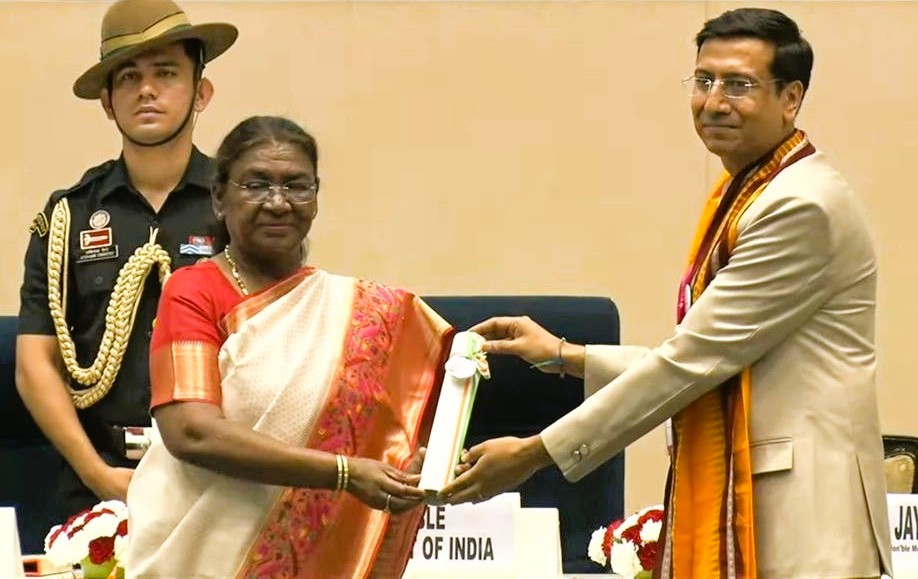
Prof. Kapil Ahuja is a Full Professor in the Department of Computer Science & Engineering at the Indian Institute of Technology Indore (IIT Indore), where he heads the Mathematics of Data Science and Simulation (MODSS) research lab. After completing dual Master's degrees and a Ph.D. from Virginia Tech (USA) followed by postdoctoral work at the Max Planck Institute in Germany, he has held visiting positions at UT Austin, IMT Atlantique, Sandia National Labs, TU Dresden, and TU Braunschweig. His administrative roles include founding Dean of International Affairs and former Head of Computer Science & Engineering at IIT Indore. Education: Ph.D. in Mathematics, Virginia Tech (2011) M.S. in Mathematics, Virginia Tech (2009) M.S. in Computer Science, Virginia Tech (2007) B.Tech. in Mechanical Engineering, IIT (BHU) Varanasi (2001) Research Focus: Prof. Ahuja's work bridges theoretical advances with real-world applications, emphasizing machine learning algorithms for plant/cancer studies, game-theoretic poverty reduction models, exascale climate modeling solvers, and drone trajectory optimization. His interdisciplinary approach integrates numerical linear algebra with network science to solve complex systems problems across healthcare, agriculture, and climate science, supported by 4.85 Crores INR in external funding. Publication Trends: Recent work demonstrates growing emphasis on AI-driven optimization for physical systems (drones, climate models) and biomedical applications (cancer classification). His publications increasingly feature cross-disciplinary collaborations between computer science, biology, and economics, with notable contributions in explainable AI for healthcare and resource allocation algorithms for social networks. Scientific Recognition: National Teacher's Award (2024) from the President of India Five-time recipient of IIT Indore's Best Teacher Award (2013-2023) Best Poster Award at International Workshop on Game Theory & Networks (2019) Steeneck Graduate Research Fellowship (Virginia Tech, 2011) Multiple SIAM travel awards for international conferences Mentorship & Service: Prof. Ahuja has graduated 5 Ph.D. and 4 M.S. (Research) students while mentoring 75 B.Tech. projects. He serves as Associate Editor for Applied Intelligence Journal (Springer Nature) and Knowledge and Information Systems, organizes international conferences, and reviews for 35+ academic sources. His administrative leadership significantly expanded IIT Indore's global partnerships through the Research Park initiative. Research Infrastructure: The MODSS lab maintains active collaborations with Oak Ridge National Lab, Sandia National Labs, and European institutions. Current projects include AI-optimized drone swarms for agricultural monitoring and game-theoretic models for poverty intervention, utilizing high-performance computing resources for large-scale simulations.
Yao Yue is a postdoctoral researcher at the Max Planck Institute for Dynamics of Complex Technical Systems in Magdeburg, Germany. Their work focuses on computational methods in systems and control theory, including parametric model order reduction, design optimization, Krylov methods, and fast computation techniques for Simulated Moving Bed (SMB) models and vibration/structure simulations. Education : Bachelor of Electronic Science and Technology, Harbin Engineering University (2001–2005) Master of Integrated Circuit Design, Tsinghua University (2005–2008) PhD in Engineering (Applied Mathematics, Numerical Approximation, Linear Algebra) at KU Leuven, Belgium (2008–2012) Research Interests span both applied mathematics and philosophical foundations of cognition. In computational methods, they work on optimizing numerical algorithms and system modeling. In philosophy, they explore axiomatic frameworks for cognitive dispositions, negation tendencies, and the epistemological limits of logic and empirical observation. Additional Activities include maintaining a personal homepage where they develop philosophical works like Reconstruction of Philosophy , discussing topics such as multiverse theory, consciousness, and the role of negation in knowledge formation.
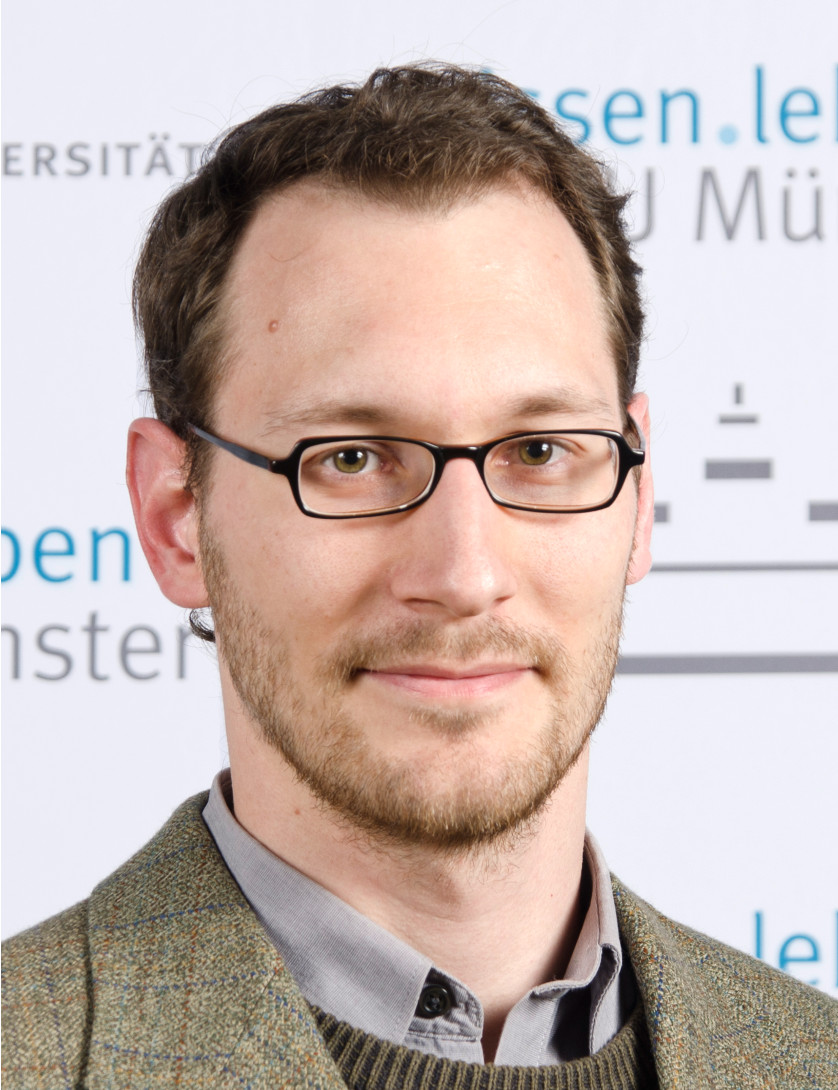
Prof. Dr. Benedikt Wirth is a Professor of Mathematics at the University of Münster, Germany, affiliated with the Institute for Analysis and Numerics within the Department of Mathematics and Computer Science. He is an active researcher and educator specializing in optimization and calculus of variations, with significant contributions to mathematical imaging and shape analysis. His research interests include image processing, scientific computing, numerical analysis, optimization, shape spaces, geodesics in shape space, variational methods, elastic deformation, and optimal transport. Wirth has developed innovative mathematical frameworks for shape analysis, particularly focusing on Riemannian metrics for shape spaces and variational approaches to shape comparison and optimization. His recent publications (2023-2025) demonstrate continued leadership in mathematical optimization, with particular focus on PET reconstruction, dimension reduction techniques, manifold embeddings, and branched transport theory. His work bridges theoretical mathematics with practical applications in medical imaging and computer vision, showing particular strength in connecting geometric analysis with computational methods. CRC 1450 - A05: Targeting immune cell dynamics by longitudinal whole-body imaging and mathematical modelling CRC 1450 - A06: Improving intravital microscopy of inflammatory cell response by active motion compensation EXC 2044 - C1: Evolution and asymptotics EXC 2044 - C2: Multi-scale phenomena and macroscopic structures EXC 2044 - C3: Interacting particle systems and phase transitions EXC 2044 - C4: Geometry-based modelling, approximation, and reduction Prof. Wirth actively supervises numerous bachelor's and master's students, with over 40 theses completed under his guidance since 2015. His teaching portfolio includes courses on inverse problems, numerical methods for partial differential equations, shape spaces, optimization, and optimal transport. He has consistently maintained an active research program while contributing significantly to the education of the next generation of mathematicians.
Gitta Astrid Hildegard Kutyniok is a Professor in the Department of Physics and Technology at UiT The Arctic University of Norway. Her research spans machine learning, applied mathematics, and signal processing, with a focus on theoretical foundations and practical applications.
Yasutaka Shimizu is a Professor at the Department of Applied Mathematics , Waseda University , with prior positions at Osaka University and as Visiting Professor at the Institute of Statistical Mathematics. His work bridges mathematical statistics , stochastic processes , and actuarial science . Education : Ph.D. in Mathematical Science (University of Tokyo, 2007) Key Research : Survival energy models for mortality prediction, threshold estimation for jump-diffusions, ruin theory, fractional Brownian motion inference Recent Publications focus on high-frequency data analysis, survival energy hypothesis applications, and statistical methods for financial/actuarial risks. His 2023 work includes threshold estimation under small noise and survival energy models with functional data analysis. Scientific Awards include the Research Achievement Award (Japan Statistical Society), Ogawa Research Encouragement Award , and Competition Outstanding Report Award . Grants from Japan Society for the Promotion of Science cover topics like statistical modeling of stochastic processes, mortality prediction, and financial risk measurement. He maintains professional memberships in the Japan Statistical Society, Mathematical Society of Japan, and Institute of Actuaries of Japan.
Lee Keel is a Professor in the Department of Electrical and Computer Engineering at Tennessee State University's College of Engineering, where he has been faculty since 1986. He also serves as an Adjunct Professor in Vanderbilt University's Mechanical Engineering Department since 1991 and previously directed Tennessee State's Center for Systems Science Research from 1997-2007. Dr. Keel earned his Ph.D. in Electrical Engineering from Texas A&M University in 1986, following an M.S. from the same institution in 1982 and a B.S. in Electronics Engineering from Korea University in 1978. His academic journey began with engineering experience at LG Telecommunications R&D in Korea before transitioning to academia. His research expertise spans Linear Systems Theory, Robust Control, and Networked Control Systems, with recent focus on developing data-based control design techniques that eliminate reliance on analytical models. His work has been continuously funded by NSF, NASA centers (Ames, Langley, Goddard, Marshall), DoD, and industry partners including Boeing, with over $20 million in research grants throughout his career. Analysis of his publication record shows consistent contributions to robust control theory, particularly in interval systems stability, parametric robustness, and measurement-based controller design. His recent work increasingly addresses cyber-physical security applications for power grids and multi-agent systems. Full Academic Scholarship, Gold-Star Yonam Foundation (1971-1972, 1976-78) Eta Kappa Nu Phi Kappa Phi Distinguished Researcher Award, Tennessee State University (1996) Professor Keel has supervised numerous graduate students through thesis research and has served in leadership roles for major conferences including as Publication Chair for multiple American Control Conferences. His research group maintains strong connections with NASA laboratories and defense contractors, providing students with opportunities to work on problems with real-world impact in aerospace and critical infrastructure domains.
Mihail Ivanov Krastanov is a Professor at the Faculty of Mathematics and Informatics, Sofia University. His research focuses on theoretical and applied aspects of control systems, optimization, and differential equations, with significant applications in biotechnology and environmental processes. He maintains an active research profile with consistent publications in high-impact journals and conference proceedings. His primary research interests span several interconnected domains: Control Theory : Controllability analysis of nonlinear, hybrid, and discontinuous systems; stabilization techniques; adaptive control frameworks. Mathematical Modeling : Development of dynamic models for biological systems including anaerobic digestion, chemostats, and biodegradation processes. Optimization Methods : Variational inequalities, trajectory tracking, and high-order approximations for nonholonomic systems. Analysis of his 15 most recent publications (2010-2015) reveals dominant themes in nonlinear/hybrid system controllability, model-based optimization of bioprocesses, and theoretical advancements in infinite-dimensional control. Recurring application contexts include bioreactor engineering, waste treatment, and renewable energy systems.
Yifan Chen is an Assistant Professor in the Department of Computer Science and affiliate faculty in the Department of Mathematics at Hong Kong Baptist University's Faculty of Science. He joined HKBU in Fall 2023 after completing his PhD in Statistics from the University of Illinois Urbana-Champaign in 2023 under the guidance of Prof. Yun Yang. His educational background includes: B.S. in Statistics from Fudan University (2018), advised by Prof. Juan Shen and Prof. Chenghong Zhang Ph.D. in Statistics from University of Illinois Urbana-Champaign (2023), advised by Prof. Yun Yang Dr. Chen's research focuses on developing efficient algorithms for machine learning, with particular emphasis on non-parametric models and neural networks featuring intensive matrix operations. His work bridges statistical theory with practical computational challenges in modern machine learning systems, especially those involving Transformers (language models) and Graph Neural Networks (GNNs). He approaches machine learning from both theoretical and applied perspectives, seeking to understand statistical structures while addressing real-world computational constraints. His publication record shows consistent output in top-tier venues including ICML, NeurIPS, KDD, and EMNLP, with recent work spanning graph coarsening, optimal transport, efficient language model fine-tuning, and causal inference. His research demonstrates strong mathematical foundations combined with practical applications in AI systems. Among his notable achievements: NSFC Young Scientists Fund (2025) GDSTC General Program funding (2024) RGC Early Career Scheme proposal grant (2024) ICML 2023 Grant Award ($1,500) Dr. Chen actively mentors students through his research group, supervising PhD students and visiting research assistants. He has successfully guided students who have gone on to PhD programs at institutions including Institute of Science Tokyo, HKU, Fudan, and NUS. His teaching includes COMP 7070 Advanced Topics in Artificial Intelligence and Machine Learning, which covers core machine learning concepts for AI application research, and COMP 2027 Applied Linear Algebra for Computing. His research group focuses on efficient machine learning algorithms, with current projects spanning graph neural networks, optimal transport, language model efficiency, and causal inference. He collaborates with researchers from institutions including UIUC, Fudan University, and industry labs like Amazon Alexa AI.
Professor Dariusz Horla is a faculty member at the Faculty of Automation, Robotics and Electrical Engineering at Poznań University of Technology, where he works in the Institute of Robotics and Machine Intelligence. He holds the title of Professor with a habilitation degree (dr hab. inż.) in automation and control engineering. His research focuses on advanced control systems, particularly anti-windup compensation techniques, model predictive control applications for nuclear power plants, UAV control systems, and fractional-order controllers. Professor Horla has published extensively across these domains, with recent work addressing challenges in cooperative control systems, optimization methods for control applications, and practical implementations of advanced control algorithms in real-world systems. Analysis of his recent publications (2015-2025) reveals a strong emphasis on practical control applications, particularly in nuclear power plant systems and unmanned aerial vehicles. His work bridges theoretical control methods with industrial implementation challenges, often focusing on optimization approaches and stability considerations in constrained systems. Professor Horla has supervised multiple doctoral students and has developed significant educational materials in control systems and automation. His intellectual property contributions include inventions related to UAV height control systems, demonstrating the practical impact of his research. His academic service includes participation in habilitation committees and development of educational materials that have shaped control engineering education at Poznań University of Technology.
Taylor Okonek is an Assistant Professor of Statistics in the Department of Mathematics, Statistics, and Computer Science at Macalester College. She holds additional affiliations as an External Affiliate of the Center for Studies in Demography and Ecology and an External Member of the Minnesota Population Center. Dr. Okonek earned her BA in Mathematics and Religion from St. Olaf College in 2018 and completed her PhD in Biostatistics from the University of Washington in 2023 under the supervision of Jon Wakefield. During her doctoral studies, she worked as a research assistant focusing on spatio-temporal methods for under-5 mortality estimation and HIV prevalence estimation, primarily in sub-Saharan Africa. Her research focuses on developing statistical methodologies for demographic applications, with particular emphasis on small area estimation, survival analysis, and statistical methods for official statistics and complex survey data settings. Much of her work is motivated by applications for the United Nations in producing under-5 mortality estimates. She is especially interested in creating computationally efficient statistical methods, with current research extending existing approaches for estimating mortality across time using continuous, parametric survival models applied to complex survey data. Dr. Okonek's publications demonstrate a consistent focus on improving computational efficiency in Bayesian frameworks for demographic estimation, particularly in benchmarking subnational estimates to national level estimates. Her methodological contributions address critical needs in official statistics where agreement between different levels of estimation is often required. As a former TRIO McNair scholar and first-generation college student from a low-income background, Dr. Okonek is deeply committed to creating inclusive learning environments. She teaches multiple statistics courses at Macalester College including Statistical Theory (MATH/STAT 355), Probability (MATH/STAT 354), and Introduction to Statistical Modeling (STAT 155), where she implements teaching practices informed by her own educational journey.
Tobias Wood serves as a Senior Lecturer in Magnetic Resonance Imaging within Neuroimaging, leading multiple externally funded research initiatives focused on advancing quantitative MRI methodologies. His primary institutional affiliation remains implied through project leadership but is not explicitly stated in available documentation. Research interests span the full spectrum of Magnetic Resonance Imaging with particular emphasis on advanced image reconstruction techniques and quantitative biomarker development . His work bridges engineering innovation with clinical applications in neurological disorders including multiple sclerosis, Parkinson's disease, and Huntington's disease, while also exploring novel frontiers like the neurocutaneous axis in inflammatory skin conditions. The research fingerprint reveals strong concentration in Myelin Imaging (49%), In Vivo Neuroscience (32%), and Parkinson's Disease research (31%). Recent publications demonstrate consistent output in high-impact journals including Magnetic Resonance in Medicine and Neuropsychopharmacology , with emerging focus on ultra-low-field MRI applications and multi-modal biomarker validation. Key trends include methodological innovation in silent scanning protocols, pediatric coil development, and translation of quantitative techniques to clinical monitoring. Current funding portfolio includes five major projects totaling approximately £2.5M, with leadership roles in EPSRC and CHDI Foundation grants. Collaborative networks span 11 similar research profiles with strong connections to multiple sclerosis research, neurodegenerative disorders, and advanced imaging physics communities. Lab resources include access to high-field MRI systems, specialized computational infrastructure, and clinical validation partnerships. Supervision approach emphasizes interdisciplinary training with strong publication expectations and industry-academic career pathways.