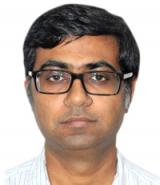
Akanksha Agrawal is an Assistant Professor and Veena and Induprakas Keri Faculty Fellow at the Department of Computer Science and Engineering, Indian Institute of Technology Madras. Her research focuses on Parameterized Complexity & Algorithms, Graph Algorithms, Computational Geometry, Exact Algorithms, and Fine Grained Algorithms & Complexity. She has held postdoctoral positions at Ben-Gurion University of the Negev (Israel) and the Hungarian Academy of Sciences, funded by a PBC Fellowship. She earned her Ph.D. from the University of Bergen under Professors Saket Saurabh and Daniel Lokshtanov. Education: Ph.D., University of Bergen, Norway (2017-2021) Postdoctoral Researcher, Ben-Gurion University of the Negev, Israel (2021-2022) Postdoctoral Researcher, Hungarian Academy of Sciences, Hungary (2022-2023) Research Interests: Her work emphasizes parameterized complexity, graph algorithms, and computational geometry. She explores exact algorithms, fine-grained complexity, and algorithmic approaches to NP-hard problems. Her research bridges theoretical insights with practical algorithmic solutions. Recent Activities & Awards: ACM-India Eminent Speaker (2024-2026) Invited Talks: COMSNETS 2025, IISc Bengaluru (2024), Bali Parameterized Graph Algorithms (2024) Program Committee Roles: IPEC 2025 (Co-Chair), WG 2025, CALDAM 2025 Grants & Academic Services: Organizing Dagstuhl Seminar (Jan. 2025) with Maria Chudnovsky, Daniel Paulusma, and Oliver Schaudt Contributions to international conferences and workshops Teaching: Courses include Combinatorial Objects, Parameterized Algorithms, Design & Analysis of Algorithms, Approximation Algorithms, and Advanced Data Structures.
Saket Saurabh is a Professor at the Institute of Mathematical Sciences (IMSc), Chennai, India, and an Adjunct Faculty at the University of Bergen, Norway. He holds a PhD in Theoretical Computer Science (TCS) from IMSc (2008). His research focuses on Parameterized Complexity, Exact Exponential Algorithms, Graph Theory, Algorithmic Game Theory, and Theoretical Foundations of Machine Learning. Before joining IMSc, he held postdoctoral positions at the University of Bergen (2007–2009) and was a Research Assistant there (2006–2007). He teaches advanced courses such as Parameterized Complexity, Kernelization, and Algorithms for Big Data. His work emphasizes developing efficient algorithms for NP-hard problems through techniques like kernelization and fixed-parameter tractability. His publications primarily address graph algorithms, parameterized complexity, and algorithm design, with contributions to meta-kernelization frameworks, representative families, and lower bounds for clique-width parameterizations. Notable collaborations include seminal work on graph isomorphism for bounded treewidth graphs and the fixed-parameter tractability of minimum bisection.
Yoshio Okamoto is a Professor at the Department of Computer and Network Engineering, Graduate School of Informatics and Engineering, at The University of Electro-Communications in Tokyo, Japan. He has held this position since April 2017, after serving as an Associate Professor at the same institution from April 2012 to March 2017. Prior to his appointment at the University of Electro-Communications, he held academic positions at Tokyo Institute of Technology, Japan Advanced Institute of Science and Technology, and Toyohashi University of Technology. His educational background includes: Bachelor of Systems Science from The University of Tokyo (1999) Master of Systems Science from The University of Tokyo (2001) Doctor of Theoretical Science from ETH Zurich (2005) Professor Okamoto's research spans several interconnected areas in theoretical computer science and discrete mathematics. His primary interests include Discrete and Computational Geometry, Graph Algorithms, Combinatorial Optimization and Polyhedral Combinatorics, Discrete Mathematics and Combinatorics, and Game Theory. His work often explores the interplay between these fields, developing theoretical foundations with practical algorithmic implications. He has made significant contributions to understanding the structural properties of geometric and combinatorial objects, as well as designing efficient algorithms for related problems. His recent publications demonstrate a continued focus on fundamental problems in discrete mathematics and theoretical computer science, with increasing applications in quantum computing, fair division, and reconfiguration problems. His work often appears in top-tier journals such as ACM Transactions on Algorithms, Algorithmica, and Theoretical Computer Science, reflecting his standing in the theoretical computer science community. Professor Okamoto has received several prestigious awards recognizing his contributions to the field: IPSJ-CS Outstanding Achievement and Contribution Award (January 2024) Research Award from The Operations Research Society of Japan (September 2020) Best Review Paper Award (with colleagues) from Japan Society for Software and Technology (September 2014) Research Encourage Award from The Operations Research Society of Japan (September 2012) 8th EATCS/LA Presentation Award (February 2010) Editors' Choice 2003 from Discrete Applied Mathematics (September 2004) As an educator, Professor Okamoto has taught numerous courses at The University of Electro-Communications since 2012, including Discrete Mathematics, Graphs and Networks, Discrete Mathematical Engineering, and Foundations of Discrete Optimization. He has served as an editor for multiple prestigious journals including Graphs and Combinatorics (Managing Editor since 2020), Acta Informatica, Journal of Computational Geometry, and Journal of Graph Algorithms and Applications. His extensive service on program committees for major conferences in theoretical computer science demonstrates his active engagement with the research community. Professor Okamoto leads a research laboratory at The University of Electro-Communications, where his team explores fundamental questions in discrete mathematics and theoretical computer science. The lab maintains strong connections with researchers worldwide, as evidenced by his numerous international collaborations. His research has been supported through various channels, including Japan Society for the Promotion of Science grants, and he has served as a reviewer for international funding agencies including the Swiss National Science Foundation and The Netherlands Organization for Scientific Research.