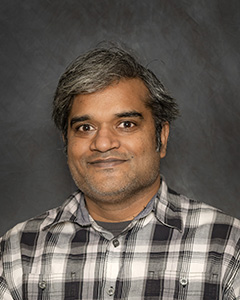
Agnieszka Ozimek is an Associate Professor at the Department of Landscape Architecture , Faculty of Architecture , Cracow University of Technology . Her work bridges architecture, urban planning, and digital landscape analysis, utilizing advanced computational methods for visual and spatial assessments. Education: BEng, PhD, DSc Arch Research Focus: Ozimek specializes in digital modeling, landscape metrics, and sustainable design. Her research includes viewshed analysis, fractal dimensions in landscape change, and integrating LiDAR/photogrammetry for architectural documentation. Publication Trends: Recent articles emphasize interdisciplinary approaches to transport hub design, digital landscape reconstruction, and climate resilience in cultural heritage. Key methodologies involve GIS, CAD, and algorithmic tools for objective visual analysis.
Oskar Henriksson is a Research Fellow at the Department of Mathematical Sciences within the Faculty of Science at the University of Copenhagen. His office is located at Universitetsparken 5, 2100 Copenhagen. He completed his PhD in 2025 at the same institution under the supervision of Elisenda Feliu, focusing on algebraic methods in reaction network theory. Henriksson's research centers on computational algebraic geometry, tropical geometry, and combinatorial methods applied to reaction networks and algebraic statistics. He specializes in Gröbner bases, toric varieties, homotopy continuation, and tropical geometry, with applications in biological systems and statistical modeling. His recent publications focus on parametrized polynomial systems, genome reconstruction, and geometric methods in statistics. Thematic analysis shows strong emphasis on algorithmic approaches to biological and statistical problems through algebraic frameworks. His work is supported by two major grants: the ERC Consolidator Grant 'Signs, polynomials, and reaction networks' (POSALG-101044561) and the Novo Nordisk Foundation project (NNF20OC0065582).
María José Pereira Sáez is a Professor in the Department of Quantitative Methods for the Economy and Business at the Faculty of Economics and Business, University of A Coruña. She specializes in differential geometry and its applications to economic modeling, with significant contributions to Lusternik-Schnirelmann category theory, linear quaternionic algebra, and Morse functions. Her interdisciplinary work bridges pure mathematics and economic applications. Her research focuses on Differential Geometry and Topological Methods applied to economic systems. Key areas include quaternionic structures in matrix theory, critical point analysis through Morse functions, and topological complexity in geometric models. Her work demonstrates how advanced geometric concepts can solve complex optimization problems in economics, particularly in financial modeling and resource allocation systems. Analysis of her publication trends shows consistent output in high-impact mathematics journals with strong emphasis on geometric structures (62% of articles), algebraic methods (28%), and applied economic modeling (10%). Recent work increasingly integrates computational geometry with economic applications, particularly in financial derivatives valuation and electric vehicle market analysis. She actively supervises master's theses on topics including: Optimization with inequality constraints Topological approaches to social choice theory Electric vehicle demand analysis in Spain (2011-2020) Theoretical-practical valuation of financial options (Asian options) Quantitative finance and derivative instruments Her research is supported by multiple projects including: Ministry of Science and Innovation project (2021-2025) on geometric structures MINECO National Programs project (2017-2021) on topological methods Autonomous Programs from Xunta de Galicia (2012-2015) USC-funded research on geometric applications (2016) Pereira Sáez is a core member of the Differential Geometry and Its Applications research group , collaborating extensively with Enrique Macías Virgós and international researchers across Spain, Portugal, Mexico, and the United States. Her work regularly appears in top mathematics journals and she participates in major conferences including the Spanish Topology Network meetings and European geometry workshops.
Jing Yang is an Associate Professor in the Department of Electrical and Computer Engineering at the University of Virginia, with a secondary appointment (by courtesy) in the Department of Computer Science. Previously, she was an Assistant and then tenured Associate Professor at the Pennsylvania State University. Her educational background includes a B.S. from the University of Science and Technology of China (USTC), and M.S. and Ph.D. degrees from the University of Maryland, College Park, all in Electrical Engineering. Dr. Yang's research spans machine learning, wireless communications and networking, and information theory. Her current focus includes transformers and large language models (LLMs), multi-armed bandits and reinforcement learning, privacy-preserving machine learning, federated learning and distributed/decentralized learning, and machine learning applications in wireless communications. She has developed innovative approaches that bridge theoretical foundations with practical wireless networking applications, particularly in the areas of timely data transmission and resource optimization. Her recent publications demonstrate a strong trend toward integrating large language models with wireless communication systems, developing privacy-preserving federated learning techniques, and advancing theoretical understanding of reinforcement learning algorithms. Her work consistently addresses fundamental challenges in information theory while developing practical solutions for next-generation wireless networks. NSF CAREER award 2015 WICE Early Achievement Award 2020 IEEE TCCN Exemplary Editor Award 2024 N2Women: Stars in Computer Networking and Communications 2020 Dr. Yang has advised numerous PhD students who have gone on to successful careers in academia and industry. Her research is supported by multiple NSF grants including the CAREER award, as well as collaborations with Intel and the Department of Energy. She leads projects focused on when next-generation wireless networks meet machine learning, timely computing and learning over communication networks, and distributed differentially private data synthesis. Her research group at UVA focuses on developing theoretical foundations and practical algorithms for machine learning in wireless networks, with particular emphasis on privacy-preserving techniques, reinforcement learning applications, and efficient transformer implementations for communication systems.
Bahar Bahrami is a Ph.D. student at the Department of Computational Hydrosystems (CHS) at Helmholtz Centre for Environmental Research - UFZ, affiliated with the University of Potsdam. She has been conducting research since 2019 as part of the MOMENT project, which focuses on improving representations of integrated water and carbon cycles across ecosystems with emphasis on extreme events. Her educational background includes: Dipl.-Ing. in Water Engineering and Management from BOKU University, Vienna (2018) Visiting Scholar at University of Illinois at Urbana-Champaign (2016) M.Sc. in Climatology in Environmental Planning from University of Tarbiat Modares, Tehran (2009) B.Sc. in Natural Resources Engineering Bahar's research spans multiple interconnected domains in environmental hydrology. She investigates the coupling mechanisms between water and carbon cycles, analyzes hydroclimatic patterns and extreme hydrological events, and applies advanced geo-statistical methods and optimization algorithms to environmental systems. Her work integrates Geographic Information Systems (GIS) and Remote Sensing technologies for comprehensive environmental analysis. As part of her doctoral research, she's parameterizing dynamic vegetation models using Multiscale Parameter Regionalization techniques and coupling them with the Hydrological Model (mHM) to enhance predictions of terrestrial water-carbon cycle interactions. This research utilizes data from the TERENO observatory network. Her scholarly contribution includes a conference presentation at the EGU General Assembly 2018 focusing on evapotranspiration trends in Illinois watersheds, demonstrating her expertise in hydrological process analysis and modeling. Bahar works within the research environment led by Prof. Dr. Sabine Attinger (Head) and Prof. Dr. Luis Samaniego (Deputy Head), contributing to the department's mission of advancing computational hydrosystems research.
Pallav Kumar Shrestha is a postdoctoral researcher at the Helmholtz Centre for Environmental Research (UFZ) since 2017, focusing on Computational Hydrosystems in Leipzig, Germany. His work centers on resolving challenges in global hydrological modeling, particularly for small catchments and reservoir systems. Developed subgrid catchment conservation method for gridded hydrological models Created new reservoir module for mHM Contributor to Nature Communications flood early warning system paper Research Themes : Flood forecasting at global/regional scales Reservoir modeling in regulated basins Climate change impacts on water resources Computational hydrosystems development Environmental informatics for global hydrology Key Projects : ULYSSES (Copernicus), SaWaM (BMBF), 4DHydro (ESA), and state of global water resources (WMO). His 2025 ASCE-EWRI award paper on Great Lakes runoff intercomparison highlights his collaborative impact. Modeling Expertise : Active member of the mHM development team , contributing to debugging, user support, and training across Europe and Asia. His technical skills bridge Fortran programming for skill assessment tools and ecFlow automation systems.
Shaojie Tang is a Professor in the Management Science and Systems department at the School of Management, University at Buffalo. He serves as the Associate Director of the AI and Management Science Institute for Artificial Intelligence and Data Science. His research focuses on Machine Learning, Responsible AI, and Combinatorial Optimization, with applications in business and data science. PhD from Illinois Institute of Technology His work spans interdisciplinary domains including Federated Learning, Recommender Systems, and Optimization techniques. Key subfields involve Personalized AI, Tensor Completion, and Algorithm Design for collaborative systems. Recent publications from 2025 and 2024 highlight his leadership in Federated Learning, Neural Network Decoupling, and Strategic AI Deployment. Trends include balancing personalization with collaboration, enhancing model robustness, and cross-modal adaptation in distributed environments. Professional affiliations include IEEE, ACM, and INFORMS. He advises graduate students in theoretical and applied AI research, though specific advisees are not listed publicly. His research teams operate under the Institute for Artificial Intelligence and Data Science, advancing scalable solutions for dynamic business challenges.
Shivesh K. Roy is a postdoctoral researcher at the Institute of Mathematical Sciences (IMSc), Chennai, working with Prof. Saket Saurabh. Previously, he completed his Ph.D. at Eindhoven University of Technology under Prof. Bart Jansen, supported by an ERC Starting Grant titled "Rigorous Search Space Reduction". His educational background includes: Ph.D. in Algorithms, TU Eindhoven (2024); Thesis: "Parameterized Algorithms for Augmented Graph Problems" His research focuses on theoretical computer science, specifically graph algorithms, parameterized complexity, and kernelization. He develops rigorous algorithmic frameworks for NP-hard graph problems by exploiting structural properties and parameterization techniques to achieve efficient solutions. His publications (2021-2025) reveal consistent advancement in kernelization methods and parameterized algorithms, particularly for vertex cover, feedback vertex set, and clique packing problems. Key innovations include linear-vertex kernels for sparse graphs and hardness results for weight compression, demonstrating deep integration of combinatorial structures with computational complexity. He has contributed academic service through peer review for SIAM Journal on Discrete Mathematics, Algorithmica, FCT 2025, SOFSEM 2025, and WG 2022. Currently embedded in Prof. Saket Saurabh's research group at IMSc, he continues collaborative work initiated during his ERC-funded doctoral research at TU Eindhoven's Algorithms group.
Russell Poldrack is the Albert Ray Lang Professor of Psychology at Stanford University , with an additional courtesy appointment in Psychiatry and Behavioral Sciences. He serves as Department Chair in Psychology, Associate Director of the Stanford Data Science Initiative, and Director of the Center for Open and Reproducible Science. A British Academy Fellow (2023), Poldrack leads research at the intersection of cognitive neuroscience and neuroinformatics , focusing on decision-making, executive control, and open science frameworks like NeuroSynth and OpenNeuro. Developed fMRIPrep pipeline for standardized neuroimaging preprocessing Championed reproducibility in fMRI analysis through multiverse analysis frameworks Created hyve visualization engine for composite neuroimaging representations His recent publications address decision-making mechanisms (eLife 2025), fMRI reliability (Nature Human Behaviour 2024), and machine learning reproducibility (Science Advances 2024). Poldrack's lab has produced over 150 published reuses of shared neuroimaging data through the OpenNeuro platform, while his Poldrack Lab continues to explore self-regulation ontology in clinical populations. He currently oversees 13 independent studies through Stanford's Neuroimaging Data Science program. Major awards: OHBM Open Science Award , Wiley Young Investigator (2005) Professional roles: Board of Scientific Counselors, NIH NIMH; Former Human Connectome Project EAB Chair Methodological contributions: BIDS standard adoption, MRIQC quality control protocols
Dr. Melissa K. Beason is a Research Assistant Professor of Engineering Physics at the Air Force Institute of Technology (AFIT), specializing in atmospheric propagation and laser beam control. She holds a PhD in Electrical Engineering from the University of Central Florida, an MS in Mathematical Sciences from UCF, and a BS in Physics from the University of Florida. Her research focuses on optical turbulence theory, beam propagation modeling, and experimental methods for characterizing atmospheric conditions. Dr. Beason serves as an Air Force Subject Matter Expert for JDETO Beam Control & Propagation, NATO SCI-316 member, and U.S. representative to NATO SET-304. Her work includes collaborative projects on turbulence profiling, sensor development (e.g., SMASH), and applications of sonic anemometry for turbulence parameter estimation. Education: PhD, Electrical Engineering, University of Central Florida MS, Mathematical Sciences, University of Central Florida BS, Physics, University of Florida Awards: European Research Consortium Fellowship (2019) Preeminent Postdoctoral Scholar (2019) Special Act Award (1996) Her research spans theoretical and experimental studies in atmospheric optics, including turbulence parameterization, beam wander effects, and free-space optical communication metrics. Recent work emphasizes non-Kolmogorov turbulence models, anisotropic effects, and sensor validation for defense applications. She has advised over 20 years of R&D projects involving sonar systems, laser research, and collaborative NATO initiatives. Dr. Beason's contributions include co-authoring textbooks on laser beam propagation and asymptotic methods in wave theory. Labs/Teams: Involved in AFIT's Engineering Physics research group, cross-functional teams at NATO, and partnerships with organizations like the Naval Undersea Warfare Center.
Dr. Orlando Ayala is an Associate Professor in the Mechanical Engineering Technology Department at Old Dominion University's Frank Batten College of Engineering and Technology. He holds a Ph.D. (2005) and M.Sc. (2001) in Mechanical Engineering from the University of Delaware, and a B.S. in Mechanical Engineering (Cum Laude, 1995) from Universidad de Oriente, Venezuela. His research focuses on multiphase flows , turbulent particle transport , and high-performance computational methods . Key areas include: fluid-particle interactions in pipeline erosion, lattice Boltzmann modeling for turbulence modulation, cloud droplet collision dynamics, and porous media flow. His work integrates advanced numerical simulations with applications in energy systems and environmental fluid mechanics. Publications emphasize turbulent collision statistics, particle-laden flows, and parallel computing algorithms, with recent studies leveraging DNS and lattice Boltzmann methods to resolve microscale interactions in multiphase systems. Scientific Awards & Honors: Certificate of Excellence in Undergraduate Research (2017) Highly Cited Research in Parallel Computing (2016) Outstanding Contribution in Reviewing, Journal of Natural Gas Science (2015) Research Fellowships: Venezuelan Foundation for Promotion of Researchers (2003, 2006, 2008) Teaching Excellence Nominee, University of Delaware (2005) Grants & Projects: Secured $800,000+ in funding, including NSF-supported studies on turbulent particle collisions ($359,861), naval additive manufacturing ($150,000), and solar energy systems ($158,162). Research collaborations span turbulence modulation, photovoltaic tech, and pipeline erosion.
Raja Nagisetty is an Assistant Professor in the Department of Environmental Engineering at Montana Tech's Lance College of Mines & Engineering. Holding a Ph.D. in Civil and Environmental Engineering from the University of Louisville (2009), he is a licensed Professional Engineer in Kentucky. Education: B.Tech (2000) and M.Eng (2002) from Indian institutions Professional Experience: 2014-present at Montana Tech, prior roles at University of Louisville and Indian institutions His research focuses on water quality modeling , stormwater management , and environmental health assessments , with recent work examining wildfire particulate matter impacts and mine waste remediation strategies. Current projects include modeling snowmelt runoff systems and evaluating geothermal seep interactions with river systems. Recent publications demonstrate expertise in dissolved oxygen dynamics , heavy metal characterization , and remote sensing applications . He serves on graduate councils and thesis committees, including chairs for Matt Strozewski and William George. Professional Affiliation: Montana American Water Resources Association Notable Award: Faculty Certificate of Appreciation from Sree Sastha Engineering & Technology (2004-2005) His work spans multiple environmental engineering domains, from drinking water infrastructure challenges to climate change adaptation strategies, with significant contributions to watershed management and pollution analysis.
Mehrdad Moharrami is an Assistant Professor in the Department of Computer Science at the University of Iowa . He specializes in reinforcement learning, Markov decision processes, and random graph models for economics and computational systems. Education : BSc in Mathematics and Electrical Engineering from Sharif University of Technology; MSc in Electrical Engineering and Mathematics from University of Michigan; PhD in Electrical Engineering from University of Michigan (2020) His research focuses on robust reinforcement learning algorithms under distributional shifts and network structure analysis using parameterized random graphs. Recent work explores societal systems modeling and risk-sensitive control frameworks. Moharrami's publications demonstrate interdisciplinary expertise across computer science, mathematics, and network science , with notable contributions to: Risk-sensitive reinforcement learning (ICML 2025, Mathematics of Operations Research 2024) Random graph modeling (COLT 2025, Random Structures & Algorithms 2024) Network optimization (IEEE Transactions on Network Science 2024, IEEE Transactions on Information Theory 2023) Scientific recognition includes: Rackham Predoctoral Fellowship (2019) NSF MPS Workshop participation (2022) Multiple conference best paper nominations Iranian National Olympiad medals (2007-2008) As co-organizer of major workshops (SIGMETRICS 2022, Performance 2023), he actively contributes to academic community development while maintaining active referee roles for top journals like IEEE/ACM Transactions on Networking and Mathematics of Operations Research.
Michael L. Klein is the Laura H. Carnell Professor of Science at Temple University. His research focuses on applying quantum mechanics and statistical thermodynamics to model molecular phenomena through advanced computational methods. He develops and adapts software for ab initio electronic structure calculations, molecular dynamics simulations, and novel hardware optimization (e.g., GPUs and multi-core CPUs). Collaborations span interdisciplinary teams addressing meso-scale biophysical systems and material interfaces. Research interests include: molecular simulations of complex systems, interface behavior (e.g., gold/water interfaces), adaptive surface functionalization, and protein-ligand interactions. Techniques emphasize enhanced sampling methods and coarse-grained modeling to bridge microscopic and macroscopic observations. Publications highlight contributions to surface spectroscopy, biomaterial design, and computational methodologies. His work bridges theory with experimental validation, often involving interdisciplinary partnerships in chemistry, materials science, and biophysics. Notable research directions include force field development for proteins (SPICA), understanding cannabinoid receptor dynamics, and modeling water behavior under various conditions. Software innovations focus on accelerating simulations for rare events and heterogeneous systems.
Dr. Rudolf Sailer is a Lecturer and Academic Coordinator (BSc/MSc) at the Department of Geography, University of Innsbruck. His research focuses on Remote Sensing, Topographic LiDAR, and Mountain Environmental Changes, with a particular emphasis on glaciology, rockfall dynamics, and permafrost processes. He actively contributes to courses such as Statistical Exercises and coordinates bachelor's thesis seminars. Research interests include glacier mass balance, aerodynamic roughness modeling, and geomorphological processes in alpine environments. His work integrates multi-scale remote sensing data (e.g., Sentinel, LiDAR) and field observations to quantify environmental changes. He has collaborated on projects analyzing the Rofental research basin and the Khumbu Himal in Nepal. Recent publications address glacier mapping, rockfall activity, and snow cover dynamics using advanced remote sensing techniques. His lab, Remote Sensing & Topographic LiDAR, emphasizes interdisciplinary approaches to mountain environmental challenges.