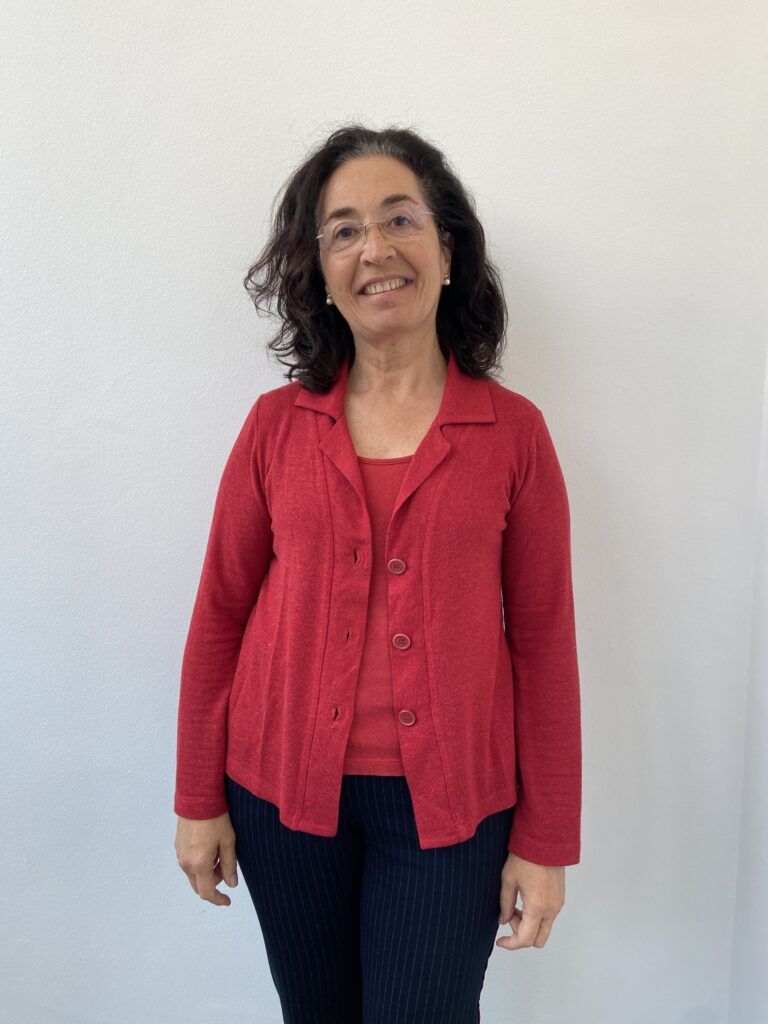
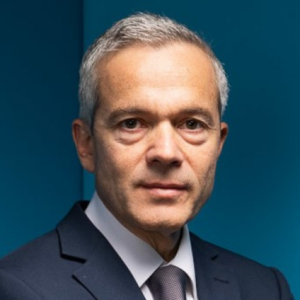
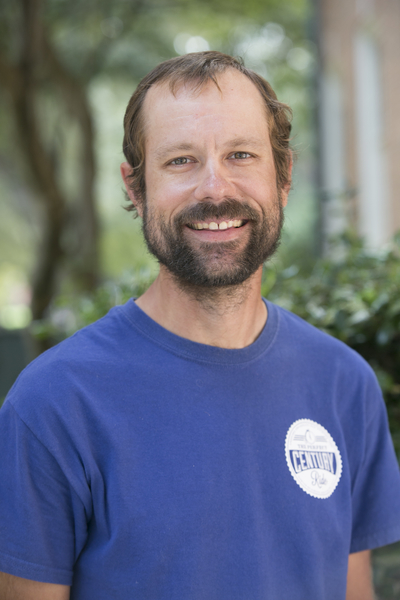
Niclas Jansson is a researcher at the PDC Center for High Performance Computing at KTH Royal Institute of Technology. He holds an M.S. in Computer Science (2008) and a Ph.D. in Numerical Analysis (2013) from KTH. His career spans roles such as postdoctoral researcher at RIKEN Advanced Institute for Computational Science (2013-2016) and visiting scientist at RIKEN (2018-2021), where he contributed to the Japanese exascale program Flagship 2020. A core focus of his research involves extreme-scale computing and numerical method development. He is a key developer of RIKEN's multiphysics framework CUBE , the HPC branch of FEniCS , and the spectral element flow solver Neko . His work is currently supported by a Swedish Research Council Starting Grant aimed at enhancing high-order spectral element methods for exascale fluid simulations. Niclas has published extensively on topics such as GPU acceleration , adaptive finite element methods , in situ visualization , and extreme-scale turbulence modeling . He also teaches Computational Fluid Dynamics (SG2212) at KTH.
Dr. Lipeng Wan is a tenure-track Assistant Professor of Computer Science at Georgia State University (GSU), located at 25 Park Place, room 733. He holds a B.Eng. in Communication Engineering from Nanjing University of Science and Technology (2008), an M.Eng. in Information and Communication Engineering from Southeast University (2011), and a Ph.D. in Computer Science from the University of Tennessee, Knoxville (2016). Prior to joining GSU, he served as a Computer Scientist at Oak Ridge National Laboratory (ORNL), first as a postdoctoral researcher (2016–2018) and later as a full-time research staff member (2018–202?). His research focuses on big data management and analytics , high-performance and data-intensive computing , and resilience and performance optimization for distributed systems . Key interests include scientific data workflows, I/O innovations for exascale systems, and error-controlled data compression frameworks like MGARD and HPDR. Dr. Wan’s recent work emphasizes adaptive data transmission (e.g., JANUS), load balancing in cloud environments (SciLance), and optimizing file access patterns on HPC systems. His publications address challenges in exascale computing, including I/O performance, geographically distributed data management, and feature-preserving compression for climate simulations. He leads research at GSU in collaboration with national labs like ORNL, focusing on advancing scalable data management techniques for high-performance computing applications.
Zhen Xie is an Assistant Professor in the Department of Computer Science at Binghamton University (SUNY), serving as Director of the Parallel Computing and Intelligent System (PCIS) Lab. He holds a PhD from the Chinese Academy of Sciences and a BA from Wuhan University of Technology. His research focuses on high-performance computing (HPC), machine learning, and their intersections, particularly optimizing performance for HPC and AI/DL applications across heterogeneous architectures. Research Highlights: Dr. Xie’s work emphasizes system-level performance optimization for ML and HPC, including GPU acceleration, memory optimization, and AI accelerator selection. His team has won the ACM Gordon Bell Special Prize (2022) for their GenSLMs project predicting SARS-CoV-2 evolution. Recent grants include a 2024 gift from OpenAI for AI testbed initiatives. Awards: ACM Gordon Bell Special Prize (2022), Impact Argonne Awards (2023) Lab: PCIS Lab explores middleware for parallel computing, targeting scientific simulations and big data analytics. Collaborations include Argonne National Lab and Lawrence Berkeley National Lab. Teaching: Teaches Distributed Systems (CS 457/557) and oversees independent studies. Previously trained researchers at Argonne’s ATPESC program. Grants & Collaborations: Subcontract with Lawrence Berkeley Lab (HEVI-LOAD), Argonne testbed expeditions, and OpenAI-funded projects. Active in DOE labs like Summit and Aurora supercomputers.
Hans Ekkehard Plesser is a Professor at the Department of Data Science, Norwegian University of Life Sciences (NMBU). His work focuses on computational neuroscience, large-scale neural network simulations, and advancing reproducibility in computational research. He is a key contributor to the NEST simulator, a widely used open-source tool for modeling spiking neural networks. His research spans theoretical and applied aspects of neuroscience, including neuron-astrocyte interactions, connectivity patterns in neural networks, and high-performance computing strategies for brain-scale simulations. He emphasizes reproducible computational practices through initiatives like the ReScience project, promoting transparency and validation in scientific software. His publications highlight advancements in simulation methodologies, algorithm optimization, and the integration of supercomputing resources for neuroscience. He has contributed to foundational work on spiking neuron dynamics, firing-rate models, and the theoretical underpinnings of neural network behavior.
Yunseong Nam is an Adjunct Assistant Professor at the University of Maryland. His research focuses on advancing quantum computing through innovations in trapped-ion systems, quantum algorithms, and error mitigation techniques. He is particularly known for developing methods to enhance gate fidelity, optimize quantum circuits, and improve fermionic simulations for quantum chemistry applications. Research Interests: Nam’s work spans quantum hardware optimization, entangling gate implementation, and hybrid quantum-classical computing architectures. He emphasizes practical applications like materials science simulations and fault-tolerant protocols, leveraging symmetries and resource-efficient algorithms to address computational challenges. His contributions include breakthroughs in pulse engineering, SPAM error handling, and the design of robust quantum circuits. Key Research Trends: Recent articles highlight advancements in trapped-ion gate optimization (e.g., small-angle Mølmer-Sørensen gates), error mitigation strategies, and quantum circuit compilers. His work frequently intersects with experimental quantum systems, emphasizing real-world implementations over purely theoretical models. Awards & Grants: No specific awards or grants are mentioned in the provided texts. Labs & Teams: While specific lab affiliations are not detailed, his collaborations likely involve quantum computing hardware groups and theoretical teams focused on algorithm optimization.
Mina Mirhosseini is a Research Fellow at the Faculty of Logistics, Molde University College, Norway. She holds a PhD in Computer Science from Shahid Beheshti University of Tehran, Iran, and has prior academic experience as a faculty member and lecturer in Iran and as a remote teaching assistant at the University of Hertfordshire, UK. Her primary research interests include Optimization Methods, Metaheuristics, Heuristics, Linear Integer Programming, Parallel Processing, Machine Learning, Artificial Intelligence, and Logistics. She has made significant contributions to solving complex computational problems such as the n-similarity problem and Mixed Integer Linear Programming (MILP) models using hybrid and parallel algorithms, particularly in the context of high-level synthesis and wireless sensor networks. The analysis of her recent publications reveals a strong focus on developing and applying advanced optimization techniques, especially quantum-inspired gravitational search algorithms and parallel genetic algorithms, to real-world engineering and computational challenges. Her work consistently emphasizes performance improvement, scalability, and load balancing in distributed and heterogeneous computing environments. Mina Mirhosseini has an extensive publication record in high-impact journals such as IEEE Transactions on Parallel and Distributed Systems, Journal of Parallel and Distributed Computing, Journal of Supercomputing, and Computers and Electrical Engineering. Her research has been published across a range of venues, reflecting interdisciplinary work at the intersection of computer science, electrical engineering, and applied optimization. She has actively contributed to the academic community through roles such as program committee member and executive committee member for conferences on fuzzy systems, swarm intelligence, and evolutionary computation. Her academic journey includes teaching and research roles in Iran, demonstrating a sustained commitment to higher education and scientific inquiry. Mina Mirhosseini is part of the research group focused on Planning, Optimization and Decision Support at Molde University College. Her current work continues to advance the state-of-the-art in parallel and metaheuristic optimization methods, with applications in logistics, synthesis, and sensor network design.
Samuel Thibault is a Professor at University of Bordeaux, affiliated with Laboratoire Bordelais de Recherche en Informatique (LaBRI) and Inria Bordeaux -- Sud-Ouest. He is a member of the SATANAS team at LaBRI (theme: High Performance Runtime Systems for Parallel Architectures) and the STORM research team at Inria Bordeaux (previously RunTime). His work bridges academic research and practical implementation of high-performance computing systems. Thibault's research focuses on task-based runtime systems, particularly StarPU, for heterogeneous and parallel computing architectures. His work addresses critical challenges in scheduling algorithms, memory management under constraints, data locality optimization, and performance modeling for complex NUMA architectures. He has made significant contributions to the field of parallel computing through the development and analysis of runtime systems that efficiently manage tasks across diverse hardware resources including CPUs, GPUs, and other accelerators. His research has practical applications in scientific computing, deep learning inference, and large-scale simulations requiring extreme computing power. His recent publication trends show a strong emphasis on optimizing task-based runtime systems for heterogeneous architectures with particular attention to memory constraints and data locality. There's a clear progression toward applying these techniques to deep learning inference workloads, as evidenced by his StarONNX project. His work consistently addresses the challenge of balancing throughput and latency in complex computing environments, with increasing focus on recursive task graphs and dynamic adaptation strategies. Thibault is actively involved in European research initiatives including TEXTAROSSA (focusing on exascale technologies) and EXA2PRO (high development productivity on heterogeneous systems). His work has been published consistently in top-tier conferences and journals in parallel and distributed computing. As part of the STORM team at Inria Bordeaux, Thibault contributes to advancing the state of the art in runtime systems for high-performance computing. His team's work on StarPU has become a reference implementation in the field, enabling researchers and practitioners to develop applications that can efficiently utilize heterogeneous computing resources without needing to manage the complexity of different hardware architectures directly.
Yolanda Becerra Fontal is a faculty member at the Universitat Politècnica de Catalunya (UPC), affiliated with the Department of Computer Architecture within the Barcelona School of Informatics (FIB). She is actively involved in research projects and collaborations, notably with the Barcelona Supercomputing Center, and is a member of prominent research groups such as the High Performance Computing Group (CAP) and CROMAI (Computing Resources Orchestration and Management for AI). Research Interests: Her research spans a broad spectrum of computer systems, with a consistent focus on performance, efficiency, and scalability. Key areas include Computer Architecture , High-Performance Computing (HPC) , Distributed and Cloud Systems , Resource and Energy Management in virtualized environments, and Data-Intensive Computing . More recently, her work has centered on innovative time-series database systems and data management for edge and cloud analytics. Publication Trends: Her recent scholarly output (2020-2022) shows a strong emphasis on time-series data management, proposing novel database architectures like NagareDB and strategies for polyglot persistence. Earlier work (2009-2013) was pivotal in MapReduce workload management, energy accounting for virtualized systems, and optical data center networks, demonstrating a long-standing contribution to foundational distributed computing challenges. Scientific Contributions: Her work has been published in top-tier journals and conferences such as Future Generation Computer Systems , IEEE Transactions , and Nucleic Acids Research . She has also contributed to significant competitive R&D projects and holds patents related to data flow management and distributed indexing. Advising and Grants: Dr. Becerra Fontal has served as a thesis advisor for doctoral students. Her research has been funded through competitive grants from national and regional programs, including Spanish State Research Plans (Plan Estatal de Investigación) and Catalonia's RIS3CAT strategy, supporting projects on high-performance computing and data management. Research Groups and Labs: She is a core member of the CAP - High Performance Computing Group and the CROMAI - Computing Resources Orchestration and Management for AI group at UPC. Her work is closely associated with the Barcelona Supercomputing Center (BSC) , one of Europe's leading supercomputing facilities, indicating access to advanced computational infrastructure.
Olaf Schenk is a Professor at the Institute of Computing within the Faculty of Informatics at Università della Svizzera italiana (USI), Switzerland. He serves as Director of the Institute of Computing and Co-Director of the Master in Computational Science. He is also an adjunct member of the Computer Systems Institute at USI. PhD in Information Technology and Electrical Engineering, ETH Zurich (2001) Venia Legendi in Mathematics and Computer Science, University of Basel (2009) Applied Mathematics, Karlsruhe Institute of Technology (KIT), Germany His research focuses on high-performance computing , computational science and engineering , and applied algorithms for extreme-scale simulations. He bridges computer science with scientific computing needs, particularly in parallel algorithms , sparse solvers , graph analytics , and manycore architectures . His work emphasizes scalable software tools and programming models for emerging HPC systems. The 15 most recent publications reflect a consistent focus on sparse matrix computations , parallel and task-based algorithms , graph partitioning , and performance optimization for heterogeneous and manycore systems. Keywords span high-performance computing, numerical linear algebra, and large-scale data analysis, showing strong integration of theoretical algorithm design with practical implementation. Olaf Schenk has received several prestigious honors: Elected Fellow, Society for Industrial and Applied Mathematics (SIAM) Senior Member, IEEE and ACM SIAM Supercomputing Prize 2023 IBM Faculty Award Two Leadership Computing Awards from the U.S. Department of Energy He has held leadership roles as Chair, Vice Chair, and Program Director of the SIAM Activity Group on Supercomputing. He serves as Associate Editor for ACM Transactions on Mathematical Software and on the editorial board of SIAM Journal on Scientific Computing . He has participated in over 60 international program committees, including top-tier conferences such as SC, IPDPS, and IEEE CSE. He advises PhD and Master’s students in computational science and leads research projects funded by national and international agencies. He is also the Founder & Director of Panua Technologies Sagl, focusing on high-end software for simulation and optimization. His research group at USI works on next-generation computing tools for extreme-scale scientific simulations, with ongoing work in adaptive algorithms, resilience, and hybrid CPU-GPU computing. He leads collaborative projects with institutions in Europe and the U.S., aiming to develop scalable, robust, and efficient software for future exascale systems.
Dr. Maria Ribera Sancho is a Professor at the Polytechnic University of Catalonia (BarcelonaTech), holding roles as Dean of the Faculty of Informatics of Barcelona (2004–2010), Vice-Dean (1998–2004), and currently Manager of the Education and Training Department at the Barcelona Supercomputing Center (BSC-CNS). She chairs the EQANIE Accreditation Committee and serves on the ACM-W Europe Executive Committee. Her research focuses on Software Engineering, Conceptual Modeling, Ontologies, Learning Analytics, and IoT applications. Notable contributions include work on automated design using conceptual models, model-driven software development, and semantic-based IoT infrastructure monitoring. She leads projects like LinDaFIX (social welfare data tools) and REMEDiAL (ontology-driven software automation). Key awards include the UPC Quality in Teaching Prize (2005, 2021), Jaume Vicens Vives Distinction (2005), Sapiens Award (2011), and Festibity Award (2011). She advises doctoral and master’s students on topics like IoT semantic monitoring and educational ontology development. Academic director of the inLab FIB Talent Program, she also directs the PRACE Advanced Training Center at BSC. Main projects include TINTIN (SQL integrity tool), e-Catalunya (collaborative government platform), and PILARES (learning analytics for secondary education). Her work bridges academia and industry through competitive projects with companies and institutions.
Stefano Markidis is a leading researcher in High-Performance Computing (HPC) and quantum computing. His work focuses on developing advanced simulation frameworks, such as the Neko framework for computational fluid dynamics, and optimizing algorithms for heterogeneous architectures. He collaborates extensively with institutions and researchers globally, contributing to fields like plasma physics, quantum systems, and machine learning applications. His research emphasizes scalability, performance optimization, and the integration of cutting-edge technologies like GPU acceleration and quantum computing. Key research interests include extreme-scale simulations, quantum algorithms, and in-situ data analysis techniques. He has published over 200 articles, with recent work addressing challenges in NISQ systems, tensor network simulations, and CUDA-based performance enhancements. His contributions span theoretical and applied domains, bridging computational methods with real-world applications in fusion energy, materials science, and space exploration. Notable collaborations include projects with Philipp Schlatter, Niclas Jansson, and the NISQ application development community. Markidis also explores hybrid frameworks combining classical and quantum computing, aiming to leverage emerging hardware for scientific breakthroughs.
Professor Diomidis Spinellis is a renowned academic in Software Technology at Athens University of Economics and Business (AUEB). He specializes in software engineering practices, code quality, AI ethics, and system architecture. His work bridges theoretical advancements with practical applications in industry, emphasizing reproducibility and empirical methods. Recipient of the IEEE Computer Society's prestigious 'Distinguished Contributor Recognition,' Spinellis is the sole Greek scientist to achieve this honor. His research spans software evolution, security, and open-source ecosystems, with a focus on methodologies like refactoring, static analysis, and debugging strategies. Key research interests include AI-generated content detection, modular data analytics, and incident management systems. His studies often leverage large-scale datasets (e.g., Unix evolution, Linux supercomputing analysis) to uncover patterns in software behavior and development practices. Publications frequently address emerging technologies' societal impacts, such as energy-efficient computing and ethical AI deployment. He advocates for reproducible research through tools like the Alexandria3k framework and contributes to open-source initiatives.
Kazem Cheshmi is an Assistant Professor in the Department of Electrical and Computer Engineering at McMaster University. His research focuses on compiler optimization techniques for accelerating scientific computing and machine learning applications on parallel architectures. He leads the SwiftWare Lab and teaches courses such as High-Performance Programming (COMPENG 4SP4/ECE 6SP4) and Special Topics in Computation (ECE 718). Education: B.Eng. (Ferdowsi University of Mashhad), M.A.Sc. (University of Tehran), Ph.D. (University of Toronto). He has held research positions at Microsoft Research, Adobe Research, Concordia University, and Rutgers University. Research Interests: High-performance computing, compiler design, sparse matrix computations, and their applications in machine learning and scientific computing. His work emphasizes optimizing sparse codes for parallel architectures and developing efficient QP solvers like NASOQ. Key Contributions: Developed Sympiler (a domain-specific compiler for sparse matrix codes) and NASOQ (a scalable QP solver). His awards include the ACM-IEEE CS George Michael Memorial HPC Fellowship (2020) and recognition for contributions to compiler-driven sparse computation optimization. Teaching and Service: Organizes SONAD’25, serves on program committees for PPoPP, Supercomputing, and IPDPS. Supervises students in compiler design, parallel programming, and high-performance computing. Labs/Teams: Leads the SwiftWare Lab focusing on compiler optimization and high-performance systems. Collaborates on open-source projects like Sympiler and NASOQ.
Brian R. Toone serves as an Assistant Professor in the Department of Mathematics and Computer Science within Samford University's Howard College of Arts and Sciences. A native of Hoover, Alabama, he teaches in Samford's growing computer science program with a focus on one-on-one student interaction. Toone holds a BS in Computer Engineering from Clemson University and both MS and PhD degrees in Computer Science from the University of California-Davis. His educational background prepared him for a career that blends academic research with practical software development experience. His research spans multiple areas of computer science with particular focus on web engineering, software engineering, trust and security systems, programming languages, database applications, and parallel processing. Toone is actively working to apply software engineering concepts to web application development and optimization, with special interest in bringing parallel computation capabilities to web applications. He is currently building a virtual supercomputer by networking department computers to donate idle processing cycles across campus. His publication history reveals consistent research in trust mediation for distributed information systems, with significant work between 1998-2008. His research evolved from control flow prediction in high-performance computing (1998) to web engineering and Ajax applications (2006-2008), showing adaptability to changing technology landscapes. Toone is an active member of professional organizations including the Association for Computing Machinery (ACM) and the Institute for Electrical and Electronics Engineers (IEEE). His research has been presented at numerous conferences including the ACM Mid-Southeast Chapter, Alabama Academy of Science, and various security and information systems conferences. Beyond academia, Toone is a competitive cyclist who has participated in major endurance cycling events including Paris-Brest-Paris (2023) and Race Across America (2017), where he raised awareness for Duchenne Muscular Dystrophy through the Ride4Gabe initiative.
Ravi Reddy Manumachu is an Assistant Professor in the School of Computer Science at University College Dublin (UCD), Ireland. He holds a B.Tech from IIT Madras (1997) and a PhD in Computer Science from UCD (2005), specializing in high-performance heterogeneous computing and energy-efficient systems. His research focuses on optimizing performance and energy efficiency in modern heterogeneous platforms like clouds, grids, and supercomputers through novel models and algorithms. Key contributions include functional performance/energy models, energy-prediction frameworks, and extensions like Heterogeneous MPI and ScaLAPACK for heterogeneous clusters. He has published over 69 articles in top journals/conferences, with recent works addressing data transfer energy measurement, scalable allreduce algorithms (SUARA), and portable programming models (OpenH). Professional roles include Assistant Professor at UCD (2023–present), SEAI Research Fellow (2022–2023), and prior industrial experience at Ansys, Siemens, and IONA Technologies. He has certifications in university teaching, GDPR, and research integrity. Languages include English (fluent), Telugu, and Hindi. Research trends emphasize bi-objective optimization (performance-energy), hardware heterogeneity challenges, and scalable communication algorithms for deep learning. His work addresses energy non-proportionality in CPUs and GPU-CPU interactions, with practical solutions for real-world applications like matrix operations and gene sequencing.