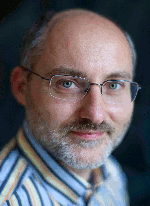
Roberto Di Cosmo is a Full Professor of Computer Science at University Paris Diderot since 1999, currently on leave at Inria. He is a prominent researcher and advocate for Free Software, contributing to its adoption since 1998 through seminars, articles, and software. He co-founded the Software Heritage initiative in 2016, aiming to build a universal archive of publicly available source code, and served as director of IRILL, a research structure dedicated to Free and Open Source Software quality, since 2010. His research focuses on theoretical computing, including functional programming, parallel and distributed programming, semantics of programming languages, type systems, rewriting, and linear logic. He has led significant projects like the European Mancoosi research initiative, addressing challenges in static analysis of large software collections. His work with Software Heritage has archived over 3 billion source code files and 700 million commits across 60 million projects. This effort preserves scientific and technological knowledge, enables software reuse, and supports research through a curated archive infrastructure. Roberto Di Cosmo actively bridges academic research with societal impact, emphasizing the role of software in digital culture and advocating for open knowledge sharing.
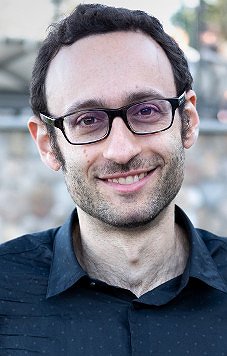
Adam Chlipala is a Professor at the Massachusetts Institute of Technology working at the intersection of programming languages, formal methods, and computer systems. His research focuses on building practical verified systems with end-to-end machine-checked proofs, particularly using the Coq proof assistant. His educational background includes a Computer Science undergraduate degree from Carnegie Mellon University (2003) and a PhD in Computer Science from the University of California, Berkeley (2007). Following a postdoctoral position at Harvard University through 2011, he joined MIT as faculty. Chlipala's research spans multiple domains with strong emphasis on dependent types , verified compilation , and hardware-software co-verification . His work consistently bridges theoretical foundations with practical implementation, as evidenced by his development of the Ur/Web programming language and his focus on creating clean-slate hardware-software stacks with formal guarantees. Key research thrusts include cryptographic constant-time verification, side-channel security, and verified tensor compilation. His recent publications (2020-2025) reveal a clear trajectory toward increasingly complex verified systems, with growing emphasis on hardware-software integration, cryptographic implementations, and performance-critical applications. The work consistently leverages Coq for machine-checked proofs while addressing real-world constraints like timing channels and hardware interfaces. Chlipala is the author of the influential textbook Certified Programming with Dependent Types , which serves as a primary educational resource for Coq at numerous institutions worldwide. His professional activities include significant service to the PL community through program committees for major conferences including PLDI, POPL, ICFP, and CPP. He leads research initiatives connecting hardware and software verification, most notably through the DeepSpec project which aims to build fully verified computing stacks. His current work focuses on practical applications of dependent types for business applications through Ur/Web and verified cryptographic implementations.
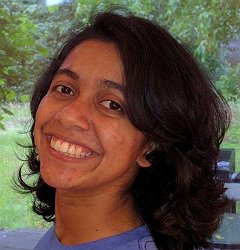
Chandrakana Nandi is the Director of US R&D at Certora and an affiliate assistant professor in the Department of Computer Science & Engineering at the University of Washington's College of Engineering. She completed her PhD at the University of Washington working with Zachary Tatlock and Dan Grossman in the PLSE research group. Her research focuses on building tools for scaling automated formal verification to real-world programs, particularly for DeFi applications. She works extensively with equality saturation techniques (egg project) and has made significant contributions to computational fabrication through projects like Carpentry Compiler, Szalinski, and LambdaCAD. Her work bridges programming languages, compilers, and digital fabrication, creating novel tools that transform how we design and manufacture physical objects. Nandi's publication record shows a strong trajectory in programming language techniques applied to verification and fabrication. Her work on equality saturation has become foundational in the field, with the egg library enabling state-of-the-art results in compiler optimization and program synthesis. Recent work has expanded into formal verification of smart contracts, demonstrating the versatility of her research approach across different domains. Distinguished Paper Award at OOPSLA 2021 Sigplan Research Highlight for POPL 2021 As Director of US R&D at Certora, she leads research efforts on verification tools for languages like WASM and techniques to help users write formal specifications more easily using mutation testing. She has served in numerous organizational roles for major programming languages conferences including as Workshops Co-Chair for ICFP 2025 and Committee Member for PLDI Review Committee. Nandi has established herself as a leader in the intersection of programming languages and computational fabrication, with her work on equality saturation becoming particularly influential across multiple subfields of programming languages research.
Anne-Frederique Caballero serves as Lecturer at the Faculty of Foreign Languages and Cultures, University of Picardie Jules Verne (UPJV), France, where she specializes in English literature and teaches courses in literature and professional communication. She maintains active affiliation with the CORPUS research unit (UR UPJV 4295), contributing to interdisciplinary studies in language and textual analysis. Her research program explores three interwoven domains : (1) Children's and fantasy literature with deep expertise in C.S. Lewis's Narnia series, Madeleine L'Engle, and J.K. Rowling; (2) Biblical intertextuality examining scriptural reinterpretation in modern works; and (3) Gender studies focusing on transcendence of masculine/feminine dichotomies. Recent projects investigate environmental ethics in Lewis/Atwood, emotional representation in YA fiction, and religious symbolism in fantasy cosmologies. Dr. Caballero's scholarly impact is demonstrated through 25+ publications including the monograph L’Évangile selon C. S. Lewis (2011) and articles in Mythlore , Linguaculture , and MSR . Her work bridges literary criticism with theological inquiry, particularly in children's literature where she argues complex philosophical concepts achieve accessibility through narrative embodiment. Current research extends into film adaptation studies and contemporary eco-theological readings of fantasy genres.
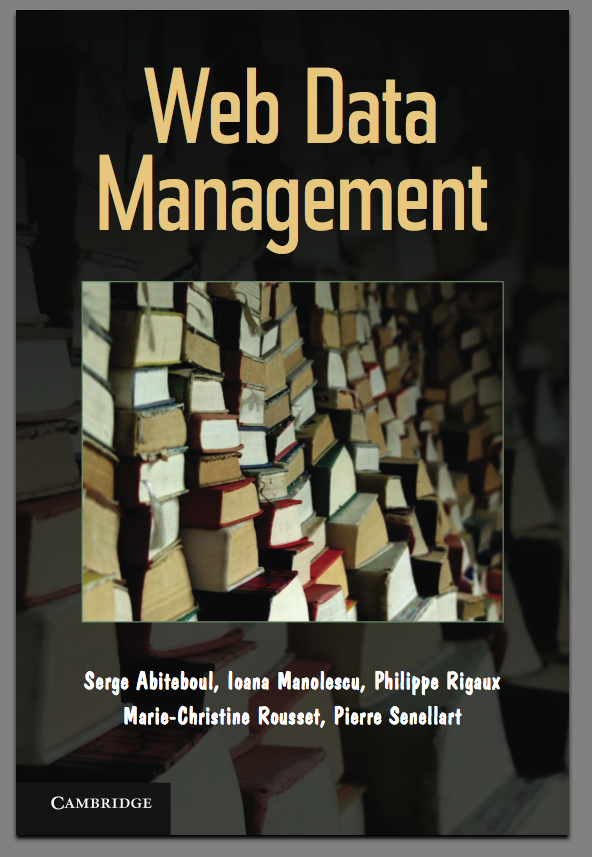
Marie-Christine ROUSSET is a Professor of Computer Science at the University of Grenoble Alpes (UGA) in France, where she is a member of the LIG (Laboratoire d'Informatique de Grenoble) in the SLIDE group. Previously affiliated with Paris-Saclay (LRI), she has established herself as a leading researcher in Knowledge Representation and Information Integration. She holds the distinguished position of Senior member of the Institut Universitaire de France (IUF) (2011-2016, renewed for 2016-2021) and serves as co-responsible for the chair Explainable and Responsible AI within MIAI Grenoble Alpes. Her research focuses on ontology-based data access, logic-based mediation between distributed data sources, query rewriting using views, data linkage, and distributed reasoning for the Semantic Web. She skillfully combines artificial intelligence and database techniques to address complex information integration challenges, with applications spanning biomedical informatics, educational technology, and trustworthy AI. Her work demonstrates consistent innovation from foundational research to practical implementations, as evidenced by her co-authorship of the book 'Web Data Management' published by Cambridge University Press. Professor ROUSSET's recent publications (2019-2022) reveal a growing emphasis on data privacy, RDF graph anonymization, and interactive ontology engineering, while maintaining her strong contributions to semantic web technologies and knowledge representation. Her research shows increasing attention to trustworthy AI concerns, aligning with her leadership roles in relevant projects. Scientific Recognition Senior member of Institut Universitaire de France (IUF) (2011-2016, renewed for 2016-2021) Junior member of Institut Universitaire de France (IUF) from 1997 to 2002 Chevalier de l'Ordre National du Merite (July 11, 2011) EurAI Fellow (nominated ECCAI Fellow in 2005) Best Paper Award at AAAI'96 for 'Verification of Knowledge Bases based on Containment Checking' Professor ROUSSET maintains an active role in the scientific community through editorial work and organizational leadership. She serves on the Editorial Board of Communications of the ACM (CACM) and has held significant roles including PC chair of EGC 2019, Workshops co-Chair of WWW 2018, and Area Chair of IJCAI 2017. Her consistent service on program committees of major international conferences demonstrates her standing in the field. Her laboratory, the SLIDE group within LIG, focuses on semantic web technologies, knowledge representation, and data integration. The group maintains strong connections with the international research community and participates in collaborative projects addressing cutting-edge challenges in artificial intelligence and data management, with particular emphasis on trustworthy and explainable AI systems.