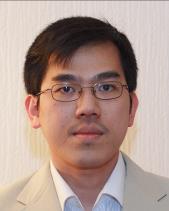
André Brodtkorb is a Professor and Head of the Department of Information Technology at Oslo Metropolitan University. His research spans applied mathematics, numerical analysis, and computational science, focusing on physics simulations and GPU computing. He advocates for open and reproducible research and is actively involved in education and societal engagement through the Academy of Young Researchers (2024-2028). Research Interests: His work integrates applied mathematics and computer science to develop high-performance simulations for environmental phenomena, including ocean currents, volcanic ash dispersion, and coastal flooding. He specializes in GPU-accelerated parallel computing, finite-volume methods, and Python-based scientific programming. Publication Trends: Recent articles highlight advancements in GPU computing efficiency, ocean modeling, and inverse ash transport modeling for volcanic plume forecasting. His research bridges computational methods with real-world environmental challenges. Scientific Awards: Member of the Academy of Young Researchers (2024-2028) Contact Information: Office: Pilestredet 35, 0166 Oslo Phone: +47 456 19 070 (Mobile), +47 672 35 924 (Office) Email: andre.brodtkorb@oslomet.no
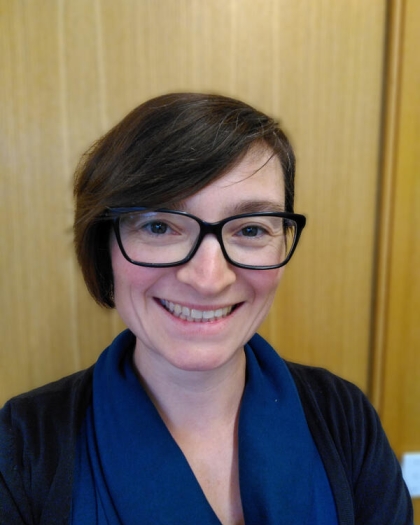
Thi Thuy Nga Dinh is an Associate Professor at the Faculty of Computer Sciences, Department of Computer Science and Communication, Østfold University College, Norway. She holds a Ph.D. from KAIST, Korea, and has previously worked at Bell Labs Seoul, Samsung Electronics, and other academic institutions. Her research focuses on wireless technologies for IoT devices, energy efficiency, network optimization, and experimental development. She contributes to projects like Productive4.0 and Arrowhead Tools within the CPS research group. Research interests include IoT connectivity, smart home systems, energy harvesting, and standards like 5G, LoRaWAN, and Zigbee. Recent work explores machine learning applications in network intrusion detection and indoor air quality forecasting. She collaborates with UiT The Arctic University of Norway and other institutions. Publications highlight contributions to energy-efficient wireless networks, scheduling algorithms, and sensor node performance under LoRaWAN. Awards include Early Bird Patents and First Publication accolades from Bell Labs. Her teaching includes courses on distributed and parallel programming.
Amirhosein Taherkordi is an Associate Professor at the Department of Information Security and Communication Technology within the Faculty of Information Technology and Electrical Engineering at the Norwegian University of Science and Technology (NTNU). His academic profile shows continuous research activity with publications spanning from 2011 through 2025, indicating an established career trajectory in computer science and networking research. Dr. Taherkordi's research interests focus on addressing fundamental challenges in distributed computing environments, particularly in resource-constrained scenarios. His work spans Internet of Things (IoT) systems, edge and fog computing architectures, network security protocols, and machine learning applications for network traffic analysis. He has made significant contributions to energy-efficient data collection protocols for wireless sensor networks, privacy-preserving techniques for industrial IoT systems, and communication-efficient approaches for federated learning in vehicular networks. His research consistently bridges theoretical innovation with practical implementation, addressing real-world challenges in smart transportation, environmental monitoring, and industrial automation systems. An analysis of Dr. Taherkordi's recent publication trends (2023-2025) reveals a strong emphasis on federated learning applications for vehicular networks (FedAGL, FedAPT), energy-efficient IoT data collection strategies (eU2U, ECMSH), and the integration of transfer learning with edge computing for transportation applications (TELEGAIT, FOGFLEET). His work increasingly addresses the critical tension between computational efficiency and accuracy in distributed systems, with growing applications in environmental monitoring (PmForecast) and circular economy frameworks. The interdisciplinary nature of his research spans computer science, electrical engineering, and environmental science domains. Dr. Taherkordi maintains an active collaborative research profile, working with international colleagues across multiple institutions as evidenced by his diverse publication venues including IEEE Transactions, ACM journals, and various conference proceedings. His research program appears to be well-established with consistent funding, though specific grant details aren't provided in the available text. He likely leads or contributes significantly to research groups focused on networking, IoT, and edge computing at NTNU, mentoring students in these emerging technology domains.
Jeanine van Halteren serves as Assistant Professor at the Department of Vocational Teacher Education within Oslo Metropolitan University's Faculty of Education and International Studies. Her office is located at Kunnskapsveien 55, Kjeller (Office KD332) with contact details +47 672 35 379 and jeanine.vanhalteren@oslomet.no. She concurrently holds the administrative role of Head of Studies for Area of responsibility 2. Her research program centers on Vocational Education and Training in traditional crafts, investigating cultural heritage preservation, innovation in design-craft-product development, and inclusion dynamics among apprentices. Parallel work explores Aesthetics in career counselling through critical thinking, reflexivity, and creative methodologies. Subject areas span Life Stories/narratives, Art/crafts/culture, Diversity and Inclusion, and Sustainability. She actively contributes to research groups including Design Literacy, Education and Society, KunstForsk (Arts-based research), Learning in diversity perspectives, and Philosophy/Art/Culture. Analysis of her 2019-2023 publications reveals dominant themes: career counselling for marginalized populations using metaphors and aesthetic frameworks, safeguarding traditional crafts through apprentice perspectives, and navigating cultural-technological intersections in vocational training. Her work consistently integrates social justice, narrative analysis, and reflexivity across contexts from youth mobility to disruptive global changes. Dr. van Halteren's research ecosystem includes the Design Literacy group examining craft-innovation synergies, KunstForsk advancing arts-based methodologies, and the Learning in diversity perspective team developing inclusive qualification frameworks. These groups collectively address vocational identity formation amid technological disruption and cultural preservation challenges.
Silvia Lizeth Tapia Tarifa is an Associate Professor in the Department of Informatics at the University of Oslo, specializing in formal methods for parallel and distributed systems. She serves as one of the principal investigators for the NFR SJM (Smart Journey Mining) project, which runs until 2026, and actively participates in Digital Twins research with a focus on GDPR-compliant data management. Her academic affiliations include the Reliable Systems research group and the Analytical Systems and Reasoning (ASR) group at the Department of Informatics. Professor Tapia Tarifa's research spans formal methods, concurrency theory, and distributed systems with particular emphasis on self-adaptive systems, semantics of concurrent languages, compositional reasoning about distributed system behavior, and formal modeling of resource usage. Her work bridges theoretical computer science with practical applications in digital twins, GDPR compliance, and resource management in distributed environments. She has made significant contributions to the ABS language framework and active object models for parallel and distributed computing. Her publication record shows a consistent focus on formal verification techniques applied to emerging challenges in distributed computing. Recent work demonstrates increasing attention to digital twins technology, user journey modeling, and privacy-preserving systems. The research trajectory reveals evolution from foundational work on concurrent language semantics toward applied research in self-adaptive systems and GDPR-compliant architectures, while maintaining strong theoretical underpinnings in formal methods. Young Research Talent grant from Research Council of Norway (2017), the only computer science grant in that call Fellow at United Nations University, International Institute for Software Technology (2007) Active participation in formal methods community as general chair, PC chair, and committee member Professor Tapia Tarifa has supervised PhD and master's students while teaching graduate-level courses. She has led significant research initiatives including the Analysis and Complex System Research Program at SIRIUS Center (ended 2023) and the EU MSCA-ITN REMARO project on Reliable AI for Marine Robotics (ended 2024). Her current research portfolio includes multiple active grants focused on digital twins, user journey analysis, and privacy-preserving distributed systems. She collaborates extensively with researchers across Europe through various EU-funded projects including FP7 ENVISAGE, FP7 FET UpScale, and FP7 FET HATS. Her research activities are centered around the ABS language framework and its applications to distributed systems verification. She maintains active collaborations through the SIRIUS Center and participates in the international formal methods community through conference organization and program committees.
Gunnar Tufte is a Professor and Deputy Head of Research at the Department of Computer Technology and Informatics, NTNU. He leads the Computer Architecture Lab and advises PhD programs in Computer Science and Informatics within the Faculty of Information Technology and Electrical Engineering. His primary research focuses on unconventional computing, including artificial spin ice systems, self-organizing nanomaterials, and bio-inspired architectures. Research Interests include: Unconventional Machines: Architecture, Design, and Computation Spin-based Computing and Energy Efficient Systems Evolution-in-Materio and Nanoscale Computation Reservoir Computing and Dynamical Systems Nano-Magnetic Orchestration and Self-Organization Key Projects: SpinENGINE (EU Horizon 2020 FET-Open): Developing parallel computing platforms using nanomagnet ensembles. SPrINTER (Norwegian Research Council): Low-power spin-based computing technology. flatspin: Open-source simulator for artificial spin ice systems (GPLv3). Grants and Collaborations: Horizon 2020 FET-Open funding for SpinENGINE. NFR funding for SPrINTER project. Lab/Team: Maintains the Computer Architecture Lab and collaborates on interdisciplinary projects with researchers in nanotechnology, AI, and biology.
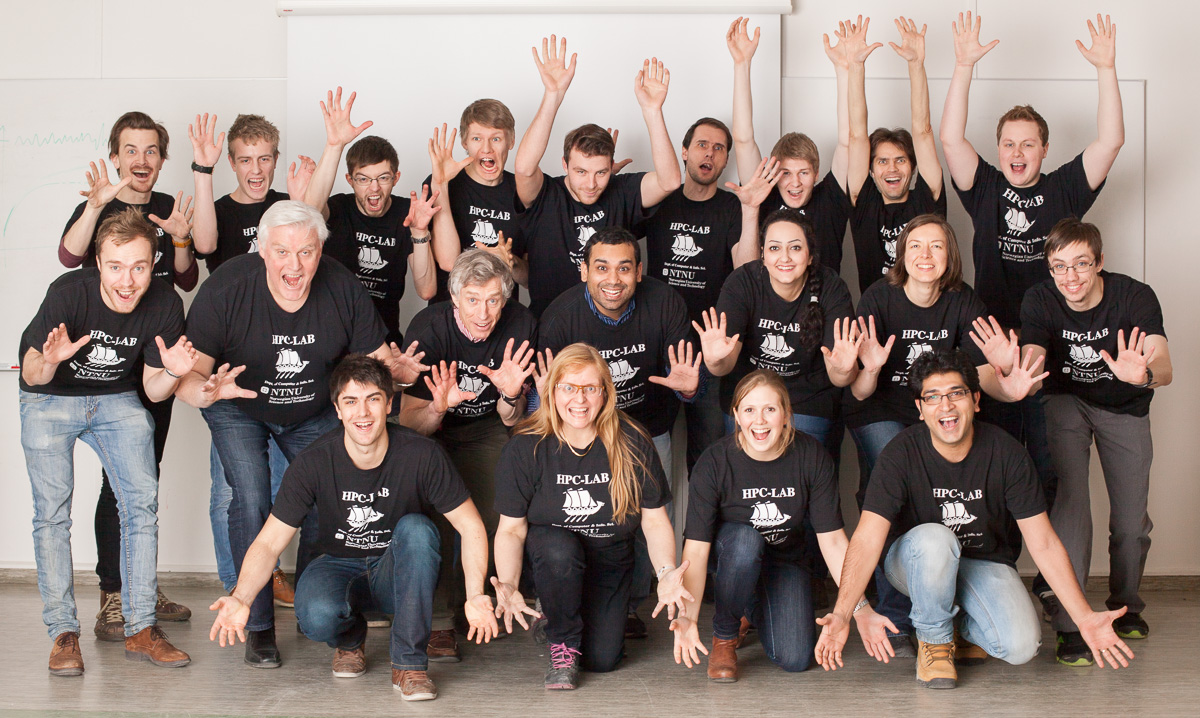
Anne C. Elster is a Professor in the Department of Computer Science at the Norwegian University of Science and Technology (NTNU), within the Faculty of Information Technology and Electrical Engineering. She is the founder and director of the HPC-Lab, a leading research group in heterogeneous and parallel computing. She also maintains a long-standing affiliation with the Oden Institute at the University of Texas at Austin as a Senior Visiting Scientist until Summer 2025. Research Interests: Her work spans high-performance computing (HPC), GPU computing, parallel algorithms, auto-tuning, performance optimization, and machine learning applications in scientific computing. She leads research in heterogeneous architectures and has contributed significantly to compiler and runtime systems for GPUs and accelerators. Publications Trends: Her recent publications (2021–2024) focus on GPU acceleration, auto-tuning frameworks (e.g., BAT, LS-CAT), performance modeling (Roofline), machine learning integration in HPC, and applications in geophysical and scientific computing. There is a strong emphasis on empirical evaluation, benchmarking, and practical optimization techniques. Scientific Awards and Recognition: IEEE Senior Member (2000) IEEE Computer Society Distinguished Contributor Charter member, NTNU's Board (2021) Distinguished Speaker, IEEE Computer Society (2019–2022) Advising and Grants: She has advised over 100 master’s students and several PhD students. She has led major funded projects including the RCN SFI Centre for Geophysical Forecasting, EU H2020 CloudLightning and TICOH, and NFR FRINATEK on Computational Microscopy. She has served on numerous international program committees and evaluation boards. Labs and Teams: She leads the HPC-Lab at NTNU, which includes postdocs, PhDs, and master’s students, and collaborates with international researchers. The lab is a hub for innovation in GPU computing, auto-tuning, and HPC applications.
Alexander Wold is an Associate Professor at the University of Oslo, affiliated with the Research Group for Robotics and Intelligent Systems within the Faculty of Mathematics and Natural Sciences. His work focuses on reconfigurable computing, embedded systems, and robotics, with notable contributions to FPGA design, real-time systems, and educational technology. He holds a position at the Institute of Informatics (IFI) and can be contacted at alexawo@ifi.uio.no . Research interests include optimizing hardware-software co-design, thermal management in 3D-IC systems, and developing open-source tools like EasyPR for pattern recognition. His publications span topics such as remote cloud labs for reconfigurable logic education, network traffic management in industrial Ethernet, and constraint programming for module placement in FPGAs. Dr. Wold’s articles reflect a strong emphasis on practical applications of robotics and intelligent systems, with a focus on safety-critical industrial systems and autonomic computing. He has contributed to multi-core system design, thermal-aware FPGA architectures, and self-aware systems.
Malin Johansson is an Associate Professor and Group Leader of the Earth Observation group at the Department of Physics and Technology, UiT The Arctic University of Norway . Her research connects remote sensing with numerical modeling and in-situ data to advance understanding of Arctic sea ice properties , environmental monitoring (oil spills, harmful algae blooms), and multi-frequency SAR observations . She teaches courses like FYS-1009 (Climate and Environmental Monitoring), FYS-3001 (Physics of Remote Sensing), and FYS-3023 (Applied Remote Sensing). Research Focus : Arctic sea ice dynamics using SAR and optical imagery Environmental risk assessment (oil spills, algae blooms) Climate-ice-ocean interactions Machine learning for SAR data analysis Article Trends : Her recent work emphasizes multi-decadal SAR analysis of Arctic sea ice types, Lagrangian drift prediction for environmental hazards, cross-polar comparisons of ice classification methods, and incidence angle modeling for SAR calibration. Students : Truls Karlsen (Multi-Frequency Sea Ice Observations) Jakub Petříček (Permafrost Remote Sensing) Labs/Teams : Leads the Earth Observation group at UiT, collaborating with international institutions on projects like INTERAAC (Norway-China) and MOSAiC expeditions.
Phuong H. Ha is a Professor at the Department of Computer Science, The Arctic University of Norway (UiT), located in Tromsø, Norway. He leads the Arctic Green Computing Group and is affiliated with the Faculty of Science and Technology. His research focuses on energy-efficient computing systems, machine learning, parallel programming, and cyber-physical systems. He holds a Ph.D. from Chalmers University of Technology (Sweden). Key roles include leading EU-funded projects such as EXCESS (FP7) and TAILOR (H2020), as well as national projects like PREAPP and eX3. He has pioneered research in energy informatics, edge intelligence, and parallel programming systems. His work emphasizes sustainable energy solutions and efficient resource management in distributed systems. Teaching responsibilities include courses on Green Computing, Operating Systems, and Parallel Programming. He has developed innovative frameworks for energy harvesting in wireless devices and contributed to Arctic observational systems through projects like the Arctic Observatory (DAO). Research highlights include over 30 peer-reviewed publications in top venues like IEEE Transactions on Parallel and Distributed Systems and Journal of Parallel and Distributed Computing. His work bridges theoretical foundations with practical applications in smart grids, IoT, and environmental monitoring.
Julia Romanowska is a senior engineer and bioinformatician at the Department of Global Public Health and Primary Care, University of Bergen . She actively contributes to research projects including the DRONE (Drug Repurposing for Neurological Diseases) and START (Study of Assisted Reproductive Technology) initiatives. Romanowska co-founded R-Ladies Bergen to promote gender diversity in computational sciences. PhD in Theoretical Biophysics (University of Warsaw) Former postdoc at Institute of Genetic Medicine, University of Bergen Developed HaplinMethyl software for DNA methylation analysis Her research spans epigenetics , X-chromosome methylation , and drug-disease associations , with recent publications in Human Genomics and bioRxiv . Romanowska specializes in genetic association studies , computational modeling , and high-dimensional data analysis .
Einar Broch Johnsen is a Professor at the Department of Informatics , University of Oslo . His research focuses on formal methods , distributed systems , and digital twins , with applications in cloud computing , robotics , and healthcare . Leadership: Strategy Director of SIRIUS (2015-2023), Coordinator of EU projects Envisage and HyVar . Community Roles: Board member of Formal Methods Europe , editorial board member of Formal Aspects of Computing , and chair of conferences like FM 2015 and FASE 2022 . His recent work explores symbolic execution , probabilistic logic , and self-adaptive systems , as reflected in his 15 most recent publications . He teaches courses such as IN2031 – Project in Programming and IN5170: Models of Concurrency .
Astrid Gjelstad is an Associate Professor in the Department of Pharmaceutical Chemistry at the University of Oslo, specializing in microextraction technologies and anti-doping research. She teaches courses in Drug Analysis and Sports Pharmacy and Anti-Doping . Academic interests: Development of artificial liquid membrane systems for drug isolation Passive diffusion and electrokinetic migration studies Anti-doping and pharmaceutical use in sports Awards: 3rd place in HPLC 2007 poster competition Young Scientist Award at Extech08 Her research focuses on microextraction technology for rapid sampling in biological matrices, with applications in pharmaceutical analysis , bioanalysis , and environmental studies . Recent publications emphasize dried blood spots , parallel artificial liquid membrane extraction (PALME) , and sustainable methods for drug analysis. In anti-doping work, she investigates pharmaceutical trends among athletes and contributes to the Norwegian Athlete Biological Passport program. Her innovations in electromembrane extraction improve selectivity and efficiency in drug isolation.
Prof. Anne C. Elster is a Professor of Computer Science at NTNU's Department of Computer & Information Science (IDI), leading the HPC-Lab. She specializes in High-Performance Computing (HPC), GPU acceleration, and heterogeneous systems. Her work spans HPC applications in medical imaging, seismic processing, and oil & gas simulations, with collaborations at CERN, NVIDIA, and Schlumberger. Elster holds a PhD in Electrical Engineering from Cornell University (1994) and is an IEEE Senior Member since 2000. She has supervised over 70 master students and numerous PhD candidates, emphasizing GPU computing. Her teaching includes courses like Parallel Computing and Compilers , with a focus on programming and problem-based learning. She leads EU projects like CLOUDLIGHTNING (2015–2018) and has organized major conferences (e.g., ISC, SC, PARA). Her HPC-Lab is a CUDA Research and Teaching Center, and she advocates for HPC infrastructure investments in Norway through policy engagement.
Xing Cai is a Professor at the Department of Informatics, University of Oslo, specializing in Scientific Computing and Machine Learning. His academic career spans several decades with a consistent focus on high-performance computing and its applications to complex scientific problems. He maintains an active research profile with numerous publications in top-tier journals and conferences. Professor Cai's research interests encompass parallel programming and high-performance computing, performance modeling and optimization, automated code generation, heterogeneous computing, and numerical methods for solving partial differential equations. His work extends to specialized applications in computational cardiology, computational geoscience, and biomedical computing. His research bridges theoretical computer science with practical applications in medicine and earth sciences, demonstrating exceptional interdisciplinary reach. An analysis of his recent publications (2019-2024) reveals a strong trend toward leveraging novel hardware architectures (GPUs, AI processors, specialized accelerators) for scientific computing, with particular emphasis on cardiac modeling applications. His work shows increasing sophistication in hardware-aware algorithm design, with publications spanning from fundamental performance modeling to domain-specific applications. The interdisciplinary nature of his work is evident in the diverse range of journals and conferences where he publishes, from computer science venues to specialized medical and geoscience publications. Professor Cai leads or participates in several significant research projects including the EuroHPC Centre of Excellence: Numerical Modeling of Cardiac Electrophysiology at the Cellular Scale (MICROCARD-2), High resolution simulation of cardiac electrophysiology on realistic whole-heart geometries, Maelstrom Associate Team, ODISSEE, Simula-Berkeley Education and Research collaboration (SIMBER), and aCG eX3: Experimental Infrastructure for Exploration of Exascale Computing. These projects reflect his leadership in both computational methodology development and domain-specific applications. His research group maintains strong collaborations with medical researchers, particularly in cardiac electrophysiology, and with geoscientists working on reservoir simulation. The publications list demonstrates consistent mentorship of junior researchers, with frequent co-authorship patterns suggesting an active supervision of PhD and postdoctoral researchers. His work on the EMI model for cardiac tissue represents a significant contribution to computational cardiology with potential clinical applications. The laboratory environment surrounding Professor Cai's work appears to be well-equipped for high-performance computing research, with access to advanced hardware platforms including GPU clusters, AI processors, and specialized accelerators. His publications on the use of Graphcore IPUs, Xeon Phi processors, and NVIDIA architectures indicate a well-resourced research environment capable of experimenting with cutting-edge hardware.