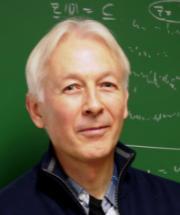
Xing CaiView profile
Professor
Xing Cai is a Professor at the Department of Informatics, University of Oslo, specializing in Scientific Computing and Machine Learning. His academic career spans several decades with a consistent focus on high-performance computing and its applications to complex scientific problems. He maintains an active research profile with numerous publications in top-tier journals and conferences. Professor Cai's research interests encompass parallel programming and high-performance computing, performance modeling and optimization, automated code generation, heterogeneous computing, and numerical methods for solving partial differential equations. His work extends to specialized applications in computational cardiology, computational geoscience, and biomedical computing. His research bridges theoretical computer science with practical applications in medicine and earth sciences, demonstrating exceptional interdisciplinary reach. An analysis of his recent publications (2019-2024) reveals a strong trend toward leveraging novel hardware architectures (GPUs, AI processors, specialized accelerators) for scientific computing, with particular emphasis on cardiac modeling applications. His work shows increasing sophistication in hardware-aware algorithm design, with publications spanning from fundamental performance modeling to domain-specific applications. The interdisciplinary nature of his work is evident in the diverse range of journals and conferences where he publishes, from computer science venues to specialized medical and geoscience publications. Professor Cai leads or participates in several significant research projects including the EuroHPC Centre of Excellence: Numerical Modeling of Cardiac Electrophysiology at the Cellular Scale (MICROCARD-2), High resolution simulation of cardiac electrophysiology on realistic whole-heart geometries, Maelstrom Associate Team, ODISSEE, Simula-Berkeley Education and Research collaboration (SIMBER), and aCG eX3: Experimental Infrastructure for Exploration of Exascale Computing. These projects reflect his leadership in both computational methodology development and domain-specific applications. His research group maintains strong collaborations with medical researchers, particularly in cardiac electrophysiology, and with geoscientists working on reservoir simulation. The publications list demonstrates consistent mentorship of junior researchers, with frequent co-authorship patterns suggesting an active supervision of PhD and postdoctoral researchers. His work on the EMI model for cardiac tissue represents a significant contribution to computational cardiology with potential clinical applications. The laboratory environment surrounding Professor Cai's work appears to be well-equipped for high-performance computing research, with access to advanced hardware platforms including GPU clusters, AI processors, and specialized accelerators. His publications on the use of Graphcore IPUs, Xeon Phi processors, and NVIDIA architectures indicate a well-resourced research environment capable of experimenting with cutting-edge hardware.