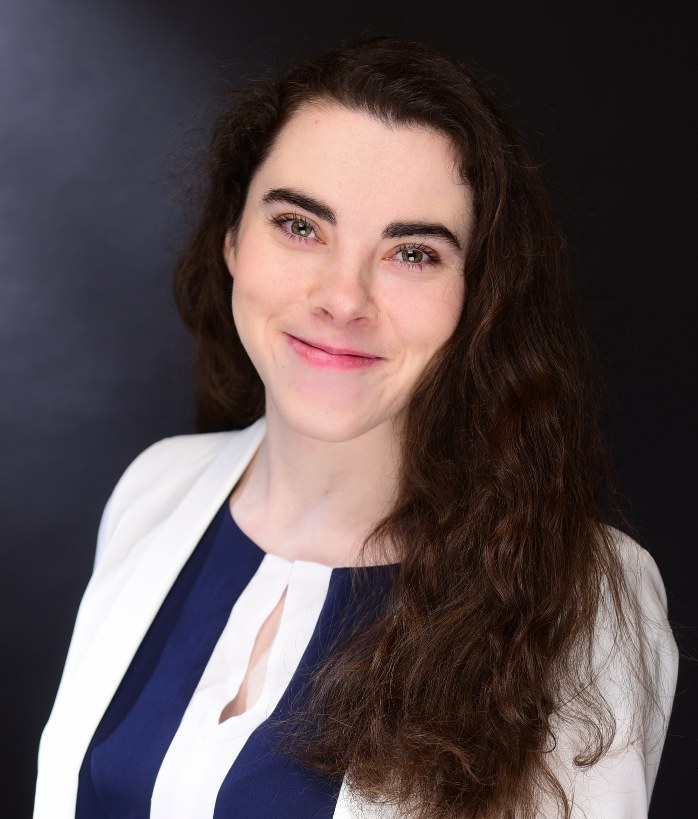
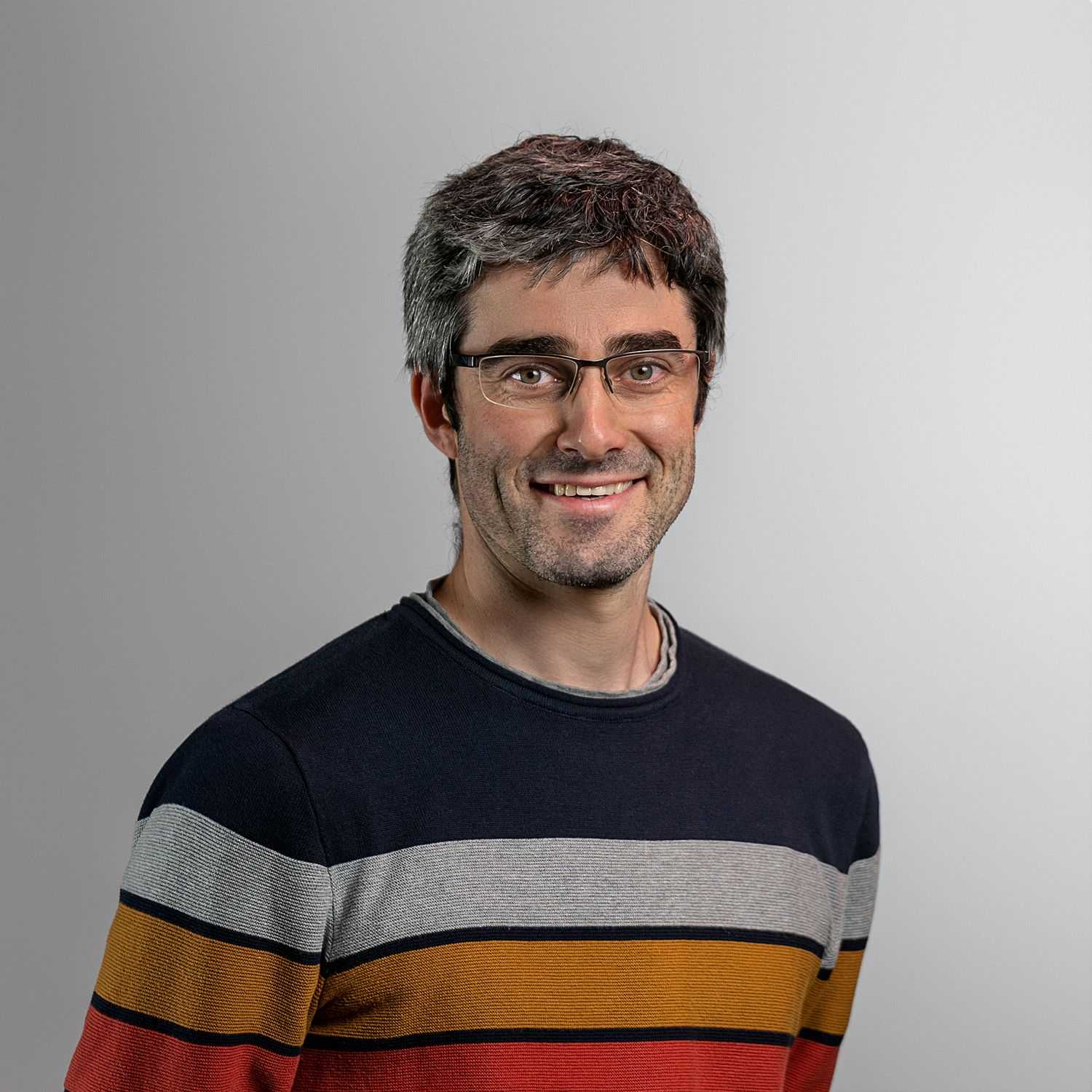
Sara Corrizzato is a Temporary Assistant Professor at the Department of Foreign Languages and Literatures, University of Verona. Her academic sector is ANGL-01/C (English Language, Translation and Linguistics) with research interests in pragmatics, sociolinguistics, and corpus linguistics. Research areas include: English Language Teaching (ELT) with focus on EFL/ESL pedagogy Corpus Linguistics analyzing historical and contemporary English texts Digital media applications in linguistic studies Cross-linguistic analysis through parallel/comparable corpora She teaches English language modules across multiple bachelor's and master's programs, including specialized courses for tourism, commerce, and healthcare professionals. Current projects involve curriculum development from general to academic English and digital media analysis. Administrative roles include: Member of the Teaching Committee for Foreign Languages and Literatures Participation in the Comitato Scientifico del Master in English for international business and global affairs Researcher in departmental governance bodies Contact: Office in Palazzo di Lingue, Room 3.05, Phone +39 045802 8694.
Jun.-Prof. Dr. Annemarie Verkerk is a linguistic typologist affiliated with Saarland University's Department of Language Science and Technology. Her research focuses on corpus-based and phylogenetic methods to study language diversity, with particular expertise in Bayesian statistics, diachronic explanations for universals, and information-theoretic modeling. She leads projects like SFB 1102 (C7), investigating communicative efficiency in word order, and SocioBaGS, exploring Bantu grammatical gender systems through sociolinguistic correlates. Her work spans Indo-European, Dravidian, and Bantu languages, employing phylogenetic comparative methods to analyze topics like numeral typology, motion event encoding, and negative existentials. Key collaborations include Numeralbank and BDPROTO, databases central to her research. She has published extensively on topics such as the evolutionary dynamics of negative existentials in Indo-European, differential rates of consonant/vowel change, and the impact of non-native speakers on lexical diversity. Her projects emphasize cross-linguistic comparison, functional explanations, and computational methods. Research highlights include: Phylogenetic analysis of Dravidian language diversification Investigation of motion event encoding typology using parallel corpora Development of BDPROTO for historical phonological data Studies on sociolinguistic factors in Bantu gender systems Her work integrates historical linguistics, computational modeling, and typological analysis to address fundamental questions about language evolution and variation. Current projects emphasize interdisciplinary approaches to understanding functional and environmental pressures shaping linguistic diversity.
MARIA ELENA BAYNAT MONREAL is a Titular Professor at the Universitat de València, affiliated with the Department of French and Italian Philology in the Faculty of Economics. She is a member of the Inter-university Institute for Applied Modern Languages (IULMA) and the research group GENDIGIT, focusing on digital genres and linguistic analysis. Her academic profile integrates literary scholarship with innovative language teaching methodologies. Her research interests include: 19th Century French Travel Literature Representation of Spain and its people in French writing Théophile Gautier and Alexandre Dumas Educational Technology in language teaching WebQuests, machinima, and digital simulations Corpus-based tourism linguistics Intercultural communication and social media in education Her recent publications reveal a strong trend in applying digital tools to language pedagogy, particularly in business and tourism French. She has led and contributed to major research projects such as COMETVAL and SLATES, the latter supporting virtual teaching during the pandemic. Her work bridges traditional philology with modern educational innovation. Her scientific contributions include: Design of WebQuests for specialized vocabulary acquisition Analysis of promotional language on hotel websites Use of Facebook groups for intercultural learning Professional simulations in Business French courses Construction of multilingual tourism corpora She has supervised various educational initiatives and collaborated extensively on applied linguistics research. She is actively involved in curriculum innovation, particularly in integrating ICT into higher education. Her teaching focuses on French for Specific Purposes, with applications in business, tourism, and hospitality contexts. She has not received any explicitly mentioned scientific awards in the provided texts. Her laboratory or research environment is centered around the GENDIGIT research group and IULMA, where digital and discourse analysis of applied modern languages is conducted.
Eirik Welo serves as a Senior Lecturer in the Department of Philosophy, Classics, History of Art and Ideas at the University of Oslo's Faculty of Humanities. His academic profile centers on classical philology with specialization in Greek and Latin textual studies, maintaining active roles in multiple research initiatives focused on antiquity and linguistic analysis. His research spans Classical Philology , Textual Criticism of Greek tragedies (particularly Sophocles' works), and Ancient Indo-European languages , with additional interests in Ancient Medicine and epic poetics . Methodologically, Welo integrates computational linguistics with traditional philological approaches to analyze linguistic structures across Indo-European language corpora. Publication trends reveal a dual trajectory: recent works (2019-2022) focus intensely on Sophoclean textual criticism and Latin poetry analysis, while earlier publications (2001-2014) demonstrate foundational contributions to computational linguistics applied to ancient texts, particularly in corpus annotation and New Testament Greek analysis. This evolution reflects growing interdisciplinary convergence between classical studies and digital humanities. Welo actively participates in three key research groups: Linguistics and Poetics (examining structural elements of literary form), Norway's Antiquity (investigating classical reception in Norwegian contexts), and Novel and Epic, Ancient and Modern (NEAM) (tracing narrative traditions from antiquity to contemporary literature), demonstrating sustained institutional engagement in collaborative scholarship.
Erik Pulz is a Research Fellow in Latin Philology at Martin Luther University Halle-Wittenberg, where he has served since April 2017 under Prof. Dr. Rainer Jakobi's chair. He earned his doctorate (Dr. phil.) from the same institution in February 2021 and completed a visiting postdoctoral position at Stanford University (October 2022–March 2023) through a DAAD scholarship. His academic foundation includes a Bachelor of Arts (2014) and Master of Education (2016) in Classical Philology and Byzantinistics from Leipzig University. BA in Classical Philology and Byzantinistics (Leipzig, 2014) MA in Classical Philology and Byzantinistics (Leipzig, 2016) PhD in Latin Philology (Halle, 2021) Pulz's research spans Latin and Greek literature with emphasis on Roman love poetry, historiography, and digital philology. His monograph on Laevius (2023) examines early Latin erotic epigram, while his Sallust studies explore narratology and rhetorical devices in Bellum Catilinae . He investigates textual transmission in Greek tragedy (e.g., Phrynichus' Alcestis ) and contributes to digital classics through the Platon Digital project. His work consistently bridges traditional philological methods with computational approaches, particularly in Greek text processing. Analysis of his 15 most recent publications reveals three dominant research threads: (1) Latin Republican literature (Sallust, Laevius, early epigram), (2) Greek textual criticism (Euripides, Phrynichus), and (3) digital humanities applications. His output demonstrates increasing interdisciplinary engagement, with recent work combining narratology, metaleptic theory, and computational linguistics. The 2019 Platon Digital contributions highlight his expertise in corpus development and variant-sensitive text analysis. Promotionsstipendium der Studienstiftung des Deutschen Volkes (2017, declined) Fondation Hardt Scholarship for Young Researchers (2019) DAAD Post-Doc Short-Term Scholarship (2022-2023) Pulz serves as editorial staff for Forum Classicum (2021-2022) and collaborates on digital humanities initiatives like Platon Digital. His grant history shows consistent support for early-career research, including prestigious international fellowships. While no formal advisees are documented, his role as scientific staff at Halle involves mentoring junior researchers in Latin philology. Future work appears focused on completing studies of Aprissius and expanding digital text-critical methodologies. As part of the Platon Digital team at Halle, Pulz contributes to creating gold-standard parallel corpora for Platonic paraphrases. His work intersects with computational linguistics groups developing form-accurate stopword lists for Ancient Greek, demonstrating active participation in cross-disciplinary digital classics networks.
Anna Sågvall Hein is a Professor in Computational Linguistics at Uppsala University's Department of Linguistics and Philology. She concurrently serves as CEO and Head of the Board of Convertus AB, a Uppsala University spin-off specializing in machine translation technology since its 2006 founding. Her research centers on Machine Translation and Computational Linguistics , with significant contributions to Swedish-Turkish language pair systems, parallel corpus development, and grammar checking methodologies. Her work bridges theoretical linguistics with industrial applications, particularly in resource-scarce language scenarios and controlled language environments. Publication analysis reveals consistent focus on machine translation architecture evolution, parallel corpus construction for minority languages, and human-computer interaction in mobile text processing. Her MATS system development demonstrates a 'glass box' transparency approach to translation engineering. She leads major initiatives including the PLUG project (Parallel Corpora in Linköping, Uppsala, Göteborg) and the Supporting Research Environment for Swedish and Turkish. Her industry role at Convertus AB drives commercialization of academic language technology research through practical machine translation solutions.
Dr. Serge Sharoff is a Professor of Language Technology at the University of Leeds' School of Languages, Cultures and Societies. His research focuses on natural language processing (NLP), machine translation, corpus linguistics, and digital humanities, with emphasis on web corpus curation and cross-lingual language adaptation. He leads projects like the Leeds Russian Centre and the PALODIEM initiative, exploring translation quality, multilingual NLP, and comparable corpora. Sharoff has supervised PhD students in language technology and teaches courses on computational linguistics, machine translation, and corpus methods for translators. Education: PhD in Computational Linguistics from Moscow Lomonosov State University (1997) Postdoctoral Work: Russian Research Institute for Artificial Intelligence (1997–2000); Humboldt Fellowship at University of Bielefeld (2001–2002) Research interests include genre classification, multilingual models for lesser-resourced languages, and leveraging non-parallel texts for translation. His work has produced large-scale corpora for Arabic, Chinese, Russian, and other languages, with applications in healthcare and social discourse analysis. Sharoff co-founded the BUCC workshop series on comparable corpora and collaborates internationally on projects like the iDEM initiative. Recent articles highlight contributions to syntax-aware machine translation, adversarial text classification, and computational analysis of fiction genres. He actively seeks PhD candidates in language technology, emphasizing practical applications in translation and computational linguistics.
Emiliano Bronislaw Fiori is an Associate Professor in Ancient Christian Literature at the Department of Asian and North African Studies, Ca' Foscari University of Venice. He is actively involved in research leadership as a member of the Ca' Foscari ERC Board and the Scientific Council of the 'Ca' Foscari Research Hub for Global Challenges,' and serves as the Rector's Delegate for Research in the Linguistic Area. His academic work bridges philology, theology, and cultural history in Late Antiquity. PhD in Social Sciences and Historical Studies of Religions, University of Bologna (2007–2009) Co-tutelle PhD, École Pratique des Hautes Études, Paris (2007–2009) Laurea in Classics (History of Christianity), University of Padua (2006) His research focuses on the intercultural transmission of Greek Christian thought into Syriac and Arabic, particularly through translation and exegetical traditions. He specializes in Syriac patristics, the reception of Dionysius the Areopagite, apocryphal literature, and the intellectual history of early Christianity. His work explores how theological ideas were adapted across linguistic and cultural boundaries in the first millennium CE. The recent publications of Professor Fiori reflect a strong thematic focus on Syriac Christian literature, manuscript traditions, and the translation dynamics of Greek patristic texts. His studies frequently examine the Apocalypse of Paul, Dionysius the Areopagite, and Gregory of Nyssa, emphasizing textual criticism, hermeneutics, and the cultural contexts of translation. His research also engages with Gnostic writings from the Nag Hammadi library, showing a broad interest in early Christian diversity. ERC Starting Grant (2017) – 'FLOS. The Intercultural Dissemination of Greek Christian Thought' John Templeton Award for Theological Promise (2011) Invited Researcher, Hebrew University of Jerusalem (2016) Prof. Fiori has supervised numerous academic events and contributed to major editorial projects, including serving as Editor-in-Chief of the 'Eastern Christian Texts' series at Brill. He has been a visiting scholar at leading institutions such as Harvard, Oxford, and the Hebrew University. His teaching includes Syriac language, Christian origins, and Christianisms of Asia and Africa. He is a member of several academic societies, including the International Association of Patristic Studies and the French Society for Syriac Studies. He leads the ERC-funded FLOS project, which investigates Syriac florilegia as knowledge-organizing tools in the early Abbasid period. His research group includes scholars from multiple disciplines, and he collaborates with institutions across Europe and the Middle East. He is also involved in digital humanities initiatives related to manuscript digitization and textual databases.
Victor Kristof is a researcher at École Polytechnique Fédérale de Lausanne (EPFL), affiliated with the INDY2 laboratory. His work spans interdisciplinary domains, combining Natural Language Processing (NLP) , Machine Learning , and Social Process Modeling to analyze legislative dynamics, vote prediction, and environmental perception. Research Focus: Kristof develops interpretable models for democratic transparency, including aligning interest group positions with parliamentary speeches. He pioneered methods for predicting legislative edit acceptance using matrix factorization and NLP. His work on Swiss referendum prediction integrates historical data with real-time analysis via the Predikon platform . Methodological Contributions: He applies Bayesian statistics , time-dynamic pairwise comparison models , and active learning algorithms to diverse problems, from carbon footprint perception to sports analytics. His War of Words framework reveals ideological patterns in EU law-making, while his Player Kernel model improves football match prediction. Labs & Collaborations: Based at EPFL's Laboratory of Dynamic Information and Networks (INDY2) , he collaborates with researchers like Matthias Grossglauser and Patrick Thiran. His datasets on legislative edits and carbon perception have advanced transparency studies.
Regina Stodden is a Research Fellow at the Department of Computational Linguistics, Heinrich Heine University Düsseldorf, since January 2019. She is affiliated with the NRW Research College for Online Participation (second funding phase) and works under the supervision of Prof. Dr. Marc Ziegele. Education: B.A. in Educational Science, Text Technology, and Computational Linguistics from Bielefeld University M.A. in Information Science and Language Technology from HHU Düsseldorf Her research focuses on automatic text processing , particularly text simplification for online discussions. This includes: Enabling participation for people with limited German proficiency Reducing manual workload in text analysis Exploring accessibility in Open Data portals She has contributed to tools like TS-ANNO for corpus annotation and EASSE-DE for simplification evaluation, with recent work extending to CEFR-based language proficiency assessment . Her research intersects Natural Language Processing , Machine Learning , and Usability Studies , often addressing accessibility challenges in digital participation. Scientific awards: No explicit awards mentioned. Advising and grants: Participates in the NRW Research College for Online Participation funding program and collaborates under Prof. Dr. Laura Kallmeyer's supervision. Her work involves grants related to text simplification for online participation processes.
Glen Cameron Layne-Worthey is an Associate Director for Research Support Services at the HathiTrust Research Center and an affiliate of the School of Information Sciences at the University of Illinois Urbana-Champaign. With a Master of Arts in Russian Literature from UC Berkeley, Layne-Worthey bridges Slavic studies with digital humanities and library science. Educational Background: MA in Russian Literature (UC Berkeley, 1992) His research focuses on digital libraries , parallel corpora , and fair use doctrines . Recent work explores the intersection of user-generated content , power dynamics , and cultural dependencies in digital scholarship. He contributed to the Routledge Companion to Libraries, Archives, and the Digital Humanities (2024) and co-created the Gutenberg-HathiTrust Parallel Corpus (2022). Scientific Awards : Lee Dirks Award (2023) Collaborations : Interdisciplinary partnerships with institutions in digital humanities and library science
Dag Trygve Truslew Haug is a Professor of Linguistics and Greek/Latin at the University of Oslo , specializing in syntactic theory, formal semantics, and Indo-European studies. His career spans roles such as Visiting Professor at the University of Oxford and Postdoctoral Research Fellowships at Oslo and the Alexander von Humboldt Foundation.
Anne Condamines is a Research Director at CNRS, affiliated with the CLLE (Cognition, Languages, Language, Ergonomics) laboratory at University Toulouse - Jean Jaurès. Her work bridges corpus linguistics, terminology, and cognitive ergonomics, focusing on specialized communication and controlled language applications. Key affiliations: CNRS, CLLE, EDF R&D, CERN collaborations Research themes: Terminology construction, linguistic variation in specialized contexts, cognitive aspects of term usage Research Highlights : 2024: Analyzed controlled language effectiveness in technical communication 2022: Explored knowledge-rich contexts and exobiology terminology 2021: Investigated terminological anomalies and conceptual relations Academic Contributions : Co-developed textual terminology frameworks Founded MAR-REL (Conceptual Relation Markers Database) Pioneered ergonomic linguistics for language engineering
Martin Klotz is a Researcher at the Institute for German Language and Linguistics, Humboldt University of Berlin, affiliated with the Collaborative Research Center (SFB1412) and the Research Unit for Emerging Grammars (RUEG). His work focuses on corpus linguistics, computational linguistics, and digital humanities infrastructure. He holds an MSc in Cognitive Systems (2019, University of Potsdam) and a BA in German Linguistics & Computer Science (2015, Humboldt University). Key research interests include corpus architectures, historical and parallel corpora, language modeling for non-standard varieties, and research software engineering. He contributes to projects like the RUEG corpus and FALKO learner corpus, emphasizing multilingual and multimodal corpus development. His publications span corpus design, software tools (e.g., Annatto), and analyses of heritage languages. He actively organizes academic events, such as the 2021 DGfS short working group on contrastive corpus methodology. He participates in lab collaborations like Deutsch Diachron Digital and contributes to open-source corpus tools. His work bridges computational methods with linguistic theory, focusing on dynamic language systems.
Marcos Garcia Gonzalez is a Ramón y Cajal Research Fellow at the University of Santiago de Compostela (USC), affiliated with the Department of Spanish Language and Literature and the Center for Research in Intelligent Technologies (CITIUS). His research focuses on computational linguistics, particularly in semantic analysis, multilingual systems, and language technologies for Galician and Portuguese. He leads projects like the Nós Project, advancing Galician's integration into AI and NLP tools. His work includes developing resources like the Parallel Universal Dependencies Treebank and tools such as Bertinho (Galician BERT models). Key areas include idiomaticity detection in word representations, vector models for semantic analysis, and syntactic parsing. Education: PhD in Computational Linguistics from USC (2014), Master in Linguistics (University of Lisbon), and Degree in Portuguese Philology (USC). Postdoctoral research under the Juan de la Cierva fellowship (2016-2020). Awards include Ramón y Cajal and Juan de la Cierva fellowships. Research interests span vector models, multilingual NLP, and semantic compositionality. Projects include LINNA (linguistic-based neural models) and DeepR3 (green language tech). His publications explore topics like homonymy/synonymy representation and Galician language preservation through open-source tools. Key contributions include annotated corpora, coreference resolution systems, and cross-lingual parsing methods. He collaborates on hybrid intelligence systems for education (iRead4Skills) and Responsible AI (DeepR3.gal). Current efforts emphasize leveraging linguistic knowledge to enhance NLP models' interpretability and multilingual support.