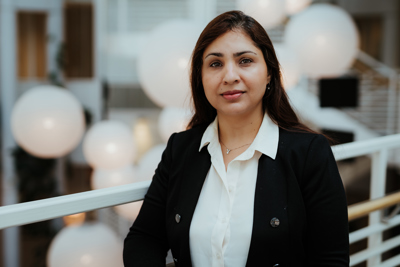
Mihir Vinay Kulkarni is a Researcher at the Department of Technical Cybernetics, Norwegian University of Science and Technology (NTNU), specializing in autonomous aerial systems for complex environments. His work bridges simulation frameworks and real-world deployment in industrial and hazardous settings. His research focuses on: Developing vision-based navigation for cluttered environments Creating parallel simulation tools (Aerial Gym) for accelerated robotics development Implementing deep reinforcement learning for collision avoidance Deploying aerial robots in ship ballast tanks and subterranean spaces Publications since 2022 demonstrate consistent output in top robotics venues, with recent work emphasizing semantic path planning and neural safety frameworks. His research trajectory shows strong alignment with NTNU's field robotics initiatives and international collaborations, particularly with ETH Zurich. As a recent PhD graduate (2025), Kulkarni represents an emerging researcher with significant potential in aerial robotics. Prospective students should note his focus on practical applications and simulation-to-reality transfer, though supervision capacity may be limited during this early career phase.
Einar Malvin Rønquist is a Professor and has served as Head of the Department of Mathematical Sciences at the Norwegian University of Science and Technology (NTNU) since August 2013. He has been a faculty member at the same department since 1999 and is affiliated with the differential equations and numerical analysis (DNA) research group, which he led from 2010-2011. His extensive publication record demonstrates a sustained research career spanning over three decades in computational mathematics. Professor Rønquist's research focuses primarily on numerical methods for partial differential equations, with special emphasis on spectral methods, reduced basis methods, and computational fluid dynamics. His work addresses challenges in high-order approximation, model reduction, and efficient computation for complex physical systems. He has made significant contributions to the development of tensor-product solvers for deformed domains, interface tracking algorithms, and the theoretical foundations of reduced basis methods. His research bridges theoretical mathematics with practical computational applications across engineering and physical sciences, with particular relevance to fluid dynamics, geometric problems, and multi-physics systems. Analysis of Rønquist's publication trajectory reveals a consistent evolution from foundational spectral element methods to advanced model reduction techniques. His work shows increasing sophistication in handling parametric problems and uncertainty quantification while maintaining rigorous mathematical foundations. The publications demonstrate strong contributions to high-order numerical methods, with applications spanning fluid dynamics, geometric problems, and multi-physics systems. Recent work shows particular emphasis on practical computational implementation, including parallel algorithms and efficient solvers for real-world applications that require solving problems on complex or deformed domains. Rønquist has maintained active international collaborations throughout his career, particularly with researchers at MIT (notably Anthony Patera), Université Pierre et Marie Curie (Yvon Maday), and other leading institutions across Europe and North America. His work has appeared consistently in top journals in computational mathematics and scientific computing, including Journal of Computational Physics, SIAM Journal on Scientific Computing, and Computer Methods in Applied Mechanics and Engineering. As department head since 2013, Rønquist has played a significant administrative role in shaping mathematics education and research at NTNU. His leadership extends beyond pure administration, as evidenced by his 2016 commentary in Universitetsavisa regarding the organization of technical cybernetics and electrical power engineering at NTNU, and his 2021 opinion piece in Aftenposten about mathematics examinations. He continues to actively contribute to both the academic and public discourse on mathematics education and research.
Torbjørn Rognes is a Professor at the Department of Informatics , University of Oslo , and holds a senior scientist position at Oslo University Hospital in the Department of Microbiology. As a core member of the Scientific Computation and Machine Learning (SCML) group and Genome Stability and DNA Repair research team, he focuses on developing high-performance computational tools for bioinformatics applications. Current positions: University of Oslo (Professor) and Oslo University Hospital (Senior Scientist) Research areas: Bioinformatics, Algorithms, Parallel Computing, Microbiome Analysis, DNA Repair Scientific contributions include: Leading development of CompAIRR for immune receptor repertoire comparison Creating VSEARCH and Swarm for metagenomic sequence clustering Pioneering HoCoRT for host contamination removal Advancing NucBreak and NucDiff for genome assembly analysis Academic training encompasses: Supervising 15+ PhD candidates across multiple institutions Maintaining educational roles in Computational Science: Bioinformatics and PROSA programs Contributing to courses in bioinformatics, algorithms, and high-performance computing Key collaborative networks include: Center for Computational Inference in Evolutionary Life Science (CELS) CRESCO - Centre for Embryology and Healthy Development Oslo University Hospital research teams
Laura Elizabeth Ratcliff is an Associate Professor at UiT The Arctic University of Norway, affiliated with the Department of Chemistry. Her research focuses on computational approaches to quantum mechanical calculations, leveraging supercomputing resources for data science applications. Current role: Associate Professor Department: Chemistry Location: Tromsø Her work emphasizes the intersection of data science and quantum chemistry, particularly in electronic structure calculations. Recent publications highlight her contributions to optimizing computational methods on high-performance computing systems. While no explicit scientific awards or formal student advisement records are mentioned in the provided texts, her ongoing research activities are documented in institutional repositories like Cristin.
Michal Repisky is a Researcher at the Department of Chemistry, UiT The Arctic University of Norway, and a member of the Hylleraas Centre for Quantum Molecular Sciences. His work focuses on developing advanced computational methods for relativistic quantum chemistry with applications to molecular property prediction. Education: Ph.D. in Chemistry from Slovak Academy of Sciences (2009) Research Interests: Repisky specializes in relativistic ab-initio electronic structure methods using two-component and four-component formalisms. His primary focus is magnetic resonance phenomena, supplemented by work in response theory for molecules and solids, real-time electron dynamics, and high-performance computing optimization. These interests drive innovations in computational accuracy and efficiency for predicting complex molecular behaviors under relativistic conditions. Publication Trends: Recent publications (2023-2025) reveal concentrated advancements in relativistic density functional theory, particularly X2C Hamiltonian implementations and real-time TDDFT applications. Key developments target X-ray absorption spectroscopy near heavy-metal edges, chiral molecule analysis through electronic circular dichroism, and efficient algorithms for attosecond transient absorption spectroscopy, demonstrating consistent progress in bridging computational cost with relativistic accuracy. Scientific Awards: No awards listed. Advising and Grants: Actively supervises PhD candidates including Rasmus Vikhamar-Sandberg (2022-present), Marc Joosten (2017-present), Marius Kadek (2014-2018), and Lukas Konecny (2013-2017). Leads the ReSpect program development (www.respectprogram.org), a major relativistic quantum chemistry DFT package that serves as critical infrastructure for the global computational chemistry community. Labs and Teams: Core member of UiT's Theoretical and Computational Chemistry research group and the Hylleraas Centre for Quantum Molecular Sciences, where he contributes to collaborative projects advancing quantum molecular science through cutting-edge computational methodologies and software development.
Petra Hatalova is a Research Fellow at the Centre for Planetary Habitability at the University of Oslo. Her research focuses on planetary science, computational astrophysics, and exoplanet research, with particular emphasis on rocky exoplanets around K-dwarf stars and their compositional diversity. Her recent work involves studying planetary formation mechanisms and improving computational tools like the GENGA N-body integrator for simulating stellar and planetary systems. Publications highlight her contributions to understanding how planets of similar size can exhibit vastly different interior structures and geochemical properties. She can be contacted via email at petra.hatalova@geo.uio.no . No awards or students are mentioned in the available records.
Sigbjørn Løland Bore is a Researcher in the Department of Chemistry at the University of Oslo , affiliated with the Hylleraas Center for Quantum Molecular Sciences . His work bridges artificial intelligence and quantum mechanics to develop machine learning potentials for advanced molecular dynamics simulations. Focus areas: first-principles simulations , ionic conductivity in nanoporous materials, and exotic chemical physics . Current projects include adversarial learning for potential optimization and investigating water's phase behavior. Publications trend toward computational chemistry , quantum simulations , and machine learning applications in molecular modeling. Collaborations span institutions like the University of California and Italian research groups.
Jørgen Andreas Michaelsen is an Associate Professor at the Department of Informatics, University of Oslo. He is affiliated with the Nanoelectronics (NANO) research group. His research focuses on nanoelectronic systems, analog and digital circuit design, radar systems, wireless sensor networks, and multimedia networking. He holds a Cand.Scient. (Master's equivalent) in Informatics from the University of Oslo, as evidenced by his 2006 thesis titled Suppression of ΔΣ DAC Quantisation Noise by Bandwidth Adaptation . His recent work (2017) includes low-power radar SoC designs for non-contact vital signs detection. Earlier contributions span topics like VCO linearization for ADCs (2013), low-power sensor interfacing (2011), and multimedia streaming optimization (2006–2007). His publications often appear in top-tier conferences such as IEEE ISSCC, NEWCAS, and Norchip, reflecting expertise in both hardware and system-level design. Michaelsen collaborates extensively with industry partners and colleagues on interdisciplinary projects, bridging nanoelectronics with practical applications in healthcare monitoring and wireless communication. His work emphasizes energy-efficient, high-performance circuit solutions for emerging technologies.
Tiago Pereira is an Associate Professor at the University of Oslo's Institute of Theoretical Astrophysics, affiliated with the Rosseland Centre for Solar Physics. His research focuses on computational astrophysics, radiative transfer, and solar atmosphere dynamics. He holds a PhD in Astronomy and Astrophysics from the Australian National University (2010) and has conducted postdoctoral research at institutions including NASA ARC and Lockheed Martin ATC (2010-2012). His work leverages high-performance computing to model solar phenomena such as spicules, chromospheric heating, and transition region dynamics. Education: PhD in Astronomy and Astrophysics, Australian National University, 2010 Postdoctoral fellowships at NASA ARC, Lockheed Martin ATC, and ANU (2010-2012) His research emphasizes radiative transfer in 3D MHD simulations, with particular attention to NLTE effects and the interplay between chromospheric layers. Key projects include the development of SunnyNet—a neural network approach to radiative transfer—and analysis of data from missions like IRIS and Hinode. Recent work explores spicule dynamics, Kelvin-Helmholtz instabilities in solar plasma, and the role of unresolved fine structures in solar atmospheres. His publications highlight contributions to spectral line formation (e.g., Hϵ, Lyman series), clustering algorithms for spectral profile analysis, and computational tools like the RH 1.5D radiative transfer code. Collaborations span international teams, including studies of solar flares, UV bursts, and coronal heating mechanisms.
Assoc. Prof Daniel Patel holds a position in the Department of Computing, Mathematics, and Physics at Western Norway University of Applied Sciences (HVL). His research focuses on interdisciplinary applications of computer graphics and visualization techniques in geosciences, VR training systems, and educational technology. Key areas include collaborative software for subsurface CO2 storage, seismic data interpretation, and vision-training serious games for children. His work bridges computer science with geology, energy systems, and marine biology, emphasizing real-time visualization algorithms and secure rendering methods. He has pioneered VR training systems for safety assessment and developed web-based 3D geology visualization tools using open standards like X3DOM. His research also extends to acoustic marine species identification and GPU-optimized rendering techniques. Notable contributions include advancements in homomorphic-encrypted volume rendering for secure visualization, multi-GPU processing with the Vulkan API, and sketch-based geological modeling tools. His projects often integrate modern hardware (e.g., VR headsets) with game engines to enhance training and educational outcomes.
Arild Hoff is a Professor of Quantitative Logistics at Molde University College, Faculty of Logistics. He teaches courses including LOG500 Management Models and Operations Research (Bachelor - Fall semester) and LOG530 Distribution Planning (Bachelor - Spring semester). Previously, he has taught several subjects within informatics, inventory and production management and exact optimization methods, both at bachelor and master level. His educational background includes: PhD in Logistics – Molde University College (2006) Cand. Scient. – University of Bergen (1998) Cand. Mag. – Molde University College (1994) Marketing – Trondheim Business School (1991) Business Economist – Trondheim Business School (1987) Professor Hoff's research focuses on operations research, planning, optimization and decision support, with particular emphasis on solution methods for combinatorial optimization problems, such as vehicle routing and hub location. His PhD thesis addressed "Heuristics for Rich Vehicle Routing Problems," exploring search methods for solving advanced vehicle routing problems with special constraints. His recent publications demonstrate a strong focus on maritime logistics, inventory routing problems, and optimization methods under uncertainty. His work spans applications in aquaculture, disaster relief, waste collection, and transportation planning, with a consistent emphasis on developing and applying advanced optimization techniques to complex real-world problems. Professor Hoff is actively involved in research groups including Energy Logistics (EneLog) and Planning, Optimization and Decision Support, with additional interests in aquaculture and other marine industries.
Alireza David Anisi is an Associate Professor at the Department of Engineering Sciences , University of Agder. With a PhD in Optimization and Systems Theory and an M.Sc. in Engineering Physics, he specializes in autonomous systems and robotics , particularly in agri-tech and harsh environments . His industrial experience spans 15+ years in defense and oil & gas sectors. Academic Background: PhD: Optimization and Systems Theory M.Sc.: Engineering Physics Research Interests include formal verification and learning for autonomous systems, combinatorial optimization for multi-robot task/path planning, computational optimal control for trajectory optimization, and nonlinear observer design. His work bridges academic research with industrial R&D. Selected Publications highlight trends in robotics safety assurance, formal verification methods, and industry-specific applications (defense, oil & gas, agriculture). Recent works focus on runtime verification in ROS 2 and RoboStar technology integration. Patents: Power system optimization (EP18162642.5, 2018) Mechanical grip system (SE1300179, 2013) Sensor arrangement for machine vision (WO2014026711, 2012) Tool changer for explosive environments (WO2012007188, 2011) Industrial robot control method (EP2466404, 2010) Harsh environment mobile robot (WO2011107137, 2010) Anisi contributes to the Robotics and Automation research group, focusing on real-world applications in agriculture, energy, and industrial sectors. He teaches MAS221 Industrial IT and Robotics and emphasizes collaboration between academia and industry.
Geir Hovland is a Professor at the Department of Engineering Sciences, University of Agder. He holds an MSc in Engineering Cybernetics from NTNU (1993) and a PhD in Robotics from the Australian National University (1997). His research focuses on robotics, control systems, industrial IT, and modeling/identification of dynamic systems. He serves as Chief Editor of the MIC Journal . Research Interests: Robotics and automation, including flexible manipulators and sensor networks Control systems for offshore and industrial applications Parallel kinematic machines and mechatronic systems Blockchain stability analysis (nonlinear control) Publications: Over 100 peer-reviewed articles in journals like Robotics , IEEE Transactions , and MIC Journal , with a focus on advanced control strategies, sensor optimization, and robotics in harsh environments. Labs/Teams: Leads the Norwegian Motion-Laboratory and collaborates with industry partners on projects like autonomous mooring systems and offshore crane modeling.
Nils Agne Nordbotten is an Associate Professor (20% position) at the University of Oslo's Institute of Transport Economics (ITS), with a main position at Thales Norway AS. His primary affiliation is with the Section for Autonomous Systems and Sensor Technologies. Nordbotten specializes in ICT and cybersecurity, with a focus on cross-domain security, fault-tolerant networks, and military communication systems. His research interests include cybersecurity frameworks for military and coalition networks, secure cross-domain information exchange, and adaptive routing methodologies for high-assurance systems. He has contributed to IEEE conferences and journals on topics such as network security function virtualization, XML/web services security, and fault-tolerant interconnection networks. Nordbotten's work spans both academia and industry, with notable collaborations on NATO transformation projects and MILS (Multiple Independent Levels of Security) architectures. His publications address challenges in secure communication protocols, machine learning for automated security classification, and resilient network design.
Toktam Ramezanifarkhani is an Associate Professor at Kristiania University College's School of Economics, Innovation and Technology. She teaches information security, risk management, and governance across bachelor's and master's programs. Her research spans Cybersecurity with specializations in IoT security, malware analysis, and human factors in security. Research Focus: She investigates theoretical and practical aspects of Information Security including Software Security, Vulnerability Analysis, Applied Cryptography, and Formal Methods. Recent work explores AI applications in cybersecurity and DevSecOps integration. Student Advising: Actively supervises graduate research in: IoT Security Machine Learning for Authentication Malware Analysis Formal Methods in Security Recent Publications: Her scholarly output demonstrates consistent focus on security frameworks, privacy-by-design architectures, and threat mitigation in distributed systems, with recurrent themes in IoT security and compliance mechanisms.




/nilsno/nils.jpg)