Borut Robič is a Full Professor and Head of the Theoretical Computer Science Chair at the Faculty of Computer and Information Science, University of Ljubljana . He also serves as Head of the Laboratory for Algorithmics and President of the Faculty's Academic Assembly since 2005. His work spans computability theory, algorithms, and parallel computing, with notable contributions to foundational concepts and educational literature. University: University of Ljubljana School: Faculty of Computer and Information Science Roles: Professor, Head of Theoretical Computer Science Chair, Head of Laboratory for Algorithmics, President of Academic Assembly Robič's research interests focus on computability and complexity theory, algorithm design, and parallel computing frameworks. His publications emphasize historical context, formal methods, and modern computational paradigms like hypercomputing. Publication trends reveal a progression from foundational algorithmic theory (1999) to advanced computability research (2020), with a 2018 work bridging parallel programming and practical implementation. Projects include leadership in ARRS research programmes on parallel systems (2020-2026) and past collaborations on graph optimization and big data initiatives. Laboratory affiliations: Head of the Laboratory for Algorithmics and active member of its research team.
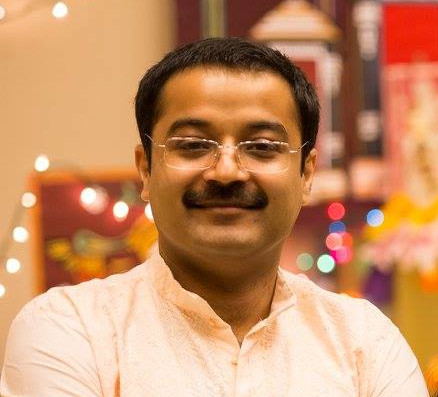
Swarnendu Biswas is an Assistant Professor in the Department of Computer Science and Engineering at the Indian Institute of Technology Kanpur. He teaches courses including Programming for Performance (CS 610), Analysis of Concurrent Programs (CS 636), and Compiler Design (CS 335), demonstrating his expertise across multiple areas of computer systems. His research interests center on Programming Languages, Compilers, Runtime Systems, and Parallel Software Systems. He leads the PROSPAR (Programming Languages and PARallel Systems) research group, which focuses on developing techniques to build efficient and correct parallel software through program analysis, compiler optimizations, and runtime systems. His recent publications reveal a strong trend in addressing fundamental challenges in parallel computing, with work spanning cache coherence, false sharing detection, data race analysis for GPUs, verification of neural networks, and thermal-aware management of heterogeneous systems. His research bridges theory and practice with significant contributions to both hardware and software aspects of parallel systems. His scientific achievements have been recognized through multiple prestigious awards: Google India Research Award 2021 Google Explore CSR 2022 Research Grant from Intel Corporation SERB Start-up Research Grant 2019 Google Cloud Platform Research Credits (2019, 2020) IITK Initiation Grant 2019 As an advisor, he mentors several PhD and MTech students working on cutting-edge research in parallel systems. His PROSPAR group has secured significant funding from industry and government sources, supporting innovative research in programming languages and parallel systems. The group actively collaborates with industry partners including Google and Intel, addressing real-world challenges in parallel computing. He leads the PROSPAR research group at IIT Kanpur, which brings together faculty, PhD students, and MTech researchers to tackle challenging problems at the intersection of programming languages, compilers, and parallel systems. The group maintains strong industry connections and focuses on practical solutions that can be deployed in real systems.
Håkan Grahn is a Professor of Computer Engineering at the Department of Computer Science, School of Computing, Blekinge Institute of Technology (BTH) in Sweden. He has been a faculty member since 1996, becoming a full professor in 2007. His academic leadership includes serving as Head of Department (1999-2002) and Dean of Research (2011-2013) at BTH. He leads multiple significant research projects including GPAI (General Purpose AI Computing) and Green Clouds, with funding from ELLIIT, the Knowledge Foundation, and Vinnova. His educational background includes: M.Sc. in Computer Science and Engineering (1990) from Lund University Ph.D. in Computer Engineering (1995) from Lund University Håkan's research spans several interconnected domains in computer science and engineering, with a strong emphasis on practical applications. His work in computer architecture focuses on optimizing system performance through innovative cache coherence protocols and memory management techniques. In the realm of parallel computing , he investigates multicore systems, GPU computing, and thread-level speculation to enhance computational efficiency. His research in AI and machine learning addresses energy efficiency, data stream mining, and practical applications in areas like district heating systems and airborne networks. The integration of image processing with machine learning forms another significant strand of his work, particularly in historical document analysis and medical imaging applications. These research areas converge in his leadership of major initiatives like BigData@BTH and GPAI, where he bridges theoretical advances with real-world implementation challenges. Analysis of Håkan's recent publications reveals a clear trajectory toward increasingly applied research with strong industry connections. While maintaining foundational work in computer architecture, his output increasingly focuses on practical AI applications, energy efficiency in computing, and domain-specific implementations in sectors like telecommunications, energy systems, and defense. The interdisciplinary nature of his work is evident in collaborations spanning computer science, engineering, and domain-specific applications, with a growing emphasis on sustainability and resource optimization in computing systems. Håkan has successfully supervised numerous doctoral students, with ten graduates and six current Ph.D. candidates. His research has been supported by substantial funding from: The Knowledge Foundation (BigData@BTH, HINTS, Green Clouds) ELLIIT (GPAI project) Vinnova (FANET-MCA, Directed COM & EW) Industry partners including Ericsson, Saab, Telenor, and Fortnox He is actively involved in multiple research groups including DISL (Distributed and Intelligent Systems Lab), CCS-Lab (Communication and Computer Systems Research Lab), and previously PAARTS (Parallel Architectures and Applications for Real-Time Systems). His leadership extends to organizing academic events like the Nordic workshop on Multi-Core Computing and the Swedish Artificial Intelligence Society workshop.
Oyekunle Olukotun is a Professor at Stanford University, internationally recognized for transformative contributions to computer architecture and parallel systems. His pioneering work established foundational principles for modern processor design that bridge academic research and industrial implementation. His research centers on parallel computing systems with emphasis on multicore and multithreaded processor architectures. Key innovations include chip multiprocessor (CMP) technology that became the industry standard for modern CPUs, fine-grained multithreading techniques for CPU efficiency optimization, and the Transactional Coherence and Consistency (TCC) framework for simplifying parallel programming. These contributions address critical challenges in performance scaling and energy efficiency for contemporary computing systems. Olukotun's publications reveal a consistent focus on hardware-software co-design for parallel systems, with significant impact across computer architecture and high-performance computing domains. His work demonstrates evolutionary progression from theoretical frameworks to industry adoption, particularly in server processor design. Scientific awards include: ACM-IEEE CS Eckert-Mauchly Award (2023) for contributions to parallel systems development ACM Fellow (2006) for multiprocessor and multithreaded processor design ASPLOS Most Influential Paper Award (2011) for the 1996 landmark paper ISCA Most Influential Paper Award (2019) for the 2004 transactional memory paper While the provided text lacks specific details about student advising or grant funding, Olukotun's entrepreneurial impact is evident through Afara WebSystems, which advanced server technology prior to its acquisition by Sun Microsystems. His research directly enabled Oracle's Niagara chip family used in SPARC-based servers. Industrial collaboration represents a critical dimension of his work, with designs transitioning from academic concepts to commercial implementations that shaped server processor evolution. The TCC framework co-developed with Christos Kozyrakis remains influential in parallel programming research.
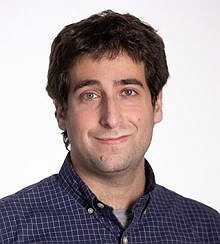
Stefan K. Muller is an Assistant Professor in the Computer Science Department at Illinois Institute of Technology. His research focuses on applying programming language techniques to improve correctness and efficiency in parallel computing, with applications spanning AI, computer science education, and systems design. He earned his PhD at Carnegie Mellon University (2018) under Umut A. Acar, following a postdoc there (2018–20), and holds an AB in Computer Science from Harvard University (2012). PhD, Carnegie Mellon University (2018) Postdoc, Carnegie Mellon University (2018–20) AB, Harvard University (2012) Stefan’s work integrates type systems, static resource analysis, and concurrency to address challenges in parallelism. His recent projects include Graph Types for language-agnostic parallel computation analysis, Responsive Parallelism models for interactive systems, and Resource-aware GPU Programming tools. He has contributed to conferences like POPL, PLDI, ICFP, and SPLASH, often focusing on deadlock detection, futures-based parallelism, and efficient compiler optimizations. His publications (2012–2024) emphasize formal methods for parallel systems. Key trends include type-driven concurrency, static analysis of GPU programs, and responsive scheduling for interactive applications. He mentors students in programming language theory and parallel computing, with former advisees now at institutions like Apple, Amazon, and UPenn. Stefan’s teaching includes courses on Types and Programming Languages (CS534), Science of Programming (CS536), and Compiler Construction (CS443). Outside academia, he is a homebrewer, runner, and singer, with a Bacon number of 2 and Erdős number of 4 .
Jaejin Lee is a Professor in the Department of Computer Science and Engineering at Seoul National University (SNU) and serves as the Director of the Center for Manycore Programming and Multicore Computing Research Laboratory. He holds a BS in Physics from SNU (1991), an MS in Computer Science from Stanford University (1995), and a PhD in Computer Science from the University of Illinois at Urbana-Champaign (1999), where his research was supported by IBM and Korea Foundation for Advanced Studies fellowships. Research Focus: His work centers on heterogeneous computing systems with expertise in GPU/FPGA programming, deep learning compiler architectures, PyTorch/TensorFlow optimization, and quantum computing simulation environments. Key areas include parallelization techniques and performance enhancement for machine learning frameworks. Publications: His research output demonstrates consistent focus on GPU efficiency, compiler-directed optimizations, and distributed computing, with recent emphasis on deep learning acceleration and error resilience in heterogeneous architectures. Awards & Honors: IEEE Fellow IBM Graduate Fellowship Korea Foundation for Advanced Studies Graduate Fellowship Leadership: Directs the Multicore Computing Research Laboratory and Center for Manycore Programming, focusing on next-generation parallel computing architectures.
Anil Madhavapeddy is the Professor of Planetary Computing at the University of Cambridge Computer Laboratory, where he co-leads the Energy & Environment Group and is a member of the Systems Research Group. He is also a Fellow at Pembroke College where he serves as Director of Studies in Computer Science. Madhavapeddy completed his PhD from the University of Cambridge in 2003 and his BEng in Information Systems Engineering from Imperial College in 1999. He holds a JM Keynes Fellowship since 2022 for his work combining computer science with economics, and serves on the management committee of the Cambridge Conservation Initiative where he co-directs 4C (Cambridge Centre for Carbon Credits) and the Centre for Earth Observation. His research spans computer systems and programming languages with a strong focus on applying these technologies to global conservation, biodiversity, and climate change challenges. He leads the OCaml Labs group and has made significant contributions to open-source projects including OCaml, Docker, Xen, and OpenBSD. His work often bridges computer science with environmental science, developing computational approaches to address planetary-scale challenges. Madhavapeddy's recent publications demonstrate a clear trajectory toward integrating programming language research with environmental monitoring and conservation. His work spans from foundational programming language techniques to applied geospatial computing systems, with increasing emphasis on biodiversity measurement, carbon credit systems, and planetary-scale environmental monitoring. JM Keynes Fellowship (2022-present) As an educator, Madhavapeddy teaches undergraduate courses including Foundations of Computer Science, Software & Security Engineering, and Cloud Computing. He mentors MPhil and PhD students and co-founded the award-winning book 'Real World OCaml' (2nd Edition, 2022). He has co-founded several companies including Unikernel Systems, High Energy Magic, Segfault, and Tarides to translate research into real-world impact. Madhavapeddy leads the OCaml Labs group at Cambridge and works closely with the Energy & Environment Group, collaborating with colleagues from Plant Sciences, Zoology, Economics, and NGOs including UNEP-WCMC and the IUCN. His current efforts are primarily focused on conservation technology through partnerships with organizations like Canopy PACT.
Matthew Fluet is an Associate Professor and Graduate Program Director in the Department of Computer Science at Rochester Institute of Technology's Golisano College of Computing and Information Sciences. He received his PhD in Computer Science from Cornell University and his BS in Mathematics from Harvey Mudd College. Prior to joining RIT, he was a research assistant professor at the Toyota Technological Institute at Chicago. Dr. Fluet's research focuses on programming languages, with particular emphasis on: Functional programming Compiler construction Program analysis Type systems Parallelism and concurrency His research has resulted in several significant projects including Manticore (a heterogeneous-parallel functional programming language), MaPLe/MPL (a functional language for provably efficient and safe multicore parallelism), and contributions to MLton (a whole-program optimizing Standard ML compiler). His work is supported by multiple National Science Foundation grants. Dr. Fluet has published extensively in top programming languages conferences including ICFP, POPL, PLDI, and PPoPP. His recent work focuses on automatic parallelism management, type-and control-flow analysis, and memory management for parallel systems, demonstrating a consistent research trajectory in making parallel programming safer and more accessible through language design. His notable research grants include: National Science Foundation (CISE Research Infrastructure): $224,329 (2014-2017) National Science Foundation (Software and Hardware Foundations): $236,744 (2014-2018) National Science Foundation: $412,261 (2011-2014) National Science Foundation: $91,867 (2008-2012) Dr. Fluet actively mentors graduate students, currently advising several MS project and thesis students. He teaches courses including Programming Skills (with focus on Rust), Compiler Construction, and Programming Language Concepts. He also serves in leadership roles including as Graduate Program Director for the Computer Science MS program and participates in departmental governance through the CS Curriculum Committee and GCCIS Curriculum Committee. He is an active member of the programming languages community, having served on program committees for major conferences and as Information Director for ACM SIGPLAN (2015-2018), demonstrating his commitment to advancing the field through research, education, and community service.