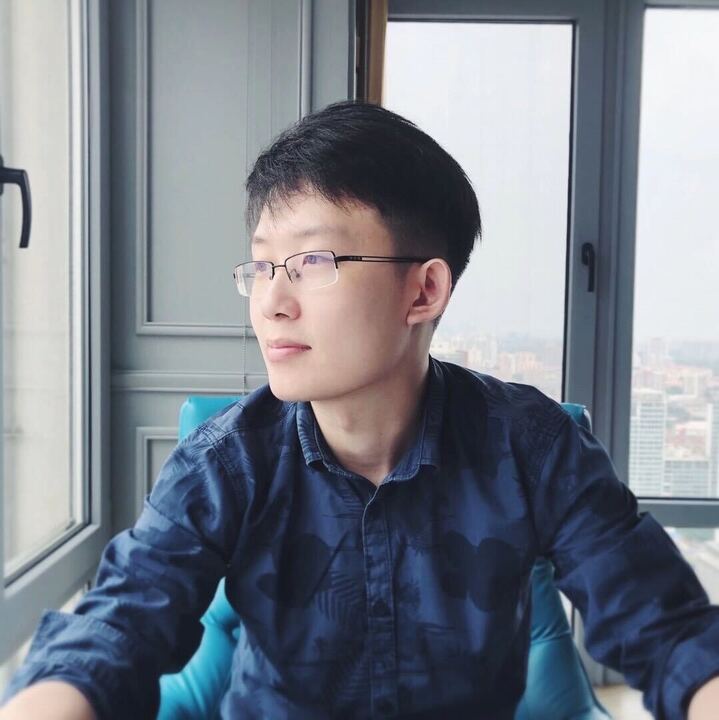
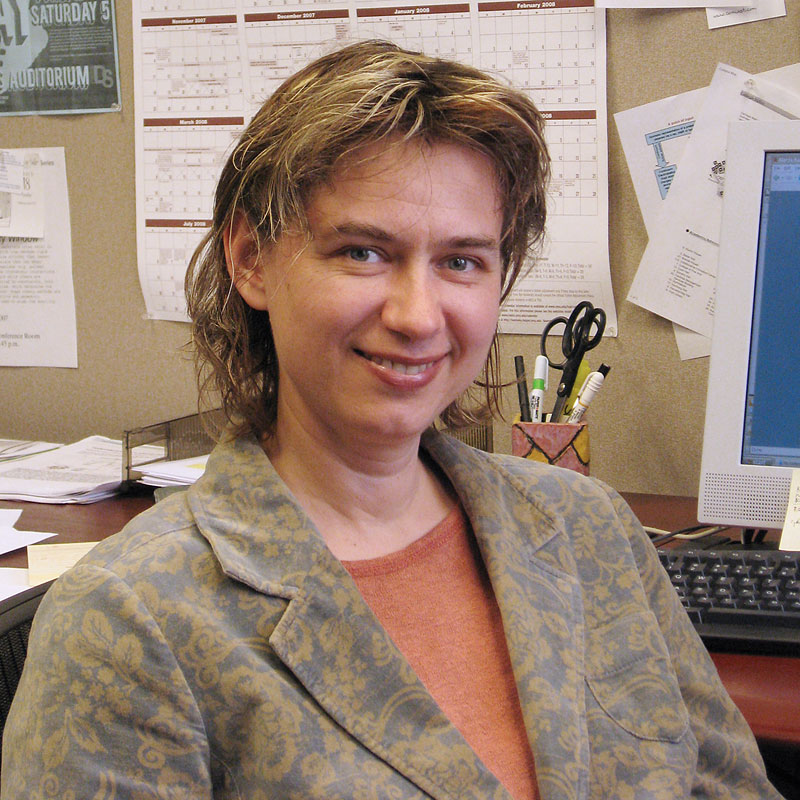
Todd C. Mowry is a Professor in the Computer Science Department at Carnegie Mellon University. His work focuses on computer systems design across multiple domains, including hardware architecture, compiler optimization, operating systems, and database performance. He explores techniques for parallel processing, memory management, and efficient execution of machine learning workloads.
Martin Prammer is a Post Doctoral Fellow at the Computer Science Department of Carnegie Mellon University. His research focuses on database systems, computer architecture, and data analytics acceleration through hardware-software co-design. Office: Gates and Hillman Centers, Room 9118 Email: mprammer@cmu.edu Dr. Prammer's work explores innovative approaches to database optimization, including: Algorithmic-hardware co-design for dense retrieval systems DRAM-PIM (Processing-in-Memory) integration for analytics acceleration Functional decomposition of storage formats Efficient integer encoding for skewed data processing His research has been applied to both theoretical advancements and practical implementations in SQLite optimization and mobile application testing. Current projects demonstrate strong connections between database engineering, computer architecture, and software systems research.
Zhihao Jia is an Assistant Professor in the Computer Science Department at Carnegie Mellon University (CMU). He is affiliated with the CMU Catalyst Group and the Parallel Data Lab, focusing on advancing systems for machine learning, quantum computing, and large-scale data analytics. Previously, he was a research scientist at Facebook and earned his PhD from Stanford University (2020), advised by Alex Aiken and Matei Zaharia. His bachelor's degree is from Tsinghua University's Special Pilot CS Class under Andrew Yao. His research emphasizes accelerating deep learning computations on modern hardware and optimizing quantum circuits for intermediate-scale quantum devices. Notable contributions include speculative reasoning techniques, efficient LLM serving systems, and quantum circuit simulators. He teaches advanced courses such as 15418 and 15618 at CMU. Zhihao advises PhD students including Zhuoming Chen, Zikun Li, and Xinhao Cheng. His work bridges systems research with emerging applications, aiming to enhance computational efficiency and scalability. He collaborates on projects like Specexec, Helix, and Atlas, addressing challenges in distributed computing and quantum simulation.
Maria Kurnikova is a Professor of Chemistry at Carnegie Mellon University (CMU), affiliated with the Mellon College of Science. She holds concurrent roles as Co-Director of the Molecular Biophysics & Structural Biology (MBSB) Graduate Program and affiliated faculty in the Joint CMU-Pittsburgh Computational Biology Program. Her research focuses on computational chemistry, molecular modeling, and theoretical biophysics, particularly in understanding protein structure-function relationships through high-performance computing and multi-scale modeling approaches. Education: M.Sc., Moscow Institute of Physics and Technology, 1984–1990 Ph.D., University of Pittsburgh, 1998 Postdoctoral Fellowships: University of Tel Aviv (1998–1999) and University of Pittsburgh/NIST (1999–2001) Research Interests: Dr. Kurnikova's work spans computational modeling of membrane proteins, ion channels, and drug design. Her group develops hierarchical models to bridge atomistic and macroscale processes, with applications in understanding ligand binding, channel gating, and ion selectivity. Current projects include: Membrane protein receptors and ion channel dynamics In silico drug design using machine learning and free energy simulations Development of accurate force fields for molecular interactions Awards: 2024 Department of Chemistry Distinguished Alumni Award (University of Pittsburgh) 2002 Research Corporation Innovation Award Collaborations & Resources: Active user of NSF/NIH supercomputing facilities (e.g., Pittsburgh Supercomputing Center) Collaborations with Olexandr Isayev’s group on drug design methodologies Labs & Teams: The Kurnikova Research Group specializes in theoretical and computational approaches to biological macromolecules, with ongoing projects in TRPM7 channel regulation, AMPA receptor allostery, and heme transfer mechanisms.