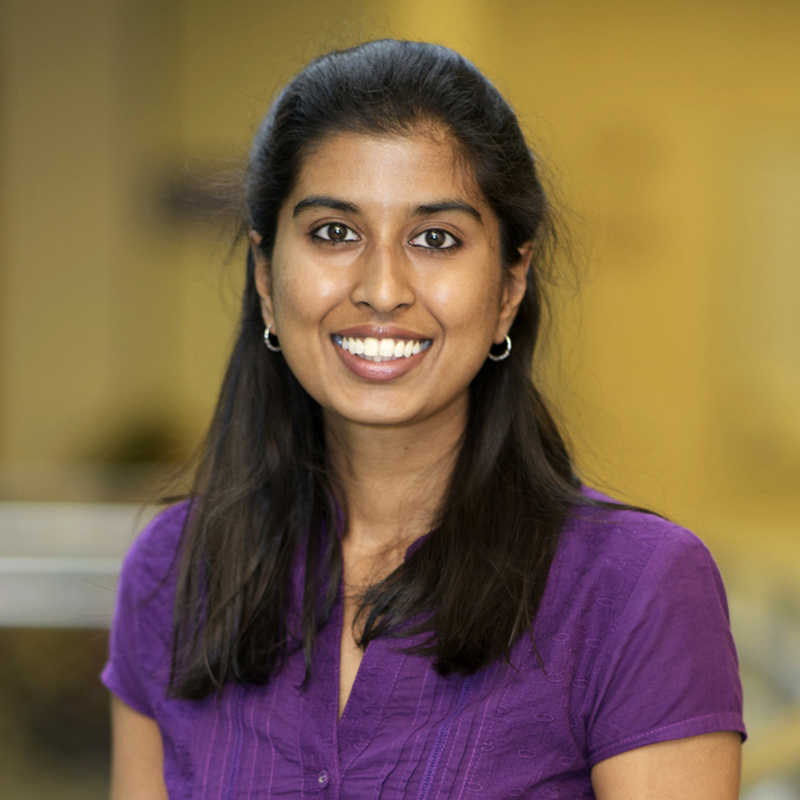
Tianqi Chen is an Assistant Professor at the Machine Learning Department and Computer Science Department of Carnegie Mellon University (CMU), with a courtesy appointment as a Professor in the Electrical and Computer Engineering Department within the College of Engineering. His research focuses on scalable machine learning systems, compiler optimization, and efficient deep learning frameworks. He holds a PhD from the Paul G. Allen School of Computer Science & Engineering at the University of Washington. Key contributions include the creation of XGBoost, Apache TVM, and MLC-LLM—widely adopted systems for machine learning and large language models. His work bridges algorithmic innovation with high-performance computing, emphasizing efficient deployment, quantization, and edge computing. Recent publications highlight advancements in LLM serving (e.g., WebLLM, Flashinfer), compiler-driven optimizations (e.g., TVM, Relax), and low-latency inference techniques (e.g., Magicdec, Tilus). These efforts address scalability, energy efficiency, and cross-platform compatibility in modern AI systems. Chen’s research has been applied to diverse domains, including music AI, browser-based inference, and microservice architectures for LLMs. His work underscores the importance of system-level thinking in advancing AI capabilities.
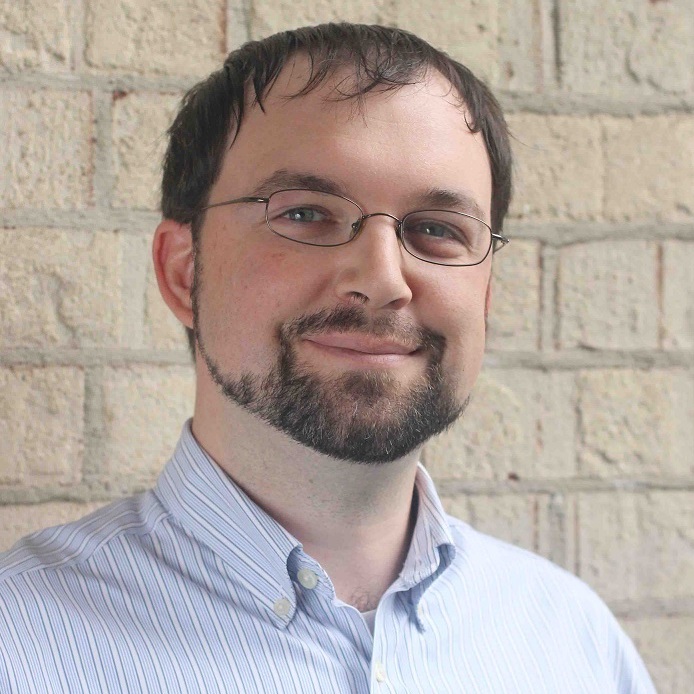
Andy Pavlo is an Associate Professor with Indefinite Tenure in the Computer Science Department at Carnegie Mellon University's School of Computer Science. He is an active member of the CMU Database Group and the Parallel Data Laboratory, where he leads research in database management systems with a focus on self-driving architectures, transaction processing, and large-scale analytics. His work bridges academic research and industry applications through projects like NoisePage, OtterTune (which he co-founded and served as CEO before it ceased operations), and Peloton. Dr. Pavlo's research interests span database management systems with particular emphasis on autonomous database architectures that can self-tune and optimize without human intervention. His work explores transaction processing systems that can handle high-throughput workloads while maintaining consistency, and large-scale data analytics techniques that efficiently process massive datasets. He has made significant contributions to query optimization, database extensibility, and automatic database tuning using machine learning techniques. His recent work on database extensibility revealed critical issues in PostgreSQL's extension ecosystem, showing that approximately 16% of extensions are incompatible with at least one other extension due to API violations and memory errors. His research output demonstrates a consistent focus on practical database systems challenges, with recent publications examining database extensibility, user-defined function optimization, and the cyclical nature of database research. The articles show a strong trend toward making database systems more autonomous, with increasing integration of machine learning techniques for automatic tuning and optimization. His work often combines deep theoretical analysis with practical implementation in open-source systems. Dijkstra Award 2024 for contributions to database systems research Dr. Pavlo actively mentors graduate students, with current advisees including Wan Shen Lim, William Zhang, and Sam Arch (co-advised with Todd Mowry). His former students have gone on to successful careers in both industry and academia. He has secured significant research funding through CMU's affiliate program with major database companies including ClickHouse, DataStax, dbt, Firebolt, MotherDuck, RelationalAI, SingleStore, Spiral, PingCAP/TiDB, Yellowbrick, and Yugabyte. His research is supported by these industry partnerships and likely includes NSF funding given his active participation in the database research community. At CMU, Dr. Pavlo leads the Database Group and organizes several seminar series including "SQL or Death," "Database Building Blocks," and "ML⇄DB Technical Talks." These seminars bring together researchers and practitioners to discuss cutting-edge developments in database systems. He also runs a summer research internship program that has attracted students for multiple consecutive years, indicating a strong research group with ongoing projects and funding.
James C. Hoe is Professor of Electrical and Computer Engineering at Carnegie Mellon University (College of Engineering). He is on sabbatical at MangoBoost and directs research in computer architecture, reconfigurable computing, and high-level hardware design. Education Ph.D., Electrical Engineering and Computer Science, MIT (2000) M.S., Electrical Engineering and Computer Science, MIT (1994) B.S., Electrical Engineering and Computer Science, UC Berkeley (1992) Research Interests Professor Hoe’s work spans computer architecture , reconfigurable computing , FPGA architectures , and high-level hardware synthesis . His group created the CoRAM abstraction for virtualized FPGA computing and leads efforts in power-efficient accelerators, in-network computing, and security-oriented FPGA systems. Scientific Awards IEEE Fellow (2013) Intel Outstanding Researcher Award (2021) Research Funding & Projects Intel / VMware Crossroads 3D-FPGA Academic Research Center – co-leading exploration of FPGA roles in future datacenters. DARPA BRASS program ($2.7 M, 4 years) – ensuring long-lived software systems remain robust to resource changes. Pigasus open-source IDS – world’s fastest FPGA-accelerated intrusion-detection system (100 Gb/s on one server). Labs & Teams He heads activities within the Computer Architecture Lab at Carnegie Mellon (CALCM) , supervising graduate researchers on CoRAM++, SPIRAL autotuning, and FPGA overlays for stream processing.
Jignesh M. Patel is a Professor in the Computer Science Department at Carnegie Mellon University , focusing on Data Management , System Efficiency (e.g., Scalable Data Platforms), and Human Efficiency (e.g., LLM-Based Query Interfaces). His work bridges Database Systems , Machine Learning , and Human-Computer Interaction . Co-founder of four startups: Paradise (1997), Locomatix (2007), Quickstep (2015), and DataChat (2017). Member of SIGMOD 2025 (AE) , CIDR 2024 (Co-Chair) , and other program committees. Research Interests include efficient data analysis algorithms , LLM-based data interaction , and systems security . His group develops platforms combining scalability and user productivity . Scientific Awards include Best Paper Awards at SIGMOD and VLDB, and Fellowships from AAAS, ACM, and IEEE. He also received Teaching Awards at CMU. Professional Activities feature co-founding startups , serving on program committees , and teaching courses like Database Systems and Advanced Database Systems at CMU.
Franz Franchetti is the Kavčić-Moura Professor of Electrical & Computer Engineering at Carnegie Mellon University. He serves as Associate Dean for Research and Director of the Engineering Research Accelerator at CMU. Education: Ph.D. in Computational Mathematics (Vienna University of Technology, 2003) M.Sc. in Technical Mathematics (Vienna University of Technology, 2000) His research interests focus on automatic performance tuning and program generation for emerging parallel computing platforms , including multicore CPUs , GPUs , and 3DIC chip design . He leads the SPIRAL effort to automate highly optimized software libraries and explores domain-specific compiler transformations in HPC applications for smart grids and material sciences . Recent work extends SPIRAL to quantum computing . The scientific awards Franchetti has received include the Gordon Bell Prize (2006) , HPC Challenge Class II Award (2010) , and the CIT Dean's Early Career Fellowship (2013) . He and his students have won multiple Best Paper Awards at HPEC, DAC, and ISPA ACM TODAES Best Paper (2014) Student Research Competition wins (PACT 2024, CGO 2023) Franchetti has advised students like Richard Veras and Thom Popovici . He has secured significant grants from agencies such as DARPA, DOE, NSF, and industry partners (Intel, NVIDIA, Mercury). He co-founded SpiralGen, Inc. and holds leadership roles in organizations like ASciNA Western Pennsylvania and as Honorary Consul of Austria in Pittsburgh.
Yihan Sun is an Assistant Professor at the University of California, Riverside (UCR) since January 2020. He earned his Ph.D. in Computer Science from Carnegie Mellon University (CMU) , advised by Guy Blelloch , and holds a Bachelor's degree in Computer Science from Tsinghua University . Research Interests: Yihan Sun focuses on the theory and practice of parallel computing , including Parallel algorithms and data structures Write-efficient algorithms for Non-Volatile Memory (NVM) Computational geometry (range trees, Delaunay triangulations) Graph algorithms (SSSP, SCC, cluster-based BFS) Concurrent and persistent data structures Multi-version concurrency control (MVCC) with garbage collection Applications in databases, transactional systems, and computational biology Recent Research Trends: His work on join-based parallel balanced trees has been foundational, supporting four balancing schemes (AVL, red-black, weight-balanced, treaps) and enabling efficient implementations in graph analytics, spatial queries, and dynamic programming. Recent publications focus on output-sensitive algorithms , scalable graph libraries (PASGAL) , and pedagogical approaches to teaching parallel algorithms. Teaching: He teaches CS260 (Parallel Algorithms) at UCR and has served as a guest lecturer for MIT 6.886 (Algorithm Engineering) and CMU 15-859 (Algorithms in the real world) . He also contributed to algorithm education through a tutorial at the ACM Symposium on Principles and Practice of Parallel Programming (PPoPP 2019) . Labs & Collaborations: Yihan is a core contributor to the PAM (Parallel Augmented Maps) library, which has been integrated into systems like Aspen (graph-streaming) and C-trees . He collaborates with teams at CMU-Parlay , PBBS , and Ligra , with his code available on Github for community feedback.
Garth Gibson is a Professor in the Computer Science Department and Department of Electrical and Computer Engineering at Carnegie Mellon University's School of Computer Science. He serves as Co-Director of the Master of Computational Data Science program and as Associate Dean for Master's Programs. Gibson has been a faculty member at CMU since 1991, after receiving his Ph.D. and M.Sc. in Computer Science from the University of California at Berkeley and a Bachelor of Mathematics in Computer Science and Applied Mathematics from the University of Waterloo. Gibson's research focuses on large-scale parallelism in computer systems, secondary memory system technologies and optimization, scalable file and key-value storage systems, scalable machine learning, and systematic testing for large scale systems. His work bridges theoretical concepts with practical implementations, with a strong emphasis on shepherding technological advances from academic research to commercial reality. He has made significant contributions to RAID technology, network-attached secure disks (NASD), and parallel file systems that have shaped industry standards and products. Gibson's recent publications reveal a strong trend toward data-intensive scalable computing, with increasing focus on machine learning systems, distributed storage solutions, and high-performance computing infrastructure. His research has evolved from foundational storage technologies to address the challenges of petascale and exascale computing environments, with particular attention to the intersection of storage systems and machine learning workloads. The papers demonstrate a consistent theme of addressing system scalability challenges through innovative architectural approaches. Scientific Awards: 2014 Fellow of the IEEE for contributions to the performance and reliability of transformative storage systems 2012 Fellow of the ACM for contributions to the performance and reliability of storage systems 2012 Jean-Claude Laprie Award in Dependable Computing Industrial/Commercial Product Impact Category 2011 SIGOPS Hall of Fame for the SIGMOD88 RAID paper 1999 Reynold B. Johnson Information Storage Award 1999 Allan Newell Award for Research Excellence 1998 Test of Time Award 1991 A.C.M. Doctoral Dissertation Award (tied for second) Gibson has advised numerous graduate students who have gone on to influential positions in both academia and industry, including Swapnil Patil who won first place in the 2010 ACM Graduate Student Research Competition. He has secured significant research funding through initiatives like the DOE Petascale Data Storage Institute and the Intel Science and Technology Center for Cloud Computing. His research has been supported by collaborations with national laboratories including Los Alamos, Sandia, Oak Ridge, Pacific Northwest, and Lawrence Berkeley. Gibson founded CMU's Parallel Data Laboratory (PDL) in 1993, which has grown into a vibrant research community comprising 6-9 faculty members, 2-3 dozen students, and 4-10 staff. The PDL operates with guidance from the Parallel Data Consortium, which includes 15-25 companies interested in parallel data systems. He also founded Panasas Inc. in 1999, a scalable storage cluster company that has deployed technology in national laboratories, energy sectors, and other high-performance computing environments. More recently, Gibson established the Big Learning research group and created the Systems Major curriculum within CMU's Master of Computational Data Science program.
Greg Ganger is the Jatras Professor of Electrical and Computer Engineering at Carnegie Mellon University and Director of the Parallel Data Lab (PDL). His research focuses on computer systems, including cloud computing, storage systems, distributed systems, and machine learning infrastructure. He holds a Ph.D. in Computer Science and Engineering from the University of Michigan and completed postdoctoral work at MIT. Education: Ph.D., M.S., and B.S. in Computer Science from the University of Michigan (1991–1995). Research Interests: Ganger leads projects in cloud computing, storage/file systems, operating systems, and systems for big data and large-scale machine learning. Recent work includes optimizing cloud resource scheduling, developing sustainable storage solutions, and improving ML cluster efficiency. The PDL explores storage system architecture, file systems, and leveraging new storage technologies like non-volatile memory (NVM). Awards: 2021 OSDI Best Paper, 2021 SOSP Best Paper, 2021 SoCC Test of Time Award, and 2021 R&D 100 Award. His team's work on Kangaroo caching and MACARON cloud caching exemplifies cutting-edge contributions. Advising & Grants: Advises graduate students in ECE and Computer Science. Active in grants related to distributed storage, cloud systems, and ML infrastructure. Collaborates with industry partners like Los Alamos National Lab on storage systems. Labs/Teams: Directs the Parallel Data Lab (PDL), a leading research group in storage and distributed systems. Collaborates with CMU’s CyLab on security aspects of storage systems and ML infrastructure.
Jignesh Patel is a Professor in the Computer Science Department at Carnegie Mellon University, specializing in database systems and data-intensive computing. His research focuses on hardware-software synergy for high-performance databases and democratizing data analytics through no-code interfaces. He co-founded DataChat, a startup focused on intuitive data analytics platforms. He holds fellowships from AAAS, ACM, and IEEE, along with teaching awards. His work emphasizes building systems that leverage novel hardware and user-friendly interfaces. Research interests include scalable data platforms, LLM-based query interfaces, and optimizing database performance through hardware collaboration. Notable projects include the Quickstep data platform and the Ava conversational interface. Awards: Fellow of AAAS, ACM, IEEE; Multiple Teaching Awards Labs/Teams: CRISP (Intelligent Storage and Processing), DataChat startup
Tze Meng Low is an Associate Research Professor in the Department of Electrical and Computer Engineering at Carnegie Mellon University (CMU), part of the College of Engineering. His research focuses on high-performance algorithms, formal methods, and hardware-software co-design, with an emphasis on achieving performance portability across architectures. He holds a Ph.D. and M.S. in Computer Science and dual B.A./B.S. degrees in Economics and Computer Science from the University of Texas at Austin. His research interests span parallel computing, graph algorithms, machine learning, and cyber-physical systems. He has contributed to projects like the DARPA BRASS initiative, collaborating on adaptive software systems for resource-challenged environments. His work also involves developing tools such as SMaLL and qLD, which address challenges in machine learning library instantiation and genomic analysis. Low has received the Dean’s Early Career Fellowship (2022) and led the $2.7M DARPA-funded BRASS project (2016–2020), supported by SpiralGen, Inc. and academic collaborators. His contributions include code generation frameworks like SPIRAL and advancements in linear algebra-based graph algorithms, emphasizing analytical models and automated code optimization. His research bridges theoretical formal methods with practical implementations, aiming to enhance software reliability and scalability in emerging domains. Collaborations include work on fault-tolerant coded computing and high-assurance systems for cyber-physical applications.
Akshitha Sriraman is an Assistant Professor in the Department of Electrical and Computer Engineering and Computer Science at Carnegie Mellon University. She holds a PhD in Computer Science from the University of Michigan (2021) and an M.S. in Embedded Systems from the University of Pennsylvania (2015). Her research focuses on bridging computer architecture and systems software to design efficient, sustainable, and equitable data center systems, emphasizing hardware-software co-design. Her work has been deployed in real hyperscale data centers, influencing Intel’s Alder Lake CPU architectures and Infrastructure Processing Unit designs. Recipient of the NSF CAREER Award (2024), Intel Rising Star Award (2023), and multiple dissertation prizes. Advances include reducing global carbon emissions via server design and introducing equity as a first-order design concern in web systems. Advises PhD and Master’s students on topics like sustainable computing, equitable systems, and hardware optimization. Key contributions span energy-efficient data center architectures, bias-free scheduling systems, and cloud GPU power management. She leads a research group prioritizing socially responsible computing and has received grants from NSF, AWS, and industry partnerships.
Carl D. Laird is the John E. Swearingen Professor and Department Head of Chemical Engineering at Carnegie Mellon University's College of Engineering. He holds affiliations with the Center for Advanced Process Decision-making (CAPD) and the Center for Materials Data Science for Reliability and Degradation (MDS-Rely). His academic journey includes a B.S. from the University of Alberta (2000), a Ph.D. from Carnegie Mellon (2006), and postdoctoral training in Epidemiology at the University of Pittsburgh. Laird's research integrates optimization, data science, and systems engineering. Key focus areas include high-performance computing for large-scale nonlinear problems, parallel scientific computing, and open-source software development, applied to domains like public health, homeland security, critical infrastructure, and energy systems. His work also spans machine learning, operations research, and advanced process decision-making. Awards and Honors: 2024 Steven J. Fenves Award for Systems Research INFORMS Computing Society Prize Wilkinson Prize for Numerical Software (for IPOPT development) NSF CAREER Award Best Oral Presentation at ESCAPE 33 John E. Swearingen Endowed Professorship He advises graduate students including Carolina Colombo Tedesco and leads the Laird Research Group, part of the Center for Advanced Process Decision Making (CAPD). His collaborations include projects with Imperial College and Sandia National Labs, such as the OMLT Python package for machine learning optimization.
George Amvrosiadis is a Research Professor in the Department of Electrical and Computer Engineering at Carnegie Mellon University, with a courtesy appointment in Computer Science. He is a core member of the Parallel Data Lab and spends part of his time at Amazon S3 as an Amazon Scholar. Education: 2016 - Ph.D., Computer Science, University of Toronto 2009 - BA, Computer Science, University of Ioannina Research Interests: His work focuses on distributed systems , operating systems , data analysis , cloud computing , and storage technologies . He explores high performance computing (HPC), zoned storage , systems security , and storage solutions for machine learning . Scientific Trends: Articles highlight innovations in storage systems, including zoned storage , HPC data services , and machine learning infrastructure . Research spans distributed systems , I/O optimization , and data integrity in large-scale environments. Scientific Awards: DeltaFS project received the R&D 100 Award from R&D World Magazine Teaching & Service: He co-teaches graduate courses on storage and cloud systems, serves on program committees for top conferences (SOSP, OSDI, FAST), and mentors students in systems research and infrastructure projects.
Beidi Chen is an Assistant Professor in the Department of Electrical and Computer Engineering at Carnegie Mellon University (CMU), with a visiting research role at FAIR/Meta. She holds a Ph.D. in Computer Science from Rice University (2020) and a B.S. in Electrical Engineering and Computer Science from UC Berkeley (2015). Her research focuses on optimizing machine learning algorithms and models for modern hardware, emphasizing efficiency in large-scale systems. She has been recognized as a Rising Star in EECS by MIT (2019) and UIUC (2021), and her work has received multiple best-paper awards, including runner-up at ICML 2022 and awards at IISA 2018 and USENIX LISA 2014. Education: Ph.D., Computer Science, Rice University (2020) B.S., Electrical Engineering & Computer Science, UC Berkeley (2015) Her research interests span machine learning systems , algorithm-system co-design , and large language models (LLMs) . She explores techniques like structured sparsity, efficient inference, and hardware acceleration to enhance the scalability and performance of ML models. Recent work includes optimizing LLM context lengths, speculative decoding, and memory-efficient training methods. Her publications highlight advancements in LLM acceleration (e.g., 'Megalodon' for unlimited context), memory optimization ('Headinfer'), and scalable training frameworks ('FlexGen'). She also contributes to federated learning and edge deployment solutions for LLMs. Awards: Best Paper Runner-up, ICML 2022 Best Paper Award, IISA 2018 Best Paper Award, USENIX LISA 2014 Rising Star in EECS (MIT 2019, UIUC 2021) Chen collaborates across academia and industry, focusing on bridging algorithmic innovation with practical hardware constraints. Her lab emphasizes scalable, efficient systems for modern AI challenges.
Brian Railing is an Associate Teaching Professor in the Computer Science Department at Carnegie Mellon University, part of the School of Computer Science. He specializes in educational technologies and systems programming, with a focus on improving teaching methods and student engagement in computer science courses. His recent courses include 15213, 15346, and 15513 across multiple semesters. His research spans electronic examination analysis, computer architecture education tools like CADSS, and optimizing parallel computing systems through Contech and LLVM instrumentation. His publications highlight advancements in student-centered learning, such as enhancing office hours and analyzing exam-taking behaviors. He also contributes to compiler optimization and memory systems evaluation. Despite extensive teaching and research, no awards or grants are explicitly mentioned. Brian’s work emphasizes bridging theory and practice in systems education, with ongoing efforts to develop scalable tools for parallel program analysis and student-driven learning environments.