Brian Nielsen is an Associate Professor at the Department of Computer Science, Aalborg University, under the Technical Faculty of IT and Design. His research focuses on Cyber-Physical Systems, Distributed Systems, and Intelligent Systems, with a particular emphasis on energy-efficient design and distributed reachability analysis. Research Interests: Cyber-Physical Systems, Distributed Systems, Embedded Systems, Intelligent Systems, Model-Based Design, Optimization Supervision: Supervised PhD theses on topics related to energy efficiency (2024) and time/cost optimization (2016) Contact: bnielsen@cs.aau.dk | Personal Website
Prof. Bekir Tevfik Akgün serves as Professor and Dean of the Faculty of Computer and Information Sciences at Yeditepe University, with prior academic appointments at Istanbul Okan University (Department Head, Institute Director), Ohio State University, and Yildiz Technical University (Dean). His expertise spans artificial intelligence, information security, computer graphics, and distributed systems, supported by extensive research funding and supervision of 19 graduate students. Educational background includes: Ph.D. in Control and Computer Engineering, Istanbul Technical University (1991) M.S. in Control and Computer Engineering, Istanbul Technical University (1984) B.S. in Electrical Engineering, Istanbul State Academy of Engineering and Architecture (1981) His research integrates theoretical and applied computer science, with recent focus on AI-driven environmental monitoring (forest fire detection via drone-IoT networks), bioinformatics security, and advanced color models. Early work established foundational contributions in digital art (marbled paper techniques) and real-time operating systems, evolving into contemporary applications in energy management and autonomous systems. Publication trends since 2001 reveal consistent innovation across domains: computer graphics (2004-2024), distributed systems (2001), and emerging AI/IoT applications (2022-2024). The interdisciplinary nature of his work bridges theoretical computer science with practical implementations in security, environmental science, and human-computer interaction. Scientific Awards: No major scientific awards were listed in the provided information. Advising and Grants: Supervised 18 master's theses and 1 doctoral dissertation covering autonomous vehicles, deep learning, and IoT systems. Secured over 1.5 million Turkish Lira in research funding through TÜBİTAK projects including Smart Renewable Energy Management System (2018-2021, 159,636 TL) and Advanced Autonomous Bus System (2018-2021, 915,810.99 TL), with additional projects in battery management and metrobus efficiency. Labs and Teams: Project descriptions indicate leadership in autonomous systems teams and energy management research groups, though specific laboratory affiliations are not detailed in the source text.
Prof. Hasan BULUT is a full-time faculty member at Ege University's Faculty of Computer and Information Sciences, Department of Computer Engineering. His primary research focuses on software engineering, parallel algorithms, computer networks, artificial intelligence, and algorithm design. He has contributed to fields like distributed systems, data structures, and bioinformatics through innovative algorithmic solutions. His academic work spans over two decades, with notable contributions to machine learning applications in energy forecasting, DNA sequence analysis, and cloud computing optimization. Key areas of expertise include hybrid machine translation models, real-time data clustering, and optimization techniques for computational problems. Prof. BULUT's recent publications emphasize interdisciplinary approaches, combining deep learning with traditional methods to solve challenges in healthcare informatics, financial prediction, and bioengineering. His work on network slicing techniques for 5G and beyond networks highlights cutting-edge contributions to modern communication systems. Despite an extensive publication record and collaborations within Ege University, no formal scientific awards or grant information is explicitly mentioned in the provided texts. His academic career includes supervising numerous research projects but specific student advisee details are not documented here.
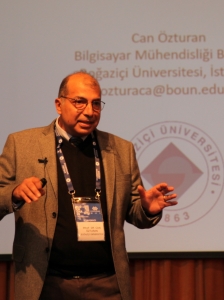
Can Özturan is a Professor in the Department of Computer Engineering at Bogazici University in Istanbul, Turkey. He joined the department as a faculty member in 1996 after completing his Ph.D. in Computer Science from Rensselaer Polytechnic Institute in 1995 and working as a Postdoctoral Staff Scientist at the ICASE (Institute for Computer Applications in Science), NASA Langley Research Center. His research interests span Blockchain Technologies, Parallel Processing, High Performance Computing, Graph Algorithms, Scientific Computing, Resource Management, and Grid/Cloud Computing. Over his career, his research focus has evolved from parallel processing and graph algorithms toward blockchain technologies, particularly focusing on privacy-preserving techniques, fraud detection, and performance optimization in Ethereum systems. An analysis of his recent publications (2021-2025) reveals a strong concentration on blockchain applications, with particular emphasis on privacy-preserving protocols using zero-knowledge proofs, fraud detection in transaction graphs, and performance optimization for blockchain systems. His work bridges theoretical computer science with practical blockchain implementations, often applying parallel processing techniques to blockchain challenges. Professor Özturan teaches courses in Blockchain Programming (CMPE483), Parallel Processing (CMPE478), Systems Programming (CMPE230), Graph Algorithms (CMPE528), and Compiler Design (CMPE425), demonstrating his expertise across both foundational and emerging areas of computer engineering.
Ahmet Kaymaz serves as an Assistant Professor in the Department of Mechatronics Engineering at Karabuk University's Faculty of Engineering, a position held since 2020 following 10 years as a Research Assistant in Electrical and Electronics Engineering at the same institution. Education: PhD in Electrical and Electronics Engineering, Karabuk University (2015-2020) MSc in Electrical and Electronics Engineering, Karabuk University (2012-2015) BSc in Electrical and Electronics Engineering, Pamukkale University (2006-2010) Research Focus: Dr. Kaymaz specializes in semiconductor device physics with emphasis on radiation effects and temperature dependencies in Schottky diodes and metal-semiconductor interfaces. His work explores diamond-like carbon (DLC) and organic interlayers for radiation sensing applications, spanning core areas of Electronics, Semiconductors, Nanotechnology, and Optoelectronics . Current investigations examine copper-doped DLC structures and cobalt/zinc-modified organic layers to enhance radiation detection capabilities. Publication Trends: His 14 journal articles (2020-2025) demonstrate consistent focus on electrical characterization under ionizing radiation, with 70% involving GaAs-based devices and DLC/organic interfaces. Recent work (2024-2025) increasingly incorporates multi-parameter analysis of barrier height distributions and polarization mechanisms, reflecting methodological maturation in radiation effects quantification. Academic Contributions: Dr. Kaymaz advises Master's candidate Mustafa Şahin (thesis on copper-doped DLC Schottky devices) and teaches core electronics courses including Electronic I/II. He currently serves as Faculty Coordinator for Applied Education and Career Planning (2024-present) and previously chaired the university's Applied Education Committee (2021-2024), demonstrating institutional leadership beyond research. Professional Development: Certified in AFAD Disaster Response and First Aid, he maintains active research collaboration networks evidenced by 17 co-authors since 2019, primarily with Esra Evcin and Şemsettin Altındal. His English proficiency (YÖKDİL 71) supports international publication in SCI-indexed journals.
Assistant Professor Tusan Derya is affiliated with Başkent University in the College of Engineering , Industrial Engineering Department . Their research focuses on Operations Research Fuzzy Logic Modeling and Optimization with applications in routing problems and logistics. Their recent publications address variations of the Traveling Salesman Problem (2020-2024), Team Orienteering (2016), and Vehicle Routing (2011) using Mixed-Integer Programming and Fuzzy Logic approaches. They have contributed to Portfolio Optimization models (2024) and Autonomous Distribution Systems (2024).
Osman Darcan is an Associate Professor at Bogazici University in Istanbul, Turkey, with a verified institutional email osman.darcan@boun.edu.tr. His academic career spans over two decades with consistent research output in computational fields. Education Background: Undergraduate: Boğazici University, Computer Engineering Masters: Boğaziçi University, Computer Engineering Ph.D.: Boğaziçi University, Industrial Engineering His research focuses on practical applications of computational techniques across multiple domains. Darcan's work in Programming Techniques emphasizes object-oriented development frameworks and visualization tools for educational purposes. His Simulation research includes distributed systems and load balancing algorithms, while Artificial Intelligence applications target data mining for student profiling and e-commerce. The E-Learning strand features innovative tools for linear programming, geometric problem-solving, and programming education, demonstrating a strong commitment to pedagogical innovation through technology. Publication trends (2000-2012) reveal an evolution from foundational work in distributed simulation (2000-2006) toward applied data mining in education and e-commerce (2009-2012). His research consistently bridges theoretical computer science with practical educational and business applications, particularly in cluster analysis for student performance and agent-based modeling for market simulations. No scientific awards were documented in the source material. While specific advising records and grant details weren't provided, Darcan's publication pattern indicates supervision of students in data mining and simulation projects. His international conference presence (IBIMA, PICMET, World Conference on E-Learning) suggests active participation in global academic networks. The absence of lab/team mentions implies independent or small-group research operations focused on software tool development.
Hande Alemdar is an Assistant Professor at the Department of Computer Engineering, Middle East Technical University, specializing in machine learning, data science, and big data analytics. She earned her BSc, MSc, and PhD in Computer Engineering from Boğaziçi University in 2004, 2009, and 2015, respectively, with her PhD thesis awarded the Bogazici University Research Fund (BAP) Best Thesis Award. PhD in Computer Engineering (2015), Boğaziçi University MSc in Computer Engineering (2009), Boğaziçi University BSc in Computer Engineering (2004), Boğaziçi University Her research focuses on applying machine learning to resource-efficient hardware, wireless sensor networks, and smart environments. She has pioneered work on ternary neural networks for FPGA-based AI, which reduce computational costs while maintaining accuracy. Her work spans diverse applications like activity recognition, fall detection, and sports analytics. Her recent publications reflect trends in deep learning for hardware efficiency, smart healthcare via ambient sensors, and network security with machine learning. These studies often integrate multi-modal sensor fusion and real-time data analysis , emphasizing deployability in resource-constrained scenarios. Scientific Awards Bogazici University BAP Best Thesis Award Hande has collaborated with Grenoble Informatics Institute and industry leaders like ST Microelectronics on energy-efficient AI. Her work has been published in journals and conferences such as Sensors, Computers & Graphics, and FPL, addressing topics from elite football performance analysis to covert channel detection in SDN. She leads research in scalable architectures for smart environments and is involved in the H2020 FET Project 'ROBOtic Replicants for Optimizing the Yield by Augmenting Living Ecosystems', demonstrating her commitment to interdisciplinary AI applications.
Belgin Ergenç Bostanoğlu is an Associate Professor in the Computer Engineering Department at Izmir Institute of Technology (Turkey). Her research focuses on query optimization in distributed databases, association rule mining, privacy-preserving data mining, and graph-based algorithms. She leads the Dworld research laboratory and has held academic and industry roles since the 1980s. Education: B.Sc. in Computer Engineering, Middle East Technical University (1983) M.Sc. in Computer Engineering, Izmir Institute of Technology (2002) Ph.D. in Computer Engineering, Paul Sabatier University, France (2008) Research Interests: Dynamic frequent itemset mining and hiding under multiple support thresholds Subgraph mining in evolving graphs Federated query processing over linked data Privacy-preserving techniques in distributed databases Medical NLP applications (e.g., TurkMedNLI dataset) Her recent work emphasizes large-scale graph analysis, medical NLP dataset development, and adaptive join operators for federated SPARQL queries. She has contributed to over 30 peer-reviewed publications and led projects like the TÜBİTAK ARDEB 3501 platform for dynamic frequent itemset mining. Teaching: Courses include Advanced Database Management Systems, Knowledge Discovery, and Privacy-Preserving Data Mining. Labs & Projects: Manages Dworld lab and coordinates projects such as 'Turkish Medical NLP Model Development' (BAP-funded) and the Behavioral Next Generation Wireless Networks COST Action.
Ethem Alpaydin is a Professor of Computer Science at Özyeğin University in Istanbul, Turkey. He is a prominent researcher in machine learning and artificial intelligence, with affiliations including membership in The Science Academy, Turkey, and Academia Europaea. He also holds a fellowship with the Asia-Pacific Artificial Intelligence Association. His research focuses on foundational aspects of machine learning, including statistical methods, neural networks, and deep learning. He has contributed to areas such as generative adversarial networks (GANs), decision pathways in neural networks, and distributed decision trees. His work bridges theoretical advancements with practical applications in domains like natural language processing and computer vision. Alpaydin has authored influential textbooks such as Introduction to Machine Learning and Maschinelles Lernen , which are widely used in academic curricula. His publications emphasize model interpretability, regularization techniques, and cross-lingual learning for languages like Turkish. Awards include recognition from leading scientific institutions for his contributions to AI and data science.
Baha Zafer is an Associate Professor in the Department of Aeronautical Engineering at Istanbul Technical University. His research primarily focuses on advanced computational methods in fluid dynamics and aeroacoustics, with applications in aerospace, marine, and energy systems. Research interests span aeroacoustics, hydroacoustics, computational fluid dynamics (CFD), and machine learning applications in flow optimization. Key areas include transonic/supersonic cavity flows, wind turbine acoustics, supercavitation phenomena, and generative adversarial networks for flow field prediction. Recent publications (2019–2025) show strong trends in applying open-source CFD tools and machine learning to aeroacoustic problems. Dominant themes include unsteady transonic flows (38% of recent work), optimization via ML (25%), and hydroacoustics (20%), reflecting a shift toward AI-enhanced simulation techniques since 2023. Currently advises 5 graduate theses. No major scientific awards are documented.
Ramazan Çağlar is an Associate Professor in the Department of Electrical Engineering at Istanbul Technical University, College of Engineering. His research focuses on modern power systems, including microgrids, renewable energy integration, reliability assessment, and intelligent control of distributed energy resources. He actively publishes in high-impact journals and leads research initiatives in smart grid technologies. Research Interests: His work spans electric power distribution, system reliability, microgrid dynamics, induction motors, and power transmission. He integrates advanced computational methods such as machine learning, Bayesian inference, and optimization algorithms to solve complex problems in energy systems. His recent focus includes fault prediction using drones, energy forecasting with neural networks, and optimal allocation of distributed generators. Recent Research Trends: Analysis of his latest publications (2022–2024) reveals a strong trend toward data-driven and AI-enhanced modeling in microgrids and renewable integration. He combines physical models with machine learning (e.g., neural ODEs, autoencoders, LSTMs) and applies multi-objective optimization techniques like multiverse optimization. His work increasingly emphasizes uncertainty quantification, real-time control, and sustainable energy solutions. Scientific Projects: Completed: Reliability Evaluation of Power Station Designed for DC-Fed Traction Systems in Light Rail Transit (2011–2021). Advising and Grants: He is currently supervising 14 theses in progress, indicating an active role in mentoring graduate students. While specific grant details are limited, his long-running project funded by ITU's BAP (Scientific Research Projects) suggests sustained research funding. His collaborations include international researchers, particularly in Africa and the Middle East. Labs and Research Teams: Though not explicitly named, his research activities suggest leadership in a power systems and smart grid laboratory at ITU, focusing on reliability, optimization, and AI applications in energy infrastructure.
Tufan Coşkun Karalar is an Associate Professor in the Department of Electronics and Communication Engineering at Istanbul Technical University (ITU), College of Engineering. His research spans integrated circuits, analog-to-digital converters, wireless sensor networks, and energy-efficient electronic systems. He is actively involved in advanced IC design projects for applications in biomedical implants, green energy, and automotive communications. Research Interests: Integrated and analog circuit design High-speed data converters (ADCs) In-memory computing architectures RF front-end and V2X communication circuits Low-power and energy-efficient sensor networks Hall effect and current sensing technologies His recent publications focus on SRAM-based in-memory computing energy models, high-speed pipelined ADCs, and RF front-end modules for vehicle-to-everything (V2X) systems. These works reflect a strong trend toward energy efficiency, high performance, and application-specific circuit design in modern electronics. Scientific Awards: ELECO 2019 Best Student Publication Award Dr. Karalar has served as Principal Investigator (PI) on multiple research projects funded by TUBITAK and TTO, including studies on ASIC design, micro-implant power control ICs, high-speed ADCs, and improved Hall effect sensors. He is currently supervising 24 theses, indicating an active role in mentoring graduate students. His work involves close collaboration with industry and academic partners in Turkey and internationally. Labs and Research Teams: While specific lab names are not mentioned, his project leadership and publication record suggest he leads a research group focused on analog and mixed-signal integrated circuit design within the Department of Electronics and Communication Engineering at ITU.
Elvin Çoban serves as Associate Professor and Chair of the Industrial Engineering Department within Ozyegin University's Faculty of Engineering, specializing in optimization applications for healthcare systems, humanitarian logistics, and service operations. Her research bridges theoretical operations research with real-world implementation in critical infrastructure domains. Education Background: PhD in Operations Management and Manufacturing, Carnegie Mellon University (2012) MS in Operations Management and Manufacturing, Carnegie Mellon University (2010) MS in Industrial Engineering, Sabanci University (2008) BS in Manufacturing Systems Engineering, Sabanci University (2006) Dr. Çoban's research program focuses on developing mathematical models for complex decision-making under uncertainty, with significant contributions to disaster response logistics using drone technology and healthcare operations management. Her work integrates machine learning with combinatorial optimization to solve scheduling problems in medical facilities and vaccine distribution networks, while also exploring energy systems through electric vehicle charging infrastructure modeling. Current projects emphasize predictive analytics for post-disaster damage assessment and resource allocation during pandemics. Analysis of her 15 most recent publications (2019-2024) reveals three dominant research thrusts: (1) humanitarian logistics (35% of output), particularly drone routing for disaster assessment; (2) healthcare operations (50%), including operating room scheduling and vaccine distribution; and (3) energy systems (15%), focused on electric vehicle infrastructure optimization. Methodologically, her work combines stochastic programming, metaheuristics, and machine learning to address data-scarce environments. Research Funding and Advisory: Principal Investigator for TUBITAK 1001 project (2021-2024): Information Gathering and Damage Prediction for Post-Disaster Drone Assessment Researcher for TUBITAK 3501 project (2013-2016): Blood Supply Chain Optimization Consultant for TEA Networks (2018-2021) and TUBITAK 1507 workforce management project (2014-2016) Advises three graduate students: Kian Farajkhah (PhD candidate), Birce Adsanver (MSc 2020), and Gulsah Alper (MSc 2015) on optimization applications in disaster response and healthcare She leads an active research group at Ozyegin University that collaborates with government agencies and industry partners on projects involving real-time decision support systems. Current initiatives focus on integrating real-world constraints into optimization models for medical logistics and developing scalable algorithms for drone-based disaster assessment networks, with ongoing recruitment for TUBITAK-funded humanitarian logistics research positions.
Sümeyye KAYNAK serves as an Assistant Professor in the Department of Computer Engineering at Sakarya University's Faculty of Computer and Information Sciences. Her academic profile demonstrates interdisciplinary expertise bridging computer science with environmental sustainability and educational technology through computational modeling and data-driven solutions. Her educational foundation includes: Doctorate (2019) from Sakarya University Institute of Science/Computer and Information Engineering with thesis on solar energy potential modeling using 3D data Master's degree (2014) from same institution focusing on AI-based student counseling infrastructure Bachelor's degree (2012) in Computer Engineering from Sakarya University Faculty of Engineering Dr. KAYNAK's research integrates advanced computational methodologies across multiple domains. Her primary focus areas include Artificial Intelligence applications for resource allocation in cloud manufacturing (utilizing genetic algorithms and AHP), Environmental Informatics for flood modeling and hydrological analysis, and Sustainable Energy systems through solar potential estimation tools. Recent work demonstrates significant expansion into geospatial web components for earth science agencies and digital twin frameworks for urban infrastructure resilience, reflecting growing emphasis on climate change adaptation technologies. Publication analysis from 2012-2025 reveals a clear research evolution: early work (2012-2018) concentrated on educational AI systems and solar energy tools, while current output (2023-2025) prioritizes environmental applications with city-scale flood impact modeling, hydroinformatics, and open data frameworks. This trajectory shows increasing sophistication in real-time data analytics and cross-domain integration, particularly between manufacturing systems and environmental monitoring. No scientific awards were documented in the source materials. Regarding academic mentoring, the available documentation contains no references to graduate student supervision or grant-funded research projects. No laboratory affiliations or research team leadership roles were specified in the provided information.