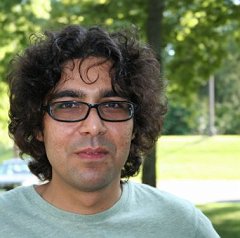
Laurin Luttmann, M.Sc., is a Research Associate at the Institute for Business Information Systems (IIS) at Leuphana University Lüneburg, specializing in Data Science and Artificial Intelligence. He works within the Professorship for Business Informatics, focusing on combinatorial optimization and warehouse logistics applications. University: Leuphana University Lüneburg Department: Business Informatics, especially Data Science Role: Research Associate Research Interests span: Reinforcement Learning and Multi-Agent Systems Combinatorial Optimization Algorithms Warehouse Logistics Automation Neural Network Applications Graph-based AI Solutions Publication Trends show expertise in: Developing parallel autoregressive models for multi-agent optimization Applying neural networks to heterogeneous graph problems Advancing warehouse routing and order batching algorithms Comparative studies on neural network training methods
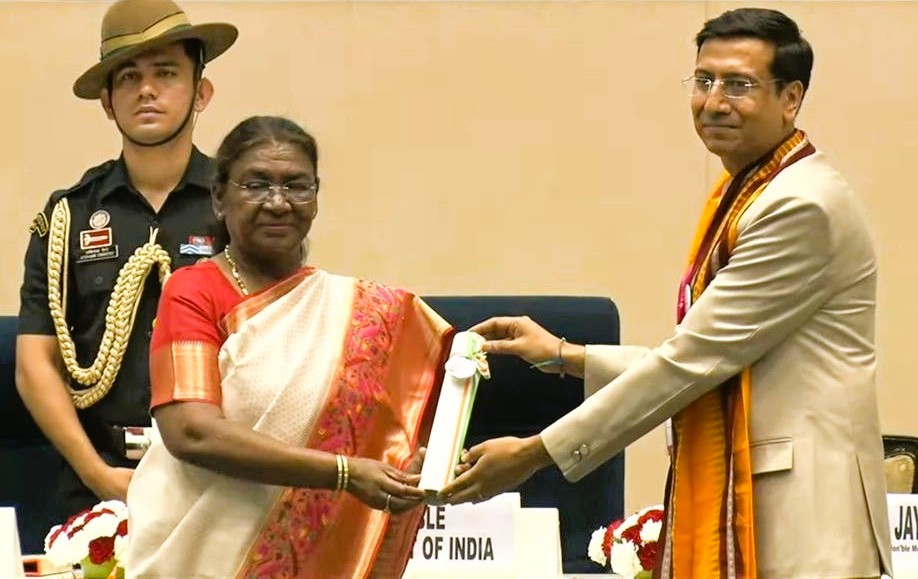
Prof. Kapil Ahuja is a Full Professor in the Department of Computer Science & Engineering at the Indian Institute of Technology Indore (IIT Indore), where he heads the Mathematics of Data Science and Simulation (MODSS) research lab. After completing dual Master's degrees and a Ph.D. from Virginia Tech (USA) followed by postdoctoral work at the Max Planck Institute in Germany, he has held visiting positions at UT Austin, IMT Atlantique, Sandia National Labs, TU Dresden, and TU Braunschweig. His administrative roles include founding Dean of International Affairs and former Head of Computer Science & Engineering at IIT Indore. Education: Ph.D. in Mathematics, Virginia Tech (2011) M.S. in Mathematics, Virginia Tech (2009) M.S. in Computer Science, Virginia Tech (2007) B.Tech. in Mechanical Engineering, IIT (BHU) Varanasi (2001) Research Focus: Prof. Ahuja's work bridges theoretical advances with real-world applications, emphasizing machine learning algorithms for plant/cancer studies, game-theoretic poverty reduction models, exascale climate modeling solvers, and drone trajectory optimization. His interdisciplinary approach integrates numerical linear algebra with network science to solve complex systems problems across healthcare, agriculture, and climate science, supported by 4.85 Crores INR in external funding. Publication Trends: Recent work demonstrates growing emphasis on AI-driven optimization for physical systems (drones, climate models) and biomedical applications (cancer classification). His publications increasingly feature cross-disciplinary collaborations between computer science, biology, and economics, with notable contributions in explainable AI for healthcare and resource allocation algorithms for social networks. Scientific Recognition: National Teacher's Award (2024) from the President of India Five-time recipient of IIT Indore's Best Teacher Award (2013-2023) Best Poster Award at International Workshop on Game Theory & Networks (2019) Steeneck Graduate Research Fellowship (Virginia Tech, 2011) Multiple SIAM travel awards for international conferences Mentorship & Service: Prof. Ahuja has graduated 5 Ph.D. and 4 M.S. (Research) students while mentoring 75 B.Tech. projects. He serves as Associate Editor for Applied Intelligence Journal (Springer Nature) and Knowledge and Information Systems, organizes international conferences, and reviews for 35+ academic sources. His administrative leadership significantly expanded IIT Indore's global partnerships through the Research Park initiative. Research Infrastructure: The MODSS lab maintains active collaborations with Oak Ridge National Lab, Sandia National Labs, and European institutions. Current projects include AI-optimized drone swarms for agricultural monitoring and game-theoretic models for poverty intervention, utilizing high-performance computing resources for large-scale simulations.
Miriam Schulte is a Professor at the Institute for Parallel and Distributed Systems (IPVS) at the University of Stuttgart . As Dean of Studies SimTech , she leads academic programs in simulation technology. Her research focuses on high-performance computing , multi-physics simulations , and scientific software development , with significant contributions to coupling libraries like preCICE and biophysical frameworks like OpenDiHu . Key Research Areas: High-Performance Computing (HPC) Multi-physics and Fluid-Structure Interaction (FSI) Sparse Grids and Hierarchical Numerical Methods Machine Learning in Simulation Software Parallel and GPU-Accelerated Algorithms Advising: Guided student projects on quantum neural networks , GPU-optimized sparse grids , and SYCL-based HPC frameworks . Coordinated SimTech Research Modules and IPVS/SGS team initiatives. Software Leadership: Maintains preCICE (coupling library for multi-physics) Develops OpenDiHu (neuromuscular simulations) Advances PLSSVM (parallel SVM library) and SG++ (sparse grids) Her recent publications (2022–2025) emphasize machine learning integration with multi-physics simulations , including groundwater heat pumps , brain tumor modeling , and neuromuscular EMG prediction . She actively promotes open-source software sustainability and collaborative research infrastructure at the University of Stuttgart.
Prof. Kurt Rothermel is a faculty member at the University of Stuttgart, specifically affiliated with the Institute for Parallel and Distributed Systems (IPVS) within the Faculty of Computer Science, Electrical Engineering, and Information Technology. His research focuses on distributed systems with particular expertise in time-sensitive networking, networked control systems, and complex event processing. Prof. Rothermel's research interests span multiple areas in distributed computing and networking: Distributed Systems and Networked Control Systems Time-Sensitive Networking and Deterministic Networking Quality of Service (QoS) Management and Optimization Complex Event Processing and Stream Analytics Edge Computing and Real-Time Video Analytics Digital Twin Systems and Proximity-based Services His recent publications (2022-2025) demonstrate a strong focus on time-sensitive networking, with numerous papers addressing scheduling algorithms, conflict graph creation, and latency management for time-triggered communication. There's also significant work on load shedding techniques for resource-constrained environments, particularly for real-time video analytics at the edge. His research increasingly incorporates digital twin systems and explores novel approaches for distributed mobile simulation, as evidenced by his "Persival" framework for handling 3D meshes on AR devices. Prof. Rothermel has made substantial contributions to the field of complex event processing, developing multiple shedding strategies (gspice, hSPICE, pspice) to manage resource constraints while maintaining utility. His work bridges theoretical networking concepts with practical applications in industrial settings, particularly evident in his research on networked control systems and time-sensitive software-defined networks.
Prof. Dr. Michael M. Resch is a faculty member at the University of Stuttgart, serving as Director of the Stuttgart High Performance Computing Center (HLRS) and head of the Institute for High Performance Computing. He has held these positions since 2003, following prior roles at the University of Stuttgart and the University of Houston. Education: Studied technical mathematics at Graz University of Technology, Austria. Prof. Resch specializes in high-performance computing and simulation sciences, with applications spanning computational engineering, automotive, aerospace, biotechnology, climate research, and medical technology. His work focuses on advancing supercomputing infrastructure, parallel programming, AI integration, and visualization tools for scientific discovery. Scientific awards and honors: National Science Foundation Award for High Performance Distributed Computing HPC Challenge Award Microsoft Early Contributor Award Honorary doctorates from Donetsk Technical University (Ukraine) and the Russian Academy of Sciences Honorary professorship at the Russian Academy of Sciences
Anton Dignös is a professor at the Free University of Bozen-Bolzano , specializing in temporal databases , time series analysis , and database systems . His research focuses on efficient query processing for interval data, temporal joins, and schema design, with significant contributions to in-memory and time series databases. Key research areas include: Temporal Data Management : Advanced techniques for interval and duration queries. Time Series Analytics : Machine learning integration and pattern detection. Schema Optimization : Automated design and tuning of database schemas. Visual Analytics : Tools for period data comparison and correlation analysis. His work spans collaborations with researchers like Johann Gamper and Michael H. Böhlen , addressing challenges in healthcare systems, industrial applications, and financial data analytics. Notable contributions include algorithms for temporal anti-joins , range-duration queries , and machine learning-based anomaly detection .
Bin Gao is an Associate Professor at the Academy of Mathematics and Systems Science (AMSS), Chinese Academy of Sciences. He holds a Ph.D. in Applied Mathematics (2019, University of Chinese Academy of Sciences) and a B.Sc. in Mathematics (2014, Sichuan University). His postdoctoral experience includes positions at UCLouvain (2019-2021) and the University of Münster (2021-2022). Research Interests: Riemannian optimization, tensor computation, parallel/distributed algorithms for orthogonality constraints, machine learning applications. Key Contributions: Development of retraction-free methods on Stiefel manifolds, preconditioned Riemannian algorithms, and geometric frameworks for symplectic eigenvalue problems. Article Trends: Recent work focuses on overcoming the curse of dimensionality via manifold-based optimization, including distributed algorithms for Stiefel manifolds, graph-regularized tensor completion, and second-order methods for symplectic structures. Keywords span numerical analysis, quantum information, and machine learning. Scientific Awards: 2021 Zhong Jiaqing Mathematics Award 2018 Best Student Paper Award (CSIAM) 2018 CAS Special President Scholarship 2017 National Scholarship for Doctoral Students (China) 2016 Honor Student Award (International Workshop on Modern Optimization and Application) Advising & Collaborations: Collaborates with researchers from UCLouvain, University of Münster, and AMSS. Mentors students in Riemannian optimization and tensor computation. Leads the popman research group.
Dirk Müller is a Professor of Software Technology/Operating Systems at the Faculty of Computer Science/Mathematics, Dresden University of Applied Sciences (HTW Dresden). He has been in this position since 2016 and is an active member of the Faculty Council since June 2021. He was awarded IEEE Senior Member status in April 2023. His academic journey includes a doctorate in Engineering from the University of Kassel in 2006, habilitation at Chemnitz University of Technology in 2014, and prior research positions at Philipps University of Marburg and Florida State University. 1995-2002: Studies in Medical Informatics at University of Leipzig 2003-2006: Research Assistant/Doctoral Student at University of Kassel 2006-2008: Research Associate at Philipps University of Marburg 2008-2014: Academic Councillor at Chemnitz University of Technology 2014-2016: Private Lecturer at TU Chemnitz 2016-present: Professor at HTW Dresden Professor Müller's research focuses on real-time systems and scheduling, model-driven software development, digitalization in companies and administration, and the concept of information. His work particularly emphasizes Rust language applications in software engineering. He has published extensively on real-time scheduling algorithms, mixed-criticality systems, and embedded systems. His teaching responsibilities include Operating Systems I, Software Engineering I & II, Model-Driven Software Development, and Programming in Rust. His publication record shows a consistent focus on real-time systems, with a clear progression from theoretical scheduling algorithms to practical implementations. His recent work has expanded into public administration digitization and biometric conference systems, while maintaining his core expertise in scheduling theory. The publications demonstrate strong international collaboration, particularly with researchers like Matthias Werner, Alejandro Masrur, and Robert Baumgartl. IEEE Senior Member (2023) Erdős number: max. 4 Strict Erdős number: max. 5 Professor Müller actively supervises student theses, with over a dozen bachelor's and diploma theses completed between 2023-2025. His students work on diverse topics including Rust programming, workflow automation, user experience optimization, and real-time event processing. He serves as a reviewer for multiple prestigious journals including IEEE Transactions on Parallel and Distributed Systems, Real-Time Systems, and The Computer Journal. He also acts as Senior Editor for Computer Science Books at Versita. His laboratory work focuses on practical implementations of real-time systems, often using Raspberry Pi as a platform for traffic analysis and other embedded applications. His research group maintains strong connections with industry, as evidenced by the applied nature of student projects at companies like IntraConnect GmbH.
Professor Andreas Kronenburg serves as Institute Director and Dean of Studies at the Institute for Reactive Currents (WASTE) at the University of Stuttgart. With a background in mechanical engineering from RWTH Aachen and a PhD in Combustion Engineering from the University of Sydney, he has established himself as a leading researcher in combustion science. His career includes significant positions at Imperial College London where he served as Governor's Lecturer in Thermofluids (2000-2007) and Reader in Combustion (2007-2008) before joining the University of Stuttgart in 2009. Professor Kronenburg's educational background includes: RWTH Aachen, Mechanical Engineering (1989-1994) Universidad Politécnica de Madrid, Study Abroad (1992-1993) University of California at Davis, Study Abroad (1992-1993) University of Sydney, PhD in Combustion Engineering (1995-1998) His research focuses on advanced combustion modeling, particularly turbulent reactive flows, spray combustion, and nanoparticle dynamics. Kronenburg has made significant contributions to Large Eddy Simulation (LES) techniques, Conditional Moment Closure (CMC) methods, and particle-based modeling approaches. His work spans fundamental combustion science and practical applications in energy systems, with recent emphasis on sustainable fuels including hydrogen, ammonia, and biomass conversion. His research group develops sophisticated computational models that address challenges in predicting complex combustion phenomena with high accuracy. Analysis of his recent publications (2023-2026) reveals a strong focus on emerging energy technologies, particularly hydrogen and ammonia combustion for decarbonization, advanced particle dynamics in combustion systems, and computational methods for efficient simulation of complex reacting flows. His work demonstrates consistent innovation in modeling techniques while addressing practical engineering challenges in sustainable energy systems. Professor Kronenburg's scientific achievements have been recognized with numerous prestigious awards: Fellow of the Combustion Institute (2019) Distinguished Paper Award of the Combustion Institute (2013) Hinshelwood Prize for meritorious work of a young researcher (2006) Two Sudgen Awards for significant contributions to combustion science (2005, 2006) Best paper award at the Australian Symposium on Combustion (1997) Springorum Commemorative Medal for academic excellence (1994) With over 3,300 citations across 164 publications and an h-index of 33, Professor Kronenburg maintains an active research program with significant impact. His work has received support from organizations like the German Research Foundation (DFG), and he collaborates extensively with international institutions including Imperial College London and the University of Sydney. The computational resources available to his research group through bwGrid and HLRS enable large-scale simulations that advance the understanding of complex combustion phenomena. The Institute for Reactive Currents under Professor Kronenburg's leadership focuses on cutting-edge research in combustion science and engineering. The institute develops advanced computational models for predicting combustion behavior in various applications, from traditional energy systems to emerging sustainable technologies. With expertise in both fundamental combustion processes and practical engineering applications, the institute contributes significantly to addressing current challenges in energy conversion and environmental protection.
Junior Professor Dr.-Ing. Constantin Pohl is a faculty member in the Faculty of Informatics at Schmalkalden University of Applied Sciences, where he holds the position of Junior Professor of Data Analytics since October 2022. His academic journey began with a Bachelor's degree in Computer Science from TU Ilmenau (2010-2013), followed by a Master's degree from the same institution (2013-2016). Professor Pohl's research and teaching expertise spans multiple domains in computer science, with a recognized specialization in Adaptive Signal Analysis at Schmalkalden University. His technical interests include Data Analytics, Programming, Databases, Distributed and Parallel Systems, and Artificial Intelligence. His career progression shows a steady development from Research Assistant at TU Ilmenau (2016-2019) to Lecturer (2019-2020) and Research Assistant at Schmalkalden University (2020-2022), where he contributed to significant projects including AutoServIoT and EduPLEx_API, before attaining his current professorship. Current Position: Junior Professor of Data Analytics Research Focus: Adaptive Signal Analysis (recognized university research focus) Technical Expertise: Data Analytics, Programming, Databases, Distributed Systems, AI Professor Pohl maintains an active role in both teaching and research, with office hours available upon request in Building B, Room 0212 at the university campus.
Osbert Bastani serves as an Associate Professor in the Department of Computer and Information Science at the University of Pennsylvania. He leads the trustml@Penn research group and holds affiliations with the ASSET, PRECISE, and PRiML research centers, as well as PLClub. His academic work centers on developing reliable and interpretable artificial intelligence systems through interdisciplinary approaches combining programming languages, formal methods, and machine learning. He earned his Ph.D. in Computer Science from Stanford University under the guidance of Alex Aiken, followed by a postdoctoral position at MIT working with Armando Solar-Lezama. This foundation in both theoretical computer science and practical systems has shaped his research trajectory. Bastani's primary research areas include Trustworthy Machine Learning (focusing on robustness against adversarial attacks, fairness in algorithmic decision-making, and explainable AI), program synthesis, and formal verification. His recent publications address critical challenges in large language models, such as defending against jailbreaking attacks and ensuring trustworthy retrieval-augmented generation. He also develops methods for conformal prediction under distribution shifts and neurosymbolic program synthesis for complex tasks like web question answering. His teaching portfolio features advanced courses including CIS 7000: Trustworthy Machine Learning and CIS 4190/5190: Applied Machine Learning, where he integrates cutting-edge research into the curriculum. Through his research group, he mentors graduate students on projects spanning neurosymbolic programming, uncertainty quantification, and fairness in sequential decision-making. As an active member of Penn's research ecosystem, Bastani contributes to the ASSET center's mission of building secure systems, PRECISE's work on cyber-physical systems, and PRiML's machine learning initiatives, while collaborating with PLClub on programming language innovations.
Antonio Filieri is a Senior Applied Scientist at Amazon Web Services (AWS) and holds a Visiting Associate Professor position at the Department of Computing, Imperial College London. Previously, he was a tenured Associate Professor at Imperial College London (2022-2024) and Assistant Professor (2016-2022), and served as Assistant Professor at the University of Stuttgart between 2013 and 2015. His academic career spans over a decade with significant contributions to software engineering research. Dr. Filieri's research focuses on formal mathematical methods for software design, verification, self-adaptation, and security. His primary research areas include static analysis, privacy, and automated test generation for security; exact and approximate methods for probabilistic program analysis; control theory for adaptive software; quantitative verification and model checking; and runtime-efficient and incremental verification. His work bridges theoretical foundations with practical applications in industry settings, particularly in cloud computing and security domains. His recent publications demonstrate a strong focus on probabilistic methods for software analysis, security testing, and performance modeling. The research trends show increasing integration of formal methods with machine learning techniques, particularly in test oracle generation and neural network analysis. There's also a clear emphasis on scalability and practical applicability of verification techniques to real-world systems like serverless computing and microservices architectures. Dr. Filieri has received numerous prestigious awards for his contributions: Best Student Paper Award (2025) for 'Robust Probabilistic Model Checking with Continuous Reward Domains' ACM Distinguished Paper Award (2023) for 'Sibyl: Improving Software Engineering Tools with SMT Selection' Best Paper Award (2022) for 'Enhancing Performance Modeling of Serverless Functions via Static Analysis' Best Artifact Award (2017) for 'Self-adaptive video encoder: comparison of multiple adaptation strategies made simple' Most Influential Paper Award (awarded at SEAMS 2025) for 'Software Engineering Meets Control Theory' ACM SigSoft Distinguished Paper Award (2011) for 'Run-time Efficient Probabilistic Model Checking' Dr. Filieri has advised several PhD students including Donato Clun (2024), Runan Wang (2024), and Xiaotong Ji (expected 2025). His advising focuses on probabilistic program analysis, automated testing, and security verification. His research has been supported by significant grants from both academic and industry sources, enabling collaborations across multiple institutions and contributing to advancements in software engineering practices. While specific lab information isn't prominently featured in the provided materials, Dr. Filieri's work suggests strong connections with research groups focused on formal methods, software verification, and adaptive systems at both Imperial College London and AWS. His research often involves interdisciplinary collaboration between theoretical computer science and practical software engineering challenges.
Shangwen Wang is an Assistant Professor in the School of Computer Science at National University of Defense Technology (NUDT) in Changsha, China. He earned his Bachelor's degree in June 2017, Master's degree in December 2019, and Ph.D. in December 2023, all from NUDT. During his graduate studies, he was supervised by Professor Xiaoguang Mao. From May 2022 to July 2023, he was a visiting student at Southern University of Science and Technology under Professor Yepang Liu. His educational background includes: Ph.D. in Software Engineering, NUDT (2020.3-2023.12), supervised by Prof. Xiaoguang Mao Visiting Scholar, SUSTech (2022.5-2023.7), supervised by Prof. Yepang Liu M.A. in Software Engineering, NUDT (2017.9-2019.12), supervised by Prof. Xiaoguang Mao B.A. in Software Engineering, NUDT (2013.9-2017.6) Wang's research focuses on program repair, program comprehension, mining software repositories, software maintenance and evolution, software testing, and AI for Software Engineering. His work bridges traditional software engineering techniques with modern AI approaches, particularly leveraging large language models for various software engineering tasks. He has made significant contributions to automated program repair, fault localization, vulnerability detection, and code generation. His research demonstrates a strong emphasis on empirical validation and practical applicability to real-world software development challenges. His recent publications show a clear trend toward integrating large language models with traditional software engineering tasks. The 15 most recent articles reveal a focus on applying LLMs to program repair, fault localization, vulnerability detection, and code generation, while maintaining strong empirical foundations. His work spans both theoretical advancements and practical tool development, with applications in software security, testing, and maintenance. His notable achievements include: CCF Outstanding Doctoral Dissertation (CCF优博) 2024 Outstanding Doctoral Graduates, NUDT, 2023 Multiple distinguished paper awards including ACM SIGSOFT Distinguished Paper Award (ISSTA'24) and IEEE TCSE Distinguished Paper Awards (ICSME'22, SANER'22) Prestigious scholarships from NUDT throughout his academic career As an active member of the software engineering community, Wang serves on numerous program committees for top conferences including ICSE, ASE, ESEC/FSE, and ISSTA. He has also contributed to teaching as a teaching assistant for courses such as Compiler, Python Programming, Discrete Mathematics, and C++ Programming. His research group appears to be actively mentoring students, as evidenced by his role as corresponding author on multiple student-led publications. Wang maintains an active research presence with collaborations across multiple institutions in China. His work demonstrates a clear trajectory from traditional program analysis techniques toward integrating cutting-edge AI approaches, particularly large language models, into software engineering practices.
Mehdi Bagherzadeh is an Assistant Professor in the Department of Computer Science and Engineering at Oakland University. His professional profile shows consistent involvement in major software engineering conferences including ASE, SPLASH, and ICSE, where he has served in various leadership roles such as Workshops Co-Chair for SPLASH (2021-2023) and Late Breaking Results Co-Chair for ASE (2022). Dr. Bagherzadeh's research focuses on the correct construction of concurrent and big data software, situated at the intersection of Software Engineering and Programming Languages. His work particularly addresses challenges in deep learning program optimization, actor concurrency models, and automated refactoring techniques. His research trajectory shows a clear evolution from foundational work on concurrent programming models (Panini, Capsule) to current applications in deep learning systems. Analysis of his publication history reveals a strong focus on practical software engineering challenges in concurrent systems, with recent work concentrating on the migration and optimization of deep learning programs. His research combines empirical studies with formal methods, addressing both theoretical foundations and practical implementation concerns in modern software systems. Through his committee service across multiple top-tier conferences including ASE, SPLASH, ICSE, and ESEC/FSE, Dr. Bagherzadeh has established himself as an active contributor to the software engineering research community. His service roles have ranged from program committee membership to organizational leadership positions.
Luciano Baresi is a Full Professor at the Polytechnic University of Milan (Politecnico di Milano), Italy, affiliated with the Department of Electronics, Information and Bioengineering. He earned his laurea (MSc) and PhD in Computer Science from the same institution and has held visiting positions at the University of Oregon (USA), Tongji University (China), and the University of Paderborn (Germany). His research spans software engineering, with current focuses on self-adaptive systems, edge computing, and AI/ML-based software. His work integrates formal methods with practical applications, emphasizing autonomous systems, cloud-edge continuum, and federated learning. Recent publications highlight AI-driven advancements in software testing, resource optimization, and educational tools. Key research themes include: AI/ML for autonomous driving testing and data augmentation Serverless computing at the edge Federated learning system architectures Containerization and cloud resource management Awarded for impactful contributions: RE 2020 Most Influential Paper ICSOC 2020 Best Paper SEAMS 2022 Best Paper He advises 14+ PhD students and leads projects like Ketonet (health app), WHO's Essential Items Estimator, and dynaSpark. As Editor-in-Chief of Proceedings of the ACM on Software Engineering and senior editor for multiple journals, he shapes academic discourse in adaptive systems and software engineering.