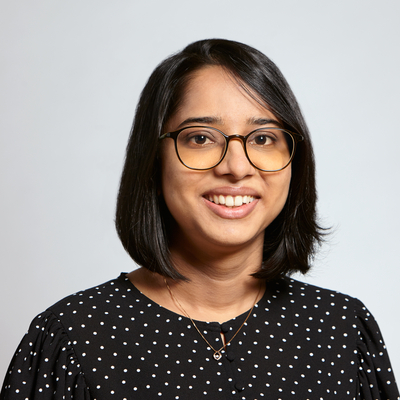
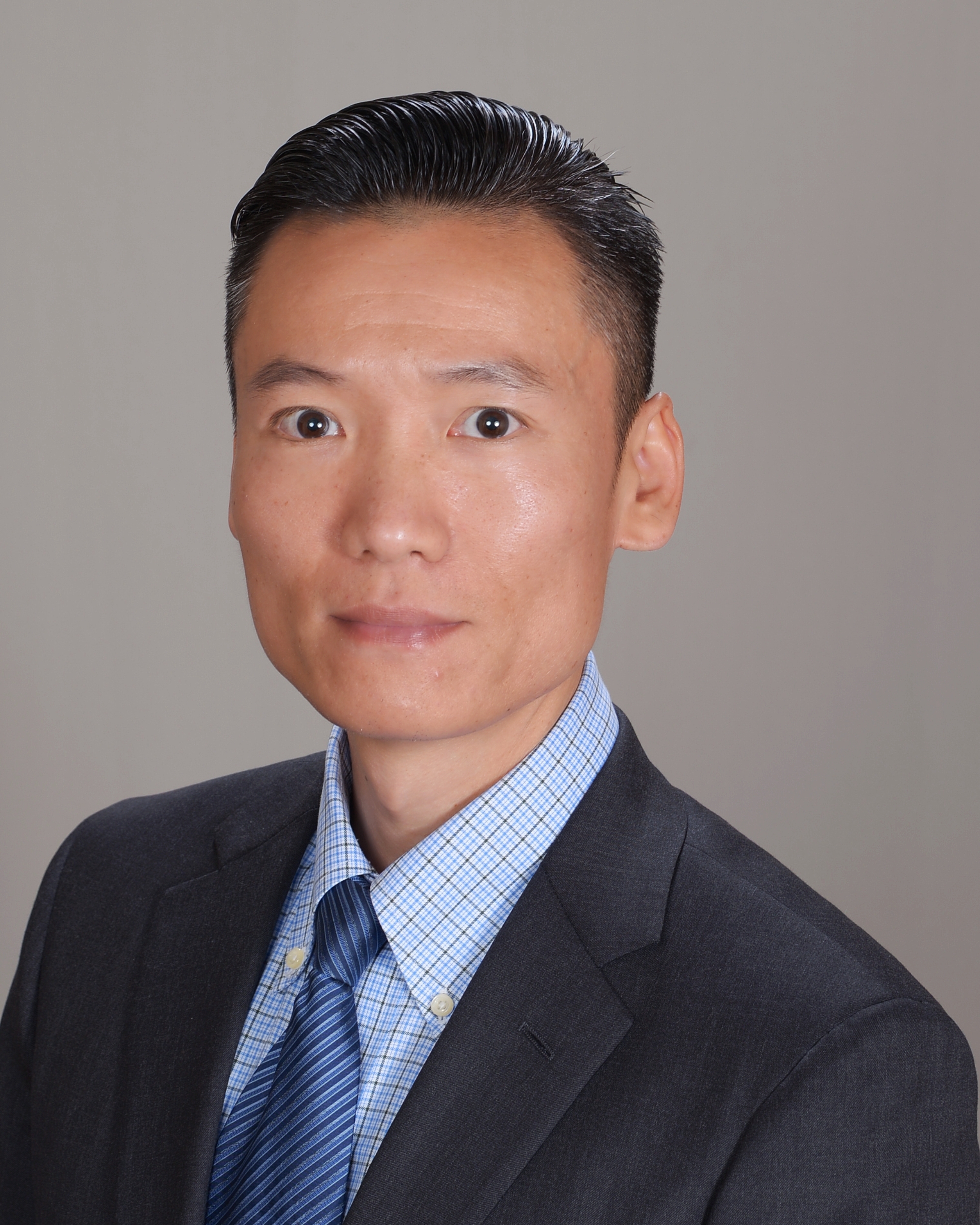
Shweta Shinde is an Assistant Professor at ETH Zürich's Department of Computer Science. She leads the Secure & Trustworthy Systems (SECTRS) group and is affiliated with the Institute of Information Security and the ZISC Center. Her research focuses on foundational and practical aspects of trusted computing, system security, and program analysis to protect devices ranging from smartphones to cloud servers. Key areas include AMD SEV-SNP, Arm CCA, Intel SGX, and hardware-software co-design for security. Dr. Shinde has made significant contributions to confidential computing, including frameworks like OpenCCA and tools for analyzing hardware vulnerabilities. Her work has been recognized with Best Paper Awards and Distinguished Paper Awards at top venues. She advises a group of PhD students, including Mark Kuhne, Supraja Sridhara, and Benedict Schlüter. Her service includes program committee roles at IEEE Security & Privacy, USENIX Security, and as Track Co-Chair for AsiaCCS 2026.
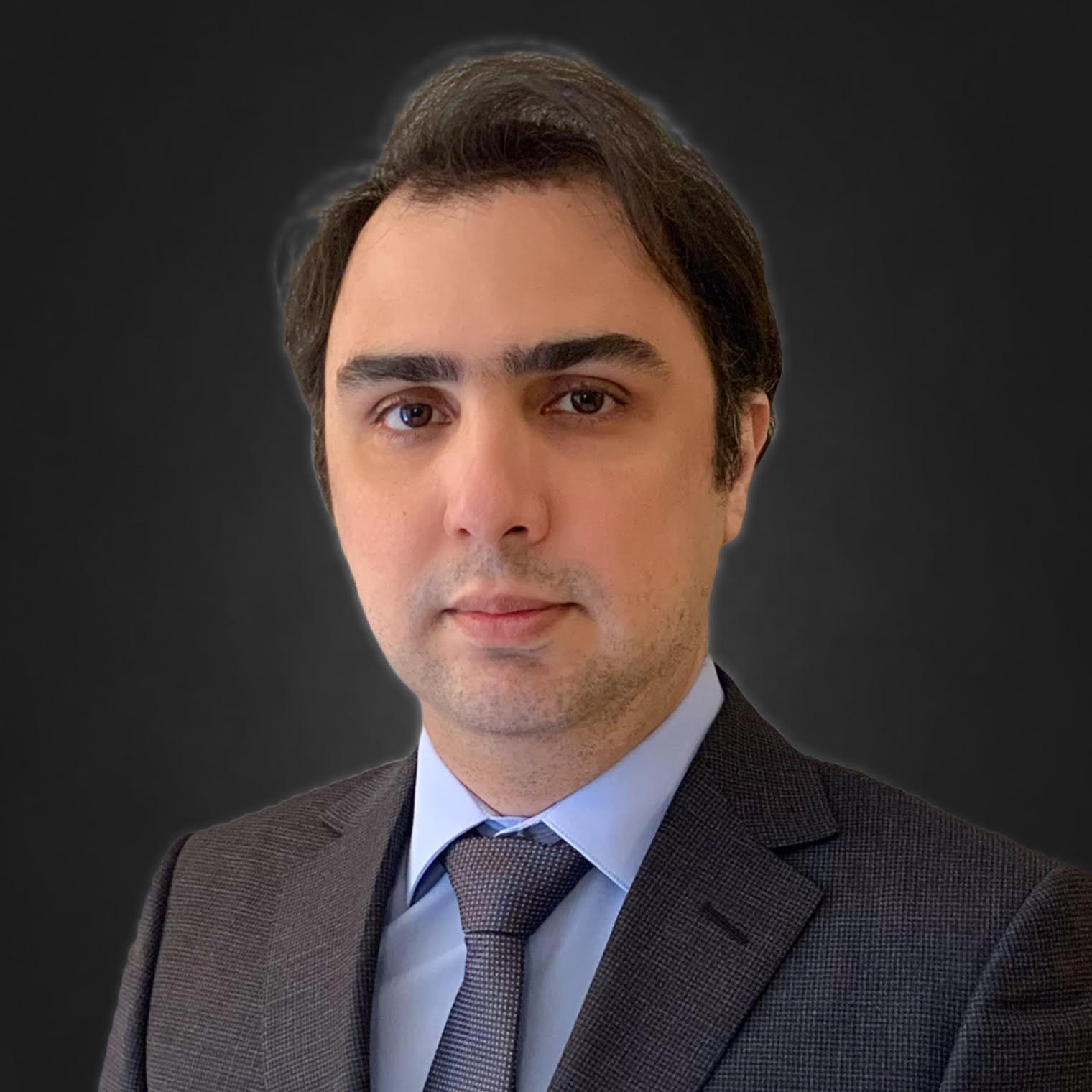
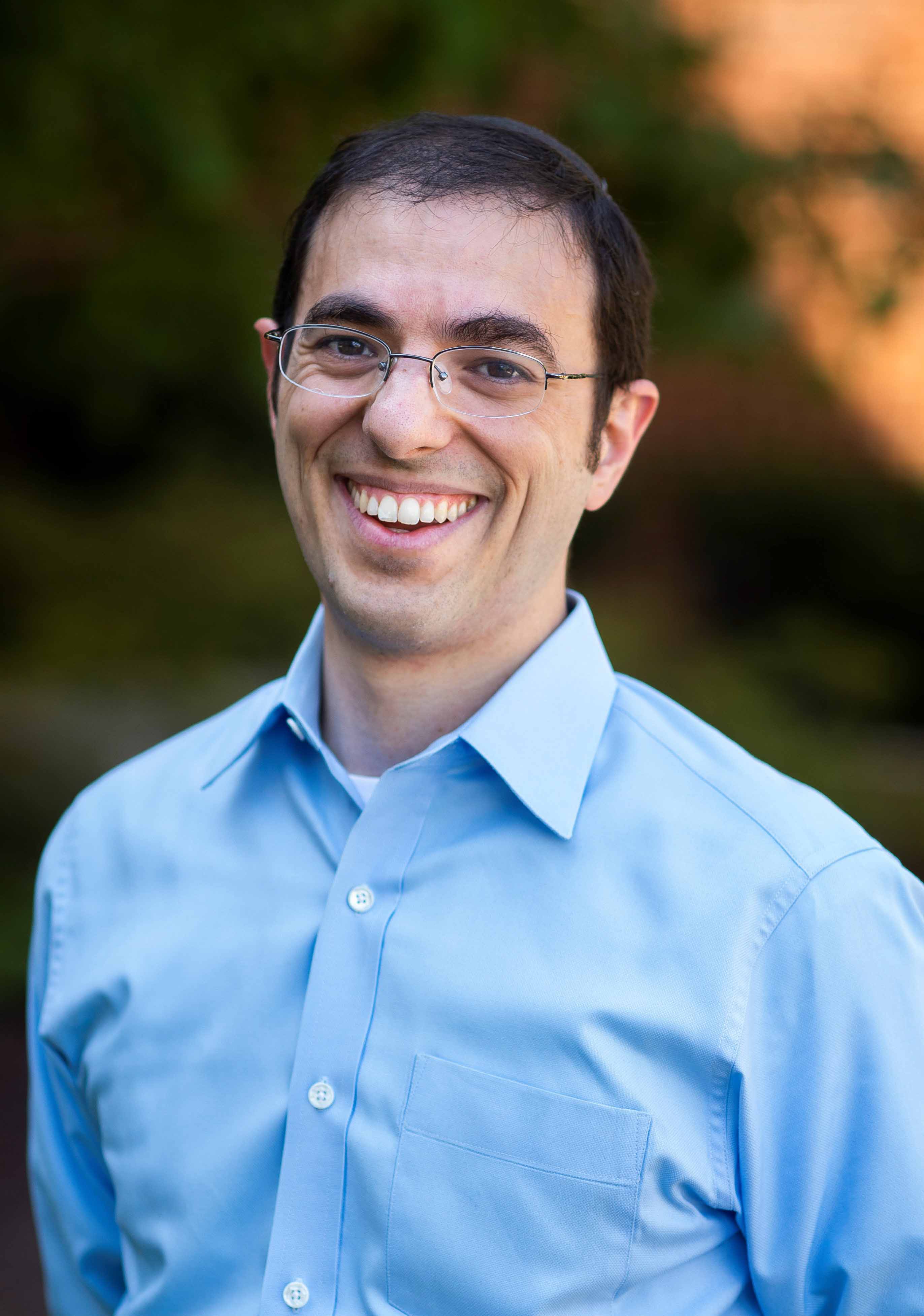
Anoosheh Heidarzadeh is an Assistant Professor in the Department of Electrical and Computer Engineering at Santa Clara University's School of Engineering. He holds a Ph.D. in Electrical and Computer Engineering from Carleton University (2012) and previously served as a Visiting Assistant Professor at Texas A&M University (2018-2022) and Associate Research Scientist at the same institution (2015-2017). His postdoctoral research was conducted at the California Institute of Technology (2013-2014). His research focuses on: Information and coding theory : Fundamental limits of data transmission and storage systems Private and secure computing : Protocols for confidential data processing in networked environments Fault-tolerant distributed systems : Resilient computation frameworks for large-scale applications Distributed machine learning : Scalable algorithms for collaborative learning architectures Recent publications (2021-2022) demonstrate strong emphasis on privacy-preserving computation (covering 73% of articles) and distributed coding techniques (67% of articles), with innovations in private information retrieval, matrix operations, and group testing methodologies. Theoretical contributions dominate (87%), while 13% address applied challenges like COVID-19 screening.
Gert Cauwenberghs is a Professor of Bioengineering at the University of California San Diego (UCSD), affiliated with the Jacobs School of Engineering. He co-directs the Institute for Neural Computation and holds a visiting professorship at MIT. His research focuses on neuromorphic engineering, energy-efficient neural interfaces, and wearable biosensors. Key contributions include silicon-based adaptive neural circuits, implantable neural recording systems, and in-ear biosensing devices. Education: M.Eng. in Applied Physics (University of Brussels, 1988), M.S. and Ph.D. in Electrical Engineering (Caltech, 1989–1994). Prior roles include Professorships at Johns Hopkins University and Visiting Professor at MIT. Research Interests: Biomedical integrated circuits, neuromorphic computing, brain-machine interfaces, and energy-efficient neural systems. His work bridges neuroengineering and clinical applications, emphasizing adaptive intelligence and low-power designs. Recent Work: Development of femtojoule-efficient neural chips, high-density neural interfaces, and closed-loop wearable systems. Projects include neurobench benchmarking frameworks and RRAM-based neuromorphic hardware. Awards: NSF Career Award (1997), ONR Young Investigator (1999), PECASE (2000), IEEE Distinguished Lecturer (2003–2004). Grants & Labs: Active in NIH and DoD-funded projects, co-directs the UCSD Institute for Neural Computation. Collaborates with industry on neural interface technologies. Labs/Teams: Cauwenberghs Lab at UCSD focuses on integrated neuroengineering systems, including neural recording systems and neuromorphic computing architectures.
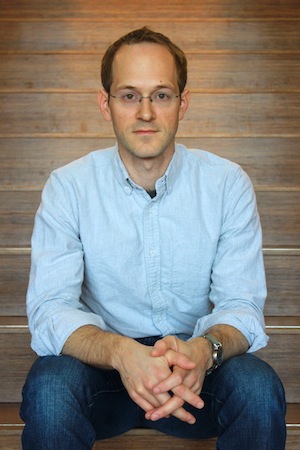
Andrew Childs is a Professor at the University of Maryland, affiliated with the Department of Computer Science and the Institute for Advanced Computer Studies (UMIACS). He serves as Director of the NSF Quantum Leap Challenge Institute for Robust Quantum Simulation (RQS) and is a Fellow at the Joint Center for Quantum Information and Computer Science (QuICS). His research focuses on quantum algorithms for simulating physical systems, algebraic problems, and quantum walk protocols, with applications in quantum computing and computational complexity. University of Maryland Institute for Advanced Computer Studies (UMIACS) Joint Center for Quantum Information and Computer Science (QuICS) NSF Quantum Leap Challenge Institute for Robust Quantum Simulation Childs' research spans quantum simulation, quantum Fourier transform, phase estimation, and Hamiltonian dynamics. He has developed techniques to reduce quantum computational resources for simulating quantum systems and explored limitations of quantum computers through hidden subgroup problems and non-unitary dynamics. His publications cover diverse areas including quantum walk optimization, Hamiltonian simulation methods, and applications to cryptography and condensed matter physics. Recent works address spatial search algorithms, product formulas for commutators, and quantum routing protocols. As an educator, Childs has taught courses on quantum algorithms and information processing at both the University of Maryland and University of Waterloo, with lecture notes and materials spanning multiple years. Contact: amchilds@umd.edu | Office: ATL 3359 | Affiliated with University of Maryland's quantum research institutes.
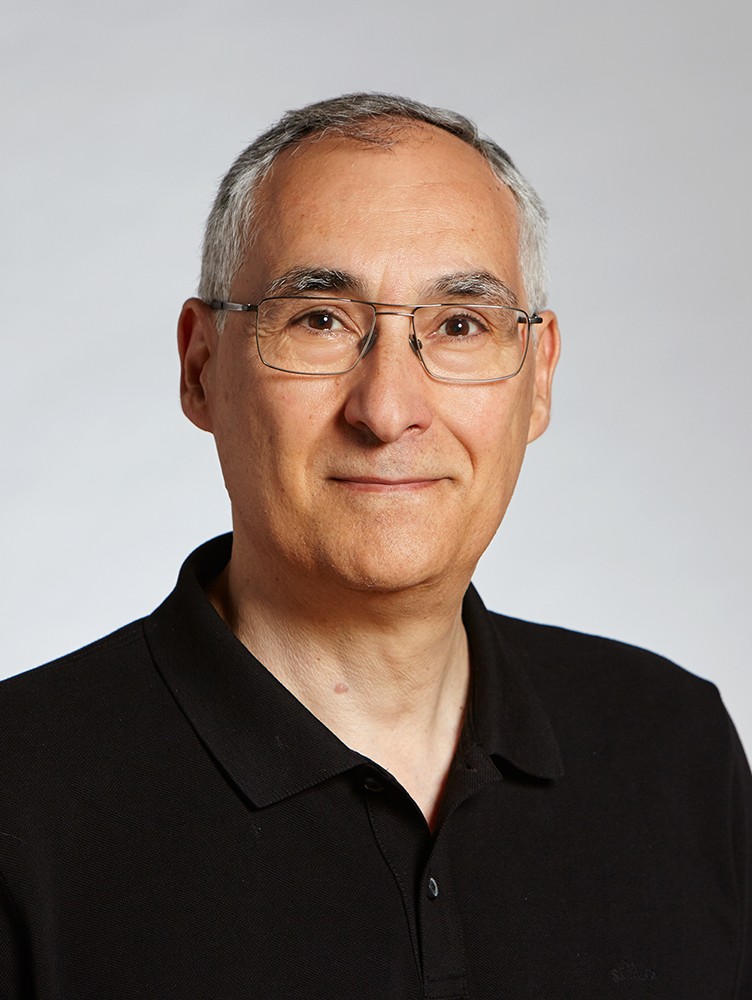
Gustavo Alonso is Full Professor at the Department of Computer Science (D-INFK) of ETH Zurich and Head of the Institute for Computing Platforms . He has been at ETH since 1995, first as a post-doc, then as Assistant Professor from April 1998, and promoted to Full Professor in October 2001. Within the Systems Group he leads the Information and Communication Systems Research Group . Education: 1989 – Telecommunications Engineering (undergraduate), Madrid Technical University (UPM-ETSIT), Spain 1992 – M.S. Computer Science, University of California, Santa Barbara (UCSB) 1994 – Ph.D. Computer Science, University of California, Santa Barbara (UCSB) Research Interests: His work spans databases, distributed systems, cloud-computing architecture, FPGAs, hardware acceleration for data science, parallel and reconfigurable computing . The group investigates how modern heterogeneous hardware—from GPUs to SmartNICs—can be integrated into data-processing systems to achieve orders-of-magnitude performance gains, energy savings, and new functionality such as in-network computation and serverless acceleration. Scientific Awards & Honors: Fellow of the ACM (Association for Computing Machinery) Fellow of the IEEE (Institute of Electrical and Electronics Engineers) Distinguished Alumnus, Department of Computer Science, UC Santa Barbara Four Test-of-Time / Most Influential Paper Awards across databases, programming languages, cloud computing, and software engineering Labs & Projects: He directs the Information and Communication Systems Research Group within the Systems Group ( systems.ethz.ch ). The lab develops open-source platforms such as Coyote v2 for FPGA abstractions, Shuhai for HBM benchmarking, and MicroRec for micro-second recommendation serving, while collaborating with industry on SmartNICs, serverless analytics, and cloud-scale data analytics.
Khuzaima Daudjee is a Professor and David R. Cheriton Faculty Fellow in the Cheriton School of Computer Science at the University of Waterloo. His research focuses on systems-oriented problems at the intersection of systems and data management, particularly building large-scale systems, storage infrastructure in the cloud, and modern hardware applications. He leads projects in distributed database systems, elastic scaling, and resource optimization. His recent work includes Caerus (geo-replicated transactions), Tiresias (predictive storage), and MorphoSys (automatic physical design metamorphosis). Daudjee has chaired major conferences including ICDE 2026 and serves on editorial boards for VLDB, SIGMOD, and IEEE TKDE journals. His awards include ACM Distinguished Scientist and multiple best paper awards. Educational initiatives include developing distributed systems teaching materials and supervising graduate students across database and distributed systems domains. His industry collaborations involve cloud infrastructure optimization and scalable data processing frameworks.
Dr. Liang Cheng is the Department Chair and Professor in the Department of Electrical Engineering and Computer Science at the University of Toledo. He leads a department with ~700 students across CS, CSE, and EE programs. His research focuses on Cyber-Physical Systems (CPS), IoT, AI/ML, and intelligent infrastructure, supported by over $30M in funding from NSF, DOE, DOT, and industry. Notable projects include CPS Breakthrough initiatives and underground sensing systems. He co-edited a multidisciplinary book on Underground Sensing and contributed to smart grid cybersecurity. Dr. Cheng has held leadership roles at Lehigh University, shaping faculty governance and equity policies. His 100+ publications span networking, real-time systems, and sensor networks. He advises on funded projects totaling $30M+ and has pioneered pedagogical approaches in computer science education. Research Interests: Cyber-Physical Systems (CPS): Focuses on autonomous drones, energy systems, and real-time infrastructure Networking: Expertise in TSN, DTN, and wireless protocols Cybersecurity: SCADA systems, PLC attack detection, and blockchain energy modeling Underground Sensing: Geo-sensing via wireless signals and subsurface tomography Grants & Projects: Over 20 sponsored projects including NSF CPS Breakthrough (2018-2023), ABB smart grid projects, and DARPA-funded EDIFY systems. Key contributions include reconfigurable wireless architectures and network calculus tools for real-time systems. Teaching: Courses span senior design, compiler design, parallel computing, and wireless sensor networks. Developed pedagogical patterns for non-CS programming education. Awards: Recognized for leadership in academic governance and interdisciplinary research collaboration.
Aditya Parameswaran is an Associate Professor in the Electrical Engineering and Computer Sciences (EECS) department at the University of California, Berkeley. He co-directs the EPIC Data Lab and the Police Records Access project, focusing on simplifying data science at scale through human-in-the-loop systems, LLM-powered tools, and scalable data systems. His research spans database systems, human-computer interaction, and machine learning, with notable contributions in tools like Lux, Modin, and DataSpread. Education : PhD in Computer Science from Stanford University (2013) BTech in Computer Science and Engineering from IIT Bombay (2007) Research Interests : Parameswaran's work centers on empowering end-users with intuitive data tools. Recent projects include LLM-powered systems for document processing (DocETL, TWIX), proactive data systems, and benchmarking frameworks. He emphasizes democratizing data science through low/no-code solutions and improving production ML workflows. Articles Trends : His recent work (2023–2025) prioritizes LLM integration into data systems, focusing on robust pipelines, assertion generation (SPADE), and debugging tools (RAGGY). Earlier contributions include visualization recommendation (Lux), scalable dataframes (Modin), and spreadsheet optimization (DataSpread). Awards : Recipient of the VLDB Early Career Award (2019), Sloan Research Fellowship (2020), NSF CAREER Award (2017), and multiple best paper/demonstration awards at top venues like SIGMOD and VLDB. Advising & Grants : Guides over 20 PhD/postdoc alumni, many now in academia (e.g., Madelon Hulsebos at CWI) and industry leadership roles. Active in securing grants (e.g., NSF, Army Research Office) and industry partnerships (e.g., Snowflake, LangChain). Labs/Teams : Leads the EPIC Data Lab, focusing on agentic data systems, and co-founded Ponder (acquired by Snowflake). Collaborates on the Police Records Access initiative, building transparency tools for public records.
Andy Pavlo is an Associate Professor with Indefinite Tenure in the Computer Science Department at Carnegie Mellon University's School of Computer Science. He is an active member of the CMU Database Group and the Parallel Data Laboratory, where he leads research in database management systems with a focus on self-driving architectures, transaction processing, and large-scale analytics. His work bridges academic research and industry applications through projects like NoisePage, OtterTune (which he co-founded and served as CEO before it ceased operations), and Peloton. Dr. Pavlo's research interests span database management systems with particular emphasis on autonomous database architectures that can self-tune and optimize without human intervention. His work explores transaction processing systems that can handle high-throughput workloads while maintaining consistency, and large-scale data analytics techniques that efficiently process massive datasets. He has made significant contributions to query optimization, database extensibility, and automatic database tuning using machine learning techniques. His recent work on database extensibility revealed critical issues in PostgreSQL's extension ecosystem, showing that approximately 16% of extensions are incompatible with at least one other extension due to API violations and memory errors. His research output demonstrates a consistent focus on practical database systems challenges, with recent publications examining database extensibility, user-defined function optimization, and the cyclical nature of database research. The articles show a strong trend toward making database systems more autonomous, with increasing integration of machine learning techniques for automatic tuning and optimization. His work often combines deep theoretical analysis with practical implementation in open-source systems. Dijkstra Award 2024 for contributions to database systems research Dr. Pavlo actively mentors graduate students, with current advisees including Wan Shen Lim, William Zhang, and Sam Arch (co-advised with Todd Mowry). His former students have gone on to successful careers in both industry and academia. He has secured significant research funding through CMU's affiliate program with major database companies including ClickHouse, DataStax, dbt, Firebolt, MotherDuck, RelationalAI, SingleStore, Spiral, PingCAP/TiDB, Yellowbrick, and Yugabyte. His research is supported by these industry partnerships and likely includes NSF funding given his active participation in the database research community. At CMU, Dr. Pavlo leads the Database Group and organizes several seminar series including "SQL or Death," "Database Building Blocks," and "ML⇄DB Technical Talks." These seminars bring together researchers and practitioners to discuss cutting-edge developments in database systems. He also runs a summer research internship program that has attracted students for multiple consecutive years, indicating a strong research group with ongoing projects and funding.
Dr. Mo Adda is a Principal Lecturer at the University of Portsmouth's School of Computing, part of the Faculty of Technology. He holds a PhD in Distributed Systems and Parallel Processing from the University of Surrey. His research focuses on network security, distributed systems, wireless networks, and cybercrime prevention. He leads projects in the Centre for Cybercrime and Economic Crime, exploring fault management in networks, blockchain applications, and IoT forensics. With 16 supervised theses, he advises on topics like energy-efficient cloud systems and machine learning for environmental modeling. His work bridges academia and industry, addressing challenges in software-defined networks, traffic control, and secure data sharing in social networks. Education: PhD in Distributed Systems (University of Surrey) Affiliations: Centre of Excellence in Defence, Risk & Resilience; Portsmouth Centre for Advanced Materials and Manufacturing Research Interests Dr. Adda's research spans: Network security and fault detection mechanisms Blockchain applications in IoT and forensics Energy-efficient cloud data center optimization Machine learning for climate modeling Self-organizing network protocols Grants & Collaborations His projects include collaborations with industry partners on secure data leakage detection in cloud systems and resilient wireless protocols for harsh environments. He has pioneered fault classification systems using clustering algorithms and fuzzy logic. Labs & Teams He contributes to the Centre for Cybercrime and Economic Crime, focusing on digital forensics and network intrusion analysis. His team develops frameworks for privacy management in social networks and proactive routing in software-defined networks.
Daniel Abadi is the Darnell-Kanal Professor of Computer Science at the University of Maryland, College Park. He leads the Data Systems Lab at Maryland (DSLAM) and is widely recognized for his groundbreaking contributions to database system architecture and implementation. Previously, he was a faculty member at Yale University where he received the Provost's Teaching Prize. Abadi's research primarily focuses on database system architecture, particularly at the intersection with scalable and distributed systems. He is best known for developing the storage and query execution engines of the C-Store prototype (a column-oriented database system commercialized by Vertica and later acquired by Hewlett-Packard), HadoopDB research (commercialized by Hadapt and acquired by Teradata), and deterministic distributed transactional systems like Calvin (currently being commercialized by Fauna). His work bridges theoretical innovation with practical industrial impact. Analysis of his recent publications reveals a consistent trajectory toward solving fundamental challenges in distributed database systems. His research has evolved from foundational work on column-stores and hybrid database architectures to cutting-edge innovations in geo-replicated transactions, concurrency control mechanisms, and the integration of machine learning with database systems. The trend shows increasing focus on practical implementations that address real-world scalability and performance challenges in large-scale data processing environments. ACM Fellow Churchill Scholarship recipient NSF CAREER Award winner Sloan Research Fellowship recipient VLDB Best Paper Award winner Two VLDB Test of Time Awards (for C-Store and HadoopDB) 2008 SIGMOD Jim Gray Doctoral Dissertation Award 2013-2014 Yale Provost's Teaching Prize 2013 VLDB Early Career Researcher Award Professor Abadi has successfully mentored several PhD students, most notably Alexander Thomson and Jose Falerio, both of whom won the prestigious SIGMOD Jim Gray Doctoral Dissertation Award for their work under his supervision. His research has been generously supported by multiple NSF grants including BIGDATA awards and other funding mechanisms that have enabled significant advances in database technology. He actively collaborates with industry partners, with several of his research projects leading directly to commercial products. At the University of Maryland, Abadi directs the Data Systems Lab at Maryland (DSLAM), which focuses on developing innovative database technologies that address contemporary challenges in data management. The lab's research spans distributed transaction processing, database architecture, and the integration of database systems with emerging computing paradigms. Notable projects include SLOG (Serializable, Low-latency, Geo-replicated Transactions), which eliminates traditional tradeoffs in distributed database design, and ongoing work in deterministic database systems that provide strong consistency guarantees without sacrificing performance.
David Duvenaud is an Associate Professor at the University of Toronto , holding a Canada Research Chair in Generative Models and a Schwartz Reisman Chair in Technology and Society . He is cross-appointed to the Department of Computer Science and Department of Statistical Sciences . A Sloan Research Fellow and founding member of the Vector Institute , his work bridges deep probabilistic models , AI safety , and scientific computing . PhD in Machine Learning (University of Cambridge, 2014) Postdoc in Hyperparameter Optimization (Harvard University, 2016) Co-founded Invenia (energy forecasting company) His research spans foundational Neural Ordinary Differential Equations (NeurIPS 2018 Best Paper) and Automatic Chemical Design (ACS Central Science 2018) to recent work on AGI governance (2025) and AI safety (2024). Key contributions include stochastic variational inference , implicit differentiation frameworks , and antisymmetrization layers for quantum Monte Carlo. Recent publications (2024-2025) focus on systemic existential risks from AI , many-shot jailbreaking attacks , and epistemic uncertainty quantification . His group trains energy-based models with scalable MCMC samplers and develops invertible neural architectures (e.g., Residual Flows NeurIPS 2019). He also explores human-AI alignment through LLM Processes (NeurIPS 2024) and Sycophancy in Language Models (ICLR 2024). Canada Research Chair (2025) NSERC Grant (2025) Sloan Research Fellow (2021) Schwartz Reisman Chair (2021) Best Paper Award (NeurIPS 2018) Distinguished Paper Award (ICFP 2021) His students include James Requeima , Jesse Bettencourt , and Raymond Douglas . He teaches courses on Statistical Methods for Machine Learning and Differentiable Inference . Current work (2025) investigates systemic human disempowerment through incremental AI capabilities and sabotage risk mitigation via hyperparameter-aware evaluations.
Ming-Syan Chen is a distinguished academic holding dual roles as a Distinguished Research Fellow and Director of the Research Center for Information Technology Innovation (CITI) at Academia Sinica, Taiwan, and a Distinguished Professor jointly appointed across multiple departments at National Taiwan University (NTU), including Electrical Engineering (EE), Computer Science and Information Engineering (CSIE), and the Graduate Institute of Communication Engineering (GICE). His career spans academia and industry, with prior roles as a research staff member at IBM Watson Research Center and leadership positions in Taiwan's technology sector. Education: He earned a B.S. in Electrical Engineering from National Taiwan University, followed by M.S. and Ph.D. degrees in Computer, Information, and Control Engineering from the University of Michigan, Ann Arbor. Research Interests: Chen's work focuses on databases, data mining, machine learning, multimedia networking, and cloud computing. He has authored over 350 papers and holds numerous patents, contributing to foundational advancements in query processing, data management, and networked systems. Award Highlights: Recipient of ACM and IEEE Fellowships, National Chair Professorship (lifetime honor), Teco Award, Pan Wen Yuan Distinguished Research Award, and IBM's Outstanding Innovation Award. His contributions span research, teaching, and technology commercialization. Leadership & Service: Former Dean of NTU's College of Electrical Engineering and Computer Science, CEO of Taiwan's Networked Communication Program, and Editor-in-Chief of the International Journal of Electrical Engineering. He has chaired international conferences and served on editorial boards of journals like IEEE TKDE and VLDB. Labs & Teams: Leads the Network Database Laboratory and collaborates on national initiatives in information and communication technologies. His research groups focus on data science, distributed systems, and social network analysis.
Hrvoje Jasak is a Professor of Continuum Physics at the Department of Physics (Cavendish Laboratory), University of Cambridge. He holds a fellowship at Christ’s College. His academic journey includes a BSc in Mechanical Engineering from the University of Zagreb (1992) and a PhD in CFD from Imperial College London (1996). Prior to academia, he held engineering roles at CD-adapco (now Siemens PLM), Nabla Ltd, and Ansys-Fluent Inc., contributing to CFD software development. His research focuses on numerical simulation methods, continuum physics, multiphase flows, naval hydrodynamics, and software development. He co-created OpenFOAM, chairs its Numerics Technical Committee, and leads the Computational Continuum Mechanics (CCM) research group within the Laboratory for Scientific Computing. His work integrates advanced numerical techniques like the partially rotating grid method, finite volume algorithms, and multiphysics coupling frameworks. Jasak is a seasoned developer with 25+ years of C++ expertise, having authored ~1 million lines of code. His group’s projects include the Naval Hydro Pack , fluid-structure interaction solvers, and the Eulerian multi-fluid model for dense sprays. He actively collaborates on international initiatives like the NUMAP-FOAM Summer School and the OpenFOAM community. His teaching spans MPhil programs, PhD supervision, and specialized CFD courses. Current research explores wave-ice interaction, lubricated contact modeling, and open-source software innovation. The CCM group’s work bridges academia and industry, addressing challenges in marine engineering, energy systems, and computational mechanics.
Matteo Sonza Reorda is a Full Professor at the Polytechnic University of Turin, affiliated with the Department of Automatic Control and Computer Science (DAUIN). He holds roles such as Partnership Agreement Coordinator with SMAT and has served as Vice-Rector for Research (2021–2024). His research focuses on fault tolerance, hardware reliability, and AI acceleration, with contributions to GPU/CNN reliability, self-test libraries, and defect-oriented testing. Education: M.S. in Electronics Engineering, Politecnico di Torino (1986) Ph.D. in Computer Engineering, Politecnico di Torino (1990) Research Interests: His work spans automatic test equipment, circuit reliability, GPU fault tolerance, neural network hardening, and embedded systems safety . He leads the Electronic CAD & Reliability Group and collaborates with institutions like the ISI Foundation and the National Research Council (CNR). Publications & Impact: With over 180 publications, his recent work emphasizes AI accelerator reliability, fault injection techniques, and safety-critical systems. Key trends include GPU resilience for CNNs, self-test library optimization, and radiation fault modeling in neural networks. Awards & Recognition: IEEE Fellow (2016–) Multiple best-paper awards at IEEE conferences (DDECS, DATE, etc.) Grants & Collaborations: Coordinator of EU projects (RESCUE, TUTORIAL) Partnerships with EDF, Marelli Europe, and SMAT Lead on National HPC/Quantum Computing Spoke 1 (2022–2025) Labs/Teams: Leads the CAD Group and collaborates with the French-Italian LIA LAFISI lab on hardware-software integration.