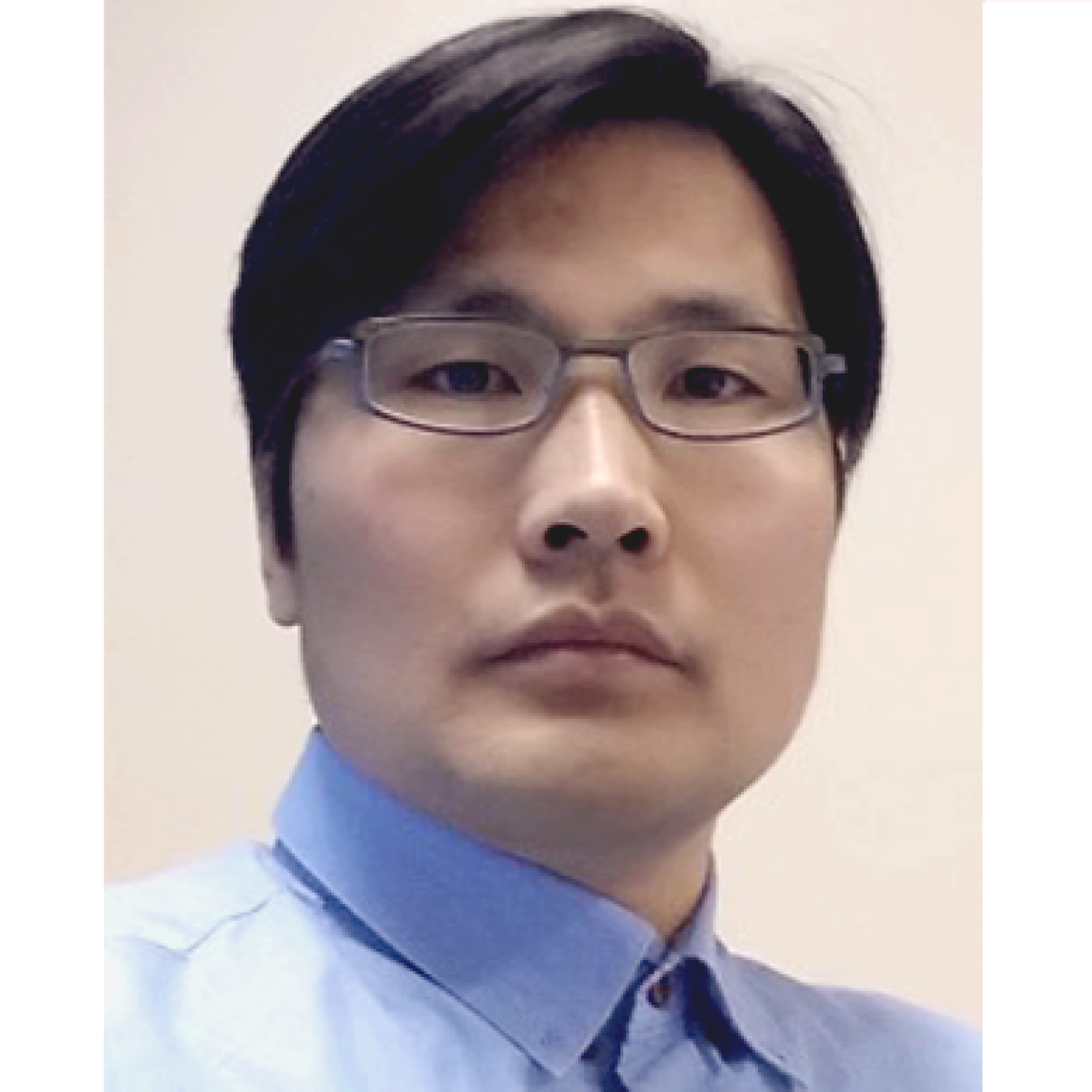
Lei Chen is a Chair Professor and Director of HKUST Big Data Institute at the Hong Kong University of Science and Technology , where he has served since 2005. His research spans data-driven machine learning , crowdsourcing systems , and uncertain database processing , with notable contributions in privacy-preserving spatial queries and graph neural networks . Ph.D. in Computer Science, University of Waterloo (2004) MS in Computer Science, Asian Institute of Technology (1997) BS in Computer Science, Tianjin University (1994) His work focuses on: Spatial Crowdsourcing - Efficient task assignment and privacy frameworks Graph Processing - Novel indexing for heterogeneous networks Explainable AI - Human-centric model interpretation techniques Uncertain Data - Probabilistic query processing with crowdsourcing Recent publications cluster around secure data federation , distributed graph training , and privacy-preserving mobility systems , reflecting his leadership in ACM and IEEE communities. Students include 15 active Ph.D. candidates and 20+ graduated researchers now at institutions like BeiHang University and Huawei Noah's Ark Lab . Awards: ACM Fellow (2024), VLDB Best Paper (2022), SIGMOD Test-of-Time Award (2015).
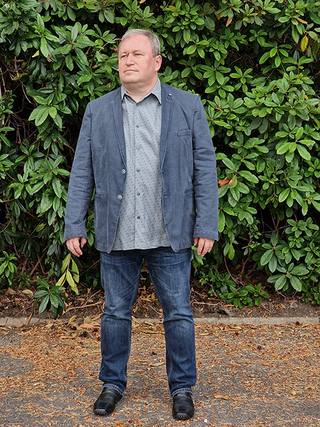
Artur Czumaj is a Professor of Computer Science and Director of the Center for Discrete Mathematics and its Applications (DIMAP) at the University of Warwick, United Kingdom. He is a member of the Global Faculty at the University of Cologne and serves as President of the European Association for Theoretical Computer Science (EATCS). PhD and Habilitation from University of Paderborn Recipient of the IBM Award and Fellow of EATCS His research focuses on theoretical computer science, particularly in the design of randomized algorithms, analysis of large data, and applications to parallel/distributed computing, property testing, sublinear algorithms, optimization algorithms, and algorithmic game theory. His work has been funded by major institutions including EPSRC, NSF, Royal Society, European Union, Simons Foundation, and IBM. The 15 most recent publications reflect expertise in graph algorithms, distributed systems, approximation techniques, and algorithmic complexity. His research spans foundational algorithm design to practical applications in large-scale data processing. Fellow of the European Association for Theoretical Computer Science (EATCS) IBM Award recipient Czumaj has held leadership roles in prominent conferences, including Program Committee Chair for STOC, ICALP, SODA, and HALG. His academic career is supported by grants from multiple international research councils and organizations.
Yasser Mohamed is a Professor in the Civil and Environmental Engineering Department at the University of Alberta . His academic and professional focus revolves around construction engineering, discrete-event simulation, and process optimization for industrial and tunneling operations. He has also explored knowledge engineering techniques and the application of TRIZ (Theory of Inventive Problem Solving) to construction processes. Email: yaly@ualberta.ca Location: 7-269 Donadeo Innovation Centre For Engineering, Edmonton, AB Courses Taught: CIV E 603 (Construction Informatics), CIV E 606 (Design and Analysis of Construction Operations) His research emphasizes modeling construction processes using discrete-event simulation to optimize performance and develop synthetic environments for construction operations. Recent publications, however, indicate a shift toward power systems, focusing on DC microgrids , grid-forming converters , and renewable energy integration . Scientific Awards: None explicitly mentioned in the provided data. Advising and Grants: No formal advisees listed. A co-applicant on a CRD grant (2007–present) for synthetic environments in construction simulation.
Tsan-sheng Hsu is a Research Professor at the Institute of Information Science (IIS), Academia Sinica in Taiwan. He has been a tenured full research fellow since June 2003, after serving as an assistant research fellow starting in 1993 and associate research fellow from 1997-2003. He also served as Deputy Director of IIS from 2002-2004 and Director of Academia Sinica Computing Center from 2008-2010. Since 2019, he has been Editor in Chief for the Journal of Information Science and Engineering. Dr. Hsu's educational background includes: Bachelor of Science in Computer Sciences from National Taiwan University (1981-1985), graduating first in class Master of Science in Computer Sciences from University of Texas at Austin (1990) Ph.D. in Computer Sciences from University of Texas at Austin (1993) Dr. Hsu's primary research interests focus on graph theory and its applications , where he investigates fundamental properties of graphs and develops algorithms for connectivity augmentation problems. His work in algorithm design, analysis, implementation and performance evaluation spans sequential, parallel, and distributed algorithms. In data-intensive computing , he explores data privacy protection, large-scale social network analysis, and computer Chinese chess. His research often bridges theoretical breakthroughs with practical applications in network reliability, statistical data security, and efficient computation. Dr. Hsu's publication record demonstrates a consistent focus on graph theory problems, particularly connectivity augmentation, graph searching, and distance-hereditary graphs. His work shows progression from theoretical foundations to practical applications, with an emphasis on developing efficient algorithms with provable performance guarantees. The majority of his publications appear in top theoretical computer science venues, reflecting his strong contributions to fundamental algorithmic research. Dr. Hsu has received several prestigious awards and honors: Bert Kay Dissertation Award from University of Texas at Austin (1993) Academia Sinica Research Award for Junior Research Investigators (2003) Phi Tau Phi Scholastic Honor Society membership (1985) MCD fellowship and IBM graduate fellowship during doctoral studies Dr. Hsu leads the Massive Data Computation and Management Lab at Academia Sinica, where he directs research on graph theory applications, algorithm design, and data privacy. His research has been supported by various projects including theoretical foundation work on graph augmentation and searching problems, as well as applied research in inference control, computer Chinese chess, and parallel computation. He has collaborated extensively with researchers from institutions including Northwestern University, National Tsing Hua University, and National Taiwan University.
Alex Psomas is an Assistant Professor in the Department of Computer Science at Purdue University, directing research at the intersection of computer science and economics. His work develops algorithmic solutions for fair resource allocation, with applications to food rescue networks and social welfare systems. Funded by NSF and Google, his lab collaborates with non-profits including 412 Food Rescue. Research combines theoretical computer science with practical implementations, particularly in dynamic fair division and mechanism design. Current projects develop AI systems for equitable food distribution through the Indy Hunger Network partnership. Recent publications advance multi-agent resource allocation with work appearing in NeurIPS, EC, and ACM Transactions. The 2024 EAAMO paper received Best Student Paper honors for its impact on food insecurity interventions. Major Recognition: NSF CAREER Award for algorithmic fairness research Google AI for Social Good Award MEGA-ACE grant for blockchain applications The Purdue AI for Social Good Lab develops open-source tools deployed in food banks nationally. PhD students investigate approximation algorithms for combinatorial optimization problems.
Sangtae Ha is an Associate Professor in the Computer Science Department at the University of Colorado Boulder. His research focuses on building practical computer systems spanning multiple disciplines, including machine learning/deep learning systems, networks and distributed systems, internet protocols, wireless networks, video streaming, storage systems, and security. He specializes in creating efficient and scalable solutions for real-world computing challenges. His work emphasizes interdisciplinary approaches, bridging theoretical computer science with practical system design. Key areas of exploration include optimizing neural network execution for edge computing, developing adaptive streaming protocols, and enhancing wireless network performance through novel signal processing and spectrum management techniques. Recent projects include frameworks for semantic offloading in neural networks and reinforcement learning-based cloud scheduling. No scientific awards or notable grants are explicitly mentioned in the provided materials. While no formal advisees are listed, his research team likely involves graduate students and collaborators. No dedicated labs or teams are named, though his work aligns with broader university initiatives in computer systems and networking.
Dr. Daniel Malz is an Assistant Professor at the Department of Mathematical Sciences, University of Copenhagen. His research focuses on quantum many-body systems, quantum optics, and quantum computing, with affiliations to research groups QA, QMATH, and QfL. His work bridges theoretical physics and mathematical modeling, addressing topics like superradiance, entanglement dynamics, and quantum state preparation. Key research interests include quantum information theory, non-Markovian dynamics, and the development of efficient quantum simulation techniques. His recent publications explore advanced topics such as photonic cluster states, tensor network simulations, and cross-platform quantum network verification. Much of his work addresses foundational questions in quantum mechanics while maintaining practical relevance for quantum technologies. His contributions span both theoretical derivations and numerical methods, with a focus on bridging classical and quantum many-body dynamics.
Tsung-Wei Huang is an Assistant Professor in the Department of Electrical & Computer Engineering at the University of Wisconsin at Madison, where he focuses on developing software systems for performance-critical applications in design automation, machine learning, and quantum computing. Previously, he held the same position at the University of Utah from 2019 to 2023. He earned his PhD from the University of Illinois at Urbana-Champaign (2017) and dual MS/BS degrees from National Cheng Kung University in Taiwan (2011). Education : PhD in ECE, University of Illinois at Urbana-Champaign (2017) MS in CS, National Cheng Kung University (2011) MS in CS, National Cheng Kung University (2010) Research Interests : Huang’s work emphasizes high-performance computing frameworks, quantum computing systems, and computer-aided design. His systems are widely adopted in academia and industry. Key contributions include GPU-accelerated quantum circuit simulators and task-parallel frameworks for static timing analysis. Publications : His research spans GPU acceleration, graph partitioning, and parallel algorithms, with recent focus on optimizing task-based execution and resource management for heterogeneous systems. Awards : ACM SIGDA Outstanding PhD Dissertation Award NSF CAREER Award Humboldt Research Fellowship ICCAD 10-year Most Influential Paper Award Multiple awards in international programming and design contests Advising & Grants : Recipient of NSF Faculty Early Career Award and Humboldt Fellowship. His research is supported by grants focusing on parallel computing systems and EDA tools. He advises students in the areas of high-performance computing and quantum systems. Labs & Teams : Leads research in parallel computing frameworks and GPU acceleration, with collaborations on taskflow systems and quantum circuit design tools.
Christina C. Christara is a Professor in the Department of Computer Science at the University of Toronto, specializing in scientific computing and numerical methods. Her research focuses on numerical solutions of partial differential equations, high performance computing, parallel computation, and financial mathematics applications. She holds a Ph.D. in Computer Science from Purdue University (1988), an M.Sc. from Purdue (1986), and a B.Sc. in Mathematics from Aristotle University (1982). She has taught courses such as Numerical Methods for Optimization Problems (CSC466/2305), High-Performance Scientific Computing (CSC456-2306), and Numerical Algorithms (CSC436), emphasizing both theoretical and computational aspects. Her research interests span numerical weather prediction, computational finance, and advanced numerical techniques like spline collocation and penalty methods. She has supervised over 20 graduate students in topics ranging from GPU-accelerated PDE solvers to XVA pricing models. Her work often addresses challenges in computational efficiency and accuracy, with applications in engineering, finance, and environmental science. She is affiliated with the Numerical Analysis and Scientific Computing Group and actively contributes to high-performance computing methodologies.
Maria Jesus Garzaran is an Adjunct Associate Professor at the Siebel School of Computing and Data Science, University of Illinois. Her research focuses on compiler design, computer hardware architecture, parallel computing, and high-performance computing (HPC) systems. Key areas of expertise include GPU utilization, parallelization techniques, and network modeling for next-generation HPC infrastructure. Her work emphasizes optimizing communication protocols in distributed systems, minimizing hardware resource usage, and enhancing performance through innovative compiler and memory management strategies. Recent contributions include advancements in MPI-3 RMA implementations and JavaScript acceleration using hardware transactional memory. No scientific awards are explicitly mentioned. Research collaborations span network design exploration, triggered operations for collective communication, and structural simulation frameworks. Her advising and grant activities are not detailed in the provided text, though her publications suggest active involvement in HPC and parallel computing research projects. No specific lab affiliations are mentioned.
Jennifer Wong-Ma is an Associate Teaching Professor at the University of California, Irvine (UCI), affiliated with the Donald Bren School of Information and Computer Sciences and the Computer Science Department. She joined UCI in 2018, previously serving as teaching faculty at Stony Brook University. Her roles include Vice Chair of Undergraduate Studies and advisor for organizations like Women in Information and Computer Sciences (WICS). She holds a Ph.D. in Computer Science from UCLA, with prior research focused on wireless systems and hardware IP protection. Education: Ph.D., Computer Science, University of California, Los Angeles, 2006 Research & Teaching Interests: Development of learning and teaching tools for CS education Alternative assessment strategies and pedagogical innovation CS education equity and retention initiatives Integration of theater techniques in classroom engagement Key Contributions: Co-founded the Coffee Meets Teaching program to foster faculty collaboration Member of UCI’s inaugural Faculty Academy for Teaching Excellence (FATE) Advocate for women in technology through WIT@UCI and WICS mentorship Awards: CS Department Award for Undergraduate Education (2012) CS Department Award for Major Contributions to Undergraduate Education (2016) Honored at 2023 ICS Awards Celebration Her work emphasizes community-building in education, bridging academia and industry, and leveraging technology to enhance student success. Current projects include optimizing grading infrastructure and predictive modeling for academic retention.
Alessandro (Alex) Orso is a Professor in the School of Computer Science and Interim Dean of the College of Computing at Georgia Institute of Technology. He holds an M.S. in Electrical Engineering (1995) and a Ph.D. in Computer Science (1999) from Politecnico di Milano, Italy. Since 2000, he has been a faculty member at Georgia Tech. Affiliations: School of Computer Science, Scientific Software Engineering Center, Center for Experimental Research in Computer Systems (CERCS), and Online Master of Science Computer Science (OMSCS). Research Focus: Software engineering with emphasis on testing, program analysis, and improving software reliability/security through formal methods and tools. His research has been funded by DARPA, NSF, IBM, and Microsoft, among others. He co-founded the Scientific Software Engineering Center to advance methodologies for high-performance scientific software. Orso is a Distinguished Member of the ACM and an IEEE Fellow. Key contributions include developing techniques for automated REST API testing, program debloating, and cross-browser web application testing. His work bridges theory and practice, emphasizing real-world system validation. Awards: Four impact awards: ISSTA (2017, 2021), ASE (2020), IBM Haifa (2013) Editorial roles: ACM TOSEM, IEEE TSE Program chairs: ISSTA 2010, FSE 2014, ICSE 2017 Advising & Grants: Supervised over 40 students (PhD, Master's, undergrad). Secured funding from government/industry partners. Tools developed include AutoRestTest, Barista, and X-PERT. Labs/Teams: Leads the Arktos Research Group, focusing on software testing, analysis, and tool development. Collaborates with industry and government on applied research projects.
Dr. Dirk Sudholt is a Full Professor at the University of Passau and a Visiting Professor at the University of Sheffield. He holds a Ph.D. from Technische Universität Dortmund and has held postdoctoral positions at the International Computer Science Institute (ICSI) in Berkeley and the University of Birmingham. His research focuses on randomized algorithms, algorithmic analysis, and combinatorial optimization, with expertise in the theoretical analysis of bio-inspired search heuristics like evolutionary algorithms and ant colony optimization. His work emphasizes rigorous runtime analysis to understand algorithmic performance and design principles. Education: PhD in Computer Science, Technische Universität Dortmund (2008) Diploma in Computer Science, Technische Universität Dortmund (2004) Research Interests: Runtime analysis of evolutionary algorithms Algorithmic design for multimodal optimization Noise robustness in metaheuristics Parallel and distributed evolutionary computation Grants: SAGE: Speed of Adaptation in Population Genetics and Evolutionary Computation (EU FP7, 2014–2016) Teaching: University of Passau: Courses on algorithms, evolutionary computation, and randomized algorithms
Christoph Kessler is a Professor and Head of the Software and Systems (SAS) division at the Department of Computer and Information Science (IDA), Linköping University, Sweden. He leads the Programming Environment Laboratory’s research group focusing on compiler technology, parallel computing, and heterogeneous systems. His work includes the development of tools like OPTIMIST, PARAMAT, and SkePU, and he has contributed over 100 publications in journals and conferences. He holds a PhD from the University of Saarbrücken and a Habilitation from the University of Trier. Research interests span parallel programming, compiler optimization, and energy-efficient scheduling for heterogeneous systems. He has secured a 30M SEK grant from SSF for the ASTECC project, advancing adaptive software for edge-cloud computing. Notable contributions include frameworks for GPU-based systems and methodologies for optimizing resource allocation on many-core architectures. His team’s work emphasizes practical applications in high-performance computing, including tools for course management (StASy) and energy-aware scheduling algorithms. The SAS division, under his leadership, focuses on software engineering and computer systems research with strong industry collaboration.
Lars Kotthoff is the Templeton Associate Professor and Derecho Professor at the University of Wyoming's School of Computing, Department of Electrical Engineering and Computer Science. He leads the MALLET lab, focusing on meta-algorithmics, learning, and large-scale empirical testing. His research integrates AI and machine learning to develop robust systems, particularly in algorithm selection, configuration, and automated machine learning (AutoML). He has held sabbaticals and collaborations globally, including at the University of Warsaw and NASA Ames. Awards include the Templeton Endowed Chair and Open Source Machine Learning Award. His work bridges computational mechanics, materials science, and optimization heuristics. Research interests include Bayesian optimization for materials science, automated parameter tuning, and interpretable machine learning models. Key projects include optimizing laser-induced graphene production and developing the mlr3 framework. Grants include NASA EPSCoR funding for in-space manufacturing and a Microsoft grant for biomedical imaging. He advises graduate and undergraduate students, mentors Google Summer of Code projects, and organizes workshops/conferences like COSEAL and Dagstuhl seminars. Publications span automated algorithm design, performance benchmarking, and interdisciplinary applications. His work emphasizes making machine learning accessible to non-experts through tools like Auto-WEKA and the mlr3 ecosystem. Current projects include NASA-funded advanced electronics manufacturing and collaborations with institutions worldwide.