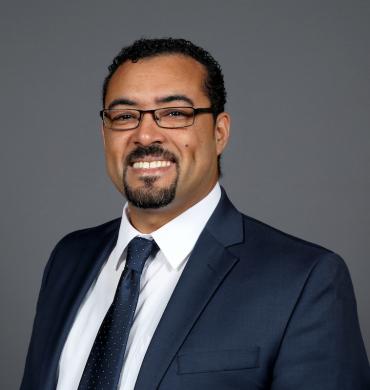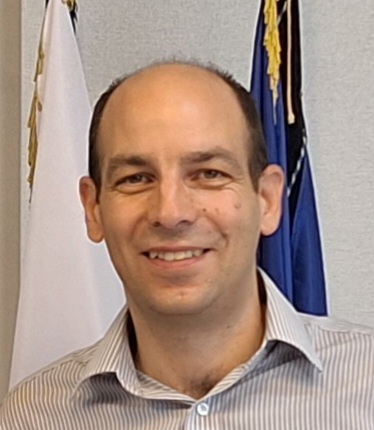
Igor Z. MilovanovicView profile
Professor
Igor Z. Milovanovic serves as a Full Professor in the Department of Mathematics at the Faculty of Electronic Engineering, University of Nis, Serbia, a position he has held since his appointment in 1991. His academic career is deeply rooted in the institution where he completed all his formal education, establishing him as a cornerstone of the mathematics and computing disciplines within this engineering faculty. His educational background reflects a lifelong commitment to applied mathematical sciences at the University of Nis: PhD in Applied Mathematics (1980), Faculty of Electronic Engineering MSc in Applied Mathematics (1978), Faculty of Electronic Engineering BSc in Mathematics (1975), Faculty of Electronic Engineering Professor Milovanovic's research program bridges theoretical mathematics and practical computational engineering, with primary expertise in parallel computing architectures and algorithm optimization. His work focuses on systolic array implementations for matrix operations, graph algorithms, and linear algebra problems, consistently targeting hardware-efficient solutions for high-performance computing challenges. This interdisciplinary approach integrates mathematical rigor with computer architecture considerations to solve complex computational problems. Analysis of his publication trajectory reveals a sustained concentration on systolic array methodologies across three decades, evolving from foundational matrix algorithms in the 1990s toward FPGA-based hardware implementations and fault-tolerant systems in the 2000s. With 50 total publications including 32 in impact-factor journals, his contributions demonstrate significant impact in parallel processing and reconfigurable computing domains, particularly in optimizing classical algorithms for specialized hardware architectures. No scientific awards or major honors are documented in the available records. He currently participates in one national research project, though international collaborations appear absent from his active portfolio. His advisory activities are not explicitly detailed, but his extensive publication history suggests substantial mentorship of graduate researchers. The professor operates within the Department of Mathematics framework at the Faculty of Electronic Engineering, with no indication of dedicated laboratory facilities or named research teams in the provided documentation. His work remains closely integrated with the department's computational mathematics focus while maintaining strong connections to computer engineering applications.