Andrea Simonetto is a Research Professor at the Applied Mathematics Unit (UMA) , ENSTA Paris, Institut Polytechnique de Paris. His work spans optimization, control theory, and learning algorithms for large-scale and streaming data , with applications in smart grids, intelligent transportation, personalized health, and quantum computing. Current research focuses on online algorithms for time-varying optimization , personalized optimization for cyber-physical systems , and variational quantum algorithms . Past contributions include theoretical and algorithmic advances in convex/non-convex optimization, distributed optimization (robotic networks, smart grids), and signal processing for sparse reconstructions and parallel computing in particle filtering. Key application domains include renewable energy integration , quantum state preparation , and human-in-the-loop control systems . His research is published in journals like ACM Transactions on Quantum Computing , IEEE Control Systems Letters , and Automatica .
Aws Albarghouthi is affiliated with the University of Wisconsin-Madison, USA. He is an active researcher with significant contributions to program synthesis, formal verification, and machine learning. Key roles: Author, Session Chair, Committee Member in conferences like PLDI, POPL, VMCAI, SPLASH, and ICFP. Research spans quantum computing, differential privacy, and static analysis. Research Trends include: Quantum Circuit Compilation and Optimization Probabilistic Verification of Fairness and Privacy Synthesis of Datalog and MapReduce Programs Neural-Augmented Static Analysis Bias Detection in Data Security Robustness in Machine Learning
Toufik AZIB is a Full Professor and scientific coordinator of the ECMS (Energy and Conception of Mechatronic Systems) research theme at ESTACA Engineering School in France. He leads a team of 6 teacher-researchers and 13 PhD students, focusing on optimal design of power electronics and energy management for hybrid power systems. His work bridges academic research and industrial applications in sustainable mobility, with strong collaborations across Europe and Algeria. Dr. AZIB received his Electrotechnical Engineering Diploma from the University of Setif, Algeria in 2006, followed by an M.Sc. in Electrical Engineering from ENSEM-INPL, France in 2007. He earned his Ph.D. in electrical engineering from the University of Paris South XI in 2010 and completed his HDR (Habilitation à Diriger des Recherches) from the University of Paris Saclay in 2021. His academic journey reflects a strong foundation in both theoretical and applied electrical engineering. His research focuses on the modeling, control, and optimal design of embedded energy systems under multi-physical constraints (electrical, thermal, electromagnetic compatibility, volume, reliability). He specializes in energy management strategies for hybrid systems combining fuel cells, batteries, and ultracapacitors, with applications in electric vehicles and the 'more electric aircraft.' His work integrates numerical and experimental approaches to develop methodologies for pre-dimensioning and real-time energy management, addressing challenges in sustainable transportation. Analysis of Dr. AZIB's recent publications reveals a strong trend toward multidisciplinary design optimization for automotive applications, particularly electronic throttle systems. His research increasingly incorporates knowledge management techniques and addresses reliability considerations in hybrid power source design. There's a clear progression from fundamental energy management strategies to sophisticated eco-driving solutions for electric vehicles, reflecting the evolving demands of sustainable mobility. Best Paper Award for 'Structure and Control Strategy for a Parallel Hybrid Fuel Cell/Supercapacitors Power Source' at IEEE VPPC'09 Dr. AZIB has supervised numerous PhD and Master's students across multiple institutions in France, Algeria, and Colombia. He leads significant research projects including MIMe (Module d'Intégration et de simulation Mécatronique), ECOS Nord (Eco-driving strategies for electric motorcycle), and AmCoAIR (improving air quality in vehicle cabins), securing funding from national and international sources. His work demonstrates strong industry collaboration with partners like Valeo, PSA, and Renault. As experimental platforms coordinator since 2012, Dr. AZIB oversees 10 specialized experimental facilities at ESTACA's S2ET-Paris Saclay research pole, including those for autonomous electric vehicles, drones, electric machines, and power modulators. His team regularly develops proof-of-concept demonstrators to validate research findings, such as the Formula Student electric vehicle and the 'Electric Appeal' streamliner project, demonstrating practical applications of their theoretical work.
Petr Kuznetsov is a Professor at Telecom Paris (Institut Polytechnique de Paris), affiliated with the Department of Computer Science and Networks (INFRES). He leads the Autonomous Critical Embedded Systems (ACES) research team at the Information Processing and Communication Laboratory (LTCI). His work bridges theoretical foundations and practical applications in distributed systems. Research Focus: Kuznetsov specializes in distributed algorithms, synchronization protocols, failure detection mechanisms, and the application of algebraic topology to distributed computing. His recent work explores Byzantine fault tolerance, blockchain consensus, and concurrency in networking infrastructures. Recent Publication Trends (2015-2025): His articles predominantly focus on scalability and resilience in distributed systems, with emerging themes in blockchain technologies, Byzantine fault tolerance, and concurrency optimization. Theoretical contributions include computability theorems and complexity bounds, while applied work targets payment systems and distributed ledgers. Awards & Honors: Best Paper Award at DISC 2019 for Scalable Byzantine Reliable Broadcast Best Student Paper Award at PODC 2018 for An Asynchronous Computability Theorem for Fair Adversaries Projects & Advising: He directs the TrustShare Innovation Chair (large-scale data synchronization) and DISCMAT (mathematical foundations of distributed computing). Actively seeks PhD candidates for projects on distributed algorithms and concurrency. Laboratory & Teams: Heads the ACES team at LTCI, focusing on critical embedded systems and fault-tolerant distributed architectures. Collaborates internationally through workshops like SPTDC.
Masao Fukushima is a Professor at the Department of System and Mathematical Sciences within the Faculty of Science and Engineering at Nanzan University, Japan. His research focuses on advanced optimization methodologies, including nonlinear programming, variational inequalities, and stochastic optimization. He holds editorial roles in academic journals and was recognized as a 2010 ISI Highly Cited Researcher in Mathematics. His work emphasizes theoretical development and algorithmic innovation in optimization fields such as complementarity problems and equilibrium-constrained programming. Research Interests: Nonlinear Programming Parallel Optimization Algorithms Global and Stochastic Optimization Mathematical Programs with Equilibrium Constraints Nonsmooth Optimization Editorial Activities: Maintains editorial board memberships as of July 2017. No specific grants or labs are detailed in the provided text, though his academic profile reflects sustained contributions to optimization theory and applications.
Maryam Mehri Dehnavi is an Associate Professor in the Department of Computer Science at the University of Toronto and a Principal Research Scientist at NVIDIA. She holds the Canada Research Chair in Parallel and Distributed Computing and leads the ParaMathics research group. Research focuses on high-performance computing , machine learning , sparse matrix optimizations , and compiler design for heterogeneous systems. Her work develops domain-specific languages , scalable numerical libraries , and auto-vectorization techniques for cloud and GPU platforms. Recent publications address LLM compression , sparse code translation , GPU kernel synchronization , and control flow optimization . Scientific recognition: Ontario Early Researcher Award (2021), NSF CRII Grant, NSERC New Frontiers in Research Fund. Current students: Mushegh Shahinyan , Martin Phan , Maryam Haghifam , and others. Former advisees: Kazem Cheshmi (NJIT), Zachary Blanco (MIT Lincoln Lab), Yuanxi Li (Amazon).
Yasmina Abdeddaïm is an Associate Professor at Université Gustave Eiffel and affiliated with ESIEE Paris. She works within the Laboratoire d'Informatique Gaspard-Monge (Softwares, Networks and Real-time team) and serves as Head of the Master in Artificial Intelligence and Cybersecurity (AIC) program. Her research focuses on real-time systems, critical systems, and scheduling algorithms. University: Université Gustave Eiffel Role: Head of Master AIC program Laboratory: Laboratoire d'Informatique Gaspard-Monge Team: Softwares, Networks and Real-time Her research spans real-time systems , mixed-criticality scheduling , energy-harvesting systems , and probabilistic schedulability . Recent publications analyze compilation optimization impacts on timing variability and propose new models for real-time deep neural networks over GPUs. She employs formal methods like timed automata for scheduling verification. Her teaching includes courses on Real-time Systems , Model Checking , Critical Application Development , and Artificial Intelligence . She is based at Cité Descartes, Champs-sur-Marne, France, with office contact details provided.
Kenza Kellou-Menouer is a researcher affiliated with the ETIS Laboratory at ENSEA, France, and part of the MIDI research group . Her work focuses on schema discovery for Semantic Web data, data mining, and big data optimization. Research: Semantic schema discovery, clustering/classification algorithms, and association rules. Teaching: Semantic Web technologies, database design, algorithms, and programming languages (Java, C++, C#, C). Research Interests center on Semantic Web data integration, RDF schema inference, and hybrid machine learning approaches. She has contributed to scalable schema discovery systems and real-time profiling techniques for large datasets. Publications include work on schema inference tools (SchemaDecrypt++, HInT) and methodological frameworks presented at top-tier venues like VLDB (A*), ICDE (A*), SSDBM (A), and ISWC . Her research bridges theoretical advancements with practical implementations for RDF datasets. Community Contributions include organizing tutorials at the International Semantic Web Conference (ISWC) 2022 and developing educational materials for database and programming courses.
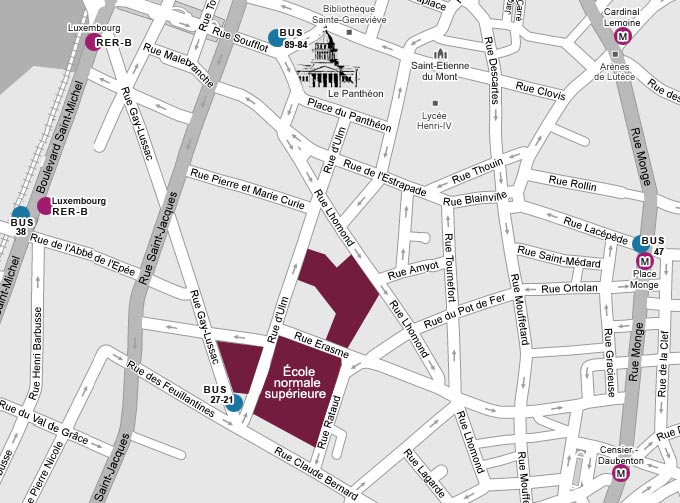
Phong Nguyen is a Research Professor at Inria (Directeur de recherche) and a part-time professor at the Computer Science Department (DI ENS) of École Normale Supérieure (ENS), PSL University in Paris. He leads the ENS Crypto Team (Inria Equipe Projet Cascade) and serves as the principal investigator for the ERC Advanced Grant PARQ (2020) focused on lattices in parallel and quantum computing. He holds a PhD (1999) and Habilitation (2007) from ENS-Lyon, with an agrégation de mathématiques (1997). His research integrates cryptography, algorithmic number theory, and lattice-based computations, emphasizing: Cryptanalysis : Deconstructing cryptographic protocols, especially lattice-based systems Post-quantum cryptography : Developing quantum-resistant solutions Lattice algorithms : Optimization of reduction, enumeration, and sieving techniques Real-world applications : Bridging theoretical constructs with practical security implementations His publications (spanning Eurocrypt, Asiacrypt, and Journal of Cryptology) demonstrate deep expertise in lattice cryptography, with recurring themes in algorithm efficiency, cryptanalysis of NTRU/GGH systems, and theoretical advancements in lattice reduction. Recent work (2024) continues this trajectory with improved BKZ analysis and hypercubic lattice optimizations. Awards include : ERC Advanced Grant (2020) for PARQ project Best Paper Award at EUROCRYPT 2006 Cor Baayen Award (2001) He advises PhD students (e.g., Henry Bambury, Leo Ducas) and interns from institutions like École Polytechnique and ENS. He directs the ENS Crypto Team and previously held leadership roles as: French Director of the Japanese-French Laboratory for Informatics (2015-2019) European Director of LIAMA (Sino-European Computer Science Lab, 2013-2015) Coordinator of ECRYPT II virtual labs (2008-2012)
Marc Snir is an Israeli-American Professor of Computer Science at the University of Illinois at Urbana-Champaign (UIUC). He holds a Doctor Honoris Causa from École Normale Supérieure de Lyon (2018). His career includes leadership roles such as Head of the Computer Science Department at UIUC (2001–2007) and Director of the Mathematics and Computer Science Division at Argonne National Laboratory (2011–2016). He is a Fellow of AAAS, ACM, and IEEE, and recipient of the IEEE Seymour Cray Award. Education: PhD in Mathematics from the Hebrew University of Jerusalem (1979). Research focuses on parallel algorithms, high-performance computing (HPC), distributed systems, and fault tolerance. He co-developed the MPI standard for parallel programming and contributed to IBM's Blue Gene supercomputer architecture. His Erdős number is 2, reflecting collaborative links to mathematician Paul Erdős. Awards include the IEEE Award for Excellence in Scalable Computing and leadership in advancing supercomputing through publications like The Future of Supercomputing (2004).
Alexandre Duret-Lutz is a Professor at École pour l'Informatique et les Techniques Avancées (EPITA) in the Laboratoire de Recherche de l'Epita (LRE). He holds a habilitation (HDR) from Université Pierre & Marie Curie (Paris 6). His research focuses on ω-automata and their application in model checking, particularly through the development of the SPOT library, a C++ tool for manipulating ω-automata and implementing model checkers. Education: HDR from Université Pierre & Marie Curie (Paris 6). Research interests include formal verification, automata theory, and LTL synthesis. He has contributed to tools like Vaucanson and Seminator, and is involved in the reactive synthesis competition SYNTCOMP. His work emphasizes optimizing automata constructions and improving verification efficiency. Key awards include the Best Paper Award at CIAA'24 and the Best Paper Award at Ada-Europe'01. He teaches courses on algorithms, complexity, and reproducible research at EPITA. Labs/Teams: Active contributor to the LRE and SPOT library development. Collaborates on projects involving formal methods and automated synthesis.
Hanjun Kim is a researcher at Yonsei University, focusing on compiler design, machine learning optimization, and hardware-aware programming techniques. His work bridges theoretical research with practical implementations in embedded systems and security domains. Research Interests Compiler-driven optimization for PIM (Processing-in-Memory) architectures Homomorphic encryption compiler design Parallel computing for DNN/LLM inference Network function program analysis Recent research trends include: application of compiler techniques to optimize resource utilization in heterogeneous computing environments, particularly for AI workloads and secure computation. His publications demonstrate expertise in tackling performance bottlenecks through architectural and compiler co-design. Conference Service 2025 SPLASH OOPSLA Review Committee 2025 LCTES Program Committee 2024 CGO Program Committee 2023 LCTES Program Committee 2022 CGO Organization Committee 2020 LCTES Program Committee
Samuel Thibault is a Professor at University of Bordeaux, affiliated with Laboratoire Bordelais de Recherche en Informatique (LaBRI) and Inria Bordeaux -- Sud-Ouest. He is a member of the SATANAS team at LaBRI (theme: High Performance Runtime Systems for Parallel Architectures) and the STORM research team at Inria Bordeaux (previously RunTime). His work bridges academic research and practical implementation of high-performance computing systems. Thibault's research focuses on task-based runtime systems, particularly StarPU, for heterogeneous and parallel computing architectures. His work addresses critical challenges in scheduling algorithms, memory management under constraints, data locality optimization, and performance modeling for complex NUMA architectures. He has made significant contributions to the field of parallel computing through the development and analysis of runtime systems that efficiently manage tasks across diverse hardware resources including CPUs, GPUs, and other accelerators. His research has practical applications in scientific computing, deep learning inference, and large-scale simulations requiring extreme computing power. His recent publication trends show a strong emphasis on optimizing task-based runtime systems for heterogeneous architectures with particular attention to memory constraints and data locality. There's a clear progression toward applying these techniques to deep learning inference workloads, as evidenced by his StarONNX project. His work consistently addresses the challenge of balancing throughput and latency in complex computing environments, with increasing focus on recursive task graphs and dynamic adaptation strategies. Thibault is actively involved in European research initiatives including TEXTAROSSA (focusing on exascale technologies) and EXA2PRO (high development productivity on heterogeneous systems). His work has been published consistently in top-tier conferences and journals in parallel and distributed computing. As part of the STORM team at Inria Bordeaux, Thibault contributes to advancing the state of the art in runtime systems for high-performance computing. His team's work on StarPU has become a reference implementation in the field, enabling researchers and practitioners to develop applications that can efficiently utilize heterogeneous computing resources without needing to manage the complexity of different hardware architectures directly.
François Trahay is a Full Professor in the Computer Science department at Télécom SudParis (Institut Mines-Télécom) and a member of the Benagil Inria team. He leads research in high-performance systems, runtime systems, and performance analysis for HPC and distributed systems. He holds an HDR from Institut Polytechnique de Paris and a PhD from University of Bordeaux (2009). His work includes the EZTrace framework for performance analysis and contributions to storage systems optimization. Education: 2021: Habilitation à Diriger des Recherches (HDR), Institut Polytechnique de Paris 2010: PostDoc at Riken, University of Tokyo 2009: PhD in Computer Science, University of Bordeaux 2006: MS in Computer Science, University of Bordeaux Research focuses on runtime system design, HPC trace analysis, and storage efficiency. Recent projects include PALLAS trace format (IPDPS 2025) and GPU performance prediction (Euro-Par 2024). He advises 4 current PhD students and has supervised 2 former students now in industry. Key contributions include: Co-developer of EZTrace performance analysis framework Co-author of 60+ peer-reviewed papers in top venues (IPDPS, IEEE Cluster, ICPP) Technical leadership in Inria's Benagil team and Samovar Lab
François Trahay is an Associate Professor at Telecom SudParis, affiliated with the SAMOVAR research laboratory. His research focuses on high-performance computing systems, storage optimization, and performance analysis tools for parallel and distributed environments. He completed his PhD at Université Bordeaux I (2009) and Habilitation (HDR) at Institut Polytechnique de Paris (2021). Research Interests: Trahay specializes in optimizing storage systems (SSDs, RAID configurations), developing performance analysis frameworks (e.g., EZTrace, NumaMMA), and enhancing energy efficiency in HPC. Key areas include I/O performance, parallel runtime systems, and adaptive computing for machine learning workloads. Publication Trends: His recent work (2018–2025) demonstrates strong focus on: (1) SSD/RAID management techniques for modern storage hardware, (2) HPC performance tools for tracing and analysis, and (3) optimization strategies for distributed deep learning systems. Laboratory Affiliation: Member of SAMOVAR Laboratory (UMR CNRS), conducting research in distributed systems, networks, and computational efficiency.