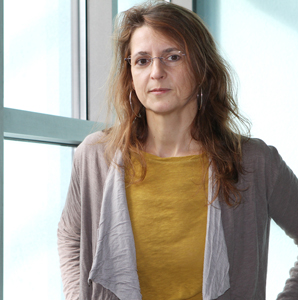
Daria Stepanova is a researcher at the Institute of Information Systems , Technische Universität Wien. Her work focuses on Answer-Set Programming (ASP), inconsistency resolution in hybrid knowledge bases, and optimization algorithms for scheduling and scene generation. Education: PhD (Dr.techn.) in Technical Sciences, MSc in Computer Science. Research Interests: Answer-Set Programming for scheduling and optimization Inconsistency handling in Description Logic Programs Hybrid reasoning systems combining logic and semantic methods Applications of automated reasoning in manufacturing and gaming Publications highlight trends in ASP-driven scheduling, inconsistency repair techniques, and semantic scene generation using contextual reasoning and algebraic measures. Labs & Teams: Active member of the Network Lab at TU Wien Collaborator on projects like ALASPO and Angry-HEX
Günther Raidl is an Associate Professor and Head of the Algorithms and Data Structures Group at the Institute of Computer Graphics and Algorithms, Faculty of Informatics, TU Wien. He holds a Dipl.-Ing. (1992), Ph.D. (1994), and Habilitation (2003) from TU Wien. His research focuses on combinatorial optimization, heuristic methods, and hybrid optimization techniques, addressing large-scale problems in transportation, network design, and cutting/packing. He leads a group of 1 PostDoc, 8 PhD candidates, and collaborates with institutions like the Vienna Graduate School on Computational Optimization (VGSCO). Education: Dipl.-Ing. in Computer Science (1992), TU Wien Ph.D. in Computer Science (1994), TU Wien Habilitation (2003), TU Wien Research Interests: Raidl’s work combines exact and heuristic optimization techniques, including mixed-integer programming, metaheuristics, and matheuristics. Applications span transportation systems (e.g., electric vehicle routing, bike-sharing systems), network design, and bioinformatics. His group leverages high-performance computing resources, such as the Vienna Scientific Cluster (VSC). Publications & Awards: Over 115 reviewed articles in journals/conferences like INFORMS Journal on Computing and Evolutionary Computation. Notable recognition includes the EvoStar 'Old Croc' Award (2012) for contributions to evolutionary computation. Advising & Grants: Supervises 8 funded PhD students and contributes to the Vienna Graduate School’s DK funding (€20,000/year for personnel and travel). Labs/Teams: Algorithms and Data Structures Group at TU Wien, collaborating with researchers like Monika Henzinger and Nysret Musliu.
Monika Lanzenberger is an Assistant Professor at the Institute of Software Technology and Interactive Systems, Faculty of Informatics, Vienna University of Technology. Her research focuses on the intersection of Semantic Web technologies, ontology alignment, and information visualization. She has established herself as a notable researcher in visual ontology alignment through her development of the AlViz tool and related publications. Dr. Lanzenberger received her PhD from the Vienna University of Technology, Faculty of Informatics in 2003 and her MSc in Computer Science from the same institution in 2001. She completed a Post-Doc Fellowship (ERCIM) with the NTNU, Department of Computer and Information Science, Trondheim, Norway (February - October 2005) and with the Centre for IT Innovation (CITI) at the CRP Henri Tudor, Luxembourg (November 2005 - July 2006). Her primary research interests center around Semantic Web and Ontology-based Data, with specific focus on ontology alignment and visualization techniques. She has made significant contributions to the field through her work on visual ontology alignment tools, particularly the AlViz system. Her research also extends to Human Computer Interaction, Information Visualization techniques, feminist perspectives on computer science, and online learning and didactics. She has published extensively in top conferences and journals in these areas, with a particular emphasis on making ontology alignment more accessible through visualization. Dr. Lanzenberger has received recognition for her work, including an Outstanding Paper Award in 2002 for her research on the evaluation of navigation in hypertext learning systems. She is an active member of the scientific community, serving as a reviewer for international conferences and co-organizer of workshops in her field. As an educator, Dr. Lanzenberger has taught numerous courses including Information Visualization, Women in Science and Technology, Fundamentals of Methodical Working, and Semi-Automatic Information and Knowledge Systems. She has supervised multiple student projects, Bachelor's theses, and Master's theses, particularly in areas related to information visualization and semantic technologies. She is a member of several professional organizations including IEEE, ÖGAI, OCG, and GI, demonstrating her active engagement with the broader computer science community.
Kathrin Hanauer is an Assistant Professor at the University of Vienna, where she is affiliated with the Research Group Theory and Applications of Algorithms and the Research Network Data Science. She conducts research in the design, analysis, and experimental evaluation of fast algorithms, with a focus on Algorithm Engineering connecting theoretical foundations with practical implementations. Her research interests include: Algorithm Engineering for practical algorithm implementation Dynamic algorithms for efficiently handling changing data Graph algorithms and network analysis Reachability problems on directed graphs Ranking problems, particularly the NP-hard Feedback Arc Set problem Network analysis, motif search, and subgraph counting Dr. Hanauer's recent publications demonstrate a strong focus on dynamic graph algorithms, with significant contributions to reachability queries, subgraph counting, and datacenter network optimization. Her work spans both theoretical algorithm design and practical implementation, often with C++ software projects. Notable contributions include the O'Reach algorithm for faster reachability queries in large graphs and several dynamic algorithms for subgraph counting and network analysis. Her scientific contributions: O'Reach: A novel approach to reachability queries in large graphs that outperforms previous methods Dynamic algorithms for four-vertex subgraph counting with efficient update operations Work on demand-aware link scheduling for reconfigurable datacenters Interdisciplinary research on normative reasoning with Aristotelian diagrams Dr. Hanauer actively supervises student research, with numerous completed theses focusing on dynamic graph algorithms, geometric algorithms, and reachability problems. Her lab maintains several software projects related to graph algorithms, including a modular algorithms library for dynamic graphs written in C++ and specialized implementations for reachability queries and subgraph counting.
Ulrich Langer is a Full Professor of Numerical Mathematics at Johannes Kepler University Linz (JKU), Austria. He has held academic positions since 1980, including roles as Scientific Director of the Radon Institute for Computational and Applied Mathematics (2003–2020) and leader of its PDE computational methods research group. He specializes in numerical methods for PDEs, computational mechanics, and parallel computing. Education: Born 1952 in Germany, studied Mathematics at Technical University Karl-Marx-Stadt (Diploma 1975) PhD in Numerical Mathematics from Leningrad University (1980) Habilitation and professorships at Technical Universities of Chemnitz and Linz His research focuses on domain decomposition methods, multigrid techniques, and isogeometric analysis. Key contributions include projects funded by FWF and NSF, such as 'Discontinuous Galerkin Domain Decomposition Methods in Isogeometric Analysis' and 'Goal-Oriented Error Control for Phase-Field Fracture.' Professional Roles: Editorial Board Member of journals like Computing, SIAM Journal on Numerical Analysis, and ZAMM ERC Panel Member for Mathematics (2008–2025) Organized international conferences, e.g., 17th Domain Decomposition Methods (2006) Awards: Multi-Grid Prize (2025). Extensive supervision of 29 PhD students and 24 diploma theses.
Prasanna Viktor is a Professor of Electrical and Computer Engineering and Computer Science at the University of Southern California (USC), holding the Charles Lee Powell Chair in Engineering. He also serves as Director of the Center for Energy Informatics and has held leadership roles in interdisciplinary research centers such as the USC Infosys Center for Advanced Software Technologies. With a BE from Bangalore University, ME from Indian Institute of Science, and PhD from Pennsylvania State University, he is a globally recognized expert in reconfigurable computing, FPGA accelerators, and parallel computing. His research focuses on high-performance architectures for applications in networking, security, HPC, and machine learning. Over 25 years, he has secured research grants totaling over $50M, including $12.9M from 2016–2021. He has advised over 70 doctoral students and published over 600 papers, earning 22 best paper awards. His work has led to IP cores with improved throughput, latency, and energy efficiency. Prasanna is a Fellow of the IEEE, ACM, and AAAS, and an elected member of Academia Europaea. He has received prestigious awards such as the W. Wallace McDowell Award (2015) and the Distinguished Alumnus Award from IISc (2019). He currently serves as Editor-in-Chief of the Journal of Parallel and Distributed Computing. He leads interdisciplinary efforts in energy informatics and smart oilfield technologies, bridging computer science, engineering, and energy sectors. His contributions include foundational work in reconfigurable computing and FPGA-based accelerators for diverse applications.
Jozef Gruska is a Professor at the Faculty of Informatics, Masaryk University in Brno, Czech Republic, where he has been a faculty member since 1997. A pioneer in computer science in Czechoslovakia, he has spent over six decades contributing to theoretical computer science, particularly in descriptional complexity, quantum information processing, and automata theory. His international career includes positions at the Slovak Academy of Sciences, University of Hamburg, and University of Minnesota. Gruska's research interests span multiple areas of theoretical computer science. He is considered one of the founders of research into descriptional complexity and systolic automata. His recent work has focused on quantum information processing, quantum automata, and entanglement. He has been instrumental in establishing quantum computing as a significant research area in Europe and Asia, particularly through the AQIS conference series. His perspective on informatics as a fundamental science that encompasses mathematics has been influential in shaping theoretical computer science in Central Europe. His research output shows a clear evolution from classical automata theory to quantum computing, with significant contributions in both areas. The publications demonstrate his ability to bridge theoretical computer science with physics, particularly in understanding quantum phenomena from an information processing perspective. His work on quantum entanglement as an information resource has been particularly influential in establishing connections between computer science and quantum physics. Computer Pioneer Award of the IEEE Computer Society (1996) IFIP Silver Core medal (1995) Gold medal of Masaryk University (1997) Main award of the Rector of Masaryk University (twice) Bolzano medal of Czech Academy of Sciences (2004) Elected member of Academia Europaea (2006) Gruska has been highly active in academic service, founding four major conference series (MFCS, SOFSEM, LATIN, AQIS) and serving on numerous program committees. He led significant research projects including Parallel and Distributed Computing (2005-2011) and Quantum Information Processing (2000-2008). As head of the Graduate School at Masaryk University, he supervised numerous PhD students. His international collaborations, particularly with Asian institutions, have been extensive, with 24 talks in India alone and multiple visits to Japan, Korea, and China. He has organized regular research activities throughout his career, including the weekly ALA (Algorithms, Languages and Automata) seminar for 35 years in Bratislava and Informatics colloquia at Masaryk University for 23 semesters. His leadership in establishing the Central European Quantum Information Processing workshop (annually since 2004) and MEMICS for PhD students (since 2005) demonstrates his commitment to fostering research communities.
Sascha Hunold is an Associate Professor at TU Wien, affiliated with the Department of Parallel Computing within the Faculty of Informatics. He holds roles as Vice Dean of Academic Affairs for Informatics Bachelor programs and Curriculum Coordinator for the Master's program in High-Performance Computing. His research focuses on parallel computing, MPI optimization, scheduling algorithms, and reproducible HPC experiments. Education: Habilitation (venia docendi) in Computer Science from TU Wien, PhD in Computer Science from the University of Bayreuth, and MSc in Computer Science from Martin Luther University Halle-Wittenberg. Research interests include MPI collective communication performance, HPC benchmarking, algorithm selection, and task scheduling. He has contributed to tools like ReproMPI and Scheduling.jl. Key awards include Best Paper awards at IEEE CLUSTER 2020 and EuroMPI/Asia 2014, and recognition for reproducible research methodologies. His work emphasizes practical applications of parallel computing in large-scale systems. Teaching responsibilities include courses on parallel algorithms, scientific programming with Python, and HPC project supervision. Active in program committees for major conferences like IPDPS and SC.
Prof. Jesper Larsson Träff is a Full Professor and Head of the Research Unit in Parallel Computing at Technische Universität Wien (TU Wien). His academic role is centered within the Department of Computer Engineering. He holds an MSc and PhD, and has contributed extensively to the field of parallel computing through his research and leadership in international projects. His research focuses on parallel algorithms, scheduling, and optimization of the Message Passing Interface (MPI), with emphasis on high-performance computing (HPC) systems and distributed architectures. Key projects include the Process Mapping initiative (2019–2024), Autotune (2021–2025), and contributions to Exascale Programming Models. He has also led efforts in evaluating MPI performance tools and their reproducibility challenges. Research Areas: Parallel Algorithms, MPI Optimization, HPC, Process Mapping, Collective Communication, and Memory Models. Notable Achievements: Awarded the Best Paper at EuroMPI 2014 and recognized by the Innovation Radar for his work on PGAS-based MPI interoperability in 2018. Teaching: Teaches courses such as Advanced Multiprocessor Programming, Bachelor/Master Thesis supervision, and seminars in Computer Engineering and Theoretical Computer Science. Prof. Träff’s advising includes students researching topics like lock-free data structures, MPI datatype optimization, and task scheduling. His grants span Austrian and EU funding bodies, addressing challenges in exascale computing and reproducible experimental research. He is affiliated with the Vienna Mapping and Sparse Quadratic Assignment (Vienna Mapping) project and actively contributes to international workshops and conferences.
Juraj Hromkovič is a Full Professor of Computer Science at the Swiss Federal Institute of Technology (ETH Zurich) , holding this position since 2004. His academic career spans multiple institutions, including Professorships at Christian Albrechts University in Kiel (1994-1997), RWTH Aachen (1997-2003), and earlier roles at Comenius University and the University of Paderborn. Education : 1977–1982: Studied Computer Science at Comenius University, Bratislava 1982: Dr. rer. nat. (PhD equivalent) from Comenius University 1986: CSc (Ph.D.) in Theoretical Cybernetics 1990: Dr. Sc. in Mathematics and Physics Research Interests focus on Theoretical Computer Science , particularly Algorithms , Complexity Theory , and Communication Protocols . His work explores Randomized Algorithms , Approximation Techniques , and Automata Theory , with notable contributions to understanding exponential gaps in computational models and optimizing information dissemination in networks. His publications span books, journal articles, and conference papers addressing foundational and applied aspects of computing. Scientific Awards include membership in the Slovak Academy of Sciences (2001) and two awards from the Slovak Literature Foundation for Scientific Literature (2002, 2004). He has supervised 11 PhD dissertations and one habilitation, demonstrating his commitment to academic mentorship.
Markus Steinberger is an Associate Professor at Graz University of Technology (TU Graz), leading the GPU Computing and Visualization Group at the Institute for Computer Graphics and Vision. He holds a PhD (2013) and Habilitation (2020) in Computer Science from TU Graz. His research focuses on GPU scheduling, parallel computing, real-time rendering, and procedural content generation. He has held roles including Assistant Professor (2015–2021) and Director of Cloud Rendering at Huawei (2021–present). Education: MSc (2010), PhD (2013), Habilitation (2020) in Computer Science from TU Graz PostDoc and Research Positions: NVIDIA (2013–2014), Max Planck Institute (2015–2017) Research interests include dynamic resource scheduling, GPU algorithms, and high-performance visualization. His work has been recognized with awards such as the GI Dissertation Prize (2014), Eurographics Best Paper (2021), and the Heinz Zemanek Prize. Key Projects: Cloud-native rendering, procedural planet rendering, and GPU-optimized algorithms Advising includes PhD student Karl Haubenwallner. His lab explores cutting-edge techniques in real-time graphics and parallel computing.
Mihaela Zavolan is a Full Professor at the Biozentrum, University of Basel, Switzerland, where she has held continuous faculty appointments since 2003 (Assistant Professor 2003-2008, Associate Professor 2008-2014, Full Professor 2014-present). She simultaneously serves as a Group Leader at the Swiss Institute of Bioinformatics since 2004, directing research on RNA regulatory networks. Her educational background includes: PhD in Computer Science, University of New Mexico (1996-1999) M.Sc. in Computer Science, University of New Mexico (1994-1996) M.D., University of Medicine and Pharmacy, Timisoara, Romania (1986-1992) Dr. Zavolan's research centers on computational RNA biology , with pioneering work in microRNA mechanisms, RNA splicing, RNA-binding proteins, and pre-mRNA 3' end processing. Her group integrates advanced computational modeling with high-throughput experimental data to dissect post-transcriptional gene regulation networks. Key methodological contributions include quantitative analysis of CLIP techniques and biophysical models of miRNA-mRNA interactions. Analysis of her publication record reveals consistent focus on developing and applying computational frameworks for RNA regulatory networks, with increasing emphasis on genome-wide mapping of RNA-protein interactions and quantitative modeling of regulatory dynamics. Her work bridges molecular biology, genomics, and systems biology through innovative algorithm development. Her major scientific awards include: ERC Starting Grant (2012) Young Investigator of EURASNET (2006-2009) Lita Annenberg Hazen Presidential Fellowship, The Rockefeller University (2001-2003) Presidential Fellowship, The Rockefeller University (2001) Burroughs Wellcome Fellow, The Rockefeller University (2000) Dr. Zavolan has secured competitive research funding including the ERC Starting Grant and maintains active grant support through her group leadership positions. She serves on editorial boards of Genome Biology, Bioinformatics, BMC Molecular Biology, and Cells, and has organized major conferences including the European Conference on Computational Biology (2012) and Computational RNA Biology Conference (2014). She leads parallel research groups at the Biozentrum (Computational and Systems Biology) and Swiss Institute of Bioinformatics (RNA regulatory networks), employing interdisciplinary teams that combine computational biology, molecular biology, and high-throughput data analysis to investigate RNA-mediated gene regulation mechanisms.
Michael Meister is a Professor at MCI – The Entrepreneurial School, holding a position in the Department of Environmental, Process & Energy Technology. He has held roles including Junior Professor and Post-Doc researcher at Universität Innsbruck and teaching positions at Imperial College London. His research focuses on wastewater treatment plant modeling, numerical flow simulation using SPH, and hydraulic simulations. Education: PhD in Environmental Technology (University of Innsbruck), MSc in Physics (Imperial College London), BSc in Physics (University of Innsbruck). Research interests include optimizing anaerobic digester mixing efficiency, CFD applications in wastewater processes, and developing SPH-based models for environmental systems. His work bridges computational fluid dynamics with practical engineering solutions for sustainable energy and water management. Key projects include OPTIFAUL (energy-efficient mixing optimization) and SPHAUL (SPH-based digester modeling). He has received multiple teaching awards from MCI and recognition for his doctoral and undergraduate work. Advised over 15 students on topics ranging from biogas potential estimation to CFD-based energy optimization in wastewater treatment plants. Active in peer review for journals and conferences, and serves on evaluation committees for international research programs. Labs/Teams: Leads the OptiFaul research initiative and collaborates with institutions like the University of Leeds and the Austrian Research Promotion Agency.
Adithya Vadapalli is an Assistant Professor at the Department of Computer Science and Engineering (IIT Kanpur, India). His research focuses on constructing systems that prevent data leaks through cryptographic methods, with broader applications in secure computation and privacy preservation. Education: Ph.D. in Computer Science from Indiana University Bloomington. Prior Role: Postdoctoral Fellow at the University of Waterloo (CrySP group). His research interests include: Secure Multi-Party Computation (SMPC) Oblivious RAM (ORAM) design Metadata protection techniques Privacy-preserving machine learning Recent publications highlight advancements in cryptographic primitives like distributed point functions, bandwidth-efficient distributed ORAM, and round-efficient 3-party MPC for dynamic data structures. These works span theoretical foundations and practical implementations. Currently, no scientific awards or student records are explicitly listed in the provided materials.
Francisco Tirado is a Full Professor of Computer Architecture at Complutense University of Madrid since 1986. He has held leadership roles including Vice-Chancellor for Research (2012-2015), Dean of the Faculty of Physics (1994-2002), and Director of the Complutense Supercomputing Center (2002-2007). He is a founding member of the Spanish Society for Computer Science (SCIE) and Spanish Society for Computer Architecture (SARTECO). His research focuses on power-aware computing, heterogeneous systems, bioinformatics, and hardware design automation. He has authored over 242 publications and supervised 15 PhD theses. His professional service includes chairing 138 international conferences and serving on numerous committees for EUROMICRO, IEEE, and national research agencies. Education: No explicit details provided, but has been active at Complutense University since 1978. Affiliations: Member of COSCE Executive Board (2012), IEEE Senior Member (2005), and EUROMICRO Board (1991-2004). Research Interests: - Optimizing energy efficiency in high-performance computing systems - Design of heterogeneous architectures and accelerators - Bioinformatics applications through hardware/software co-design - Parallel programming models for emerging architectures - Automation tools for FPGA and embedded systems development Conference Contributions: Played multiple roles (General Chair, Program Chair) for major events like ParCo, HPCA, and EUROMICRO PDP conferences. Delivered 64 keynote/plenary lectures globally. Scientific Awards: Doctor 'Honoris Causa' from universities in Spain, Paraguay, and Peru 2013 National Computer Science Award IEEE Senior Membership Advising: Supervised 15 PhD students. Active in technology transfer contracts with industry. Labs/Teams: Founder and leader of the ArTeCS research group at Complutense University, specializing in computer architecture and high-performance computing innovations.