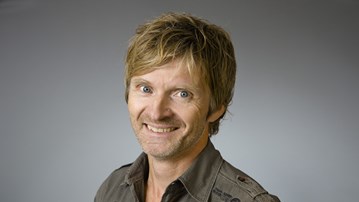
Fredrik Gunnarsson is an Adjunct Professor at Linköping University's Department of Electrical Engineering (ISY), specializing in Automatic Control (RT). His research focuses on control systems, signal processing, and sensor fusion, with applications in positioning, navigation, and optimization for autonomous systems. University: Linköping University Department: Department of Electrical Engineering (ISY) Academic Rank: Adjunct Professor Research Interests Fredrik's work spans advanced signal processing, sensor fusion, and control algorithms. He contributes to 5G positioning, Gaussian process state-space models, and indoor localization. His research intersects with optimization-based control for autonomous systems and machine learning techniques in dynamic environments. Article Trends His recent publications emphasize wireless positioning, statistical filtering, and sensor fusion methodologies. Topics include Kalman filtering, Gaussian process modeling, particle methods for indoor navigation, and optimization algorithms for control systems. Keywords span Control Systems , Signal Processing , Machine Learning , and Wireless Communication . Labs and Collaborations LINK-SIC - Linköping Center for Sensor Informatics and Control Automotive Systems research SEDDIT competence center
Marian Codreanu is a Senior Associate Professor at Linköping University's Department of Science and Technology (ITN), within the Communications and Transport Systems (KTS) division. He holds a M.Sc. from the University Politehnica of Bucharest (1998) and a Ph.D. from the University of Oulu, Finland (2007), where his thesis was recognized as the best in technical sciences. He has held roles including Marie Skłodowska-Curie Fellow (2019) and Academy of Finland Research Fellow (2013). His research focuses on information freshness optimization, sparse signal processing, and machine learning applications in wireless networking. Dr. Codreanu’s work spans wireless communications, statistical signal processing, and mathematical optimization. He co-founded the Nordic Workshop on System and Network Optimization for Wireless (SNOW) and served as IEEE Vice Chair (2011–2018). His contributions include over 100 journal/conference papers and co-authored books like Compressed Sensing with Applications in Wireless Networks (2019) and Weighted Sum-Rate Maximization in Wireless Networks (2012). His research group, Wireless Optimization and Analytics, develops models and algorithms for wireless network performance and data analytics. Key projects include B-PREPARED (disaster preparedness) and EAN (electric aircraft networks). His work integrates theoretical advancements with practical applications in smart cities, logistics, and air traffic management.
Anders Hellman is a Professor at the Department of Physics, Chalmers University of Technology, Sweden. He is also affiliated with the Competence Centre for Catalysis and serves as a senior strategic advisor to the Area of Advance (AoA) Energy at Chalmers. His research focuses on theoretical physics, surface science, heterogeneous catalysis, and materials for energy applications. He holds a PhD in theoretical physics from the University of Gothenburg (2003), followed by postdoctoral studies at Haldor Topsoe A/S, DTU Denmark, and Chalmers. His research interests include computational modeling of catalytic processes, energy materials design, and first-principles analysis of reaction mechanisms. Key areas of exploration involve chemical-looping combustion, catalyst screening for ethylene epoxidation, and the development of novel oxygen carriers for energy systems. He has contributed to advancements in understanding surface phenomena, nanoparticle behavior, and the interplay between material properties and catalytic performance. Dr. Hellman’s work bridges theory and experiment, with notable contributions to methane-to-methanol conversion, hydrogen evolution reactions, and photoelectrochemical systems for water splitting. His interdisciplinary approach integrates quantum chemistry, kinetic modeling, and materials discovery to address challenges in sustainable energy and catalytic innovation.
Associate Professor Daniel Jönsson works at the intersection of visualization and machine learning at Linköping University's Department of Science and Technology (ITN) and Media and Information Technology (MIT) division. He leads research in transforming complex datasets into intuitive visual representations, with applications in medical imaging and neuroscience. As a core developer of the Inviwo visualization software, he emphasizes interdisciplinary collaboration across fields like AI and radiology. His work includes developing tools like VisualNeuro for brain cohort studies and exploring neural network interpretability. Research focuses on visualization techniques for high-dimensional data, including fMRI analysis and neural network exploration. Notable achievements include an honorable mention at the IEEE VIS conference (2016) for brain imaging visualization work. Collaborations with CMIV (Center for Medical Image Science and Visualization) highlight his commitment to clinical and medical research applications. Publications emphasize combining visualization with machine learning, addressing challenges in data readiness for AI projects and improving neural network analysis. His contributions span software development, algorithm design, and cross-disciplinary methodological advancements in data-driven decision-making.
Per Andersson is a Senior Lecturer at the Department of Computer Science, Lund University. He serves as Director of first and second cycle studies and holds additional roles at ELLIIT (Linköping-Lund initiative on IT and mobile communication) and the Parallel Systems group. His research focuses on embedded systems, code generation, optimization, and reconfigurable hardware design. He contributes to UN Sustainable Development Goals through technology advancements. Professional roles include leadership in academic program administration and participation in major initiatives like the EASE project (Embedded Applications Software Engineering, 2008-2018). His work bridges computer science and education policy, particularly in recognition of prior learning (RPL) and higher education accreditation processes. Research interests span technical domains such as parallel architectures, reconfigurable systems, and medical informatics, alongside educational topics like lifelong learning systems. His 20+ publications reflect interdisciplinary engagement, with notable contributions in IEEE conferences and journals like Haematologica and International Journal of Lifelong Education. He collaborates extensively with industry and academia, evidenced by participation in projects involving software engineering, radio standard integration, and clinical trial analyses. His work emphasizes practical applications of theoretical advancements in both technical and educational fields.
Ming Zhao is a Lecturer at the University of Gävle's Academy of Technology and Environment, teaching industrial economics, statistics, reliability engineering, and logistics simulation. Research focuses on reliability modeling, statistical methods, and quality management, with applications in software, manufacturing, and sensor networks. Key interests include masked data analysis for reliability estimation, copula-based modeling of dependent failures, and Bayesian methods for system reliability. Publications emphasize practical frameworks for software reliability and manufacturing system performance. Article trends show consistent innovation in reliability estimation techniques, particularly for systems with incomplete data. Recent work integrates statistical methods with industrial applications like reconfigurable manufacturing and wireless sensor networks. No awards, supervised students, or lab details are documented.
Ingemar André is a Professor at Lund University in the Department of Biochemistry and Structural Biology, affiliated with the eSSENCE: The e-Science Collaboration. His research integrates computational and experimental methods to study protein structure, evolution, and self-assembly. Key areas include AI-driven protein structure prediction, high-throughput protein stability analysis, and synthetic biology applications. Education: No specific academic degrees listed in the provided text. Research Interests: Dr. André’s work focuses on understanding protein interactions, evolution, and self-assembly pathways through computational modeling and experimental techniques. He develops AI-based tools for protein design and simulates evolutionary processes to predict structural changes. His experimental work includes high-throughput methods for characterizing protein biophysical properties in vivo. Recent Projects: Optimizing codon sequences for recombinant protein production (2023–2026, Novo Nordisk Foundation). Massively parallel protein stability measurements for evolutionary studies (2023–2027, Swedish Research Council). Awards: Sven and Ebba-Christina Hagberg Prize (2015). The Svedberg Prize (2015). Advising & Grants: Leads multiple research initiatives, including Synbio@Lund, a synthetic biology theme at the Pufendorf Institute for Advanced Studies. His grants focus on protein engineering and computational methods. Labs/Teams: Collaborates with interdisciplinary groups in synthetic biology and e-Science, emphasizing sustainable applications of bioengineering.
Sindri Magnússon is an Associate Professor and Senior Lecturer at Stockholm University's Department of Computer and Systems Sciences (DSV), part of the Data Science Research Group. He holds a B.Sc. in Mathematics from the University of Iceland (2011), a Master’s in Applied Mathematics (Optimization and Systems Theory) from KTH Royal Institute of Technology (2013), and a Ph.D. in Electrical Engineering from KTH (2017). He completed a postdoctoral fellowship at Harvard University (2018–2019) and was a visiting PhD student there in 2015–2016. His research focuses on distributed optimization, decision-making, and machine learning in cyber-physical systems and IoT. Key projects include AI-driven equitable decision-making, smart converter control for renewable energy systems, federated reinforcement learning, and sustainable data-driven algorithms. His work bridges core data science with applications in critical infrastructures, energy systems, and societal challenges. Recent articles explore multi-objective optimization for satellite scheduling, federated learning for privacy-preserving AI, and reinforcement learning in non-stationary environments. His contributions span theory and practice, addressing scalability, sustainability, and ethical AI. He is actively involved in the Data Science Research Group, which develops algorithmic methods for decision-making in smart cities and energy systems. No awards or grants are explicitly listed, but his projects suggest significant research funding and collaboration.
Erik Elmroth is a Professor at the Department of Computing Science, Umeå University. He leads research in distributed systems, cloud/edge computing, and autonomous resource management, directing a 30+ member research group. His leadership includes transformative roles as department head (2009-2021) and Deputy Director at High Performance Computing Center North (HPC2N). Elmroth serves on executive committees for the SEK 6.2B Wallenberg AI program (WASP) and SEK 390M eSSENCE initiative, and leads multiple Kempe Foundation projects. Research interests center on: Autonomous control of cloud/edge infrastructures Software-defined systems and federated clouds AI-driven resource optimization High-performance computing architectures Robust machine learning for distributed environments His publications emphasize adaptive cloud systems, anomaly detection, and federated learning, with consistent focus on scalability and resilience in edge/cloud deployments. Awards and honors: Member of Royal Swedish Academy of Engineering Sciences (IVA) Nordea Scientific Prize (2011) SIAM Linear Algebra Prize (2000) National HPC Lecturer appointment He has supervised 40+ PhD students and secured major grants including the Swedish Research Council's second-largest award for the Cloud Control project. Elmroth founded the Control Workshops series and co-founded Elastisys AB, a cloud security firm with 50+ employees recognized as Umeå's Spin-off Company of the Year.
Jonas Skeppstedt is a Senior Lecturer in the Department of Parallel Systems at Lund University's Faculty of Engineering. His research focuses on Computer Science and Parallel Processing. Institution: Lund University School: Faculty of Engineering Department: Parallel Systems Research Interests span multiple domains in computer science: Heuristics for optimizing computational processes Parallel Processing architectures and implementation Compiler design and optimization techniques Dataflow programming models Publications reflect his expertise in code optimization and parallel systems. Contact: jonas.skeppstedt@cs.lth.se
Amos H. C. Ng is a Professor at the School of Engineering Science, University of Skövde, specializing in simulation-based optimization and Industry 4.0 technologies. His research bridges production engineering with human-robot collaboration, ergonomics evaluation, and cloud-based cyber-physical systems for manufacturing efficiency. Key Affiliations: University of Skövde (School of Engineering Science), Uppsala University (Industrial Engineering and Management) Research Themes: Multi-objective optimization, Digital Twin frameworks, Human-centric production systems, Reconfigurable manufacturing, Throughput bottleneck analysis Projects: ACCURATE 4.0 (Knowledge Foundation), VF-KDO (Virtual Factories with Knowledge-Driven Optimization), EWASS (Wire Harness Assembly Optimization) His recent publications demonstrate expertise in applying evolutionary algorithms, machine learning models, and digital human modeling tools to solve complex manufacturing problems ranging from crankshaft machining to wood supply chain robustness. Current work integrates motion capture technology with DHM tools for objective ergonomic assessments in assembly stations. Amos collaborates extensively with industrial partners like Volvo Penta and academic institutions, utilizing simulation-based approaches to enhance decision-making in production systems. His methodological focus includes non-dominated sorting genetic algorithms, surrogate modeling, and parallel computing architectures for optimization tasks.
Anders Västberg is a Lecturer at KTH Royal Institute of Technology within the Department of Communication Systems. His work spans teaching and examination roles across various courses in computer science, electrical engineering, and information and communication technology (ICT) innovation, including Wireless Communication Systems , Mobile Networks , and Programming of Parallel Systems . Teaches courses like Internet of Things and Introduction to Computer Security . Examiner for advanced-level degree projects in embedded systems and communication systems. Focuses on wireless networking, heterogeneous networks, and energy-efficient network design. His research interests include energy efficiency in telecommunications , green radio systems , and network optimization . Recent work explores power consumption in backhaul systems , heterogeneous network deployment , and signal propagation in ionospheric channels . Articles highlight trends in green networking , starting with 2016 studies on cell DTX and heterogeneous networks , followed by 2013 work on backhaul optimization and wideband efficiency . Earlier papers (1997–2008) focus on ionospheric signal distortion and HF channel analysis .
Mattias Sandberg is an Associate Professor at the Royal Institute of Technology (KTH) , Sweden, within the School of Engineering Sciences and the Division of Numerical Analysis, Optimization and Systems Theory . He is actively engaged in teaching and examining a broad spectrum of courses in numerical methods, differential equations, and computational mathematics. His research and teaching interests span numerical analysis , partial differential equations , stochastic differential equations , and parallel computing . He is responsible for several core and advanced courses, including Analytical and Numerical Methods for Differential Equations , Computational Methods for Stochastic Differential Equations and Machine Learning , and Numerical Methods for Partial Differential Equations . These courses reflect his deep involvement in both theoretical and applied aspects of computational mathematics. Sandberg also serves as examiner for multiple degree projects and advanced courses, underscoring his role in mentoring and evaluating students at the master's level. His affiliation with KTH and his extensive teaching responsibilities indicate a strong commitment to education and research in applied and computational mathematics.
Håkan Grahn is a Professor of Computer Engineering at the Department of Computer Science, School of Computing, Blekinge Institute of Technology (BTH) in Sweden. He has been a faculty member since 1996, becoming a full professor in 2007. His academic leadership includes serving as Head of Department (1999-2002) and Dean of Research (2011-2013) at BTH. He leads multiple significant research projects including GPAI (General Purpose AI Computing) and Green Clouds, with funding from ELLIIT, the Knowledge Foundation, and Vinnova. His educational background includes: M.Sc. in Computer Science and Engineering (1990) from Lund University Ph.D. in Computer Engineering (1995) from Lund University Håkan's research spans several interconnected domains in computer science and engineering, with a strong emphasis on practical applications. His work in computer architecture focuses on optimizing system performance through innovative cache coherence protocols and memory management techniques. In the realm of parallel computing , he investigates multicore systems, GPU computing, and thread-level speculation to enhance computational efficiency. His research in AI and machine learning addresses energy efficiency, data stream mining, and practical applications in areas like district heating systems and airborne networks. The integration of image processing with machine learning forms another significant strand of his work, particularly in historical document analysis and medical imaging applications. These research areas converge in his leadership of major initiatives like BigData@BTH and GPAI, where he bridges theoretical advances with real-world implementation challenges. Analysis of Håkan's recent publications reveals a clear trajectory toward increasingly applied research with strong industry connections. While maintaining foundational work in computer architecture, his output increasingly focuses on practical AI applications, energy efficiency in computing, and domain-specific implementations in sectors like telecommunications, energy systems, and defense. The interdisciplinary nature of his work is evident in collaborations spanning computer science, engineering, and domain-specific applications, with a growing emphasis on sustainability and resource optimization in computing systems. Håkan has successfully supervised numerous doctoral students, with ten graduates and six current Ph.D. candidates. His research has been supported by substantial funding from: The Knowledge Foundation (BigData@BTH, HINTS, Green Clouds) ELLIIT (GPAI project) Vinnova (FANET-MCA, Directed COM & EW) Industry partners including Ericsson, Saab, Telenor, and Fortnox He is actively involved in multiple research groups including DISL (Distributed and Intelligent Systems Lab), CCS-Lab (Communication and Computer Systems Research Lab), and previously PAARTS (Parallel Architectures and Applications for Real-Time Systems). His leadership extends to organizing academic events like the Nordic workshop on Multi-Core Computing and the Swedish Artificial Intelligence Society workshop.