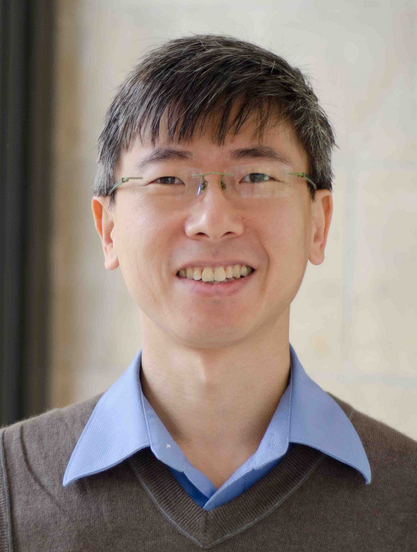
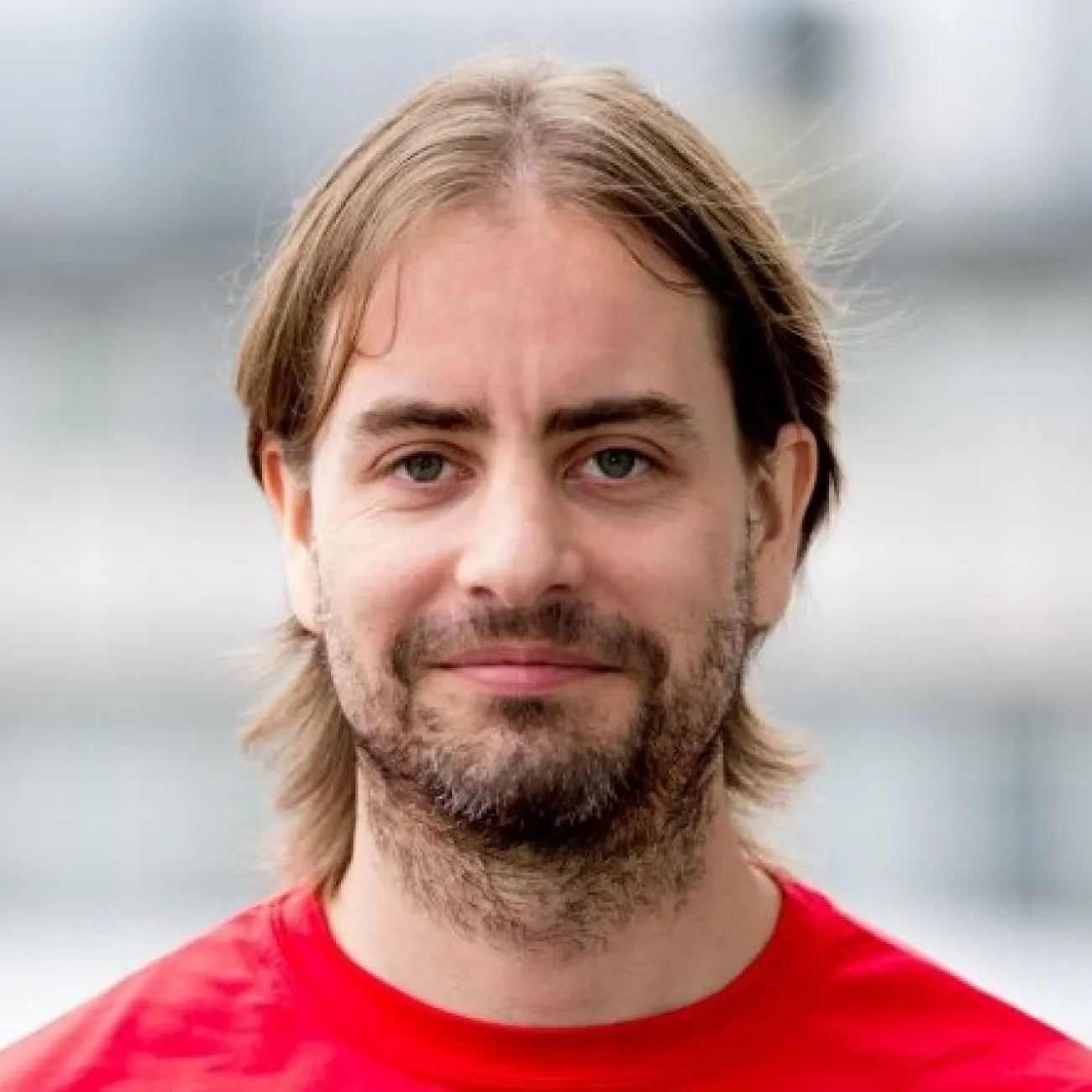
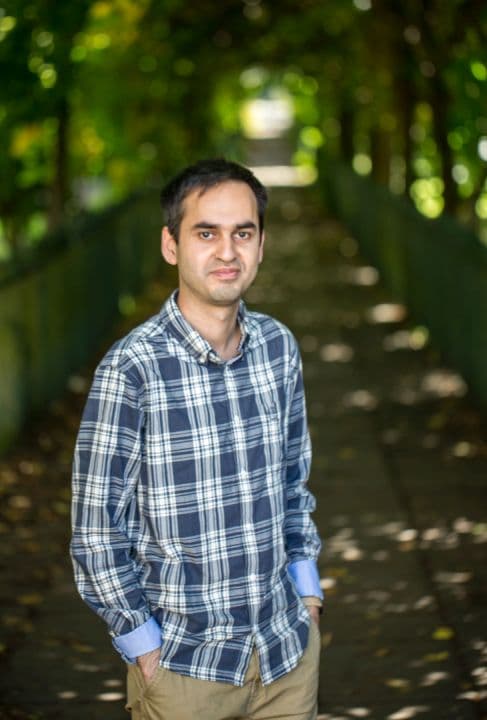
Yee Whye Teh is a Professor at the Department of Statistics, University of Oxford, and a research scientist at DeepMind. His work focuses on statistical machine learning, including probabilistic learning, Bayesian nonparametrics, deep learning, and Monte Carlo methods. He co-directs the ELLIS programme on Robust Machine Learning and has held roles such as Programme Co-chair for ICML 2017. Teh has delivered keynotes at UAI 2019, an IMS Medallion Lecture at JSM 2019, and the Breiman Lecture in 2017. His research emphasizes scalable inference algorithms, hierarchical models, and applications in genetics and natural language processing. Teh's educational background includes a PhD from the University of Toronto (2003) and a Master's from the same institution (2000). He has contributed to widely used software tools like the Sequence Memoizer and has been recognized for his work through prestigious lectureships. Research interests span Bayesian nonparametric models, MCMC methods, and their applications in genetics and data compression. His lab collaborates on projects like fragmentation-coagulation processes for genetic variation modeling and Mondrian forests for online learning. Teh advises students through Oxford's graduate programs, though he notes high demand for mentorship. His work often bridges theory and practice, addressing challenges in big data learning and small data problems.
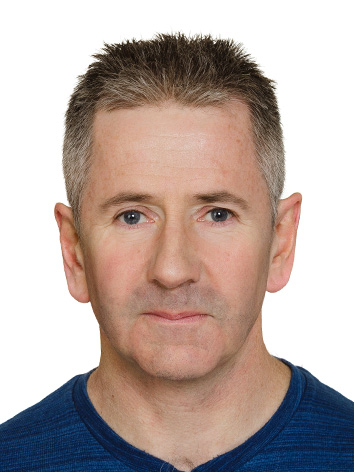
Michael O'Boyle is a Professor at the University of Edinburgh's School of Informatics, where he serves as Director of the ARM Research Centre of Excellence and the EPSRC Centre for Doctoral Training in Pervasive Parallelism. Holding an EPSRC Established Career Research Fellowship, he leads pioneering work in compiler technology for heterogeneous architectures, bridging theoretical advances with practical high-performance computing applications. Professor O'Boyle's research spans multiple cutting-edge areas including heterogeneous code discovery and optimization, neural machine translation for program synthesis, deep neural network system stack optimization, software-defined hardware, and compiler/architecture co-design. His approach integrates constraint analysis, program synthesis, and machine learning to address complex challenges in high-performance computing across diverse hardware platforms. His recent publications reveal a strong trend toward integrating machine learning with traditional compiler techniques, particularly in neural program synthesis, tensor optimization, and architecture-aware compilation. This work represents a paradigm shift in compiler design, moving from rule-based systems to learning-based approaches that can automatically adapt to diverse hardware targets. IEEE/ACM CGO 2025 Distinguished Paper Award for 'Tensorize: Fast Synthesis of Tensor Programs from Legacy Code' IEEE/ACM CGO 2024 Test of Time Award ACM GPCE 2023 Best Paper Award for 'C2TACO: Lifting Tensor Code to TACOM' ACM ASPLOS 2021 Distinguished Paper Award IEEE HPCA 2021 Best Paper Award for 'Prodigy: Improving the Memory Latency of Data-Indirect Irregular Workloads' Professor O'Boyle has successfully mentored numerous PhD students who have secured prominent positions in academia (including at Cambridge, Edinburgh, Leeds, and McGill) and industry (including Meta, NVIDIA, Qualcomm, Huawei, and Microsoft). His research is supported by significant funding from EPSRC, ARM, and European projects including Bonseyes and Transmuter, demonstrating strong international recognition and industry impact. He leads the influential Compiler and Architecture Design (CArD) Group at the University of Edinburgh and is a founder of the HiPEAC Network of Excellence, which has grown into a major European initiative connecting researchers and practitioners in high-performance and embedded computing.
Hrvoje Jasak is a Professor of Continuum Physics at the Department of Physics (Cavendish Laboratory), University of Cambridge. He holds a fellowship at Christ’s College. His academic journey includes a BSc in Mechanical Engineering from the University of Zagreb (1992) and a PhD in CFD from Imperial College London (1996). Prior to academia, he held engineering roles at CD-adapco (now Siemens PLM), Nabla Ltd, and Ansys-Fluent Inc., contributing to CFD software development. His research focuses on numerical simulation methods, continuum physics, multiphase flows, naval hydrodynamics, and software development. He co-created OpenFOAM, chairs its Numerics Technical Committee, and leads the Computational Continuum Mechanics (CCM) research group within the Laboratory for Scientific Computing. His work integrates advanced numerical techniques like the partially rotating grid method, finite volume algorithms, and multiphysics coupling frameworks. Jasak is a seasoned developer with 25+ years of C++ expertise, having authored ~1 million lines of code. His group’s projects include the Naval Hydro Pack , fluid-structure interaction solvers, and the Eulerian multi-fluid model for dense sprays. He actively collaborates on international initiatives like the NUMAP-FOAM Summer School and the OpenFOAM community. His teaching spans MPhil programs, PhD supervision, and specialized CFD courses. Current research explores wave-ice interaction, lubricated contact modeling, and open-source software innovation. The CCM group’s work bridges academia and industry, addressing challenges in marine engineering, energy systems, and computational mechanics.
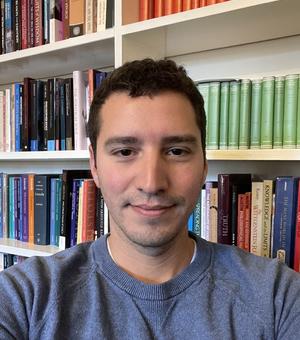
Mike Giles is a Professor of Numerical Analysis at the University of Oxford's Mathematical Institute and serves as Head of the Numerical Analysis Group. He is also a Professorial Fellow at Balliol College and a Fellow of the Royal Society (FRS). His academic career spans computational mathematics, scientific computing, and computational finance. Professor Giles' research primarily focuses on Monte Carlo methods, with particular emphasis on the development and numerical analysis of multilevel Monte Carlo methods over the past 15 years. His work has significant applications in computational finance, uncertainty quantification, and solving stochastic differential equations. He has also made substantial contributions to high-performance computing, especially in the exploitation of many-core GPUs for scientific computing applications. His research bridges theoretical numerical analysis with practical computational implementations. Analysis of his publication record reveals a consistent trajectory of innovation in Monte Carlo methodology, evolving from foundational work on path simulation to sophisticated multilevel techniques that dramatically improve computational efficiency. His research spans multiple disciplines including numerical analysis, computational finance, and high-performance computing, with a clear focus on developing practical algorithms that address real-world computational challenges in science and finance. Fellow of the Royal Society (FRS) Professor Giles actively teaches courses in numerical methods for the MSc in Mathematical and Computational Finance and is a leading educator in GPU programming, organizing an annual intensive course on CUDA Programming on NVIDIA GPUs. He has been instrumental in establishing JADE, Oxford's GPU supercomputer facility, which supports research in machine learning and scientific computing. His leadership extends to the Numerical Analysis Group at Oxford and the Mathematical and Computational Finance Group, where he fosters interdisciplinary research connecting mathematics, finance, and computer science. Through his educational initiatives and research leadership, Giles has significantly influenced both academic research and practical applications of advanced computational methods.
Professor Wayne Luk is a Professor of Computer Engineering at the Department of Computing, Faculty of Engineering, Imperial College London. He leads the Programming Languages and Systems Section and the Custom Computing Research Group, and directs the EPSRC Centre for Doctoral Training in High-performance Embedded and Distributed Systems and the Centre for Advanced Financial Engineering. He previously served as a Visiting Professor at Stanford University from 2006 to 2009. His research spans FPGA acceleration, quantum computing, deep learning optimization, and algorithm-hardware co-design, with affiliations to the CRUK Convergence Science Centre and the Engineering Secure Software Systems group. His research interests include computational modeling for particle physics, causal discovery in agent-based systems, and high-throughput digital electronics. Notable contributions include FPGA-accelerated algorithms for neural networks, quantum circuit simulation, and Bayesian optimization frameworks. His work emphasizes practical applications of reconfigurable hardware in fields like medical imaging, high-energy physics, and financial systems. Professor Luk is a Fellow of the Royal Academy of Engineering, IEEE, and BCS. His publications focus on advancing hardware-aware machine learning, FPGA-based acceleration techniques, and scalable design methodologies. His research bridges theoretical computer science with applied engineering, addressing challenges in real-time systems, embedded computing, and next-generation computing architectures. His academic leadership includes directing interdisciplinary centers and training programs, fostering collaboration across computing, engineering, and physics. Current projects explore quantum computing tools, causal inference systems, and high-performance graph neural networks for particle physics applications.
Dr. Simon A. Morrison is a Senior Lecturer in the Division of Communication, Screen & Performance within the Faculty of Arts, Humanities and Social Sciences at the University of Chester. He serves as Programme Leader for the Music Journalism degree, which he helped design, build and deliver from its first cohort in 2014. With 25 years of experience as a writer, broadcaster, and academic, Morrison brings extensive industry knowledge to his teaching and research, having worked as a music journalist reporting from locations worldwide including Beijing, Brazil, Moscow, and Marrakech. Dr. Morrison holds a PhD from the University of Leeds (completed 2018), an MA from the University of Manchester (1995-1997), and a BA Hons from the University of Manchester (1989-1992). Prior to his position at Chester, he worked as an Associate Lecturer at Manchester Metropolitan University (2012-2014) and as a Visiting Lecturer at Leeds University (2011-2013). His academic journey follows a substantial career in media where he presented TV for Rapture TV, hosted radio shows in Ibiza, produced and presented for Kiss Radio, and appeared on BBC Breakfast and BBC 5 Live. Dr. Morrison's research centers on the intersection of words and music , with particular focus on Popular Music , Musico-Literary Intermediality , and Electronic Dance Music Culture . His work explores how music subcultures, particularly rave and dance music scenes, are represented in literature and journalism. He examines the connections between different countercultural movements, notably drawing parallels between the Beat Generation writers and contemporary 'Chemical Generation' authors who write about club culture. His research also investigates the relationship between music journalism and subcultural movements across different historical periods. His recent publications reveal a clear trajectory connecting historical dance music developments across continents and eras. Morrison's work traces the evolution of electronic dance music from its American roots in Chicago and Detroit through its transatlantic journey to Europe and back again, examining how cultural exchange shaped musical innovation. His analyses of Pink Floyd demonstrate how rock bands interact with media landscapes, while his investigations of music journalism document the changing nature of music criticism in digital eras. The recurring theme across his scholarship is the examination of how subcultural experiences are translated into written form, whether through journalism, fiction, or academic analysis. Dr. Morrison actively supervises undergraduate dissertation projects and Negotiated Study production projects across all three years of undergraduate study. He has successfully supervised an MRes project to completion and examined PhDs (including one internal and two external, one being an Australian PhD by Artefact & Exegesis). He has served as an External Examiner for Music Journalism programs at Southampton Solent University (2016-2019) and BIMM London, Birmingham and Manchester (2016-2020). His teaching spans modules including Introduction to Journalism, Live Journalism, Dancing About Architecture: Popular Music Media, Histories and Technologies, The Cultural Politics of Music Journalism, The Politics of Social Media, Magazine Publishing and Music PR and Promotional Writing.
Rosa Andujar is a Senior Lecturer in Liberal Arts at King's College London, where she is affiliated with both the Department of Liberal Arts and the Department of Classics within the Faculty of Arts & Humanities. She serves as Editor of the American Journal of Philology and holds positions on the editorial boards of Brazilian journals Nuntius Antiquus and PhaoS - Revista de Estudos Clássicos. Dr. Andujar was elected to the Program Committee of the Society for Classical Studies for a three-year term (2022-2025), serving as Vice President for Program and Chair from 2023-2025. Her research focuses on two complementary areas: Ancient Greek tragedy, particularly the tragic chorus and its performance capabilities Global receptions of Greek drama, with special emphasis on Latin America and the Caribbean Dr. Andujar's work examines how engagements with Graeco-Roman antiquity intersect with questions of gender, race, class, and national identity. She has particular expertise in Cuban adaptations of Greek tragedy and Latinx receptions of classical drama, exploring how these cultural encounters create new narratives that challenge traditional understandings of classical reception. Her research has been recognized with prestigious awards including the 2020 London Hellenic Prize for 'The Greek Trilogy of Luis Alfaro' and the 2022 AJP Best Article Prize. She has secured significant research funding from the Loeb Classical Library Foundation, British Academy, A. G. Leventis Foundation, Harvard Center for Hellenic Studies, Andrew W. Mellon Foundation, and Fundación BBVA. Dr. Andujar's current research projects include 'The Cambridge Companion to Classics and Race' (edited volume), 'La Puerta Electra/The Electra Door' (critical bilingual anthology of Cuban rewritings), and 'Tragedy and Revolución' (monograph on Greek drama in Caribbean cultural history), supported by recent fellowships from the Loeb Classical Library Foundation and British Academy. She is actively involved in academic service as Editor of the American Journal of Philology, co-editor of the 'Classics and the Postcolonial' book series for Routledge, and Advisory Board member of 'Hesperides: Classics in the Luso-Hispanic World.' Her external examining work for the University of Birmingham (2018-2023) demonstrates her commitment to academic standards across institutions.
Andrew Rice is a Professor of Computer Science at the University of Cambridge's Department of Computer Science and Technology, and holds the Hassabis Fellowship in Computer Science. He is also the Director of Studies in Computer Science at Queens' College. His research focuses on programming languages, software engineering, and machine learning applications in software development. He leads projects like Isaac Computer Science and ALTA (Automated Language Teaching and Assessment), advancing adaptive learning technologies. His work includes static analysis tools such as Error Prone at Google, energy efficiency studies in computing infrastructure, and contributions to the Computing for the Future of the Planet initiative. His teaching emphasizes practical skill development through flipped classrooms and video lectures, earning him the 2014 Pilkington Prize for teaching excellence. He has held visiting roles at Google and collaborated on energy consumption research for mobile devices and data centers. His research spans systems, networking, and natural language processing, with a strong focus on applying computational methods to real-world challenges. Key Projects: Isaac Physics/Computer Science, ALTA, Error Prone Static Analysis Research Themes: Programming Languages, Machine Learning, Energy Efficiency Awards: Pilkington Prize (2014)
Professor Paul Goulart is a full Professor of Engineering Science at the University of Oxford and Tutorial Fellow at St Edmund Hall, positions he has held since 2014. He leads research and teaching in robust optimization, control systems, and high-speed numerical methods, with applications spanning fluid flows, traffic networks, and economics. Education SB & MSc, Aeronautics and Astronautics – Massachusetts Institute of Technology (MIT) PhD, Control Engineering – University of Cambridge (Gates Scholar, 2007) Research Interests Professor Goulart’s work lies at the intersection of control engineering and optimization . His core expertise includes: Robust and high-speed convex optimization Model predictive control (MPC) and control barrier functions Neural-network-based control and system identification Optimization over traffic and economic networks Real-time and embedded optimization solvers These interests are reflected in prolific publication output and active supervision of doctoral researchers. Publications & Trends From 2020 to 2025 Professor Goulart has co-authored more than thirty papers. A dominant theme is the development of fast, reliable algorithms for conic optimization and robust control , often leveraging machine-learning techniques to enhance scalability and real-time performance. Recent works emphasize safety certificates, GPU-accelerated solvers, and neural-network controllers for uncertain systems. Awards & Honors Gates Cambridge Scholar (2003) Advising & Grants Professor Goulart actively seeks DPhil students in control engineering and optimization . He leads the Control Group within the Department of Engineering Science and has been involved in multiple industrially funded projects, although specific grant identifiers are not provided in the supplied text. Laboratory & Teams He is a member of the Control Group , Department of Engineering Science, University of Oxford, and serves as Secretary to the Governing Body of St Edmund Hall (Michaelmas Term 2024).
Simon Shogry is an Associate Professor in the Faculty of Philosophy at the University of Oxford and a Tutorial Fellow at Brasenose College. He specializes in Ancient Philosophy, with a focus on Stoicism, Hellenistic ethics, and epistemology. His research explores topics such as Stoic moral psychology, the rationality of perception, and the interplay between logic and ethics in ancient thought. Shogry earned his Ph.D. from Princeton University’s Program in Classical Philosophy and holds a B.A. from Claremont McKenna College. Before joining Oxford, he held postdoctoral and lecturing positions at Princeton University, the University of Pennsylvania, and the College of New Jersey. His research interests include Stoic and Epicurean ethics, ancient logic, and moral psychology. He has published extensively on figures like Seneca, Epictetus, and Chrysippus, with a recent monograph Stoic Eros (CUP, 2024). His work bridges ancient philosophical debates with contemporary epistemology and ethics, emphasizing the relevance of Hellenistic thought to modern discussions. Shogry teaches undergraduate courses on ancient philosophy and ethics at Oxford. His scholarship is accessible via his personal webpage, Google Scholar, and PhilPeople profiles.
Professor David Thomas holds the position of Professor in Computer Engineering at the University of Southampton's Electronics and Computer Science Department. His research focuses on the intersection of software and hardware, particularly leveraging FPGAs for novel digital architectures and event-driven computing. He has a notable academic trajectory, having previously served as a Lecturer and Senior Lecturer at Imperial College London before joining Southampton in 2021. Dr. Thomas is actively involved in supervising PhD students and contributes to interdisciplinary research projects funded by the EPSRC, such as the SONNETS initiative exploring scalable event-triggered systems. Education: BSc in Computer Science (Imperial College London), PhD in Digital Architectures (Imperial College London). Postdoctoral roles included Research Associate and Research Fellow at Imperial's Department of Computing. Research Interests: Event-driven computing, FPGA-based systems, high-level synthesis, and high-performance computing. His work emphasizes practical implementations of theoretical models, such as custom processors and application-specific accelerators. Current projects include optimizing random number generation for FPGAs and exploring meta-programming techniques for hardware design. Advising and Grants: Supervises multiple PhD students in areas like neuromorphic computing and algorithm optimization. Active in securing funding for distributed system architectures and FPGA-based solutions. Labs/Teams: Member of the Cyber Physical Systems research group. Collaborates with interdisciplinary teams on projects like POETS (Partially Ordered Event-Triggered Systems) for large-scale parallel computing.
Prof. David Ham is a Professor of Computational Mathematics at the Department of Mathematics, Faculty of Natural Sciences, Imperial College London. His research focuses on high-level abstractions for scientific computation, particularly in geophysical fluids and numerical software. He leads the Firedrake project and co-developed the dolfin-adjoint framework, which received the 2015 Wilkinson Prize for Numerical Software. Ham holds a BSc (Mathematics) and LLB from The Australian National University, and a PhD from TU Delft. His career includes roles as a NERC Independent Research Fellow and Grantham Research Fellow at Imperial College. He is affiliated with the Grantham Institute, Mathematics of Planet Earth, and Software Performance Optimisation groups. His research spans computational science, including finite element methods, adjoint-based inversion, and parallel computing. Recent work emphasizes differentiable programming integration with machine learning and geophysical modeling. Ham has contributed to numerous grants and projects, including EPSRC and NERC-funded initiatives. He leads development of software tools like Firedrake and Thetis, advancing computational methods for oceanography and geodynamics.
Dr. Danial Chitnis is a Chancellor's Fellow and Lecturer in Electronics at the School of Engineering, University of Edinburgh. He holds a DPhil in Engineering Science from the University of Oxford (2013) and has expertise in microelectronics, biomedical engineering, and quantum imaging. His research focuses on SPAD arrays, time-of-flight sensors, and wearable optical systems for biomedical applications. Education: BSc in Electronics Engineering, Chamran University of Ahvaz (2002–2007) MSc in Advanced Microelectronics Systems Engineering, University of Bristol (2007–2008) DPhil in Engineering Science, University of Oxford (2009–2013) Research Interests: Single-Photon Avalanche Diode (SPAD) arrays for optical communications and biomedical imaging Quantum-enhanced imaging via QuantIC Hub Wearable sensors for near-infrared spectroscopy (NIRS) AI-driven automation in test and measurement systems Articles Trends: Recent work emphasizes AI integration in electronics design, photon-counting receivers for 6G networks, and portable biomedical devices. Notable contributions include SYCL-based acceleration of circuit simulations and FPGA-driven time-to-digital converters. Grants & Collaborations: Principal Investigator of multiple grants, including EPSRC-funded projects on AI-enhanced human-machine interfaces and quantum technology applications. Collaborates with UCL, QuantIC, and industry partners like Keysight Technologies. Labs/Teams: Co-investigator at QuantIC, the UK Quantum Technology Hub in Quantum Enhanced Imaging. Leads interdisciplinary research on detector arrays and systems for quantum physics and consumer cameras.
Dr. Salwa El-Awa is a Senior Lecturer in Arabic and Islamic Studies at Swansea University's School of Culture and Communication. She previously held positions at the University of Birmingham (2001-2010) and Ain Shams University in Cairo (2010-2015). Her academic roles include teaching Arabic linguistics, Qur’anic studies, and Hadith analysis, alongside supervising PhD students in translation and religious studies. Her research focuses on Qur’anic textuality, discourse markers, and Islamic movements. Key areas include textual coherence in the Qur’an, Arabic linguistic analysis, and the intersection of religion and counter-terrorism policy. Recent projects explore governance strategies engaging moderate Islamic groups to combat jihadism. El-Awa has published extensively on Qur’anic linguistics, including monographs like Textual Relations in the Qur'an (2005) and Al-Wujuh Wa al-Naza’ir (1998). Her work bridges religious studies, linguistics, and security studies, with notable contributions to Yale’s Dictionary of the Qur'an (2024) and interdisciplinary journals like International Journal of Law, Crime and Justice . She has secured £20,000 for the International Qur’anic Text Linguistics Conference (2020-2021) and served as an External Examiner for Westminster University’s Translation program (2019–2022). Her teaching includes advanced translation, healthcare interpreting, and world cinema studies.
Timothy Harris is an Affiliated Lecturer at the University of Cambridge's Department of Computer Science and Technology, where he jointly teaches courses on multicore semantics and programming. Currently, he works at OpenAI, focusing on performance optimization for GPU inference of large language models, including the Azure OpenAI Service. Previously, he held roles at Microsoft, AWS, Oracle Labs, and was a faculty member at the University of Cambridge (2000–2004). His research spans distributed systems, runtime systems, operating systems, and high-performance computing, with an emphasis on scalability and performance. He contributed to projects like the Xen hypervisor and the Barrelfish research OS. Key research interests include distributed training of PyTorch models in the ONNX runtime, large-scale storage performance with Amazon S3, and runtime systems for in-memory graph analytics. His work often bridges 'big data' and high-performance computing techniques. Notable contributions include the book Transactional Memory (2010) and the Barrelfish OS, alongside numerous publications in top-tier conferences like SOSP, ASPLOS, and EuroSys. He has served as PC chair for ISMM 2025, VEE 2017, and EuroSys 2015, reflecting his leadership in the systems research community. His awards include a Best Paper Award at PACT 2010. Beyond academia, Harris is an avid hiker, aiming to complete the UK coastline, and maintains a photography portfolio at tlhphotography.uk .