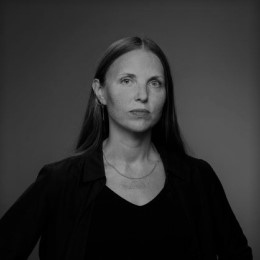
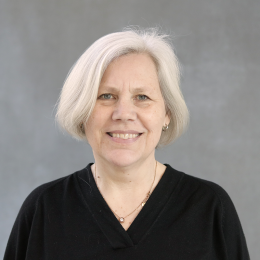
Katarina Winter is a Lecturer in Criminology at the Department of Criminology, Stockholm University. With a PhD in Sociology, her research focuses on knowledge production processes and expert-public dynamics, particularly in the context of digital crime prevention and drug policy. She is affiliated with the Victimological Research Group and contributes to interdisciplinary projects bridging sociology and choreography. PhD in Sociology (2019) from Stockholm University Lecturer in Criminology at Stockholm University Her research explores how digital technologies and biomedical frameworks shape public policy and citizen participation. Key projects include: Promises and consequences in security technology (2023-2025) Digital crime prevention in Swedish municipalities (2022-2023) Risks of injection drug use (2022-2024) Scientific state or state science? (2016-2021) Her publications analyze sociotechnical imaginaries in security apps, media framing of harm reduction, and conversational coproduction mechanisms. She serves as associate editor for Nordic Studies on Alcohol and Drugs and co-founded the Green Criminology working group at Stockholm University.
Richard James Glassey is a University lecturer at the Royal Institute of Technology (KTH) in Stockholm, Sweden, working in the Department of Theoretical Computer Science. His office is located at Lindstedtsvägen 5, Floor 5, and he can be contacted via phone at +46 8 790 69 91. His research interests include: Theoretical Computer Science Algorithms and Data Structures Programming Computer Science Education Parallel Programming Dr. Glassey teaches across the computer science curriculum from foundational to advanced levels, demonstrating expertise in both theoretical concepts and practical implementation. His teaching spans introductory programming, algorithms, data structures, and specialized topics in computer science education. He holds significant teaching responsibilities across multiple courses, often serving in dual roles as both teacher and course coordinator or examiner. This indicates leadership within the department's educational framework and deep involvement in curriculum development and assessment.
Anders Västberg is a Lecturer at KTH Royal Institute of Technology within the Department of Communication Systems. His work spans teaching and examination roles across various courses in computer science, electrical engineering, and information and communication technology (ICT) innovation, including Wireless Communication Systems , Mobile Networks , and Programming of Parallel Systems . Teaches courses like Internet of Things and Introduction to Computer Security . Examiner for advanced-level degree projects in embedded systems and communication systems. Focuses on wireless networking, heterogeneous networks, and energy-efficient network design. His research interests include energy efficiency in telecommunications , green radio systems , and network optimization . Recent work explores power consumption in backhaul systems , heterogeneous network deployment , and signal propagation in ionospheric channels . Articles highlight trends in green networking , starting with 2016 studies on cell DTX and heterogeneous networks , followed by 2013 work on backhaul optimization and wideband efficiency . Earlier papers (1997–2008) focus on ionospheric signal distortion and HF channel analysis .
Mingzheng Chen is a Post-Doctoral Researcher at KTH Royal Institute of Technology's Division of Electromagnetic Engineering and Fusion Science, specializing in advanced antenna systems and waveguide technologies for terahertz and millimeter-wave applications. His research program centers on three interconnected pillars: quasi-optical structures for beamforming, periodic electromagnetic structures (particularly glide-symmetric holey configurations), and additive manufacturing of metal RF components. This focus enables lightweight, low-cost solutions for satellite communications and next-generation wireless systems, with experimental validation forming a critical component of his methodology. Analysis of his 15 most recent publications reveals dominant themes in W-band and sub-THz antenna design (7 papers), additive manufacturing techniques (6 papers), and waveguide physics (5 papers), demonstrating consistent innovation in geodesic horn antennas and glide-symmetric structures across both journal and conference venues. Award recognition includes: 2023 Best Paper Award from National Science Review Best Paper Award at MTTW 2023 As an active educator, he serves as Teaching Assistant for Applied Antenna Theory (EI2400) while maintaining prolific output (50+ publications). His collaborative network spans European institutions, with particular emphasis on experimental validation of theoretical models. Current research leverages KTH's advanced manufacturing facilities for metal-only RF component development, targeting applications in geostationary satellite communications and 6G infrastructure.
Maria Öhrstedt serves as a Senior Lecturer and Director of Studies at Stockholm University's Department of Education and Didactics (IPD). She joined her current position in February 2023 with responsibility for education within the teacher education program. Her academic background includes a defended thesis in psychology from 2017 titled 'University students' learning: A learning strategy perspective on studies in psychology.' Her research focuses on educational psychology with particular emphasis on adult learning and higher education. She is especially interested in students' perspectives on learning and how learning strategies develop and vary with academic performance. She is currently involved in research projects examining how students with special needs perceive digital teaching and experiences of teaching during the Covid-19 pandemic, including international comparative studies with universities in Australia and USA. Her publication record reveals consistent research on learning approaches among university students, particularly psychology students. Her work examines how learning strategies relate to academic performance, stress levels, and students' ability to predict their own academic outcomes. Her research demonstrates that strategic approaches to learning correlate with better academic achievement, while surface approaches correlate with higher stress levels and poorer performance. Maria has significant teaching experience, having taught in various teacher education contexts including the Centre for University Teacher Education (CeUL), Continuing Education for Active Teachers (VAL), and Continuing Education for Foreign Teachers (ULV). She has taught courses on higher education pedagogy, didactics, and developmental psychology, with particular enjoyment of professional education for psychologists, sociologists, and human resources scientists. Senior Lecturer at Department of Education and Didactics, Stockholm University Director of Studies for teacher education program since February 2023 Member of Higher Education Pedagogy (HELP) research group Former assistant professor and senior lecturer in psychology at Stockholm University and Södertörn University
Håkan Grahn is a Professor of Computer Engineering at the Department of Computer Science, School of Computing, Blekinge Institute of Technology (BTH) in Sweden. He has been a faculty member since 1996, becoming a full professor in 2007. His academic leadership includes serving as Head of Department (1999-2002) and Dean of Research (2011-2013) at BTH. He leads multiple significant research projects including GPAI (General Purpose AI Computing) and Green Clouds, with funding from ELLIIT, the Knowledge Foundation, and Vinnova. His educational background includes: M.Sc. in Computer Science and Engineering (1990) from Lund University Ph.D. in Computer Engineering (1995) from Lund University Håkan's research spans several interconnected domains in computer science and engineering, with a strong emphasis on practical applications. His work in computer architecture focuses on optimizing system performance through innovative cache coherence protocols and memory management techniques. In the realm of parallel computing , he investigates multicore systems, GPU computing, and thread-level speculation to enhance computational efficiency. His research in AI and machine learning addresses energy efficiency, data stream mining, and practical applications in areas like district heating systems and airborne networks. The integration of image processing with machine learning forms another significant strand of his work, particularly in historical document analysis and medical imaging applications. These research areas converge in his leadership of major initiatives like BigData@BTH and GPAI, where he bridges theoretical advances with real-world implementation challenges. Analysis of Håkan's recent publications reveals a clear trajectory toward increasingly applied research with strong industry connections. While maintaining foundational work in computer architecture, his output increasingly focuses on practical AI applications, energy efficiency in computing, and domain-specific implementations in sectors like telecommunications, energy systems, and defense. The interdisciplinary nature of his work is evident in collaborations spanning computer science, engineering, and domain-specific applications, with a growing emphasis on sustainability and resource optimization in computing systems. Håkan has successfully supervised numerous doctoral students, with ten graduates and six current Ph.D. candidates. His research has been supported by substantial funding from: The Knowledge Foundation (BigData@BTH, HINTS, Green Clouds) ELLIIT (GPAI project) Vinnova (FANET-MCA, Directed COM & EW) Industry partners including Ericsson, Saab, Telenor, and Fortnox He is actively involved in multiple research groups including DISL (Distributed and Intelligent Systems Lab), CCS-Lab (Communication and Computer Systems Research Lab), and previously PAARTS (Parallel Architectures and Applications for Real-Time Systems). His leadership extends to organizing academic events like the Nordic workshop on Multi-Core Computing and the Swedish Artificial Intelligence Society workshop.