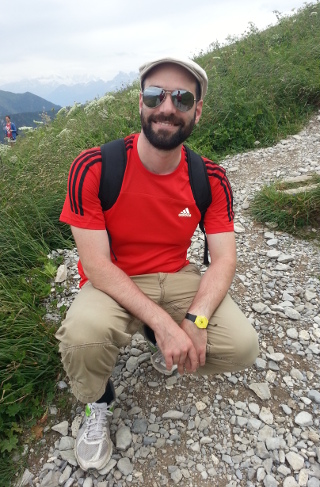
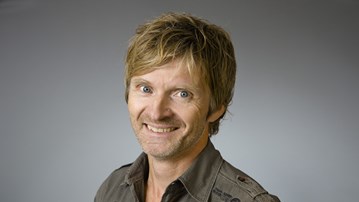
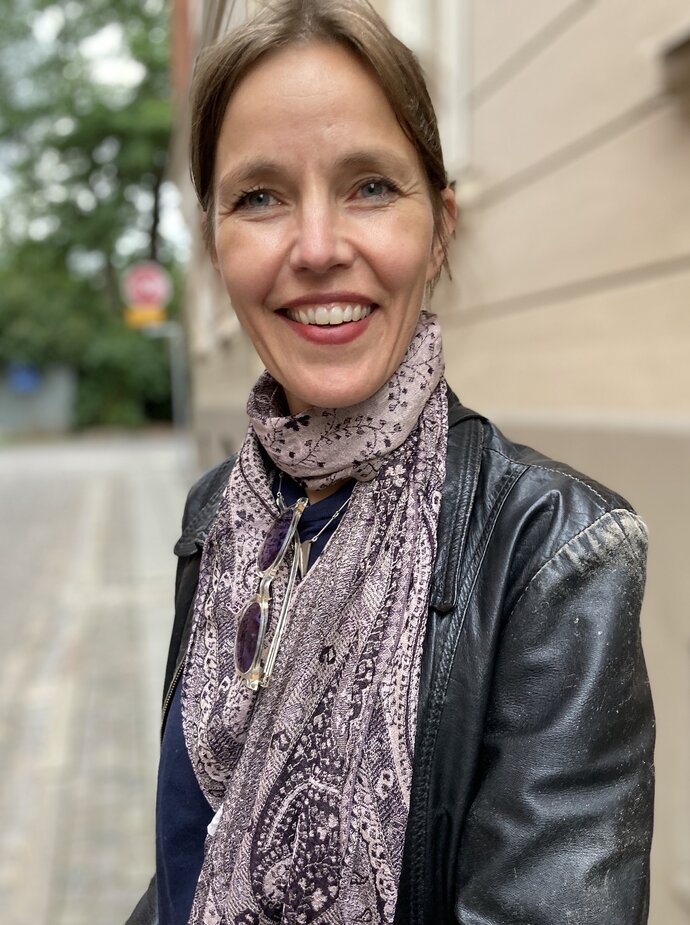
Jacob Lindbäck is a doctoral student at KTH Royal Institute of Technology , affiliated with the Division of Decision and Control Systems and the Wallenberg AI, Autonomous Systems and Software Program (WASP). His research focuses on the analysis and development of scalable optimization algorithms for machine learning, particularly computational optimal transport and its applications. Key research areas: Machine Learning Optimization Algorithms Optimal Transport Computational Mathematics Publications highlight advancements in GPU-accelerated splitting methods for optimal transport, novel algorithms, and computational efficiency. He also contributes as an assistant for the course Modelling of Dynamical Systems (EL2820) .
Terje Östigård is an Associate Professor at Linnaeus University's Faculty of Arts and Humanities, Department of Cultural Sciences. A specialist in interdisciplinary archaeology, his research spans 25 years of comparative studies across Asia and Africa, focusing on death rituals, water symbolism, and cold climate adaptations. Primary Research: Global archaeology, world heritage, and environmental history with emphasis on water's cultural/religious significance Geographic Focus: Scandinavia, Nepal, India, Bangladesh, Nile region (Egypt, Ethiopia, Tanzania, Uganda) Theoretical Framework: Indo-European rituals, agricultural cosmology, historical ethnology His recent work explores winter's role in structuring agricultural societies through comparative analysis of Nordic and Himalayan traditions, examining how frozen landscapes shaped cultural development. Key publication themes include: Nordic folklore and metallurgy symbolism Indo-European cosmological parallels Sacred water classifications (rivers vs springs) Climate's influence on religious practices Material culture empowerment theories Mythic interpretations of archaeological findings Östigård currently serves as Director of Studies in Archaeology , maintaining active fieldwork and theoretical research programs.
Emma Severinsson is a Senior Lecturer and Director of Studies at Lund University's Department of Arts and Cultural Sciences, Division of Fashion Studies. She coordinates the Fashion History Network and has led projects on fashion's role in constructing citizenship and Swedish identity. Lund University, Sweden Department of Arts and Cultural Sciences Division of Fashion Studies Research Interests: Emma's work examines fashion as a cultural and historical lens for analyzing modernity, gender constructions, and national identity in 20th-century Sweden. Her research connects fashion history with broader societal narratives about whiteness and Swedishness. Recent Publications: Her 2025 media commentaries explore topics like: Hawaiian shirt cultural transformation Strandbeachwear trends and body image Melania Trump's political dress choices Beauty industry evolution Maga makeup and gender dynamics Awards: Lengertz Litteraturpris (2022) Teaching: Courses include Fashion Studies fundamentals, historical contexts, and cultural communication. She oversees academic programs across multiple divisions within the Department of Arts and Cultural Sciences.
Thomas K Bader is Professor in Building Technology and Head of the Department of Building Technology at Linnaeus University's Faculty of Technology. His academic career spans from doctoral research at Vienna University of Technology to his current leadership position, with expertise bridging theoretical mechanics and practical timber engineering applications. Professor in Building Technology since July 2019 Associate Professor in Building Technology (specialized in Structural Engineering) since September 2016 Habilitation in Mechanics of Materials and Structures from TU Wien Professor Bader's research focuses on the mechanical behavior of timber structures, with particular emphasis on wood mechanics across multiple length scales. His work integrates experimental characterization with numerical simulation to advance understanding of timber as a structural material. Key research areas include dowel-type connections in timber structures, cross-laminated timber systems, and the mechanical properties of wood under various loading conditions including compression perpendicular to grain and rolling shear. His publication record demonstrates consistent research productivity with numerous high-impact publications in leading engineering journals. The research trajectory shows increasing focus on sustainable timber construction, with recent work examining the relationship between structural engineering design and carbon footprint in multi-story CLT buildings. His research has evolved from fundamental wood mechanics to comprehensive structural systems analysis. Professor Bader leads multiple research groups including Composite Elements and Hybrid Structures, Connections in Timber Structures, Cross-Laminated Timber research, and the Linnaeus University Centre for Competitive Timber Structures. His current research projects address resource efficiency in timber construction, competitive advantages of CLT systems, and moisture-dependent properties of South Swedish hardwoods. As an educator, Professor Bader teaches advanced structural engineering courses, particularly Conceptual Structural Design in the Master's program in Sustainable Structural Engineering. He has supervised numerous bachelor's, master's, and doctoral students, with a teaching philosophy focused on increasing engineers' knowledge of timber as a structural material to fully exploit its potential in construction applications.
Hao Chen is a researcher at KTH Royal Institute of Technology, affiliated with the School of Electrical Engineering and Computer Science (EECS), specifically within the Computer Science department focusing on Communication Systems and the Optical Network Laboratory (ON Lab). He also contributes to research in Intelligent systems and Information Science and Engineering. Chen completed his doctoral dissertation titled 'Reliable and Efficient Distributed Machine Learning' in 2022, establishing himself as an emerging expert in distributed machine learning systems. Chen's research interests center around distributed and federated machine learning architectures, with particular emphasis on optimizing communication efficiency in decentralized systems. His work addresses critical challenges in distributed learning including communication bottlenecks, straggler nodes (devices with slow responses), and privacy preservation. His research spans applications in wireless IoT networks, satellite communications, and edge computing environments. His publication record shows a clear trajectory of increasingly sophisticated approaches to distributed machine learning. Starting with foundational work on coded stochastic ADMM methods in 2021, he progressed to developing asynchronous parallel algorithms (2023) and exploring applications in specialized domains like speech fatigue recognition (2024). A consistent theme across his work is the optimization of communication resources while maintaining learning performance, with particular attention to real-world constraints in wireless and satellite networks. Chen has collaborated extensively with researchers including Ming Xiao, Mikael Skoglund, Yu Ye, and others across multiple publications. His research has been supported by funding sources including the EU Horizon 2020 program (grant 825272) and the Swedish Foundation for Strategic Research (APR20-0023). His work appears in high-impact journals including IEEE Transactions on Big Data, IEEE Internet of Things Journal, and IEEE Wireless Communications. As a researcher at KTH, Chen contributes to cutting-edge work at the intersection of machine learning and communication systems, developing techniques that enable efficient distributed intelligence across networked devices while addressing practical constraints of real-world deployment.
Konstantinos Sagonas is a Senior Lecturer/Associate Professor at Uppsala University's Department of Information Technology. His work bridges theoretical and practical aspects of computer science, focusing on concurrency, formal verification, and functional programming in Erlang. Despite his self-identification as a "terrible e-mail responder," he encourages phone contact for direct communication. University: Uppsala University Department: Department of Information Technology Academic Rank: Senior Lecturer/Associate Professor His research spans from stateless model checking and dynamic partial order reduction for concurrent systems to static analysis and type systems in functional programming. Recent work explores IoT protocol testing via fuzzing and symbolic execution, fine-grain memory coherence for security, and automated detection of state machine bugs in network protocols. Key publication trends include formal methods (2024: "Testing IoT Protocol Requirements"; 2023: "Tailoring Stateless Model Checking for Event-Driven Programs") and concurrent data structures (2021: "Lock-free Contention Adapting Search Trees"). Earlier contributions focus on Erlang optimization (2002-2018) and logic programming tabling (1999-2006).
Louise Persson serves as Assistant Professor in Media, Aesthetics and Narrative at the Department of Information Technology, School of Informatics, University of Skövde. Based in room PA310E, she coordinates multiple Bachelor's-level courses (7.5-15 credits) and manages a full 180-credit undergraduate program while maintaining active research and publication output. Her research critically examines narrative construction in digital media, with pioneering work in feminist game writing frameworks and the adaptation of traditional storytelling forms like fairy tales into interactive experiences. She investigates how cultural heritage narratives can be revitalized through game design while addressing systemic gender biases in game development pipelines. Analysis of her publications reveals consistent thematic threads across game studies, narrative theory, and cultural production. Her 2024-2020 works establish foundational arguments for dedicated game writing pedagogy, while the 2018 publications demonstrate parallel interests in educational exchange methodologies and literary adaptations. The recurring focus on narrative authority and participatory storytelling positions her at the intersection of media studies, gender theory, and digital humanities.
Sandro Stucki is a Lecturer in the Department of Computer Science and Engineering at Chalmers University of Technology. He has previously worked as an applied scientist at Amazon and as a postdoctoral researcher at Chalmers University of Technology and the University of Gothenburg. He completed his doctoral studies at the Programming Methods Laboratory (LAMP) at EPFL under the supervision of Professor Martin Odersky. His research focuses on programming languages, with particular interest in formal methods, type systems and theory, and the semantics and implementation of domain-specific languages. He applies formal methods and type theory to problems in privacy and security, investigates type safety of Scala and related type systems, and develops type soundness proofs using Agda. His work also includes designing domain-specific languages for modeling probabilistic and stochastic systems, especially biochemical systems. He has contributed to the Scala ecosystem by developing a GNU/Emacs mode for Kappa, a modeling language for systems biology. His recent publications demonstrate strong expertise across programming language theory, formal verification, privacy-preserving systems, and applications in systems biology. His work bridges theoretical foundations with practical applications, particularly in the Scala programming language ecosystem. Stucki is actively involved in academic service, having served on program committees for numerous conferences including ECAI, GPCE, NWPT, and as a steering committee member for the Scala Symposium series. He has also organized several academic events, including the Scala Symposium 2016. He currently teaches courses on Data Science and AI, Fundamentals of Program Development, and Neuro-symbolic AI at Chalmers/Gothenburg University, and has previously taught courses on Parallel Functional Programming, Principles of Concurrent Programming, and Types and Programming Languages.
Filip Strömbäck is an Associate Professor at Linköping University's Department of Computer and Information Science (IDA), part of the Software and Systems (SAS) division. His research focuses on computer science education, software engineering, and dynamic software systems. His work bridges pedagogical frameworks and technical systems, emphasizing teaching methodologies in programming and software maintenance. Key contributions include studies on abstraction skills development, human-machine teaching dynamics, and TA insights into complex CS concepts. Collaborating with colleagues like Daniel Varro and Pontus Haglund, his articles explore topics ranging from dynamic software updates to concurrent programming education. He contributes to the Graduate School in Computer Science (CUGS) and the SAS division’s research on software engineering and industry collaboration.
Per Andersson is a Senior Lecturer at the Department of Computer Science, Lund University. He serves as Director of first and second cycle studies and holds additional roles at ELLIIT (Linköping-Lund initiative on IT and mobile communication) and the Parallel Systems group. His research focuses on embedded systems, code generation, optimization, and reconfigurable hardware design. He contributes to UN Sustainable Development Goals through technology advancements. Professional roles include leadership in academic program administration and participation in major initiatives like the EASE project (Embedded Applications Software Engineering, 2008-2018). His work bridges computer science and education policy, particularly in recognition of prior learning (RPL) and higher education accreditation processes. Research interests span technical domains such as parallel architectures, reconfigurable systems, and medical informatics, alongside educational topics like lifelong learning systems. His 20+ publications reflect interdisciplinary engagement, with notable contributions in IEEE conferences and journals like Haematologica and International Journal of Lifelong Education. He collaborates extensively with industry and academia, evidenced by participation in projects involving software engineering, radio standard integration, and clinical trial analyses. His work emphasizes practical applications of theoretical advancements in both technical and educational fields.
Ahmad Al-Shishtawy is a Lecturer at the Software Engineering and Computer Systems department within the School of Electrical and Computer Engineering (EECS) at KTH Royal Institute of Technology in Stockholm, Sweden. His contact details include phone number +46 8 790 42 42 and device address at Kistagangen 16. Teaching Roles: Data Mining (FID3016) - Teacher, Assistant Distributed Systems, Basic Course (ID2201) - Examiner, Teacher Programming of Parallel Systems (ID1217) - Examiner, Course Manager, Teacher, Assistant Scalable Machine Learning and Deep Learning (ID2223) - Assistant His research and teaching interests span software engineering, distributed systems, machine learning, data mining, and parallel programming.
Erik Elmroth is a Professor at the Department of Computing Science, Umeå University. He leads research in distributed systems, cloud/edge computing, and autonomous resource management, directing a 30+ member research group. His leadership includes transformative roles as department head (2009-2021) and Deputy Director at High Performance Computing Center North (HPC2N). Elmroth serves on executive committees for the SEK 6.2B Wallenberg AI program (WASP) and SEK 390M eSSENCE initiative, and leads multiple Kempe Foundation projects. Research interests center on: Autonomous control of cloud/edge infrastructures Software-defined systems and federated clouds AI-driven resource optimization High-performance computing architectures Robust machine learning for distributed environments His publications emphasize adaptive cloud systems, anomaly detection, and federated learning, with consistent focus on scalability and resilience in edge/cloud deployments. Awards and honors: Member of Royal Swedish Academy of Engineering Sciences (IVA) Nordea Scientific Prize (2011) SIAM Linear Algebra Prize (2000) National HPC Lecturer appointment He has supervised 40+ PhD students and secured major grants including the Swedish Research Council's second-largest award for the Cloud Control project. Elmroth founded the Control Workshops series and co-founded Elastisys AB, a cloud security firm with 50+ employees recognized as Umeå's Spin-off Company of the Year.
Jonas Skeppstedt is a Senior Lecturer in the Department of Parallel Systems at Lund University's Faculty of Engineering. His research focuses on Computer Science and Parallel Processing. Institution: Lund University School: Faculty of Engineering Department: Parallel Systems Research Interests span multiple domains in computer science: Heuristics for optimizing computational processes Parallel Processing architectures and implementation Compiler design and optimization techniques Dataflow programming models Publications reflect his expertise in code optimization and parallel systems. Contact: jonas.skeppstedt@cs.lth.se
Lene Nordrum serves as an Associate Professor in English Linguistics at Lund University's Centre for Languages and Literature (SOL) within the Faculty of Humanities and Theology. She additionally works as an academic developer at the Centre for Engineering Education (LTH), demonstrating her cross-faculty contributions to the university. Her institutional roles include Coordinator for English courses for university staff and for commissioned education at the Centre for Languages and Literature. Dr. Nordrum's research spans several interconnected areas in linguistics and education. Her primary interests include English for Specific Purposes (particularly in academic contexts), multimodal communication analysis, contrastive linguistics comparing English with Scandinavian languages, and systemic functional linguistics. Her methodological approach is predominantly corpus-based, utilizing monolingual, multilingual, and learner corpora to investigate linguistic phenomena. She has developed significant expertise in writing pedagogy, with special focus on Content and Language Integrated Learning approaches within engineering and science disciplines, bridging language education with STEM fields. Her recent scholarly work shows a growing emphasis on doctoral education, particularly through pedagogical mentorship models for doctoral students. The trajectory of her publications demonstrates movement from specialized linguistic analysis toward broader educational applications, reflecting her dual roles in both linguistics research and academic development. Her scientific recognition includes: Meriterad Lärare HT award (2025) for teaching excellence Election to Vetenskapssocieteten i Lund (2024), a prestigious scientific society The Stig Johansson bursary for best poster presentation at the 32nd ICAME conference (2011) Nordrum actively contributes to doctoral education through multiple projects, including the "Pedagogical mentorship programme for doctoral students: Two pilot projects" (2022-2024) and "Writing feedback and student engagement: A teacher perspective" (2022-2023). She frequently engages in pedagogical development work, serves as an external reviewer for PhD theses, and participates in national and international academic forums. Her work on "Agency in academic writing" (2011-2013) established early foundations for her current focus on academic writing support. She is actively involved with several academic networks including the Nordic Society for Systemic Functional Linguistics and contributes to the research community through peer review activities for publishers like John Benjamins. Her participation in the Centre for Engineering Education demonstrates her commitment to interdisciplinary collaboration between humanities and technical disciplines.
Sofi Sonesson is an Assistant Professor at Linköping University , serving as Head of the Department of Physiotherapy and Head of the Department of Health, Medicine and Care (HMV). Her research spans physiotherapy , sports medicine , and generative AI in education , with a focus on injury prevention, rehabilitation after knee injuries, and AI integration in healthcare training. Assistant Professor in Physiotherapy (2022–present) Docent in Physiotherapy (2021–present) Head of Department of Physiotherapy and Department of Prevention, Rehabilitation and Close Care (PRNV) Her research emphasizes injury prevention in community and elite sports, including projects like SWIPE (Sports Injury Prevention) and NACOX (ACL Injury Recovery). She also leads initiatives to strengthen generative AI literacy among physiotherapy students and educators. Current PhD Students: Timmy Gustafsson (Main Supervisor), Kalle Torvaldsson (Assistant) Completed PhD Students: Hanna Tigerstrand Grevnerts (2019), Ida Åkerlund (2024) Her recent work includes 15+ publications on topics like injury epidemiology, ACL recovery, and AI-driven pedagogical tools. Notable projects examine knee stability after surgery, long-term physical activity post-injury, and AI’s role in medical education .