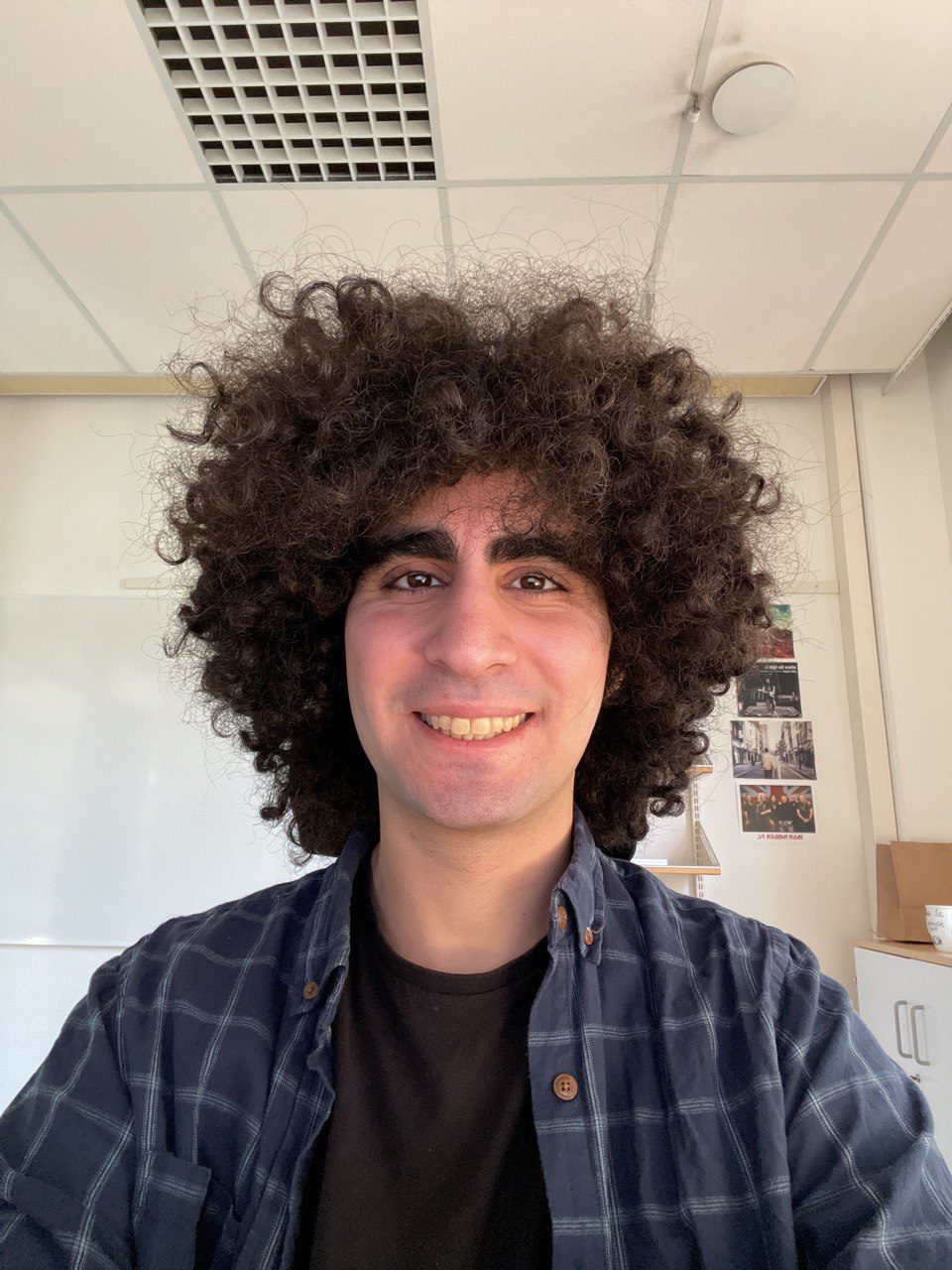
Welf Löwe is a资深 researcher and faculty member at Linnaeus University's Faculty of Technology, Department of Computer Science and Media Technology, and also teaches at Linköping University's Department of Computer and Information Science. His research focuses on data-intensive technologies, software metrics, design pattern detection, and context-aware systems. He leads the Data Intensive Software Technologies and Applications (DISTA) group and contributes to the Linnaeus University Centre for Data Intensive Sciences and Applications (DISA). He actively collaborates on projects like the Data Intensive Applications (DIA) graduate school and the High-Performance Computing Center (HPCC). His work spans machine learning applications in healthcare, forestry, and industrial automation. Recent research includes feature engineering in medical data, skeleton avatar technology for aging studies, and AI-driven diagnostics. He has authored over 150 peer-reviewed publications and participates in interdisciplinary initiatives such as the iSchool project.
Sina Sheikholeslami is a Researcher at the Division of Energy Systems, Department of Energy Technology at KTH Royal Institute of Technology. He works on leveraging AI for sustainability and climate action, focusing on projects like Beyond 2030 and OnStove. His affiliations include the KTH Climate Action Centre and Vinuesa Lab. He holds a PhD in Distributed Computing from KTH (2025), advised by Vladimir Vlassov, Amir Payberah, and Jim Dowling, with prior M.Sc. studies at Eindhoven University of Technology and KTH through the EIT Digital Master School. He also completed a B.Sc. in Computer Software Engineering at Amirkabir University of Technology. Research interests include distributed systems, machine learning, deep learning, and their applications in sustainable development. Notable work includes developing frameworks like AutoAblation for ablation studies and Importance-aware DPT for dataset partitioning, which earned the Best Artefact Award at DAIS 2023. His recent work explores using LLMs for ablation studies and weight initialization techniques from hyperparameter trials. Academic leadership roles include serving on the KTH PhD Chapter’s Board, EECS PhD Student Council, and committees such as the School Assembly and Third-Cycle Education Council. He is Sweden’s Local Representative for the EIT Digital Alumni Foundation. His teaching roles include assistant and teacher in courses like Data Mining and Data-Intensive Computing. He supervises multiple students, including those exploring topics like scalable model training with Ray and feature stores in Hopsworks. His research spans environmental monitoring (e.g., ExtremeEarth), public transit systems (DUGET), and interdisciplinary applications of ML in wood science and urban planning.
Pierre Nyquist is an Associate Professor in the Department of Mathematical Sciences at Chalmers University of Technology and Gothenburg University. Previously, he held a position at KTH Royal Institute of Technology. His research focuses on probability theory, mathematical statistics, and applied mathematics, with an emphasis on large deviations, stochastic numerical methods, and statistical learning theory. He is supported by grants from the Swedish Research Council, Wallenberg AI, Autonomous Systems and Software Program (WASP), and the Swedish e-Science Research Center (SeRC). Education: Ph.D. in Applied and Computational Mathematics (2014, advisor Henrik Hult), postdoc at Brown University (2014–2016), and assistant professor at TU Eindhoven (2016–2020). Research interests include large deviations theory, stochastic processes, gradient flows, and applications to machine learning and computational statistics. His work spans theoretical developments and practical methodologies, such as Monte Carlo algorithms and uncertainty quantification tools. Recent activities include organizing seminars, supervising PhD students, and collaborating with industry partners. He has been awarded membership in the Young Academy of Sweden (2024–2029) and serves as a scientific ambassador for EURANDOM. Key publications address topics like large deviations in stochastic approximations, Metropolis-Hastings algorithms, and neural entropy estimation. His teaching includes courses on statistical learning, probability, and Monte Carlo methods.
Shivesh Kumar is an Assistant Professor in the Dynamics Division of the Department of Mechanics and Maritime Sciences at Chalmers University of Technology. He also holds a part-time Senior Researcher position at the Robotics Innovation Center, German Research Center for Artificial Intelligence (DFKI) in Bremen, Germany. Assistant Professor at Chalmers Part-Time Senior Researcher at DFKI Co-Chair, IEEE-RAS Technical Committee on Model-Based Optimization for Robotics His research focuses on robotics , particularly in kinematics, dynamics, and control systems for developing animal-like physical/athletic intelligence in robots. Key areas include underactuated robotics, control algorithm benchmarking, and human-robot interaction. Recent publications (2023-2024) highlight work on: Parkour control for monoped hoppers Reinforcement learning for robotic athleticism Energy-efficient brachiation robots Robust co-design of underactuated systems His projects involve collaborations with Wallenberg AI, Autonomous Systems and Software Program and Chalmers' digitalization initiatives. He maintains advisory relationships with the Advanced AI Team: Team Mechanics & Control and Underactuated Robotics Lab at DFKI. Contact: shivesh.kumar@chalmers.se
Jörgen Blomvall is an Associate Professor at Linköping University's Department of Management and Engineering (IEI). His research focuses on optimal financial decision-making, accurate financial measurement, and stochastic optimization models applied to financial markets. He develops methods to enhance measurement accuracy for quantities like forward rates, default intensities, and local volatilities, which are critical for equity, interest, credit, and derivative markets. Blomvall's work integrates stochastic programming and dynamic programming to address portfolio optimization, risk management, and transaction cost reduction. He is affiliated with the Operations Management and Finance research group, exploring resource optimization in manufacturing and service industries. His key research areas include financial engineering, stochastic programming, and quantitative risk management. Recent work emphasizes improving dividend estimation from intraday quotes, reducing transaction costs in hedging strategies, and analyzing stage complexity in stochastic programming for portfolio choice. Blomvall's methodologies have advanced the modeling of systematic risks and optimal investment decisions under real-world market constraints. Blomvall has contributed extensively to the development of optimization-based frameworks for performance attribution and yield curve estimation. His articles frequently address practical applications of stochastic models in financial markets, balancing theoretical rigor with computational feasibility. Despite his prolific output, no specific academic awards or student advisees are documented in the provided texts. He is active in the Production Economics (PEK) research group at Linköping University.
Mats Brorsson is a Professor at the Division of Software and Computer Systems , KTH Royal Institute of Technology. His research spans multiple areas of computer architecture and parallel computing, with a focus on system software, energy-aware architectures, and performance debugging tools. He is actively involved in projects like the PaPP ARTEMIS collaboration and coordinates the KTH-SICS Scalable Computing Systems initiative. Research Interests : Mats Brorsson's work primarily addresses parallel computing , task-based programming models (e.g., OpenMP), and energy-efficient computer architectures . He has made significant contributions to NUMA system optimization , work-stealing schedulers , and runtime systems for high-performance computing. Professional Activities : Mats Brorsson serves as coordinator for the PaPP ARTEMIS project and is a member of the KTH-SICS Collaboration in Scalable Computing Systems. His publications reflect deep engagement with task scheduling , cache coherence protocols , and adaptive resource management for parallel systems.
Björn Forsberg is an Assistant Professor in the Department of Physics, Chemistry and Biology (IFM) at Linköping University, where he leads a research group in structural bioinformatics. He is affiliated with SciLifeLab Linköping and the National Supercomputer Centre (NSC), and is part of the Wallenberg National Program for Data-Driven Life Science (DDLS), supported by the Knut and Alice Wallenberg Foundation. His work bridges computational science and molecular biology, focusing on the development of novel methods for analyzing cryo-electron microscopy (cryo-EM) data. His research centers on understanding molecular life through data-driven approaches. He develops computational tools to analyze ensemble cryo-EM data, using spatial filtering and local correlation metrics to identify sources of structural variation and attribute them to biological mechanisms. His lab leverages high-performance computing resources, including the Berzelius supercomputer, to process large-scale datasets and improve the resolution and interpretability of molecular models. This work has broad implications for understanding diseases like Alzheimer's and for drug discovery. The recent publications highlight a strong trend in advancing cryo-EM methodology, particularly through software development (e.g., RELION) and the integration of machine learning and GPU computing. His work spans fungal metabolism, ion channel dynamics, chloroplast ribosomes, and foundational algorithmic improvements in 3D reconstruction. The research combines structural biology, bioinformatics, and computational physics to extract biological meaning from complex data. Scientific Awards and Recognition: Selected for the SciLifeLab and Wallenberg National Program for Data-Driven Life Science (DDLS) Supported by the Knut and Alice Wallenberg Foundation through DDLS and the PALS (Program for Academic Leaders in Life Science) network Björn Forsberg is actively building his research team, advising PhD and master’s students, and seeking postdoctoral researchers with backgrounds in computational biology, computer science, or related fields. His lab collaborates with leading experts in structural biology and uses national research infrastructures to push the boundaries of data-driven life science. He has no listed formal grants yet, but his program is funded through major foundation support. His research is conducted at the intersection of the Department of Physics, Chemistry and Biology (IFM), SciLifeLab Linköping, and the National Supercomputer Centre (NSC), forming a multidisciplinary environment for innovation in computational structural biology.
Jana Weiss is an Associate Professor at Stockholm University's Department of Environmental Science, specializing in environmental chemistry and exposure assessment. Her research employs pet animals as models for human chemical exposure, particularly focusing on endocrine-disrupting compounds in indoor environments. Quantitative analysis of organic contaminants PFAS exposure pathways Endocrine disruption mechanisms Non-target chemical screening One Health exposure modeling Mixture risk assessment frameworks Her recent publications demonstrate growing concern about cumulative chemical exposure from dust and textiles. Studies show children's dust ingestion creates 17× higher PFAS exposure than adults, with combined dust/food pathways exceeding EFSA thresholds. Methodological advances include ionization efficiency prediction models for OH-PCB quantification in serum and in silico TH disruption screening. She coordinates two Master's programs: Environmental Toxicology & Chemistry (ETC) and Atmospheric Biogeochemistry & Climate (ABC), teaching courses covering chemical distribution, sampling techniques, and effect-directed analysis. Contact: jana.weiss@aces.su.se
Ahmed Rezine is a Senior Lecturer and Associate Professor at the Department of Computer Science (IDA) , specifically within the Software and Systems (SAS) division at Linköping University . His research focuses on software verification , machine learning , and cybersecurity , particularly in the context of deep neural networks and embedded systems . Research Trends: His recent publications, such as VNN: Verification-Friendly Neural Networks (2024) and Trojans in Instruction Sets (2024), highlight his work at the intersection of AI robustness and hardware security . Earlier studies (2023-2017) emphasize formal verification of concurrent systems and GPU architectures , reflecting a consistent focus on parameterized systems and security analysis . Colleagues & Collaborations: Rezine collaborates with researchers in the Software and Systems group, part of the Wallenberg Autonomous Systems Program (WASP) . His work intersects with AI IDA and Embedded Systems (ESLAB) , focusing on autonomous systems and real-time processing .
Ingemar Markström is a Research Engineer at KTH Royal Institute of Technology's Division of Computational Science and Technology since 2019. Previously, he taught computer science courses at KTH from 2006 onwards, serving as a General Tutor in the EECS department and contributing to numerous programming courses including DD1320, DD1310, DD1339, DD2387, DD1361, DD1343, DD1396, and DD1315. He holds a Master's thesis in computer science focusing on visualization and computer graphics: 'Comparing normal estimation methods for the rendering of unorganized point clouds.' His research interests span visualization techniques, computer graphics, and innovative programming pedagogy. He has also explored recreational mathematics through the publication 'More ties than we thought,' analyzing combinatorial knot theory in necktie tying. Currently involved as an assistant in Advanced Graphics and Interaction (DH2413), Information Visualization (DH2321), and as a teacher for Program Development for Interactive Media (DM1595). Markström is affiliated with the Visualization studio VIC and maintains a creative outlet through music, playing in band Kalabalik (contemporary medieval music) and producing electronic music. No scientific awards are explicitly listed, though his work demonstrates interdisciplinary curiosity.
Hazem Ali is a Senior Lecturer at Halmstad University's School of Information Technology. He holds a Ph.D. in Electrical and Computer Engineering from Faculdade de Engenharia da Universidade do Porto (FEUP) and an M.Sc. in Computer Science and Engineering from Halmstad University. His research focuses on embedded systems, real-time systems, and dataflow programming models. He has expertise in hardware/software co-design, parallel computing, and optimization of real-time applications. Education: Ph.D. in Electrical and Computer Engineering (FEUP, Portugal) M.Sc. in Computer Science and Engineering (Halmstad University, Sweden) Recent publications highlight his work in cybersecurity for autonomous vehicles, GPU acceleration of MIMO systems, and optimization of dataflow models. His projects include ELLIIT B02 (Beyond 5G Wireless) and CyberInfra (Cybersecure Traffic Infrastructure). Proficiency in tools includes MATLAB, C/C++, Java, VHDL, and dataflow languages like CAL and Sigma-C, with extensive international experience in Sweden, Portugal, and Egypt.
Pedro Petersen Moura Trancoso is a Full Professor at the Department of Computer Engineering , Chalmers University of Technology, Sweden. His research focuses on deep learning accelerators , heterogeneous computing , energy-efficient architectures , and memory system optimization for IoT and edge devices. Key projects: AutoPIM (autonomous vehicle accelerators), VEDLIoT (efficient AIoT), eProcessor (European processor ecosystem), PRIME (PIM systems) Collaborations: European Commission, Swedish Research Council, Swedish Foundation for Strategic Research Research Trends : Hybrid CNN/GPU/FPGA Acceleration On-Chip/Scratchpad Memory Optimization Adaptive Resource Allocation for Energy Efficiency Hardware-Software Co-Design for AIoT Publications demonstrate leadership in deep learning hardware , heterogeneous memory systems , and edge computing architectures . Key journals: IEEE ISPASS, ACM Computing Frontiers, DATE Conference.
Victor Hedén serves as a Lecturer in Automation Engineering within the School of Engineering Science at the University of Skövde. Based in room PA210D, he teaches multiple bachelor's level engineering courses and coordinates academic programs, with contact details including email victor.heden@his.se and phone 0500-448866. His role bridges theoretical instruction with practical industrial applications. His research spans Automation Engineering systems and Industrial Maintenance methodologies, with significant focus on Operational Excellence in manufacturing contexts. He maintains parallel expertise in Lifelong Learning frameworks, specifically designing higher education pathways for mid-career professionals. This dual specialization connects engineering optimization with adult educational strategies, reflecting Sweden's emphasis on workforce development through academia-industry collaboration. Analysis of his publications reveals a consistent integration of technical and pedagogical innovation. The 2021 study demonstrates institutional approaches to engaging working adults in higher education, while the 2014 research establishes preventive maintenance as foundational for operational efficiency. These works collectively position him at the intersection of industrial engineering practice and educational accessibility, with implications for Sweden's manufacturing sector and vocational training systems.
Kerstin Johannesson is a Professor in Marine Ecology at the University of Gothenburg's Department of Marine Sciences, and Director of the Tjärnö Marine Laboratory. Her research focuses on evolutionary mechanisms in marine organisms, particularly Littorina snails and Fucus seaweeds, exploring adaptation over environmental gradients and speciation under divergent selection. University of Gothenburg, Department of Marine Sciences Director, Tjärnö Marine Laboratory She leads genomic studies on hybrid zones and chromosomal inversions, with major projects like CeMEB (Marine Evolutionary Biology) and BaltGene. Her work combines field experiments, genome analysis, and conservation genetics, including the discovery of Fucus radicans as a Baltic Sea endemic species. Recent publications (2025–2022) analyze structural variants, hybridization, and genetic monitoring in marine ecosystems. Collaborators include Roger Butlin, Anja Westram, and Rui Faria.
Ingela Holmström is a full-time Professor at the Department of Linguistics , Stockholm University , specializing in Swedish Sign Language (STS) and bilingualism . She serves as Head of the Sign Language Department and leads multiple research initiatives including the MULDER project (2024) on deaf migrants' multilingual situation , the LäsTecken project on deaf children's reading development , and the UTL2 project examining STS as a second language for hearing students . Research Themes : Deaf migrant language acquisition Bilingual education policy Visual-gestural modality instruction Language ideologies in Nordic countries Technological mediation in deaf education Key Methodologies include ethnographic classroom observations, longitudinal studies of cochlear implant users, and mixed-methods analysis of sign lexicon acquisition patterns. Her work demonstrates how able-bodied norms in Swedish bureaucracy create systemic barriers for deaf migrants, while highlighting translanguaging practices as both facilitators and complicators in multilingual classrooms.