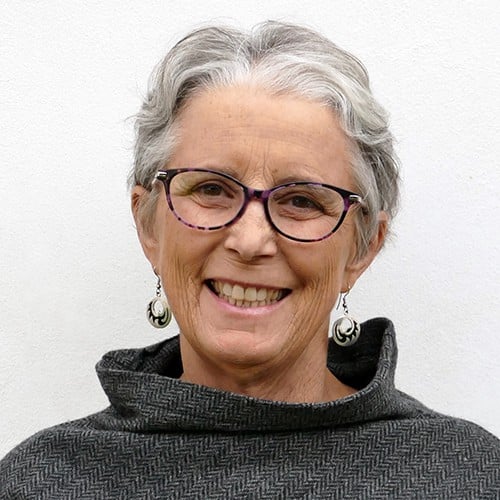
Lone Leth Thomsen is an Associate Professor at the Department of Computer Science, Aalborg University, affiliated with The Technical Faculty of IT and Design. She is a member of CISS (Center for Embedded Software Systems) and Daisy (Center for Data-intensive Systems). Her research focuses on spreadsheet semantics, parallel programming, formal verification, and programming language design. Key research interests include operational semantics for spreadsheets, concurrency models, and energy-efficient software development. She has participated in projects such as P3: Popular Parallel Programming (2015–2019) and COST Action IC0701 (2008–2012), which addressed formal verification of object-oriented software. Recent work explores sustainable software practices and energy consumption analysis of IT systems. Her publications emphasize spreadsheet semantics, parallel execution optimization, and formal methods. She has collaborated on projects like The Virtual Desktop and Beyond (2006–2009), focusing on service-oriented architectures in farming industries.
Stephanie Forrest is a Professor in the School of Computing and Augmented Intelligence (SCAI) at Arizona State University (ASU), where she also serves as Director of the Biodesign Center for Biocomputation, Security and Society. She is an External Faculty member of the Santa Fe Institute (SFI), where she previously held leadership roles including Co-Chair of the Science Board (2010–2013) and Interim Vice President for Academic Affairs (1999–2000). Prior to joining ASU, she was a Regents Distinguished Professor and Department Chair of Computer Science at the University of New Mexico (2006–2011). B.A., St. John's College M.S., Ph.D., University of Michigan, Computer Science Her research lies at the intersection of biology and computation, focusing on computational immunology, automated software repair, evolutionary computation, and modeling complex systems such as cancer and immune responses. She pioneers bio-inspired algorithms for cybersecurity and develops evolutionary techniques for software optimization and repair. Her work integrates principles from immunology, genetics, and complex adaptive systems to solve problems in computer science. The trends in her recent publications reveal a sustained focus on automated program repair using evolutionary computation, GPU code optimization, and modeling biological systems. Her work increasingly combines machine learning with mutation-based search, explores semantic representations in code repair, and applies bio-inspired models to real-world software and security challenges. ACM/AAAI Allen Newell Award (2011) Presidential Young Investigator Award (1991) Stanislaw Ulam Memorial Lectures, SFI (2013) IEEE Fellow UNM Annual Research Lecture (2012) IEEE S&P Test of Time Award (2020) ICSE Most Influential Paper Award (2019) ACM/SIGEVO Impact Award (2019) SEAMS Best Paper Award (2019) WEIS Best Paper Award (2015) Stephanie Forrest has advised numerous students and researchers, often in collaboration with W. Weimer, C. Le Goues, and M. Moses. Her research is supported by major funding agencies including the National Science Foundation (NSF), Defense Advanced Research Projects Agency (DARPA), Air Force Research Laboratory (AFRL), and the Santa Fe Institute. She has also contributed to public policy as a Jefferson Science Fellow at the U.S. Department of State (2013–2014), advising on cyber-policy. She currently chairs the Government Affairs Committee of the Computing Research Association (CRA). She leads the Biodesign Center for Biocomputation, Security and Society, which brings together interdisciplinary teams to study the co-evolution of technology and society. Her research group has developed tools for intrusion detection (e.g., STIDE, pH, RISE), automated software repair (e.g., GenProg), and biological modeling (e.g., CancerSim). Current projects include engineering diversity for enhanced cybersecurity, measuring internet censorship, and modeling immune and cancer systems.
Dmitriy Traytel is an Associate Professor in the Department of Computer Science at the University of Copenhagen, affiliated with the Software, Data, People & Society research section. His work bridges formal methods, programming languages, and runtime verification, with a strong emphasis on correctness and efficiency. His research focuses on the logical and formal foundations of programming systems, including syntax with bindings, higher-order logic, type systems, and temporal logics. He develops verified tools and frameworks for runtime monitoring, policy enforcement, and query evaluation, often using interactive theorem provers like Isabelle/HOL. His recent publications demonstrate a consistent contribution to top venues such as POPL, CAV, and TACAS. The trends in his recent articles show a deep engagement with runtime verification , particularly in developing explainable , efficient , and first-order monitoring techniques. He combines theoretical rigor with practical tool building, as seen in systems like WHYMON and TimelyMon. His work often intersects with security policies, functional programming, and formal semantics. He has not been mentioned in the text as receiving scientific awards, but his publication record in premier venues indicates high scholarly impact. While no students are explicitly listed, his role as an Associate Professor and active researcher suggests involvement in advising. There is no mention of specific grants, but his participation in a Promotion Programme implies institutional support. He is part of a vibrant research environment within the Department of Computer Science, which is involved in the SCIENCE AI Centre, suggesting interdisciplinary collaboration potential. Traytel maintains a personal website and ORCID profile, and his contact information is publicly available. He is actively contributing to the research output of the department, with 59 recorded publications, including journal articles and conference proceedings.
Rolf Fagerberg is a Professor in the Department of Mathematics and Computer Science at the University of Southern Denmark (SDU). His research centers on algorithms, data structures, and their applications in computational biology and cheminformatics. His research interests include: Algorithms and data structures, particularly dynamic and geometric data structures Graph theory with emphasis on subgraphs, Yao graphs, and hypergraphs Algorithmic cheminformatics and modeling of chemical reaction networks Computational biology, including metabolic pathway analysis Theoretical computer science and discrete mathematics Recent publications highlight a strong trend toward interdisciplinary research combining computer science with chemistry and biology, particularly in modeling chemical reaction networks using hypergraphs and mixed-integer linear programming. His work also includes algorithmic solutions for palindromic subsequence problems and efficient extraction of reaction rules from large databases, reflecting a blend of theoretical and applied algorithm design. Rolf Fagerberg has served as senior coordinator on multiple research projects, including 'Algorithmic Cheminformatics' and 'Fundamental Data Structures', funded by the Danish Ministry of Higher Education and Research. He has also contributed to peer review and editorial work for major conferences such as the ACM Symposium on Parallelism in Algorithms and Architectures and the International Symposium on Experimental Algorithms. He has supervised PhD students and is actively involved in academic service, including membership in assessment committees at Aarhus University and IT University of Copenhagen. His research has received media attention, including coverage of a 'mathematical breakthrough' and applications in understanding intestinal systems in obesity.
Bartosz Andrej Baracz serves as an Instructor at the Centre for Internationalisation and Parallel Language Use (CIP) within the Faculty of Humanities at the University of Copenhagen, contributing to the institution's strategic initiatives in multilingual academic environments. His research focuses on critical dimensions of globalised academia: Internationalisation frameworks in higher education systems Dynamics of multilingual communication in scholarly contexts Institutional language policy development Practical implementation of parallel language use (Danish/English) in teaching and research The Centre for Internationalisation and Parallel Language Use (CIP) operates as a dedicated hub supporting the University of Copenhagen's mission to balance international integration with preservation of Danish academic identity through evidence-based language strategies and faculty development programs.
Jesper Petersen serves as Associate Professor in the Section of Biblical Exegesis at the Faculty of Theology, University of Copenhagen, where his anthropological research examines contemporary Islamic practices within Danish society through extensive fieldwork. His research program critically investigates Islamic feminism, LGBTQ+ perspectives in Islam, and sharia implementation among Danish Muslims, with particular emphasis on gender-based violence, religious marriage coercion, and parallel legal institutions. Current work under his Sapere Aude-funded project explores the emerging phenomenon of "Non-Muslim Islam" and its implications for religious authority. Recent publications (2024-2025) demonstrate a cohesive trajectory examining legal and social tensions at the intersection of Islam and secular European governance, revealing patterns in honor-based violence, religious legal pluralism, and political responses to sharia practices across multiple publication formats including ethnographic monographs and policy evaluations. Scientific Awards: Sapere Aude Fellowship from Danish Council for Independent Research Petersen leads the Danish Council for Independent Research-funded Sapere Aude project on Non-Muslim Islam, generating policy-relevant insights through ethnographic analysis of Muslim communities. While no formal students are documented in available records, his research methodology involves deep community engagement and collaborative knowledge production with diverse Muslim stakeholders in Denmark.
Carl-Johannes Johnsen is a Ph.D. student and Guest Researcher in the Department of Computer Science at the University of Copenhagen, specializing in reconfigurable computing and machine learning acceleration for X-ray food inspection systems. His research integrates FPGA-based hardware acceleration with compiler design for high-performance computing, focusing on programming models for Field-Programmable Gate Arrays and optimization of machine learning pipelines. Additional interests include concurrent and distributed programming education methodologies that prioritize conceptual understanding over formal proofs. Publication analysis (2019-2022) reveals consistent contributions to FPGA acceleration of scientific workloads (molecular dynamics), novel compiler vectorization techniques, and minimalist hardware implementations. His work bridges computer architecture, parallel computing, and practical applications in food safety inspection through cross-disciplinary collaboration. No scientific awards were documented in the source material. As an active doctoral candidate, Johnsen has no advisory responsibilities. Research grant details were not specified in the provided information. He operates within the Programming Languages and Theory of Computation research environment at the Department of Computer Science, engaging in international collaborations focused on hardware-software co-design as indicated by network analysis metrics.