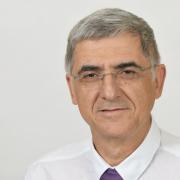
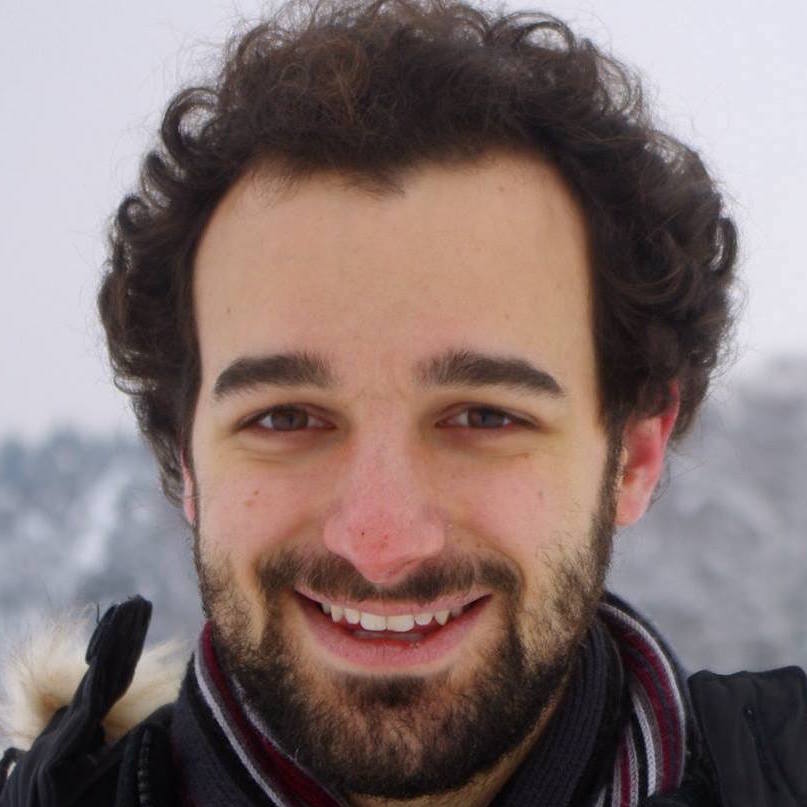
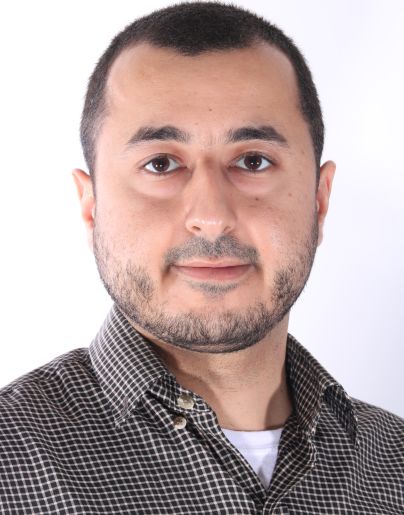
John O'Donnell is an Honorary Lecturer at the University of Glasgow's School of Computing Science. His research spans functional programming, hardware description languages, parallel computing, and computer science education, with notable applications in music technology. Key research areas: Functional approaches to hardware design and simulation Parallel data structures and algorithms for specialized architectures Programming misconception identification and pedagogical tools Computational modeling of musical performance techniques Publications demonstrate consistent innovation in applying functional programming paradigms to diverse domains, from circuit design to music pedagogy. Recent work focuses on educational aspects of computer systems and programming.
Boris Barbour is a researcher at the École Normale Supérieure (IBENS) in Paris, France, where he leads the Neuronal Algorithms group. His work bridges cellular neuroscience , neural network modeling , and electrophysiology , with a focus on cerebellar function and synaptic plasticity. He teaches extensively in the Imalis master's program and contributes to international training courses in microelectrode techniques and optical imaging . Primary Affiliation: IBENS, École Normale Supérieure, Paris Teaching Roles: Organizes M1 course S10 (Synaptic Foundations of Network Function), contributes to M2 Neurophysiology practicals, and co-tutors interdisciplinary neuroscience projects His research explores ephaptic coupling in cerebellar Purkinje cells via the pinceau structure, combining in vitro , in vivo , and in silico approaches. Key themes include stochastic gradient descent algorithms in cerebellar learning, synaptic weight distributions , and non-synaptic inhibition mechanisms . He has developed open-source tools like a patch-clamp amplifier tutorial and optimized Arduino USB code for experimental setups. Barbour is a co-organizer of the Paris Spring School and actively contributes to PubPeer for post-publication peer review. His work is supported by the Agence Nationale de la Recherche (ANR) and has produced foundational studies on cerebellar network dynamics , ion channel distribution , and neuronal information processing . Collaborations span institutions in France, the UK, and Japan, with authorship on studies challenging paradigms in synaptic transmission and extracellular impedance research.
Matti Rintala is a University Lecturer at Tampere University's Faculty of Information Technology and Communication Sciences, specifically within the Computing Sciences department. His primary responsibilities include teaching core courses such as Principles of Programming Languages and Functional Programming 1, alongside contributing to Data Structures and Algorithms 1. His expertise spans programming languages, data structures, algorithms, and concurrency. Research interests focus on C++ programming paradigms, concurrency mechanisms, and educational technology. Notable work includes leveraging modern C++ features for high-level synthesis, optimizing exception handling in concurrent systems, and analyzing student preferences in hybrid learning environments. His articles consistently address practical challenges in software engineering and distributed systems. While no formal advising or grant details are provided, his teaching and research contributions highlight a commitment to advancing both theoretical and applied aspects of computing sciences. No scientific awards are documented in the provided materials.
Bilal Shebaro is an Associate Professor in the Department of Computer Science at St. Edward's University, within the School of Natural Sciences (NSCI). He also serves as the Director of the Institute for Interdisciplinary Science (i4). His research focuses on digital forensics, cyber security, information assurance, and data privacy. Dr. Shebaro holds a Ph.D. in Computer Science from the University of New Mexico. He teaches courses such as Computer Security and Privacy, Mobile Programming, Database Systems, and programming paradigms (procedural, functional, parallel). He collaborates with the Forensic Sciences department to teach an interdisciplinary digital forensics course. Active in university governance, he serves on the Promotion and Tenure Review Committee, NSCI Safety Committee, and is a member of the Campus Community Emergency Response Team (C-CERT). Dr. Shebaro advises senior projects and oversees diverse undergraduate research initiatives. The Institute for Interdisciplinary Science (i4) under his leadership fosters collaborative research across disciplines.
Nikita Koval is a Researcher at JetBrains , specializing in concurrent programming, Kotlin coroutines, and testing frameworks. His work bridges academic research with industrial application, focusing on synchronization primitives, lock-free data structures, and JVM-based concurrency tools. Academic rank: Researcher Affiliation: JetBrains Research interests include: Concurrent algorithm design and optimization Formal verification of synchronization mechanisms Testing frameworks for JVM-based languages Memory-efficient lock-free data structures Scalability in coroutine communication Distributed systems debugging Publication trends show a focus on Kotlin coroutines, JVM concurrency, and testing frameworks like Lincheck. His work spans algorithm design (union-find, queues), formal verification (CQS), and practical tools for concurrency testing (Lincheck) across conferences like PPoPP, PLDI, and ECOOP. Scientific recognition: Nikita received the Best Paper Award at OPODIS 2019 for his work on concurrent union-find algorithms. His contributions to Lincheck and CQS have been adopted into Kotlin's core libraries. Workshop leadership: He offers a 4-day corporate workshop on concurrent algorithms, covering testing, debugging, and implementation of lock-free data structures, now booked for Q3/Q4 2025. The curriculum includes hands-on Java/Kotlin coding with topics like segment queues, fetch-and-add queues, flat combining, and concurrent hash tables.
Denis Darquennes is a computer science researcher affiliated with University of Namur, specializing in coordination languages and data protection systems. His academic career spans over three decades with significant contributions to tuple-based coordination models and data protection frameworks. His research focuses on the theoretical foundations of coordination languages, particularly examining multiplicities, density metrics, and expressiveness in tuple-space systems. Darquennes has developed formal methods for analyzing coordination patterns and has contributed to important data protection frameworks through European research initiatives. His publication record shows consistent research output from 1989 through 2020, with recent work emphasizing the expressiveness of data-based coordination languages and density metrics in distributed systems. The research demonstrates a clear progression from theoretical foundations to practical applications in data protection. Darquennes has been actively involved in major European research projects including COE-Profilage, RW-Euser, CE-Miauce, and SPFJUS-Phenix, where he contributed expertise in data protection and coordination language design. His work bridges theoretical computer science with practical privacy concerns in emerging technologies. His educational background includes doctoral research completed in 2017 on multiplicities in coordination languages, supervised by Jean-Marie Jacquet and Isabelle Linden at University of Namur, following master's level work on ant colony algorithms in 2005.
Thomas Eiter is a Professor at TU Wien's Institute of Logic and Computation. His research focuses on declarative programming paradigms, knowledge representation, and artificial intelligence. He leads projects in neurosymbolic systems, answer set programming (ASP), and stream reasoning, with applications in visual question answering, scheduling optimization, and semantic scene generation. Eiter has contributed to foundational work in ASP semantics, computational complexity, and hybrid reasoning frameworks. His work bridges logical formalisms with practical AI challenges, emphasizing explainability and scalability. Projects like ALASPO and neurosymbolic integration showcase his focus on advancing both theoretical and applied aspects of AI. Projects: HumanE AI Network, WASP, REWERSE Research Themes: Neurosymbolic AI, Answer Set Programming, Stream Reasoning Notable achievements include pioneering work on semiring-based reasoning frameworks and developing efficient ASP solvers like Alpha. His contributions span over 471 publications, emphasizing interdisciplinary applications in computer vision, robotics, and automated planning.
Gerard Holzmann is a Lecturer in Computing and Mathematics Sciences at the California Institute of Technology. His research focuses on software safety, formal verification techniques, distributed systems, and static analysis methods. He has contributed to tools like Tau for automata-based verification and improved algorithms for parallel model checking. His work spans reactive synthesis, multi-paradigm specifications, and swarm testing methodologies. Holzmann teaches advanced courses such as CS 118 – Automata-Theoretic Software Analysis, emphasizing practical applications of formal methods in software engineering.
Dr. Gregory Attila is an Assistant Professor at the Faculty of Humanities and Social Sciences , Károli Gáspár Reformed University , specializing in Japanese society, politics, and East Asia. He earned his DrUniv in Sociology (1982) and MA in History/Sociology (1974–1975) from Eötvös University. His academic career spans roles at Eötvös University (1988–1992), Pázmány University (1992–1999), and Károli University (since 2000). Research Focus : Japanese politics, international relations, modernization studies, EU-Japan interactions, and East Asian regional dynamics. Publications : Authored/edited 15+ works on topics like Japanese identity, energy security, and post-war nation-building (1982–2016), with 4 independent citations. International Engagement : Research Fellow at University of Tokyo (1983–85), Visiting Professor at Waseda University (1992, 1996–97), and Jagiellonian University (2018). Honors : Recipient of the Higher Education Merit Medal (Eötvös University, 1975). Active in the Kőrösi Csoma Society . Supervised Emilia Fábián’s doctoral thesis (2015) on Japan’s international relations.
Prof. Yoram Reich is a Full Professor at the School of Mechanical Engineering within The Iby and Aladar Fleischman Faculty of Engineering at Tel Aviv University, where he has been affiliated since 1993. He holds the Chair of Engineering Design and Systems Engineering and serves as head of the Systems Engineering Research Initiative (TAU-SERI) and the MSc in Systems Engineering program. His academic journey includes a BSc (Summa Cum Laude) and MSc (Cum Laude) in Mechanical Engineering from Tel Aviv University, followed by a PhD in Civil Engineering from Carnegie Mellon University (1991) as a Rothschild and Fulbright Fellow. His research spans interdisciplinary domains with core interests in Systems Engineering , Engineering Design , Innovation Methodologies , and Sustainable Biomimicry . He pioneered frameworks like the Interdisciplinary Engineering Knowledge Genome (IEKG) and Infused Design, focusing on cross-disciplinary innovation. His work integrates biological principles with technological solutions through biomimetic design strategies. Analysis of his 15 most recent publications (2014-2019) reveals strong emphasis on: (1) Advanced systems engineering frameworks for enterprise collaboration and verification, (2) Mechanical design innovations in robotics and parallel mechanisms, and (3) Theoretical foundations of design science. Recurring themes include model-based systems engineering, singularity analysis in kinematics, and sustainable design paradigms. Scientific Awards & Honors: Fellow of Design Research Society (2014) & Design Society (2023) Honorary Fellow, Israeli Society of Systems Engineering (2021) Reviewers' Favorite Awards at ICED'11, ICED'13 Outstanding Paper Award at ICED'09 Rothschild & Fulbright Fellowships (1986) Academic Leadership: He founded the Israel Institute for Empowering Innovation (2012) and TAU's Systems Engineering Research Initiative (2018). Current responsibilities include: Heads MSc in Systems Engineering program Leads Final Project in Mechanical Engineering program Editor-in-Chief of Research in Engineering Design Senate Member at Tel Aviv University He directs research in enterprise process integration, biomimetic sustainability, and design theory development through the TAU-SERI laboratory, collaborating with international partners across engineering disciplines.
Marco Vassena is an Assistant Professor at the Department of Information and Computing Sciences, Utrecht University, within the Faculty of Science. He focuses on developing principled methods for building secure systems, bridging Security and Programming Languages research communities. His work applies type systems, compilers, program analysis, and verification to ensure reliable security guarantees in software systems. PhD in Computer Science from Chalmers University of Technology Visiting Assistant Professor at Stanford Postdoctoral Researcher at CISPA Helmholtz Center for Information Security Member of the CISPA-Stanford Center for Cybersecurity His research spans language-based security (constant-time programming, memory safety, information flow control), software defenses against Spectre and side-channel attacks, and WebAssembly sandboxing. He leads projects like MSWasm and Blade, targeting microarchitectural attack mitigation through formal verification and compiler design. Scientific recognition includes the Veni Grant (2023). Current projects explore speculative execution security, dynamic information flow control, and secure WebAssembly implementations.
Borut Robič is a Full Professor and Head of the Theoretical Computer Science Chair at the Faculty of Computer and Information Science, University of Ljubljana . He also serves as Head of the Laboratory for Algorithmics and President of the Faculty's Academic Assembly since 2005. His work spans computability theory, algorithms, and parallel computing, with notable contributions to foundational concepts and educational literature. University: University of Ljubljana School: Faculty of Computer and Information Science Roles: Professor, Head of Theoretical Computer Science Chair, Head of Laboratory for Algorithmics, President of Academic Assembly Robič's research interests focus on computability and complexity theory, algorithm design, and parallel computing frameworks. His publications emphasize historical context, formal methods, and modern computational paradigms like hypercomputing. Publication trends reveal a progression from foundational algorithmic theory (1999) to advanced computability research (2020), with a 2018 work bridging parallel programming and practical implementation. Projects include leadership in ARRS research programmes on parallel systems (2020-2026) and past collaborations on graph optimization and big data initiatives. Laboratory affiliations: Head of the Laboratory for Algorithmics and active member of its research team.
Erez Petrank is a Professor of Computer Science at the Technion - Israel Institute of Technology, where he holds the Andrew and Erna Viterbi Chair. His academic career spans decades with significant contributions to systems research, particularly in memory management and concurrent programming. He has maintained continuous academic service through leadership roles in major conferences including SPAA'24, ISMM 2023, and PPOPP 2021. His research focuses on concurrent computing, programming languages, and systems with special emphasis on memory management. Additional interests include parallelism, cryptography, data structures, approximation algorithms, and distributed computing. Petrank's work bridges theoretical foundations with practical systems implementation, particularly evident in his persistent memory research and garbage collection innovations. Petrank's publication record shows consistent contributions to ACM SIGPLAN conferences over two decades, with recent work focusing on non-volatile memory systems, lock-free data structures, and memory reclamation techniques. His research demonstrates a clear trajectory from foundational memory management concepts toward modern persistent memory architectures, reflecting adaptability to evolving hardware paradigms while maintaining theoretical rigor. H-index: 41 (Google Scholar) Erdos number: 2 62 co-authors across diverse research collaborations Petrank has mentored numerous researchers through his academic position and conference leadership roles, serving on program committees for major venues including PLDI, PPoPP, and ISMM. His professional service includes executive committee membership in ACM SIGPLAN (2009-2012) and steering committee roles for multiple conferences. He maintains active research collaborations with institutions worldwide, as evidenced by his extensive co-author list spanning theoretical computer science to practical systems implementation. His academic lineage traces back through Oded Goldreich, Shimon Even, and Hao Wang to intellectual giants including Isaac Newton and Galileo Galilei, reflecting deep roots in theoretical computer science and mathematics.
Munther Abualkibash serves as an Associate Professor in the Department of Information Security and Applied Computing at Eastern Michigan University, where he teaches core computer science courses including Data Structures, Programming Languages, and Computer Organization. Education: Ph.D. in Computer Science and Engineering, University of Bridgeport M.S. in Computer Science, University of Bridgeport B.S. in Computer Science, Al-Ahliyya Amman University His research program integrates cybersecurity with advanced computing paradigms, specializing in real-time adaptive systems for object detection, distributed algorithm optimization, and cloud infrastructure development. Key methodologies include machine learning frameworks like AdaBoost applied to parallel and distributed environments. Publication analysis reveals consistent innovation in scaling machine learning algorithms for multi-core networks, with emphasis on real-time performance and resource efficiency across computer vision and cloud computing domains. No documented scientific awards, student advising records, research grants, or laboratory affiliations are present in the available materials.
Justin F. Landy, Ph.D., serves as a full-time Associate Professor in the Department of Psychology and Neuroscience within Nova Southeastern University's College of Psychology. His office is located in Parker 247 (Fort Lauderdale campus), with primary contact at jlandy@nova.edu. His academic credentials include: Ph.D. in Psychology, University of Pennsylvania M.A. in Psychology, University of Pennsylvania B.A., Cornell University Dr. Landy's research program bridges social and cognitive psychology through rigorous investigation of moral cognition. He examines the cognitive architecture underlying moral judgments, the formation of moral character perceptions, and the mental representation of ethical concepts. His parallel focus on methodological rigor addresses critical issues in scientific replicability and research transparency within psychological science. While no named laboratory is specified, his research activities within the Department of Psychology and Neuroscience involve experimental paradigms exploring moral decision-making processes. As a core faculty member, he contributes to NSU's graduate training programs including Clinical Psychology (Ph.D./Psy.D.), School Psychology (Psy.D.), and Experimental Psychology (M.S.). His commitment to methodological excellence informs both his scholarly output and mentorship approach for graduate researchers.