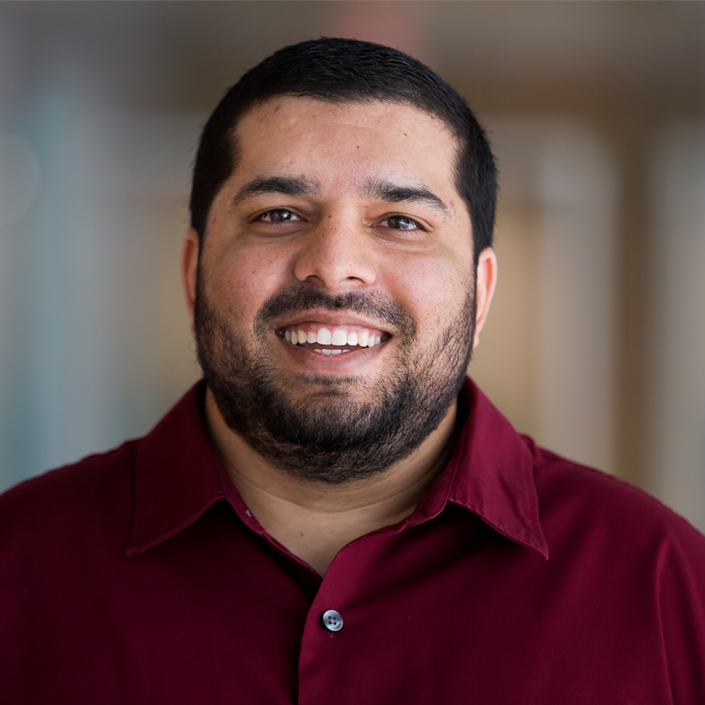
Amir Kamil is a Lecturer at the University of Michigan's College of Engineering, teaching programming and computer science courses including EECS 280 (Programming & Data Structures) and EECS 390 (Programming Paradigms). His research focuses on parallel programming models, program analysis, and educational methodologies in computer science. Research Interests: Develops programming models for parallel systems and investigates pedagogical approaches to computer science education. Current work includes UPC++ for distributed C++ applications and improving student understanding of programming concepts. Teaching: Creates comprehensive educational materials including online textbooks for programming languages and data structures. Supervises undergraduate research and develops innovative teaching methods for computational theory. Students: Mentors graduate and undergraduate researchers in programming languages and parallel computing. Recent collaborators include PhD candidates and industry researchers at Microsoft, Amazon, and Apple.
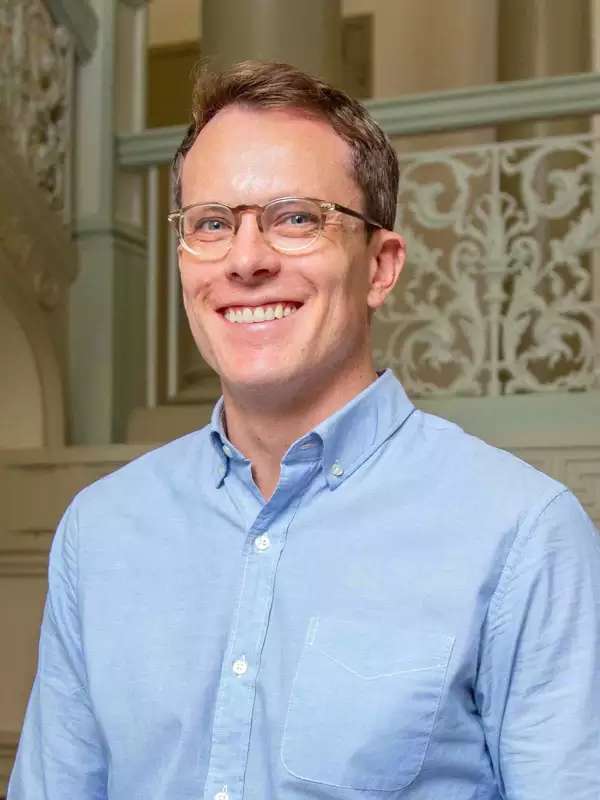
Alex White is an Assistant Professor in the Department of Neuroscience & Behavior at Barnard College. He leads the Barnard Vision Lab, focusing on visual perception, attention, and visual word recognition. His work employs behavioral assessments, eye-tracking, and functional MRI to study how the brain processes visual information, particularly written words. He joined Barnard in 2021 and teaches courses including Introduction to Neuroscience and Visual Neuroscience. Educational Background: BA, Yale University MS, University of Sydney PhD, New York University Research Interests: Dr. White's research explores the neural mechanisms underlying visual perception, with a focus on how attention and expectation influence visual processing. His lab investigates word recognition through eye-tracking and fMRI, addressing questions about serial vs. parallel processing, visual field position effects, and neural bottlenecks in lexical access. Recent work also examines dyslexia-related visual encoding deficits and the interplay between attention and language in the visual word form area. Publications Overview: His articles emphasize capacity limits in word recognition, spatial attention dynamics, and neural correlates of visual processing. Recent work highlights hemifield asymmetries in crowding and the role of expectation in modulating covert attention. The lab's findings contribute to theories of parallel/serial processing and neuroplasticity in reading. Labs/Teams: The Barnard Vision Lab collaborates with students and researchers to advance understanding of visual cognition. Openings for student research assistants require programming skills.
Dr. Mark William Padilla is a Professor at Christopher Newport University , where he teaches Greek and Latin languages , Greek literature and myth , and Honors courses on Alfred Hitchcock and Richard Wagner . He holds a Ph.D. and MA in Comparative Literature from Princeton University , along with a BA in Classics and English from UC Santa Cruz . Specializes in Classical Reception Studies through film analysis Focuses on Alfred Hitchcock's mythic structures Expert in Greek literature and reception traditions Co-organizes CNU study abroad programs in Greece His research synthesizes ancient Greek myth with 20th-century cinematic techniques , particularly analyzing Vertigo's mythological layers and classical allusions in Hollywood scripts . Padilla has presented lectures internationally in USA, Canada, UK, and Ireland . Key contributions include: Classical Vertigo (2024) - Myth in Hitchcock's aesthetics Wrong Man and Grace Kelly Films (2018) - British Museum influences Rites of Passage (1999) - Greek initiation themes in tragedy 2019 Faculty Excellence Award for Scholarship As a former dean and provost at three liberal arts colleges, his administrative experience shapes faculty prestige analysis in small institutions, exploring multi-directional academic pressures in his 2008 publication.
Charlie Peck is a Professor of Computer Science and Associate Dean of Natural Sciences at Earlham College. He leads the Computer Science Department and oversees interdisciplinary initiatives in the natural sciences. His research focuses on parallel/distributed computing, bioinformatics, and expeditionary science, combining fieldwork with computational methods. Peck is co-PI of the LittleFe and Bootable Cluster CD (BCCD) projects, which develop affordable HPC education tools. He has conducted field research in Iceland, studying glacial microbiology and environmental data collection, often involving student collaborators. Education: Ph.D., Union Institute & University B.A., Earlham College Research interests include: High-performance computing education Environmental sensor networks Microbial community analysis Sustainable energy systems His fieldwork often integrates geology, chemistry, and computer science, as seen in collaborative Iceland expeditions. Peck also leads educational programs like Earlham’s England study abroad program, emphasizing place-based learning in London. Publications highlight HPC curricula, cluster management systems, and interdisciplinary environmental research. He actively contributes to organizations like ACM (SIGCSE) and IEEE (Computer Society), focusing on education and outreach in computational science.
Michael Lam is an Associate Professor in the Department of Computer Science and Interim Assistant Dean of the College of Integrated Science & Engineering (CISE) at James Madison University (JMU). He holds a Ph.D. and M.S. in Computer Science from the University of Maryland (2014 and 2010, respectively), and a B.S. in Computer Science from JMU (2007). His research focuses on high-performance computing, scientific computing, and software engineering, with a particular emphasis on precision computing and algorithm optimization. Dr. Lam's work includes developing tools for mixed-precision analysis, such as HPC-MixPBench, and advancing techniques like ADAPT (Algorithmic Differentiation for Floating-Point Precision Tuning). His contributions span both computational theory and pedagogy, including innovative approaches to online systems education and curriculum design. He has held roles such as Post-doctoral Researcher at the University of Maryland and Graduate Research Intern at Lawrence Livermore National Lab. His research trends emphasize energy-efficient computing paradigms, automated precision tuning, and bridging the gap between theoretical algorithms and practical software implementation. While no awards are explicitly listed, his extensive publication record reflects sustained excellence in high-performance computing and educational innovation. As Interim Assistant Dean of CISE, Lam contributes to interdisciplinary initiatives and program development. His advising and grant activities are reflected in his scholarly work, though specific grant details are not provided here.
Aleksander Byrski is a Full Professor at AGH University of Science and Technology, serving as Deputy Dean for Research and Cooperation in the Faculty of Computer Science, Electronics and Telecommunications. He is also an active member of the Council of Information Technology and Telecommunications and Deputy President of the Try IT Foundation. His research focuses on nature-inspired computing, agent-based distributed computation, artificial intelligence, and parallel/distributed computing and simulations. Byrski's work spans optimization algorithms, high-performance computing frameworks, and applications in urban traffic simulation, healthcare, and engineering. His research interests emphasize scalable agent-based systems, socio-cognitive metaheuristics, and their practical implementations in solving complex real-world problems. Key contributions include advancements in ant colony optimization, evolutionary multi-agent systems, and distributed computing paradigms. Byrski actively bridges theoretical computer science with applied domains such as traffic management, epidemic modeling, and smart city technologies. Articles from 2023–2025 highlight his focus on hybrid metaheuristics, socio-cognitive algorithms, and optimization for time-delay systems. Notable themes include improving algorithm efficiency through migration strategies, leveraging two-dimensional pheromone models, and exploring open/closed source frameworks for large-scale optimization. His work often addresses scalability challenges in HPC environments and real-time systems. Byrski has received no explicitly mentioned scientific awards but is recognized for his leadership roles in academic and industry collaborations. His advising and grants are not detailed here but reflect ongoing research in agent-based computing and functional programming paradigms. He contributes to interdisciplinary teams advancing computational intelligence and societal applications such as epidemic simulation and smart infrastructure.
Umut Acar is a Professor at Saarland University and Director at the Max Planck Institute for Software Systems (MPI-SWS), with dual affiliations spanning academic and research domains. His core research focuses on Programming Languages , Parallel Computing , and Algorithms , emphasizing memory management optimizations and functional programming paradigms. Key interests include runtime systems, concurrency models, and language design for scalable computation. He actively mentors graduate students within the Department of Computer Science, though specific advisees are unlisted in source materials.
Dr. Dragan H. Stojanovic serves as a Professor at the Faculty of Electronic Engineering, University of Niš, specializing in computer science since his appointment in 2015. His academic journey spans over three decades at the same institution, where he earned all his degrees and now leads research in cutting-edge computational fields. His educational background includes: PhD in Electrical Engineering and Computing (2004, University of Niš) MSc in Electrical Engineering and Computing (1998, University of Niš) BSc in Electrical Engineering and Computing (1993, University of Niš) Stojanovic's research centers on Artificial Intelligence and Edge Computing , with significant contributions to Smart City infrastructures, parallel processing algorithms, and neural network applications. His work bridges theoretical computer science with practical implementations in urban systems, demonstrated through collaborations on 1 national and 2 international research projects . Recent publications (2022-2025) reveal a strategic pivot toward resource-constrained AI deployment across edge-fog architectures, while earlier work (2014-2020) established foundations in geospatial data parallelization and social media analytics. His publication portfolio shows evolving expertise: 2014-2019: Focus on parallel computing (MPI/CUDA) for geospatial and trajectory data 2020-2022: Integration of IoT and social networks into Smart City business processes 2023-2025: Advanced Edge AI optimization for real-time object detection and prediction systems Stojanovic actively contributes to academic knowledge transfer through project leadership and has published 16 journal articles in impact-factor journals. His current research trajectory emphasizes sustainable computing paradigms for urban environments, with emerging work on competency-focused AI education frameworks.
Matthias S. Müller is affiliated with RWTH Aachen University's IT Center, with additional associations to TU Dresden's Center for Information Services and High Performance Computing and the University of Stuttgart's High Performance Computing Center. His research focuses on parallel computing paradigms, OpenMP optimizations, and energy-efficient high-performance computing. Recent publications demonstrate specialization in parallel pattern compilers, OpenMP runtime optimizations, and energy-aware computing benchmarks. His team develops tools for performance analysis and optimization in heterogeneous computing environments, with applications in computer vision and scientific computing.
Steve Brandt serves as Adjunct Professor in Computer Science and Engineering at Louisiana State University and Assistant Director for Computational Science at the Center for Computation and Technology. His research focuses on parallel programming models, high-performance computing frameworks, and scientific code development. Professor Brandt contributes to major projects including the Einstein Toolkit for astrophysics simulations and HPX parallel runtime system. He teaches courses on programming methodologies and distributed systems, emphasizing practical applications in scientific computing.
Maciej Besta is a leading researcher at ETH Zurich's Institute for Computing Platforms, where he heads research initiatives at the Scalable Parallel Computing Lab (SPCL) and contributes to the ETH Future Computing Laboratory (EFCL). Working under the mentorship of Professor Torsten Hoefler, he has established himself as a prominent figure in high-performance computing, graph processing, and large language models. Position: Researcher at Institute for Computing Platforms, ETH Zurich Research Leadership: Head of Sparse Graph Computations and Large Language Models Research at SPCL Collaboration: Leads project management for SPCL's contributions to ETH Future Computing Laboratory Besta's research spans multiple abstraction levels, from hardware and network topologies to middleware, algorithms, and programming models. His primary focus areas include graph-enhanced language models, graph neural networks, graph databases, and sparse models, with applications across various computational settings. He approaches these problems through rigorous performance modeling and formal reasoning, emphasizing both scalability and practical implementation. His recent publications reveal a clear trend toward integrating graph structures with language models and AI systems. Besta has pioneered work on graph databases, knowledge graphs of thoughts, and higher-order graph neural networks, while maintaining his strong foundation in high-performance computing and network topology design. His research bridges traditional HPC with cutting-edge AI, creating novel approaches for efficient large-scale computation. IEEE TCSC Award for Excellence in Scalable Computing (Early Career, 2023) Multiple Best Paper Awards at Supercomputing conferences (2022, 2023) ACM SIGHPC Doctoral Dissertation Award (2022) ETH Medal for outstanding doctoral thesis (2021) Fellow of The Explorers Club (2022) Besta actively mentors ETH Zurich students through semester projects, Bachelor's, and Master's theses, focusing on graph processing and related computer science challenges. His mentorship extends beyond technical guidance, incorporating lessons from his extensive polar and mountaineering expeditions that emphasize mental resilience, efficient risk management, and leadership. He has supervised numerous student projects that have resulted in high-impact publications at top-tier conferences. As a core member of the Scalable Parallel Computing Lab, Besta collaborates with researchers across ETH Zurich and international institutions. His unique approach integrates insights from extreme environment expeditions into research methodology, creating a distinctive framework for tackling complex computational problems. The lab's work under his leadership spans theoretical modeling, practical implementation, and real-world deployment of high-performance systems.
Andreas Nieder is a Professor at the Max Planck Institute for Empirical Aesthetics (MPIEA) in Frankfurt, Germany, leading research within the Department of Neuroscience, specifically the Neural Circuits, Consciousness, and Cognition group. His work focuses on the neural basis of consciousness across species, with groundbreaking research on avian cognition. Dr. Nieder's research challenges the long-held assumption that a layered cerebral cortex is necessary for consciousness. Through innovative experiments with crows, his team has demonstrated that single-neuron activity in the avian endbrain correlates with perceptual awareness, providing empirical evidence for consciousness in brains with radically different architectures from mammals. This work suggests consciousness either evolved before the mammalian-avian split 320 million years ago or emerged independently in different evolutionary lineages. Cognitive Neuroscience Comparative Neuroscience Consciousness Studies Avian Cognition Neural Correlates of Perception Evolutionary Neurobiology His publication record reveals a consistent trajectory exploring how subjective experience emerges in non-mammalian brains. The research demonstrates sophisticated cognitive processing in birds, particularly corvids, with neural mechanisms that parallel mammalian consciousness despite vastly different brain structures. This work bridges neuroscience, evolutionary biology, and philosophy of mind, fundamentally reshaping our understanding of the biological requirements for conscious experience. Nieder's research program represents a paradigm shift in consciousness studies, demonstrating that the capacity for conscious awareness is not exclusive to mammals with layered cortices but can emerge in alternative neural architectures. His findings have profound implications for understanding the evolution of cognition and the minimal neural requirements for subjective experience across the animal kingdom.
Elisa Gonzalez Boix is a Professor at the Software Languages Lab, where she leads the Distribution and Concurrency (DisCo) research group. Her work focuses on advancing distributed computing and concurrent programming paradigms within software language design and implementation. Research Interests: Distributed Systems : Scalability, fault tolerance, and network resilience in decentralized architectures Concurrency : Parallel execution models, synchronization primitives, and non-determinism management Programming Languages : Language semantics for distribution/concurrency abstractions Software Engineering : Tooling and methodologies for complex system development As head of the DisCo group, she drives research at the intersection of language theory and practical system engineering, addressing challenges in modern distributed applications through innovative runtime and compiler techniques.
Toktam Ramezanifarkhani is an Associate Professor at Kristiania University College's School of Economics, Innovation and Technology. She teaches information security, risk management, and governance across bachelor's and master's programs. Her research spans Cybersecurity with specializations in IoT security, malware analysis, and human factors in security. Research Focus: She investigates theoretical and practical aspects of Information Security including Software Security, Vulnerability Analysis, Applied Cryptography, and Formal Methods. Recent work explores AI applications in cybersecurity and DevSecOps integration. Student Advising: Actively supervises graduate research in: IoT Security Machine Learning for Authentication Malware Analysis Formal Methods in Security Recent Publications: Her scholarly output demonstrates consistent focus on security frameworks, privacy-by-design architectures, and threat mitigation in distributed systems, with recurrent themes in IoT security and compliance mechanisms.
Leon O. Chua is a Professor in the Department of Electrical Engineering and Computer Sciences at the University of California, Berkeley. He joined the faculty in 1970 after serving as an Assistant and Associate Professor at Purdue University. His research focuses on Cellular Neural Networks, Nonlinear Dynamics, and Chaos Theory, with contributions to circuit theory and complexity science. Chua is a Fellow of the IEEE and has received numerous awards, including the IEEE Gustav Kirchhoff Award (2005) and the Neural Networks Pioneer Award (2000). He holds 7 U.S. patents and 8 honorary doctorates from international universities. Education: B.S., Electrical Engineering, Mapúa Institute of Technology, 1959 M.S., Electrical Engineering, Massachusetts Institute of Technology, 1961 Ph.D., Electrical Engineering, University of Illinois, 1964 Research Interests: Cellular Neural Networks and their applications Nonlinear circuits and chaos theory Complex systems and bifurcation analysis Notable Achievements: Coined the term 'memristor' in 1971, later validated experimentally Founded the Cellular Neural Network (CNN) paradigm Recipient of the Top 15 Most Cited Author in Engineering (2002) Lab & Teams: He leads the NOEL (NOnlinear ELectronics) Lab at UC Berkeley, focusing on nonlinear circuits and systems.