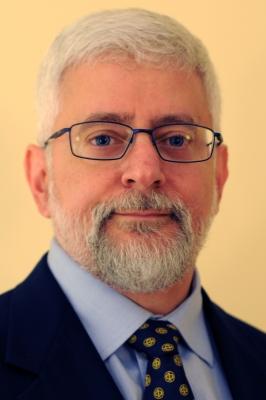
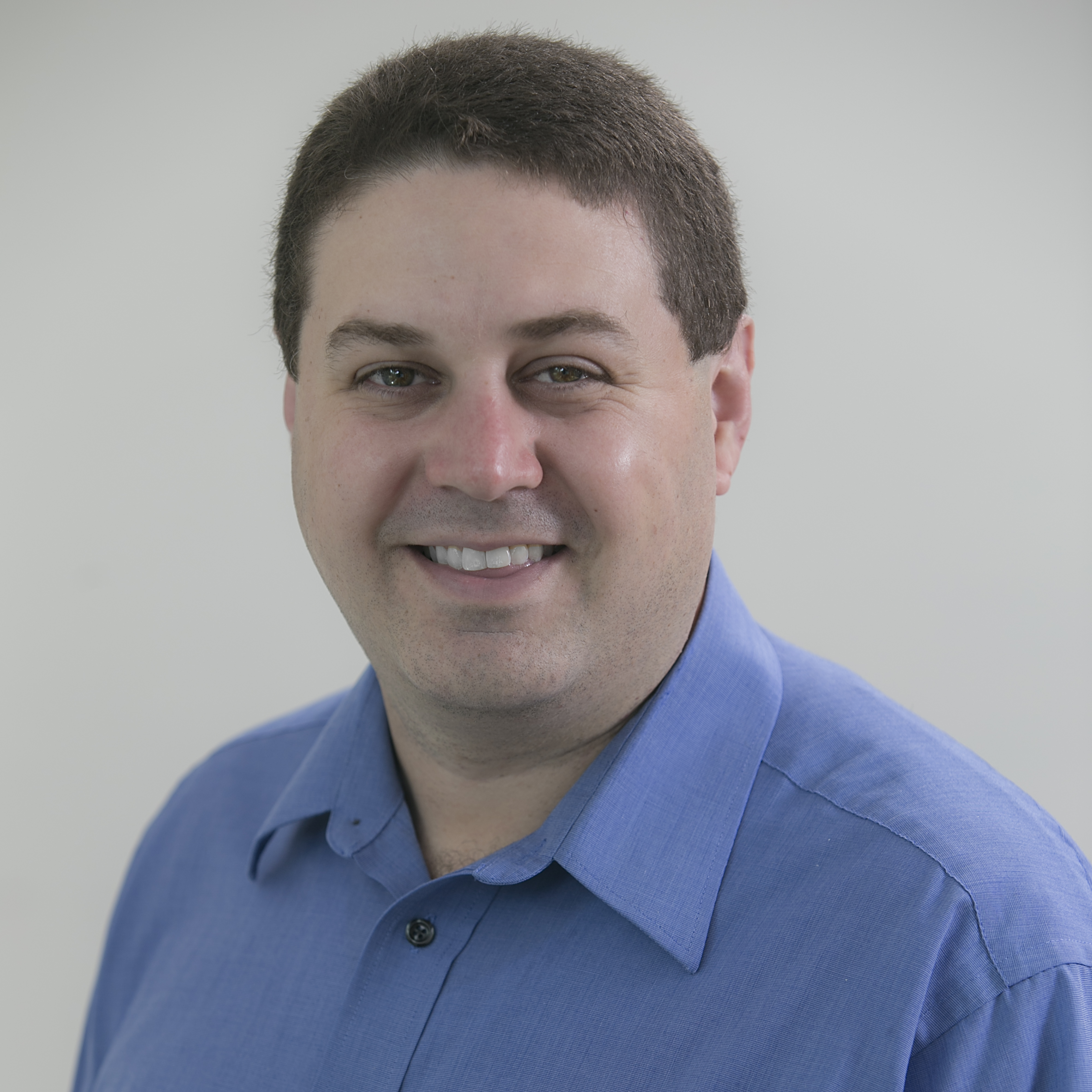
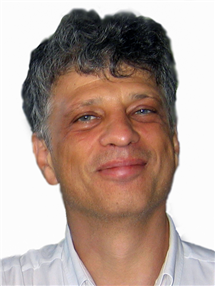
Fred B. Schneider is the Samuel B. Eckert Professor of Computer Science at Cornell University , where he has been a faculty member since 1978. His career spans foundational work in trustworthy systems , fault-tolerant distributed systems , and system security . He served as department chair from 2014–2018 and previously earned a B.S. in Engineering from Cornell (1975) and a Ph.D. in Computer Science from Stony Brook University (1978).
Kyle C. Hale is an Associate Professor at Oregon State University's School of Electrical Engineering and Computer Science (College of Engineering). He holds a Ph.D. and M.S. from Northwestern University (2016, 2013) and a B.S. in Computer Science from UT Austin (2010). Prior to joining Oregon State in 2024, he served as an Associate Professor at Illinois Tech in Chicago. His research spans operating systems, high-performance computing (HPC), virtualization, computer architecture, and system security. Current work focuses on specialized system software stacks for emerging computing paradigms like memory disaggregation and parallelism optimization. He leads the HExSA Lab and collaborates with the HiPCastor group. Scientific Awards: NSF CAREER Award (2023-2028) Illinois Tech College of Computing Excellence in Research (2023) Illinois Tech College of Computing Excellence in Teaching (2021) Illinois Tech Department of Computer Science Teacher of the Year (2020) EuroSys '22 Best Artifact Award Recent Research Trends: His publications emphasize compiler techniques for memory-disaggregated systems, optimizing parallel runtimes through hardware-software integration, virtualization at fine granularities, and accelerating machine learning workloads via system-level innovations. Keywords include HPC, virtualization, parallelism, and secure execution contexts. Teaching: Courses taught include Computer Architecture (CS/ECE 472), System Security (CSP 544), Operating Systems (CS 450), and advanced topics in serverless/edge computing. He actively recruits PhD students to the HExSA Lab.
Dr. Jing Li is an Associate Professor and Eduardo D. Glandt Faculty Fellow at the University of Pennsylvania , holding dual appointments in the Electrical and Systems Engineering and Computer and Information Science departments. As co-director of the CyberSavvy nationwide security research center and director of the Penn Computational Intelligence Lab (PennCIL) , she pioneers innovations in non-von Neumann computing paradigms. Her research spans post-CMOS technologies, in-memory computing, and hardware-software co-design for security and AI applications. PhD in Computer Engineering, Purdue University (2009) BSc in Electrical Engineering, Shanghai Jiaotong University (2004) Research Focus: Dr. Li's work addresses fundamental challenges in computer systems across the stack. Key areas include: In-Memory Computing: Liquid Silicon architecture combining RRAM with silicon CMOS through monolithic 3D integration Security Engineering: Transforming computer security from "Art" to formal "Engineering" discipline within CyberSavvy Virtualization: Cloud FPGA abstraction layers decoupling compilation from runtime resource management Graph Analytics: Degree-aware optimization techniques for massive-scale graph processing Deep Learning Systems: Roofline model extensions for FPGA-based CNN acceleration Scientific Impact: Awarded DARPA Young Faculty Award , NSF CAREER Award , and IBM CEO Milestone Award , her team has achieved world records in energy-efficient computing (ENIAD supercomputer). With 46 U.S. patents and over 80 publications, she leads ecosystem development for emerging computing architectures through initiatives like the open-source MEG simulation platform . Community Leadership: Dr. Li serves on program committees for flagship conferences ( ISCA , FPGA Symposium ), chairs the International Memory Workshop , and contributes to the MLsys conference's inaugural committee. She actively mentors through multiple PhD openings and industry collaborations.
Peter Dinda is a Professor in the Department of Computer Science at Northwestern University , with a secondary appointment in the Department of Electrical and Computer Engineering . He has authored over 130 scientific papers, holds five patents, and is a Fellow of the IEEE . As the former head of the Computer Engineering and Systems division, he has contributed extensively to experimental computer systems. Education: B.S. in Electrical and Computer Engineering from the University of Wisconsin Ph.D. in Computer Science from Carnegie Mellon University Research Focus: Experimental computer systems, particularly parallel and distributed systems , virtualization , operating systems , and empathic systems that integrate user satisfaction with systems-level decision-making. His work also spans compiler design, memory management, and hardware-software co-design for performance optimization. Recent Trends: His publications emphasize virtualization efficiency, memory protection frameworks, parallel programming language design, and power management in heterogeneous computing environments. Key areas include exascale systems, IoT privacy, and physiological sensor-based user modeling. Scientific Awards: Fellow, IEEE Leadership: Served as Director of Graduate Studies and previously led the Computer Engineering and Systems division.
Catherine Z. Elgin is a Professor of the Philosophy of Education at Harvard University's Graduate School of Education since 1996. She holds a Ph.D. from Brandeis University (1975) and has taught at MIT, Princeton, Wellesley, Dartmouth, UNC Chapel Hill, Michigan State, Simmons, and Vassar prior to her Harvard appointment. Literary executor for Nelson Goodman and Jonathan Adler Research focuses on epistemology , philosophy of art , and philosophy of science Argues that understanding (not knowledge) should be epistemology's central concern Research Trends across her publications reveal: Epistemic value of fiction and imagination Interdisciplinary connections between art, science, and philosophy Critique of analytic/synthetic distinctions Perspectival approaches to scientific representation Conceptual analysis of exemplification and metaphor Epistemic normativity in educational contexts Scientific Awards & Editorial Involvement : Elected to American Academy of Arts & Sciences (2023) Advisory Board, American Philosophical Association Committee on the Philosophy of Education Editorial Board, American Philosophical Quarterly Editorial Board, International Journal for the Philosophy of Science Academic Leadership : Teaches courses in philosophy of education Maintains active research program through Harvard's DASH repository Collaborates with educators across Harvard's schools including the Center for Ethics and the Professions
Tom Conte is an academic leader with a joint appointment in the School of Electrical & Computer Engineering and School of Computer Science at Georgia Institute of Technology. As the founding director of the Center for Research into Novel Computing Hierarchies (CRNCH), he specializes in computer architecture and compiler optimization. His work focuses on manycore architectures, energy-efficient microprocessor design, and embedded system architectures. Prior to Georgia Tech, he directed the Center for Embedded Systems Research at North Carolina State University. He holds IEEE Fellow status and served as 2015 President of the IEEE Computer Society, co-leading the IEEE Rebooting Computing Initiative since 2011. Dr. Conte earned his bachelor’s degree in Electrical Engineering from the University of Delaware (1986), followed by M.S. and Ph.D. degrees in Electrical Engineering from the University of Illinois at Urbana-Champaign (1988 and 1992). His research has been recognized with prestigious awards including the IEEE Computer Society’s Golden Core Member award and the National Science Foundation’s CAREER Award (1996). His research interests span quantum computing, 3D chip architectures, energy-efficient processing, and post-Moore computing innovations. He has pioneered initiatives like the Superstrider architecture and CREEPY energy-efficient processing frameworks. Recent work includes advancements in quantum programming languages (e.g., Qwerty) and hybrid quantum-classical systems. Awards: IEEE Fellow, Young Alumni Achievement Award, CAREER Award Leadership: IEEE Computer Society President (2015), CRNCH Director Key Projects: Rebooting Computing Initiative, Superstrider Architecture His lab’s contributions include novel compiler optimizations for manycore systems, smart NIC offloading techniques, and thermodynamically inspired computing models. Conte’s work bridges academic research with industry needs through interdisciplinary collaborations and standardization efforts.
Dengfeng Sun is a Professor and Associate Head of the Gambaro Graduate Program in the School of Aeronautics and Astronautics at Purdue University. His research focuses on distributed control systems, autonomy, resilient networks, and air traffic management. Sun holds a B.Eng. from Tsinghua University, an M.S. from The Ohio State University, and a Ph.D. from UC Berkeley. His work spans advanced air mobility, UAV trajectory planning, and stochastic optimization for large-scale systems. Key contributions include resilient UAV traffic control, distributed state estimation algorithms, and fault detection methods for navigation systems. Sun's research has been published in top journals like IEEE Transactions on Intelligent Transportation Systems and Transportation Research Part E. Education: B.Eng., Tsinghua University (2000) M.S., Ohio State University (2002) Ph.D., UC Berkeley (2008) He advises on cutting-edge projects integrating robotics, autonomous systems, and cloud-based traffic modeling. His lab develops solutions for urban air mobility, emergency medical UAV networks, and next-generation air traffic control systems. Notable collaborations include work with NASA and industry partners on continuous descent approach procedures and metroplex routing paradigms. Sun's work bridges theoretical control systems with practical applications in aviation and infrastructure optimization.
Thuy T. Le is a Professor of Electrical Engineering at San Jose State University's College of Engineering. With a distinguished career spanning several decades, he teaches graduate and undergraduate courses in digital system design, computer architecture, microprocessor systems, and related fields. His academic journey began with earning B.S., M.S., and Ph.D. degrees from the University of California, Berkeley. Professor Le's research interests encompass a broad spectrum of cutting-edge technological domains. His primary focus areas include System-on-Chip (SoC) and Embedded System Design, Hardware Accelerators for complex algorithms, Quantum Computing, implementation of Probability theory and Monte Carlo simulation, and radiation effects on electronic devices and systems. His work bridges traditional electrical engineering with emerging computational paradigms, demonstrating a consistent ability to adapt to evolving technological landscapes while maintaining strong foundations in core engineering principles. Analysis of Professor Le's publication record reveals a consistent trajectory from nuclear reactor physics and computational methods toward modern hardware acceleration and quantum computing. His early work focused on nuclear reactor simulation and radiation shielding, then evolved to parallel computing and distributed systems, and has recently centered on hardware acceleration for complex algorithms, quantum computing applications, and AI hardware. This progression demonstrates his ability to transition between major technological paradigms while maintaining expertise in computational methods and hardware implementation. Professor Le has demonstrated significant leadership in professional service, having served as keynote speaker, general chair, technical program chair, session chair, reviewer, and committee member for numerous international conferences. His service extends beyond academia through his role as Co-Founder and Advisor of the Vietnamese Strategic Ventures Network and Chairman of the Board of the United States–Vietnam Foundation. In his educational role, Professor Le has made substantial contributions to engineering curriculum development and assessment. He has taught a wide range of courses including EE271 (Advanced Digital System Design), EE210, EE250, and various project/thesis courses. His research advising spans digital system design, ASIC, SOC, and hardware accelerators. He has also collaborated with local companies on projects related to high-performance system architectures, parallel algorithms, digital arithmetic, and System-on-Chip verification.
Matthew Hertz is a Teaching Professor in the Department of Computer Science and Engineering at the University at Buffalo's School of Engineering and Applied Sciences. His research focuses on computer science education, runtime systems, and dynamic memory management. Education: PhD, Computer Science, University of Massachusetts Amherst, 2006 MS, Computer Science, University of Massachusetts Amherst, 2001 BA, Computer Science, Carleton College, 1997 Research interests span computer science education and systems optimization. His educational research investigates learning factors in introductory programming courses, develops pedagogical tools like CloudCoder for programming exercises, and analyzes failure rates in CS1 courses. In systems research, he focuses on memory management innovations including garbage collection algorithms, adaptive resource allocation, and performance optimization in shared environments. Publications show dual focus: recent work emphasizes educational data analysis and programming pedagogy while earlier research concentrates on memory management efficiency and runtime systems. Trends include automated assessment tools and adaptive algorithms for resource-constrained environments. No scientific awards reported. No advising or grant information available. No labs or teams mentioned in available data.
George Bosilca is a Research Professor at the University of Tennessee, Knoxville, affiliated with the Department of Electrical Engineering and Computer Science and the Innovative Computing Laboratory. He holds a PhD in Computer Science (University of Paris XI, 2004) and an MS in Math and Computer Science (University of Paris XI, 1999). His research focuses on distributed algorithms, parallel programming paradigms, performance modeling/optimization, and resilience in programming models. He contributes to exascale computing initiatives through projects like PaRSEC and Open MPI. Key research areas include task-based runtimes, MPI standardization for exascale systems, and fault-tolerant distributed computing. His work emphasizes scalable and portable constructs for high-performance applications. Bosilca is involved with the Innovative Computing Laboratory (ICL) and collaborates on projects like the EPEXA ecosystem and Argobots threading framework. Recent publications highlight advancements in asynchronous many-task systems, GPU-accelerated collective operations, and resilience strategies for HPC platforms. His contributions span theoretical frameworks and practical implementations, bridging algorithmic innovation with real-world HPC challenges.
Jeffrey Young is a Principal Research Scientist at Georgia Institute of Technology, working with the Partnership for Advanced Computing Environments (PACE) and leading Georgia Tech’s Open Source Program Office. His research focuses on high-performance computing (HPC), computer architecture, and novel accelerators including GPUs, FPGAs, and Arm/RISC-V processors. He leads next-generation computing strategy at PACE and directs the NSF-funded CRNCH Rogues Gallery testbed, which explores post-Moore accelerators like neuromorphic and near-memory systems. His work bridges hardware-software co-design and scientific software engineering. Recent research trends show expertise in quantum programming (Qwerty/ASDF), heterogeneous computing (Cupbop), and memory system optimization across GPUs, FPGAs, and CPUs. He has contributed to exascale workflows (HIPLZ), safe HPC libraries, and UAV co-simulation frameworks. Scientific Awards: NSF-funded CRNCH Rogues Gallery testbed (2020-2024) Education: Ph.D. in Computer Architecture (2013), advised by Dr. Sudhakar Yalamanchili Labs & Initiatives: Director, CRNCH Rogues Gallery testbed Co-Director, Georgia Tech Center for Scientific Software Engineering Director, Georgia Tech Open Source Program Office
David Wood is a Professor in the Department of Computer Sciences at the University of Wisconsin-Madison, with primary affiliation to the College of Engineering. His research focuses on cost-effective computer architectures and tools for evaluating performance, feasibility, and correctness of new systems. Multi-paradigm multiprocessors integrating shared-memory, message-passing, and hybrid programming Virtual prototyping systems leveraging similarities between existing and hypothetical parallel machines Performance tuning techniques for program optimization He developed Fast-Cache, a memory system simulation method optimizing cache hits to reduce simulation time, and Typhoon, a hardware platform implementing Tempest mechanisms for low-overhead inter-paradigm communication.
Lawrence Rauchwerger is a Professor in the Department of Computer Science at the University of Illinois at Urbana-Champaign (UIUC), affiliated with the Siebel School of Computing and Data Science within the Grainger College of Engineering. Previously, he held the Eppright Professorship at Texas A&M University and co-directed the Parasol Laboratory. He earned his Engineer degree from the Polytechnic Institute in Bucharest, an M.S. from Stanford University, and a Ph.D. from UIUC. His research focuses on parallel computing, compilers, scientific computing, and runtime systems. Notable contributions include the STAPL library, advancements in parallel graph algorithms, and thread-level speculation techniques. Rauchwerger has been recognized with prestigious awards, including AAAS and IEEE Fellowships, and has led numerous grants in exascale computing and radiation transport. He has advised over 30 graduate students and contributed to influential conferences as a chair and reviewer. His work bridges theory and practice, emphasizing scalable algorithms and adaptive parallel programming models. Current research interests include biological neural networks and high-performance computing frameworks.
Justin Y. Shi is an Associate Professor at Temple University's Computer and Information Science Department. His research focuses on scalable computing, blockchain protocols, software safety, and infinitely scalable systems. He holds a PhD from the University of Pennsylvania and has held roles including Interim Director of the Center for Advanced Computing and Communications (1992-1998) and CIS Department Chair (2007-2009). B.S. Computer Engineering, Shanghai Jiao-tong University (1977) M.S. Software Engineering, University of Pennsylvania (1983) PhD in Concurrent Programming, University of Pennsylvania (1984) His research explores decoupling programs and data from physical devices to achieve fault tolerance and scalability. Key contributions include the Statistic Multiplexed Computing (SMC) paradigm and foundational work on parallel algorithms and distributed systems. He has authored patents on scalable parallel computing and high-performance blockchain systems. Teaching highlights include courses on quantum computing, cybersecurity, and fullstack programming. He has advised over 15 students, many now in industry and academia. Founder & CEO of Parallel Computers Technology Inc. (2000-2017) Co-founder of SMC Labs (2022-present) Active in editorial roles for IEEE Blockchain Technology Briefs and contributor to NSF workshops on cloud computing. His work has been exhibited at Supercomputing Conferences (1991-2018).
David Sears is an Associate Professor of Interdisciplinary Arts at Texas Tech University , affiliated with the J.T. & Margaret Talkington College of Visual & Performing Arts . He co-directs the Performing Arts Research Laboratory (PeARL) and coordinates the Bachelor of Arts in Interdisciplinary Arts Studies. Prior to TTU, he earned a PhD in Music Theory from the Schulich School of Music at McGill University (2016) and completed a postdoc at Johannes Kepler University (2017). Dr. Sears' research focuses on the structural parallels between music and language , particularly in tonal harmony, using behavioral and computational methods. His work also spans popular music analysis (e.g., 80s pop synthesizers, Billboard Hot 100 trends), music and emotion , DIY communities on platforms like Pinterest, and film/video game music (e.g., jump scares, autism spectrum emotion recognition). His publications appear in venues like Music Perception , Psychology of Music , and Quarterly Journal of Experimental Psychology . PeARL, where he is a director, employs methods from psychophysics , cognitive psychology, and music informatics to study music, theatre, dance, and visual arts. Current projects include modeling musical expectation , analyzing horror film soundtracks , and exploring DIY online communities . As a pedagogue, Dr. Sears teaches graduate seminars in the Fine Arts Doctoral Program and undergraduate/graduate music theory courses. His lab's recent graduates include Hannah Percival (2024) and Sylvia Weintraub (2024), with ongoing advising of PhD candidates like Elizabeth Acosta and Devin Guerrero.