Richard D. Wesel is an Associate Dean for Academic and Student Affairs at a College of Engineering, where he has held leadership roles such as Vice-Chair of the Electrical Engineering Department. With Ph.D. and M.S. degrees in Electrical Engineering from Stanford University and MIT respectively, his research focuses on communication theory and channel coding, particularly low-density parity-check (LDPC) codes and turbo codes for efficient data transmission over noisy channels. Education: MIT (B.S., M.S.), Stanford (Ph.D.) Leadership: Associate Dean, Former Vice-Chair of Electrical Engineering Wesel's research explores advanced techniques for broadcast and multiple-access communication systems, emphasizing applications in wireless LANs, satellite communications, and optical networks. His work integrates machine learning with traditional decoding algorithms, as seen in recent publications on neural-network-optimized LDPC decoding and parallel trellis-stage-combining methods for high-throughput systems. His articles demonstrate a focus on finite-blocklength coding, including CRC-aided list decoding for convolutional and polar codes, and voltage optimization strategies for flash memory reliability. Wesel has authored over 100 publications and led a research group that won the 2006 Design Automation Conference's top award for optical multiple access design. Scientific Awards: National Science Foundation CAREER Award Okawa Foundation Award As an educator, Wesel received the TRW Excellence in Teaching Award in 2000 and has contributed to academic governance through roles on the Faculty Executive Committee and Undergraduate Council. His work bridges theoretical communication systems with practical implementations, including FPGA-based decoders and adaptive coding for fading channels.
Jianfeng Gu is a Ph.D. Candidate and researcher at the Technical University of Munich (TUM), affiliated with the Department of Computer Science and specifically the Chair of Computer Architecture and Parallel Systems led by Prof. Martin Schulz. He maintains an active research profile with numerous publications and contributes to the academic community through teaching seminars on Cloud Computing. His academic path began with a Bachelor of Software Engineering from Sun Yat-sen University in China (2014-2018), followed by a Master of Engineering from the same institution (2018-2020). Since April 2021, he has been pursuing his Ph.D. at TUM, advancing research in computing systems and architectures. Gu's research focuses on Heterogeneous Serverless Computing for Deep Learning applications, specializing in GPU, FPGA, and NPU technologies within serverless environments. His work addresses critical challenges in resource allocation, auto-scaling, and performance optimization for serverless inference systems. Additionally, he investigates Real-time Autonomous Driving Systems , developing advanced perception techniques through sensor fusion (particularly stereo-LiDAR fusion) for high-precision depth sensing and object detection in autonomous vehicles. His interdisciplinary approach bridges hardware acceleration, cloud infrastructure, and AI applications. His publication trajectory shows a progression from foundational computer vision and autonomous driving research (2018-2020) toward increasingly sophisticated work on serverless computing and federated learning (2021-2025). Recent publications focus on efficient resource sharing in heterogeneous serverless environments, with particular attention to GPU and FPGA allocation strategies that maintain service level objectives while optimizing costs. His work demonstrates strong technical depth across multiple computing domains. Best Paper Award at IEEE/ACM DATE 2021 15+ publications with 185+ citations Research featured in top venues for computer architecture and cloud computing As a Ph.D. researcher, Gu teaches seminars on Cloud Computing (IN2107) and contributes to multiple research projects at TUM's Chair of Computer Architecture and Parallel Systems. His work is supported by the department's research infrastructure and collaborations with faculty including Prof. Martin Schulz and Prof. Michael Gerndt. Gu works within TUM's advanced computing research environment, contributing to projects related to high-performance computing, serverless architectures, and autonomous systems. His research group maintains specialized hardware and software infrastructure for evaluating modern HPC architectures and accelerators, including FPGA clusters and GPU resources for deep learning research.
Dr. Xiong Yi is an Assistant Professor at the School of System Design and Intelligent Manufacturing (SDIM) at Southern University of Science and Technology (SUSTech) in Shenzhen, China. He leads the Computational Design and Fabrication (CoDeFab) research group, focusing on the integration of computational design methods with advanced manufacturing technologies, particularly in the field of additive manufacturing. Dr. Xiong has established himself as a leading researcher in computational design for additive manufacturing, with a strong international research background spanning Europe and Asia. Dr. Xiong's educational journey includes: Doctor of Science (DSc) in Engineering Design and Production from Aalto University, Finland (2012-2016) Master of Science (MSc) in Machine Automation from Tampere University of Technology, Finland (2010-2012) Bachelor of Engineering (BEng) in Mechanical Engineering from Hubei University of Technology, China (2006-2010) Dr. Xiong's research primarily focuses on computational design and fabrication methodologies, with particular emphasis on design for additive manufacturing (DfAM), intelligent manufacturing systems, and smart materials. His work bridges the gap between theoretical design principles and practical manufacturing constraints, developing novel approaches for the production of complex engineered products. He has pioneered research in continuous fiber-reinforced composite additive manufacturing, developing innovative process planning and optimization techniques that enable the production of high-performance structural components. His research in electrothermally controlled origami and 4D printing of smart materials represents cutting-edge work at the intersection of materials science, mechanical engineering, and computational design. Dr. Xiong's recent publications reveal a strong focus on continuous fiber-reinforced composites, with significant contributions to 4D printing, metamaterials, and intelligent process planning. His work integrates computational design with manufacturing constraints, creating novel approaches for topology optimization, toolpath planning, and structural design that consider both performance requirements and manufacturability limitations. The research demonstrates increasing sophistication in materials science applications, particularly in programmable materials and multi-functional structures. Dr. Xiong has received multiple prestigious awards for his research contributions, including: Best Presentation Award at the 24th Chinese Conference on Mechanisms and Machine Science (IFToMM CCMMS2024) Best Presentation Award at the International Conference on Frontiers of Additive Manufacturing Research (RAAM 2024) Best Paper Award at the International Conference on Design for 3D Printing (ICD3DP 2023) PhD Scholarship from Aalto University (2016) Research Travel Grant from the International Association for Vehicle System Dynamics (IAVSD) (2013) National Scholarship from the Ministry of Education (2008) As a dedicated educator and mentor, Dr. Xiong serves as a PhD supervisor at SUSTech and has successfully guided students who have gone on to pursue advanced studies and careers at prestigious institutions including Hong Kong Polytechnic University, Beihang University, DJI Innovations, and Singapore's A*STAR research institute. His research is supported by multiple competitive grants, including key projects from the National Key R&D Program of China, the National Natural Science Foundation of China, and provincial and municipal funding agencies. Dr. Xiong also serves on the editorial board of the Journal of Engineering Design and as a guest editor for Composites Communications, contributing to the advancement of his field through scholarly service. Dr. Xiong leads the CoDeFab research group, which maintains a strong collaborative culture focused on 'design leading manufacturing, manufacturing driving design, and digital-intelligent integration.' The group has developed several advanced manufacturing platforms, including multi-axis continuous fiber-reinforced composite additive manufacturing systems, smart composite additive manufacturing platforms, and multifunctional soft matter open manufacturing platforms. With a focus on practical applications and innovation, the CoDeFab group actively collaborates with industry partners and has established a joint laboratory to bridge academic research with industrial implementation.
Boro Jakimovski is an Assistant Professor at the Institute of Informatics, Faculty of Natural Sciences and Mathematics, Ss. Cyril and Methodius University in Skopje. He specializes in Grid computing, High-performance computing, and Parallel and distributed processing, with significant contributions to international projects like the European Grid Initiative and SEE-GRID series. PhD in Informatics (2010) - Thesis: Modelling and verification of Grid workflows MSc in Informatics (2004) - Thesis: Communications in Grids BSc in Informatics (2000) - Graduated top of class His research focuses on optimizing computational grids through adaptive workflows and genetic algorithms. He teaches courses such as Distributed Operating Systems and Software Construction, while previously tutoring foundational informatics topics including Algorithms and automata, Data structures, and Parallel processing. Publications span 18 international conferences and 1 journal article, with a notable awarded paper at MII 2003 . Key projects include FP7 coordination for Pan-European infrastructure and leadership in SEE-GRID initiatives as Grid Infrastructure Manager for Macedonia. Scientific Awards : Awarded paper at MII 2003 International Conference Grants : Participated in 15+ international projects (FP6, FP7, TEMPUS, UNESCO, DAAD, INTERREG III) International Engagement : Lectured at 20+ workshops, visited 10+ universities/summer schools Specializations include Grid infrastructure development, having completed professional visits to institutions like CERN (Switzerland), Humboldt University (Germany), and Software Technology Research Laboratory (UK). He chairs Macedonia's coordination in European Grid Initiative projects and contributes to curriculum development across SEE countries.
Tony Stillfjord is an Associate Professor at the Centre for Mathematical Sciences, Lund University, Sweden. He previously held postdoctoral positions at the Max Planck Institute for Dynamics of Complex Technical Systems and Chalmers/University of Gothenburg. Ph.D. and MSc in Numerical Analysis from Lund University Funded by WASP (Wallenberg AI, Autonomous Systems and Software Program) Research Interests : Numerical methods for partial differential equations, splitting schemes, stochastic optimization, and large-scale differential Riccati equations. His work focuses on developing low-rank approximations and robust optimization algorithms. Recent Publications highlight advancements in Lie/Strang splitting for operator-valued Riccati equations, stochastic descent methods, and GPU-accelerated splitting schemes. Software Contributions : Developed DREsplit (MATLAB package for differential Riccati equations) and BST20_CODE for stochastic optimization experiments. Contact : Office at MH:562E, Lund University. Email: tony.stillfjord@math.lth.se . URL: tonystillfjord.net
Nisanth N. Nair is Professor of Chemistry at the Indian Institute of Technology Kanpur (IITK), India, holding the position since 2018. He obtained his PhD from the Universität Hannover, Germany (2004) after completing his MSc in Chemistry at IIT Madras (2001). His research group pioneers advanced computational-chemistry methods to address grand-challenge problems in energy, healthcare and materials science. Education PhD (2004), Universität Hannover, Germany MSc (2001), Chemistry, Indian Institute of Technology Madras Research Interests Professor Nair’s work is organized around five tightly linked thrusts: Method development: massively parallel QM/MM algorithms, polarizable force-fields, metadynamics and hybrid functionals for large-scale catalytic systems. Energy catalysis: computational design of Rh/Al₂O₃ and Rh/TaON catalysts for efficient water-splitting and H₂ production. Healthcare: molecular mechanisms behind antibiotic resistance in NDM-1 and Class-C β-lactamase enzymes, guiding de-novo inhibitor discovery. Aerospace materials: multi-scale modelling of thermo-oxidative degradation of high-temperature polymers in collaboration with Boeing. Heterogeneous catalysis: olefin hydrogenation on Rh/Y-zeolite and single-atom catalysis phenomena. Publications Trend His recent articles (2011–2013) highlight an integrative approach combining rigorous electronic-structure calculations with micro-kinetic modelling to unravel complex catalytic cycles, antibiotic-resistance pathways and support-effects in single-atom catalysts. Honours & Awards P. K. Kelkar Young Faculty Research Fellow, IIT Kanpur (2012–2015) Young Associate, Indian Academy of Sciences, Bangalore (2012–2015) Young Scientist Medal, Indian National Science Academy, New Delhi (2013) Contact & Resources Office: SL 302, Department of Chemistry, IIT Kanpur, Kanpur 208016, India Phone: +91 512 259 6311 Email: nnair@iitk.ac.in Web: http://home.iitk.ac.in/~nnair
Harutyun Ishkhanovich Avetisyan is a Professor and Head of the Basic Department "System Programming" at the Faculty of Computer Science of the National Research University Higher School of Economics (HSE). He began his tenure at HSE in 2017 and brings 30 years of scientific and teaching experience to his role. Additionally, he serves as the Director of the Institute for System Programming of the Russian Academy of Sciences (ISP RAS), a position he has held since 2015. Avetisyan holds numerous prestigious academic distinctions, including being elected as an Academician of the Russian Academy of Sciences in 2019 and as a Corresponding Member in 2016. He earned his Doctor of Physical and Mathematical Sciences degree in 2012 and was awarded the academic title of Associate Professor in 2009. His educational background includes a specialty in "Applied Mathematics" from Yerevan State University (1993). His research focuses on three main areas: analysis and transformation of programs, software security, and parallel and distributed computing technologies. These interests are reflected in his extensive publication record and leadership in major research initiatives. His work bridges theoretical computer science with practical applications in cloud computing, secure data storage, and high-performance computing systems. Avetisyan's scholarly contributions demonstrate a consistent focus on system programming challenges, particularly in the areas of code analysis, optimization, and security. His recent publications indicate a growing interest in cloud computing paradigms, smart city infrastructure, and energy-efficient computing solutions. His research has significant implications for both academic theory and industrial applications in software development. Among his notable recognitions, Avetisyan was awarded the medal of the Order "For Merit to the Fatherland" 2nd degree in 2021 for his significant contributions to science and dedicated service. He also serves on the editorial boards of several prestigious journals including "Programming" (since 2015) and "Proceedings of the Institute for System Programming of the RAS" (since 2010). Throughout his career, Avetisyan has led and participated in numerous research grants funded by the Ministry of Education and the Russian Foundation for Basic Research. His professional trajectory shows steady progression from postgraduate studies (1997-2000) to research fellow (2000-2002), deputy director of ISP RAS (2002-2015), and ultimately director of the institute (2015-present). At HSE, Avetisyan teaches courses in parallel programming and mentor seminars for master's students in Software Engineering. His teaching philosophy emphasizes the integration of cutting-edge research with practical software development skills, preparing students for careers at the forefront of computer science.
Jaechun No is a Professor at the Department of Computer Science and Engineering, College of Engineering, Sejong University. With a Ph.D. from Syracuse University (1999), he previously served as a Researcher at Argonne National Laboratory (1999-2001) and Hewlett Packard HPDC Laboratory (2001-2003) before joining Sejong University in 2003. Education: B.S., Ewha Womans University (1985) M.S., Western Illinois University (1993) Ph.D., Syracuse University (1999) His research focuses on Cloud/Edge computing , NVMe SSD technologies , and large-scale distributed/parallel storage systems . Key achievements include optimizing KVM/QEMU and Docker I/O virtualization, developing machine learning-based server failure prediction systems, and advancing NVMe/NAND flash memory I/O caching mechanisms for hybrid file systems. Recent publications highlight his work on virtualized I/O performance control (L-DTC, 2025), GPU Direct I/O classification (e-CLAS, 2024), Kubernetes resource provisioning (2024), and virtual storage resource redistribution (vThrot, 2024). These reflect trends in virtualization optimization, machine learning integration, and distributed resource management. Jaechun No's research has been cited extensively, with 148 Scopus h-index and over 8,000 citations. His collaborations span multiple countries and institutions, focusing on I/O virtualization, storage technologies, and distributed computing environments. Professional Affiliations: Current Professor at Sejong University (2003-present) Researcher at Argonne National Laboratory (1999-2001) Researcher at Hewlett Packard HPDC Laboratory (2001-2003)
Professor Jeffrey W. Bode serves as Full Professor at the Department of Chemistry and Applied Biosciences at ETH Zurich, Switzerland, and maintains a secondary affiliation with the Institute of Transformative Biomolecules at Nagoya University, Japan. His internationally recognized research laboratory develops novel chemical reactions that operate under physiological conditions, bridging synthetic organic chemistry with biological applications. The Bode Research Group specializes in creating chemical methodologies that function in water and biological environments, including proteins, cells, and tissues. Their major research thrusts include acylboronate chemistry (particularly potassium acyltrifluoroborates or KATs), protein synthesis through ketoacid-hydroxylamine (KAHA) ligation, synthetic fermentation for drug discovery, and SnAP chemistry for N-heterocycle synthesis. These innovations enable applications in wound healing, drug delivery, cellular encapsulation, and artificial tissue development. The group's work on chemoselective ligation reactions has fundamentally advanced amide bond formation without traditional coupling reagents. Recent publications demonstrate a strong trajectory toward automated synthesis platforms, protein engineering, advanced bioconjugation techniques, and applications in chemical biology. The group has successfully commercialized SnAP chemistry through Sigma Aldrich and developed KAHA ligation into a robust method for synthesizing large proteins. Their research consistently focuses on creating molecules inaccessible through existing technologies, with particular emphasis on physiological compatibility and biological relevance. Professor Bode leads an international research team of approximately thirty PhD students and postdoctoral researchers from twenty different countries. The Bode Research Group maintains extensive collaborations across disciplines, contributing significantly to chemical biology, medicinal chemistry, and materials science. Their laboratory is equipped with advanced automation platforms for organic synthesis and maintains strong connections with pharmaceutical and biotechnology industries for translational applications of their chemical methodologies.
Praveen Agarwal is a Professor of Mathematics at the Department of Mathematics, International College of Engineering, located near Kanota, Agra Road, Jaipur-303012, Rajasthan, India. He also maintains a significant affiliation with the Lepage Research Institute in Slovakia. His academic profile demonstrates a strong international presence with collaborations spanning multiple continents. Dr. Agarwal's research expertise centers on Special functions , Fractional calculus , and Mathematical Physics . His work in fractional calculus represents cutting-edge contributions to this specialized mathematical field, developing theoretical frameworks with applications across diverse scientific disciplines. His research in special functions has led to numerous extensions and generalizations of classical mathematical constructs, creating innovative tools for solving complex differential equations. In mathematical physics, he applies rigorous analytical techniques to model physical phenomena, particularly those involving wave propagation, diffusion processes, and energy systems. Analysis of Dr. Agarwal's extensive publication record reveals a sophisticated approach to fractional-order differential equations with applications spanning viscoelastic wave behavior, neural networks, energy storage systems, and biomedical engineering. He frequently develops novel mathematical methods, including specialized integral transforms and polynomial-based solution techniques, to address complex nonlinear systems. His research consistently bridges pure mathematical theory with practical engineering applications, particularly in areas requiring precise modeling of memory effects and non-local phenomena. The interdisciplinary nature of his work is evident in publications addressing both theoretical mathematics and practical engineering challenges. Dr. Agarwal maintains active research collaborations with prestigious institutions worldwide, including The Union of Czech Mathematicians and Physicists, University of Prešov in Prešov, Eötvös Loránd University, Italian Society for General Relativity and Gravitation, Transilvania University of Brasov, VŠB-TU Ostrava, and Lodz University of Technology. These international partnerships reflect the global recognition of his contributions to mathematical sciences and demonstrate his ability to work across disciplinary boundaries to solve complex problems.
Andang Sunarto is an Associate Professor affiliated with the State Islamic Institute (IAIN) Bengkulu, Indonesia and the Lepage Research Institute, Slovakia . His work bridges Numerical Analysis , Computational Mathematics , and Algorithm Design with applications in Robotics , Image Processing , and Sharia-Compliant Systems . Research Focus: Fractional Calculus, Nonlinear PDEs, GPU-Accelerated Algorithms Collaborations: International institutions including Union of Czech Mathematicians and Physicists and University of Prešov His recent publications (2021–2025) emphasize Iterative Methods for solving Time-Fractional Diffusion Equations and Porous Medium Models . He also explores Digital Islamic Education and Halal Tourism Development . Despite no listed awards, his work spans diverse domains like Mobile Banking Evaluation , Environmental Pollution Analysis , and Ethnobotanical Applications . Andang actively designs EdTech tools (e.g., Wordwall-based modules) and contributes to computational methods in Climate Modeling and Nonlinear Diffusion .
Jason R. Green is a Professor in the Department of Chemistry at the University of Massachusetts Boston. With a PhD from Purdue University (2007) and postdoctoral experience at the Universities of Chicago, Cambridge, and Northwestern University, his research bridges theoretical chemistry, physics, and data science to explore nonequilibrium systems. His work focuses on transforming chemical energy into dynamically functional materials through interdisciplinary approaches. Education: B.S., Case Western Reserve University (cum laude, 2002) Ph.D., Purdue University (2007) with NASA Graduate Fellowship NSF Postdoctoral Fellow at University of Chicago and University of Cambridge Research Interests: Theoretical chemical physics Nonequilibrium statistical mechanics Data science applications in chemical systems His recent publications analyze electrochemical material dynamics (ACS Nano 2024), chemically driven self-assembly (Chemical Science 2024), and thermodynamic speed limits across disciplines (Nature Physics 2020, Physical Review X 2022). He has received prestigious fellowships including NASA's Graduate Student Researchers Program and NSF Postdoctoral Fellowship. The Green Research Group at UMB applies theory, computation, and data science to understand energy transformation in synthetic and biological materials.
Brandon Lucia is a Full Professor in the Department of Electrical and Computer Engineering at Carnegie Mellon University's College of Engineering. He leads the abstract research group focusing on the intersection of computer architecture, systems, and programming languages. His work bridges theoretical foundations with practical implementations in energy-constrained environments. Lucia's research centers on intermittent computing systems and edge computing in extreme environments. His work on energy-harvesting systems has established fundamental principles for batteryless computing, while his orbital edge computing research pioneers computational intelligence for nanosatellite constellations. These research thrusts address critical challenges in reliability, efficiency, and programmability for systems operating under severe power constraints. His publication record shows a clear evolution from foundational work on intermittent computing models to sophisticated applications in space computing and edge intelligence. Recent publications demonstrate increasing integration of dataflow architectures with energy-harvesting constraints, particularly in satellite constellations where computational resources must be managed across distributed, power-constrained platforms operating in extreme environments. NSF CAREER Award (2017) IEEE TCCA Young Computer Architect Award (2019) Sloan Foundation Fellowship (2021) ASPLOS Best Paper Awards (2018, 2020) OOPSLA Distinguished Paper and Artifact Awards (2015) Lucia actively mentors numerous PhD students including Brad Denby, Zhuo Cheng, and Emily Ruppel, many of whom contribute significantly to his research program. His abstract research group maintains strong industry connections while pursuing fundamental advances in computing systems. The group has developed multiple open-source tools including Legerdemain for program analysis and MultiCacheSim for cache coherence simulation. His laboratory work spans from theoretical foundations of intermittent computing to practical implementations in space systems. Current projects include computational nanosatellite constellations, energy-minimal dataflow architectures, and secure edge computing systems that operate reliably despite frequent power failures.
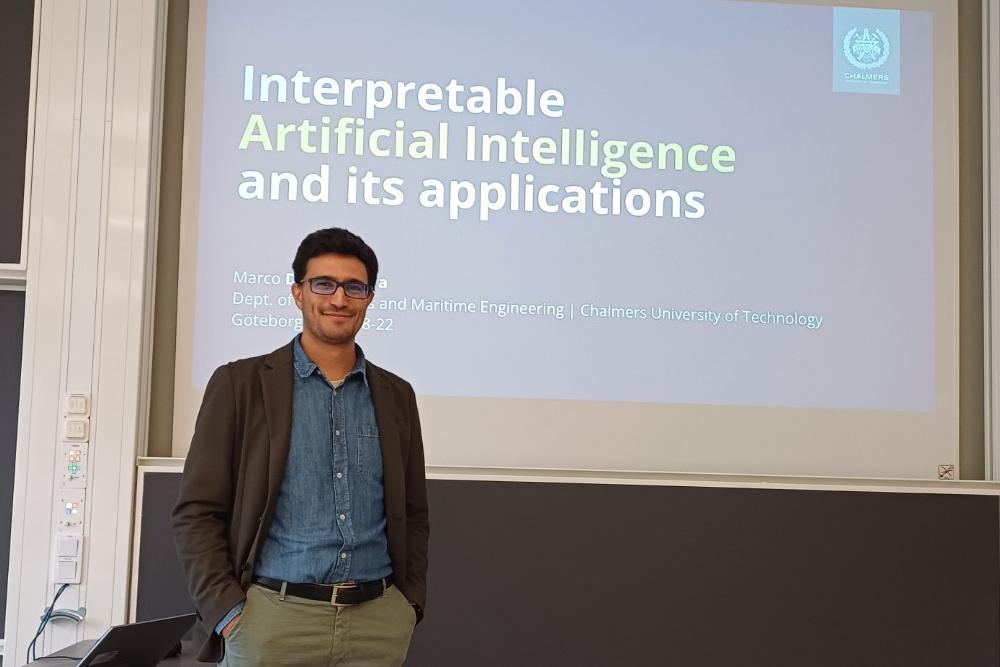
Marco L. Della Vedova is a Senior Lecturer in Applied Artificial Intelligence at Chalmers University of Technology, Sweden. He works in the Vehicle Engineering and Autonomous Systems division within the Department of Mechanics and Maritime Sciences, as part of Prof. Mattias Wahde's research group. Since 2025, he has served as Director of the Data Science and AI master's programme (MPDSC) at Chalmers, where he teaches courses including Introduction to Artificial Intelligence and Digitalization in Sports. Dr. Della Vedova earned his academic foundation at the University of Pavia, Italy, where he completed his BSc (2006), MSc (2009), and PhD (2013) in Computer Engineering. His doctoral research focused on "Real-Time Physical Systems and Electric Load Scheduling" under Prof. Tullio Facchinetti. During his PhD studies, he spent a year at U.C. Berkeley hosted by Prof. Francesco Borrelli at the Model Based Predictive and Distributed Control Lab. His research spans multiple AI domains with a strong emphasis on interpretability. Dr. Della Vedova develops interpretable methods for conversational AI, naturalness evaluation of forests using canopy height models, and geospatial applications. His work bridges theoretical AI with practical societal benefits, particularly in environmental monitoring, transportation systems, and orienteering. He has previously contributed to cloud computing, hate speech detection, and cyber-physical energy systems, demonstrating his interdisciplinary approach to AI research. Dr. Della Vedova's publication record reveals a consistent trajectory of impactful research across multiple domains of artificial intelligence. His recent work shows a strong focus on interpretability in AI systems, with significant contributions to natural language processing, geospatial analysis, and causal inference. The research demonstrates both theoretical depth and practical applications, particularly in environmental monitoring and social media analysis. His methodology often combines traditional machine learning approaches with novel interpretability techniques, creating bridges between complex AI systems and human understanding. Dr. Della Vedova has received several prestigious recognitions for his work: Best PhD thesis award from the Order of the Engineers of Bergamo (2013) Italian champion of Il Cervellone (2012) Top Italian performer in IEEEXtreme 6.0 programming competition (148th overall globally, 2012) Premio Arturo Schena award from Fondazione Credito Valtellinese (2010) With over 50 students supervised through bachelor's and master's theses, Dr. Della Vedova has established himself as a dedicated mentor in the AI community. His current PhD students include Minerva Suvanto working on interpretable NLP and Vivien Lacorre developing AI for railway infrastructure inspection. His supervision spans diverse topics from forest naturalness evaluation to hate speech detection and transportation optimization. Beyond formal supervision, he actively contributes to educational initiatives including serving as Director of Chalmers' Data Science and AI master's program and developing innovative teaching methods that connect theoretical concepts with real-world applications. Dr. Della Vedova is deeply embedded in both academic and professional communities. He leads the Applied Artificial Intelligence research group at Chalmers while maintaining strong connections with European research networks through projects like the ERASMUS+ EUrienteering initiative. His interdisciplinary approach is reflected in collaborations across computer science, environmental science, and social sciences. Notably, he applies his AI expertise to orienteering both as a researcher developing localization methods and as a licensed Event Advisor for the International Orienteering Federation, demonstrating how his professional and personal interests converge in innovative ways.
Professor Abdel Lisser is affiliated with CentraleSupélec, where he conducts research in Gif-sur-Yvette, France. His work spans multiple disciplines including stochastic optimization, game theory, and machine learning. Research Interests: Stochastic Optimization, Chance Constrained Optimization, Distributionally Robust Optimization, Stochastic Game Theory, Physics-Informed Neural Networks. His recent publications focus on integrating stochastic programming with deep learning frameworks to address complex optimization problems under uncertainty. Key areas include Markov Decision Processes, joint chance constraints, and applications in autonomous vehicle control and network design. In 2025, he published on single-controller stochastic games, convex approximations for Markov processes, and physics-informed neural networks for nonlinear equations. 2024 contributions include distributionally robust Markov decision processes, neurodynamic optimization, and CNN-based equilibrium prediction in games. Email: abdel.lisser@l2s.centralesupelec.fr Institution: L2S, CentraleSupélec Location: 3 rue Joliot Curie, 91190 Gif-sur-Yvette, France