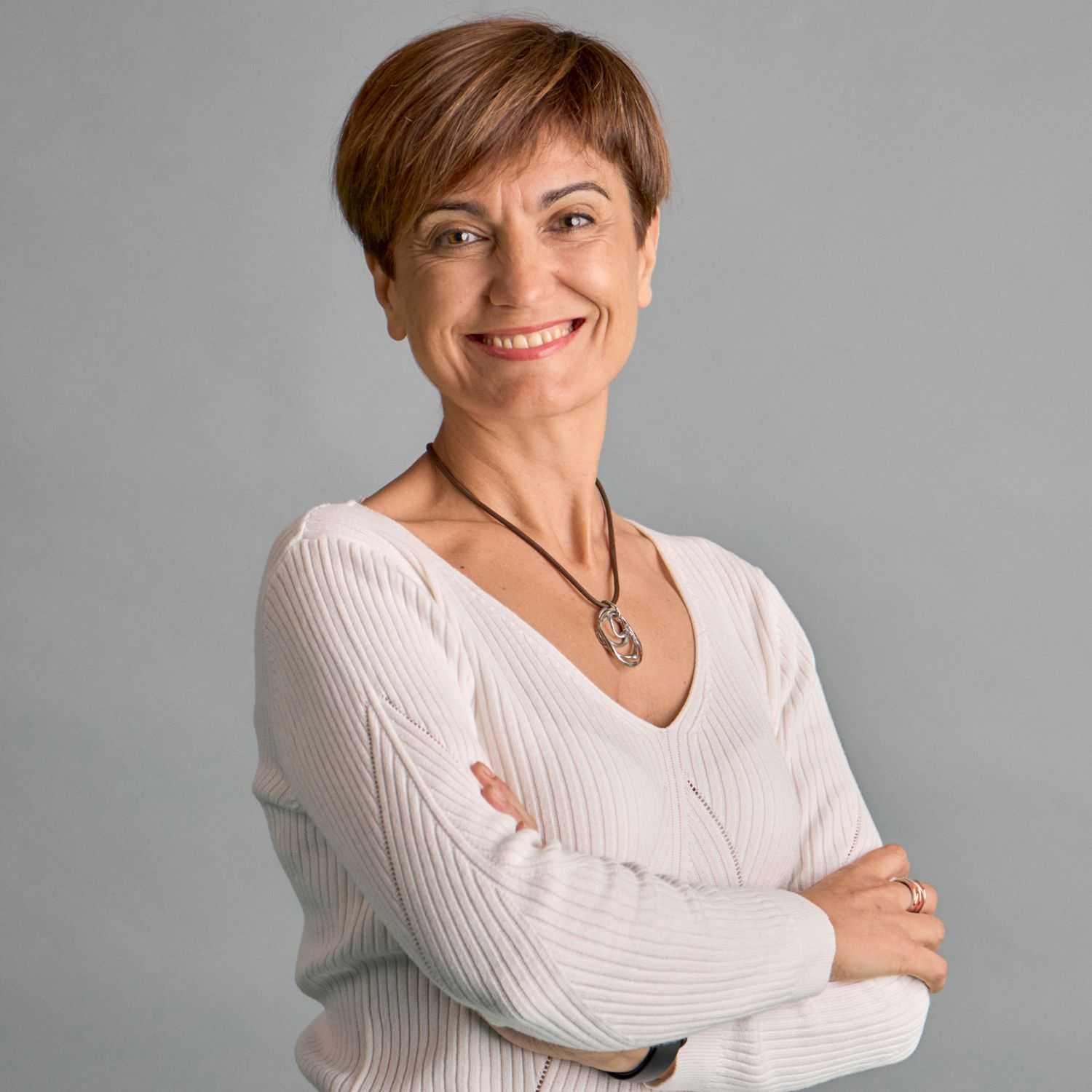
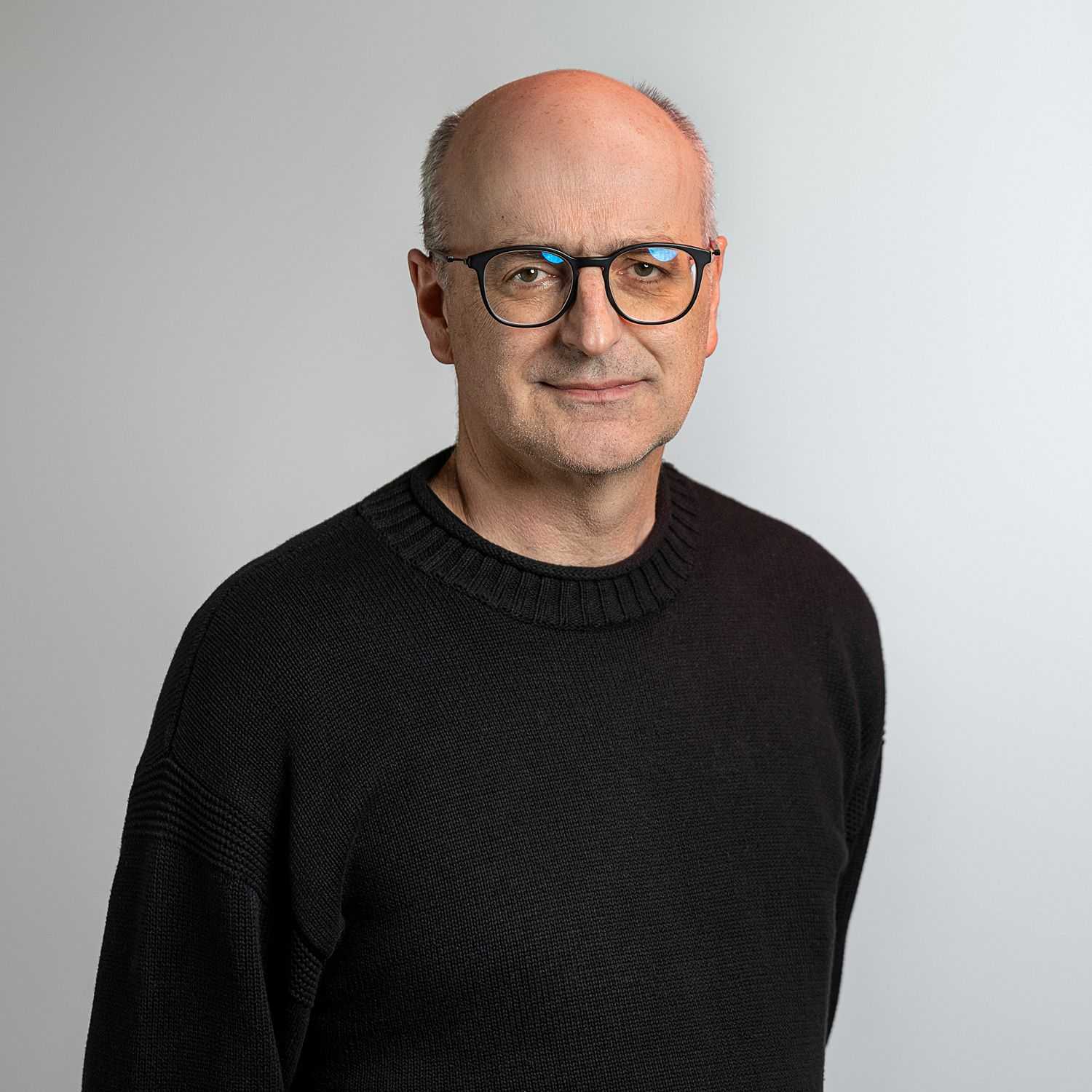
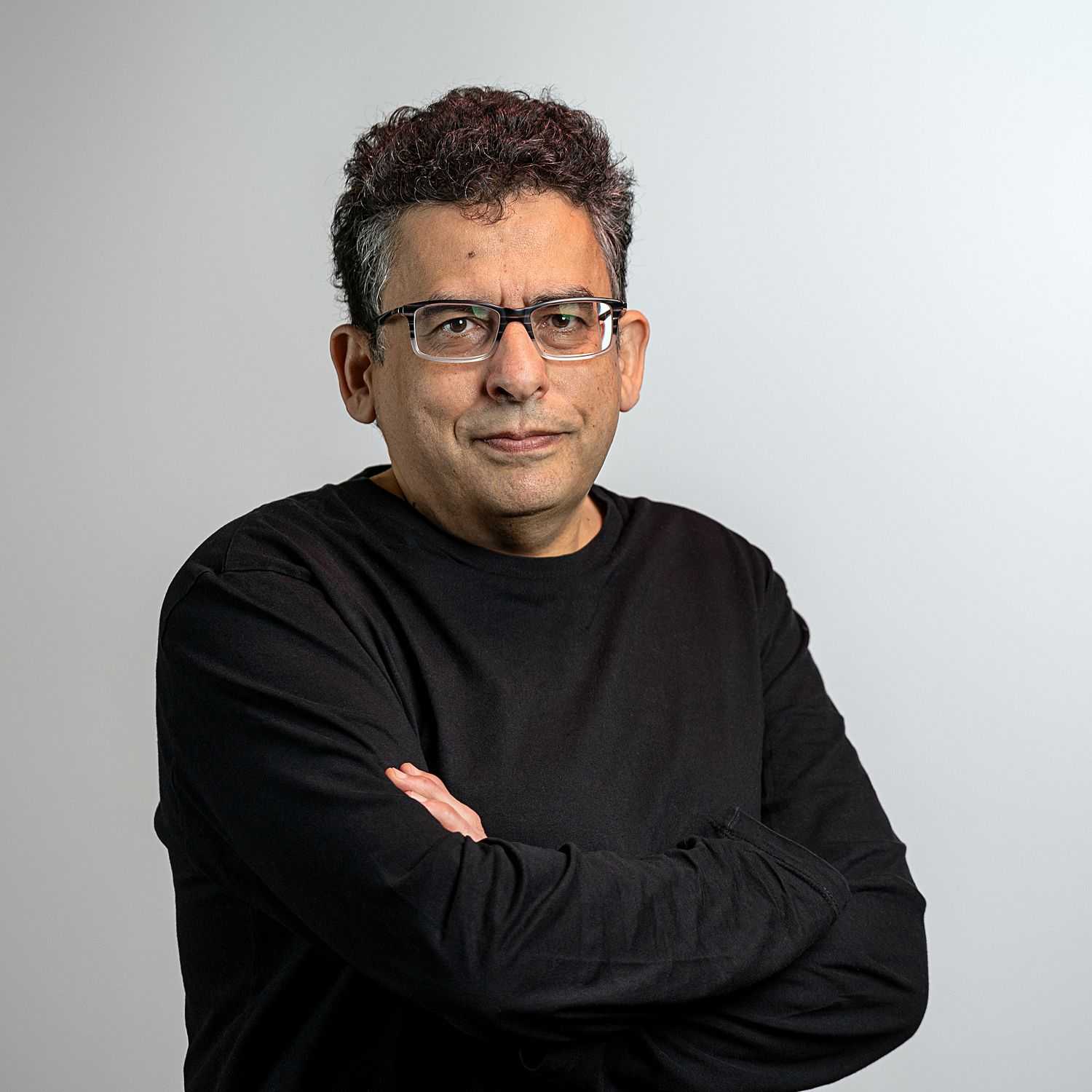
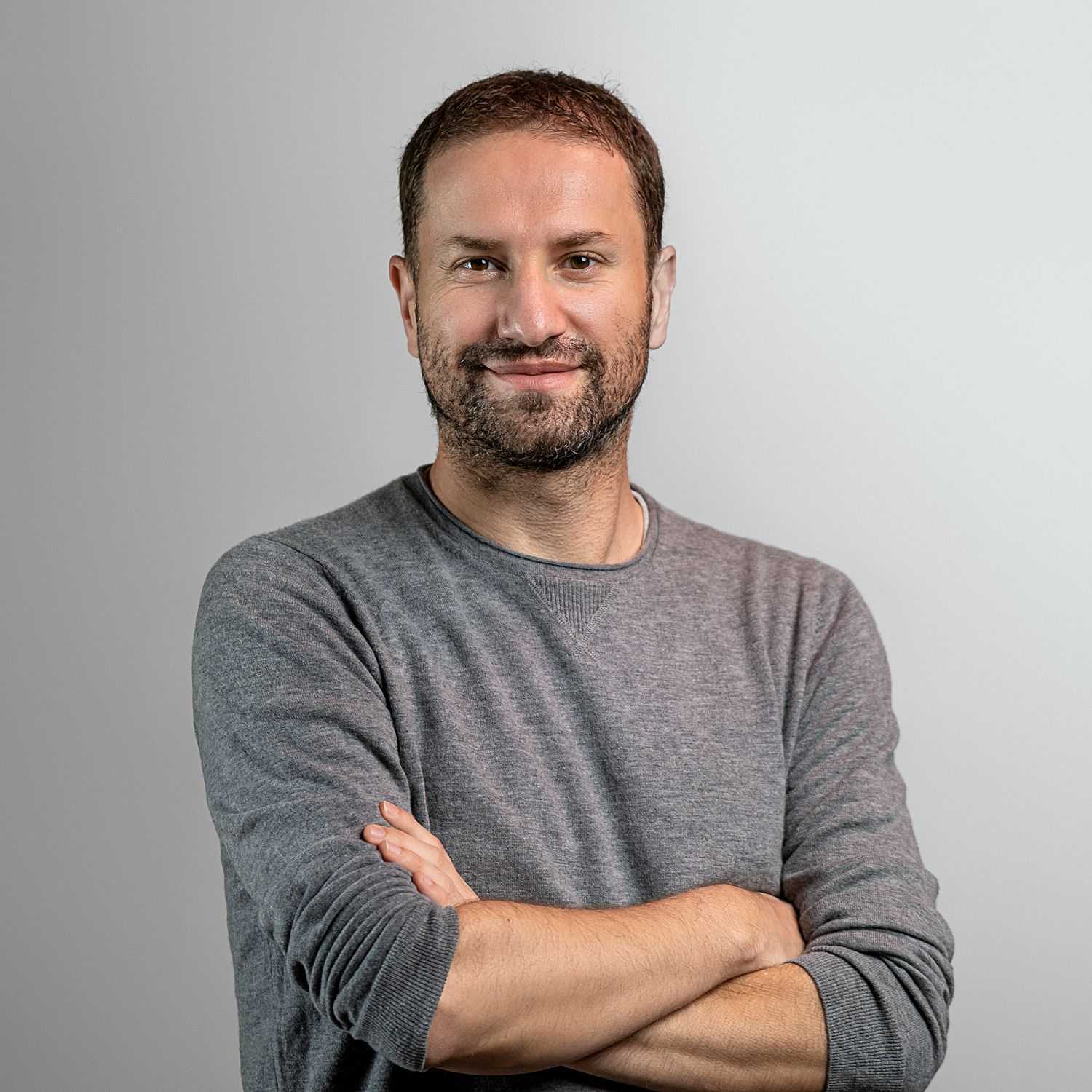
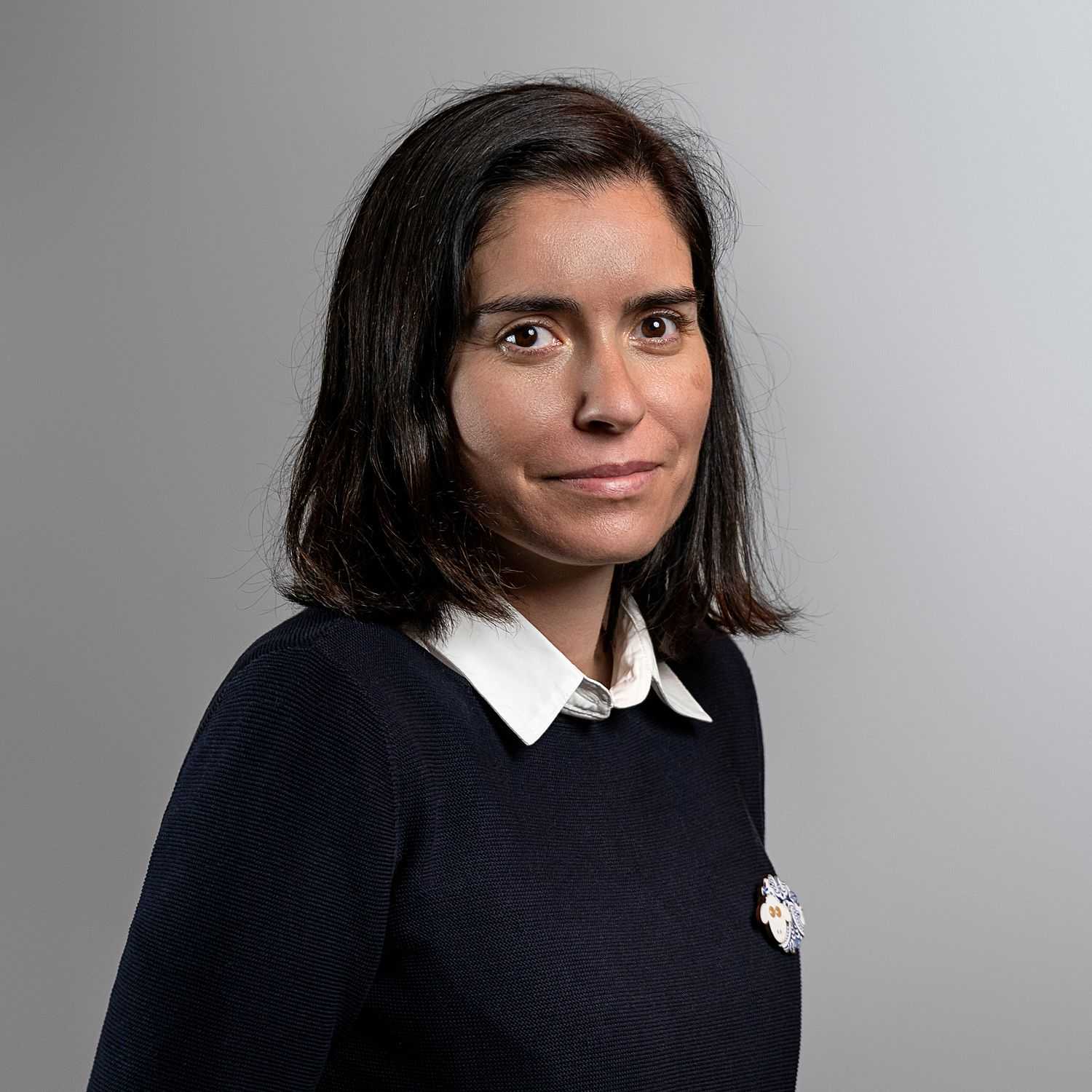
Dora Blanco Heras is a Full Professor in the Department of Electronics and Computer Engineering at the University of Santiago de Compostela. She holds a BS in Physics (1993) and a PhD cum laude from her current university. Research Focus: High Performance Computing, Computer Vision, Remote Sensing Projects: Rapid Digital Monitoring of River Ecosystems, High Performance and Cloud Computing for Demanding Applications Her work emphasizes GPU-accelerated algorithms for multispectral/hyperspectral image processing, anomaly detection, and human-computer interfaces for sustainability indices. She has contributed to technical committees like GRSS Earth Science Informatics and organized summer schools on geospatial AI.
Dr. José Carlos Cabaleiro Domínguez is a Full Professor in the Department of Electronics and Computing at the University of Santiago de Compostela's Faculty of Computing, Spain. He has been a member of CiTIUS (Centro singular de investigación en tecnoloxías da información e comunicación) since 2010 and was promoted to Full Professor in 2022 after serving as an Associate Professor since 1994. His academic journey began with a BS and PhD in Physics from the University of Santiago de Compostela in 1989 and 1994 respectively, with initial teaching experience at the University of A Coruña from 1990-1994. His research focuses on high performance computing, particularly in parallel systems architecture, development of parallel algorithms for irregular problems with sparse matrices, performance prediction and improvement of parallel applications, memory hierarchy optimization, and applications for grid and cloud computing. He has developed significant expertise in 3D point cloud processing from remote sensors like LiDAR, with applications in urban infrastructure analysis, powerline detection, and route planning. Analysis of his recent publications reveals a strong emphasis on optimizing resource allocation for big data frameworks, developing deep learning applications for point cloud classification, and creating efficient algorithms for powerline detection in LiDAR surveys. His work bridges theoretical computer science with practical applications in geospatial analysis and infrastructure monitoring. His research has been published in top-tier journals including IEEE Transactions, ISPRS Journal of Photogrammetry and Remote Sensing, and Future Generation Computer Systems, reflecting his significant contributions to the field of high performance computing and its applications. Dr. Cabaleiro actively collaborates with researchers across multiple institutions, as evidenced by his extensive publication record with co-authors from various universities and research centers. His work demonstrates a consistent trajectory of advancing parallel computing techniques while applying them to increasingly complex real-world problems involving large-scale geospatial data.
Tomás Fernández Pena is a Full Professor at the University of Santiago de Compostela (USC) and Senior Researcher at the Research Center in Intelligent Technologies (CiTIUS) . With a career spanning over three decades, he has held academic positions since 1990 and contributed extensively to High Performance Computing (HPC), Big Data, and emerging quantum computing fields. Ph.D. in Physics from USC (1994) Senior Member of IEEE Associate Editor for IEEE Transactions on Computers and IEEE Access Research Contributions : His work focuses on parallel systems architecture, cloud computing middleware, and quantum simulation optimization. He has pioneered methods for NUMA systems, LiDAR data processing, and Big Data applications in bioinformatics/cheminformatics. His recent articles show increasing emphasis on quantum computing frameworks and distributed quantum processing. Scientific Recognition : Holds four Spanish Ministry of Education six-year research excellence periods (sexenios de investigación) and has served as Principal Investigator in 3 public projects and co-investigator in 31 EU/Xunta de Galicia funded initiatives. Supervised 7 Ph.D. theses and published 43+ international journal papers. International Collaborations : Maintains academic connections through funded research stays at Loughborough University, University of Tennessee, and University of Illinois Urbana-Champaign. Active in IEEE and participates in global conferences like Euro-Par and CHEP.
Juan Carlos Pichel Campos is a Full Professor at the University of Santiago de Compostela (USC) specializing in high performance computing and language technologies. His research spans quantum computing, distributed systems, and Big Data technologies with a focus on practical applications in health informatics and computational physics. He received his B.Sc. and M.Sc. in Physics from University of Santiago de Compostela (Spain) and completed his Ph.D. there in 2006. He conducted postdoctoral research at University Carlos III de Madrid and University of Illinois at Urbana-Champaign, and worked as a researcher and project manager at Galicia Supercomputing Center. Professor Pichel's research interests include parallel and distributed computing, Big Data technologies, programming models, and software optimization techniques for emerging architectures. His recent work has focused on bridging quantum computing with classical high performance computing systems, developing efficient algorithms for processing massive biological datasets, and creating tools for health-related information retrieval and misinformation detection. His interdisciplinary approach combines techniques from computer science, physics, and biomedical informatics to solve complex computational problems. Analysis of his recent publications reveals a strong trend toward quantum computing applications and integration with classical HPC systems (accounting for approximately 40% of his recent work), followed by health informatics and natural language processing (about 30%), and bioinformatics and computational physics (about 30%). His research demonstrates a consistent focus on developing practical tools and frameworks that address real-world computational challenges across multiple domains. rePowerSiC: High-Efficiency High-Power Laser Beaming In-Space Systems Based On Sic (2024-2028) C3HS: Content curation for consumer health search - Search and misinformation detection (2023-2026) Big-eRisk: Early Prediction of Personal Risks on Massive Data (2021-2024) eRISK: Technologies for the early prediction of signs related with psychological disorders (2019-2021) BigNLP: Approaching High Performance Computing to Big Data Technologies: Natural Language Processing as Case Study (2015-2018) Professor Pichel has established strong collaborations with research groups across Europe and the United States, particularly in the fields of quantum computing and biomedical informatics. He is actively involved with CiTIUS (Centro singular de investigación en tecnoloxías da información e da comunicación de USC), contributing to its mission of advancing information and communication technologies through interdisciplinary research.
Natalia Seoane Iglesias serves as an Associate Professor in the Department of Applied Physics at the University of Santiago de Compostela's College of Physics. Her research integrates semiconductor device physics with high-performance computing to address challenges in next-generation electronics and energy conversion systems. B.Sc. in Physics, University of Santiago de Compostela (Spain) Ph.D. in Physics, University of Santiago de Compostela (2007) Postdoctoral research: University of Glasgow (2007-09), University of Edinburgh (2011), Swansea University (2013-15) Her research focuses on semiconductor device simulation , nanoscale variability analysis , and laser power conversion systems . She develops advanced computational tools combining 3D finite-element modeling with machine learning techniques to optimize device performance. Current projects target ultra-high efficiency (>80%) SiC-based laser converters for space applications and statistical variability studies in sub-10nm transistor architectures. Her publication portfolio reveals strong trends in machine learning-enhanced TCAD and high-concentration photovoltaics . Recent work demonstrates how vertical epitaxial heterostructures with SiC/GaN materials can overcome traditional efficiency barriers in wireless power transfer systems, while her nanoscale variability studies provide critical insights for future CMOS scaling. Key scientific contributions include: Development of MLFoMpy for semiconductor data post-processing Novel Pelgrom-based predictive models for device variability Breakthrough laser power converter architectures exceeding 80% efficiency Comprehensive studies of metal grain effects in nanosheet FETs She leads the rePowerSiC project (2024-2028) developing space-qualified laser power systems and contributes to multiple EU-funded initiatives in high-performance computing. Her team employs advanced simulation frameworks including VENDES and Silvaco Atlas for device characterization, with applications ranging from satellite power systems to refinery monitoring drones.
José María Sabater-Navarro is a Full Professor and Vice-Dean of the Polytechnic School at Miguel Hernández University in Elche, Spain. He serves as Director of the Master of Industrial Engineering and represents the School of Engineering of Elche on the university's Executive Board within the Department of Systems Engineering and Automation. His academic credentials include a PhD in Robotics (Summa Cum Laude, 2003) from Miguel Hernández University and an MSc in Mechanical Engineering (1998) from Universitat Politècnica València. Professor Sabater-Navarro specializes in surgical robotics with emphasis on computer-aided surgery, surgery simulation, and augmented reality applications. His research extends to medical image processing for neurosurgery and orthopedics, diabetes control systems, rehabilitation robotics, soft robotics, and haptic interfaces for telerobotic systems. He actively investigates kinematic analysis and control of parallel service robots for medical and industrial applications. His scientific recognition includes: research grant from ITQ-CSIC (1998) research grant from IMPIVA-UMH (1999) Festo award for the best project (2004) Fundeum award to the best informatics initiative (2004) «Importantes» award for Instead Technologies Ltd. (2014) He currently supervises PhD candidates Juan Rodriguez, Luis Daniel Lledó, and Alvaro García, following previous guidance of Fco. Javier Badesa Clemente, Ricardo Morales Vidal (2014), and Gema Romero Moraleda (2009). His funded projects include the diabetes control application (2014, Coordinator), MARCUS robotized platform for NOTES/SILS surgery (2011-2014, Coordinator), and the Iberoamerican network for ICT applications for people with disabilities (2012-2015, Researcher). He founded Instead Technologies Ltd. (2009) and contributes to the Neuroengineering research group at the Institute of Bioengineering.
Alberto Alvarez Lugrís is a full-time researcher affiliated with the University of Vigo's Faculty of Philology and Translation , specifically in the Department of Translation and Linguistics . He focuses on Translation and Interpretation studies, with particular emphasis on comparative stylistics and corpus-based translation research. Doctorate: University of Vigo (1999) Supervisors: Dr. María Dolores Gómez Penas, Dr. José Yuste Frías Research Group: TI4 Translation & Paratranslation Campus: Vigo His research spans translation theory , lexicography , and computational linguistics . He has developed corpus-based methodologies for bilingual dictionary creation and translation analysis. Current projects involve Galician-English translation dynamics and translator training using digital tools. Scientific production trends show sustained contributions to: Corpus linguistics applications Translation pedagogy Lexicographic resource development Stylistic analysis in translation Cultural transfer studies Translator identity research Selected honors: Recipient of IV Premio Plácido Castro de tradución (2005) His digital lexicography work includes: Modern Dictionary (Inglés-Galego) development CLUVI bilingual dictionary projects Corpus-driven lexicographic planning
Cristina Lopez Bravo is a full-time Professor in the Telecom Engineering Department at the University of Vigo , affiliated with the School of Telecommunication Engineering and the Research Center for Telecommunication Technologies . She is part of the TC1 Grupo de Tecnoloxías da Información research group. PhD from Universidad Politécnica de Cartagena (2004) with thesis: Estudio del algoritmo de asignacion jerárquica paralela para conmutadores con colas virtuales a la salida Her research focuses on telecommunications engineering , particularly in network switching architectures and parallel processing algorithms for virtual output queueing systems. She contributes to the development of information technologies within telecommunication frameworks. Affiliations: Research Center for Telecommunication Technologies (Campus Vigo) TC1 Grupo de Tecnoloxías da Información
Dr. Jose A. Boluda is an Associate Professor in the Department of Computer Engineering at the University of Valencia's School of Engineering. He holds a B.S. in Physics (Electricity, Electronics and Computer Science, 1992) and a Ph.D. (2000) from the same institution. With 6 teaching quinquenios and 4 research sexenios, his academic career spans over two decades. His research focuses on: Computer vision hardware design Smart vision sensors and neuromorphic computing Reconfigurable architectures (FPGA) High-speed motion analysis and change-driven processing Biomimetic visual sensing strategies He has authored over 50 international publications and participated in 15 research projects. His publications predominantly explore: Event-based vision sensors Hardware-accelerated image processing Neuromorphic engineering applications Real-time systems for robotics and 3D scanning Low-power circuit design for computer vision Awards include: Fernando Sapiña Award 2023 for Valencian teaching materials Fernando Sapiña Award 2021 for English teaching materials Fernando Sapiña Award 2021 for Valencian teaching materials He has directed 2 doctoral theses and supervised multiple master's projects. Research includes international collaborations at the University of Virginia, University of Macedonia, and Universitat Jaume I. His lab focuses on developing novel vision sensors and processing architectures.
José García Rodríguez is a full professor at the University of Alicante, affiliated with the Higher Polytechnic School and the Department of Informatics and Computing Technology. He earned a BS in Computer Engineering (1994) and PhD in Artificial Vision (2009) from the same institution. Current roles: Director of the PhD Program in Computer Science Vice Dean of International Relations Editor-in-Chief of the International Journal of Computer Vision and Image Processing Associate Editor of Expert Systems Journal Senior member of IEEE, INNS, and Eucog networks His research spans computer vision, deep learning, robotics, and ambient intelligence, with applications in improving autonomy for individuals with acquired brain damage. He has led 20+ regional/national/international projects, including three consecutive national projects funded by Spain's Ministry of Economy and Competitiveness (DPI2013-40534-R, TIN2016-76515-R, PID2019-104818RB-I00). International collaborations include research stays at the University of Westminster, Queen Mary University of London, and Griffith University (Australia). He has organized special sessions at WCCI conferences (2010–2018) and special issues in JCR journals like Neural Processing Letters and Complexity. Professional memberships include European networks Eucog, HIPEAC, ELLIS, and COST Action IC1307.
Sandra María Gómez Canaval is an Associate Professor at the Universidad Politécnica de Madrid , affiliated with the Department of Computer Systems . Her research focuses on: Artificial Intelligence and Machine Learning Bio-Inspired Computational Models Distributed and High-Performance Computing Generative Models and Network Security Data Mining and Time Series Forecasting Her recent work explores machine learning applications for: Network traffic prediction Harmful algal bloom forecasting Energy-efficient deep neural networks Automated guided vehicle control Cryptomining attack detection Her publications highlight expertise in Generative Adversarial Networks (GANs), cloud-based security, and Industry 4.0 systems. She actively contributes to: Data augmentation techniques Parallel computing architectures Network digital twin development
Gabriel Luque is an Assistant Professor in the Department of Languages and Computer Science at the E.T.S.I. Informática (School of Computer Engineering) of the University of Málaga, Spain. His academic career focuses on parallel metaheuristics and evolutionary algorithms, with applications spanning bioinformatics, natural language processing, traffic optimization, and workforce planning. Dr. Luque's research interests center on the design and analysis of parallel and distributed metaheuristics for solving complex combinatorial optimization problems. His work has significantly contributed to understanding the performance characteristics of distributed evolutionary algorithms, including studies on takeover time dynamics, energy consumption analysis, and communication overhead in parallel implementations. He has made notable contributions to DNA fragment assembly problems using parallel genetic algorithms and has extended his research to emerging areas like quantum computing applications. Research grant from Spanish Government: 'Ayuda a la Movilidad José Castillejo' (2008) Research grant from Andalusian Government: 'Beca de Formación de Personal Docente e Investigador' (2002-2006) Award: 'Proyecto Fin de Carrera - Diario el País' (2001) Dr. Luque actively supervises student research projects and has directed several final degree projects on topics including particle swarm algorithms for complex problem solving and extending optimization libraries. His research is supported by multiple national and international projects focused on smart mobility, intelligent cities, and fundamental metaheuristic research. Dr. Luque has established a productive research trajectory with numerous high-impact publications in journals and conferences, demonstrating consistent contributions to the field of parallel metaheuristics and their real-world applications.
Joan Oró is a researcher at the Blanquerna Department of Physical Activity and Sport Sciences and Sports Management within the Faculty of Psychology, Educational Sciences and Sports at Blanquerna - Ramon Llull University. His work focuses on speech synthesis, voice quality analysis, and environmental noise mapping, with a particular emphasis on computational modeling and acoustic sensor networks. Research Interests: Speech signal processing, finite element modeling of phonation, environmental noise monitoring, and machine learning applications in acoustic analysis. Projects: Key contributions to the DYNAMAP initiative for real-time road traffic noise mapping and the FEMVoQ project for 3D voice quality simulation. Publications: Recent work explores vocal tract-glottal source interactions, spectro-temporal noise analysis, and intelligent clustering architectures, spanning interdisciplinary applications in acoustics, signal processing, and urban planning.
Bartomeu Fluxa Cabrer is an Associate Lecturer at the University of the Balearic Islands (UIB) with additional roles as Lecturer in UIB's Project Management postgraduate program and Collaborator Lecturer at the Open University of Catalonia (UOC). He maintains parallel industry leadership as PMO Senior Consultant and PM Practice Leader at CGI. His academic work focuses on Software Engineering and Software Quality education across multiple UIB engineering programs. Research interests center on: Software process improvement and capability maturity models Implementation of ISO standards (Quality, Information Security) IT project control systems and quality management Certification frameworks in technology organizations He collaborates with the MiProSoft research group investigating software project innovation. Industry expertise since 2002 spans project control systems, ISO standard evolution, process measurement, and corporate information systems management.
Francisco Javier Pérez de la Cruz serves as an Associate Professor in the Department of Civil Engineering at the School of Industrial Engineering, Polytechnic University of Cartagena, Spain. His academic career integrates technical expertise in water infrastructure with innovative educational methodologies, reflecting a commitment to sustainable engineering solutions and pedagogical advancement within civil engineering disciplines. His research spans water resources engineering, flood risk management, and sustainable water systems, with notable focus on historical water supply contexts, energy recovery in distribution networks, and carbon footprint reduction in irrigation. Educational research forms a parallel pillar, emphasizing project-based learning and gamification tools like Kahoot! to enhance multidisciplinary engineering education. This dual trajectory bridges practical infrastructure challenges with evolving teaching paradigms. Analysis of his 15 most recent publications (2018-2025) reveals consistent interdisciplinary patterns: historical engineering analyses inform modern sustainability practices, while flood risk modeling and SUDS implementation address climate resilience. Educational studies demonstrate systematic exploration of digital tools for competency development, with Kahoot! research evolving from classroom implementation to cross-disciplinary frameworks. The convergence of water-energy nexus investigations and pedagogical innovation defines his scholarly identity. Scientific Awards: No awards, fellowships, or medals were documented in the available information. Advising and Grants: The provided text contains no records of student advisement, research grants, or funded projects. His supervisory roles and external funding mechanisms remain unreported in the current dataset. Labs and Teams: No specific research laboratories, field teams, or collaborative networks were referenced. His operational research environment appears institutionally embedded within the university's civil engineering infrastructure without dedicated team descriptions.