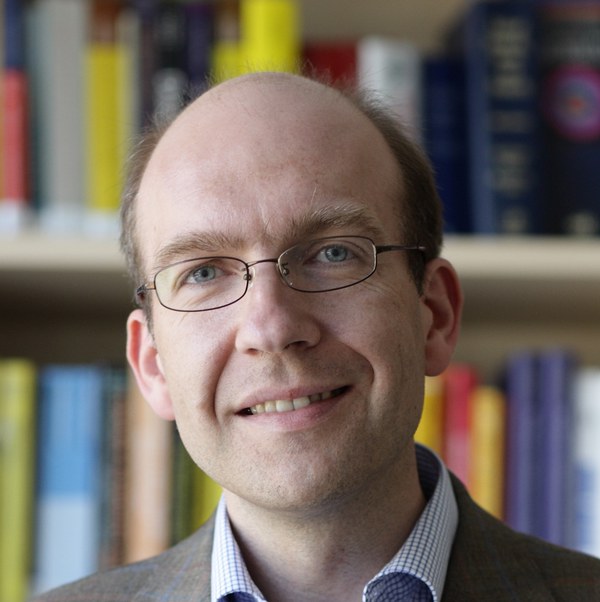
Matthias S. Müller is affiliated with RWTH Aachen University's IT Center, with additional associations to TU Dresden's Center for Information Services and High Performance Computing and the University of Stuttgart's High Performance Computing Center. His research focuses on parallel computing paradigms, OpenMP optimizations, and energy-efficient high-performance computing. Recent publications demonstrate specialization in parallel pattern compilers, OpenMP runtime optimizations, and energy-aware computing benchmarks. His team develops tools for performance analysis and optimization in heterogeneous computing environments, with applications in computer vision and scientific computing.
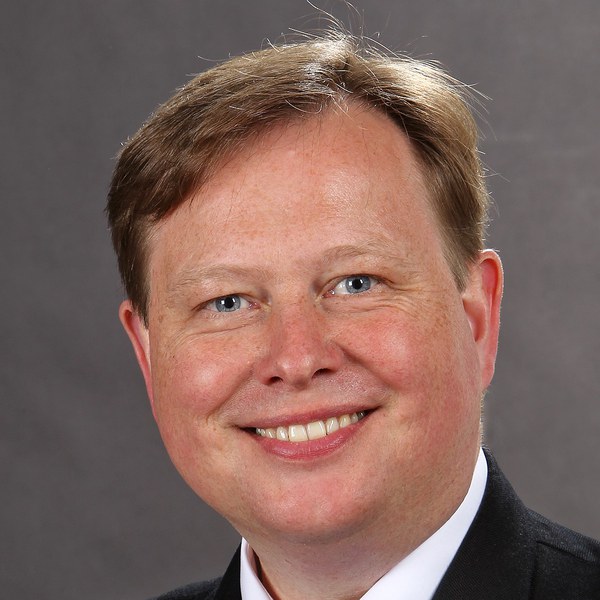
Ananta Tiwari is a researcher specializing in High-Performance Computing (HPC), energy efficiency, and parallel system optimization. His work focuses on optimizing HPC applications, workload management, and resource allocation strategies to enhance both performance and energy efficiency. Tiwari has collaborated extensively with institutions like the University of Maryland, UC San Diego, and Lawrence Livermore National Laboratory through his research activities. Education: PhD in Computer Science, University of Maryland, College Park (2011) Research Interests: Energy-efficient HPC systems Parallel application auto-tuning frameworks Workload characterization and extrapolation Node-sharing and resource pricing models ARM architecture optimization for HPC Key Contributions: Tiwari's research spans energy optimization techniques for large-scale MPI applications, colocation strategies for HPC workloads, and binary instrumentation tools for program analysis. His work on auto-tuning frameworks and multi-objective modeling with machine learning addresses critical challenges in balancing performance, power consumption, and scalability in modern HPC environments.
Roland Wismüller is a Professor at the Institute of Computer Science, University of Siegen, Germany, with previous affiliations at the Technical University of Munich (LRR-TUM). His extensive academic career spans over three decades with continuous publications from 1994 through 2025, demonstrating sustained research activity and leadership in computer science. Wismüller's research interests focus on distributed systems, parallel computing, and performance analysis, with significant contributions to monitoring systems for grid applications. His work has evolved to include contemporary areas such as Device-to-Device (D2D) networking, automotive systems, and mobile security. His research spans both theoretical foundations and practical implementations, with numerous tools and frameworks developed for performance measurement, debugging, and monitoring of distributed applications. Analysis of his publication trends reveals a clear progression from foundational work in parallel and distributed systems in the 1990s and early 2000s toward more applied domains in recent years. His early work established frameworks for performance analysis of grid applications (G-PM tool), while his recent publications address challenges in D2D communications, automotive sensor systems, and Android security. This evolution demonstrates adaptability to emerging technological domains while maintaining core expertise in system performance and monitoring. Wismüller has maintained long-standing collaborations with researchers including Marian Bubak, Wlodzimierz Funika, and Bartosz Balis, with whom he has co-authored numerous publications. His work has appeared in prestigious venues including Future Generation Computer Systems, IEEE Communications Surveys & Tutorials, and Sensors, reflecting both the quality and interdisciplinary nature of his research.
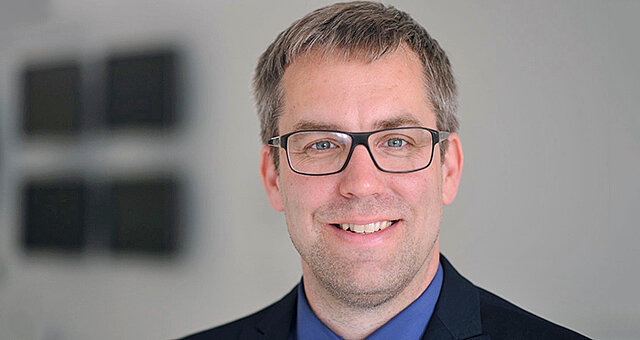
Kai Wang is a researcher affiliated with Nankai University's Institute of Machine Intelligence under the College of Computer and Control Engineering. His work spans interdisciplinary domains including artificial intelligence, machine learning, and engineering, with a focus on optimization algorithms, neural networks, and biomedical applications. Key research areas: AI, machine learning, biomedical imaging, robotics, environmental science, and optimization. Recent publications address UAV surveillance, medical diagnostics, and tensor-based computational methods. Collaborations include institutions across China, France, Japan, and the USA. His 2025–2026 publications highlight advancements in diffusion models, transformer architectures, and IoT-driven solutions for healthcare and infrastructure. No scientific awards or student advisories are explicitly mentioned in the provided records.
Prof. Markus Diesmann is a Director of the Institute for Advanced Simulation (IAS-6) and the Institute for Neuroscience and Medicine (INM-10) at Forschungszentrum Jülich. He leads the Computational Neurophysics group, focusing on understanding neuronal network dynamics through computational models and supercomputing. His work integrates theoretical neuroscience with high-performance computing to simulate brain-scale networks and explore neuromorphic computing foundations. Research interests include correlation structures in neuronal networks, simulation technologies, brain-scale modeling, and software engineering for neuroscience. He has pioneered efforts in scaling neuronal network simulations to exascale systems and improving computational efficiency. Key contributions include the NEST simulation software and studies on synaptic plasticity, sequence learning, and LFP dynamics. Publications emphasize advancements in simulation algorithms, network connectivity analysis, and bridging experimental data with computational models. His work addresses challenges in real-time cortical microcircuit simulation, neuromorphic hardware integration, and the role of noise in neural computation. Prof. Diesmann collaborates internationally on neuroscience initiatives and high-performance computing applications. He advocates for robust scientific software practices and contributes to infrastructure for open science in computational neuroscience.
Prof. Dr. Stefan Heim leads the Neuroanatomy of Language working group at Research Center Jülich's Institute of Neuroscience and Medicine (INM-1). His research bridges cognitive neuroscience and computational approaches to language processing. Research Focus His work investigates the structural and functional organization of language networks in the brain, combining neuroanatomical approaches with advanced computational methods. Current projects explore machine learning applications in neuroscience and computational linguistics. Publication Trends Recent publications focus on machine learning innovations including large language models, efficient training techniques, and applications in scientific domains like plasma physics and renewable energy.
Sohan Lal is a postdoctoral researcher at the Technical University of Berlin (TU Berlin), focusing on advanced modeling and runtime support for large-scale HPC clusters under a DFG-funded project. His PhD in Computer Engineering from TU Berlin (2019) explored power modeling and architectural techniques for energy-efficient GPUs. He contributed to EU-funded LPGPU projects on low-power GPU computing, leading tasks and collaborating across consortium members. Previously, he lectured at Shri Mata Vaishno Devi University and worked as an IT specialist in the Government of India. Education: PhD in Computer Engineering, TU Berlin (2019) Masters in Computer Science, IIT Delhi (2011) Bachelor in Computer Science and Engineering, GCET Jammu (2003) His research interests span GPU architecture, power/performance modeling, memory systems, and applied machine learning. Notable contributions include techniques like Selective Lossy Compression (SLC) for GPUs and entropy encoding-based memory compression (E²MC). He received HiPEAC travel/grants and was an ACM SRC semifinalist (2018). Grants & Collaborations: HiPEAC Collaboration Grant for joint work with TU/e DFG-funded postdoctoral research He actively teaches advanced computer architectures and multicore systems at TU Berlin, reflecting his passion for education developed during his early teaching career.
Markus Hegland is a Professor and Head of the Centre for Mathematics and its Applications (CMA) at the Australian National University (ANU). He holds a PhD from ETH Zurich (1988) and has been affiliated with ANU since 1992, focusing on High-Performance Computing (HPC) and numerical analysis. As a Hans Fischer Senior Fellow at TUM-IAS, his research emphasizes high-dimensional problems, ill-posed systems, and data mining applications. His work bridges computational mathematics with practical domains like systems biology and spectral enhancement. Research interests include sparse grid techniques, regularization methods, and algorithm development for HPC. Notable contributions include the OPTICOM method for stable sparse grid solutions and convergence theory for variable Hilbert scales regularization. He has led projects on fault-tolerant HPC algorithms and collaborated with Fujitsu on HPC applications. Publications span numerical analysis, bioinformatics, and computational physics. His work on the chemical master equation and gyrokinetics showcases interdisciplinary impact. Currently, he explores resilient grid-based solvers and machine learning integration with HPC frameworks. No awards are explicitly listed, but his senior fellowship underscores recognition in his field. Grants and collaborations include ARC-funded research in bioinformatics and HPC resilience. His work on digital twins and algorithm optimization reflects broader interests in advanced computational modeling. He is actively involved in teaching and supervising in computational mathematics and data science at ANU.
Dr. Thomas Schierl is the Head of the Video Communication and Applications Department at Fraunhofer Heinrich Hertz Institute (HHI) in Berlin. Since 2010, he has led research groups in multimedia communications and video coding, co-developing key video coding standards such as H.264 SVC and HEVC. He currently heads the Video Coding & Analytics department since 2015, focusing on video compression, wireless transmission, and standardization. Education: Diplom-Ingenieur (Computer Engineering) from Berlin University of Technology, 2003 Dr.-Ing. in Electrical Engineering and Computer Science, Berlin University of Technology, 2010 Research interests span video over wireless networks, system integration of video codecs, and cellular network protocols. He contributed to MPEG-2 Transport Stream standards and co-authored IETF RFCs for video payload formats. In 2014, he received the Emmy Award for MPEG-2 Transport Stream development. Active in standardization bodies: JCT-VC, MPEG, IETF, 3GPP, and DVB. His work includes high-level syntax for HEVC parallelism and V2X resource pooling for 5G NR. Labs/Teams: Leads the Video Coding & Analytics team at HHI, specializing in cutting-edge video compression and communication technologies.
Dr. Patrick Scholz is a researcher in Climate Dynamics at the Alfred Wegener Institute, focusing on ocean modeling, the Atlantic Meridional Overturning Circulation (AMOC), and climate system interactions. He leads the development of the FESOM2.0 ocean model and contributes to the TRR181 Energy Transfer project. His work emphasizes high-resolution simulations, parameterization improvements, and mesh generation for climate models. Research interests include deep-water formation, numerical mixing, and the impact of climate change on ocean circulation. He collaborates on projects like the AWI-CM3 coupled climate model and participates in the HighResMIP initiative. His studies address AMOC slowdown effects, Antarctic ice shelf melt, and Arctic Ocean dynamics. Located in Bremerhaven, he also engages in climate model intercomparison efforts (OMIP-2) and contributes to understanding climate extremes linked to ocean-atmosphere interactions.
René Widera is a researcher at the Helmholtz-Zentrum Dresden-Rossendorf (HZDR), specifically within the Laser Particle Acceleration department of the Institute of Radiation Physics. His work focuses on advancing high-performance computing (HPC) techniques for plasma simulations, particularly leveraging GPU architectures and exascale computing frameworks. He contributes to the development and optimization of the PIConGPU code, a leading particle-in-cell (PIC) simulation tool. His research integrates machine learning for real-time data analysis, parallel algorithms for HPC scalability, and cross-platform visualization strategies. Areas of expertise include laser plasma acceleration, high-energy-density physics, and the design of efficient numerical methods for large-scale simulations. He explores hardware-agnostic solutions for computational challenges, including memory access optimizations and DAG-based parallelism. Collaborations involve international HPC initiatives and open-source software projects like openPMD and alpaka . Key projects include the TWEAC initiative to overcome limitations in laser-wakefield acceleration and the development of in-situ visualization pipelines for real-time simulation insights. He also evaluates modern GPU architectures (e.g., AMD, ARM-based systems) for scientific workloads. His contributions bridge theoretical plasma physics with practical computational advancements, aiming to enable next-generation high-intensity laser experiments.
Wenwen Zhang is a Professor at the Department of Electronic Engineering, College of Information Science and Electronic Engineering, Zhejiang University. With an extensive publication record spanning from 2016 to 2025, Dr. Zhang has established herself as a prominent researcher in multiple interdisciplinary fields at the intersection of computer vision, machine learning, and sensor systems. Her work demonstrates significant contributions to medical imaging, sensor array systems, wireless communications, and AI-assisted applications. Dr. Zhang's research interests encompass a wide range of topics including medical image analysis, sensor array systems, wireless communications, and AI-assisted applications. Her work demonstrates particular expertise in developing innovative deep learning architectures for medical imaging tasks such as cardiac segmentation and nuclei detection, as well as creating sophisticated models for gas sensing and wireless communication systems. She has made significant contributions to the fields of one-shot object detection, medical image segmentation, and sensor fusion techniques, with her research often bridging theoretical advancements with practical applications in healthcare and engineering. Analysis of Dr. Zhang's recent publications reveals a strong focus on cutting-edge deep learning approaches applied to medical imaging and sensor systems. Her work shows increasing sophistication in model architectures, moving from traditional CNNs to more complex transformer-based and hybrid models. There's a clear trajectory toward more explainable and clinically relevant AI systems, particularly in medical applications. Her research also demonstrates growing interest in multimodal approaches, combining different types of data and sensors to improve system performance. Dr. Zhang maintains active collaborations with researchers at Zhejiang University, particularly with Yuanjin Zheng and Zhiping Lin in the field of electronic engineering and sensor systems. She also collaborates extensively with Fei-Yue Wang from the University of Chinese Academy of Sciences, evidenced by multiple publications on parallel vision frameworks. Her international collaborations include work with researchers from institutions in Canada on intelligent knee sleeves and other biomedical applications. Her publication record shows consistent productivity with 12 publications in 2025 (as of this writing), 25 in 2024, and 26 in 2023, indicating an active and growing research program across multiple high-impact journals and conferences.
Yuan Liao is an active researcher with a focus on interdisciplinary areas spanning computer science, electrical engineering, and applied mathematics. His work emphasizes innovative solutions in signal processing, machine learning, robotics, and human mobility studies. Notably, he has contributed to advancements in wearable biomedical devices, remote sensing image analysis, and next-generation wireless communication systems like 6G. Collaborations with institutions like Academia Sinica and co-authors such as Vasilis Friderikos highlight his global academic network. Liao's research often bridges theoretical frameworks with practical applications, addressing challenges in healthcare, transportation, and urban planning. Key contributions include developing novel neural network architectures for tasks like image inpainting and emotion recognition from EEG signals. His work on robotic aerial base stations for mmWave backhauling demonstrates expertise in cutting-edge wireless systems. While specific institutional affiliations are not explicitly stated in the provided data, his prolific publication record across top-tier journals and conferences indicates an established academic role, likely as a researcher or faculty member in a technical discipline.
Toshiki Takeuchi is an academic researcher known for contributions in Human-Computer Interaction (HCI), Ubiquitous Computing, and Signal Processing. His work spans interdisciplinary areas including healthcare informatics, wireless communication systems, and machine learning applications. He collaborates with institutions on projects involving emotion-aware systems, radio tomography, and bioinformatics tools. Research interests focus on: Designing systems for self-awareness and behavior change (e.g., driver behavior analysis, emotion logging) Signal processing in factory and vehicular environments (e.g., LOS/NLOS identification, mmWave MIMO) Medical NLP for clinical data analysis Secure software development for mobile applications Recent publications emphasize: Integration of NLP with electronic health records Radio tomography for spatial loss field estimation UI/UX innovations for health and transportation systems Grants and advising details are not explicitly documented in the provided texts. Collaborations include frequent work with researchers like Michitaka Hirose and Tomohiro Tanikawa.
Wei Jia is a Professor at the School of Computer and Information, Hefei University of Technology, China. Their research focuses on artificial intelligence, machine learning, computer vision, and robotics, with contributions to knowledge graphs, biometric systems, and autonomous systems. They have co-authored over 130+ publications in top-tier journals and conferences, including venues like IEEE Transactions, CVPR, and AAAI. Research interests span deep learning techniques, graph neural networks, and optimization for large-scale systems. Notable work includes entity extraction frameworks, safety analysis in engineering systems, and swarm control algorithms for unmanned vehicles. Contributions also extend to data management systems, such as the TierBase key-value store and the OVERLORD data loader for foundation models. Publications highlight interdisciplinary applications in cybersecurity, robotics, and biomedical imaging. Their work often bridges theoretical advancements with practical implementations, addressing challenges in both software and hardware systems. No specific awards or grants are listed in the provided text.