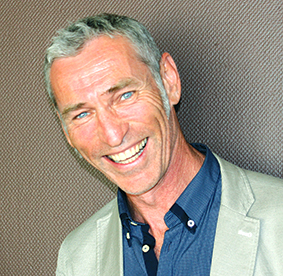
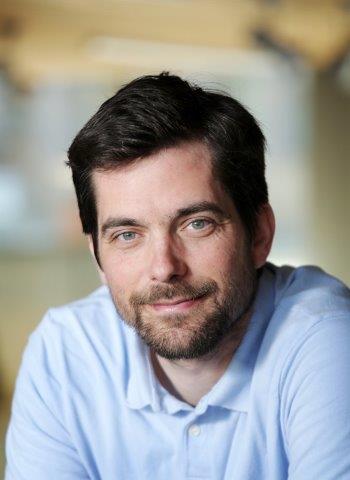
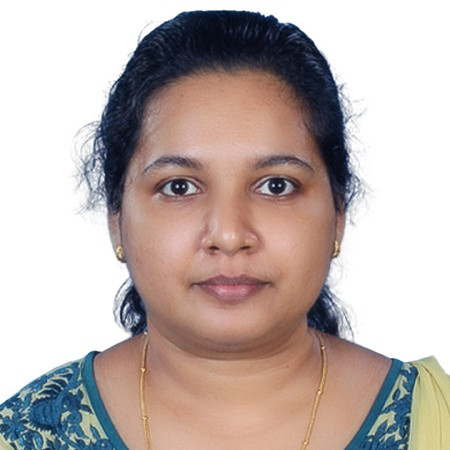
Andrea Simonetto is a Research Professor at the Applied Mathematics Unit (UMA) , ENSTA Paris, Institut Polytechnique de Paris. His work spans optimization, control theory, and learning algorithms for large-scale and streaming data , with applications in smart grids, intelligent transportation, personalized health, and quantum computing. Current research focuses on online algorithms for time-varying optimization , personalized optimization for cyber-physical systems , and variational quantum algorithms . Past contributions include theoretical and algorithmic advances in convex/non-convex optimization, distributed optimization (robotic networks, smart grids), and signal processing for sparse reconstructions and parallel computing in particle filtering. Key application domains include renewable energy integration , quantum state preparation , and human-in-the-loop control systems . His research is published in journals like ACM Transactions on Quantum Computing , IEEE Control Systems Letters , and Automatica .
Aws Albarghouthi is affiliated with the University of Wisconsin-Madison, USA. He is an active researcher with significant contributions to program synthesis, formal verification, and machine learning. Key roles: Author, Session Chair, Committee Member in conferences like PLDI, POPL, VMCAI, SPLASH, and ICFP. Research spans quantum computing, differential privacy, and static analysis. Research Trends include: Quantum Circuit Compilation and Optimization Probabilistic Verification of Fairness and Privacy Synthesis of Datalog and MapReduce Programs Neural-Augmented Static Analysis Bias Detection in Data Security Robustness in Machine Learning
Toufik AZIB is a Full Professor and scientific coordinator of the ECMS (Energy and Conception of Mechatronic Systems) research theme at ESTACA Engineering School in France. He leads a team of 6 teacher-researchers and 13 PhD students, focusing on optimal design of power electronics and energy management for hybrid power systems. His work bridges academic research and industrial applications in sustainable mobility, with strong collaborations across Europe and Algeria. Dr. AZIB received his Electrotechnical Engineering Diploma from the University of Setif, Algeria in 2006, followed by an M.Sc. in Electrical Engineering from ENSEM-INPL, France in 2007. He earned his Ph.D. in electrical engineering from the University of Paris South XI in 2010 and completed his HDR (Habilitation à Diriger des Recherches) from the University of Paris Saclay in 2021. His academic journey reflects a strong foundation in both theoretical and applied electrical engineering. His research focuses on the modeling, control, and optimal design of embedded energy systems under multi-physical constraints (electrical, thermal, electromagnetic compatibility, volume, reliability). He specializes in energy management strategies for hybrid systems combining fuel cells, batteries, and ultracapacitors, with applications in electric vehicles and the 'more electric aircraft.' His work integrates numerical and experimental approaches to develop methodologies for pre-dimensioning and real-time energy management, addressing challenges in sustainable transportation. Analysis of Dr. AZIB's recent publications reveals a strong trend toward multidisciplinary design optimization for automotive applications, particularly electronic throttle systems. His research increasingly incorporates knowledge management techniques and addresses reliability considerations in hybrid power source design. There's a clear progression from fundamental energy management strategies to sophisticated eco-driving solutions for electric vehicles, reflecting the evolving demands of sustainable mobility. Best Paper Award for 'Structure and Control Strategy for a Parallel Hybrid Fuel Cell/Supercapacitors Power Source' at IEEE VPPC'09 Dr. AZIB has supervised numerous PhD and Master's students across multiple institutions in France, Algeria, and Colombia. He leads significant research projects including MIMe (Module d'Intégration et de simulation Mécatronique), ECOS Nord (Eco-driving strategies for electric motorcycle), and AmCoAIR (improving air quality in vehicle cabins), securing funding from national and international sources. His work demonstrates strong industry collaboration with partners like Valeo, PSA, and Renault. As experimental platforms coordinator since 2012, Dr. AZIB oversees 10 specialized experimental facilities at ESTACA's S2ET-Paris Saclay research pole, including those for autonomous electric vehicles, drones, electric machines, and power modulators. His team regularly develops proof-of-concept demonstrators to validate research findings, such as the Formula Student electric vehicle and the 'Electric Appeal' streamliner project, demonstrating practical applications of their theoretical work.
Maryam Mehri Dehnavi is an Associate Professor in the Department of Computer Science at the University of Toronto and a Principal Research Scientist at NVIDIA. She holds the Canada Research Chair in Parallel and Distributed Computing and leads the ParaMathics research group. Research focuses on high-performance computing , machine learning , sparse matrix optimizations , and compiler design for heterogeneous systems. Her work develops domain-specific languages , scalable numerical libraries , and auto-vectorization techniques for cloud and GPU platforms. Recent publications address LLM compression , sparse code translation , GPU kernel synchronization , and control flow optimization . Scientific recognition: Ontario Early Researcher Award (2021), NSF CRII Grant, NSERC New Frontiers in Research Fund. Current students: Mushegh Shahinyan , Martin Phan , Maryam Haghifam , and others. Former advisees: Kazem Cheshmi (NJIT), Zachary Blanco (MIT Lincoln Lab), Yuanxi Li (Amazon).
Binoy Ravindran is a Professor at Virginia Tech’s College of Engineering, Department of Electrical and Computer Engineering, leading the Systems Software Research Group (SSRG). His research focuses on computer systems, emphasizing security, performance, concurrency, distributed systems, and real-time computing, with recent work in software verification and heterogeneous-ISA platforms. Key projects: Low-level Reasoning Machine (LLRM), Popcorn Linux, LibrettOS, Hyflow, HermiTux, SlimGuard, HydraVM, KairosVM. He has co-authored 15+ papers from 2025 to 2022, spanning venues like ASPLOS, POPL, PLDI, VEE, PPoPP, and MIDDLEWARE, with awards including ACM Distinguished Scientist and eight Best Paper Awards. Service roles: Editorial Boards (IEEE Transactions on Cloud Computing, ACM TECS), Program Co-Chair (ACM Systor 2025), Committee memberships across ASPLOS, PLDI, and more.
Romain Raveaux is an Associate Professor at the LIFAT Computer Science Laboratory, University of Tours, affiliated with Polytech Tours. His research focuses on Image Analysis, Machine Learning, Structural Pattern Recognition, Graph Matching, Graph Neural Networks, Discrete Optimization, Reinforcement Learning, and Transfer Learning . Email: romain.raveaux@gmail.com , romain.raveaux@laposte.net Address: 64 av. Jean Portalis, Tours, France, 37200 Phone: +33 (0)2 47 36 14 27 Research Interests Graph Matching and Neural Networks Discrete Optimization for Pattern Recognition Transfer Learning in Graph-Based Models Historical Document Analysis Scientific Trends His recent work bridges Graph Neural Networks with Mixed-Integer Programming , focusing on Image Semantic Segmentation and Graph Cycle Detection . Earlier studies emphasize Genetic Algorithms for graph classification and Graph Edit Distance optimization in pattern recognition.
Kenza Kellou-Menouer is a researcher affiliated with the ETIS Laboratory at ENSEA, France, and part of the MIDI research group . Her work focuses on schema discovery for Semantic Web data, data mining, and big data optimization. Research: Semantic schema discovery, clustering/classification algorithms, and association rules. Teaching: Semantic Web technologies, database design, algorithms, and programming languages (Java, C++, C#, C). Research Interests center on Semantic Web data integration, RDF schema inference, and hybrid machine learning approaches. She has contributed to scalable schema discovery systems and real-time profiling techniques for large datasets. Publications include work on schema inference tools (SchemaDecrypt++, HInT) and methodological frameworks presented at top-tier venues like VLDB (A*), ICDE (A*), SSDBM (A), and ISWC . Her research bridges theoretical advancements with practical implementations for RDF datasets. Community Contributions include organizing tutorials at the International Semantic Web Conference (ISWC) 2022 and developing educational materials for database and programming courses.
Jordi Canal is a Lecturer at the School for Advanced Studies in the Social Sciences (EHESS) in Paris, affiliated with the Center for Historical Research (CRH) and the Iberian Studies Group (GEI). His academic career spans several decades, with a focus on Spanish and Catalan political history, particularly examining Carlism as a counter-revolutionary movement and the development of Catalan nationalism. Canal's research interests center on contemporary Spanish history, with particular emphasis on political movements, nationalism, historical memory, and the relationship between history and literature. His work demonstrates deep engagement with how political identities are constructed through symbols, emotions, and historical narratives. He has published extensively on Carlism, examining it not merely as a historical curiosity but as a significant political phenomenon that shaped modern Spain. His recent publications reveal an increasing focus on the intersection of literature and history, analyzing how novels and literary works engage with historical events and political transitions in Spain. This includes examining works by authors like Galdós, Unamuno, Pardo Bazán, and Semprún to understand how literature processes historical trauma and political change. Canal maintains an extensive international scholarly network, serving on the editorial and advisory boards of numerous academic journals across Spain, Italy, France, Brazil, Venezuela, and other Latin American countries. He also serves on the 'Junta de Govern' of the Democratic Memorial, appointed by the Parliament of Catalonia in 2016. His teaching focuses on 'History of Contemporary Spain: Research, Debates, Problems' and 'The Colors of Politics: Identities, Emotions, Symbols, Propaganda, Fashion,' reflecting his interdisciplinary approach that connects political history with cultural and symbolic dimensions of power.
Hanjun Kim is a researcher at Yonsei University, focusing on compiler design, machine learning optimization, and hardware-aware programming techniques. His work bridges theoretical research with practical implementations in embedded systems and security domains. Research Interests Compiler-driven optimization for PIM (Processing-in-Memory) architectures Homomorphic encryption compiler design Parallel computing for DNN/LLM inference Network function program analysis Recent research trends include: application of compiler techniques to optimize resource utilization in heterogeneous computing environments, particularly for AI workloads and secure computation. His publications demonstrate expertise in tackling performance bottlenecks through architectural and compiler co-design. Conference Service 2025 SPLASH OOPSLA Review Committee 2025 LCTES Program Committee 2024 CGO Program Committee 2023 LCTES Program Committee 2022 CGO Organization Committee 2020 LCTES Program Committee
Ahed Alboody is a Professor and Researcher at HESAM University Group, specifically affiliated with CESI and the Digital Innovation Laboratory for Businesses and Learning to Support Territorial Competitiveness (LINEACT) in Nice, France. He holds a specialized doctorate in computer science from the University of Toulouse 3 Paul Sabatier and has extensive experience in deep learning, computer vision, and remote sensing applications. His work bridges academic research with practical applications in environmental monitoring, human-computer interaction, and spatial reasoning systems. Education: Specialized Doctorate in Computer Science, University of Toulouse 3 Paul Sabatier (IRIT), 2011 Master 2 Research in Electronics, Automation and Systems Engineering, National Polytechnic Institute of Toulouse (INPT-ENSEEIHT), National School of Civil Aviation (ENAC), ISAE-SUPAERO, and University of Toulouse III, 2006 Engineering Diploma in Electronics and Telecommunications, University of Tishreen (Techrine), Lattakia, Syria, 2002-2003 Undergraduate studies in Electronics and Telecommunications, University of Tishreen (Techrine), Lattakia, Syria, 2002 Alboody's research focuses on advanced applications of deep learning and computer vision, particularly in the areas of 3D hand gesture recognition, hyperspectral and multispectral image processing, and semantic segmentation. His work combines theoretical advancements in mixture-of-experts architectures with practical applications in remote sensing and environmental monitoring. He has pioneered approaches in frugal learning and zero-shot learning for image segmentation tasks, with applications in digital twins and collaborative robot environments. His publication record demonstrates a clear evolution from foundational work in spatial reasoning systems (2008-2012) to current cutting-edge research in deep learning architectures for 3D gesture recognition and hyperspectral image analysis. Recent publications (2022-2024) show a strong focus on mixture-of-experts transformers, parallel architectures for efficient computation, and applications in environmental monitoring with drones and satellite imagery. Alboody actively supervises Master's level research projects (two M2 level projects mentioned) and serves as a reviewer for prestigious journals including IEEE Transactions on Neural Networks and Learning Systems and IEEE Transactions on Geoscience and Remote Sensing. He has also been a member of the Technical Program Committee for international conferences on databases and knowledge applications. His laboratory work centers around the Digital Innovation Laboratory for Businesses and Learning to Support Territorial Competitiveness (LINEACT), where he leads research in engineering and digital tools. Current projects include developing graph neural networks for 3D hand gesture recognition using depth and skeleton data, and implementing frugal learning approaches for semantic image segmentation in collaborative robot environments.
Philippe Poignet is a Professor at the University of Montpellier, affiliated with the Institut Universitaire de Technologie (IUT) and conducting research at the LIRMM (Laboratory of Informatics, Robotics, and Microelectronics of Montpellier). He served as Director of LIRMM from July 2015 to October 2023 and co-heads the IRP with Stanford University since 2025. His work focuses on Surgical Robotics, with a particular emphasis on medical device development, control systems, and biomedical applications. Co-founder of startup ACUSURGICAL (retinal surgery robotics) Scientific collaborator with STERLAB (flexible ureteroscopy robotics) Co-organized Summer School on Surgical Robotics (SSSR) for 20 years His research spans medical robotics , control theory , and biomedical imaging , with applications in needle steering, tissue interaction, and surgical precision. Recent publications highlight advances in soft tensegrity design , model predictive control , and multi-modality imaging registration . Scientific recognition includes: Best Paper Award at ARK’22 Prix de l’Innovation de l’I-Site MUSE (2020) Chevalier des Palmes Académiques (2019) He supervises doctoral students in projects related to flexible robotics , bioimpression , and robotic shoulder surgery , with collaborations across Europe and industry partners like CARANX Medical and CEDRAT Technologies.
Mathieu Brédif is a Permanent Researcher at LASTIG, Gustave Eiffel University, affiliated with the National School of Geographic Sciences (ENSG) and IGN. He serves as co-chair of ISPRS Working Group II/3 on Point Cloud Processing (2016-2020) and chaired ISPRS Working Group III/5 on Graphics and Remote Sensing (2012-2016). His academic appointments include Assistant Professor at École Polytechnique teaching Image Analysis and Computer Vision (INF573) and 3D Computer Graphics (INF443) since 2019-2020. Telecom ParisTech PhD (2005-2010) Stanford University Master in Computer Science (2004) École Polytechnique Engineering Degree (2000-2005) Brédif's research focuses on Lidar processing, 3D reconstruction, and geovisualization , with significant contributions to point cloud analysis, urban scene modeling, and historical image integration. His work bridges computer vision, photogrammetry, and geographic information systems, emphasizing practical applications in urban planning and cultural heritage. He has developed novel algorithms for point cloud inpainting, visibility estimation, and distributed 3D reconstruction. His publications reveal consistent focus on urban modeling through point cloud processing (58% of works), image-based rendering techniques (22%), and geovisualization systems (15%). The research trajectory shows increasing emphasis on deep learning applications for LiDAR data since 2016, alongside continued development of geometric algorithms for photogrammetric processing. ANR project leadership in geospatial data valorization (structurAtion et vaLorisation du patrimoinE géoGraphique - 9) iSpace&Time 4D web GIS development (5) European project participation in high-volume point cloud analysis (8) Brédif actively mentors doctoral candidates, currently supervising Melvin Hersent, Alexane Nghien, and Florent Geniet, with 8 completed PhDs including Pierre Biasutti and Murat Yirci. His laboratory work centers on the GEOVIS research team , developing the iTowns open-source framework for 3D geospatial visualization, which powers the Géoportail's 3D data engine and supports multiple ANR projects in cultural heritage visualization.
Raji Susan Mathew is an Assistant Professor at the School of Data Science, Indian Institute of Science Education and Research Thiruvananthapuram (IISER TVM). Her research focuses on regularization techniques, compressed sensing, and deep learning for medical image reconstruction, particularly in magnetic resonance imaging (MRI) and quantitative susceptibility mapping (QSM). Current affiliation: School of Data Science, IISER TVM Prior appointments: C. V. Raman Postdoctoral Fellow and Research Associate III at Indian Institute of Science, Bangalore Education: Ph.D. in MR image reconstruction from IIIT-Kerala, M.Tech in Signal Processing from Cochin University of Science and Technology, B.Tech in Electronics and Communication Engineering from Mahatma Gandhi University Her recent publications highlight expertise in AI-driven medical imaging solutions, including QSM optimization , vision transformers for nerve tracking , and unsupervised learning for corrosion analysis . She has also contributed to book chapters on parallel MRI theory and regularization frameworks. Scientific awards include the C. V. Raman Postdoctoral Fellowship and Maulana Azad National Fellowship , supporting her work on efficient algorithms for medical image processing. Dr. Mathew advises Ph.D. and BS-MS students on topics like spiking neural networks in imaging , uncertainty-aware QSM reconstruction , and lightweight AI models for disease classification . She actively reviews for journals like IEEE Transactions on Medical Imaging and conferences like ISBI and ICASSP.
Pierre Renaud is a Professor at INSA Strasbourg and Deputy Director of the ICube laboratory, specializing in Medical and Surgical Robotics, Mechatronics, and Additive Manufacturing. His research focuses on developing advanced robotic systems for healthcare applications, including surgical robots, compliant mechanisms, and MRI-compatible devices. He leads projects such as SPIRIT (multi-material additive manufacturing for medical robotics) and contributes to national initiatives like TIRREX and LABEX CAMI. Education: PhD in Mechanics from Université Clermont-Auvergne (2003), M.Sc. from ENS Cachan (1998), and Agrégation in Mechanical Engineering (1999). Visiting Associate Professor at Stanford University (2010–2011) as a Fulbright Fellow. Research Themes: Mechatronics for medical robotics, compliant systems, additive manufacturing integration, and tensegrity-based robots. Collaborates with IHU Strasbourg for surgical technology development and Axilum Robotics for industrial applications. Key Projects: Robotic assistance for interventional radiology, magnetic elastography, and beating heart surgery. Active in international collaborations (e.g., ANR, H2020 ITN ATLAS). Labs/Teams: Head of the Robotics, Data Science, and Healthcare Technologies group at ICube. Engaged in Equipex IRIS and ROBOTEX platforms for robotic innovation.
Mr. Jean-Charles Billaut is a Professor at the Polytechnic School of Tours (EPU) within the University of Tours, affiliated with the Computer Science Department and the Fundamental and Applied Computer Science Laboratory of Tours (LIFAT). His primary research focuses on Operational Research, particularly in scheduling theory, production planning, and logistics optimization, with notable contributions to healthcare and food supply chain systems. He has held leadership roles, including Director of the Computer Science Laboratory since 2007 and Editor-in-Chief of the European Journal of Operational Research since 2007. His work bridges theoretical advancements and real-world applications, addressing challenges in multi-agent scheduling, robust production systems, and emergency logistics. Key collaborations include optimizing chemotherapy production and medical sample dispatching, reflecting his commitment to impactful operational research. His research often employs metaheuristics and exact methods to solve complex scheduling and routing problems, emphasizing sustainability and resilience in supply chains.