Nuno Pereira Lopes is an Associate Professor at Instituto Superior Técnico , part of Universidade de Lisboa , and a researcher at INESC-ID . He also serves as an advisor at FuriosaAI , focusing on tensor contraction processors for AI workloads. Research Interests : Compilers, formal verification of LLVM optimizations, machine learning frameworks, undefined behavior exploitation, probabilistic model checking, blockchain security, and many-core code generation. Teaching : Compilers and Computer/Informatics Engineering projects. Funding : Supported by Google, Matter Labs, NLnet, Oracle, PRACE, RNCA, and Woven by Toyota. Recent Publications focus on LLVM backend validation , PyTorch pipeline parallelism , C++ dynamic cast optimization , undefined behavior in C/C++ , and AI tensor processors . His work bridges compiler design, formal methods, and AI hardware. Academic Service includes representing Portugal in ISO/IEC JTC 1/SC 22 (C++), organizing FLoC'26 , and serving on program committees for PLDI, EuroLLVM, and CGO.
Fernando Manuel da Silva Nogueira is an Associate Professor at the Department of Physics, Faculty of Sciences and Technology, University of Coimbra. He holds a PhD in Theoretical Physics from the same institution (1999) and has been a faculty member since 1990. His research focuses on materials discovery using ab-initio methods , computational physics, and development of scientific software tools like Octopus and APE . He leads the Condensed Matter Physics group at CFisUC (Centro de Física da Universidade de Coimbra) and has been Director of the Portuguese Physics Olympiad (2007-2018). Education: PhD in Theoretical Physics (1999), University of Coimbra MSc in Theoretical Physics (1993), University of Coimbra BSc in Physics (1990), University of Coimbra Research interests include computational materials science , nonlinear optics , density functional theory , and electronic structure calculations . He has authored 40+ peer-reviewed articles, 3 books, and directed over 25 research projects. His work spans topics like carbon nanotube properties, firefly bioluminescence mechanisms, and high-throughput materials discovery. He has organized 25+ conferences, advised 3 PhD students and 17 MSc students, and contributed extensively to open-source computational physics software. His ORCID is 0000-0003-3125-3660 .
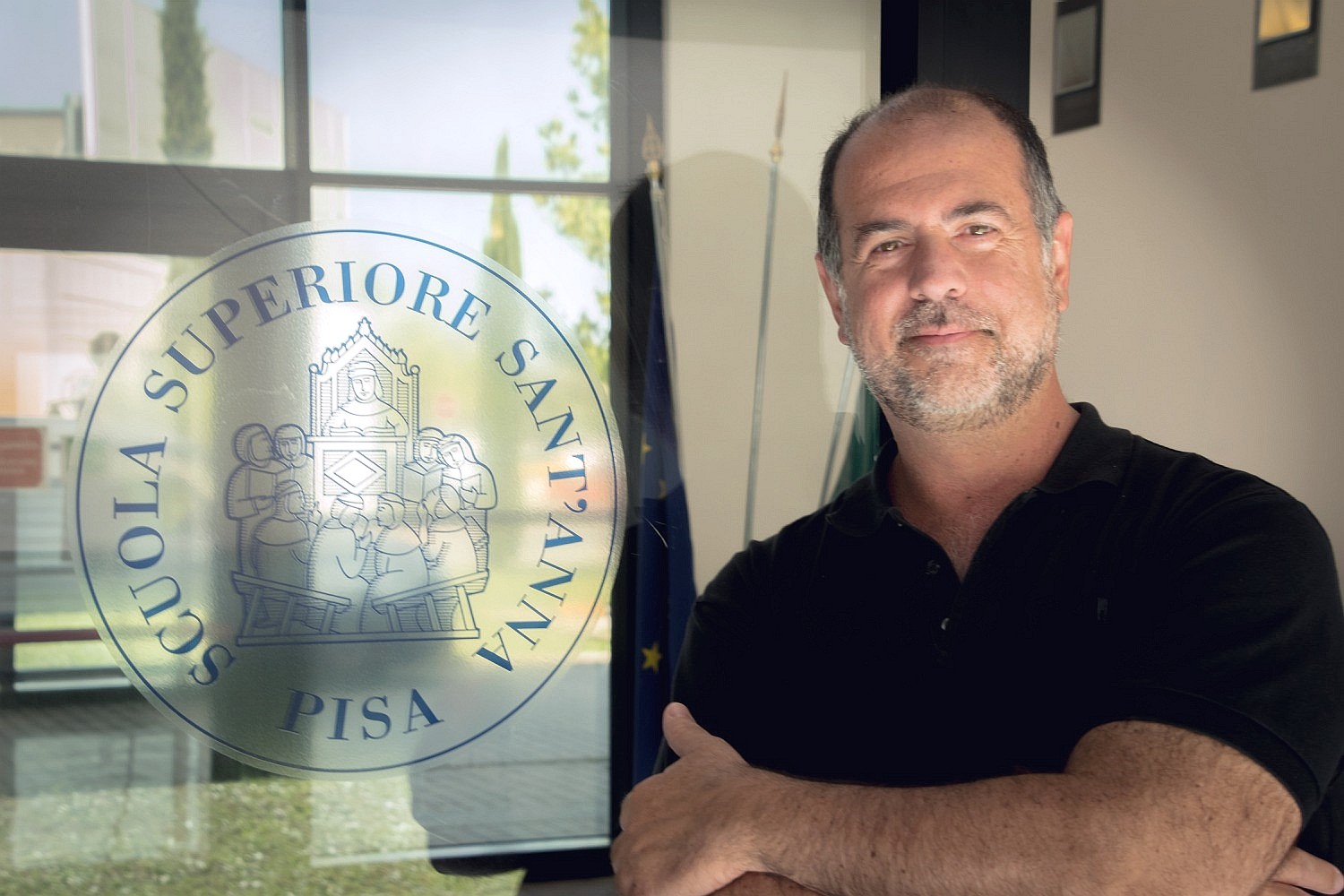
Giorgio C. Buttazzo is a Full Professor of Computer Engineering at the Scuola Superiore Sant'Anna in Pisa, Italy, and founder/director of the RETIS Lab. His career includes roles at the University of Pavia and co-founding Evidence s.r.l. (a real-time embedded systems company). He holds an IEEE Fellowship (2012) and the IEEE TC RTS Outstanding Technical Contributions Award (2013). Education: Electronic Engineering (University of Pisa, 1985), Master in Computer Science (University of Pennsylvania, 1987), PhD in Computer Engineering (Scuola Superiore Sant'Anna, 1991). Affiliations: TeCIP Institute, RETIS Lab, and leadership roles in IEEE Technical Committees. Research focuses on real-time systems, robotics, and AI integration. He has authored 10 books, over 300 papers, and pioneered frameworks like the ERIKA/SHARK kernels. Current projects include RETICULATE, OPERAND, and NANCY (5G networks). Teaching includes Real-Time Systems, Neural Networks, and Jazz Guitar Improvisation. Advised over 150 master and PhD students. Active in conferences like ECRTS, RTSS, and RTAS.
Rodrigo Miragaia Rodrigues is a full professor at the Instituto Superior Técnico (ULisboa) and a researcher at INESC-ID since 2015. He previously held roles as an associate professor at Universidade Nova de Lisboa, tenure-track faculty at MPI-SWS, and completed his PhD at MIT in 2005 under Barbara Liskov. Education: PhD in Computer Science, MIT, 2005 Research Interests: Focuses on distributed systems, fault-tolerant computing, cloud infrastructure, and consistency models. His work bridges theoretical foundations and practical implementations, addressing challenges in geo-replication, secure analytics, and resource allocation in serverless environments. He emphasizes scalable systems and resilient data management. Awards: Best Paper Award at SOSP ERC Starting Grant Google Faculty Research Award Advising & Grants: Has advised 7 PhD students as main advisor, with graduates in top institutions like Purdue, TU Munich, and USTC. Secured funding from the European Research Council (ERC) and Google, focusing on projects like DependableCloud (ERC Grant 307732). Labs & Teams: Leads research at INESC-ID and previously directed the Dependable Systems Group at MPI-SWS. Active in academic leadership roles, including President of the Scientific Council at IST.
Nuno Santos is an Associate Professor in the Department of Computer Science and Engineering at Instituto Superior Técnico (IST), University of Lisbon, and a senior researcher at INESC-ID Lisbon, where he leads the SysSec team within the Distributed, Parallel and Secure Systems (DPSS) group. He is an active member of the international security community, serving as Program Vice Co-Chair for USENIX Security 2025 and on program committees for top venues such as IEEE S&P, CCS, and USENIX Security. Education: Ph.D. in Computer Science, 2013 – Max Planck Institute for Software Systems (MPI-SWS) & Saarland University Research internships at Microsoft Research Redmond (2010), Vrije Universiteit Amsterdam (2018), and Technical University of Munich (2024) Research Interests Nuno Santos’s research centers on the security and privacy of computer and networked systems, with particular emphasis on trusted execution environments, secure systems design, and the intersection of machine learning with security. His group investigates vulnerabilities and defenses in widely deployed platforms, including TrustZone, JavaScript runtimes, and cloud infrastructures. Additional themes include censorship-resistant communication, privacy-preserving analytics, and automated exploit generation. Recent Publication Trends Over the past five years, his work has increasingly targeted emerging threat models in confidential computing (AMD SEV-SNP, Intel TDX), large-language-model integration into web applications, and automated security analysis of JavaScript ecosystems. These publications consistently appear in the most selective venues (PLDI, SIGMETRICS, ICSE, NDSS, S&P, USENIX Security), evidencing strong empirical evaluation and real-world impact. Awards & Honors IST Outstanding Teaching Award (2019/2020) ISOC.PT Best Portuguese Internet Research Award (2024) Prémio Científico Universidade de Lisboa / Caixa Geral de Depósitos (2024) Multiple IST Teaching Excellence Awards Advising & Service Nuno Santos has supervised numerous MSc and PhD students whose theses span secure systems, network privacy, and trustworthy computing. Recent defenses include Bernardo Ribeiro, Cristi Savin, Hugo Mantinhas, João Aragonez, João Sá, and Tomás Tavares. He actively participates in doctoral committees and mentors junior researchers within the DPSS group. Labs, Teams & Collaborations He leads the SysSec team inside the Distributed, Parallel and Secure Systems (DPSS) group at INESC-ID Lisbon. The team maintains strong collaborative ties with MPI-SWS, VUSec at VU Amsterdam, the Systems Research Group at TU Munich, and multiple industry partners including Microsoft Research.
Junkai HE serves as an Assistant Professor in the Operations, Supply Chain and Information Management department at KEDGE Business School and is affiliated with the CESIT research center since September 2024. He earned his PhD in mathematics and computer science from Paris-Saclay University (France) in 2020, following which he conducted postdoctoral research at IRT SystemX and Télécom SudParis. His research specializes in decision making under uncertainty through advanced modeling and algorithm design , with primary applications in supply chain management , remanufacturing , and maintenance optimization . Key methodologies include stochastic programming, multi-objective optimization, and predictive maintenance modeling for complex industrial systems. Analysis of his 2019-2024 publications reveals a consistent trajectory in applying operations research to sustainable industrial practices. His work increasingly focuses on uncertainty integration in disassembly line balancing and remanufacturing systems, while maintaining strong foundations in classical scheduling problems for manufacturing and logistics. Publications predominantly appear in top-tier journals like the International Journal of Production Economics and Computers & Operations Research. He teaches core operations management courses including operations research, production planning, and logistics, demonstrating active educational engagement. His research at CESIT likely involves industry collaborations addressing real-world supply chain challenges, though specific grant details are unmentioned. As a CESIT researcher, he contributes to KEDGE's industrial technology research initiatives, bridging theoretical optimization methods with practical applications in manufacturing and logistics systems. Current work appears oriented toward sustainable supply chain innovations and digital transformation of maintenance practices.
Luis Antunes Veiga is an Associate Professor and Senior Researcher at INESC-ID Lisbon, affiliated with the Distributed Systems Group and the Computing Systems and Communication Networks Laboratory. His research focuses on Cloud Computing, Edge Computing, Distributed Systems, and Big Data processing. He teaches courses such as 'Cloud Computing and Virtualization' and 'Operating Systems, Virtualization and Cloud Computing.' His work emphasizes scalable systems, network-aware workflows, and resource-efficient data processing. Research Interests: His primary areas include distributed systems architectures, edge computing frameworks, graph processing algorithms, and software-defined systems. He explores topics like latency-aware network design, resource auction mechanisms for edge environments, and interoperable service workflows. His contributions span theoretical frameworks and practical implementations, such as the RATEE system for edge resource trading and the VeilGraph incremental graph processing framework. Publications: His recent work addresses challenges in distributed systems, such as elastic scaling of stream processing, efficient graph processing in Spark, and latency optimization in internet-scale workflows. These publications reflect a trend toward integrating software-defined approaches with edge and cloud infrastructures. Notable Awards: Best Young Researcher INESC-ID, Excellence in Teaching (IST 2012), and a Best-Paper Award at ACM/IFIP/Usenix Middleware 2007. Labs & Teams: Active in the Computing Systems and Communication Networks Laboratory, leading projects on edge computing and distributed systems.
Nuno P. Lopes is an Associate Professor at Instituto Superior Técnico (University of Lisbon) and affiliated with INESC-ID . His research focuses on compiler optimization, program verification, formal methods, and hardware-software co-design for AI workloads. He advises students at both PhD and MSc levels in areas such as compilers, machine learning frameworks, and blockchain security. Education: PhD in Computer Science from Instituto Superior Técnico (2014), Master's from the same institution, and Bachelor's in Computer Science. Research Interests: Compilers, static analysis, LLVM optimization validation, undefined behavior exploitation, tensor contraction processors, and secure smart contract verification. He leads projects like Alive2 for LLVM optimization validation and Torchy , a tracing JIT compiler for PyTorch. Awards: Distinguished Paper at PLDI 2015, Best Paper at SPIN 2013. His student Juneyoung Lee won the EuroLLVM'19 SRC award and best PhD thesis in Seoul National University's Engineering College. Grants: Supported by Google, Matter Labs, Oracle, PRACE, and Woven by Toyota. His lab focuses on sustainable AI computing and compiler-driven optimizations. Current Projects: Alive2, TCP (Tensor Contraction Processor), and FuriosaAI collaborations. Advises students on topics like blockchain mining efficiency, Rust-C++ translation, and secure smart contract execution.
David R. Matos is an Assistant Professor at the College of Engineering, University of Lisbon, and a researcher at the Distributed, Parallel and Secure Systems Group (DPSS) of INESC-ID. He is also a member of the BIG ERA Chair Team. His primary research interests include distributed systems, cybersecurity, and cloud computing, with a specific focus on intrusion recovery mechanisms for cloud environments and microservice architectures. Education: BSc in Informatics Engineering, University of Lisbon MSc in Informatics Engineering, University of Lisbon PhD in Computer Sciences and Engineering, Instituto Superior Técnico His research applies machine learning techniques to associate application requests with database statements, enabling identification and reversal of malicious operations. Key themes include decentralized storage, blockchain recovery, secure communication protocols, and pluggable intrusion recovery systems. David has contributed to projects such as PATI, SITAN, SafeCloud, SEAL, and the BIG ERA Chair. He developed the Rectify system for intrusion recovery in PaaS clouds, which is deployable alongside applications without software modifications.
João Paiva Cardoso is a Full Professor at the Department of Informatics Engineering, Faculty of Engineering of the University of Porto, Portugal, and a Senior Researcher at INESC TEC's Human-Centered Computing and Information Science Centre since July 1, 2011. He earned his PhD in Electrical and Computer Engineering from the Technical University of Lisbon in 2001 and has built an extensive career spanning academia and industry. Former positions: IST/UTL (2006-2008), Senior Researcher at INESC-ID (2001-2009), University of Algarve (1993-2006) Industry experience: PACT XPP Technologies, Inc., Munich, Germany (2001/2002) Professional affiliations: Senior Member of IEEE, Member of IEEE Computer Society, Senior Member of ACM His research centers on compilation techniques, domain-specific languages, reconfigurable computing, and high-performance embedded systems. Recent publications reveal a strong focus on hardware/software co-design, with particular emphasis on FPGA acceleration and source-to-source compilation techniques for optimizing CPU-FPGA applications. His work addresses critical challenges in High-Level Synthesis compatibility, task graph representations, and holistic partitioning approaches. Professor Cardoso has served in leadership roles for numerous international conferences including General Chair of FPL'2013 and General Co-Chair of multiple ARC symposia. His supervised theses cover diverse topics from energy-efficient classification techniques to FPGA-based kNN accelerators, demonstrating the breadth and practical application of his research vision.
Filipe Alves serves as a Researcher at Polytechnic Institute of Bragança and pursues a PhD in Industrial and Systems Engineering at University of Minho, with continuous research activity since 2017. His work bridges theoretical optimization frameworks and practical industrial applications through DTx - Digital Transformation CoLAB, a national R&D consortium focused on digital innovation. His academic foundation includes: Bachelor's in Biomedical Engineering (Polytechnic Institute of Bragança) Master's in Biomedical Technology (Polytechnic Institute of Bragança) Specializing in scheduling systems and metaheuristic algorithms , his research creates decision support tools for industrial automation and healthcare logistics . Key contributions address nurse scheduling, home healthcare routing, and virtual power plant optimization using MILP solvers and multi-agent architectures. His methodology integrates mathematical modeling with real-world constraints like time windows, resource capacities, and dynamic environments. Publication analysis reveals three dominant trajectories: (1) Healthcare logistics optimization (40% of recent work), featuring nurse/home care scheduling solutions; (2) Energy systems management (30%), particularly virtual power plant coordination; (3) Public health applications (20%), including pandemic impact studies and waste management. This evolution demonstrates increasing interdisciplinary reach while maintaining core optimization expertise. As an active DTx CoLAB member, he collaborates on digital transformation projects connecting academic research with industrial implementation. His current PhD research extends these efforts into industrial systems engineering frameworks for complex scheduling challenges.
Pedro Arroz Correia Bonifácio Serra is a researcher in the Department of Electrical and Computer Engineering at Universidade Lusófona, specializing in Guidance, Navigation, and Control (GNC) systems for aerospace and robotic applications. His work is closely aligned with European Space Agency (ESA) missions such as e.Deorbit, COMRADE, GUIBEAR, and HERACLES, focusing on active debris removal, on-orbit servicing, and autonomous spacecraft operations. Research Interests: His primary research areas include Guidance, Navigation and Control (GNC), space robotics, autonomous systems, image-based visual servo control, fault-tolerant control, and nonlinear control systems. He has made significant contributions to the development and validation of control architectures for capturing tumbling satellites and enabling autonomous landing of UAVs and spacecraft. The most recent publications reflect a strong emphasis on space safety, debris removal technologies, and computational GNC for complex space missions. His work bridges theoretical control design with practical ground validation, particularly in the context of ESA-led projects. The recurring themes across his publications include autonomous rendezvous, manipulator control for space robots, and robust GNC under uncertain conditions. Scientific Contributions: Key contributor to ESA's e.Deorbit mission studies, focusing on capture and deorbiting of defunct satellites like Envisat. Developed and tested GNC systems for the HERACLES lunar ascent element. Involved in the COMRADE project for combined control of robotic spacecraft and manipulators. Worked on GUIBEAR project for bearings-only rendezvous navigation. Advising and Grants: While no formal students are listed, his research is supported by major European space initiatives, likely involving collaborative grants from ESA and industrial partners such as Airbus. His work involves experimental validation and prototype development, indicating access to advanced research funding and facilities. Labs and Teams: Although specific lab affiliations are not mentioned, his involvement in projects like WMS LEMUR and e.Deorbit suggests collaboration with ESA’s GNC teams and space robotics laboratories focused on on-orbit servicing and debris removal technologies.
Jorge Rodrigues da Costa is a Full Professor at the Department of Information Science and Technology (ISTA), Instituto Universitário de Lisboa (ISCTE-IUL), where he also serves as Vice-Rector. He is a Senior Researcher and Coordinator of the Antenna and Propagation Group at the Institute of Telecommunications – IUL. His academic career is deeply rooted in electrical and computer engineering, with a focus on advanced antenna systems and propagation technologies. His educational background includes a Licenciado (1997) and Ph.D. (2002) in Electrical and Computer Engineering from Instituto Superior Técnico (IST), Lisbon, and an Agregação (2010) from ISCTE-IUL. He is a Senior Member of IEEE and has held editorial positions in top journals including IEEE Transactions on Antennas and Propagation and IEEE Open Journal of Antennas and Propagation. His research interests span antenna design (dielectric lenses, transmit-arrays, RFID, MIMO, UWB), biomedical applications (microwave imaging for breast cancer and bone fracture detection), and millimeter-wave systems for 5G, satellite, and beyond-6G communications. He has contributed over 200 publications, with extensive work in IEEE journals, and co-authored four patents. His recent publications (2023–2024) highlight advancements in environmental remote sensing (plastic litter detection), medical diagnostics (bone and breast imaging), and high-performance antenna systems (low-profile transmitarrays, beam steering, 3D-printed antennas). These works reflect a strong trend toward interdisciplinary research combining electromagnetics, biomedical engineering, and sustainable technologies. He has received recognition as a Senior Member of IEEE and has been actively involved in major European projects such as TERRAMETA, aimed at shaping future 6G technologies. Jorge Costa has supervised 7 PhD theses (as supervisor or co-supervisor), 26 MSc theses , and 7 research grants , demonstrating a strong commitment to academic mentorship. He has also led research teams in developing innovative antenna systems for satellite, medical, and 5G applications. His work is supported by affiliations with the Institute of Telecommunications and active collaboration with international research groups. He leads the Antenna and Propagation Group – Lx at IT Lisboa and contributes to the Wireless Technologies thematic line. His team is engaged in cutting-edge projects including microwave imaging systems, low-power cancer screening, and roadmap development for post-6G communications.
Miguel Monteiro is an Assistant Professor at the Department of Informatics (DI) within the Faculty of Sciences and Technology (FCT) at New University of Lisbon (UNL) since 2006. He is affiliated with the research groups NOVA-LINCS (formerly CITI) and QUASAR . Research Interests: His work focuses on Software Engineering , particularly in Software Modularity , Aspect-Oriented Software Development (AOSD), and Program Reengineering and Evolution . He has extensively studied modularity challenges in MATLAB systems and developed techniques for aspect-oriented refactoring. Notable Projects: Funded by Portuguese Science and Technology Foundation (FCT) and international bodies, his projects include: GasPar (2010-2013): General-purpose AOSD framework for heterogeneous multicore parallel systems. AMADEUS (2007-2010): Aspect-oriented optimizations for MATLAB development. PRIA (2009-2011): International collaboration with University of Texas at Austin on parallel programming. PPC-VM (2004-2007): Portable parallel computing via virtual machines. SOFTAS (2005-2008): Aspect-oriented software development research. Academic Contributions: His research spans aspect-oriented refactoring, code smells, software visualization, and domain-specific languages. He has published in journals like Journal of Computer Languages , Expert Systems , and Scientometrics , and presented at conferences including AOSD, ICEIS, and ITNG.
Paulo Carreira is an Associate Professor at Instituto Superior Técnico , Universidade de Lisboa. His research focuses on Building Automation , Energy Management , and Data Integration , with a particular emphasis on Smart Urban Environments and Cyber-Physical Systems . Fields: Building Automation, Energy Management, Data Privacy, Query Optimization, ETL, Streaming Query Processing Research Trends : His recent work spans from SQL Injection Attacks in LLM-integrated systems to Multi-Paradigm Modeling for Cyber-Physical Systems. Publications highlight his expertise in Energy Efficiency in buildings and BIM Integration with real-time data. Scientific Awards : Best Student Paper Award Nomination for Best Paper Award