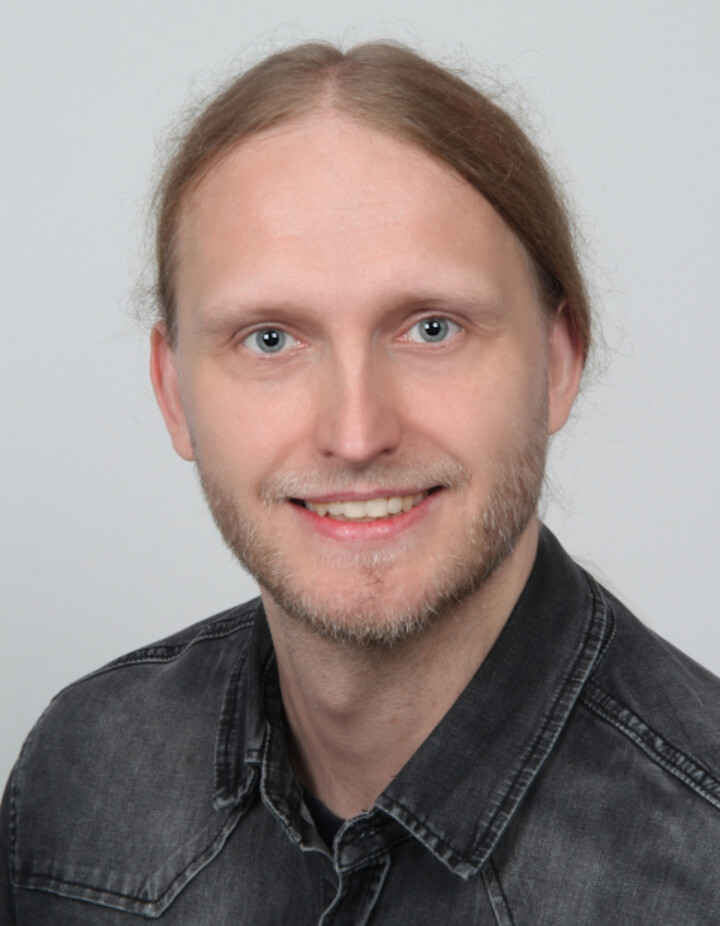
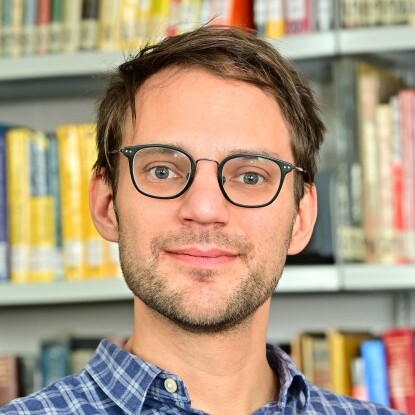
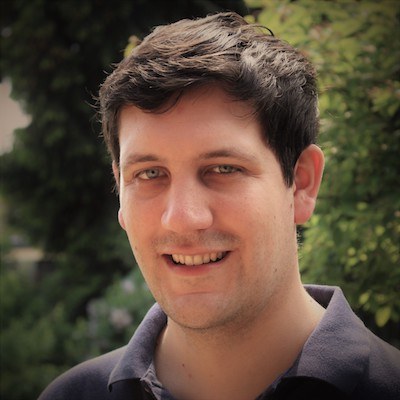
Prof. Dr. Paulo Drews-Jr is a Visiting Professor at the Department of Computer Science, Faculty of Engineering, University of Freiburg, Germany. His research focuses on Robotics, Computer Vision, and Deep Learning, particularly for autonomous systems operating in underwater and aerial environments. He holds a D.Sc. and M.Sc. in Computer Science with minors in Robotics and Computer Vision from the Federal University of Minas Gerais, Brazil, and a B.Sc. in Computer Engineering from the Federal University of Rio Grande, Brazil. Education: D.Sc. in Computer Science (Minor: Robotics and Computer Vision), Federal University of Minas Gerais, Brazil M.Sc. in Computer Science (Minor: Robotics and Computer Vision), Federal University of Minas Gerais, Brazil B.Sc. in Computer Engineering, Federal University of Rio Grande, Brazil Research Interests: Paulo Drews-Jr specializes in Robot Perception, Robotics, and Computer Vision. His work addresses challenges in Underwater Robotics, Aerial Robotics, and Industrial Automation, including Active Perception to Account for Uncertainty in Deep Learning Applied to Robotics. His recent publications emphasize Deep Reinforcement Learning, Image Processing, and Trans-Media Navigation for Hybrid Unmanned Vehicles.
Roland Leißa is an Assistant Professor in the School of Business Informatics and Mathematics at the University of Mannheim, Germany. His research focuses on programming languages, compilers, and domain-specific languages (DSLs) for high-performance computing across heterogeneous architectures. He teaches courses on parallel programming, compiler construction, and advanced programming topics. His work emphasizes automatic parallelization, intermediate representations, and program optimizations, particularly through partial evaluation techniques. He has contributed to tools like MimIR, AnyDSL, and FLOWER, which address challenges in GPU programming, FPGA synthesis, and ray tracing. Roland leads research on abstracting industrial and scientific application problems into reusable, theoretically sound compiler solutions. His projects span sequence alignment accelerations, dataflow compilation, and vectorization strategies, targeting modern hardware including GPUs and SIMD architectures. Contact: leissa@uni-mannheim.de | Personal Website | ORCID: 0000-0002-2444-6782
Zhenbin Zhang is a full professor and institute director at Shandong University in Jinan, China. He holds prestigious fellowships including IET Fellow and IEEE Senior Member status, and has been recognized in Stanford University's 'Lifetime Scientific Impact List' for top 2% scientists globally. Research Focus: Renewable energy conversion systems Key Areas: Offshore wind energy, power electronics, microgrids, predictive maintenance His work spans high-power wind turbine control systems, hybrid microgrids, and intelligent power conversion technologies. Recent publications demonstrate expertise in distributed control architectures, predictive maintenance algorithms, and advanced converter topologies. Scientific accolades include: 2024: Science and Technology Innovation Award (China Power Supply Society) 2024: Gold Award, Geneva International Exhibition of Inventions 2018: National Distinguished Expert (China's 1000 Talents Program) 2017: VDE-Award-2017 (Germany) He has received multiple best paper awards and holds 25 conference best paper/presentation prizes. His research has been cited over 200 times for key works in wind energy conversion and power electronics.
Boris Glavic is a Professor at Illinois Institute of Technology, Chicago, specializing in database systems with a strong research focus on data provenance, uncertain data management, and database optimization techniques. His work bridges theoretical database concepts with practical applications in data cleaning, debugging, and ML integration. Glavic's research primarily centers on data provenance, where he has developed innovative techniques for tracking data lineage, optimizing provenance computations, and applying provenance to various database tasks. His work spans theoretical foundations of provenance in database query languages to practical systems like GProM (a 'Swiss Army Knife' for provenance needs) and applications in data debugging, uncertain data management, and ML pipeline robustness. Key contributions include provenance-based data skipping, reenactment techniques for transaction debugging, and frameworks for explaining query answers and non-answers. Analysis of Glavic's recent publications reveals a clear evolution from foundational provenance research toward integration with machine learning systems and addressing data quality challenges. His work increasingly focuses on practical applications where provenance techniques enhance data reliability in ML pipelines, improve debugging of complex data workflows, and enable efficient handling of uncertain and incomplete data. The publications demonstrate strong interdisciplinary connections between database theory, data management systems, and machine learning. While specific awards aren't documented in the provided information, Glavic's extensive publication record in top-tier venues (VLDB, SIGMOD, ICDE) over more than a decade demonstrates significant recognition within the database research community. His work has clearly influenced both theoretical and practical aspects of data management systems. Glavic has mentored numerous researchers who have become frequent collaborators, including Seokki Lee, Xing Niu, Su Feng, and Pengyuan Li. His research has been supported by grants enabling substantial contributions to data provenance, database debugging, and uncertain data management. The collaborative nature of his work is evident through extensive co-authorship networks spanning multiple institutions and research groups. Though specific lab affiliations aren't detailed in the provided information, Glavic's research appears to be conducted within a vibrant database research group at Illinois Institute of Technology, with strong connections to other leading database research centers. His work on systems like GProM suggests an active research laboratory focused on practical database tools and techniques.
Prof. Dr.-Ing. Christian Hochberger is a Professor at Technische Universität Darmstadt, affiliated with the Department of Computer Science. His research focuses on reconfigurable computing, FPGA architecture, embedded systems, and hardware/software co-design. He teaches courses such as 'Rechnersysteme I/II' and 'High-Level Synthese.' University: Technische Universität Darmstadt Department: Department of Computer Science Research interests span FPGA-based acceleration, CAD tools for reconfigurable systems, and energy-efficient computing. His work frequently addresses challenges in hardware design, parallelization, and fault tolerance. Publications from 2022-2024 highlight contributions to memristive devices, genetic circuit design automation, and CGRA optimization. His recent work emphasizes experimental methodologies and novel techniques in resistive switching and memristor-based FPGAs. Awards: None explicitly listed in the provided text.
Prof. Sebastian Schöps is an Associate Professor in the Department of Electrical Engineering and Information Technology at Technische Universität Darmstadt. He leads the Computational Engineering Group, focusing on coupled multiphysical simulations and high-performance computing. His work bridges computational electromagnetics with advanced numerical methods like isogeometric analysis and reduced-order modeling. Education: Joint PhD in Physics (KU Leuven, Belgium) and Mathematics (University of Wuppertal) MSc and BSc in Business Mathematics (University of Wuppertal) Research Interests: Coupled systems involving electromagnetism, thermodynamics, and structural mechanics High-performance parallel algorithms for industrial-scale simulations Uncertainty quantification in engineered systems Optimization of electric machines using isogeometric analysis His work frequently involves developing novel finite element formulations and collaborating with CERN on accelerator magnet simulations. Publications Trends: Recent work emphasizes machine learning integration with physics-based models, optimization under uncertainty, and scalable simulation techniques for superconducting devices. Key applications include electric machine design, particle accelerator magnets, and medical device modeling. Labs & Projects: Leads the PASIROM project (Parallel Simulation and Robust Optimization of Electro-Mechanical Energy Converters), and contributes to CERN's quench protection system research. Active in open-source tool development for multiphysics simulation.
Mina Abadeer is a Researcher affiliated with the University of Münster, Germany. She is based in Room 710 at Einsteinstraße 62, 48149 Münster. Her work focuses on agent-based modeling, disaster management simulations, and machine learning integration into complex systems. Key projects include contributions to the CrowdSim system for crowd behavior analysis and the PACXX framework for parallel computing. She actively participates in teaching and research activities, including courses on distributed systems and interactive simulations. Her research interests emphasize the practical application of computational models to real-world challenges, such as pandemic response, evacuation planning, and network optimization. She has published widely on topics like QoS-aware routing mechanisms in SDN networks and interactive simulation frameworks for disaster recovery scenarios. Her work bridges theoretical computer science with applied systems engineering, addressing both technical and societal challenges through interdisciplinary approaches.
Andreas Kuhn is a PhD Student at the University of Würzburg , affiliated with the Supramolecular and Cellular Simulations Group at the Center for Computational and Theoretical Biology (CCTB). His work combines mathematical modeling , computational simulation , and quantitative image analysis to study collective behaviors in biological systems. Research Interests include: Computational modeling of Trypanosoma brucei colonies Agent-based approaches to emergent swarming dynamics Impact of spatial constraints on collective behavior Julia programming for scientific applications Key Achievements: Developed a Julia course for biological data analysis Identified novel collective states in confined geometries via Vicsek model analysis Published on quantitative metrics for colony anisotropy in Journal of The Royal Society Interface
Lars Braubach is a full professor at Bremen University of Applied Sciences , affiliated with Faculty 4. His work bridges theoretical and applied research in multi-agent systems , distributed computing , and software engineering , with recent contributions to system robustness and cybersecurity. Active in multi-agent programming (Jadex V platform) Expertise in end-to-end encryption and cloud infrastructure Focus on supply chain resilience and data science infrastructure Recent scientific publications emphasize adaptive software architectures, secure distributed systems, and robustness-by-design principles. His work appears in leading venues like EUMAS and IDC symposia.
Dr. Philipp Warode is a research assistant at the Faculty of Economics, Humboldt University of Berlin, specializing in AI and network optimization. His work bridges computational economics, algorithm design, and operations research. Education: PhD in Mathematics (2022), TU Berlin His research focuses on parametric optimization of network flows, congestion games, and scheduling algorithms, with notable projects like Unsplittable Flows and collaborations with Martin Skutella and Max Klimm. Recent publications address atomic splittable congestion games, non-clairvoyant scheduling, and queuing system optimization. Teaching: Regular instructor of Mathematics I/II lectures and preparatory courses for bachelor/master students since 2019. Contact: philipp.warode@hu-berlin.de | Room 325, Spandauer Straße 1, 10178 Berlin | ORCID: 0000-0002-2878-6872
Jan Drewes is a current Postdoctoral Research Fellow at the Physics of Psychological Processes Group within the Institute of Physics at Technische Universität Chemnitz , Germany. His work bridges physics and experimental psychology, focusing on visual perception, eye tracking, and natural image statistics. PhD , Justus-Liebig-Universität Giessen (2006), thesis: Classification of Natural Scenes Diploma , Universität zu Lübeck (2003), thesis: Prediction of Saccadic Eye Movements with Dynamic Scenes His research explores how humans process visual information, including topics like object recognition, eye movement dynamics, and the statistical properties of natural scenes. He has developed methods to analyze gaze drift due to pupil dynamics and investigated neural mechanisms in shape and orientation perception. Recent publications (2010–2016) highlight his focus on rapid visual categorization, animal detection in natural scenes, and EEG-oculomotor interactions. Key areas include non-retinotopic perception, recurrent neural processing, and behavioral oscillations during visual tasks. He has collaborated with institutions in Germany, Italy, Canada, France, and China, including York University, Trento University, and CNRS Toulouse, while affiliating with research groups like the Melcher Active Perception Group and Elder Lab.
Malte von Scheven is a Senior Researcher and Deputy Director at the Institute of Structural Analysis and Dynamics at the University of Stuttgart. He holds a Dr.-Ing. degree (2009) and specializes in adaptive structures, fluid-structure interaction, and computational mechanics. Research Focus: Redundancy matrices for structural assessment, high-performance computing, actuator placement optimization Teaching: Finite element methods, computational mechanics, nonlinear structural analysis Leadership: Deputy Director since 2006, conference organizer for ECCOMAS and SMART symposia His work bridges structural mechanics with bio-inspired design, including studies on sea urchin skeletons as models for segmented shells. He has supervised numerous theses on SFRP composites, topology optimization, and adaptive systems. Scientific Engagement: Published 15+ papers on redundancy matrices and FSI Organized mini-symposia at international conferences (ECCOMAS 2024, SMART 2023) Active in university governance through Faculty Council and TIK committee Recent research investigates mechanical modeling of adaptive structures, with applications in civil engineering and architectural geometry. His redundancy matrix framework provides novel performance indicators for robust design and assemblability assessment.
Larissa Capobianco Shimomura is a Postdoctoral Researcher at the Institute for Parallel and Distributed Systems (IPVS) within the Cluster of Excellence IntCDC at the University of Stuttgart. Her work focuses on integrating computational design and construction through advanced data processing and artificial intelligence methodologies. Research Focus: AI-driven co-design in prefabrication and on-site construction Affiliation: University of Stuttgart, IPVS, IntCDC Cluster Her research projects aim to optimize construction workflows by leveraging predictive analytics and adaptive systems. While specific publications or awards are not detailed in the provided text, her role underscores expertise in computational approaches to architectural engineering.
Moucheng Yang is an active faculty member in the College of Engineering, specializing in computer science and technology. His research focuses on reconfigurable computing, FPGA architecture design, and digital circuit optimization. His recent work includes the development of DSLUT and R-LUT architectures, which improve logic cell scalability and efficiency for domain-specific benchmarks. Earlier studies explored CPU-FPGA hybrid systems for bioinformatics and data-parallel acceleration. Key trends in his publications emphasize hardware resource allocation, parallelized technology mapping, and latency reduction through adaptive circuit partitioning. His collaborations span institutions like Xilinx Zynq and Intel Stratix-10.
Peter Spichtinger is a Professor for Theoretical Cloud Physics at the Institute for Atmospheric Physics (IPA) , Johannes Gutenberg-Universität Mainz , Germany. Since 2010, he has led research on cloud dynamics, multiscale modeling, and atmospheric pattern formation. His work bridges mathematical modeling with climate science , focusing on ice supersaturation , gravity wave-cloud interactions , and machine learning applications in atmospheric physics. Key Affiliations : Institute for Atmospheric Physics (Mainz), Mainz Institute of Multiscale Modeling (M3O), Waves to Weather (W2W) SFB, TPChange CRC Research Themes : Cloud-scale microphysics, ice nucleation pathways, tropopause dynamics, stochastic Galerkin methods, fractal properties of atmospheric systems His 15 most recent publications emphasize ice microphysics in climate models, GPU-accelerated weather front detection , asymptotic cloud modeling , and machine learning for atmospheric datasets . Current projects include BINARY (Big Data in Atmospheric Physics) and leadership of the SCALES Conference 2025 . He serves as Deputy Institute Director (2020-2022) and Spokesperson for M3O (since 2022) . Scientific awards include the Marie Curie Fellowship (2007-2009) . He supervises theses in interdisciplinary contexts and co-organizes seminars on cloud dynamics and machine learning for atmospheric systems.