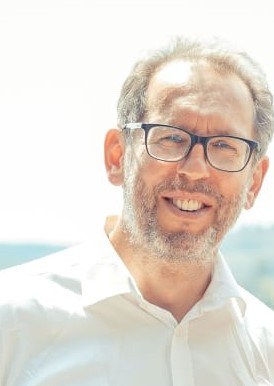
Michael Hinze is a Full Professor (W3) at the Mathematical Institute of Universität Koblenz, where he heads the Working Group on Optimization of Complex Systems. His research develops advanced mathematical methods for solving engineering challenges, particularly in fluid dynamics and computational modeling. Research interests: Focuses on developing efficient computational algorithms for shape/topology optimization, inverse problems in PDE systems, and data-driven model reduction techniques. Current projects include BMBF-funded work on trustworthy AI systems and DFG-supported fluid dynamic optimization using Lipschitz methods. Publications consistently demonstrate innovative approaches to optimization challenges, combining theoretical rigor with practical engineering applications. Recent work emphasizes phase-field methods and parallel computing implementations. Administrative roles: Head of Mathematical Institute and member of the Faculty Council. Serves as associate editor for leading journals including Journal of Optimization Theory and Applications (JOTA) and IMA Journal of Numerical Analysis (IMAJNA).
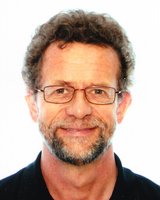
Dr. Benjamin Uekermann is a Researcher at the Department of Informatics, Technical University of Munich. His work focuses on high-performance computing and parallel algorithms for scientific applications.
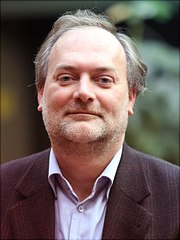
Dr. Peter Steinbach leads the Group of Artificial Intelligence at the Helmholtz-Zentrum Dresden-Rossendorf (HZDR), focusing on interdisciplinary research spanning computational science, space physics, and machine learning applications. His work integrates advanced computing techniques with domain-specific challenges in healthcare, microscopy, and space weather monitoring. Education & Background: While specific educational details are not provided, his research portfolio indicates advanced expertise in physics, computational methods, and software engineering. His career has been centered at HZDR, contributing to major projects like the CLIJ GPU-accelerated image processing framework and space weather studies using ionospheric wave analysis. Research Interests: Steinbach's work emphasizes practical AI applications, including educational tools for machine learning (e.g., "Teaching Machine Learning in 2020") and medical AI systems. His computational science contributions include optimizing high-performance computing for fluid dynamics and parallel processing. In space physics, he investigates VLF transmitter propagation, plasmaspheric dynamics, and geomagnetic storm impacts using satellite data from DEMETER and ground-based networks. Key Projects: Developed CLIJ, a GPU-accelerated image processing tool integrated with Fiji, revolutionizing microscopy workflows. Advanced understanding of ionospheric processes through studies on Schumann resonances and plasmaspheric hiss effects. Pioneered techniques for lightning detection and Q-burst analysis to map Earth's crust conductivity. Technical Contributions: Steinbach has optimized MPI-based fluid dynamics models for GPU systems and created benchmarking tools like gearshifft for heterogeneous computing platforms. His work bridges theoretical research with practical software solutions for the scientific community.
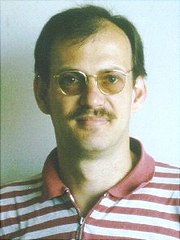
Prof. Dr. Stephan Frickenhaus is a Professor and Head of the Computing and Data Centre at the Alfred Wegener Institute, Helmholtz Centre for Polar and Marine Research. His primary affiliation is with the Bremerhaven Site, where he leads the Computing Division and oversees High-Performance Computing (HPC) infrastructure. His research focuses on Cluster Analysis, Big Scientific Data Analytics, and sustainable data science infrastructures. He actively contributes to interdisciplinary projects like the MOSAiC Arctic expedition and the Digital Earth initiative, emphasizing data integration and FAIR principles. Key responsibilities include managing HPC resources, developing data management frameworks, and advancing collaborative digital ecosystems in Earth System Science. His work bridges computational methods with environmental research, addressing challenges in climate modeling, oceanography, and cryosphere dynamics. Prof. Frickenhaus is also involved in policy and steering groups such as the Steering Group Digital Earth and HIDA-Steer, promoting data-driven scientific advancements. Research interests span data science applications in polar and marine environments, with publications emphasizing Arctic ecosystem studies, HPC optimization, and AI-driven climate analysis. His contributions to projects like MOSAiC underscore his expertise in large-scale data collection and analysis, ensuring scientific data remains accessible and reusable for future research.
Tomasz Trzcinski is an active computer vision and machine learning researcher with a prolific publication record across top-tier conferences and journals including CVPR, ECCV, WACV, NeurIPS, and IEEE Access. His work spans multiple institutions, primarily collaborating with researchers from Polish academic and research organizations as evidenced by co-author patterns and institutional affiliations in his publications. 229+ publications documented in DBLP (2012-2025) Active contributor to computer vision and machine learning communities Regular presence at major conferences (CVPR, ECCV, NeurIPS) Trzcinski's research primarily focuses on continual learning , where he has made significant contributions to addressing catastrophic forgetting and knowledge retention. His work extends to 3D vision , particularly neural radiance fields (NeRF), Gaussian splatting, and point cloud processing, with applications in robotics and scene understanding. He also explores medical imaging applications, collaborating with medical researchers on projects involving pulmonary artery pressure estimation and fetal birth weight prediction. His methodological contributions include innovations in hypernetworks, vision transformers, and test-time adaptation techniques. Analysis of his recent publications (2023-2025) reveals a strong emphasis on continual learning methodologies, with approximately 40% of his work addressing challenges in this domain. His research demonstrates a consistent trajectory toward more efficient and robust neural network architectures, with increasing focus on practical applications in robotics, medical imaging, and real-world adaptation scenarios. The integration of vision-language models and contrastive learning approaches represents his latest research direction, indicating adaptation to emerging trends in the field. As a senior researcher, Trzcinski frequently serves as a corresponding author and collaborates with numerous junior researchers, suggesting an active supervisory role. His work shows evidence of securing research funding through collaborations with institutions involved in medical imaging and computer vision applications. Trzcinski maintains active research collaborations across multiple teams, particularly with groups focused on continual learning (Twardowski, Deja, Cygert), 3D vision (Kania, Kowalski), and medical applications (Sitek, Grzeszczyk). His research group appears to maintain strong connections between theoretical machine learning advancements and practical applications in healthcare and robotics.
Venkatram Vishwanath is a Professor in the Department of Computer Science at the University of Illinois at Urbana-Champaign (UIUC), affiliated with the College of Engineering. His research focuses on high-performance computing (HPC), parallel I/O systems, machine learning applications, and scientific computing. He has contributed to advancing scalable data management, performance optimization on supercomputers, and interdisciplinary projects such as the HACC cosmological simulation framework. Collaborations with institutions like Argonne National Laboratory highlight his work in bridging computational science with practical applications. Key areas of expertise include topology-aware data aggregation, GPU performance modeling, and accelerating I/O operations for large-scale simulations. His work on frameworks like vl3 and PIDX has improved parallel data handling and visualization. Awards and recognitions are not explicitly listed in the provided data, but his extensive publication record and leadership in HPC projects reflect significant contributions to the field.
Dong In Kim is a prominent researcher in the field of wireless communications and artificial intelligence, with an extensive publication record spanning multiple decades. His research primarily focuses on the intersection of communications technology and AI, particularly in next-generation wireless networks. He has established significant collaborations with researchers across the globe, including Dusit Niyato (290 co-authored papers), Ping Wang, Jiawen Kang, and Hongyang Du. Active researcher with 639 publications documented in the DBLP database Regular contributor to top-tier IEEE journals and conferences Specializes in emerging areas of wireless communications and AI integration Kim's research interests center around wireless communications systems with a strong emphasis on artificial intelligence applications. His work spans several key areas including generative AI for wireless networks, semantic communications, reconfigurable intelligent surfaces, and integrated sensing and communication systems. He has been particularly active in exploring how generative AI models can enhance physical layer communications, security, and network optimization. His recent work shows a clear trajectory toward 6G technologies and the integration of large language models with wireless networking infrastructure. Analysis of Kim's recent publications reveals a strong focus on practical implementations of theoretical concepts, with many papers including experimental validation. His research demonstrates a progression from traditional wireless communications toward increasingly sophisticated AI-driven approaches, with particular emphasis on generative models and their applications in communications security, resource allocation, and network optimization. The interdisciplinary nature of his work bridges electrical engineering, computer science, and artificial intelligence. Throughout his career, Kim has maintained consistent productivity, with publication counts showing steady growth over time. The 2024-2025 period shows particularly high output (111 publications), indicating active research momentum. His work appears across multiple IEEE transactions including IEEE Transactions on Wireless Communications, IEEE Transactions on Vehicular Technology, and IEEE Internet of Things Journal, reflecting broad impact across communications disciplines.
Ramin Yahyapour is a researcher affiliated with the University of Göttingen and GWDG (Gesellschaft für wissenschaftliche Datenverarbeitung mbH Göttingen). His work focuses on cloud computing, distributed systems, cybersecurity, and high-performance computing. Key research areas include virtual machine migration optimization, data center energy efficiency, federated identity management, and parallel computing frameworks. He has collaborated extensively with institutions like the University of Göttingen and researchers such as Philipp Wieder, Faraz Fatemi Moghaddam, and Andrei Tchernykh. Research Interests: Cloud resource optimization Cybersecurity for distributed systems Workflow management in data-intensive environments Network function virtualization Machine learning for system scheduling Identity and access management Publications span topics like VM placement algorithms, data center power reduction, and federated identity systems, demonstrating expertise in both theoretical and applied computer science. His work often bridges academia and industry, addressing real-world challenges in cloud infrastructure and digital systems.
Rajendra V. Boppana is a Professor in the Department of Information Systems and Cyber Security at the College of Sciences, University of Texas at San Antonio. With a research career spanning over three decades since 1988, his work has significantly contributed to the fields of computer networking, cybersecurity, and distributed systems. His educational background, while not explicitly detailed in the provided publications, likely includes advanced degrees in Computer Science or a related field, given his extensive research contributions and faculty position. His publication record demonstrates deep expertise developed through years of academic research and teaching. Dr. Boppana's research interests focus primarily on network security , mobile ad hoc networks , routing algorithms , and cybersecurity . His early work concentrated on fault-tolerant communication and routing algorithms for parallel and distributed systems, while more recent research has shifted toward practical cybersecurity applications including ransomware detection, intrusion detection systems, and honeypot technologies. His research often bridges theoretical networking concepts with real-world security applications, demonstrating a consistent ability to adapt to evolving technological challenges. Analysis of his recent publication trends (2019-2025) reveals a strong focus on contemporary cybersecurity challenges. His work increasingly incorporates machine learning techniques for security applications, with particular emphasis on network traffic analysis, ransomware detection, and innovative honeypot designs using generative AI. The shift from traditional networking research to security applications reflects both the evolving threat landscape and his ability to address pressing real-world problems. Dr. Boppana has received recognition through consistent publication in top-tier venues including IEEE Transactions journals and major computer science conferences, though specific awards are not detailed in the provided publication record. As an advisor, Dr. Boppana has mentored numerous graduate students, with recent PhD candidates including Palden Lama, Jarrod Ragsdale, and Kumar Thummapudi, who have co-authored multiple publications with him on cutting-edge security topics. His research has been supported by various grants, though specific funding sources are not detailed in the provided information. His laboratory or research group appears to focus on network security and cybersecurity applications, with recent work involving machine learning for security, ransomware detection, and network traffic analysis. The group maintains active collaborations with researchers across multiple institutions and appears to have strong industry connections given the practical nature of their security research.
Prof. Dr. T. Andreae is a faculty member at the University of Hamburg's Faculty of Mathematics, specializing in Discrete Mathematics. His research focuses on graph theory, combinatorics, and their applications in theoretical computer science and optimization. He has contributed significantly to areas such as infinite graph reconstruction, immersion theory, and algorithmic game theory. His academic background includes a Doctoral Dissertation on infinite graph systems (1978) and extensive work on graph embeddings, TSP approximations, and clique transversals. Key contributions include studies on ubiquitous graphs, self-immersions in infinite graphs, and optimization under relaxed triangle inequalities. Prof. Andreae is affiliated with the Discrete Mathematics group and the Mathematical Seminar at the University of Hamburg. He has authored over 50 publications, with recent work emphasizing structural properties of infinite graphs and algorithmic solutions for discrete problems. His teaching includes courses such as 'Mathematics for Computer Science Students' (ALA and DM tracks), for which he provides detailed lecture scripts. No scientific awards are explicitly mentioned in his profile.
Prof. Jens Struckmeier is a faculty member at the University of Hamburg, holding the position of Professor of Numerics within the Department of Mathematics, Faculty of Mathematics, Computer Science and Natural Sciences. His research focuses on applied mathematics, particularly numerical methods for partial differential equations, computational fluid dynamics, kinetic theory, and optimal control. He has contributed extensively to areas such as particle methods for the Boltzmann equation, finite-volume particle methods for conservation laws, and mathematical modeling of crystallization processes and thermal flows. His work often bridges theoretical developments with industrial applications, such as fire simulations in vehicle tunnels and polymer crystallization studies. Struckmeier's research interests include numerical analysis, kinetic theory, and the development of efficient algorithms for complex systems. He has authored or co-authored numerous publications, including books on hyperbolic partial differential equations and articles in journals like Journal of Computational Physics and Mathematical Models and Methods in Applied Sciences . His work on radiation models for low Mach number flows and optimal control of crystallization processes demonstrates interdisciplinary applications of mathematical modeling. Notable contributions include the finite-volume particle method for moving domains and kinetic schemes for granular flow equations (Savage-Hutter equations). He collaborates widely, with co-authors across institutions, and his research often addresses real-world challenges in engineering and physics. While no specific awards are listed, his sustained academic output reflects significant contributions to numerical mathematics and applied sciences.
Dr. Kai Rothe is a Lecturer at the University of Hamburg's Department of Mathematics within the Faculty of Mathematics, Computer Science and Natural Sciences. His research focuses on numerical linear algebra, eigenvalue problems, finite element methods, and parallel algorithms. He has co-authored numerous textbooks and publications in applied mathematics, including works on engineering mathematics and numerical methods. Dr. Rothe has extensive teaching experience, having instructed courses such as Analysis for Engineers, Complex Functions, and Differential Equations since the late 1980s. His work emphasizes practical applications of mathematical principles to engineering and computational science.
Dr.-Ing. Sebastian Werner is an Acting Professor leading the SWK research group at the University of Hamburg (UHH) since October 2024. He holds a PhD from TU Berlin's Information Systems Engineering group and has extensive experience in postdoctoral research and teaching. His academic focus lies in serverless computing, distributed systems, and cloud-native architectures. He teaches modules such as SE 1, SEE, and SWA at UHH, ensuring continuity in the SWK group's educational offerings. Research Interests: Sebastian’s work emphasizes sustainability, maintainability, and trustworthiness in distributed architectures. He has contributed to EU projects like TEADAL and DITAS, exploring cloud continuum data management and serverless platforms. His dissertation, 'Serverless Data Processing: Application Platform (Co-) Design,' highlights his expertise in scalable computing solutions. Key Projects: Includes the BMBF-funded SMILE project (2020), focusing on serverless migration and cloud application measurement. His research spans fog computing, blockchain-based systems, and edge performance benchmarking. Awards: Received the BMBF Software Campus - SMILE project award in 2020. Grants & Collaborations: Active in EU-funded initiatives and industry collaborations, such as the Gaia-X 4 Future Mobility project. His team at SWK includes researchers like Stephanie Schulte, Leif Bonorden, and Alireza Hakamian.
Dr. Paras Mehta is a Researcher at the Department of Databases and Information Systems, part of the Computer Science faculty at Freie Universität Berlin. His work focuses on spatial data mining, geoinformatics, and spatio-temporal analysis with applications in disaster response systems and social media analytics. He contributes to projects such as MoveSafe and CliniScale, addressing challenges in real-time data processing and location-based services. Research interests include geotagged post analysis, spatio-textual data retrieval, and distributed computing for large-scale spatial datasets. His recent work emphasizes continuous summarization of streaming data and hotspot detection using frameworks like Apache Spark. Notable projects involve developing systems like μTOP for trending topic detection in microblogs and LocXplore for urban region profiling. His publications span spatial keyword queries, trajectory aggregation, and disaster response frameworks. Paras Mehta holds a PhD and has contributed to both academic and applied research in database systems. Despite no listed awards or grants in the provided texts, his research portfolio demonstrates strong engagement with spatial computing challenges. He collaborates within the Databases and Information Systems group at Freie Universität Berlin, contributing to both theoretical advancements and practical software solutions.
Marcel Ebbinghaus is a researcher at the University of Freiburg affiliated with the Department of Computer Science. His work focuses on program verification, concurrent programs, commutativity, and partial order reduction. He has co-authored publications presented at premier venues including CAV, AVM, and TACAS, often collaborating with researchers like Dominik Klumpp, Andreas Podelski, and others. Research Interests include: Program verification for concurrent systems Commutativity and partial order reduction techniques Preference orders in verification Model checking and fairness reduction Recent Publications Trends : His work emphasizes automated reasoning and verification of parallel/concurrent systems. Key subfields include commutativity analysis, partial order reduction, model checking, and generalization techniques applied to software verification. Lectures : He co-organizes courses on Theoretical Computer Science (summer 2025) and Discrete Models of Cyber-Physical Systems (winter 2024/25).