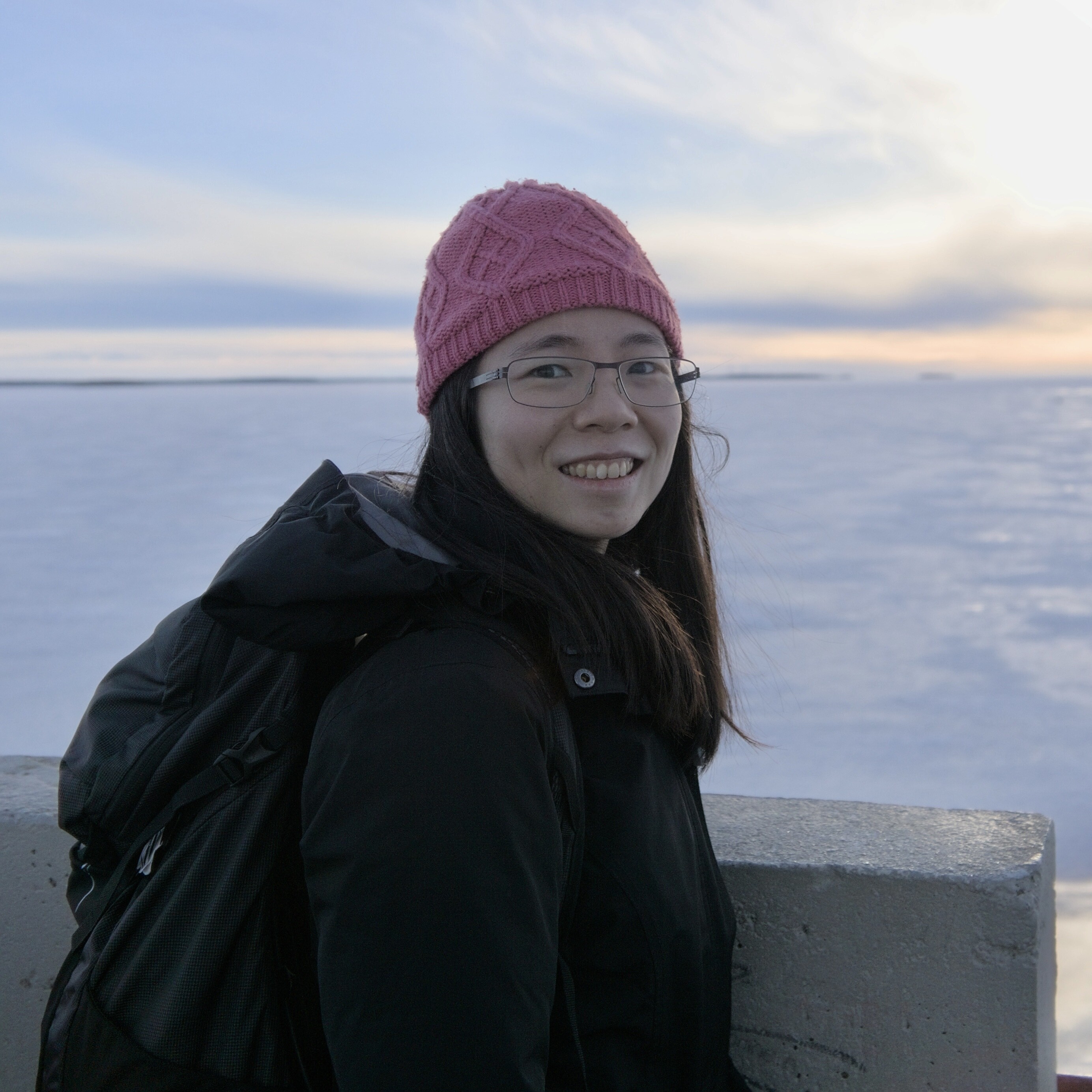
Saana Svärd is a Professor at the University of Helsinki in the Faculty of Arts, Department of Languages. She specializes in ancient Near Eastern studies with a focus on gender analysis, digital humanities, and emotional history in Mesopotamian texts. Academic Affiliation: University of Helsinki (Faculty of Arts, Department of Languages) Research Themes: Neo-Assyrian Empire, gender studies, digital approaches to cuneiform texts Her recent research explores emotional semantics through computational methods and bodily mapping in ancient texts. She directs the Centre of Excellence in Ancient Near Eastern Empires (2018-2025) and leads the 'Embodied Emotions' project (2022-2026). Notable awards include the 2021 Helsinki Science Award and 2023 honorary mention for co-editing Muinaisen Lähi-idän imperiumit . Key projects include: Digital Humanities approaches to Akkadian texts Quantitative analysis of Neo-Assyrian religious affiliation Gender roles in ancient Mesopotamian societies
Petteri Kaski is an Associate Professor at the Department of Computer Science, School of Science, Aalto University , and a member of the Helsinki Institute for Information Technology (HIIT) . His research focuses on theoretical computer science, particularly in algorithm design, exact and parameterized algorithms, algebraic algorithms, and combinatorics. Doctoral Degree in Engineering and Technology, Helsinki University of Technology (2005) Licentiate Degree in Engineering and Technology, Helsinki University of Technology (2002) Master's Degree in Engineering and Technology, Helsinki University of Technology (2001) His recent work explores tensor scaling, Johnson-Lindenstrauss transforms, Hamiltonian cycles, and computational complexity, with contributions to polynomial-time algorithms, finite field computations, and combinatorial optimization. Notable awards include the Best Paper Award at ICALP 2017 , an ERC Starting Grant (2014) , and the Kirkman Medal (2007) . He has served on scientific committees for conferences like STACS 2025 and ICALP 2024 , and collaborated with institutions such as the IT University of Copenhagen and Universität Regensburg . Key Research Areas : Theoretical Computer Science, Algorithm Design, Exact Algorithms, Algebraic Computation, Graph Theory, Combinatorics
Mohsin Abbas is an Assistant Professor (Tenure Track) in the Computing Sciences department at Tampere University, Finland. His research focuses on high-throughput, low-latency, and energy-efficient VLSI architectures for baseband processing systems, particularly channel code decoders. He has held roles including Research Assistant Professor at HKUST, Postdoctoral Fellow at McGill University, and Lead Engineer at ASTRI. Education: PhD in Electronics and Computer Engineering (2017), HKUST, under Prof. Chi-Ying Tsui MSc in Computer Science and Engineering (2011), Hanyang University, South Korea BSc in Computer Engineering (2007), University of Engineering and Technology Taxila, Pakistan Research Interests: VLSI Design (ASIC/FPGA) Wireless Communications (5G/6G) Massive MIMO and Compute-In-Memory (CiM) Channel Coding and Hardware Architecture Low-Latency Decoding Algorithms (e.g., GRAND) Energy-Efficient Systems and Green Communication Teaching Experience: HKUST: Digital Circuits and Systems (ELEC 2200), VLSI Design Automation (EESM 5020) Labs/Teams: Integrated Systems for Information Processing (ISIP) Lab, McGill University (2019–2022) HKUST’s ECE Department and ISIP Lab collaborations
Pauli Miettinen is a Professor of Data Science at the University of Eastern Finland, affiliated with the School of Computing within the Faculty of Science, Forestry and Technology. His research focuses on data science methodologies, including matrix and tensor decompositions, redescription mining, and social network analysis. Key applications span ecological niche modeling, health data analysis, and parliamentary candidate opinion analysis. He leads the Algorithmic Data Analysis research group and contributed to the Neuro-Innovation project (2021–2026). Recent work includes advancements in differentially private redescription mining and hyperbolic community graph generation. His publications emphasize efficient algorithms for data mining tasks like biclustering and non-negative matrix factorization. Selected achievements include developing the HyGen graph generator and pioneering techniques for interpretable data representation. His research bridges theoretical method development with practical applications in diverse domains.
Amauri Holanda De Souza Junior is a Postdoctoral Researcher affiliated with the Department of Computer Science , focusing on Probabilistic Machine Learning . His work bridges theoretical advancements with practical applications in graph-based models. Active research areas include Graph Neural Networks , Persistent Homology , and Simulation-based Inference . His recent publications highlight innovations in: Topological data analysis for graph representations Robust statistical methods under model misspecification Scalable Bayesian inference frameworks Equivariant architectures for graph learning
Jarno Alanko is a Postdoctoral Researcher at the University of Helsinki within the Department of Computer Science . Specializing in algorithmic bioinformatics and computational genomics, he is affiliated with the Genome-scale Algorithmics research group led by Professor Veli Mäkinen. Research Interests: Bioinformatics algorithms String processing Genomic data structures Graph-based sequence representation Metagenomic analysis Space-efficient computing Notable Research Contributions: His work focuses on optimizing k-mer-based analyses through novel data structures like Finimizers and Eulertigs, improving sequence alignment efficiency, and developing graph indexing methods beyond Wheeler graphs. Recent publications in IEEE/ACM Transactions on Computational Biology and Bioinformatics and Algorithmica highlight his contributions. External Collaborations: Alanko has collaborated with institutions such as the Max Planck Institute for Molecular Cell Biology and Genetics during his 2017 academic visit. Contact: jarno.alanko@helsinki.fi | ORCID: 0000-0002-8003-9225
Yanda Tao is a Researcher at the Department of Computing, Imperial College London, funded by Samsung since March 2024. He graduated with distinction from the MSc Advanced Computing program at Imperial College London (2022-2023) and holds an Ingénieur degree in AI from CentraleSupélec, Université Paris-Saclay (2019-2023). During his master's, he developed HetML , a system for heterogeneity-aware automatic parallel training of deep learning models under the supervision of Professor Peter Pietzuch at LSDS (Large-Scale Data and Systems Group). His research focuses on machine learning systems design for heterogeneous GPU clusters, optimizing cloud infrastructure for deep learning workflows, and improving distributed training efficiency. Technical expertise includes system architecture, parallel computing, and ML pipeline deployment gained through internships at Alstom (Data Scientist) and SAP France (Software Engineer). His work bridges theoretical system design with practical implementation challenges in large-scale ML environments. The HetML project (2023, in preparation) demonstrates his specialization in automatic parallelism techniques and heterogeneity-aware optimization for distributed deep learning. This aligns with his broader interest in scalable machine learning infrastructure and cost-efficient system design for democratizing large-scale AI applications.
Jukka Suomela is an Associate Professor in the Department of Computer Science at Aalto University, Finland. His research focuses on the theoretical foundations of distributed and parallel computing, with a strong emphasis on locality and algorithmic complexity. Current roles: Associate Professor, Aalto University Research group: Distributed Algorithms Key conferences: PC Chair for DISC 2019, SIROCCO 2016, Local Chair for ALGO 2018 Steering Committee: Vice Chair, DISC Research Interests include distributed algorithms, local algorithms, parallel computing, graph algorithms, and computational complexity. His work explores fundamental limits of distributed systems and the role of locality in algorithm design. Notable Scientific Awards : FOCS 2019 Best Paper Award DISC 2012 & 2017 Best Paper Awards MSc Thesis Award 2006, University of Helsinki Best Junior Researcher 2008, University of Helsinki Nokia Scholarship 2008 Teaching includes Programming Parallel Computers (freely available), CS-E4510 Distributed Algorithms, and other courses in the Finnish Computer Science major/minor programs. His publications span distributed systems theory, graph algorithms, and interdisciplinary projects in linguistics and cultural analytics.
Fatemeh Yaghoobi is a Doctoral Researcher at Aalto University, affiliated with the Department of Electrical Engineering and Automation under the College of Engineering. She actively contributes to Sensor Informatics and Medical Technology research groups. Research Interests: Her work focuses on algorithm development for state estimation in nonlinear systems, leveraging Bayesian statistics and parallel computing. Key areas include probabilistic numerical methods, Kalman smoothers, and optimization techniques for machine learning applications. Publication Trends: Recent research highlights advancements in parallel-in-time computing for ODE solvers, statistical linear regression for state-space models, and iterative Kalman smoother algorithms. These publications reflect interdisciplinary applications in machine learning, signal processing, and computational mathematics. Contact: Email: fatemeh.yaghoobi@aalto.fi
Pavel Zemcik serves as a Visiting Professor in the Computational Engineering department at the School of Engineering Sciences, Lappeenranta University of Technology (LUT). His academic work spans multiple domains within computer science with a strong emphasis on visual computing technologies. Dr. Zemcik's research interests encompass a broad spectrum of visual computing disciplines, including computer graphics, computer vision, machine vision, and image processing. His work particularly focuses on light field rendering techniques, 3D display technologies, and advanced wavelet transform applications. He has made significant contributions to GPU acceleration methods for real-time visual processing and has explored applications in both industrial settings and medical imaging. Analysis of his recent publication trends reveals a concentrated research trajectory in light field technologies and 3D display systems over the past five years. His work demonstrates increasing sophistication in handling visual quality metrics, focus management, and compression techniques specifically tailored for 3D displays. The research shows strong interdisciplinary connections between computer graphics, signal processing, and human perception studies. His scholarly output demonstrates consistent productivity across multiple high-impact venues in computer graphics and computer vision. While specific grant information isn't detailed in the available materials, his publication pattern suggests sustained research funding supporting his work in visual computing technologies.
Timo Hämäläinen is a Professor of Computer Engineering at Tampere University, leading the Unit of Computing Sciences within the Faculty of Information Technology and Communication Sciences. He is a core member of the System-on-Chip research group and the Computer Engineering Team, actively contributing to the System-on-Chip Hub initiative. His research focuses on System-on-Chip (SoC) design methodologies, FPGA-based high-level synthesis, real-time embedded systems, and open-source hardware-software co-design frameworks like RISC-V and HEVC encoding. He has pioneered work on agile SoC development processes and validation techniques for large-scale hardware systems. Key research areas include: High-level synthesis (HLS) optimization for FPGAs Real-time processor architectures and context-switching latency reduction Formal verification of IP-XACT-compliant SoC designs Resilient RISC-V MPSoC implementations Hardware-accelerated algorithms for signal processing and networking His recent publications (2023-2025) emphasize agile SoC development frameworks, hardware-software co-design for real-time systems, and validation methodologies for large-scale embedded systems. He has contributed to open-source projects like Kvazaar HEVC encoder and the Kactus2 IP-XACT toolchain. Academic advising includes students such as Santéri Mäki-Äijö (formal verification), Arto Oinonen (RISC-V tooling), and Sakari Lahti (processor modeling). His work integrates academic research with industrial collaboration through frameworks like the Fault-slip-Through quality assessment methodology.
Athanasios Markou serves as a University Lecturer in the Department of Civil Engineering at Aalto University, Finland, affiliated with the Structures research group specializing in Structural Engineering, Mechanics, and Computation. His academic role integrates teaching with experimental and computational research on innovative structural systems, particularly focusing on geometrically nonlinear behavior validated through advanced techniques like high-speed imaging and photogrammetry. His research interests span Structural Engineering, Mechanics, and Computational Methods, with emphasis on bending-active and twisted structures, kinematic pavilions, and chain dynamics. He investigates material reuse in sustainable construction, elastic torsion systems, and base isolation for seismic protection, often blending architectural design with engineering principles to develop efficient structural forms. Analysis of his 2019-2024 publications reveals consistent exploration of nonlinear structural behavior through experimental-computational synergy. Key trends include bending-active beam elements, falling chain dynamics, and torsion-based systems like the 'Zero Gravity' series, frequently resulting in open datasets and physical prototypes. His interdisciplinary collaborations emphasize sustainable material use and kinematic innovation in architectural applications. Within Aalto University's Structures research group, Markou contributes to cutting-edge work on structural morphology and computational mechanics. The group pioneers bending-active elements and sustainable construction methodologies, utilizing photogrammetry and high-speed imaging for data-driven validation while advancing material-efficient design paradigms through physical prototyping.
Ivy K. Y. Woo is a Doctoral Researcher (academic rank: Researcher) in the Department of Mathematics and Systems Analysis at Aalto University, Finland. She is an active member of the Algebra and Discrete Mathematics research group, collaborating with principal investigators including Russell W.F. Lai and Chris Brzuska on advanced cryptographic protocols. Her research concentrates on Cryptography and Privacy with specialized expertise in lattice-based constructions, anonymous transaction systems, and steganography. Key focus areas include traitor tracing mechanisms, functional encryption schemes, Learning With Errors (LWE) assumptions, and privacy-preserving technologies for blockchain applications. Her methodology integrates theoretical cryptography with practical security implementations, particularly addressing leakage resilience and sustainable anonymity systems. Analysis of her 10 recent publications (2022-2025) reveals dominant research trajectories in lattice-based cryptography (70% of output), with significant contributions to traitor tracing, attribute-based encryption, and obfuscation techniques. Parallel streams explore blockchain privacy (20%) through transaction graph analysis and sustainable ring signatures, plus steganographic methods (10%) for natural data hiding. Her work consistently targets high-impact venues including ASIACRYPT, CRYPTO, and Privacy Enhancing Technologies Symposium. Scientific recognition includes: The Andreas Pfitzmann - PETS Best Student Paper Award Runner Up 2022 for "On Defeating Graph Analysis of Anonymous Transactions" Woo maintains active research partnerships within Aalto's cryptography ecosystem, particularly through the Algebra and Discrete Mathematics group. Her current projects involve lattice-based solutions for multi-authority attribute encryption and leakage-resilient cryptographic primitives, with several 2025 publications indicating ongoing high-productivity collaboration with international research teams.
Professor Johan Lilius is a Full Professor of Embedded Systems at Åbo Akademi University's Faculty of Science and Engineering, Department of Information Technology. He has held this position since 2001 and currently serves as Head of Research. Prof. Lilius has demonstrated extensive leadership throughout his career, having served as director of the Turku Center for Computer Science (TUCS) and multiple terms as Head of the Department of Information Technology, where he led significant departmental restructuring and educational reform efforts through two major university reorganizations. He is currently a member of the steering group for Digivisio2030, a national initiative involving all Finnish higher education institutions aimed at building a new educational ecosystem. Prof. Lilius's research focuses on energy-efficient software, safety in autonomous systems, and neuro-symbolic computing. His work contributes to the UN Sustainable Development Goals, particularly in technology and environmental sustainability. His research interests span autonomous navigation, data-parallel computing, energy-aware systems, and maritime technology. His work bridges theoretical computer science with practical applications in embedded systems, particularly in maritime contexts. Analysis of his recent publications shows a strong trend toward autonomous systems, particularly in maritime applications, with significant work on energy efficiency in embedded architectures. His research increasingly integrates AI and machine learning approaches with traditional software engineering, focusing on safety-critical systems where reliability is paramount. The fingerprint analysis of his work reveals strong connections to convolutional neural networks, autonomous navigation algorithms, and scenario-based testing for complex systems. Ten-Year Most Influential Paper Award at the ACM/IEEE Conference on Model Driven Engineering Languages and Systems Several Best Paper Awards 2015 Gadd Prize for Research Excellence at Åbo Akademi Prof. Lilius has demonstrated exceptional commitment to doctoral education, having supervised over 10 completed doctoral theses and currently mentoring several PhD students. He leads the TUCS Graduate program and has co-organized numerous academic workshops, summer schools, and conferences. His research is supported by significant projects including EDISS (Engineering of Data-intensive Intelligent Software Systems), IoT Reboot Factory, DECATRIP (Decarbonizing Transport Corridors), SMARTER (Sea4Value Smart Terminals), and AutoMare EduNet (Autonomous Maritime Education Network), funded by the European Commission, Business Finland, and other organizations. Prof. Lilius collaborates extensively through the Turku Center for Computer Science (TUCS) and participates in national initiatives like Digivisio2030. His work often involves interdisciplinary teams focusing on the intersection of software engineering, AI, and practical maritime applications, with strong industry partnerships that ensure real-world impact of his research.
Manuel Caceres is a Postdoctoral Researcher at the Department of Computer Science, Aalto University. His work focuses on graph algorithms, string algorithms, and data structures, with applications in computational biology and algorithm design. Research Interests: Graph Algorithms String Algorithms Data Structures Computational Complexity Collaborations: He collaborates with researchers like Massimo Cairo, Shahbaz Khan, and Alexandru I. Tomescu, contributing to journals and symposia such as ACM Transactions on Algorithms and SEA 2024 .