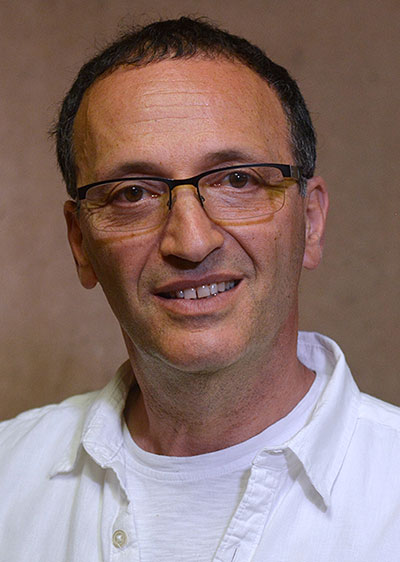
Alexander Rind is a full-time Researcher at the University of Applied Sciences St. Poelten , affiliated with the School of Media and Digital Technologies and the Media Computing Research Group . He holds an MSc in Business Informatics from Vienna University of Technology, University of Vienna, and Lund University. Education : 1998-2004 MSc in Business Informatics His research interests span Visual Analytics , Information Visualization , and Human-Computer Interaction , with specialization in time-oriented data analysis , electronic health records visualization , and multimodal analytics . Recent projects focus on integrating sonification with visualization for enhanced data exploration. Key publication trends reveal expertise in temporal data modeling , multimodal analytics , and domain-knowledge integration for healthcare and social work applications. His work includes TimeBench (open-source time-oriented data library) and tools like easyBiograph / easyNWK for social diagnostics. He actively contributes to scientific communities as program committee member for IEEE VIS, EuroVis, and journals like TVCG, while developing visual analytics systems for clinical gait analysis, media transparency, and industrial manufacturing.
Donatella Sciuto is a Full Professor of Computer Science and Engineering at Politecnico di Milano, serving as Executive Vice Rector overseeing research strategies. She holds a PhD from the University of Colorado, Boulder and an MBA from Bocconi University. Her research focuses on embedded systems design, low-power electronics, and cyber-physical systems, with contributions to smart cities and ICT infrastructure. Education: Bachelor's in Electronic Engineering, Politecnico di Milano (1984) PhD in Electrical and Computer Engineering, University of Colorado, Boulder MBA, SDA Bocconi School of Management Research Interests: Embedded systems, multiprocessor architectures, hardware/software co-design, power-efficient computing, and building automation via IoT technologies. She leads the Embedded Systems Design research group at Politecnico di Milano and coordinates EU-funded projects in smart cities and reconfigurable systems. Awards: IBM Women Leaders in AI (2021) IEEE Fellow (2011) EDAA Fellow (2010) Outstanding Contribution Award, IEEE Computer Society (2009) Professional Roles: Board Member: Bank of Italy, Istituto Italiano di Tecnologia, STM, Avio Former President, IEEE Council of Electronic Design Automation (2011-2013) Executive Committee Member, Design Automation and Test in Europe (DATE) conference Labs/Teams: Leads the Embedded Systems Design and Design Methodologies group at Politecnico di Milano, collaborating with CEFRIEL on executive education programs in embedded systems and IoT.
Dragi Kimovski is a Habilitated Assistant Professor in Distributed Systems at Klagenfurt University, Austria, focusing on Edge Computing and AI. He previously held roles at the University of Innsbruck and the University of Information Science and Technology in Macedonia. His research spans Edge/Fog/Cloud computing, multi-objective optimization, and high-performance computing. He has coordinated major projects like 6GContinuum and KärtnerFog, and led initiatives such as DataCloud and ASPIDE. His teaching includes courses on Distributed Computing, Cloud Computing, and IoT. He is the co-creator of the Carinthian Computing Continuum and maintains a blog on Edge AI World. His work emphasizes sustainable and efficient computing solutions for emerging technologies. Education: Not explicitly listed in the provided text. Research Interests: Edge Computing, Fog Computing, Cloud Computing, Multi-objective Optimization, High-Performance Computing, AI in Distributed Systems. His work addresses challenges in resource management, latency reduction, and scalability across heterogeneous environments, with applications in healthcare, IoT, and 6G networks. Projects: 6GContinuum (Coordinator): Focuses on AI services over 6G networks. KärtnerFog (Scientific Coordinator): Develops adaptive Fog infrastructures over 5G. DataCloud (WP5 Leader): Manages Big Data pipelines on the Computing Continuum. ASPIDE (Scientific Coordinator): Advances exascale programming models for data processing. Teaching: Klagenfurt University: Courses include Distributed Computing, IoT, Cloud Computing, and Advanced Programming. University of Innsbruck: Taught Advanced Parallel and Distributed Systems. University of Information Science and Technology: Courses in High-Performance Computing and Network Architectures. Labs/Teams: Co-created the Carinthian Computing Continuum, an automated SDN testbed for Edge computing research. Active in interdisciplinary teams addressing extreme data processing and sustainable computing.
Diana Marin is a PostDoc Researcher at TU Wien's Institute of Visual Computing & Human-Centered Technology. She holds a BSc, MEng, and Dr.techn. (PhD) in technical fields. Her research focuses on computational geometry, point cloud processing, and distributed computing for large-scale datasets. She has contributed to projects like Distributed Surface Reconstruction and RE:STOCK INDUSTRY. Education: BSc, MEng, Dr.techn. (PhD) Her work emphasizes curve and surface reconstruction from unorganized point clouds, leveraging proximity graphs and distributed computational methods. Key projects include optimizing surface reconstruction for massive datasets and developing parameter-free algorithms for connectivity analysis. Her publications span topics like SING neighborhood graphs, Riemannian manifold curve reconstruction, and distributed processing techniques. She collaborates on projects such as PostDisaster and Mixed Reality Lab.
Beng Chin Ooi is a Lee Kong Chian Centennial Professor at the National University of Singapore (NUS), School of Computing. He has been with NUS since 1991, progressing through the ranks from Lecturer to his current distinguished position. He previously served as Dean of the School of Computing from 2007 to 2013 and as Director of the Smart Systems Institute from 2011 to 2021. His educational background includes: 1985: B.Sc. (1st Class Honors) from Monash University, Melbourne, Australia 1989: Ph.D. in Computer Science from Monash University, Melbourne, Australia Beng Chin Ooi's research focuses on database systems, large scale analytics, and distributed systems. His work has been instrumental in advancing the field of data management technology, particularly in the context of "big data" in large-scale parallel and distributed systems. He has made significant contributions to spatio-temporal and distributed data management, as well as pioneering research in distributed database management and peer-to-peer based enterprise quality management. His recent publications demonstrate a strong focus on blockchain technology, machine learning systems, and healthcare informatics. There's a clear progression from foundational database research to applications in emerging technologies like blockchain and AI. His work bridges theoretical advances with practical system implementations, as evidenced by multiple open-source projects associated with his publications. His notable awards include: 2021: NUS Research Recognition Award 2020: ACM SIGMOD E.F. Codd Innovations Award 2020: ACM SIGMOD Research Highlight Award 2019: VLDB Best Paper Award 2016: Fellow of Singapore National Academy of Science 2016: China Computer Federation Overseas Outstanding Contributions Award 2014: VLDB Best Paper Award 2014: IEEE TCDE CSEE Impact Award 2013: Singapore National Day's Public Administration Medal (Silver) 2013: NUS Outstanding Researcher Award 2012: IEEE Computer Society Kanai Award 2011: ACM Fellow 2011: Singapore President's Science Award 2009: IEEE Fellow 2009: ACM SIGMOD Contributions Award Throughout his career, Professor Ooi has demonstrated exceptional leadership in the database community, promoting high standards of database research at both international and regional levels. His BLOCKBENCH framework became the world's first benchmarking tool for private blockchains, and his work on data provenance on blockchain systems earned both the VLDB Best Paper Award and the ACM Research Highlight Award. He has led several major research initiatives, including the Smart Systems Institute at NUS. Professor Ooi has established multiple open-source projects including FabricSharp for blockchain data provenance and Cool for cohort online analytical processing. His research group has consistently produced high-impact work that bridges theoretical advances with practical system implementations.
Vladimir Plungian is a distinguished Russian linguist currently serving as Professor and Head of the Department of Theoretical and Applied Linguistics at Moscow State Lomonosov University's Faculty of Philology. He also holds significant leadership positions as Deputy Director of the Vinogradov Institute for Russian Language and Head of the Department of Linguistic Typology at the Institute of Linguistics, all part of the Russian Academy of Sciences. Plungian earned his undergraduate and graduate degrees at Moscow State Lomonosov University and The Institute of Linguistics of the Russian Academy of Sciences. His academic career spans several decades with continuous appointments at Moscow State University since 1989, progressing from Junior Research Fellow to full Professor. His research encompasses a remarkably broad spectrum of linguistic fields including general linguistics, morphology, grammatical typology, corpus linguistics, and poetics. Plungian has conducted extensive fieldwork on diverse language families including Slavic languages, African languages (particularly in Mali), languages of the Caucasus, and Austronesian languages. His work demonstrates a unique intersection between theoretical linguistics and practical language documentation. An analysis of his recent publications reveals a continued focus on grammatical typology, corpus linguistics, and the documentation of lesser-studied languages. His work spans both theoretical explorations of grammatical categories and practical applications in corpus construction, with particular attention to Slavic languages, Pamir languages, and Armenian. The Eastern Armenian National Corpus represents one of his major collaborative achievements. Full member, Russian Academy of Sciences (Department of History and Philology), 2016 "Prosvetitel" Prize (Humanities) for best popular-scientific book publication in Russian, 2011 Corresponding Member, Russian Academy of Sciences (Department of History and Philology), 2009 Plungian has played a significant role in developing major linguistic resources, most notably as one of the creators of both the Russian National Corpus and the Eastern Armenian National Corpus. Since 2016, he has served as editor-in-chief of Voprosy Jazykoznanija, the leading Russian linguistics journal. His international collaborations include work at scientific centers across Europe (Belgium, Germany, Norway, France) and fieldwork in Africa and various regions of the Russian Federation. Plungian leads multiple research teams across different institutions, including the Department for Corpus and Poetic Studies at the Vinogradov Institute for Russian Language, where he has directed research since 2003. His work bridges theoretical linguistics with practical applications in language documentation and corpus construction, creating a unique research environment that connects Slavic linguistics with the study of African and Caucasian languages.
Univ.Prof. Michael Wimmer is a Professor in the Department of Computer Graphics and Visualization at TU Wien's Faculty of Informatics. His research focuses on real-time rendering, point cloud processing, GPU computing, and computational design. He leads projects involving architectural visualization, thermal simulation, and integrative design frameworks combining 4D sketching with material modeling. His work bridges computer graphics with applications in architecture and engineering. ORCID: 0000-0002-9370-2663 Research Group: Network Lab Recent research emphasizes GPU-accelerated algorithms (e.g., LOD generation for 2 billion points), real-time rendering techniques, and deep learning approaches for surface reconstruction. Collaborations span thermal simulation with civil engineers and 4D design tools for architects. Notable contributions include: Developing PPSurf for detailed surface reconstruction using point convolutions Advancing Vulkan-based rendering pipelines in academic settings Integrating light polarization for HDR imaging His lab explores applications in architectural design metaphors, computational material assessment via GeoRadar, and thermal simulation using precomputed radiative transport. Students under his supervision focus on GPU optimization, 3D reconstruction, and VR ergonomics.
Prof. Lukas Einkemmer is a faculty member at the University of Innsbruck, holding a position in the Institute of Mathematics. He specializes in numerical analysis, plasma physics, and high-performance computing. His work focuses on developing advanced numerical methods for solving complex kinetic equations and PDEs, with applications in plasma simulation and computational fluid dynamics. Education: He earned a PhD in applied mathematics (2014) and MSc in physics (2013) from the University of Innsbruck, alongside BSc in applied mathematics (2010). He completed research stays at UC Merced and holds notable academic awards, including the SciCADE New Talent Award (2015) and participation in the Heidelberg Laureate Forum (2013). Research & Teaching: His research includes exponential integrators, dynamical low-rank methods, and semi-Lagrangian discontinuous Galerkin schemes. He teaches numerical methods, PDEs, and computational courses at both undergraduate and graduate levels. He also leads training programs in parallel computing (OpenMP/MPI) at the University’s Research Center for High-Performance Computing. Publications & Grants: Over 70 peer-reviewed articles in journals like J. Comput. Phys. and SIAM J. Sci. Comput. , focusing on numerical algorithms and their applications. He has secured grants from FWF and other agencies, advancing methods for plasma physics and kinetic theory. Awards & Recognition: Multiple honors, including the Oberwolfach Leibniz Graduate Student award (2014) and sustained scholarship support for academic excellence.
Corinna Brungs is a Senior Scientist at the University of Vienna , affiliated with the Faculty of Life Sciences and the Department of Pharmaceutical Sciences (Division of Pharmacognosy). Her research focuses on applying cutting-edge mass spectrometry techniques for natural product identification, biomarker discovery, and untargeted metabolomics workflows. Developing open mass spectral libraries Advancing data processing strategies Specializing in tattoo pigment and metabolite analysis Research Highlights: Brungs bridges phytochemistry and computational metabolomics through method development in mass spectrometry. Her work includes creating standardized protocols for: Tattoo pigment identification In-source fragmentation analysis Non-targeted drug exposure profiling Integration of mobility-resolved spectrometry Scientific Awards: 2025 Early Career Prize (Metabolomics Society) 2025 Early Career Travel Award (Metabolomics Society) 2022 Czech Academy of Sciences Fellowship Publications (2022-2025) demonstrate leadership in: MALDI-TIMS-MS2 bioimaging MZmine 3 software development Metabolomics data reproducibility Mass spectral library matching
Johan Håstad is a Full Professor in the Department of Computer Science at the Royal Institute of Technology (KTH), Sweden, since 1992. Previously, he held academic positions at KTH and the Massachusetts Institute of Technology (MIT) as a Postdoctoral Fellow (1986-1987). His work lies at the intersection of theoretical computer science and mathematics, with foundational contributions to computational complexity theory, cryptography, and approximation algorithms. Ph.D. in Mathematics from MIT (1986) Member of the Royal Swedish Academy of Sciences (2001) Knuth Prize laureate (2018) for breakthroughs in optimization, cryptography, parallel computing, and complexity theory Research Focus: Johan Håstad's research has fundamentally shaped computational complexity theory, particularly in understanding the limits of efficient computation and approximation. His work on probabilistically checkable proofs (PCPs) and hardness of approximation has had a profound impact on theoretical computer science, influencing areas like cryptography and parallel computing. He is known for developing Håstad's switching lemma and establishing strong inapproximability results for NP-hard problems. Scientific Recognition: ACM Doctoral Dissertation Award (1986) Gödel Prize (1994, 2011) Chester Carlson Research Prize (1990) Göran Gustafsson Prize (1999) Knuth Prize (2018)
Christoph Kirsch is a Professor and Chair of the Department of Computer Science at the University of Salzburg. He also serves as Chair of the Programming Research Laboratory at the Faculty of Information Technology, CTU Prague. His research focuses on systems, concurrency, memory management, and formal methods, with notable contributions including the Selfie educational software project and work on symbolic execution. He is a prolific author with over 50 publications in top venues like LCTES and EMSOFT. Education: Ph.D. in Computer Science (details not specified). His teaching includes courses on elementary computer science concepts and curricula development. He advises students such as Anna Bolotina and has graduated over a dozen PhD students. Research highlights include the Selfie system (self-referential C compiler and emulator), work on concurrency primitives like Scal and Timestamped Stack, and contributions to real-time systems (Logical Execution Time, Variable-Bandwidth Servers). His recent focus includes teaching digital thinking and evaluating eval in R programs. He has organized conferences like MPLR’24 and served on program committees for EuroSys and RTNS. His book Elementary Computer Science emphasizes foundational concepts for broad audiences.
Reinhard Pichler is a Full Professor at the Vienna University of Technology (TU Wien), affiliated with the Faculty of Informatics and the Department of Databases and Artificial Intelligence . His research focuses on Database Theory , Computational Logic , and Parameterized Complexity . He leads multiple research projects like DeConquer (2023–2027) and HyperTrac (2018–2022), addressing challenges in query optimization and hypergraph decompositions. He holds the prestigious START Prize (2014–2022) for young researchers. His work spans theoretical foundations (e.g., hypertree decompositions) and practical applications (e.g., SPARQL query processing systems like SparqLog). He contributes to academic governance, serving on faculty councils and curriculum commissions. His research innovations bridge algorithmic theory and real-world database systems, emphasizing efficient query evaluation and tractability analysis. Key contributions include advancing fractional hypertree decompositions , SPARQL query optimization , and consistent query answering . His projects often involve collaborations with industry and international funders like the Austrian Science Fund (FWF) and Vienna Science and Technology Fund (WWTF). He actively publishes in top venues like Journal of the ACM , ACM Transactions on Database Systems , and Proceedings of the VLDB Endowment . His academic leadership extends to course design, teaching advanced topics like Complexity Theory and Theoretical Computer Science . He mentors doctoral students and oversees research teams exploring cutting-edge areas like uncertain databases and cloud-based computational social choice .
Oskar Mencer is a Professor in the Department of Computing at Imperial College London , where he has been a member of academic staff since 2000. He was also a Consulting Professor at Center for Computational Earth and Environmental Science , Stanford University (2009-2010). His research focuses on Multiscale Dataflow Computing , exploring the interaction of hardware and software systems through domain-specific representations, parallel programming, VLSI design, and compiler methodologies. He has contributed to fields including high-performance computing, FPGA optimization, and computational finance. Dr. Mencer's work has been recognized with a Special Award from Com.sult (2012), Imperial College Research Excellence Award (2007), and a Top EPSRC Advanced Fellowship (2001). He has received multiple best paper awards, including at ICFPT'08 and ASAP 2008, and his 2000 paper on stream architectures was recognized as historically significant in 2015. His publications demonstrate a strong emphasis on FPGA acceleration , custom architectures , and parallel processing across geophysics, finance, and neuroscience applications. Special Award for Dataflow Innovation (2012) Best Paper Award - ICFPT'08 Best Paper Award - ASAP 2008 He has served on technical committees for conferences such as FPL , DATE , and FPT , and leads the Computer Architecture Research Group (currently inactive).
Alexandru Nicolau is a Distinguished Professor and Chair of the Department of Computer Science at the University of California, Irvine (USA), where he has worked since 1992. He previously held positions as Associate Professor (1988–1992) and Assistant Professor (1984–1988) at UC Irvine and Cornell University, respectively. Education : B.A., Brandeis University (1980) MS (1981), Ph.D. (1984), Yale University Research Interests : A leading expert in parallelizing compilers , high-performance computing , and software-hardware co-design , Nicolau pioneered foundational techniques like Percolation Scheduling and Optimal Loop Parallelization . His work enables efficient exploitation of instruction-level parallelism in general-purpose programs, with applications in embedded systems , matrix algorithms , and GPU-based neural networks . He has also contributed to Electronic Design Automation (EDA) and lightweight synchronization protocols . Scientific Awards : IEEE Fellow (2014) ACM SIGPLAN Most Influential Paper (PLDI 20 years) EDAA/IEEE/ACM DATE Most Influential Paper (10 years) ACM ICS Most Influential Paper (25 years) 4 Best Paper awards (VLSI design 2003, ISHPC 2005, CASES 2008, IJCNN 2009) Advising & Grants : He has mentored notable scholars now at Stanford, McGill, and Google, and secured over $20M in funding from NSF , DARPA , and industry leaders like IBM and Intel . His professional service includes chairing ACM ICS’09 and PPOPP’13, and serving on steering committees for LCPC and ICS. Labs & Collaborations : His techniques have been adopted by IBM Watson, Siemens Munich, Fujitsu Labs Japan, and the open-source GCC compiler.
Martin Uecker is a Professor at the Institute of Biomedical Imaging at TU Graz. His research focuses on advanced MRI reconstruction techniques, real-time imaging, and open-source software tools like the Berkeley Advanced Reconstruction Toolbox (BART). He specializes in developing methods for fast and accurate medical imaging, including applications in cardiac MRI, fetal brain imaging, and disease monitoring. His work emphasizes reproducibility, quantitative imaging, and clinical translation. Key research areas include generative models for MRI reconstruction, model-based inversion of the Bloch equations, and interactive real-time MRI systems. His team collaborates on projects involving hardware-software integration, such as portable MRI scanners and MRI-guided interventions. Notable contributions include advancements in multi-echo radial FLASH techniques, motion-resolved T1 mapping, and Bayesian uncertainty estimation in imaging. Uecker’s publications highlight innovations in accelerating MRI acquisition and reconstruction, with applications in pulmonary function assessment, neonatal imaging, and cardiovascular diagnostics. His work bridges theoretical physics, computational methods, and clinical practice, fostering open-source frameworks to democratize access to cutting-edge imaging tools.