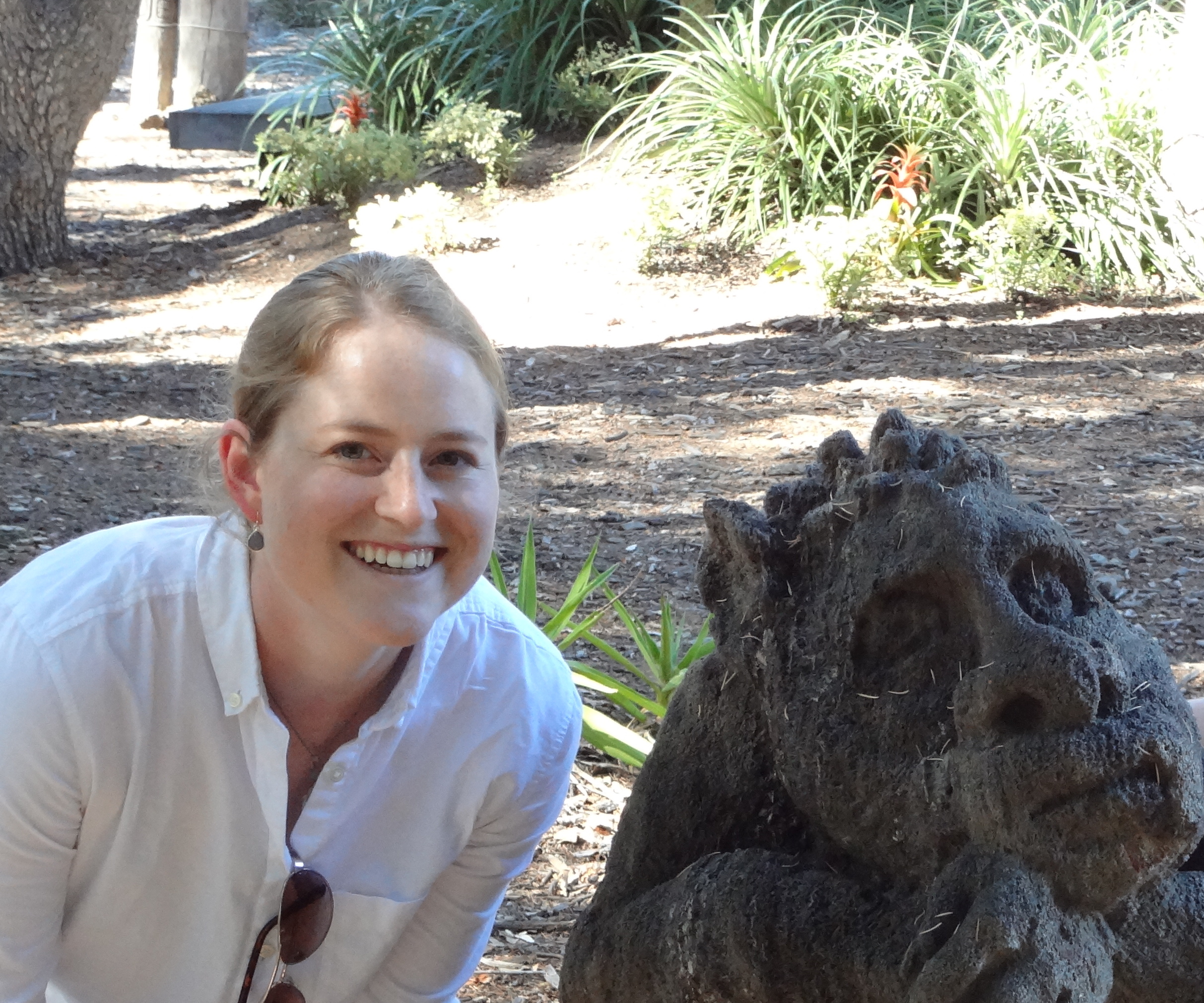
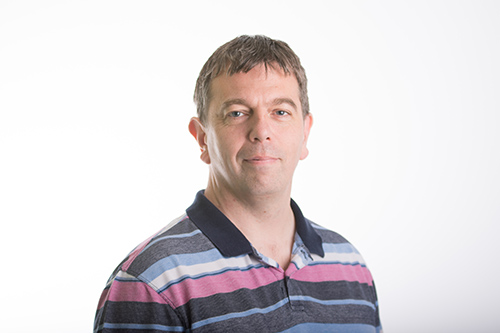
Dr Jack Betteridge is an Honorary Research Fellow in the Department of Mathematics, Faculty of Natural Sciences, at Imperial College London. His work bridges computational mathematics with environmental sciences, focusing on numerical methods for atmospheric and oceanic systems. His research interests include: Numerical and Computational Mathematics Atmospheric Sciences Oceanography Physical Geography and Environmental Geoscience Computation Theory and Mathematics Distributed Computing Analysis of his 2019-2024 publications reveals deep engagement with finite element methods, particularly through the Firedrake project for automated PDE solutions. His work emphasizes high-performance computing applications in geophysical fluid dynamics, developing novel preconditioners and solvers for atmospheric modeling while contributing to computational education for mathematicians.
Antonio Plaza is a Full Professor at the University of Extremadura, Spain, and Head of the Hyperspectral Computing Laboratory. With over 600 publications, he is a leading expert in hyperspectral data processing and parallel computing of remote sensing data. He serves as IEEE Fellow and has received numerous accolades, including the 2019 Excellent Teaching Award and multiple Highly Cited Researcher recognitions. Research Interests : His work bridges Hyperspectral Image Analysis , Medical Imaging , and High-Performance Computing . Recent projects focus on 3D anatomical modeling, AI-driven surgical tools, and deep learning applications for aortic dissection segmentation. Scientific Awards : 2019 Highly Cited Researcher (Geosciences) 2015 IEEE Fellow 2019 Excellent Teaching Award 2018 Highly Cited Researcher (Cross-Field) 2002 Best PhD Dissertation, University of Extremadura Editorial Leadership : Served as Editor-in-Chief of IEEE Transactions on Geoscience and Remote Sensing (2013–2017) and held multiple committee roles in IEEE GRSS. His articles reflect a shift from remote sensing to medical imaging, with a focus on Aortic Dissection Segmentation , Skull Reconstruction , and AI-driven Medical Tools .
Camilla Cattania is an Assistant Professor of Geophysics in the Department of Earth, Atmospheric and Planetary Sciences (EAPS) at the Massachusetts Institute of Technology, where she holds the Cecil and Ida Green Career Development Professorship. She leads research in seismology, earthquake physics, and operational earthquake forecasting, with a focus on understanding earthquake interactions at regional and global scales using numerical, analytical, and statistical tools. Dr. Cattania received her bachelor's and master's degrees in experimental and theoretical physics from the University of Cambridge, followed by a PhD in geophysics from the GFZ German Research Center for Geosciences/University of Potsdam. Her professional journey included positions as a guest scientist at GFZ, guest investigator at Woods Hole Oceanographic Institution, and postdoctoral fellow at Stanford University before joining MIT's faculty. Her research interests center on earthquake physics and forecasting, with specific focus areas including seismicity on rough faults, fault mechanics and earthquake cycles, the physics of small earthquakes, static stress triggering in operational earthquake forecasting, seismic swarms and aseismic slip driven by dikes, and dynamic triggering on transform faults. She develops physics-based models that incorporate Coulomb stress changes with rate-and-state friction laws to improve earthquake forecasting capabilities. Dr. Cattania's publication record demonstrates an impressive progression in developing and refining physics-based earthquake forecasting models, with her most recent work exploring the integration of AI and machine learning techniques to enhance forecasting accuracy. Her research spans both theoretical development and practical applications for operational earthquake forecasting systems. Scientific Recognition: Recipient of the prestigious NSF CAREER Award in 2024 for her project 'Towards a comprehensive model of seismicity throughout the seismic cycle' Co-author of influential papers that have advanced the field of physics-based earthquake forecasting Dr. Cattania is actively involved in educational outreach through partnerships with 826 Boston, working with Boston area high schools to lead interactive labs and demonstrations about earthquake research. She emphasizes the importance of connecting students with scientists to humanize the research process and inspire future generations of geophysicists.
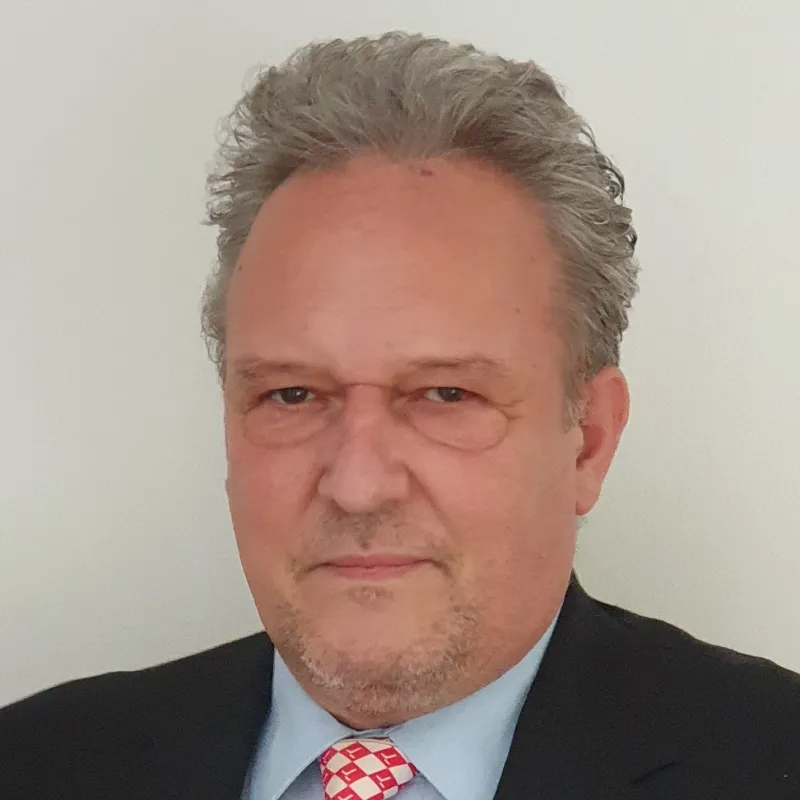
Univ.-Prof. Dr.-Ing. habil. Volker Rodehorst is a full professor of computer vision at Bauhaus-Universität Weimar, holding positions in both the Faculty of Media and Faculty of Civil Engineering. His research focuses on photogrammetric computer vision, image analysis, 3D reconstruction, and structural health monitoring with applications in civil infrastructure inspection and urban modeling. He leads projects like ev.AI.luate and InfraCloud, leveraging AI and UAS technologies for infrastructure assessment. Education: PhD (2003): Technical University of Berlin, Faculty of Civil Engineering & Applied Geosciences Habilitation (2013): TU Berlin, Faculty of Electrical Engineering & Computer Science Computer Science Diploma (1994): TU Berlin Research Interests: UAS-based structural inspection using multi-view stereo and deep learning Crack detection and segmentation in concrete structures Automated building age estimation for energy modeling Flight path planning optimization for complex structures Integration of computer vision into BIM workflows Publications: Recent work emphasizes robust algorithms for crack detection (Omnicrack30k benchmark), UAS flight path optimization, and semantic segmentation challenges in bridge inspections. Key contributions include MVCrackViT and CISOL datasets advancing structural analysis methodologies. Awards: Best Academic Performance Prize (1994) - TU Berlin ISPRS Presidential Citation (2008) for WG III/2 leadership Grants & Labs: Leads Bauhaus' 3D-RealityCapture-ScanLab and coordinates EU projects like AISTEC-PRO. Active in developing modular solutions like smoodPLAN for infrastructure inspection. Teaching: Offers courses in photogrammetric computer vision, geodesy, and parallel systems. Supervises PhD students in structural health monitoring and computer vision.
Oliver G. Ernst is a Professor of Numerical Analysis at Technische Universität Chemnitz . His research focuses on Numerical Analysis , Uncertainty Quantification , and Inverse Problems , with applications in Thermo-Hydro-Mechanical (THM) processes , Electromagnetics , and Stochastic Partial Differential Equations . He is associated with the Numerical Analysis group at TU Chemnitz. Key Research Areas : Efficient numerical methods for PDEs Krylov subspace techniques Stochastic finite element methods Multi-physics modeling Geoscientific applications Recent Publications (2025-2010): THM simulations under uncertainty Neural network PDE solvers Bayesian inversion frameworks Rational Krylov algorithms Deflated restarting strategies Collaborations : TU Bergakademie Freiberg University of Manchester Technical University of Munich University of Maryland University of Geneva Software Development : Contributor to OpenGeoSys platform Developer of FEMALY MATLAB library Academic Recognition : h-index 32, i10-index 66, with over 4423 citations since 2020.
Gregory S. Okin is a Professor of Geography and Chair of the Department of Geography at UCLA, affiliated with the Institute of the Environment and Sustainability. He holds a PhD in Geochemistry from Caltech (2001) and has been at UCLA since 2006. His research focuses on dryland geomorphology, aeolian processes, and mineral aerosol dynamics, with emphasis on dust emission impacts on climate, ecosystems, and human health. Okin employs remote sensing, field studies, and modeling to analyze soil-vegetation-atmosphere interactions in arid regions, particularly wind erosion's role in grassland-to-shrubland transitions. He co-leads NASA's Earth Surface Mineral Dust Source Investigation (EMIT), creating global mineral maps using imaging spectroscopy. Recent work addresses dust-climate links, wildfire health impacts, and rangeland monitoring via satellite-cloud computing integration. Education Background: Ph.D., Geochemistry, California Institute of Technology (2001) M.S., Geology, California Institute of Technology (1997) B.A., Chemistry & Philosophy (Double Major), Middlebury College (1995) Postdoctoral Research, Geography, UC Santa Barbara (2001–2002) Research Interests: Dr. Okin's work integrates aeolian geomorphology , remote sensing , and Earth system modeling to explore: - Dust emission mechanisms and climate feedbacks - Dryland ecosystem resilience under climate change - Vegetation-soil connectivity in arid landscapes - Applications of imaging spectroscopy (e.g., EMIT mission) His projects often involve interdisciplinary collaborations, combining field measurements with computational modeling. Scientific Contributions: Key innovations include developing dust emission models (e.g., MAPTALE) and advancing spectral unmixing techniques for mineral mapping. His findings on pet food environmental impacts (e.g., carbon pawprints) have gained media attention.
Ahed Alboody is a Professor and Researcher at HESAM University Group, specifically affiliated with CESI and the Digital Innovation Laboratory for Businesses and Learning to Support Territorial Competitiveness (LINEACT) in Nice, France. He holds a specialized doctorate in computer science from the University of Toulouse 3 Paul Sabatier and has extensive experience in deep learning, computer vision, and remote sensing applications. His work bridges academic research with practical applications in environmental monitoring, human-computer interaction, and spatial reasoning systems. Education: Specialized Doctorate in Computer Science, University of Toulouse 3 Paul Sabatier (IRIT), 2011 Master 2 Research in Electronics, Automation and Systems Engineering, National Polytechnic Institute of Toulouse (INPT-ENSEEIHT), National School of Civil Aviation (ENAC), ISAE-SUPAERO, and University of Toulouse III, 2006 Engineering Diploma in Electronics and Telecommunications, University of Tishreen (Techrine), Lattakia, Syria, 2002-2003 Undergraduate studies in Electronics and Telecommunications, University of Tishreen (Techrine), Lattakia, Syria, 2002 Alboody's research focuses on advanced applications of deep learning and computer vision, particularly in the areas of 3D hand gesture recognition, hyperspectral and multispectral image processing, and semantic segmentation. His work combines theoretical advancements in mixture-of-experts architectures with practical applications in remote sensing and environmental monitoring. He has pioneered approaches in frugal learning and zero-shot learning for image segmentation tasks, with applications in digital twins and collaborative robot environments. His publication record demonstrates a clear evolution from foundational work in spatial reasoning systems (2008-2012) to current cutting-edge research in deep learning architectures for 3D gesture recognition and hyperspectral image analysis. Recent publications (2022-2024) show a strong focus on mixture-of-experts transformers, parallel architectures for efficient computation, and applications in environmental monitoring with drones and satellite imagery. Alboody actively supervises Master's level research projects (two M2 level projects mentioned) and serves as a reviewer for prestigious journals including IEEE Transactions on Neural Networks and Learning Systems and IEEE Transactions on Geoscience and Remote Sensing. He has also been a member of the Technical Program Committee for international conferences on databases and knowledge applications. His laboratory work centers around the Digital Innovation Laboratory for Businesses and Learning to Support Territorial Competitiveness (LINEACT), where he leads research in engineering and digital tools. Current projects include developing graph neural networks for 3D hand gesture recognition using depth and skeleton data, and implementing frugal learning approaches for semantic image segmentation in collaborative robot environments.
Michael Bader is a Professor in the Department of Computer Science at the Technical University of Munich (TUM), part of the TUM School of CIT. He leads the research group on hardware-aware algorithms and software for high-performance computing at the Leibniz Supercomputing Center. His work focuses on developing efficient algorithms and software for supercomputing platforms, particularly in geosciences and simulation of earthquakes and tsunamis. His research interests include high-performance computing, simulation software development (e.g., SeisSol and ExaHyPE), parallel numerical algorithms, adaptive mesh refinement, and large-scale geophysical simulations such as earthquake dynamics and tsunami modeling. He emphasizes optimizing algorithms for modern supercomputing architectures to handle complex computational challenges. Professor Bader has supervised numerous PhD students, including Lukas Krenz, Ravil Dorozhinskii, and Sebastian Wolf, among others. His research has been supported by grants from the EuroHPC JU, BMBF, DFG, and other institutions. Notable projects include ChEESE-2P for exascale computing in solid earth sciences and the targetDART project for adaptive task distribution on exascale systems. He is actively involved in teaching, offering courses such as Numerical Algorithms for High Performance Computing and Scientific Computing 1 . His group collaborates extensively with institutions like the Leibniz Supercomputing Center to advance computational methods for simulating natural disasters and geophysical phenomena.
Hyung-Mok Kim is a Professor at Sejong University's Department of Energy Resources and Geosystems Engineering, where he has been employed since September 2012. He holds a Ph.D. from the University of Tokyo (2002), an M.S. from Seoul National University (1999), and a B.S. from Seoul National University (1997). Prior to joining Sejong University, he worked at the Korea Institute of Geoscience and Mineral Resources (KIGAM) from 2006 to 2012 and Obayashi Corporation from 2003 to 2006. His research focuses on coupled Thermal-Hydraulic-Mechanical (THM) processes in geological systems, with applications including: Stability analysis of granular geomaterials under fluid flow Cement grout injection mechanics in rock joints Underground fluid injection impacts (including CO₂ sequestration and induced seismicity) Mechanical behavior of hydrate-bearing sediments Compressed air energy storage (CAES) in rock caverns Recent publications (2022-2025) demonstrate strong emphasis on energy storage solutions (hydrogen, CAES), waste disposal safety , and advanced computational geotechnics , utilizing numerical modeling and experimental validation across subsurface engineering challenges.
Eileen R. Martin is an Associate Professor at Colorado School of Mines, jointly appointed in Geophysics and Applied Math and Statistics with a 60/40 split. She collaborates with two industry-aligned consortia: the Center for Wave Phenomena (CWP) and the Center to Advance the Science of Exploration to Reclamation in Mining (CASERM). PhD, Institute for Computational and Mathematical Engineering, Stanford University (2018) MS, Geophysics, Stanford University BS, Mathematics and Computational Physics, University of Texas at Austin Her research bridges computational science and geophysics with applications to subsurface characterization using advanced sensing technologies. She focuses on distributed acoustic sensing (DAS) , seismic imaging , inverse problems , and machine learning for geoscientific data analysis. Recent work explores permafrost thaw monitoring , glacier hydrology , and mine seismicity through scalable algorithms. Selected 2024-2025 Publications : Modeling permafrost thermodynamics with differentiable computing DAS applications in cryoseismic cataloging and glacier monitoring Urban traffic monitoring via multicomponent seismic data Open-source DASCore Python library development Lossy compression effects on seismic data integrity Scientific Awards : NSF CAREER grant SIAM Geosciences Early Career Prize SEG J. Clarence Karcher Award Presidential Early Career Award for Science and Engineering (PECASE) Academic Leadership : Advising 13 graduate students (MS/PhD) across Geophysics, Applied Math, and Hydrologic Engineering Teaching courses in Parallel Scientific Computing, Digital Signal Processing, and Mathematical Geophysics Co-leading weekly group meetings with industry consortia integration Labs & Collaborations : Center for Wave Phenomena (CWP) at Mines CASERM: Mining Exploration to Reclamation Consortium Stanford Exploration Project (alumni) Lawrence Berkeley National Lab affiliate
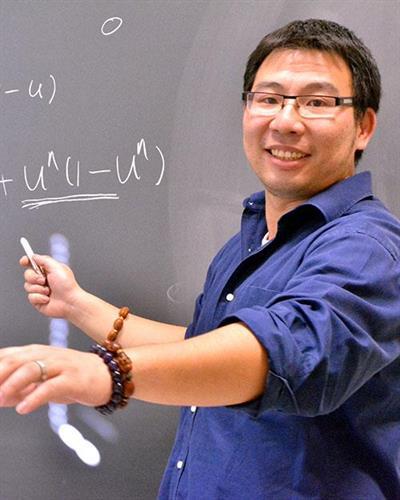
Xiaozhe Hu is a full-time Professor in the Department of Mathematics at Tufts University since July 2024. Previously held positions include Associate Professor (2019-2024) and Assistant Professor (2014-2019) at Tufts, and Adjunct Associate Professor (2020-2022) at the University of Bergen, Norway. Education : PhD in Computational Mathematics (Zhejiang University, 2009); BS in Information and Computer Science (Zhejiang University, 2004) His research focuses on scientific computing and numerical analysis , particularly: Development of adaptive and parallel numerical methods for PDEs and graph problems Multigrid/multilevel solvers for large-scale coupled systems Quantum algorithms and spectral graph theory Applications in poromechanics , reservoir simulation , and bioinformatics Recent publications demonstrate expertise in preconditioning techniques for Biot’s model, meshless methods for fluid-structure interaction, and data-driven discretization approaches . Awards include the Reimann-Louville Award (2016) and outstanding PhD graduate recognition (Zhejiang Province, 2009). PhD Students : Junyuan Lin (Loyola Marymount), Peter Ohm (RIKEN), Casey Cavanaugh (LSU), Kaiyi Wu, Eoghan O'Keefe Master Students : Charles Colley (Purdue PhD), Yue Shen (Florida State PhD), Samuel Rabinowitz, Phong Huang, Samuel Hocking Co-organizer of the Computational and Applied Mathematics Seminar and contributor to open-source HAZmath finite element library.
Juan Restrepo is a Professor of Mathematics with courtesy appointments in Statistics, EECS, and Physical Oceanography at Oregon State University, where he holds a Courtesy Faculty position in the Department of Mathematics within the College of Science. He is also affiliated with the University of Tennessee and Oak Ridge National Laboratory, where he holds appointments in the Computer Science and Mathematics Division. He serves as Co-Director of the Dynamics and Data Science Institute (D2SI), a leading interdisciplinary research center. Ph.D. in Physics, Pennsylvania State University, 1992 M.S. in Engineering (Acoustics), Pennsylvania State University, 1987 B.S. in Music, New York University, 1983 Restrepo's research lies at the intersection of data science and dynamics, with two primary tracts: (1) applying statistical physics and data science to complex non-equilibrium systems such as climate and financial markets; and (2) studying ocean dynamics and transport in climate and nearshore processes. His work emphasizes uncertainty quantification, adaptive time series analysis, extreme events, and data assimilation. His recent publications reflect a strong focus on modeling geophysical systems under uncertainty, using advanced computational and statistical techniques. Themes include climate sensitivity, oil spill dispersion, sediment transport, wave breaking, and high-performance computing for large-scale simulations. His work integrates machine learning, stochastic modeling, and dynamical systems theory. SIAM Fellow SIAM Geosciences Career Award ORISE Distinguished Post-doctoral Fellow DOE Young Investigator Award Ruth Homeyer Graduate Student Award Restrepo has secured over $30 million in research funding from NSF, DOE, NASA, and GoMRI. He has advised numerous students in applied mathematics and computational sciences, and has held leadership roles in professional societies, including President of the Nonlinear Geophysics Section at the American Geophysical Union. He is actively involved in promoting diversity in science and mentoring underrepresented groups. He leads interdisciplinary research teams at D2SI and collaborates with national labs such as Argonne and Los Alamos. His work bridges applied mathematics, climate science, oceanography, and computational engineering, making significant contributions to both theory and real-world applications.
Pavel Zemcik serves as a Visiting Professor in the Computational Engineering department at the School of Engineering Sciences, Lappeenranta University of Technology (LUT). His academic work spans multiple domains within computer science with a strong emphasis on visual computing technologies. Dr. Zemcik's research interests encompass a broad spectrum of visual computing disciplines, including computer graphics, computer vision, machine vision, and image processing. His work particularly focuses on light field rendering techniques, 3D display technologies, and advanced wavelet transform applications. He has made significant contributions to GPU acceleration methods for real-time visual processing and has explored applications in both industrial settings and medical imaging. Analysis of his recent publication trends reveals a concentrated research trajectory in light field technologies and 3D display systems over the past five years. His work demonstrates increasing sophistication in handling visual quality metrics, focus management, and compression techniques specifically tailored for 3D displays. The research shows strong interdisciplinary connections between computer graphics, signal processing, and human perception studies. His scholarly output demonstrates consistent productivity across multiple high-impact venues in computer graphics and computer vision. While specific grant information isn't detailed in the available materials, his publication pattern suggests sustained research funding supporting his work in visual computing technologies.
Sean Douglas Willett is a Full Professor at ETH Zurich, Switzerland (since 2006), specializing in Earth surface processes and tectonic geomorphology. Previously, he held positions as Assistant/Associate Professor at the University of Washington (1998-2006), Assistant Professor at Pennsylvania State University (1994-1998), and completed postdoctoral research at Dalhousie University. He was also a Visiting Professor at the University of Bologna (2004-2005). Education: Ph.D. in Geophysics, University of Utah (1988) B.S. in Geology and Geophysics, University of Utah (1982, cum laude) Research Focus: Integrates numerical modeling with field observations to study landscape evolution, mountain-building processes, fluvial/glacial erosion dynamics, low-temperature thermochronology, and orogenic wedge mechanics. His work bridges tectonics, climate science, and surface processes. Publications: His recent articles (2012-2015) demonstrate advanced computational methods for landscape modeling and focus on Alpine/European tectonic evolution, river basin reorganization, and exhumation mechanisms. Earlier foundational work established mechanical models for mountain belts. Awards/Honors: Fellow, Canadian Institute for Advanced Research (1995-2014) Elected Member, Academia Europaea (2015) Professional Service: Extensive editorial contributions including Associate Editor for American Journal of Science and Terra Nova , organizer of TOPO-Europe conferences, and committee roles for European Science Foundation programs. His scholarly impact includes 5,700+ citations and h-index of 36 (2015).
Dr. Jason Jones is an Associate Professor in the Department of Electronic and Electrical Engineering at Swansea University, leading the SwanSim Initiative. He holds a prominent role in advancing computational simulation technologies, including High Performance Computing (HPC), mesh generation, and web-based simulation tools. His work focuses on enabling accessible, user-friendly computational frameworks for engineering applications. Affiliations: Swansea University, School of Aerospace, Civil, Electrical and Mechanical Engineering Zienkiewicz Centre for Computational Engineering (ZCCE) SwanSim Initiative Lead His research interests span computational engineering, parallel computing, and the integration of modern technologies like neural networks into meshing processes. Key contributions include the FLITE mesh generator suite and the WebSim environment, which democratize access to advanced simulation tools. Jones has supervised multiple PhD and EngD projects, focusing on drone swarm systems and GNSS improvements. Notable grants include the Welsh Government-Airbus-funded 'On-Demand Web-Based Unstructured Mesh Generation' (2016–2019) and the EPSRC-funded 'Patient Specific Modelling Network' (2009–2013). His publications address diverse applications from ozone disinfection modeling to aerodynamic design of supersonic vehicles like the BLOODHOUND SSC. Teaching responsibilities include modules on software engineering, IoT systems, and engineering ethics. Jones maintains active industry collaboration through initiatives like the SwanSim platform, bridging academic innovation with practical engineering solutions.