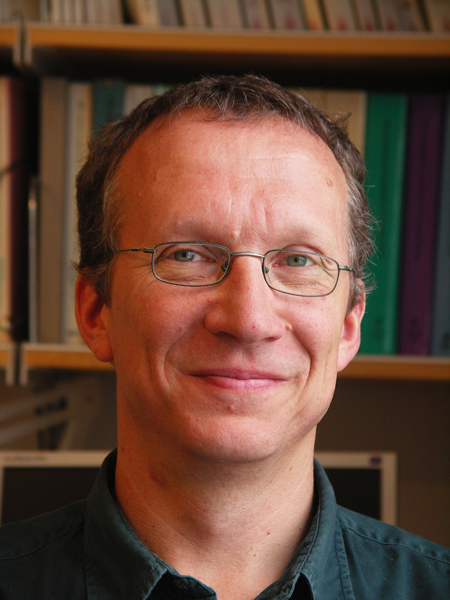
Raphael D. Levine is a Professor at the Department of Chemistry, University of California, Los Angeles (UCLA). He holds affiliations in the Chemistry and Biochemistry departments, Molecular & Medical Pharmacology, and is a member of the California NanoSystems Institute and the JCCC Signal Transduction and Therapeutics Program Area. Primary Affiliation: Department of Chemistry, UCLA Secondary Affiliations: Chemistry and Biochemistry, Molecular & Medical Pharmacology Research Institutes: California NanoSystems Institute, JCCC Program Area Levine's research spans interdisciplinary domains such as: Information-theoretic approaches to gene networks and carcinogenesis Quantum and molecular computing via quantum dots, DNAzymes, and redox systems Entropy analysis in biochemical signaling and cellular dynamics Ultrafast spectroscopy for molecular logic devices Isotope effects in planetary and nebular chemistry His work emphasizes the convergence of physical chemistry, computational biology, and nanotechnology. Key methodologies include surprisal analysis, maximal entropy inference, and electrochemical spectroscopy. Levine's publications demonstrate expertise in translating quantum phenomena into practical computing frameworks, with applications in cancer biology, molecular electronics, and astrochemical modeling. Notable collaborations include James R. Heath and Françoise Remacle. Contact: rafi@chem.ucla.edu | Office: Geology 3608A | Mailing: Department of Chemistry, UCLA
David Lopez Vilariño is a **Professor** at the **University of Santiago de Compostela**, affiliated with the **Department of Electronics and Computing** within the **Faculty of Physics**. He earned his PhD in 2001 with a thesis titled *"Active contours at the pixel level: design and implementation on cellular network architectures,"* advised by Dr. Diego Cabello Ferrer. His research focuses on **Computer Architecture**, **FPGA Acceleration**, **LiDAR Data Analysis**, and **Embedded Systems**, with notable contributions to LiDAR-based applications in urban planning, infrastructure monitoring, and medical imaging. He is part of the **ARQCOMP (Computer Architecture)** and **Artificial Vision** research groups. His work spans topics such as high-performance computing, parallel processing, and hardware optimization for vision-capable systems. Key projects include developing FPGA-based solutions for real-time video surveillance, retinal vessel analysis, and autonomous navigation systems. Publications emphasize **LiDAR data processing**, including algorithms for road detection, power line characterization, and 3D point cloud analysis. He also pioneered tools like the *Open Lidar Visualizer and Analyser* for 3D stereoscopic visualization. His expertise bridges hardware design and software development, particularly in leveraging FPGAs for embedded vision systems. No scientific awards or grants are explicitly listed, but his prolific publication record highlights sustained innovation in computer vision and geospatial technologies. His research team collaborates on projects involving manycore systems, GPU acceleration, and reconfigurable computing architectures.
Andrei-Constantin Braitor is a researcher specializing in control engineering and power systems, with a focus on DC microgrids, stability analysis, and power electronics. His work addresses challenges in voltage stability, overvoltage/overcurrent protection, and control design for DC microgrids in hybrid electric aircraft and meshed networks. He has collaborated with notable researchers such as Houria Siguerdidjane and Alessio Iovine on projects involving droop control, admittance matrix computation, and consensus-based control algorithms. Research Interests: DC Microgrid Stability and Control Distributed Control Systems Power Electronics Integration Aerospace Power Systems Nonlinear Dynamics in Power Networks His recent publications (2020-2025) explore advanced hierarchical control frameworks, fault-tolerant designs, and educational applications of control engineering through animated cartoons. He has contributed to both theoretical stability analysis and practical control implementations in meshed and parallel-operated converter systems. No scientific awards, grants, or lab affiliations were explicitly mentioned in the provided texts. His student advising record is currently empty.
Federica Mucci is an Associate Professor of International Law at the University of Rome Tor Vergata, affiliated with the Department of History, Humanities and Society. She specializes in international protection of cultural heritage, European Union law, and treaty law. Her teaching includes courses on cultural heritage protection and EU law for programs in Education and Tourism. Legal Expert: Italian Ministry of Foreign Affairs UNESCO Delegation Member: Contributed to the 2005 UNESCO Convention on cultural diversity and its implementation. Her research focuses on international law frameworks for cultural heritage, maritime law, treaty interpretation, and environmental protection. Key publications include monographs on cultural heritage law (2012) and a PhD thesis on EU copyright law (1998). Publications span interdisciplinary topics such as topological data analysis, though the majority of her work aligns with legal and humanities disciplines. Awards: No specific prizes are mentioned, but her scholarly output includes influential books and articles on international law. Advising/Grants: No formal student advisees or grant details provided in text. Labs/Teams: No specific lab affiliations mentioned, though her role at UNESCO implies collaboration with international bodies.
Giuseppe Agapito is a Professor at the Department of Law, Economics and Sociology (DiGES) at the University of Camerino, where he teaches courses such as Elements of Computer Science and Data Analysis. He specializes in computational biology, bioinformatics, and health informatics, focusing on genomic data analysis, machine learning applications in healthcare, and parallel computing methodologies. His research integrates multi-omics approaches, pathway enrichment analysis, and predictive modeling for drug response and disease mechanisms. Notable contributions include tools like BioPAX-Parser and cPEA, which enhance genomic data interpretation. He actively collaborates in international studies, such as the 4CE consortium analyzing SARS-CoV-2 impacts. His work addresses challenges in privacy-aware bioinformatics, high-performance computing for genomics, and AI-driven medical diagnostics. Education details are not explicitly provided in the texts, but his academic profile reflects extensive expertise in interdisciplinary fields bridging computer science and biomedical research. He maintains an active research agenda with over 50 publications since 2018, emphasizing scalable data analysis, drug biomarker discovery, and computational methods for clinical outcomes prediction. His teaching responsibilities include IT management and data analysis modules within social science curricula, reflecting a commitment to digital literacy across disciplines. Research interests span bioinformatics tool development, genomic data preprocessing, and AI applications in healthcare, with a focus on translational research. Recent articles highlight advancements in fMRI classification using graph neural networks, privacy-preserving genomic pipelines, and edge-based deep learning for medical signal analysis. Awards and grants are not explicitly listed, but his sustained contribution to international research consortia underscores his field influence. He advises students and researchers on computational methodologies and hosts weekly office hours for academic consultations.
Dr. Anuraag Shrivastav is a Professor at the University of Winnipeg's Department of Biology, affiliated with the Richardson College for the Environment and Science Complex. His research focuses on cellular signaling mechanisms linked to cancer development, particularly studying biomarkers and therapeutic targets for colorectal, breast, and prostate cancers. His lab also explores renewable energy materials, including perovskite solar cells and nanomaterials like zinc oxide buckyballs. Research Interests: Dr. Shrivastav investigates oncogenic pathways involving N-myristoyltransferase (NMT), mTOR signaling, and STAT3/AP1 interactions. His work bridges basic science and clinical applications, developing diagnostic tools such as blood-based biomarker tests. Simultaneously, he pioneers advancements in energy materials through computational modeling and experimental synthesis of novel photovoltaic systems. Publications Trends: Over 2023-2025, his articles emphasize translational cancer research—identifying prognostic markers and therapeutic strategies—while maintaining a parallel focus on materials innovation for sustainable energy solutions. This dual focus reflects his interdisciplinary approach to scientific inquiry. Awards: No specific awards mentioned, though his extensive publication record indicates sustained research impact. He currently supervises graduate students and postdocs in both cancer biology and materials science domains. Lab/Team: His laboratory integrates molecular biology, computational modeling, and materials engineering, fostering cross-disciplinary collaboration. Active projects include NMT-based cancer diagnostics and next-generation solar cell development.
Brian K. Smith is a Professor at the Lynch School of Education and Human Development at Boston College , holding the Honorable David S. Nelson Chair and serving as Associate Dean for Research . His career spans roles at Drexel University, MIT, the National Science Foundation, and Rhode Island School of Design. Education: Ph.D., Learning Sciences, Northwestern University B.A., Computer Science and Engineering, University of California at Los Angeles (1991) Research Interests focus on the design of computer-based learning environments, human-computer interaction, and computational thinking. He leads the Lynch School’s new M.A. program in Learning Engineering , blending learning science with practical design for curricula, museum exhibits, and corporate training. Recent publications highlight trends in AI integration for education , game-based learning platforms , and sociomateriality theory for learning sciences. His work emphasizes equity, particularly for underrepresented groups in STEM. Scientific Awards include the NSF CAREER Award , Apple Distinguished Educator , and TRW Chairman's Award for Innovation . Grants & Collaborations: Technical advisor to the Center for Inclusive Computing at Northeastern University Co-investigator in RISD’s “STEM to STEAM” initiative Labs & Teams: Co-director of Boston College’s M.A. in Learning Engineering program Vice chair of the World Usability Day Design Challenge
Hsin-Hao Su is an Assistant Professor in the Department of Computer Science at Boston College. His research focuses on distributed computing through the lens of theoretical computer science, emphasizing parallelism, locality, communication, combinatorial optimization, symmetry breaking problems, and gossip-based algorithms. He completed his Ph.D. at the University of Michigan (2010–2015), advised by Seth Pettie, followed by a postdoctoral fellowship in Nancy Lynch's group at MIT (2015–2017). **Education:** Ph.D. in Computer Science, University of Michigan (2010–2015) Postdoctoral Associate, MIT (2015–2017) His work addresses foundational challenges in distributed systems, including efficient algorithms for shortest paths, graph decomposition, and task allocation. Notable contributions include advancing parallel and distributed approaches to clustering, matching, and quantile computations. Su has served on program committees for major conferences like ISAAC, ESA, and DISC, and held roles such as Workshop Chair (PODC 2021) and Student Travel Awards Organizer (PODC 2018). **Research Trends:** His articles emphasize algorithm design under distributed and parallel constraints, with recent focus on optimizing communication, reducing computational rounds, and bridging theoretical guarantees with practical efficiency. Topics span graph algorithms, approximation techniques, and bio-inspired methods.
Sai Manoj Pudukotai Dinakarrao is an Assistant Professor in the Department of Electrical and Computer Engineering at George Mason University's College of Engineering and Computing. He leads the HArt (Hardware and AI Research) Group, focusing on cutting-edge research at the intersection of hardware security and artificial intelligence. His educational journey includes a BTech in Electronics and Communication Engineering from Jawaharlal Nehru Technological University (2010), an MTech in Information Technology from International Institute of Information Technology Bangalore (2012), and a PhD in Electrical Engineering from Nanyang Technological University, Singapore (2015). Following his doctoral studies, he completed post-doctoral research at TU Wien, Vienna (2015-2017) and George Mason University (2017-2018). Dr. Dinakarrao's research spans hardware security, adversarial machine learning, IoT networks, and deep learning in resource-constrained environments. His work integrates hardware design with AI techniques to address security challenges in computing systems, with particular focus on side-channel attack detection, malware detection in IoT networks, on-chip security, and hardware accelerator design for machine learning applications. His research has resulted in numerous publications in top-tier conferences and journals including IEEE Transactions, ACM conferences, and Design Automation Conference. Analysis of his recent publications reveals a strong trend toward hardware security solutions using machine learning techniques. His work increasingly focuses on Processing-in-Memory architectures, energy-efficient security solutions for IoT devices, and innovative approaches to hardware Trojan detection. Many publications demonstrate interdisciplinary collaboration across electrical engineering, computer science, and cybersecurity domains. Young Research Fellow Award at Design Automation Conference (DAC) 2013 Best paper award at International Conference on Data Mining (ICDM) 2019 Best paper award at International Conference on Consumer Electronics (ICCE) 2020 Best paper nomination at International Conference on Computer-Aided Design (ICCAD) 2019 Best paper nomination at Design Automation and Test in Europe (DATE) 2018 Dr. Dinakarrao has successfully mentored numerous PhD and MS students, with alumni securing positions at AMD-Xilinx, US Government agencies, and academic institutions. His research has been supported by significant grants from NSF, DARPA, and Virginia Commonwealth Cyber Initiative. Current projects include securing supply chains with UVA, developing novel architectures for machine learning acceleration, and creating energy-preserving cryptography protocols. The HArt Group maintains active collaborations with industry partners including AMD-Xilinx and government agencies. The lab focuses on practical implementations of theoretical security concepts, with particular emphasis on creating deployable security solutions for real-world hardware systems. Current research directions include intermittent computing with energy harvesting, hardware fuzzing techniques, and robust machine learning models resistant to adversarial attacks.
Johan Håstad is a Full Professor in the Department of Computer Science at the Royal Institute of Technology (KTH), Sweden, since 1992. Previously, he held academic positions at KTH and the Massachusetts Institute of Technology (MIT) as a Postdoctoral Fellow (1986-1987). His work lies at the intersection of theoretical computer science and mathematics, with foundational contributions to computational complexity theory, cryptography, and approximation algorithms. Ph.D. in Mathematics from MIT (1986) Member of the Royal Swedish Academy of Sciences (2001) Knuth Prize laureate (2018) for breakthroughs in optimization, cryptography, parallel computing, and complexity theory Research Focus: Johan Håstad's research has fundamentally shaped computational complexity theory, particularly in understanding the limits of efficient computation and approximation. His work on probabilistically checkable proofs (PCPs) and hardness of approximation has had a profound impact on theoretical computer science, influencing areas like cryptography and parallel computing. He is known for developing Håstad's switching lemma and establishing strong inapproximability results for NP-hard problems. Scientific Recognition: ACM Doctoral Dissertation Award (1986) Gödel Prize (1994, 2011) Chester Carlson Research Prize (1990) Göran Gustafsson Prize (1999) Knuth Prize (2018)
Fuyuan Zhang is a Postdoctoral Researcher at the Max Planck Institute for Software Systems, specializing in advanced software testing methodologies and formal verification techniques. His research focuses on improving the reliability and security of AI systems, quantum computing frameworks, and concurrent systems through innovative testing criteria, adversarial attacks, and compositional reasoning. Key areas of expertise include: Large Language Model (LLM) testing and validation Quantum program analysis and security Adversarial machine learning and neural network robustness Formal verification of concurrent and cyber-physical systems Automated bug detection in complex software systems His work bridges theoretical foundations with practical applications, addressing critical challenges in AI safety, quantum software reliability, and system-wide security certification.
Jiong Tang is a Pratt & Whitney Chair Professor in Design and Manufacturing at the University of Connecticut , where he also serves as Co-Director of the Management and Engineering for Manufacturing Program . He received his B.S. and M.S. in Applied Mechanics from Fudan University, China (1989 and 1992), and his Ph.D. in Mechanical Engineering from Pennsylvania State University (2001). Prior to joining UConn, he worked at the GE Research Center as a research engineer. Research Interests : System dynamics, control theory, smart materials, vibration suppression, uncertainty propagation, computational intelligence, and multi-physics system modeling. Current Projects : Digital twin development for aerospace materials, physics-informed machine learning in manufacturing, adaptive metasurface design, and optimization of cooperative robotics. Methodological Focus : Combines Bayesian deep learning , Gaussian process metamodeling , transformer-based architectures , and multi-fidelity data fusion for industrial applications. His work emphasizes smart sensing , electromechanical integration , and uncertainty-robust inverse analysis . Collaboration : Research funded by federal agencies and industrial partners , with particular emphasis on aerospace and manufacturing technologies. His recent publications highlight generative adversarial networks for defect detection , piezoelectric metamaterials , and physics-guided neural network architectures across mechanical, structural, and composite systems.
Umberto Michelucci is a Professor of Scientific Machine Learning at Lucerne University of Applied Sciences and Arts (HSLU), Switzerland. He holds a PhD in Machine Learning applied to Physics and has over 20 years of industry experience. He is the Subject Head of Applied Data Intelligence in Continuing and Executive Education, Head of Certificates in Machine Learning/Data Engineering, and founder of TOELT LLC and the AI Center of Excellence at Helsana Versicherung AG. His research focuses on machine learning applications in science, astrophysics, uncertainty quantification, and sensor technology. Education PhD in Machine Learning applied to Physics (Portsmouth University) Master in Theoretical Physics (University of Florence) Postgraduate Certificate in Higher Education (Open University, UK) Research Interests Michelucci’s work bridges machine learning and scientific disciplines. Key areas include: Machine learning for astrophysics (INAF collaborations) Uncertainty analysis in high-stakes ML systems Deep learning for optical sensing (e.g., olive oil quality analysis) Foundational mathematical concepts for ML in science Awards & Recognition World’s Top 2% Scientists (Stanford List) Google Developer Expert in Machine Learning AI Global Ambassador (2022) TOP AI Influencer in Switzerland (2021) Grants & Collaborations He collaborates with institutions like INAF (Italy) and NVIDIA/Google, leading projects on AI for agrifood, medical imaging, and astrophysics. His work includes $multi-million industry partnerships and EU-funded research. Labs & Teams Director of the TOELT AI Lab and oversees HSLU’s Applied Data Intelligence programs. Active in open-source initiatives and global AI standardization efforts.
Mr. Jean-Charles Billaut is a Professor at the Polytechnic School of Tours (EPU) within the University of Tours, affiliated with the Computer Science Department and the Fundamental and Applied Computer Science Laboratory of Tours (LIFAT). His primary research focuses on Operational Research, particularly in scheduling theory, production planning, and logistics optimization, with notable contributions to healthcare and food supply chain systems. He has held leadership roles, including Director of the Computer Science Laboratory since 2007 and Editor-in-Chief of the European Journal of Operational Research since 2007. His work bridges theoretical advancements and real-world applications, addressing challenges in multi-agent scheduling, robust production systems, and emergency logistics. Key collaborations include optimizing chemotherapy production and medical sample dispatching, reflecting his commitment to impactful operational research. His research often employs metaheuristics and exact methods to solve complex scheduling and routing problems, emphasizing sustainability and resilience in supply chains.
Christoph Grunau is a Researcher at ETH Zürich's Theoretical Computer Science department, affiliated with the Professorship for Computer Science. His work focuses on distributed computing, parallel algorithms, graph theory, and network decomposition. He has contributed to advancements in scalable MPC (Massively Parallel Computing) algorithms, efficient parallel derandomization techniques, and deterministic network decomposition methods. His research emphasizes algorithmic efficiency, theoretical guarantees, and applications in distributed systems, quantum computing, and dynamic graph problems. Key contributions include work on graph orientation, dynamic coloring algorithms, and clustering techniques such as k-center and k-means++. His publications span topics like shortest path algorithms with negative edge weights, probabilistic methods for algorithm analysis, and distributed symmetry breaking in sparse graphs. Grunau's research bridges foundational theory with practical distributed computing challenges, addressing scalability and efficiency in both classical and emerging computational frameworks.