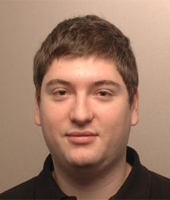
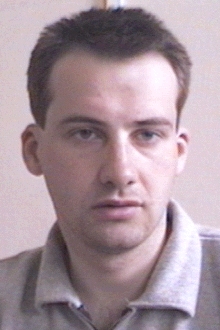
Flavius Opriţoiu is a Lecturer at the Department of Computer Science, Politehnica University of Timişoara. His research focuses on cryptographic hardware implementations , system reliability , and parallel computing architectures . Degree: Dr. Eng. Contact: Room B420/B520, flavius.opritoiu@cs.upt.ro Research areas include: Computing architectures Reconfigurable systems Information security Neural networks Cryptanalysis Recent research trends show focus on AES cryptographic systems , with emphasis on error detection , BIST (Built-In Self Test) , and hardware reliability in cryptographic implementations.
Lecturer Dr. Alexandru Vancea is a faculty member at the Faculty of Mathematics and Computer Science , Babeș-Bolyai University , teaching the course Computer Systems Architecture for both Romanian and English tracks in the 2024-2025 academic year. He coordinates online course materials via MS Teams and manages course logistics, examinations, and grading policies.
Alina Itu is an Associate Professor at the Department of Automation and Information Technology, Faculty of Electrical Engineering and Computer Science, Transilvania University of Brașov, Romania. Her academic work spans artificial intelligence, cloud computing, and industrial process optimization. Research Interests Artificial intelligence Cloud computing Constraint satisfaction problems Optimization of industrial processes Publications Trends Alina’s research focuses on service-oriented architectures, GPU acceleration, and constraint satisfaction frameworks. Recent work applies these technologies to food processing, geodesic monitoring, and biomedical computations, highlighting interdisciplinary integration of AI and industrial engineering. Publications 2019: Industrial Service Oriented Architecture in milk processing 2019: Enterprise Service Bus for geodesic monitoring 2017: GPU acceleration in medical hemodynamics 2014: Service-oriented architecture for industrial optimization
Cătălin Bogdan CIOBANU is a Lecturer at the Electronics and Computers Department within the Faculty of Electrical Engineering and Computer Science at the Technical University of Brașov. His research focuses on advanced computing architectures, including SIMD designs, reconfigurable systems, embedded systems, and supercomputing. He is affiliated with the university’s main campus at Politehnicii St, no 1, Brașov, România, and can be contacted via email at catalin.ciobanu@unitbv.ro or phone +40 711 928 609. His research interests revolve around optimizing computational hardware for high-performance tasks. Key areas include the design of polymorphic registers for efficient matrix operations, high-bandwidth memory systems for digital signal processors, and accelerating algorithms using AVX2 and CUDA. He has contributed to projects like the SARC architecture and the EXTRA platform for reconfigurable HPC. CIOBANU has published extensively in journals like IEEE Micro and conferences such as IEEE International Conference on Computational Science and Engineering. His work often bridges theoretical computer architecture with practical applications in embedded and supercomputing systems. No scientific awards are explicitly mentioned in the provided text. His advising activities and grants are not detailed here, but his involvement in academic research and development at the university is central to his role.
Magdalena BARBU is a Lecturer at the Department of Engineering and Industrial Management, Faculty of Technological Engineering and Industrial Management, Transilvania University of Brașov. Her research focuses on production system design, flexible manufacturing systems, and computer-aided design. She has contributed to advancements in automation, tool management, and 3D printing process optimization. Her work bridges theoretical frameworks with practical applications in manufacturing processes and industrial systems. Key research interests include: Automation of assembly processes and robotics integration 3D printing techniques and process management Tool flow dynamics and manufacturing system perturbations Green manufacturing and eco-friendly lubrication systems Kanban-based inventory and production control methodologies Publications emphasize industrial automation, sustainable manufacturing, and mathematical modeling for technical-economic forecasting. Her work spans journals like RECENT and METALURGIA INTERNATIONAL , with a notable book on manufacturing equipment systems (2020). No scientific awards or grants are explicitly listed in the provided materials. Her advisory role is currently unspecified, though her research themes suggest involvement in industrial collaborations.
Csaba Zoltán KERTÉSZ is a Lecturer at the Department of Electronic and Computers, Faculty of Electrical Engineering and Computer Science, Technical University of Brașov. His research focuses on embedded systems, microcontroller applications, graphical user interfaces, digital signal processing, and real-time operating systems. He has contributed to IoT/M2M communication, wireless sensor networks, and SDR platforms. He has also explored the use of GitHub in collaborative learning and automotive industry-supported curriculum design. Key research interests include: Embedded GUI development frameworks IoT gateway systems using SDR Real-time monitoring and control systems HbbTV architecture performance analysis His recent work (2021-2024) emphasizes: AI-driven programming assessment tools SIMD extension optimization Wireless sensor networks for water distribution Reconfigurable IoT infrastructure Publications span over 15 years, showing sustained contributions in embedded systems, telecommunications, and educational technology. No specific awards mentioned. Labs/Teams: Actively involved in the University's embedded systems and IoT research groups.
Dan Marius Dobrea is an Assistant Professor at the Technical University of Iasi, specializing in interdisciplinary research at the intersection of Virtual Reality, Medical Electronics, and intelligent systems. His work bridges advanced computational methods with practical applications in transportation monitoring, sensor design, and brain-computer interfaces. University: Technical University of Iasi Academic Rank: Assistant Professor Research interests span UAV systems, deep learning algorithms, and neuro-fuzzy networks. Recent publications highlight real-time tracking solutions for drones, pothole detection in road infrastructure, and sensor-based gesture recognition systems. His focus on lightweight AI architectures for embedded platforms demonstrates a commitment to resource-efficient technologies. Article trends reveal expertise in: Unmanned Aerial Vehicles (UAVs) Real-time computer vision Deep learning for infrastructure monitoring Human-computer interaction via inertial sensors Signal processing for biomedical applications GPU-accelerated algorithm optimization
Professor Mihai IVANOVICI is affiliated with the University of Transilvania in Brasov, Romania, serving in the Department of Electronic and Computers within the Faculty of Electrical Engineering and Computer Science . His research focuses on image processing, remote sensing, fractal analysis, and texture characterization , with applications in agriculture, biomedical engineering, and space technology. He leads projects integrating artificial intelligence into FPGA-based systems for cosmic radiation sensing and agricultural monitoring. Notable contributions include the DACIA5 dataset for crop identification and studies on vegetation indices using hyperspectral data. His work bridges theoretical analysis with practical implementations in domains like precision agriculture and satellite technology. Research Highlights: Developed fractal analysis models for soil roughness estimation and image segmentation Designed hardware accelerators for AI applications in gaming and space systems Explored EEG-based brain signal complexity linked to visual stimuli Awards: No awards explicitly listed in the provided texts. Grants & Collaboration: Active in EU-funded educational initiatives like InnEO’Space PhD for training young Earth Observation researchers. Collaborates with institutions on projects like the ATLAS New Small Wheel read-out controller ASIC. Contact: Located at Str. Institutului 10 (Corp L3) and Str. Politehnicii 1 (Corp N) in Brașov.
Zalán Bodó is an Associate Professor at the Faculty of Mathematics and Computer Science , Babeș-Bolyai University, Cluj-Napoca, Romania. His research focuses on Artificial Intelligence, Machine Learning, Information Retrieval, Natural Language Processing, Formal Languages, and Computer Vision . He holds an Erdős number of 4 and maintains an active presence in academic networks like Google Scholar and DBLP. His work bridges theoretical and applied computer science, with contributions to malware analysis, explainable AI, and dataset compilation. He has published extensively on topics such as graph-based malware detection, automated code generation, and medical imaging applications. His office is located at Mathematicum Building (room 207), and he can be reached via zalan.bodo@ubbcluj.ro or zalan.bodo@gmail.com .
Dr. Romulus Valeriu Flaviu Turcu is an Associate Professor at the Department of Physics, Babeș-Bolyai University, and Director of the National Institute for Research and Development of Isotopic and Molecular Technologies (NIRD-IMT) since 2019. He holds a Ph.D. in Physics from Babeș-Bolyai University, a master’s in Material Science, and a bachelor’s in engineering. With over 17 years in academia and R&D, his interdisciplinary expertise spans Nuclear Magnetic Resonance (NMR), materials science, medical imaging, and high-pressure engineering. His research has been conducted across institutions in Europe and North America, including the Pacific Northwest National Laboratory (USA) and Los Alamos National Laboratory. He also serves as a visiting professor at the University of Rochester’s Ain Center for Entrepreneurship. Dr. Turcu’s work focuses on advanced materials, energy technologies, and innovative instrumentation, with contributions to carbon sequestration studies and biomedical applications of MRI. Key research areas include NMR methodologies for material characterization, development of nanostructured composites, and applications of machine learning in energy systems. His publications reflect a strong emphasis on interdisciplinary approaches, combining experimental physics, computational modeling, and engineering solutions. Dr. Turcu leads strategic initiatives at NIRD-IMT, advancing Romania’s technological capabilities in isotopic and molecular technologies. He has coordinated numerous R&D projects for enterprises and international collaborations, demonstrating expertise in transitioning research into practical innovations.
Stepan Yuriyovych Skrupsky is an Associate Professor at the Department of Computer Systems and Networks, Faculty of Computer Science and Technology, Zaporizhzhya National Technical University (ZNTU). He graduated with honors in 2010 as a Master in Computer Systems and Networks and defended his PhD thesis on "Models and methods of video information compression in distributed computer systems" in 2013 at the Institute of Modeling Problems in Energy. His research focuses on parallel and distributed computing , neural networks , video compression , and artificial intelligence systems . He teaches disciplines such as Computer Architecture, Mobile Application Architecture, and Cloud Technologies. Education : Master in Computer Systems and Networks, ZNTU (2010) PhD Thesis : "Models and methods of video information compression in distributed computer systems" (2013) His scientific works explore parallel computing architectures for AI applications, including neuro-fuzzy models , Internet of Things infrastructure , and rule extraction methods . Publications span topics like big data reduction , medical diagnostics , and software-defined networks . He uses computational intelligence and stochastic optimization for distributed system design. Key trends in his research include parallelization of AI algorithms , resource-efficient distributed systems , and cross-domain applications from medicine to IoT. His articles appear in venues such as Radio Electronics, Computer Science, Control and Automatic Control and Computer Sciences .
Тетяна Сергіївна Дьячук є старшим викладачем кафедри комп'ютерних систем та мереж Факультету комп'ютерних наук і технологій Запорізької національної технічної політехніки, де працює з 2006 року після закінчення університету з відзнакою. Вона є активним членом академічної спільноти, зосереджуючись на сучасних напрямках комп'ютерних наук та технологій. Освіта: Запорізька національна технічна політехніка, 2006 рік, спеціальність "Комп'ютерні системи та мережі", кваліфікація "Магістр комп'ютерних систем та мереж" (з відзнакою) Запорізька національна технічна політехніка, 2006 рік, кваліфікація "Менеджер-економіст" Наукові інтереси Тетяни Сергіївни охоплюють ключові напрями сучасних комп'ютерних технологій, зокрема розподілені та паралельні обчислення, блокчейн-технології, децентралізовані платформи та оптимізацію обчислень. Вона також активно займається дослідженнями в галузі Android-програмування та розробки мобільних додатків. Її наукова робота характеризується практичною спрямованістю, що знаходить відображення в численних публікаціях та конференціях. Аналіз наукових публікацій Тетяни Сергіївни показує чітку еволюцію її наукових інтересів від фундаментальних досліджень розподілених систем та алгоритмів планування ресурсів до сучасних технологій блокчейну, штучного інтелекту та автоматизації процесів програмування. Особливо вражає її здатність поєднувати теоретичні дослідження з практичними застосуваннями в різних галузях, від медичної діагностики до розробки мов високого рівня. Наукові досягнення: Понад 15 наукових публікацій в провідних наукових виданнях Активна участь у міжнародних наукових конференціях Реєстрація в наукометричних базах: Scopus, Web of Science, Google Scholar, ORCID Тетяна Сергіївна активно бере участь у науково-педагогічній діяльності, викладаючи курси, що відповідають сучасним тенденціям в комп'ютерних науках. Вона також займається науковою роботою зі студентами, сприяючи їх інтеграції в наукову спільноту через участь у наукових конференціях та проєктах. Незважаючи на те, що конкретні науково-дослідні гранти не зазначені в доступних джерелах, її публікаційна активність та участь у конференціях свідчать про продуктивну наукову діяльність. Хоча конкретні лабораторії або наукові групи, якими керує Тетяна Сергіївна, не зазначені в доступних джерелах, її наукова робота тісно пов'язана з розвитком сучасних технологій розподілених систем та обчислень, що ймовірно відбувається в рамках кафедри комп'ютерних систем та мереж Запорізької політехніки.