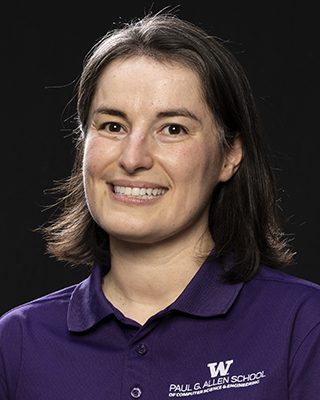
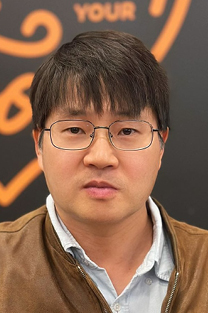
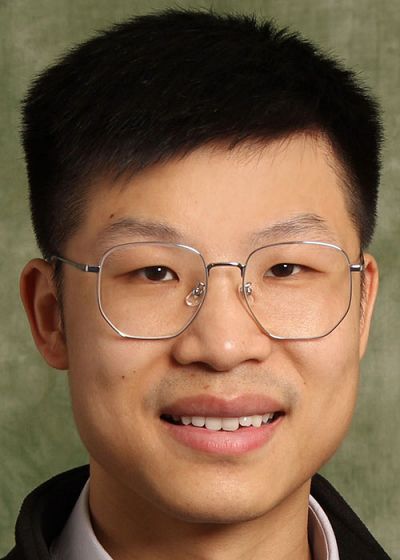
Elba Garza is an Assistant Professor at the Paul G. Allen School of Computer Science & Engineering , University of Washington. Her work bridges Human-Centered Computing and Software & Hardware Systems , with a focus on educational technologies and parallel computing architectures. Expertise: Architecture & Parallel Computing, Computing Education Research
Atila Alvandpour serves as Professor and Head of the Integrated Circuits and Systems Division at Linköping University's Department of Electrical Engineering (ISY), concurrently holding the position of Vice Head of the Department. He joined the university in 2003 following senior research scientist roles at Intel Corporation's Circuit Research Lab (1999-2003). His educational foundation includes M.S. and Ph.D. degrees earned from Linköping University in 1995 and 1999 respectively. Alvandpour's research centers on advanced nano-scale integrated circuit design , with pioneering work in data converters (ADCs/DACs) , RF transceivers , and ultra-low-power systems . His expertise spans sensor interfaces, energy-harvesting architectures, and multi-GHz digital circuits, driving innovations for IoT and biomedical applications through novel analog/mixed-signal techniques. Recent publications (2024-2025) reveal a strategic focus on system-level integration for emerging technologies, particularly energy-efficient SoCs for wireless optical sensing, RF energy harvesting, and bio-implantable devices. This trend emphasizes circuit miniaturization, power optimization, and multi-functional integration in cutting-edge CMOS processes. No formal scientific awards are documented in the source materials. As Division Head and active researcher with 24 U.S. patents, Alvandpour leads a significant research group within the Division of Electronics and Computer Engineering (ELDA). His IEEE senior membership and editorial roles for flagship journals like IEEE Journal of Solid-State Circuits demonstrate substantial professional influence, though specific grant details remain unspecified.
Dr. Lipeng Wan is a tenure-track Assistant Professor of Computer Science at Georgia State University (GSU), located at 25 Park Place, room 733. He holds a B.Eng. in Communication Engineering from Nanjing University of Science and Technology (2008), an M.Eng. in Information and Communication Engineering from Southeast University (2011), and a Ph.D. in Computer Science from the University of Tennessee, Knoxville (2016). Prior to joining GSU, he served as a Computer Scientist at Oak Ridge National Laboratory (ORNL), first as a postdoctoral researcher (2016–2018) and later as a full-time research staff member (2018–202?). His research focuses on big data management and analytics , high-performance and data-intensive computing , and resilience and performance optimization for distributed systems . Key interests include scientific data workflows, I/O innovations for exascale systems, and error-controlled data compression frameworks like MGARD and HPDR. Dr. Wan’s recent work emphasizes adaptive data transmission (e.g., JANUS), load balancing in cloud environments (SciLance), and optimizing file access patterns on HPC systems. His publications address challenges in exascale computing, including I/O performance, geographically distributed data management, and feature-preserving compression for climate simulations. He leads research at GSU in collaboration with national labs like ORNL, focusing on advancing scalable data management techniques for high-performance computing applications.
Zhiqiang Que is a Research Associate in the Department of Computing at Imperial College London, affiliated with the Faculty of Engineering and the Centre for High-Throughput Digital Electronics and Machine Learning. His research focuses on computer architecture, embedded systems, high-performance computing, and CAD tools for hardware design optimization. His research interests include FPGA-based acceleration of machine learning models, hardware-software co-design, and real-time signal processing for scientific applications such as particle physics and gravitational wave experiments. He has contributed to projects involving low-latency graph neural networks (GNNs), Bayesian neural networks, and efficient stream processing on FPGAs. Recent work includes advancements in trustworthy design flows for deep learning acceleration, reconfigurable architectures for recurrent neural networks, and optimizing FPGA-based systems for high-energy physics experiments at the HL-LHC.
Shengwang Du is a Professor of Physics and Astronomy and Professor of Electrical and Computer Engineering at Purdue University, serving as Deputy Director of the Purdue Quantum Science and Engineering Institute (PQSEI). He holds adjunct and visiting roles at institutions globally, including co-founding Light Innovation Technology (LiT) companies. His research focuses on quantum optics, quantum computing, optical neural networks, and bioimaging. Du earned his PhD in Physics from the University of Colorado Boulder in 2005, with prior degrees from Peking University and Nanjing University. Education: PhD, Physics (Atomic, Molecular and Optical Physics), University of Colorado Boulder, 2005 MS, Electrical Engineering, University of Colorado Boulder, 2002 MS, Physics, Peking University, 1999 BS, Electrical Engineering, Nanjing University, 1996 Research Interests: AMO Physics, Quantum Optics, Quantum Networks, Quantum Computing, Optical Neural Networks/AI, Optical Microscopy, Bioimaging. Professional Contributions: Associate Editor of Optics Express , Optica Fellow (2019), APS Fellow (2019), and key organizer of international quantum conferences. His publications span quantum optics, bioimaging, and photonics, with recent work emphasizing quantum networks and AI-driven microscopy. Awards: APS and Optica Fellowships (2019), Hong Kong Young Academy of Sciences membership (2020–2025), and the 2011 HKUST Research Award. Grants & Labs: Co-founded Light Innovation Technology (LiT) and NanoBioImaging (NBI) Ltd. Active in quantum engineering, optical instrumentation, and quantum sensing initiatives.
Dr. Wei-Chin Ho is an Assistant Professor specializing in microbial genetics and evolutionary biology. His research integrates experimental, computational, and theoretical approaches to study how microorganisms adapt to environmental changes. Key focuses include mutation dynamics, phenotypic plasticity, genetic drift vs. selection, and the molecular mechanisms underlying traits like antibiotic resistance and biofilm formation. His research investigates topics such as mutation rate variation, metabolic adaptation, and evolutionary trade-offs in response to fluctuating resources. Recent work explores microbial survival strategies in feast-famine cycles and the reversibility of phenotypic changes during environmental adaptation. Dr. Ho’s studies emphasize understanding the interplay between genetic and environmental factors in shaping microbial evolution. His publications reflect a focus on experimental evolution, mutation analysis, and the genetic basis of microbial adaptation. Notable themes include hypermutator evolution, ecotype dynamics, and the limits of population genetic parameter estimation using temporal data. No scientific awards or grants are explicitly mentioned in the text. Advising and student mentorship details are not provided. Dr. Ho’s work is centered in microbial systems biology, with implications for understanding antibiotic resistance and environmental microbial responses.
Zhen Xie is an Assistant Professor in the Department of Computer Science at Binghamton University (SUNY), serving as Director of the Parallel Computing and Intelligent System (PCIS) Lab. He holds a PhD from the Chinese Academy of Sciences and a BA from Wuhan University of Technology. His research focuses on high-performance computing (HPC), machine learning, and their intersections, particularly optimizing performance for HPC and AI/DL applications across heterogeneous architectures. Research Highlights: Dr. Xie’s work emphasizes system-level performance optimization for ML and HPC, including GPU acceleration, memory optimization, and AI accelerator selection. His team has won the ACM Gordon Bell Special Prize (2022) for their GenSLMs project predicting SARS-CoV-2 evolution. Recent grants include a 2024 gift from OpenAI for AI testbed initiatives. Awards: ACM Gordon Bell Special Prize (2022), Impact Argonne Awards (2023) Lab: PCIS Lab explores middleware for parallel computing, targeting scientific simulations and big data analytics. Collaborations include Argonne National Lab and Lawrence Berkeley National Lab. Teaching: Teaches Distributed Systems (CS 457/557) and oversees independent studies. Previously trained researchers at Argonne’s ATPESC program. Grants & Collaborations: Subcontract with Lawrence Berkeley Lab (HEVI-LOAD), Argonne testbed expeditions, and OpenAI-funded projects. Active in DOE labs like Summit and Aurora supercomputers.
Victorita Dolean-Maini is Professor at University of Strathclyde and Visiting Professor at University of Strathclyde (2023-2026). She specializes in domain decomposition methods for PDEs, high-performance computing, and scientific machine learning. Her work develops fast algorithms for wave propagation problems and complex systems. She co-authored the reference work 'Domain Decomposition Methods' (SIAM 2015) and received the Bull-Joseph Fourier Prize for stroke simulation using HPC. Current research explores physics-informed neural networks with domain decomposition architectures and their application to medical digital twins. She serves on the editorial board of SIAM Journal on Scientific Computing and collaborates with industrial partners on scientific machine learning projects. Recent publications focus on neural network architectures combining domain decomposition with physics-informed learning, multilevel methods, and efficient coarse spaces for partial differential equations.
Marjan Firouznia is a Principal Research Engineer at Linköping University , affiliated with the Division of Diagnostics and Specialist Medicine (DISP) under the Faculty of Medicine and Health Sciences . With a PhD in Electrical Engineering from Amirkabir University of Technology and postdoctoral experience at institutions like Case Western Reserve University, she specializes in advancing machine learning models for precise segmentation of cardiac structures including the left atrium , epicardial fat , and fibrosis using CT and MRI scans. Her work aims to improve diagnostic accuracy and treatment planning in cardiovascular care. Marjan's research focuses on medical imaging , deep learning , and computational anatomy , with recent publications on FractalRG , FK-means , and Poincare-guided UNet for cardiac structure segmentation. Her academic contributions span 15 recent publications , emphasizing fractal geometry , chaos theory , and optimization algorithms in biomedical applications. She actively develops open-source datasets and tools, such as the FK-means codebase , to support reproducibility in medical AI research.
Claudia Sinatra is a Lecturer at ETH Zürich’s Department of Civil, Environmental and Geomatic Engineering, affiliated with the Institute of Spatial and Landscape Development. She holds an MSc in City Design and Social Science from LSE and an MSc in Architecture from the University of Ferrara (Italy), with additional studies at the Technical University of Munich. Her work bridges urban design, sociology, and visual storytelling, focusing on socio-spatial justice, care-oriented urbanism, and intersectional feminist spatial practices. Since 2022, she has contributed to ETH’s Master’s program in Spatial Development and Infrastructure Systems, teaching the Urban Design Studio for Planners. Her professional experience includes roles at multidisciplinary firms in London and Zurich, leading urban analyses, masterplans, and public realm projects. She actively engages with gender equity in planning through memberships in organizations like Frau + SIA and LARES. Parallel to academia, she practices as an independent graphic designer, integrating visual narratives with urban research. Her research and teaching emphasize collaborative design processes and critical dialogue in complex urban transformations. Notable engagements include moderating panels on planetary urbanization and postcolonial climate discourse, as well as exhibiting projects like “Activism. Feminism. Care” at ETH Zürich.
Divakar Viswanath is a Professor of Mathematics at the University of Michigan , with research expertise in numerical analysis, nonlinear dynamics, and mathematical genetics. His work bridges computational mathematics and scientific programming, focusing on problems like coalescent theory in population genetics and fluid dynamics. Education: BTech in Computer Science and Engineering, IIT Bombay (1992) PhD in Computer Science, Cornell University (1998) Research interests include: Numerical analysis of differential equations Nonlinear dynamics and chaotic systems Coalescent theory in population genetics with applications to mutation rates and inference algorithms Connections between dynamical systems and computational mathematics Recent publications span computational fluid dynamics, numerical methods, population biology, and symbolic dynamics, reflecting interdisciplinary applications of mathematics. He authored the book Scientific Programming and Computer Architecture (MIT Press, 2017), which explores program performance, memory optimization, and parallel computing models.
Kristopher Micinski is an Assistant Professor in the Electrical Engineering and Computer Science Department at Syracuse University. His research focuses on scalable program analysis, static analysis, and formal methods applied to computer security and privacy. He holds a PhD in Computer Science from the University of Maryland and a BS in Computer Engineering from Michigan State University. Education: PhD, Computer Science, University of Maryland at College Park BS, Computer Engineering, Michigan State University Research Interests: His work bridges theory and application of program analyses, emphasizing scalable static analysis frameworks, Datalog optimization for distributed systems, and security applications. Recent efforts include GPU-accelerated Datalog engines and large-scale malware analysis pipelines like Assemblage. Grants & Projects: NSF PPoSS Large: $1M grant for declarative analytics DARPA V-SPELLS: $400K for legacy software optimization Assemblage: $350K DoD grant for malware classification Teaching: He teaches undergraduate and graduate courses on programming languages (CIS352) and formal methods (CIS700), with materials publicly available on YouTube.
Armando Fox is a Professor in the Department of Electrical Engineering and Computer Sciences at UC Berkeley, where he co-leads the ASPIRE Lab and directs the Berkeley MOOCLab. His work focuses on integrating online learning research into educational frameworks. He holds a PhD, MS and BS from Berkeley, Illinois, and MIT respectively. Fox's research spans applied statistical machine learning, Software as a Service (SaaS), cloud computing, parallel programming, and innovative online education methods. He pioneered Berkeley's first MOOC on software engineering and co-authored the textbook Engineering Software as a Service . His recent publications demonstrate strong focus on: AI-enhanced education tools and assessment systems Cloud-based learning management architectures Generative AI for collaborative programming education Automated testing frameworks for computer science Significant awards include: NSF CAREER Award ACM Distinguished Member Scientific American 50 top researcher recognition Fox previously contributed to Intel Pentium Pro microprocessor design and founded a mobile computing company based on his dissertation research.
John Herbert is a Senior Lecturer in Computer Science at University College Cork (UCC), Ireland. His research focuses on pervasive computing, wireless sensor networks, and healthcare informatics, with notable projects like the CARA framework for falls assessment in the elderly. He holds a PhD in Computer Science from Cambridge University and has held visiting roles at institutions including SRI International and the University of Cambridge. Education: BSc (Experimental Physics), MSc (Experimental Physics), Postgraduate Diploma (Computer Science) from UCC; PhD (Computer Science) from Cambridge University. Research Grants: Led projects funded by Science Foundation Ireland (163,726) and the Irish Research Council (71,250), focusing on cloud computing and healthcare applications. His work emphasizes context-aware systems, data quality in medical environments, and real-time analysis. Selected awards include an International Fellowship from Digital Systems Research Center (1989) and visiting fellowships at Cambridge (2008-2009). Teaching: Courses include Advanced Software Engineering, Formal Methods, and Model-Based Software Development. Outreach: Advisor to award-winning student teams (e.g., IEEE mobile app contest) and collaborator with industry partners in China and Europe.
Marc Snir is an Israeli-American Professor of Computer Science at the University of Illinois at Urbana-Champaign (UIUC). He holds a Doctor Honoris Causa from École Normale Supérieure de Lyon (2018). His career includes leadership roles such as Head of the Computer Science Department at UIUC (2001–2007) and Director of the Mathematics and Computer Science Division at Argonne National Laboratory (2011–2016). He is a Fellow of AAAS, ACM, and IEEE, and recipient of the IEEE Seymour Cray Award. Education: PhD in Mathematics from the Hebrew University of Jerusalem (1979). Research focuses on parallel algorithms, high-performance computing (HPC), distributed systems, and fault tolerance. He co-developed the MPI standard for parallel programming and contributed to IBM's Blue Gene supercomputer architecture. His Erdős number is 2, reflecting collaborative links to mathematician Paul Erdős. Awards include the IEEE Award for Excellence in Scalable Computing and leadership in advancing supercomputing through publications like The Future of Supercomputing (2004).