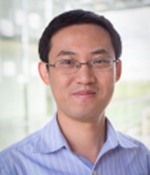
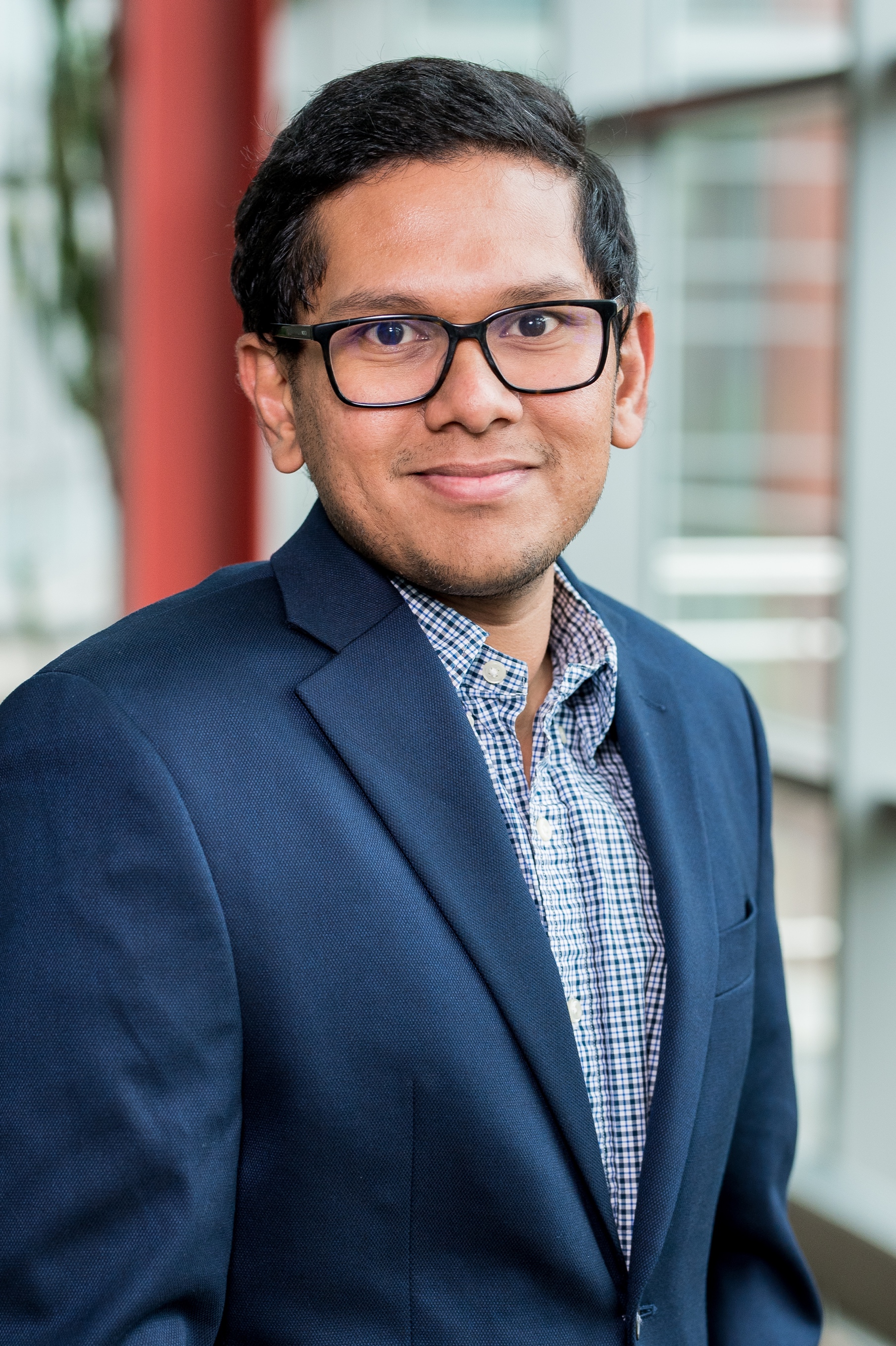
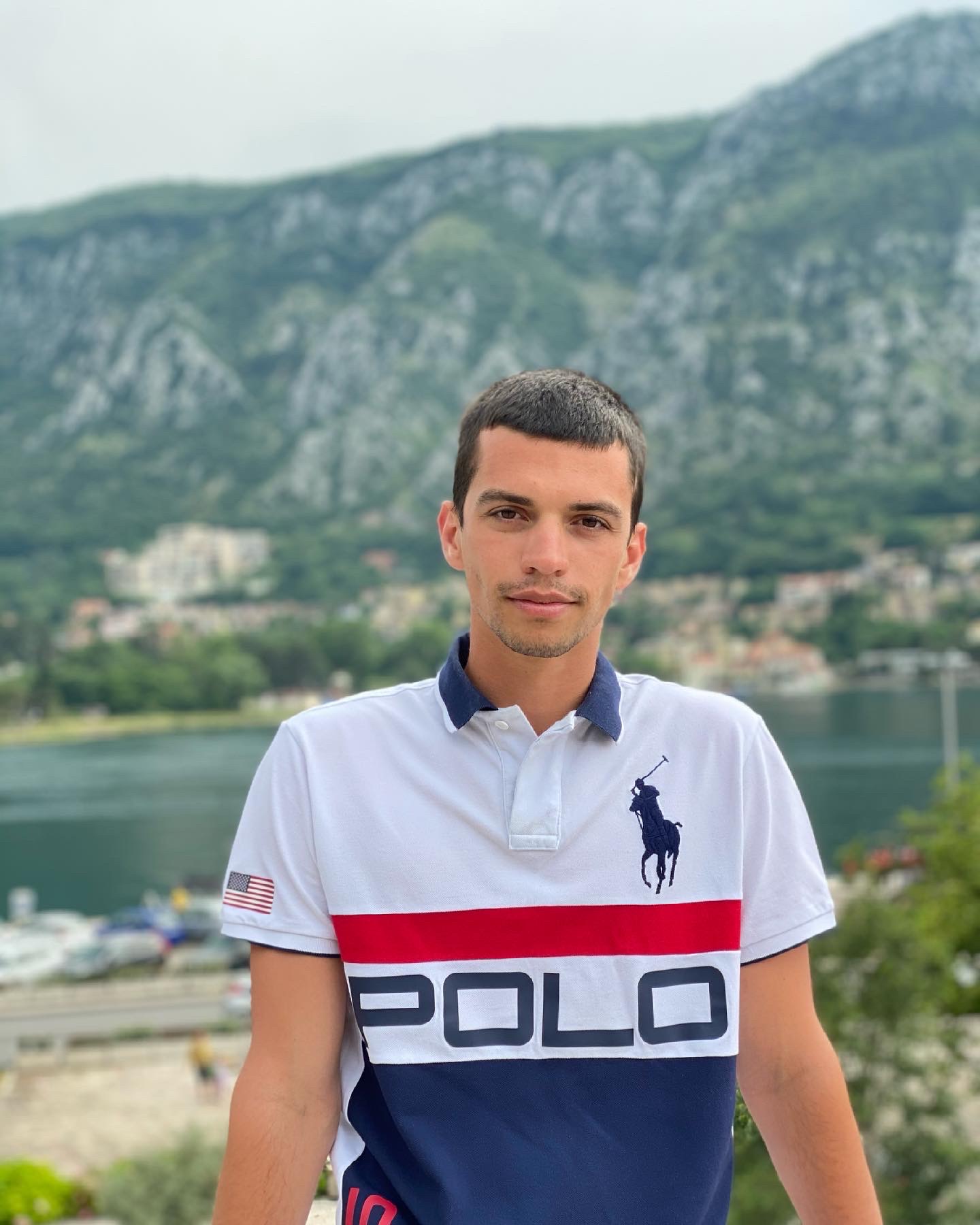
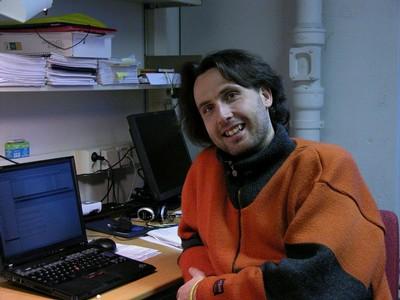
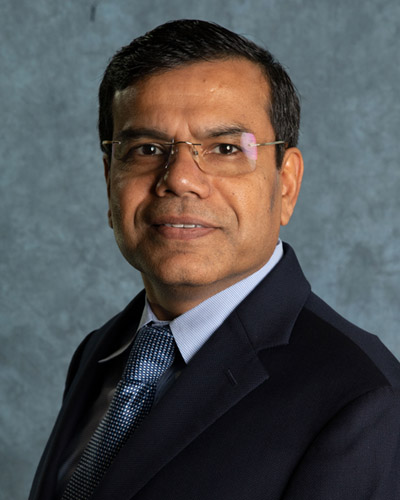
Dong Li is an Associate Professor at the University of California, Merced , where he directs the Parallel Architecture, System, and Algorithm Lab (PASA) and co-directs the High Performance Computing Systems and Architecture Group . He co-founded Yotta Labs Inc. and previously held research roles at Oak Ridge National Laboratory (2011-2014) and a PhD from Virginia Tech. Research Interests: Dong's work focuses on High performance computing (HPC) Memory heterogeneity and non-volatile memory Systems for machine learning and AI Fault tolerance in large-scale systems His innovations include heterogeneous memory optimization for recommendation models and GNNs, CXL memory integration, and persistent memory debugging tools. Recent Publications highlight advancements in CXL-based inter-node communication Memory tiering for laminography reconstruction ML-guided memory optimization for DLRM and GNN Fault tolerance benchmarks and error analysis Awards & Recognition: NSF CAREER Award (2016) Oracle Research Award (2022) ASPLOS Distinguished Artifact Award (2021) Virginia Tech Early Career Alumni Award (2023) Advising & Funding: Dong has mentored 22 students (8 PhD, 6 Master’s, 8 undergraduates) and secured grants from NSF, NVIDIA, Meta, and national labs (Argonne, Lawrence Berkeley, Lawrence Livermore). Collaborations include Microsoft (DeepSpeed, Intel PMDK), AMD, SK Hynix, and Intel/MICRON hardware donations.
Dr Joshua Alcock is a Lecturer at the University of Liverpool, actively involved in teaching and research. He contributes to modules such as Cloud Computing for E-Commerce (COMP315), High Performance Computing (COMP328), and Multi-Core and Multi-Processor Programming (COMP528), where he serves as Module Co-ordinator. His research focuses on computational operations research and optimization, particularly in heuristic approaches for the Periodic Multiple Maintenance Person Problem (2023). This work addresses dynamic scheduling challenges in industrial maintenance, leveraging algorithmic design and stochastic optimization techniques.
Leila De Floriani is a Professor at the University of Maryland, with appointments in the Department of Geographical Sciences and the University of Maryland Institute for Advanced Computer Studies (UMIACS). She previously served as a professor at the University of Genova (Italy) since 1990, where she developed Italy's first undergraduate and graduate curricula in computer graphics and directed the Ph.D. program in Computer Science for eight years. Her professional activities include serving as the 2020 President of the IEEE Computer Society and currently as IEEE Division VIII Director for 2023-24. Professor De Floriani's research spans geometric modeling, data visualization, spatial data representation and processing, computer graphics, shape analysis, and topological data analysis. Her work focuses on developing mathematical models and algorithms for representing, analyzing, and visualizing complex spatial data, particularly through hierarchical models, mesh-based representations, and topology-based approaches. Her research group, the GeoVis group, investigates applications in terrain modeling, environmental data analysis, and forest structure mapping using LiDAR technology. Analysis of her recent publications reveals a strong focus on terrain representation and processing, with increasing emphasis on topological data analysis, machine learning integration, and efficient algorithms for large-scale spatial data. Her work bridges theoretical foundations in computational topology with practical applications in geospatial sciences, demonstrating consistent innovation in data structures and visualization techniques. Scientific Awards & Recognitions Fellow of IEEE (2016) for contributions to geometric modeling and scientific visualization Fellow of International Association for Pattern Recognition (IAPR) (1998) for contributions to geometric modeling and image analysis Fellow of Eurographics Association (2020) for outstanding contributions to computer graphics and visualization Pioneer of Solid Modeling Association (2017) for seminal work in solid and feature-based modeling Inducted Member of IEEE Visualization Academy (2020) IEEE Computer Society Golden Medal Award (2018) Inducted Member of IEEE Honor Society Eta Kappa Nu (2019) Multiple best paper awards at major conferences including Shape Modeling International (2015), IEEE/EG Symposium on Volume and Point-Based Graphics (2008), and ACM SIGSPATIAL (2008) Professor De Floriani has successfully advised numerous PhD students including Xin Xu, Yunting Song, and Noel Dyer, whose recent dissertations focused on topology-based individual tree mapping, efficient terrain analysis, and bathymetric data visualization respectively. Her research has been funded by prestigious agencies including the National Science Foundation, NASA, and the European Commission. As the leader of the UMD GeoVis group, she oversees a research program that develops open-source tools for spatial data analysis available on GitHub, with current projects focusing on forest point cloud processing and topology-based geospatial data visualization. The GeoVis group, affiliated with the Department of Geographical Sciences, UMIACS, and the Center for Geospatial Information Sciences, maintains a strong collaborative environment with ongoing projects in geometric modeling, spatial data structures, topology-based machine learning, and mesh-based terrain modeling. The group has received recent funding from NASA's HPOSS program for developing an open-source library for forest point cloud processing based on topological data analysis.
Charith Mendis is an Assistant Professor in the Siebel School of Computing and Data Science at the University of Illinois at Urbana-Champaign, with joint appointments in the Department of Computer Science, Electrical and Computer Engineering, and the Coordinated Science Lab. His research focuses on the intersection of compilers, program optimization, and machine learning systems. Dr. Mendis received his educational background from prestigious institutions: Ph.D. in Computer Science from Massachusetts Institute of Technology (2020) S.M. in Computer Science from Massachusetts Institute of Technology (2015) B.Sc. in Electronics and Telecommunication Engineering from University of Moratuwa (2013) His primary research interests center around compiler technology and machine learning systems. Mendis leads the ADAPT lab at UIUC, where his team works on creating high-performance ML optimization techniques and automated compiler construction using machine learning and formal methods. His work bridges the gap between traditional compiler design and modern machine learning approaches, with applications in tensor compilers, graph neural networks, and sparse computation. He has developed novel frameworks for optimizing deep learning workloads, verification of compiler transformations, and performance modeling for emerging hardware architectures. Mendis has established himself as a leading researcher in compiler optimization for machine learning systems, with a particular focus on tensor compilers, graph neural networks, and performance modeling. His recent publications demonstrate increasing sophistication in combining formal methods with machine learning techniques to solve challenging problems in compiler optimization and verification, with multiple papers accepted at top-tier conferences including OOPSLA, PLDI, POPL, and SIGMOD. His notable scientific achievements include: Google ML and Systems Junior Faculty Award (2025) DARPA Young Faculty Award (2024) NSF CAREER Award (2024) Distinguished Paper Award at POPL (2025) William A. Martin Thesis Award for Outstanding SM thesis, MIT (2015) Multiple teaching excellence awards at UIUC (2021-2023) Dr. Mendis actively mentors students through the ADAPT lab, offering research opportunities for undergraduates, master's students, and PhD candidates interested in compiler technology and machine learning systems. His research is supported by significant funding from the ACE center (part of JUMP 2.0), National Science Foundation (NSF), DARPA, IIDAI, and industry partners including Google, Intel, Amazon, and Qualcomm. He teaches advanced courses in compiler construction and machine learning for compilers. He leads the ADAPT lab at UIUC, which focuses on developing advanced compiler technologies for modern machine learning workloads. The lab maintains active collaborations with industry partners and has established itself as a leading research group in compiler optimization for AI systems. Current projects include tensor compilers, graph neural network optimization, and automated verification of deep learning systems.
Miloš Racković serves as a full Professor in the Department of Mathematics and Informatics at the University of Novi Sad, Serbia. He maintains active academic engagement through the Laboratory for the development of information systems, with his office located in the Information technologies and systems office (DMI&DF) on the second floor, room 49. Contact is available via telephone (485)-2868 or email rackovic@dmi.uns.ac.rs, and his personal website (http://www.is.pmf.uns.ac.rs/rackovicm/) provides additional resources. His research spans foundational and applied computer science, with seminal contributions in fuzzy database systems including PFSQL query language development and prioritized fuzzy logic for relational databases and XML. He has pioneered deep learning methodologies through innovative classification techniques using negative and missing features in convolutional neural networks. Additional expertise includes high-performance computing implementations of Lattice Boltzmann methods using OpenCL, robotics (symbolic modeling and trajectory planning), and blockchain applications for Industry 4.0 production processes. His sports analytics work applies neural networks to basketball player and referee movement analysis. Analysis of his 2012-2025 publications reveals a strategic evolution toward interdisciplinary applications, particularly in industrial transformation (blockchain-enabled traceability) and sports analytics. His work consistently bridges theoretical computer science with practical implementations, demonstrating increasing focus on real-world problem solving while maintaining strong foundations in database theory and computational methods. Professor Racković leads the Laboratory for the development of information systems, which focuses on advancing information system methodologies through formal modeling extensions (including Petri net innovations) and practical implementations for uncertainty management. The laboratory's work spans from foundational research in fuzzy logic systems to applied projects in high-performance computing and blockchain integration, fostering innovation in information technology development.
Sergiu Nisioi is an Associate Professor at the Faculty of Mathematics and Computer Science, University of Bucharest, with expertise in computational linguistics, machine translation, and text simplification. He bridges cognitive science with NLP through eye-tracking and EEG research, while also exploring sound art and digital autonomy via initiatives like HYPHA.ro. Current projects include PN-IV-P2-2.1-TE-2023-2007 (text complexity/readability), Legal Document Processing , and Europarl Dialectal Corpora Research spans computational psycholinguistics , LSTM-based translation models , and algorithmic composition for sound art His work integrates interdisciplinary methodologies, combining EEG signal processing for architecture data with the University of Architecture, and DSP for ecological projects at chlorophylla.live.
Jovan Stojkovic is an incoming Assistant Professor at the Department of Computer Science at the University of Texas at Austin, set to join in Fall 2026. Prior to his appointment at UT Austin, he will spend a year at Meta working with the AI and Systems Co-design group. His research focuses on cloud computing and datacenters, with particular emphasis on cloud-native workloads and machine learning inference. Education: PhD in Computer Science from the University of Illinois at Urbana-Champaign, advised by Professor Josep Torrellas Undergraduate studies at the School of Electrical Engineering, University of Belgrade, Serbia, where he was recognized as the best student of the Computer Engineering and Information Theory Department every year from 2017-2020 Research Interests: Jovan's research focuses on cloud computing and datacenters , with two primary domains: Cloud-native workloads , such as microservices and serverless computing. He investigates how to co-design novel hardware platforms and software systems that deliver orders-of-magnitude improvements in performance, energy efficiency, and resource utilization for these emerging workloads. Machine Learning (ML) inference , particularly large language models (LLMs). His work addresses the challenges of ML inference through smart scheduling, workload placement, and system-level configuration tuning to reduce energy, power, and thermal overheads while maintaining performance and accuracy guarantees. Publication Trends: Jovan's publications demonstrate a strong focus on optimizing cloud infrastructure for emerging workloads. His research spans across serverless computing, microservices, and large language model inference. A clear trend emerges in his work: addressing the performance, energy efficiency, and resource utilization challenges of modern cloud workloads through innovative hardware-software co-design approaches. His most recent work shows increasing focus on LLM inference optimization, particularly in the areas of thermal management, power efficiency, and scheduling for many-adapter environments. Awards and Honors: HPCA Best Paper Award (2025) IEEE MICRO Top Picks Honorable Mention (2024) 6 patents with IBM and Microsoft on: Serverless systems, Processor overclocking in the cloud, and Energy-efficient LLM inference W. J. Poppelbaum Memorial Award (2025) for hardware and architecture innovation Mavis Future Faculty Fellowship (2024–2025) Invited to present at 11th Heidelberg Laureate Forum (2024) Kenichi Miura Award (2022) for excellence in High Performance Computing Multiple student travel grants to ISCA, MICRO, ASPLOS, and HPCA Advising and Grants: Jovan is actively seeking prospective PhD students for his research group at UT Austin. His research has been supported through collaborations with major tech companies including IBM, Microsoft, and Meta. His six patents with IBM and Microsoft demonstrate the practical impact of his research in serverless systems, processor overclocking, and energy-efficient LLM inference. His work on serverless computing (MXFaaS, EcoFaaS) and LLM inference optimization has received significant recognition in top-tier computer architecture conferences. Research Groups: During his PhD at UIUC, Jovan worked with Professor Josep Torrellas on cloud infrastructure research. He has collaborated extensively with researchers at IBM Research (particularly Hubertus Franke) and Microsoft (particularly Íñigo Goiri and Ricardo Bianchini). His upcoming position at UT Austin will establish his independent research group focused on cloud computing and datacenter systems. His year at Meta working with the AI and Systems Co-design group will further strengthen his expertise in AI infrastructure.
Prof. Dr.-Ing. Richard Membarth is a Research Professor for System-on-a-Chip and AI at the Edge Computing at Technische Hochschule Ingolstadt (THI). He is affiliated with the Hardware-Software Co-Design group and holds a secondary position at the German Research Center for Artificial Intelligence (DFKI) Saarbrücken. Co-creator of DSL frameworks like AnyDSL and Hipacc Key contributor to MetaDL (AI metaprogramming) and PRIME (predictive rendering) His research bridges GPU computing , domain-specific languages , and compiler technology , with recent work on Vulkan SPIR-V compilation and device-driven SpMV algorithms . Notable awards include the HiPEAC Paper Award (2018) and multiple Best Paper Awards for his compiler frameworks.
Michel Gendreau is a Full Professor in the Department of Mathematics and Industrial Engineering at Polytechnique Montréal. He holds a B.Com. from McGill University, and both an M.Sc. and Ph.D. from the University of Montreal. His research focuses on operational research with applications in logistics, transportation, energy systems, and telecommunications. He is affiliated with several prestigious research centers including the Institute for Data Valorization (IVADO), the Trottier Energy Institute (IET), and the Interuniversity Research Center on Enterprise Networks, Logistics and Transport (CIRRELT). Professor Gendreau's research interests span operational research, with particular emphasis on stochastic optimization methods applied to transportation and logistics problems, energy systems management, and telecommunications. His work often addresses real-world challenges through mathematical modeling and algorithm development, with applications ranging from bike-sharing systems to emergency response planning and electricity grid management. The analysis of his recent publications reveals a strong focus on vehicle routing problems under uncertainty, maintenance optimization, and the integration of stochastic programming with machine learning techniques for improved decision making. Professor Gendreau has received numerous prestigious awards recognizing his contributions to the field of operations research. In 2022, he was named a Fellow of the International Federation of Operational Research Societies (IFORS). In 2010, he was awarded Fellow status by INFORMS (Institute for Operations Research and the Management Sciences). Most notably, in November 2015, he received the Robert M. Herman Lifetime Achievement Award from the Transportation Science and Logistics Society of INFORMS, which is considered the most prestigious distinction for operational researchers working in logistics and transportation. Throughout his career, Professor Gendreau has supervised 25 doctoral students and 18 master's students, contributing significantly to the development of the next generation of operations research experts. His research has been supported by numerous grants from organizations including NSERC (Natural Sciences and Engineering Research Council of Canada), with expertise recognized in Operational Research and Management Science (NSERC subject 1601) and Logistics (NSERC subject 1603). Professor Gendreau is actively involved in several research teams and laboratories, particularly those focused on data valorization, energy systems, and transportation logistics. His current work continues to push the boundaries of stochastic optimization and its applications to complex real-world problems, with recent publications addressing challenges in urban transportation, energy management, and emergency response systems.
Professor Jordan Taylor is affiliated with Princeton University as a faculty member in the Department of Biomedical Engineering within the School of Engineering and Applied Science. His research focuses on unraveling computational processes in motor control and learning, with particular emphasis on interactions between explicit cognitive strategies and implicit motor adaptation during skill acquisition. Taylor leads the Intelligent Performance and Adaptation Laboratory , aiming to develop optimal training protocols for motor rehabilitation post-stroke or disease. Research Interests : Taylor investigates how humans learn motor skills through dual mechanisms of declarative strategy formation and implicit neural adaptation. His work explores the neural systems underlying these processes and their functional consequences, especially in pathological conditions like cerebellar degeneration. Current studies examine working memory constraints, reward modulation of implicit adaptation, and plan-based generalization of motor learning. Publication Trends : Recent articles analyze dual mechanisms in sensorimotor learning, reward-driven adaptation, and contextual influences on motor memory. His computational neuroscience approach combines behavioral experiments, neural imaging, and theoretical modeling to study cognitive-motor interactions across various tasks.
Brian Towles is an Adjunct Assistant Professor in the Department of Electrical and Computer Engineering at Duke University. He earned his D.Phil. from Stanford University in 2005 and has contributed extensively to computer architecture and machine learning systems through research and publications. His work focuses on specialized hardware for molecular dynamics simulations and network-on-chip design. Research Interests: Dr. Towles specializes in computer architecture, particularly in network-on-chip design, event-driven computation, and low-latency interconnects for scientific computing. His research enables high-performance simulations in molecular dynamics and machine learning, with notable collaborations on Anton/TPU series supercomputers. Publication Trends: His publications span from 2001 to 2024, emphasizing Custom ASICs for scientific computing (Anton 2/3, TPUv4) Optimized interconnects and routing algorithms Event-driven and cycle-accurate simulation frameworks Resilient systems for large-scale machine learning
Luca Frediani is a Professor in Theoretical and Computational Chemistry at the Hylleraas Center, Department of Chemistry, UiT The Arctic University of Norway. His research focuses on advanced quantum chemistry methods, including density functional theory, multiwavelet basis sets, and solvation modeling. He actively develops computational tools like MRChem and VAMPyR for molecular electronic structure calculations. Current affiliation: UiT The Arctic University of Norway Research group: Theoretical and Computational Chemistry Teaching: KJE-2001 Theoretical Chemistry and Spectroscopy His work spans relativistic quantum chemistry, numerical methods for response properties, and benchmarking of basis set limits. Publications emphasize eliminating basis set errors, multiwavelet applications, and polarizable continuum models for solvation. He collaborates extensively on software development for quantum chemistry. Recent articles highlight multiwavelet-based DFT at the basis set limit, noise-tolerant force calculations, and relativistic effects in electronic structure. Sub-fields include scalar relativity, cavity-free solvation, and metal-ligand interaction accuracy.
Dr. Erma Perenda serves as Professor and Chair of Distributed Signal Processing at RWTH Aachen University, Germany, leading research within the Department of Distributed Signal Processing. Her contact details include email perenda@dsp.rwth-aachen.de and phone +49 241 80-27879, with office location at Kopernikusstraße 16, 52074 Aachen in the ICT Cubes facility. Her research spans: Distributed Signal Processing Wireless Communications Machine Learning (Deep Reinforcement Learning, Federated Learning) Modulation Classification AI-driven Network Optimization She focuses on solving real-world challenges in wireless systems including hardware impairments, channel variations, and energy efficiency through advanced AI techniques. Analysis of her 2018-2024 publications reveals consistent innovation in applying multi-agent deep reinforcement learning to wireless power allocation, developing robust modulation classification methods resilient to channel impairments, and implementing federated learning for industrial edge computing. Her work bridges theoretical machine learning with practical wireless communication constraints. Scientific Awards: No awards documented in available sources Advising and Grants: No student advisees or grant information provided Labs and Teams: Leads Distributed Signal Processing research group at RWTH Aachen University Based in ICT Cubes building focusing on wireless AI systems
Rasha Kashef serves as Associate Professor at Toronto Metropolitan University, teaching courses including BME506 (Introduction to Software), COE628 (Operating Systems), COE691 (Software Requirements Analysis), and EE8225 (IoT Analytics). Her academic trajectory spans faculty positions at AAST Institute (2009-2011), University of Waterloo departments (2011-2016), and IVEY Business School (2016-2019), complemented by research roles at Microsoft Corp. Her educational foundation includes: Ph.D. in Electrical and Computer Engineering, University of Waterloo (2008) Bachelor’s degree, Alexandria University Faculty of Engineering (2000; Best Student Award recipient) Dr. Kashef’s research integrates advanced computational methodologies across critical domains: Core expertise in Machine Learning and Big Data analytics for complex system modeling Specialized applications in Healthcare informatics and Revenue management Technical innovation in IoT infrastructure and Distributed Computing architectures Cross-disciplinary work in Operations Research and Autonomous Systems Her publication record demonstrates evolving focus from foundational clustering techniques (2009-2010) to cooperative learning frameworks (2017) and security-oriented big data applications (2019), reflecting consistent contributions to data science scalability and robustness. Award highlights include: Dean’s SRC Award and IEEE Best Paper Awards (2024) Roger’s Cybersecure Fellowship (2023) Multiple Waterloo graduate scholarships and teaching awards No information is available regarding student advising, research grants, or laboratory leadership in the provided materials.
Sushil Prasad is a Professor of Computer Science at the University of Texas at San Antonio (UTSA), affiliated with the College of Sciences. His research focuses on data-intensive computing, energy-efficient deep learning models, parallel algorithms, and high-performance software systems. He holds a Ph.D. from the University of Central Florida, an M.S. from Washington State University, and a B.Tech. from the Indian Institute of Technology, Kharagpur. His work emphasizes integrating parallel and distributed computing into early computer science curricula. Key research interests include geospatial data analysis using ICESat-2 and Sentinel-2 imagery, edge device-optimized neural networks, and scalable polygon processing algorithms. He has contributed to frameworks like MPI-GIS and Crayons for high-performance geospatial computing. His educational initiatives include NSF-funded curriculum modernization efforts in parallel computing education. Recent work trends show a focus on climate science applications (e.g., polar sea ice classification), energy-efficient AI, and GPU/OpenMP parallelization. He has organized workshops like EduHPC and EduPar to advance HPC education strategies. Notable recognition includes the TCPP Outstanding Service Award (2012). His projects span cloud-based GIS systems, distributed ML training, and big spatial data processing. Collaborations include NSF-funded research on colocation mining, trajectory analysis, and curriculum development for undergraduate HPC education.