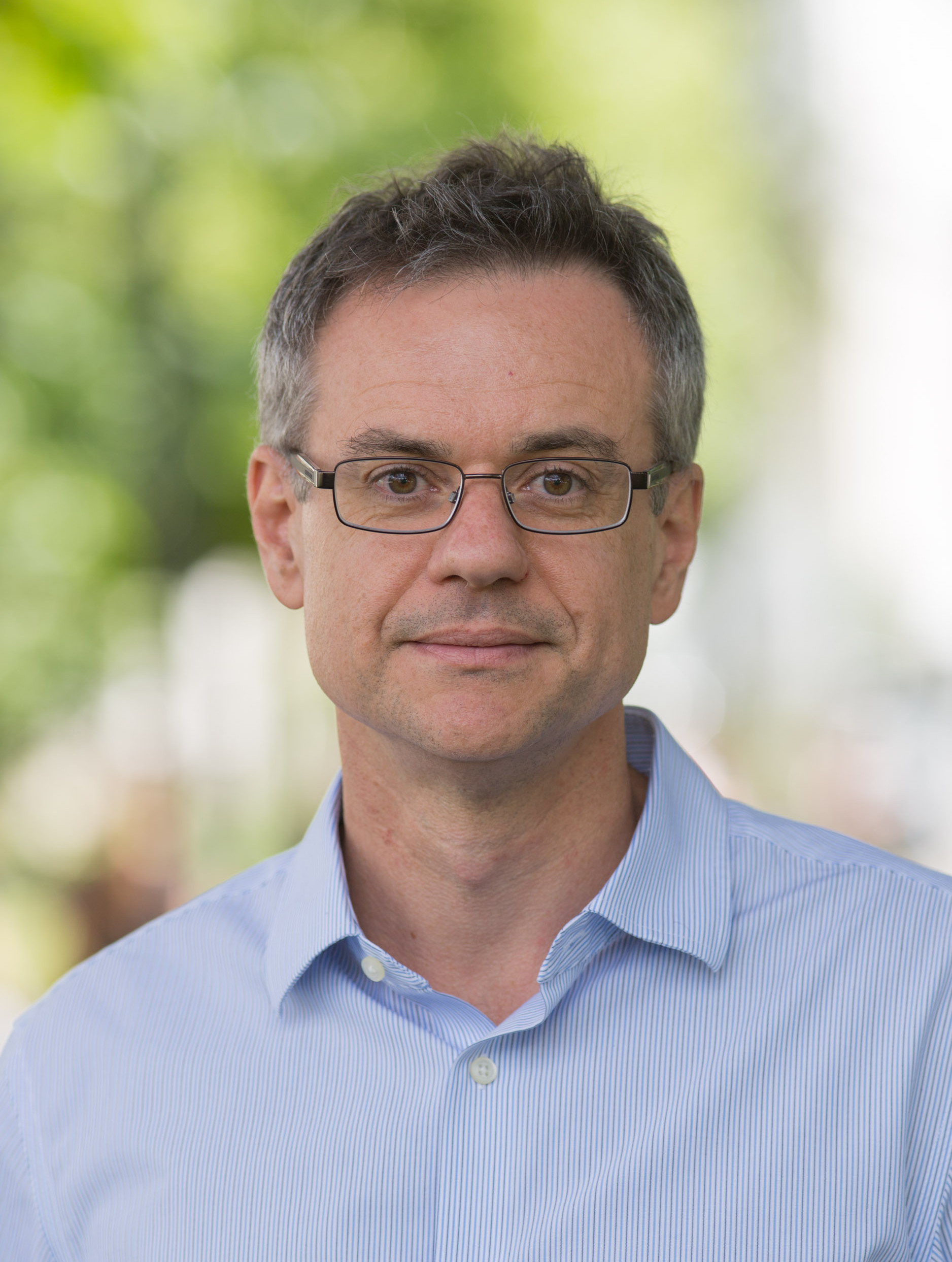
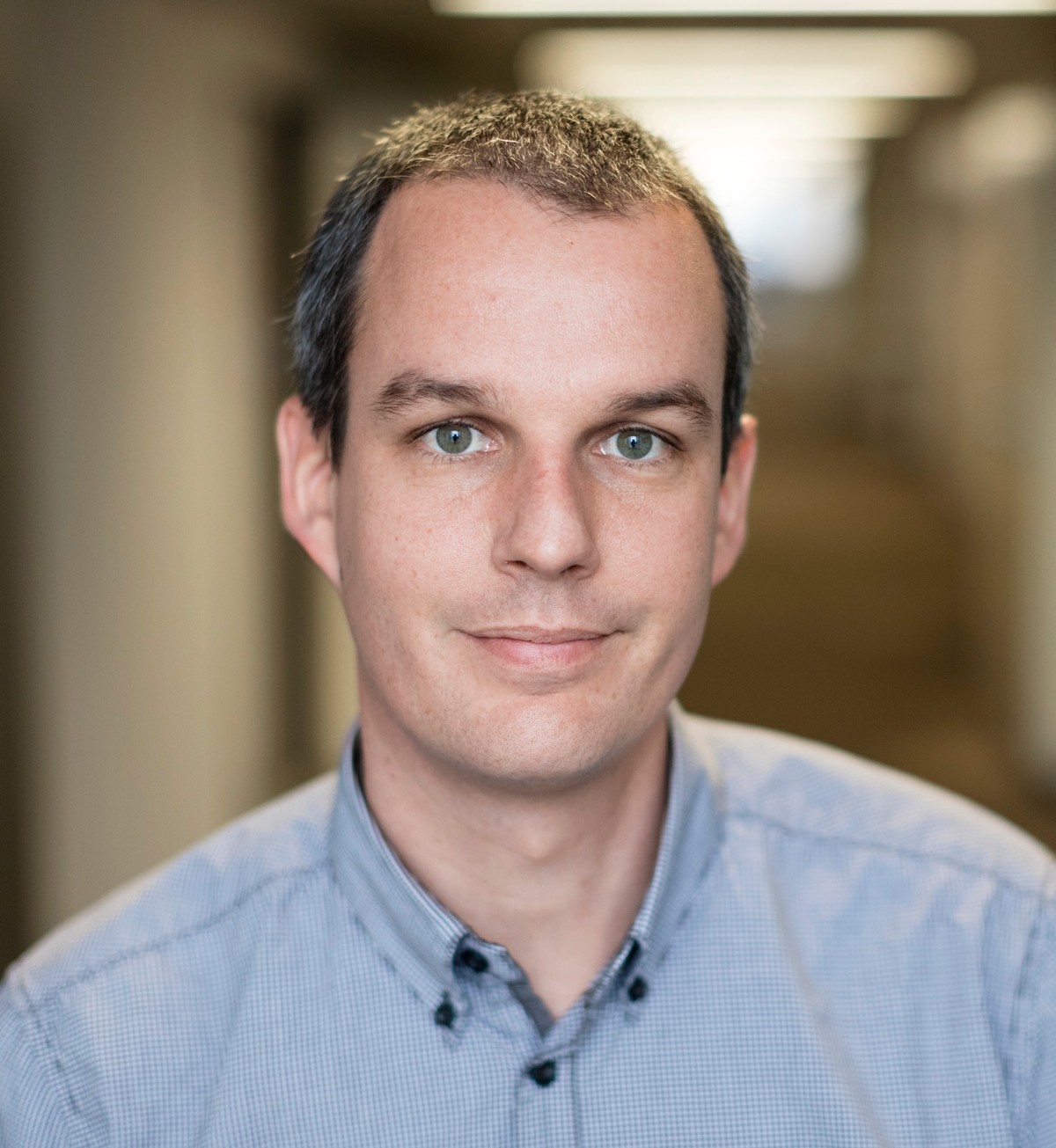
Alberto Lerner is a Senior Researcher at the Department of Informatics within the Interfaculty Informatics Department at the University of Fribourg. His research focuses on advancing database systems, storage architectures, and hardware-software co-design. He holds a strong interest in computational storage, network-accelerated query processing, and the integration of modern hardware technologies like CXL into database engines. Lerner's work emphasizes performance optimization and scalable solutions in data-intensive computing environments. His research interests include database architecture, storage co-design, hardware acceleration, and network-driven computing. Recent publications highlight innovations in point cloud data processing, reprogrammable storage devices, and software-defined controllers for NAND flash systems. Lerner's articles reflect a trend toward leveraging modern hardware advancements to enhance database and storage performance. He has contributed to frameworks like BABOL and Data Pipes, advancing declarative control over data movement and network-based graph mining.
Fernando Pedone is a Full Professor at the Faculty of Informatics, Università della Svizzera italiana (USI), leading the Computer Systems Institute (SYS). He holds a Ph.D. in Computer Science from EPFL (1999). His research focuses on dependable distributed systems, distributed algorithms, and fault-tolerant data management. Pedone has authored over 70 papers and co-edited 'Replication: Theory and Practice.' Roles: Full Professor, SYS Director Affiliations: USI, Swiss National Science Foundation (SNSF), Interchain Foundation Teaching: Distributed Algorithms, Distributed Systems, Operating Systems Research interests span atomic multicast protocols, state machine replication, blockchain synchronization, and consensus algorithms. His work bridges theoretical foundations with practical implementations, emphasizing scalability and fault tolerance. Pedone's projects are sponsored by entities like SNSF, CTI, and Microsoft Research. Notable contributions include 'Heron' (shared-memory state replication), 'PrimCast' (atomic multicast), and studies on blockchain state synchronization. His lab oversees over 20 PhD students, with alumni holding roles in academia and industry. Grants and collaborations include partnerships with the Hasler Foundation, European Commission, and Western Digital Research. Pedone actively participates in conferences like Middleware, DSN, and EuroSys.
Bart Vandereycken is an Associate Professor in the Mathematics Department at the University of Geneva, specializing in numerical analysis and scientific computing. His research focuses on large-scale and high-dimensional problems solved using low-rank matrix and tensor techniques, with applications in numerical linear algebra, optimization, and nonlinear eigenvalue problems. He previously held positions as an instructor at Princeton University and postdoctoral researcher at EPF Lausanne and ETH Zurich, and earned his PhD from KU Leuven in 2010. His research interests include Riemannian optimization algorithms, multilevel preconditioning, and machine learning applications. He serves as an associate editor for SIAM Journal on Matrix Analysis and Applications and Linear Algebra and its Applications . Bart organizes the Numerical Analysis seminar with colleagues, and advises students interested in numerical analysis or numerical linear algebra. Recent work emphasizes convexity structures in matrix decompositions, robust preconditioning techniques, and scalable low-rank algorithms for high-dimensional PDEs. His 2024–2025 publications explore advancements in Riemannian optimization schemes, subspace iteration methods, and distributed computing applications of matrix decompositions. Key themes include improving convergence guarantees and developing geodesic-based optimization frameworks for challenging numerical problems.
Dr. Thijs Smit is affiliated with the Professur für Biomechanik at ETH Zürich, holding a researcher position within the biomechanics field. His work focuses on advanced biomedical engineering solutions, particularly in spinal fusion implants, regenerative medicine scaffolds, and topology optimization techniques. Primary affiliation: ETH Zürich, Department of Biomechanics Research interests: Patient-specific implant design, 3D-printed biomaterials, topology optimization in medicine, regenerative scaffold development His research combines computational modeling with additive manufacturing to create innovative medical devices. Notable projects include LEGO-inspired titanium scaffolds for tissue engineering and patient-specific spinal fusion cages optimized via topology methods. His work bridges engineering principles with clinical applications in orthopedics and regenerative medicine. Publications emphasize interdisciplinary approaches, with recent trends in 3D-printed biomaterials for regenerative medicine and computational optimization tools for medical device design. His 2024 studies highlight advancements in anatomically conforming spinal implants. Earlier work includes FEA analysis of non-rigid origami structures and transportation node attitude measurement. No awards or grants are explicitly listed in the provided information. Advising roles or student collaborations are not detailed here. His current projects likely involve collaboration with the Biomechanics Professorship team to advance surgical implant technologies and biomaterial applications.
Prof. Edouard Bugnion is a Full Professor at the Data Center Systems Laboratory within the School of Computer Science and Communications at École Polytechnique Fédérale de Lausanne (EPFL). Since joining EPFL in 2012, he has led research in datacenter systems and virtualization, with prior experience as VMware's first CTO and Cisco's VP/CTO. Research Interests: Data Center Systems Network and Data Plane Efficiency Operating System Design Virtualization Technologies Trusted Execution Environments Low-Latency Computing His recent publications focus on datacenter efficiency for OLDI applications, system security through hardware-based trust, and network-compute co-design . These works span topics from microsecond-scale latency optimization to privacy-preserving proximity tracing systems. Scientific Recognition: Elected ACM Fellow (2017) ACM Software Systems Award (2009) Teaching: Currently teaching CS-212: Systems Programming Project , with past courses including CS-522: Principles of Computer Systems and CS-410: Technology Ventures .
Victor Kristof is a researcher at École Polytechnique Fédérale de Lausanne (EPFL), affiliated with the INDY2 laboratory. His work spans interdisciplinary domains, combining Natural Language Processing (NLP) , Machine Learning , and Social Process Modeling to analyze legislative dynamics, vote prediction, and environmental perception. Research Focus: Kristof develops interpretable models for democratic transparency, including aligning interest group positions with parliamentary speeches. He pioneered methods for predicting legislative edit acceptance using matrix factorization and NLP. His work on Swiss referendum prediction integrates historical data with real-time analysis via the Predikon platform . Methodological Contributions: He applies Bayesian statistics , time-dynamic pairwise comparison models , and active learning algorithms to diverse problems, from carbon footprint perception to sports analytics. His War of Words framework reveals ideological patterns in EU law-making, while his Player Kernel model improves football match prediction. Labs & Collaborations: Based at EPFL's Laboratory of Dynamic Information and Networks (INDY2) , he collaborates with researchers like Matthias Grossglauser and Patrick Thiran. His datasets on legislative edits and carbon perception have advanced transparency studies.
Ángel García-Fernández is an Associate Professor at the Polytechnic University of Madrid , specializing in Bayesian inference , multi-target tracking , and nonlinear filtering with applications in signal processing, robotics, and underwater mapping. His work includes the development of Poisson multi-Bernoulli mixture (PMBM) filters, iterated posterior linearization algorithms, and direction-of-arrival (DOA) measurement models.
Prof. Dr. Matthias Rosenthal is a Professor of Multiprocessor and Real-Time Systems at the ZHAW School of Engineering, Zurich University of Applied Sciences (ZHAW), where he also serves as Head of the Research/Focus Area Realtime Platforms. He holds a PhD and MSc in Electrical Engineering from ETH Zurich (1993–1997). His research focuses on multiprocessor systems, hybrid multicore architectures, distributed signal processing, embedded GPU computing, and real-time embedded systems. Key projects include In-Flight GNSS Interference Detection, dAIrector (automated multi-camera live production), and novel AFM techniques for industrial quality control. He has led over 15 industry-focused projects, including collaborations with Innosuisse and companies like Harman International. His work emphasizes real-time systems, FPGA-GPU co-design, and embedded AI solutions. Education: PhD (ETH Zurich, 1997), MSc (ETH Zurich, 1993) Awards: CTI Startup Label (2005) Teaching: Lectures on digital systems, real-time computing, and information theory Notable contributions include advancements in embedded machine learning for food waste management, secure boot concepts for Zynq MPSoC, and low-latency wireless video systems. His research bridges theoretical computer engineering with practical industrial applications.
Prof. Mathieu Luisier is a Full Professor of Computational Nanoelectronics at ETH Zurich's Department of Information Technology and Electrical Engineering. He earned his PhD in 2007 from ETH Zurich, followed by postdoctoral research there and a role as Research Assistant Professor at Purdue University (2008–2011). His research focuses on nanoscale device modeling, including nanowire transistors, memristors, and 2D semiconductors, with a strong emphasis on quantum transport and high-performance computing. ERC Starting Grant (2013) SNSF Advanced Grant (2022) ACM Gordon Bell Prize (2019) His work integrates advanced simulation techniques like GW approximations and parallel algorithms to address challenges in nanoelectronics. He teaches courses on digital circuits and integrated systems, and leads research groups exploring next-generation devices for applications in quantum computing and neuromorphic systems.
Dr. Manuel Dahmen is the Head of Department at the Institute of Climate and Energy Systems (ICE-1) within the Research Center Jülich. His research focuses on designing sustainable and cost-efficient energy systems through advanced techniques like numerical optimization and deep learning. Key areas include renewable energy integration, process network analysis, and machine learning-driven system design. His work addresses challenges in decarbonizing industries, optimizing energy systems, and developing tailor-made fuels for high-efficiency engines. Dahmen leads interdisciplinary projects combining computational methods with practical engineering solutions, emphasizing robust design under uncertainty. He contributes to open-source tools like COMANDO for energy systems optimization and explores innovations in graph neural networks for molecular property prediction. Research trends reflected in his publications highlight optimization algorithms (e.g., semi-infinite programming), demand response strategies for industrial processes, and physics-informed machine learning for dynamic systems. Dahmen’s contributions bridge theoretical advancements with real-world applications, aiming to accelerate the transition to sustainable energy systems.
Emanuel de Bellis is an Associate Professor at the University of St. Gallen , specializing in empirical research methods related to Marketing , Behavioral Science , and New Technologies . His work primarily explores the intersection of artificial intelligence and consumer behavior, with a focus on how autonomous systems influence decision-making and adoption patterns. Marketing Behavioral Science New Technologies Research Methods His research spans domains like AI assessment tools , zero-sum beliefs in autonomy , and mass customization . He has published extensively on topics including algorithmic evaluation effects, consumer adoption of autonomous products, and the psychological implications of smart technologies. Recent publications on AI's impact on job candidates and autonomous systems reveal emerging trends in human-AI interaction , technological substitution , and behavioral adaptation . His empirical studies bridge consumer psychology with technological innovation , emphasizing practical implications for businesses and policymakers.
Antonio Carzaniga is a Full Professor and founding member of the Faculty of Informatics at Università della Svizzera italiana (USI), where he has been active since 2004. Previously, he served as an Assistant Research Professor at the University of Colorado at Boulder from 2001 to 2007. He holds a Ph.D. in Computer Science and a Bachelor’s degree in Electronic Engineering from Politecnico di Milano. Full Professor, Faculty of Informatics, Università della Svizzera italiana (2004–Present) Assistant Research Professor, Department of Computer Science, University of Colorado at Boulder (2001–2007) Ph.D. in Computer Science, Politecnico di Milano Bachelor’s in Electronic Engineering, Politecnico di Milano His research spans distributed systems and software engineering, with a strong focus on content-based addressing networks, publish/subscribe systems, middleware, software fault tolerance, and verification. He has pioneered work in information-centric networking and developed the Siena project, a scalable publish/subscribe service. His recent work extends into programmable networks, GPU-accelerated matching, and performance annotations for cloud systems. The 15 most recent publications highlight a consistent trajectory in scalable, high-performance networking and adaptive software systems. Key themes include content-based communication, packet subscriptions, information-centric networking, and leveraging redundancy for fault tolerance and testing. His work bridges theoretical foundations with practical implementations, often involving system-level software and performance evaluation. Best Paper Award, ACM SIGCOMM Workshop on Information-Centric Networking (ICN'13) Carzaniga has advised multiple graduate students, including Michele Papalini, Koorosh Khazaei, and Daniele Rogora, and has collaborated on funded research projects in distributed systems and networking. He has contributed to software development through projects like the Siena Fast Forwarding engine and the Synthetic Workload Generator. His service includes organizing workshops and contributing to major conferences in software engineering and computer systems. He leads research initiatives such as Siena and Content-Based Networking, focusing on scalable, decentralized communication infrastructures. His lab has developed key tools for evaluating publish/subscribe performance and implementing high-speed forwarding algorithms.
Joaquim Loizu is a Senior Lecturer (MER) at the Swiss Plasma Center (SPC-TH) and the School of Physics and Chemistry (SPH-ENS) at École Polytechnique Fédérale de Lausanne (EPFL). His work bridges theoretical plasma physics with experimental validation , focusing on advanced magnetic confinement concepts for fusion energy. Education PhD in Plasma Physics (2013), EPFL Master in Physics, Imperial College London (2009) BSc in Physics, EPFL Research Interests include: Design and stability of stellarator fusion devices MHD equilibrium and formation of magnetic islands Chaotic magnetic field transport Non-neutral plasma simulations Plasma sheath dynamics and bootstrap current analysis Scientific Contributions span 15 recent publications (2023-2025) on topics like chaotic transport quantification, gyrotron electron gun simulations, and multi-region MHD equilibrium calculations. His work has significantly advanced stellarator optimization and tokamak divertor modeling. Awards European Physical Society Plasma Physics PhD Award (2009) IUPAP Young Scientist Prize in Plasma Physics (2020) Advising includes mentoring PhD students Erol Balkovic , Pierrick Giroud-Garampon , and Zeno Tecchiolli . He contributes to major fusion experiments including Wendelstein 7-X and TCV tokamak , while developing simulation tools like GBS and FENNECS for plasma turbulence and non-neutral plasma studies.
Charbel Toumieh is a Research Fellow at the École Polytechnique Fédérale de Lausanne (EPFL), based in the Intelligent Systems Laboratory (LIS) under the School of Engineering (STI). His research focuses on advanced robotics, particularly in aerial systems, motion planning, and autonomous systems. He holds a postdoctoral position and contributes to projects involving multi-agent coordination, high-speed navigation, and energy-efficient drone designs. Key research areas include teleoperation of aerial swarms, adaptive morphing for avian-inspired drones, and decentralized multi-agent planning. His work addresses challenges in cluttered environments, dynamic obstacle avoidance, and real-time trajectory optimization. The LIS lab, part of the Institute of Microengineering (IGM), emphasizes innovative solutions in intelligent systems and robotics. Recent publications highlight advancements in motion planning algorithms, safe corridor generation using voxel grids, and GPU-accelerated exploration techniques. His research bridges theoretical control systems with practical applications in autonomous robotics, aiming to enhance efficiency and resilience in robotic systems.
Laurent Vanbever is an Associate Professor at ETH Zürich's Department of Information Technology and Electrical Engineering and heads the Computer Engineering and Networks Lab. His research focuses on networking systems, with a strong emphasis on network security, routing protocols, software-defined networking (SDN), and distributed systems. He explores topics such as BGP convergence, energy-efficient router designs, and mitigating routing attacks on cryptocurrencies. His work bridges theoretical advancements with practical implementations, addressing challenges in network scalability, resilience, and sustainability. Key research areas include network verification, programmable packet processing (P4), and the security of decentralized systems like blockchain. Recent projects analyze transient forwarding anomalies, SDN-based network optimizations, and energy consumption in ISP networks. His contributions to network measurement and control plane innovations have significant implications for Internet architecture and operational practices. Vanbever actively publishes in top-tier conferences/journals and collaborates on open-source networking tools. His lab develops frameworks to enhance network performance and security, such as verifying link loads and mitigating BGP hijacks. Current efforts include exploring energy-efficient network designs and safeguarding cryptocurrency infrastructure against routing vulnerabilities.