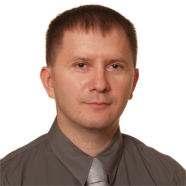
Sebastian Ernst is a Lecturer at the Department of Applied Informatics, Faculty of Electrical Engineering, Automatics, Computer Science and Biomedical Engineering, AGH University of Science and Technology in Kraków. His research focuses on Computer Science , Artificial Intelligence , and Smart Cities , with a strong emphasis on Geographic Information Systems (GIS) and Energy Efficiency in urban environments. University: AGH University of Science and Technology Faculty: Electrical Engineering, Automatics, Computer Science and Biomedical Engineering Department: Applied Informatics Position: Lecturer Contact: ernst@agh.edu.pl Office: C-2, 4th floor, room 424 Phone: +48 12 617 51 95 His recent publications highlight trends in Graph-Based Modeling , Smart Lighting Systems , and Robust Algorithm Design for urban infrastructure. He explores Pairwise Comparisons , GIS Applications , and Energy Conservation through computational methods.
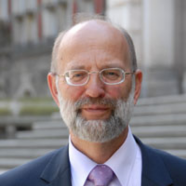
Piotr Szymczyk is a Professor at the Department of Biocybernetics and Biomedical Engineering , AGH University of Science and Technology in Kraków. His research focuses on artificial intelligence , embedded systems , and real-time data processing , with applications in biomedical engineering, georadar analysis, and energy systems. Key research areas: Neural networks (Laplace/Z-transform), real-time systems , parallel computing , and georadar data classification Projects: NCN grants for 'Intelligent embedded systems' and 'Digital georadar data processing' His work spans embedded Linux , microcontroller programming (ARM, STM32), and wireless technologies (LoRa, Bluetooth LE). He has supervised doctoral and master's theses in these fields. Scientific awards: NCN Agreement No. 6693/B/T02/2011/40 Ministry of Science and Higher Education grant 0128/R/t00/2010/12
Franciszek Seredyński is a Professor at the Institute of Computer Science, Faculty of Natural Sciences, University of Warsaw. His research focuses on applying Deep Learning and Nature-Inspired Methods to security issues, with a primary affiliation in computer and information sciences (100% discipline). His work spans diverse subfields including cellular automata, cryptography, genetic algorithms, learning automata, parallel programming, and SQL. A tag cloud derived from publications, projects, and citations highlights specific interests such as block ciphers , distributed systems , and generalized extreme value distribution . With 73 documented publications, his bibliometric indicators include an h-index of 11 (Scopus), 7 (Web of Science), a total impact factor of 6.2, SNIP of 15.933, and CiteScore of 4. His research is accessible through identifiers like ORCID 0000-0003-0206-8183 and institutional URN urn:uph-prod:UPH550e8f0fa90b4dd7bc2f7d1b44996855 .
Marek Kopel is an Assistant Professor at the Department of Applied Informatics, Faculty of Information and Communication Technology, Wrocław University of Science and Technology. He has held this position since 2011 and has been affiliated with the university since 2001. His teaching focuses on video games, information retrieval, and databases. Ph.D. in Computer Science Kopel's research spans game development, artificial intelligence, virtual reality, and music technology. He explores the intersection of games and AI, including real-time music adaptation in gameplay and VR interaction methods. His work also addresses procedural generation, optimization algorithms, and accessibility in educational materials. His publications highlight trends in VR immersion, game AI, and music industry analysis, often leveraging machine learning and semantic web technologies. He contributes to the organization of international conferences like ACIIDS and ICCCI. Kopel actively engages in interdisciplinary collaborations, notably through the InforMusic science club. He integrates his passion for music into research, playing instruments in university bands (WITelsi) and testing student-created games.
Dr. hab. Beata Bylina is a Professor at the Faculty of Mathematics, Physics and Computer Science , Maria Curie-Skłodowska University (UMCS) , affiliated with the Department of Information Systems Software . She specializes in high-performance computing, numerical methods, and energy-efficient parallel programming. ORCID ID : 0000-0002-1327-9747 Contact : beata.bylina@umcs.pl / beata.bylina@mail.umcs.pl Office : Room D-522 (Institute of Computer Science) or Room B-2, Akademicka Street 9, Lublin Consultations : Wednesdays 10:00–12:00 (in-person or remote via Microsoft Teams) Her research focuses on: Parallelization and vectorization techniques for multicore architectures Energy consumption optimization in numerical algorithms Matrix factorization methods (WZ, LU, QR) for CPU/GPU hybrid systems Markov chain modeling for network performance analysis Compiler optimization impact on performance and energy metrics Recent publication trends show emphasis on: Time-energy correlations in multithreaded algorithms OpenMP/OpenACC for hybrid CPU-GPU implementations Efficient sparse matrix storage schemes for GPUs Impact of hardware-specific optimizations (Xeon Phi, frequency scaling) Comparative studies of parallelization strategies
Dr. Jarosław Marcin Bylina serves as a Professor at Maria Curie-Skłodowska University in Lublin, Poland, where he leads the Department of Cybersecurity and Computational Linguistics within the Faculty of Mathematics, Physics and Computer Science. His academic profile shows active engagement in research and teaching activities with current office hours available for student consultations. His research spans critical areas in modern computing, with primary focus on High Performance Computing and Parallel Computing architectures. Specialized interests include optimization of multicore systems, Markov chain applications, sparse matrix algorithms, and energy efficiency in computational systems. His work frequently addresses challenges in Intel Xeon Phi architectures, task-based parallelism using Intel Cilk Plus, and performance analysis of distributed computing environments. Based on bibliometric analysis of his 40 publications, his research demonstrates significant impact in information technology fields with h-index values of 8 (Google Scholar), 7 (Scopus), and 4 (Web of Science). His work contributes to the broader discipline of Information and Communication Technology with particular emphasis on practical implementations in high-performance computing environments. Professional recognition includes a Total CiteScore of 20.8, Total SNIP of 7.874, and a ministerial score of 1,031 in the Polish academic evaluation system. His research output demonstrates consistent contribution to computational science with documented expertise across multiple technical domains. Available for academic consultations at Akademicka Street 9, room D-521, Lublin, with remote consultation options available through university Teams platform (code: jpq0hw9).
Bartłomiej Kotyra serves as an Assistant Professor in the Department of Information Systems Software at the Institute of Computer Science and Mathematics, Faculty of Mathematics, Physics and Computer Science, Maria Curie-Skłodowska University in Lublin, Poland. His research spans interdisciplinary domains with emphasis on: Parallel algorithms implementation using OpenMP and GPU architectures Hydrological modeling including watershed delineation and flow accumulation analysis Financial market applications focusing on forex indicators and technical analysis Dr. Kotyra has published 5 scholarly articles with a Scopus/Web of Science h-index of 3. His computational research demonstrates expertise in applying high-performance computing techniques to geospatial problems and financial market analysis, particularly in longest flow path calculations and multicore processor optimizations. His scholarly impact is reflected in a total impact factor of 14.768, SNIP of 4.92, and CiteScore of 26.3, accumulating 485 points in the Polish ministerial scoring system. Dr. Kotyra maintains regular consultation hours on Mondays from 12:15-14:15 and can be reached at room 306 (phone: 81 537 29 35) or via email.
Professor Jerzy Brzeziński is a distinguished academic at Poznań University of Technology, where he serves in the Faculty of Computer Science and Telecommunications within the Institute of Computer Science. With a career spanning several decades, he has established himself as a leading researcher in distributed systems and networking, maintaining active research productivity with publications as recent as 2022. Professor Brzeziński's research interests focus on distributed systems, peer-to-peer networks, service-oriented architecture, mobile ad hoc networks, and distributed shared memory systems. His work bridges theoretical foundations with practical applications, particularly in areas like gaming platforms, secure data exchange, and reliable communication protocols. Recent publications demonstrate continued innovation in sybil-proof data exchange mechanisms and broadcast protocols for mobile networks. Analysis of his publication trends reveals an evolution from foundational work on memory systems and consistency models in the early 2000s toward more applied research in peer-to-peer systems, gaming applications, and sustainable computing in recent years. His work consistently addresses core challenges in distributed computing while adapting to emerging technological contexts. Professor Brzeziński has supervised at least 10 doctoral students throughout his career, including Andrzej Stroiński, Michał Kalewski, and Łukasz Piątkowski. His mentorship has produced significant contributions to the field, with students researching topics like Petri Net models, reliable broadcast protocols, and server synchronization. His research is characterized by strong collaborative networks, frequently working with colleagues at Poznań University of Technology and former students. This collaborative approach has resulted in numerous high-impact publications in reputable journals and conference proceedings across the distributed systems domain.
Professor Dariusz Horla is a faculty member at the Faculty of Automation, Robotics and Electrical Engineering at Poznań University of Technology, where he works in the Institute of Robotics and Machine Intelligence. He holds the title of Professor with a habilitation degree (dr hab. inż.) in automation and control engineering. His research focuses on advanced control systems, particularly anti-windup compensation techniques, model predictive control applications for nuclear power plants, UAV control systems, and fractional-order controllers. Professor Horla has published extensively across these domains, with recent work addressing challenges in cooperative control systems, optimization methods for control applications, and practical implementations of advanced control algorithms in real-world systems. Analysis of his recent publications (2015-2025) reveals a strong emphasis on practical control applications, particularly in nuclear power plant systems and unmanned aerial vehicles. His work bridges theoretical control methods with industrial implementation challenges, often focusing on optimization approaches and stability considerations in constrained systems. Professor Horla has supervised multiple doctoral students and has developed significant educational materials in control systems and automation. His intellectual property contributions include inventions related to UAV height control systems, demonstrating the practical impact of his research. His academic service includes participation in habilitation committees and development of educational materials that have shaped control engineering education at Poznań University of Technology.
Professor Joanna Józefowska is a distinguished academic at Poznań University of Technology, where she serves as a full professor in the Faculty of Computing and Telecommunications, Institute of Computer Science. With a career spanning over three decades since completing her doctoral dissertation in 1990, she has established herself as a leading expert in operations research and scheduling algorithms. Her research spans several key areas within operations research, with particular emphasis on: Discrete-continuous scheduling problems Resource allocation and optimization Just-in-time scheduling models Applications of apportionment theory Energy-efficient computing systems Quantum approaches to transportation problems Professor Józefowska's recent work demonstrates her ability to adapt traditional operations research methods to address contemporary technological challenges, with publications in 2022-2023 focusing on energy-efficient computing systems and quantum approaches to electric vehicle charging infrastructure. Her research output shows consistent productivity throughout her career, with publications appearing in reputable journals such as European Journal of Operational Research, Annals of Operations Research, and Computers and Operations Research. As an academic mentor, Professor Józefowska has successfully guided multiple doctoral students to completion, with dissertations covering topics ranging from ontology enrichment to discrete resource allocation. Her supervision has helped develop the next generation of researchers in operations research and computer science, contributing to the academic ecosystem at Poznań University of Technology and beyond. Her scholarly contributions extend beyond research and supervision to include editorial roles for significant publications in her field, demonstrating recognition of her expertise by the broader academic community. Professor Józefowska continues to actively contribute to the advancement of knowledge in operations research while maintaining her position as a respected academic at one of Poland's leading technical universities.
Dr. Piotr Sypek is an Assistant Professor at the Department of Microwave and Antenna Engineering, Faculty of Electronics Telecommunications and Informatics, Gdańsk University of Technology. His work focuses on computational methods for electromagnetic simulations, particularly in microwave engineering applications. Dr. Sypek obtained his doctoral degree (dr inż.) in Electronics (Technology) from the Faculty of Electronics Telecommunications and Informatics at Gdańsk University of Technology on July 10, 2012. His research spans several key areas in computational electromagnetics and high-performance computing. Dr. Sypek specializes in microwave engineering , computational electromagnetics , parallel computing , GPU computing , finite element method , and finite-difference methods . His work focuses on developing efficient computational techniques for electromagnetic simulations, with particular emphasis on accelerating finite element methods using modern hardware architectures including GPUs and Intel Optane persistent memory. Analysis of Dr. Sypek's publication record from 2005 to 2022 reveals a consistent focus on computational methods for microwave engineering applications. His research trajectory shows an evolution from fundamental filter design techniques to increasingly sophisticated computational approaches involving model order reduction, GPU acceleration, and memory optimization for large-scale electromagnetic simulations. The interdisciplinary nature of his work bridges electrical engineering, computational science, and high-performance computing. Dr. Sypek has made significant contributions to the field of computational electromagnetics through his publications in prestigious journals including IEEE Transactions on Microwave Theory and Techniques and Radioengineering. While specific details about his advising activities and research grants are not explicitly mentioned in the available information, Dr. Sypek's collaborative publication record suggests active involvement in research teams at Gdańsk University of Technology, particularly within the Department of Microwave and Antenna Engineering. Dr. Sypek appears to be a key contributor to research teams focused on computational electromagnetics at Gdańsk University of Technology, working closely with colleagues including A. Lamecki, M. Mrozowski, and others on projects related to finite element analysis, GPU acceleration, and microwave device simulation.
prof. dr hab. inż. Henryk Krawczyk serves as a Professor at Gdańsk University of Technology within the Faculty of Electronics, Telecommunications and Informatics. He is based at the Task Computing Centre (Centrum Informatyczne Task) in the Building of Electronics, Telecommunications and Informatics (room 520), with contact email hkrawk@pg.edu.pl and phone 583471018. His research spans critical intersections of cloud infrastructure and computational intelligence: Intelligent cloud service engineering with resilience-focused development frameworks Rural IoT deployment solutions for underserved telecommunications environments Machine learning optimization for constrained edge devices GPU-accelerated computational biology simulations DevOps/CI/CD integration in cloud service lifecycles Analysis of his 2024-2025 publications reveals a strategic emphasis on practical implementations where cloud platforms bridge theoretical AI advances with real-world engineering challenges. His work particularly addresses infrastructure limitations in rural IoT deployment through intelligent data cleaning mechanisms and develops quality assessment metrics for next-generation cloud services. The protein simulation research demonstrates cross-disciplinary application of high-performance computing techniques. As a core member of Gdańsk Tech's Task Computing Centre, Professor Krawczyk leverages institutional high-performance computing resources to advance scalable cloud architectures and computational biology methodologies. No information regarding student supervision or research grants was provided in available materials.